
Asgarzade Music School
Members
-
Joined
-
Last visited
-
Ah yes)) Instead of predicting your love life, it predicts whether your flute and bassoon will get along, or if your oboe and piccolo will have major conflicts in the key of C
-
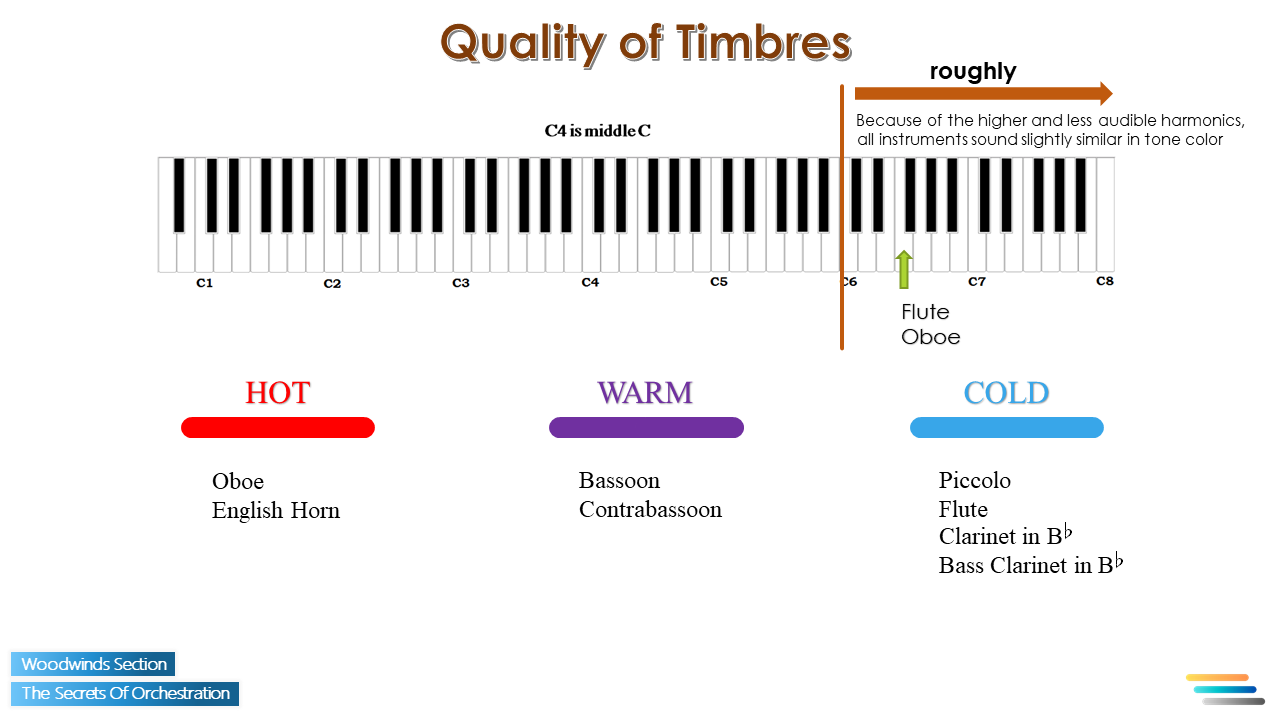
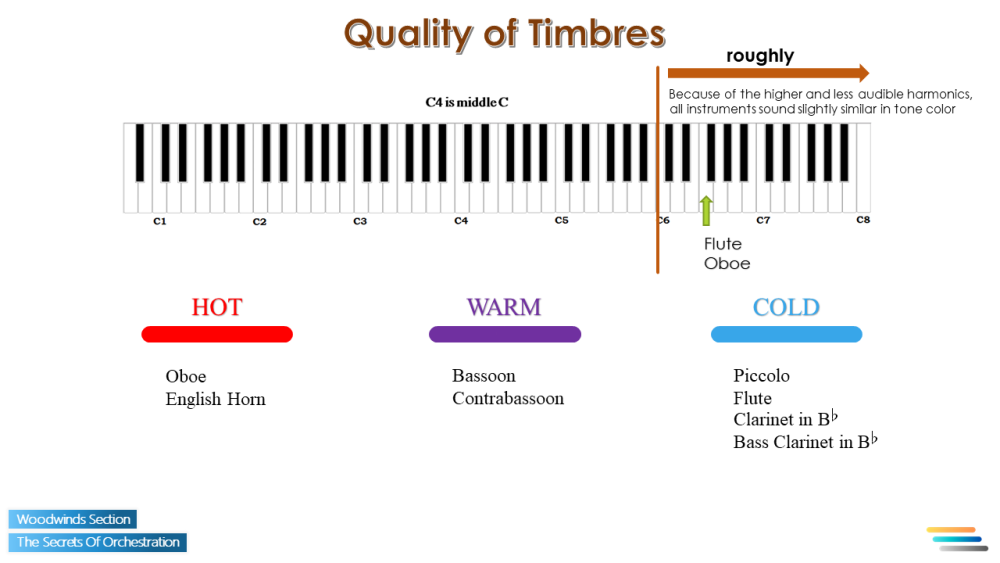
The woodwind section of the symphony orchestra can be categorized into three primary timbral color groups: Cold, Warm, and Hot. This classification helps composers understand how different woodwind instruments function within orchestral texture, balance, and emotional character. By organizing instruments according to their inherent timbral qualities, composers can make more intentional decisions when writing melodies, harmonies, and layered textures. Additionally, this categorization provides practical guidance on instrumental mixing, allowing composers to predict how different woodwinds will blend, contrast, or dominate within an orchestral context—and what kind of sonic result will ultimately be achieved. 1. Cold Timbres: Piccolo, Flute, Clarinet, Bass Clarinet 2. Hot Timbres: Oboe, English Horn 3. Warm Timbres Bassoon, Contrabassoon NB: Due to the dominance of higher and less perceptible harmonics in the extreme upper registers, the timbre of woodwind instruments becomes less distinct. In these ranges, different instruments may sound surprisingly similar in tone color. For example, when the flute and oboe play the same pitch—such as F6—it becomes difficult to clearly identify whether the sound is cold or hot, or even to distinguish which instrument is playing. For this reason, the following graphics and timbral classifications are based on the most effective, practical, and musically “sweet” registers of each instrument, where their characteristic tone color is most clearly perceived and reliably distinguishable in orchestral writing More Information and Free Orchestration Resources: Free Download
-
Hello dear users. I am happy to be here. In this thread, we are gonna talk about the cinematic orchestration. I will be glad if you can share your comments. https://asgarzademusicschool.com/p/thesecretsoforchestration?coupon_code=YOUNGCOMPOSERSFORUM&product_id=3233088 Youtube Channel