All Activity
Today
-
-
XanderTan.Composer joined the community
-
-
-
PeterthePapercomPoser replied to UncleRed99's topic in Incomplete Works; Writer's Block and SuggestionsLoL .. I really don't know and can't say. The judges at these things could be much stricter than our community here on Young Composers. Your rhythms - you have a characteristic way of meandering up and down and you can't resist the inclusion of occasional triplets LoL
-
With that being said, do you think I might have a shot at being the chosen work? 😅 I've only ever submitted work to 2 other calls before. This will make 4 now, once I submit this, after its completion... I'd also like to ask; what about my work makes it recognizable as "oh, yeah that's UncleRed's work, right there"? lol
-
The problem i have with that Composition-Video above is : .............................. i cant SEE or HEAR the CHORUS I cant detect where it "starts and where it ends" ............. i suspect the "Man on the street" wouldn't know either . Time is money.. so these HUGE gaps in the composition , make absolutely no sense whatsoever . just my opinion you don't have to agree with it.

-
Kyle, i think you've stepped out of your "Comfort-Zone" to explore the rest of the orchestra I see images with this track, that go further than the one "Theme-Category" personally i have to have a picture or film, in front of me , before i can start anything. The orchestra has a lot of different players, playing different instruments. Example : Breakfast - Lunch - Dinner - | " what do want today for your : Breakfast - Lunch - Dinner " ? chips-chips-chips .........................i want the orchestra to play | violins-violins-violins so the rest of the orchestra that doesn't play violins are .......REDUNDANT .......There just sitting there doing Nothing. so its so refreshing to hear you use The rest of the orchestra...... be nice to NAME the instruments your using in your productions.
-
-
-
PeterthePapercomPoser replied to UncleRed99's topic in Incomplete Works; Writer's Block and SuggestionsHi @UncleRed99 ! I think it's a very nice and sonically pleasing work! The inclusion of Taps in the piece (albeit with liberal artistic license) enriches the message of the piece being a dedication to those who died on D-Day (probably the most gruesome and intense engagement in WWII). I think I could compare you to Brahms in a way, because Brahms in his harmonic structuring of his pieces was so dependent on 3rds and 6ths (something he also had in common with Percy Grainger). Your music on the other hand is very suspension-heavy, constantly creating those major and minor 2nds that rub and resolve pleasantly to major or minor sonorities. I think you should be weary of this however, since this style of writing for brass is very common in the DCI (Drum Corps International) universe and doesn't win you points for originality, creativity or style. Although I would argue that you do have a certain personal style that is recognizable. Thanks for sharing!
Yesterday
-
-
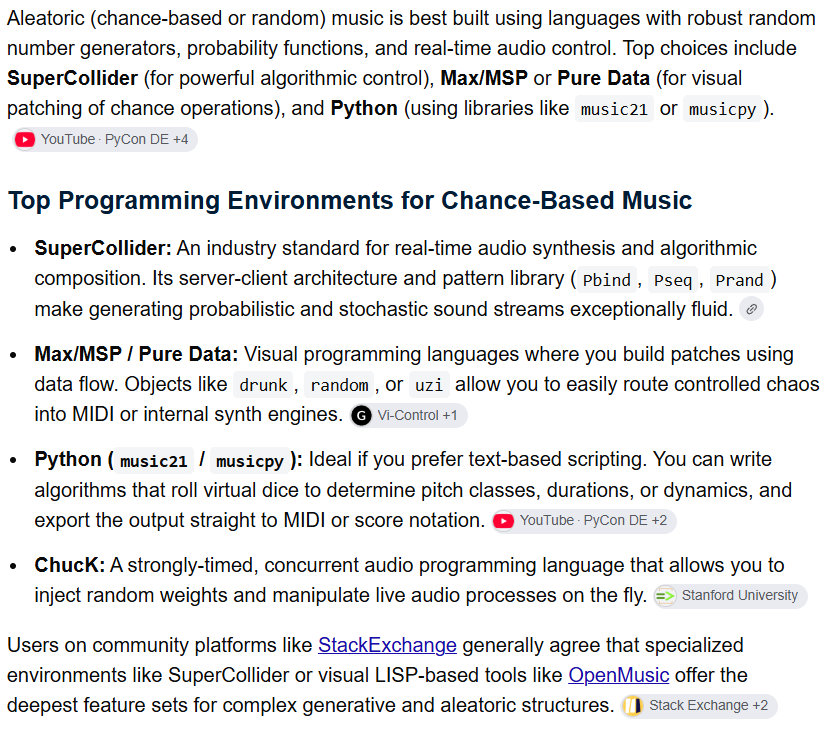
PianoFings joined the community✈️🎬★ 𝗗𝗘𝗦𝗧𝗜𝗡𝗔𝗧𝗜𝗢𝗡 𝗕𝗘𝗥𝗠𝗨𝗗𝗔™ | 𝗠𝗮𝗶𝗻 𝗧𝗶𝘁𝗹𝗲 𝗧𝗵𝗲𝗺𝗲© : 𝗢𝗽𝗲𝗻𝗶𝗻𝗴 𝗖𝗹𝗼𝘀𝗶𝗻𝗴 𝗖𝗿𝗲𝗱𝗶𝘁𝘀 DESTINATION BERMUDA 2.mid DB.pdf. with me changes, I usually have those as suggestions the ensembles I have been with useing mallet instruments we had mallet bags which allowed us to drop stuff in and quickly pull stuff out With the octaves, I think that’s just purely for texture reasons sometimes I’ll have a single player use an octave grip with runs sometimesMany thanks for those tips Mark. I will move the oboe part in Bar 6 to the clarinet. In Bar 16 I've already eliminated the oboe and replaced with flute (see amended version directly above your post). Alex.Modest Mussorgsky piano suite "Pictures at the exhibition" certainly have been written for the orchestra countless times. Schubert arranged one of lieder into piano trio. Debussy orchestrated one his works. So, the answer is ...yes! In fact, that would be fun challenge for this forum: arrange a piano for certain ensemble. @Lithl That is one method. The other method is the old fashion way: write everything out. :)Hi @Luis Hernández! In principle, I think you could adapt any piano work for an orchestra using a DAW. That said, there are certainly some that would be incredibly difficult, take Conlon Nancarrow’s Study No. 40a, for instance. https://www.youtube.com/watch?v=ZXd-I_7XBoY That one might be almost impossible, don't you think? (Haha) Ultimately, piano works originally composed for player pianos might not be well-suited for orchestral adaptation. The same likely applies to piano pieces with an extremely sparse number of notes. Even if it were possible, the real question is whether the orchestration adds any value, whether it actually "works" or not. By the way, your arrangement of Schoenberg’s Six Little Pieces for Piano, Op. 19 was really good! I didn't comment on the specific topic because I don't feel qualified to offer advice on orchestration. However, I just wanted to let you know how much I enjoyed it! Best, Lithl.As a listener ... just a fun piece! MarkAlex, Please aware that in measure 6 you have a slur in pp in the Oboe going to the B - Bb the Oboe's lowest note. Not a problem usually, however, at that dynamic level it might not work. At measure 16 you have the Oboe at the high F and G.... I don't see the benefit here at all. Not really recommended unless it is an avant garde work. In both cases the Oboist will not be happy with the orchestration. MarkThe truth is, it’s a surprising, original and captivating piece. Two things strike me – though they’re more questions than anything else, as my experience with percussion is very, very limited. One is the speed with which the percussionist changes instruments (or mallets). Sometimes it seems to happen in ‘zero time’. Is that possible? I suppose it must be down to the layout of the instruments and the mallets? The other is that in many sections the vibraphones and marimbas play in unison or an octave apart – is this due to the acoustic volume of the instruments? It sometimes sounds a bit overloaded, but I imagine that’s down to the virtual instrument as well. It’s certainly a very good lesson on percussion. As for the connection with the poem, well, I don’t know – I’m one of those who think that music doesn’t describe anything. To me, it sounds lively and cheerful, and, in a way, the instruments do remind me of a sunset on the coast. The score is explained very well.Hi guys! I think there are different levels to "personal style." There’s the kind often seen in pop music—a style defined by the individual artist or the band itself—and then there’s the kind @Luis Hernández is referring to: a personal style that carries significant influence. In the 21st century, we see plenty of that first type—original, personal styles—and I personally enjoy listening to them. Artists like Nils Frahm, Boards of Canada, and GoGo Penguin come to mind. Perhaps the reason we aren't seeing the kind of unprecedented, revolutionary shifts that occurred in the 20th century is simply because music has fragmented into so many different genres. That said, I believe new and innovative works are still being created within each of those genres. We have such an incredible array of equipment and techniques available today that, depending on how you combine them, it’s certainly possible to create fresh, novel music. Though, I have to admit, I show absolutely no signs of doing that myself, haha. The topic of "random elements" is also fascinating. You could probably incorporate randomness into a piece by using a DAW that utilizes mathematical formulas for randomization. If you used that to establish rules for sound placement, for instance, you might be able to generate a different piece of music every time using just a single formula. Since the turn of the 21st century, we haven't really seen anyone who represents a paradigm shift in music, but I’m sure someone will emerge eventuallyーand I certainly hope to live long enough to see it happen! Best, Lithl.




.thumb.png.8b5b433a341551e913a34392660bc95b.png)