Leaderboard
-
Luis Hernández
Members2Points3,312Posts -
Olov
Members2Points99Posts -
PeterthePapercomPoser
Admin1Points2,864Posts


.thumb.png.8b5b433a341551e913a34392660bc95b.png)
Popular Content
Showing content with the highest reputation on 11/14/2020 in Posts
-
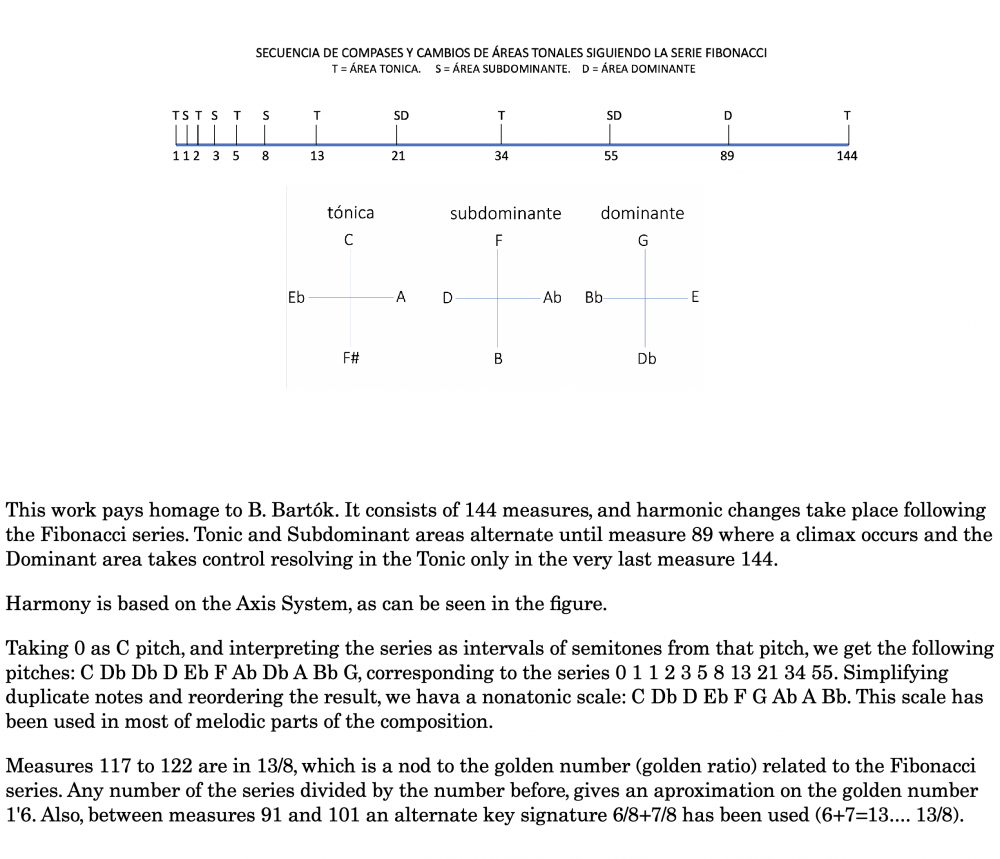
1 pointI'm still learning to use the orchestra, but I can't write things in classic forms.... So, taking Bartók as a model for the Form, I used the Fibonacci series. This is in the notes of the score:
 1 point
 -
Fellowship (Sword 5).mp3 Yeah, so I made some changes. Does the drum bother, or does it enhance?1 point
-
I decided to put a segno at the first bar, it seems to be more practical then a 3/4 measure at the end. Yeah, although Cor Anglais players are harder to find (I suppose) here it works theoretically. And it sounds better and a bit louder too. Good idea!! I have been thinking about the picardy third in the end of section 2, I'll compare it and see how it ends up. Still had the problem with the fine. Yes, it doesn't matter where in the measure I put it, it always end at the end of it. If I put it on the 1, it ends before the first beat. So…I can also skip the DC/DS thing and just write the eight bars and finish the piece with a picard third. A little waste of pages but, oh well. (EDIT: I did manage to get Sibelius to stop at the right time, by going through settings) Thanks a lot!1 point
-
1 pointGreat concerto, I love the viola, and this piece is exciting as I think you're a viola player. First mov Good intro, in the romantic style. Pertinent accentuations as when the celli and counterbasses become a bit active. There are many cadenzas or quasi (with little background, as a recitative which brings a very tranquil mood. although it makes the movement a bit long to my taste. I see you are using slurs for expression in the strings. Some people discouraged me to do it. What do you think? I've read that Brahms sometimes wrote double slurs, one for expression, the other to establish the phrasing. I usually put a "legato" indication (I see you do it sometimes, too). In my opinion, whenever it is clear to understand it... it's OK. I find the Andente more coherent, perhaps with some motives quite romantic. I observe some ppp dynamics in the winds. Mr. Alan Belkin advices, in general, to stay between pp and ff for all the orchestra but timpani (within can do fff) and strings (which can play ppp and fff). The piano is different and can do also the whole range. The Finale is a nice contrast to the slower movements.1 point
-
Can't you just write those two eighth pick-ups at the very end of the piece and return to the repeat sign? Or in MuseScore I could erase those rests from the last measure I think (EDIT: or maybe you could change the meter in the last measure to 3/4?). The only other problem that's audible is that the end is cut off - can't you just place the fine on the 3rd beat of the 2nd measure of the 1st ending? As for the low oboe notes - an English Horn could play that and also have a nicer darker tone. The highest note you have is a G so that would be a high C for English Horn. I like the music. It is dark with some more hopeful moments. Although there are other major chords available than just the bIII. Maybe you could have used a picardy third? Or a major IV? bVI is always a great option. Thanks for sharing.1 point