

Leaderboard
-
Fruit hunter
Members2Points132Posts -
danishali903
Members1Points375Posts -
Hands
Old Members1Points2,980Posts -
Luis Hernández
Members1Points3,401Posts



Popular Content
Showing content with the highest reputation on 04/23/2026 in Posts
-
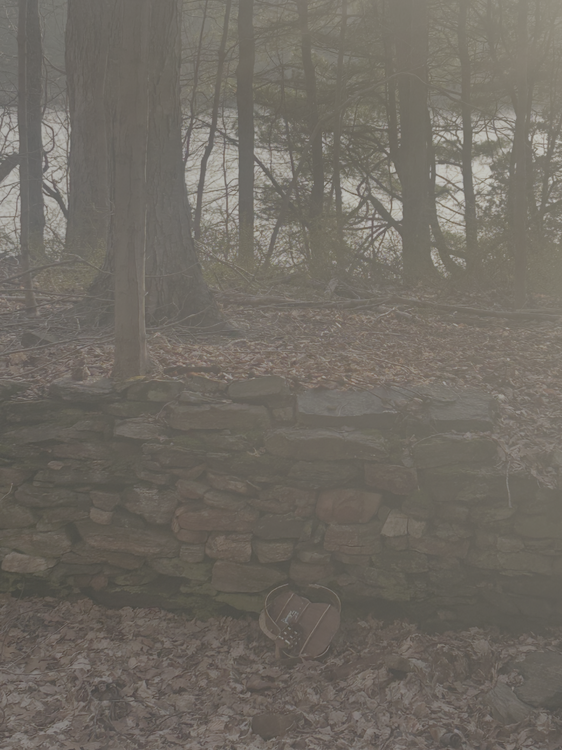
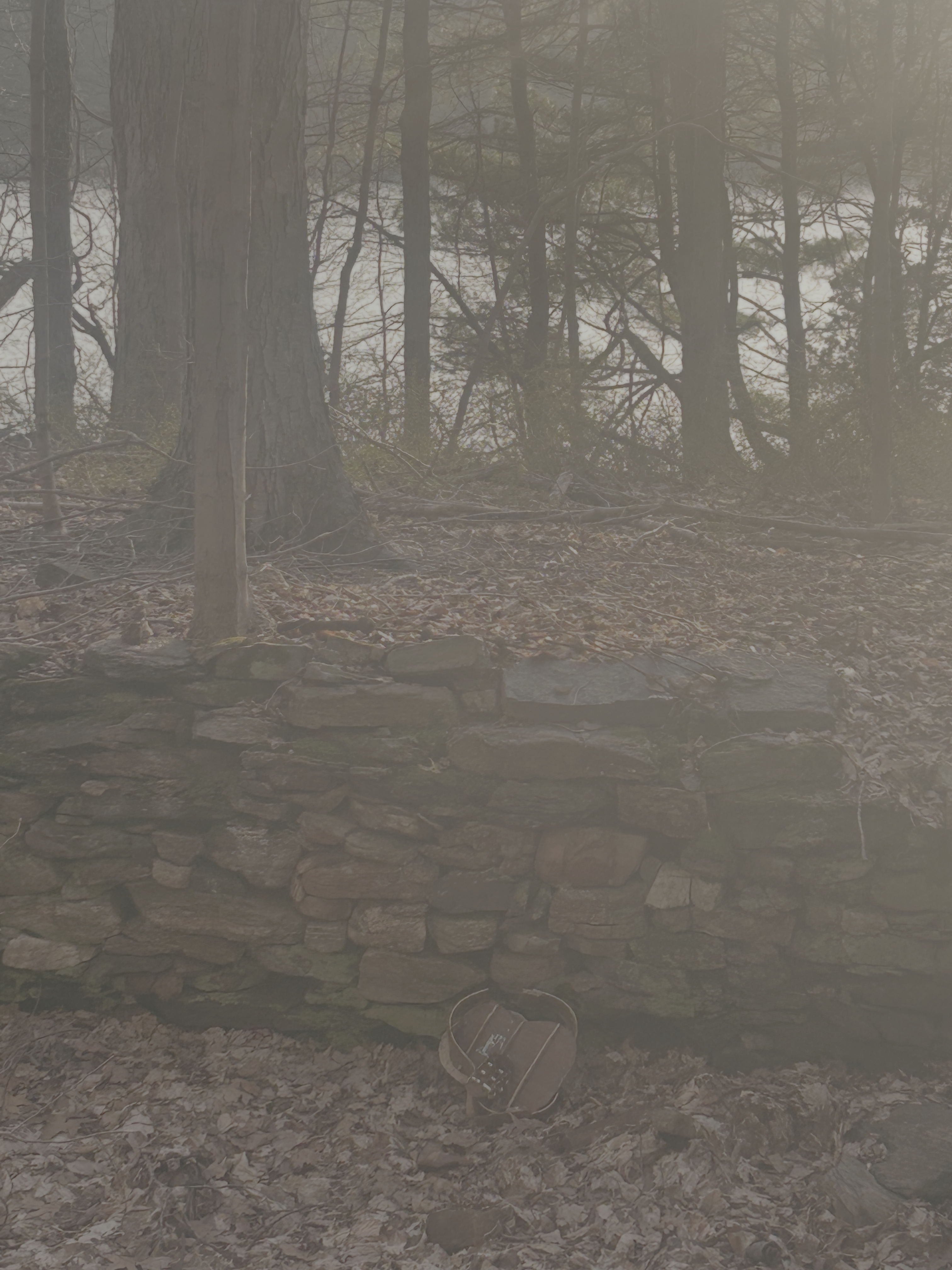
Written for the 2026 spring Young composer competition this work for percussion quintet features a wide range of natural and man-made percussion instruments to represent the integration of man and nature. Few years back me, and a few of my friends decided that it would be a good idea to cure our boredom by bringing a already busted up child size guitar meant for learning and to "" sacrifice it into the woods.'' the reservoir is a large body of water near where I live so it was a short distance, which then led to an easy walk into a bunch of colonial ruins where we laid the guitar and watch it rot away. Far deep in the reservoir lays a broken destroyed child size guitar that my sister got for her birthday as a child or something like that it’s been ever since sitting around around in the house and had transfer locations from her room to the living room room to the my room to the wilderness it’s final resting place. My sister never had been fond of performing music in her life. In fact she is quite horrible at it so my parents smartly in intelligently got her a low quality guitar anyways fast-forward a few years later, and I am now experimenting with multi instrumelity. However, though I got fond of extended techniques, playing it like a hammered dulcimer and even bowing the thing after me becoming friends with the lead guitarist to my modern day chamber band sort of situation, he starts to play it and at that point it only had two remaining strings. We all anonymously decided that we should bring it to the reservoir maybe hide a secret note in it after all the band was just a bunch of board teens, wanting something interesting to do with our lives, so what ended up happening was we snuck into the Reservoir found a foundation of an old colonial house and threw the guitar in it other than impact damage ever since the guitar has been rotting away however, though quite often me and my friends still visit it’s resting place only to see it in more final pieces I’m pretty sure I got rid of the note since it had some secrets that I do not want people finding and still to this day. It’s been resting there ever since. Percussion five has a lot of handmade instrument specifically for this work . The alcoholics shekere; is just a bucket with crushed up beer, cans, or soda cans is meant to be played in a similar style to a traditional shekere . the facidrum; faci- Latin for bundle, a bundle of resident sticks attached and tied up to a frame . Chopping block; a semi resonant piece of wood meant to be played like a table and a practice pad All of the other instruments should be self-explanatory Keep note that since because this was written in musescore bunch of playback loopholes has been exploited, although that there are more than five staves these are to represent each instrument in the set up rather than the actual part parts of represented by the groups that are bracketed. This is to create custom percussion set ups, and to satisfy an easier workflow with sound fonts. ' Sacrificed to the wilderness.mp3 Sacrificed to the wilderness.pdf
 1 point
 -
1 pointHallo @interlect , that is a good question. Honestly, I also never heard about „Counter-Melody“ or „Twin Melody“. However, since I’ve always use counterpoint when composing, possibly I can explain something about. First of all, the “reviewers” who have concluded that this piece is not counterpoint may be somewhat surprised, since the piece has a “jazz” or “big band” feel that one doesn’t necessarily expect when looking forward to a piece performed on an organ, a piano, or perhaps by a chamber orchestra. But that kind of „style“ is not the issue. Counterpoint is not a style of music or related only with a certain era, namely the Baroque time. There is, for example, a Russian composer, Nikolai Kapustin, who wrote always in Jazz „style“, including 24 preludes and fugues in Jazz style, which – of cause – apply counterpoint. So, counterpoint is a composing technique, rather than a style: Counterpoint, or polyphonic music is all about voices that form rhythmically and melodically independent (horizontal) musical lines. When two or more such voices occur in a piece of music, they interact with each other, following certain contrapuntal rules and thus creating harmony. Since all voices are equally carriers of the melodic and rhythmic material, there is no specific melody voice and no subordinate accompaniment, for example through (vertical) chords. While singing independently, the voices do not have to be completely unrelated. Often, one voice repeats or imitates what another voice has sung before, as is the case in a canon, for example. Counterpuntal compositional technique fascinates with its efficiency in the use of thematic material. Once started with the (fugue) subject and the „accompaniment“ in the other voices (which is, in fact, no accompaniment but material being developed in interaction with the subject), there is enough material with which to compose without having to stop and reflect. To come back to your example: To me, it’s inherently a typical jazz piece based on a chord progression over which the band begins to improvise. In a chord progression, the vertical approach—that is, the chords themselves with their harmonies—is the fundamental compositional or improvisational technique. The melodic material follows these harmonies and generates the horizontal lines as a result of them, rather than as their original idea. And even though your two brass sections interact with each other in a kind of melodic dialogue, I get the impression that they are engaged in a “playful competition” to see who can deliver the better improvisation over the underlying jazz harmonies, rather than developing a “subject” or thematic material. There’s nothing wrong with that, and I really liked the piece, but it is also for me no counterpoint, and the other classifications like “Twin melody” or “Counter-Melody” (which, as far as I know, aren’t clearly defined terms) seem to be an attempt to express in a single word what I’ve tried to explain in more detail.1 point
-
1 pointHello This piece is fantastic. It sounds very modern in many ways: dissonances, harmonies, dense textures, etc. But it retains a Baroque spirit. Bravo.1 point
-
1 pointI like this, Tristan! As good as anything I can do for piano. You have followed me for long enough to know that I can't even play piano, but are those rapid chromatic glissandos possible? Maybe they are, some special technique; never really looked into it. I write very conservatively for piano.1 point
-
1 point
-
Probably more of a visual reminder to bang on that note...might've overdone it with those markings1 point
-
1 pointHi @Fugax Contrapunctus! Very cool idea! I actually do something like this harmonically speaking in my Variations on "Deck the Halls" for Piano and Orchestra. I cycle through the whole circle of 5ths twice over before returning back to the home key, although it's not a canon. Very effective orchestration here, starting with just strings, adding woodwinds and then introducing the choir - very multi-dimensional approach to a simple repeating canonic structure. Thanks for sharing!1 point


.thumb.png.8b5b433a341551e913a34392660bc95b.png)