August 17, 200917 yr Author So let's remember to write really good 30 second works voer crappy 8 minute works. :) Exactly, why should I expand the movements of the string quartet, which work well as is and sacrifice quality in favor of quantity? Right now the impression I get is that its leaving everyone wanting more, not less. That's exactly the kind of thing I want from my listeners, them craving more of my music. Each movement says everything it needs to say, I would ruin it by adding anything else. And also, thanks for the comments. (And for being just about the only one on here who apparently doesn't hate miniatures or want overlong, overdone, dull developments. If someone wants to hear me develop a theme in a more "traditional" way -- the string quartet is essentially just a giant development of an idea though -- they can listen to my Composition No. 1 for tuba quartet, or whatever else is up on my MySpace that does it. But yeah, not everything needs to be long and super developmental a la Beethoven (as a previous comment of mine was kinda gettin' at).) Your so good. Keep it up! Thanks! I plan on it!
August 18, 200917 yr Author EDIT: Tape4a was kind of cool. But its more about deconstructing a churchymnal and less abstract Just noticed this edit. JR, thanks for the comment. I'd say that deconstruction is a form of abstraction, but then again, no one ever said everything has to be abstract either. I'd say that this is more of a re-contextualization though. In the piece I took the Psalm(s) (or hymn in some cases... the melody has been used in many different settings), created a canon, did some electronic manipulations ("bit crushing", time stretching, etc.) and then layered a few different "thoughts" on top of each other. The piece is really about the counterpoint of those ideas as much as anything. The goal, however was to make something that could be listened to in multiple ways -- one could listen to the manipulation of the Psalm, one of the speaking voices, another one, the listener can combine different lines. Basically, I wanted to do something in which everything is in the foreground and everything is in the background. Also, try listening to it in headphones if you haven't already. If you're interested, the voices you hear are Martin S. Bergmann as Prof. Louis Levy from Woody Allen's Crimes and Misdemeanors, Morton Feldman, John Cage, Henry Miller, and Man Ray (but mainly just the first two). The Psalm you hear is Psalm 134 and/or Psalm 100 (it's also the melody for the hymn Praise God, from Whom All Blessings Flow, possibly more).
August 18, 200917 yr I loved the first part of the string Quartet. I didn't have time to check most of them though...
August 19, 200917 yr Author Nicola, True, but I don't feel like adding anything to this piece would improve it. Myrtle, I'm so glad you enjoyed it! I hope you'll have time to check out the rest!
August 19, 200917 yr Okay, I've just gotten throught listening to the first string quartet, very post-modern sounding. It reminds me of a sountrack to one of those horror/scary movies, but not the 'B' rate, I mean the seriously scary ones like Saw. The style is different and haunting at the same time, but I did like it.
August 20, 200917 yr Author Okay, I've just gotten throught listening to the first string quartet, very post-modern sounding.It reminds me of a sountrack to one of those horror/scary movies, but not the 'B' rate, I mean the seriously scary ones like Saw. The style is different and haunting at the same time, but I did like it. I didn't find Saw all that scary... or good... :musicwhistle: But thanks, haha! I'm glad you liked it and I hope you can check out the rest at some point!
August 21, 200917 yr I've just finished listening to "composition 1" and am very impressed. The piece remained somewhat constant throughout in terms of dynamics and feel but nowhere did I feel bored or uninterested. Somehow you found away to maintain interest throughout. I can't comment technically on how I think you accomplished this (maybe the variety of articulation, textures, and tessituras), but I certainly think that it is quite an accomplishment!
August 21, 200917 yr Author I've just finished listening to "composition 1" and am very impressed. The piece remained somewhat constant throughout in terms of dynamics and feel but nowhere did I feel bored or uninterested. Somehow you found away to maintain interest throughout. I can't comment technically on how I think you accomplished this (maybe the variety of articulation, textures, and tessituras), but I certainly think that it is quite an accomplishment! Well, there is a whole lot of dynamic motion, actually. Its pretty much constant dynamic motion, just maybe not "in your face" differences. Just a lot of slight changes. There are a number of shifting elements in this piece, how the tubas play (adjusting timbre), vibrato, etc., so perhaps it was those subtle, constant, shifts that kept you interested? Either way, I appreciate the comment, I'm glad you enjoyed it, and thanks! @Ticktockfool Are you asking if that's the sound I used to create the piece? Because if so, way off. :D
August 21, 200917 yr Charlie - I agree with your point. What I implied it was a matter of taste and my own aesthetic more than anything "wrong" with it musically. My strategy when I receive this type of comment or give it is to file it in the back of my mind as something to consider in the next composition. Also, such comments I think are a back handed compliment - the material is well liked! But it does make more sense the quartet when you remind me it is a gigantic development.
August 24, 200917 yr Author @composerorganist I gotcha, in which case, thanks. The length of my compositions are determined before I write. This I said "I'm writing miniatures" and I wrote miniatures. Other pieces, such as my tuba quartet or my guitar trio, I said "I'm going to do a longer piece". So I guess I always have that duration comment in the back of my mind. Also, I'm glad it makes more sense. ;) Thanks again for listening!
August 26, 200917 yr Author Hello all, I've just updated my MySpace page -- I added some different recordings to it. I hope you'll all be able to check them out! New Pieces: Study for solo piano Music for Chamber Orchestra Seven Studies and Four Canons for Eight Triangles The recordings aren't the best quality, and the performances have some issues here and there, but I think you'll get the idea. Enjoy!
August 26, 200917 yr The Seven Studies and Four Canons - quite enjoyable. Reminds me a little of Lou Harrison's work with gamelan though the tonal language a bit different. Even reminiscent of some of the ambient work by Eno and Budd. Now is this all triangles???? I swear i hear what sounds like a hitting the rim of a medium size drum. Would you explain more the triangles you used? Also, the studies - are the studies in timbres? I do wonder though how much of it is really "composed" - some of it seems quite aleatory. Would like to know a little about your process. As for your Tape Compositions I enjoy them but very hard to comment as I do not know how to do this genre - but they sound very well prepared.
August 26, 200917 yr Author composerorganist, There are no instruments used other than the 8 triangles -- both players have a 4'', 6'', 8'', and 10'' triangle. The studies are indeed in different timbres, they basically build from movement to movement, adding a new one each time. Some of the sounds are created through amplification, mic's and contact mic's, though no electronic manipulation outside of that was done. I also used different mallets and various other extended techniques (banging them together, harmonics, muting, etc.). Some of the movements are serial, some are "freely" composed, several are based on the triangle rhythms from Liszt's Piano Concerto No. 1. Just about everything is very precisely notated, the only aleatoric elements in the piece are in the last study (second to last movement), in which precise rhythms are free (though overall durations of sections are very specifically controlled). Thanks for your comments, I'm glad that you liked both the triangle piece and the tape pieces.
August 26, 200917 yr Hey Charlie, Man, this is some sick stuff. 7 Studies and 4 Canons for triangles was particularly interesting...I'm currently listening to your Music for Chamber Orchestra, and I like it. :] I like how a lot of your music starts very soft, and the rest of the sound silently emerges from the fog of sound. Not to say that it's not clear; it really is a wonderful effect! Music for Chamber Orchestra sounds aleatoric; is it really just notated? I'd love to see the score sometime; if you ever get a chance, or feel like uploading a score, please do so! Keep up the good work.
August 26, 200917 yr several are based on the triangle rhythms from Liszt's Piano Concerto No. 1. Standard piece in any self-respecting triangle player's repertoire. ;)
August 26, 200917 yr Author @blackballoons Thanks! I guess I like to have stuff build up, haha. The chamber orchestra piece is and isn't specifically notated. The strings, winds, brass, and some of the acoustic guitar and percussion parts are notated spatially within each measure, so the rhythms aren't precisely notated but the pitches are. The rhythms for the plucked piano and part of the elec. guitar are precise, but the pitches are free. The bowed piano is notated spatially as well. Parts of both guitar parts, as well as the entire elec. organ part are notated exactly. Standard piece in any self-respecting triangle player's repertoire. ;) Which is the exact reason why I used it. :)
August 27, 200917 yr Charlie, I'm listening to the Chamber Orch. piece, and it sounds great! I didn't know Dominic conducted (he's played some of my percussion music). I'm guessing you're into the whole Spectral school - some of the opening passages of that reminded me of Grisey, in a good way, of course! I was wondering what the instrumentation was - but now I see it in your last post. Some of the sonorities sounded electronic - I thought it was perhaps an accordion. Now I'm guessing it was organ! I'd like to see the score. I haven't listened to the Triangle piece yet. But, of course, I immediately think of Lucier's piece for solo triangle - Silver Streetcar for the Orchestra....
August 27, 200917 yr Author Cornicello, Thanks, I'm glad you enjoyed it! I don't think Dominic "normally" conducts, he just conducts the conservatory's contemporary ensemble. He is a great percussionist though! I'm not as into Grisey as maybe this piece suggests, haha. Though I am a Murail fan. Perhaps a lot of that sound comes from my Ligeti overdose in my mid-teen years (which I've continued to this day). ;) Full instrumentation: Piccolo, Flute, Alto Flute, Oboe, Clarinet, Bassoon, Horn, Tuba, 2 percussion (one - tam-tam, xylophone, two - tam-tam, vibraphone), Guitar (in 15tET), Elec. Guitar, Piano, Elec. Organ (in 21 1/4tET), 3 violins, 2 violas, cello, bass. The "accordion" sound you heard was probably the bowed xylophone. Lucier's triangle piece, if I'm not mistaken, is a whole lot of rolls, as is the triangle movement from Adams' The Mathematics of Resonant Bodies. I tried to avoid that and do something a bit different with my triangles.
August 27, 200917 yr Charlie, It's Anthony - sorry! Okay, I was thinking of the sonorities that Grisey gets in "Partiels", but sure, Murail gets similar sounds! My dissertation was on Murail's D
August 27, 200917 yr Author Anthony, Don't get me wrong, I completely understand where you were coming from with your comment! Just merely expressing other influences! Either way, I will definitely be sure to check out your dissertation, I looked over quickly, and it all looks quite interesting. I'll give it a read when I have a bit more time to devote to it. Yeah, he definitely is! Great, would love to hear your thoughts! Enjoy the pool! ;)
October 1, 200916 yr Hi Charles. I listened to your study for solo piano. I guess its new? I never saw it before... I liked it, though I do probably not understand it ;) can you tell a bit about it?
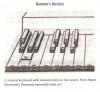
October 18, 200916 yr Author jrcramer, It is about 3 years old. It mainly involves tone clusters in the bottom register shifting dynamics. It was my way of looking at the various sympathetic vibrations on the piano and how different things pop out at different dynamic levels. It doesn't translate very well on the recording though.