All Activity
- Past hour
-
Hi ....................Whats the difference between "Counter-point vs TwinMelody" ? The Track below was submitted for a Counterpoint Evaluation, and came back as Negative, stating that's not counterpoint. A Double brass Section 1: panned left 2: panned right If its not counterpoint is classed as a Counter-Melody ? COUNTERPOINT vs TWIN MELODY.mp3
- Today
-
-
Probably more of a visual reminder to bang on that note...might've overdone it with those markings
- Yesterday
-
Hi all, Here's a short work for string trio. All comments welcome. Mark New String Trio.mp3 New String Trio.pdf
-
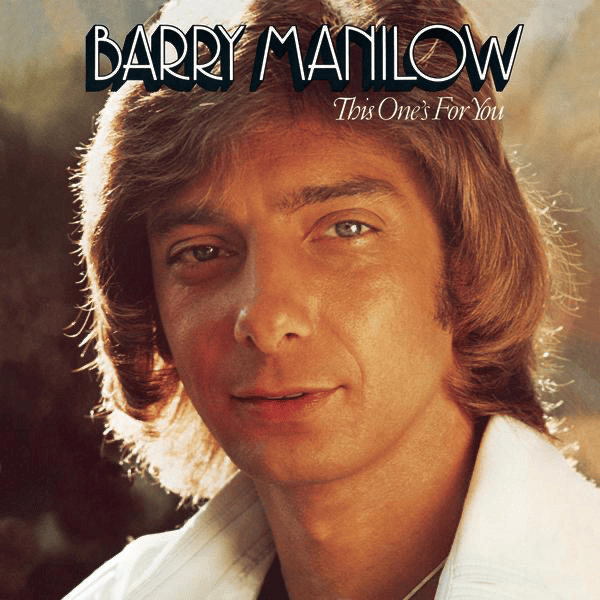
Looks Like We Made it | V.I.P. Symphony Orchestra : Rendition A Barry Manilow Symphony Orchestral Arrangement..................Makes me Cry Every time Barry Manilow - Looks like we made it - Rendition.mp3
-
-
@danishali903 Thank you for your comments; they are very valuable to me. I will certainly take another look at these orchestral versions and keep your comments in mind. However, in general, I believe that during this period—similar to (though distinct from) Impressionism—the conventions of classical or Romantic orchestration do not apply in the same way. Of course, I already suspected that some very fast passages wouldn’t be idiomatic for certain instruments, and that information is very valuable to me. The same goes for playing fast passages in unison on two instruments. However, some doublings that seem unnecessary are there for the sake of color, which, in some cases, departs from classical combinations. This is what we often see in the 20th century. I have a certain fondness for these orchestrations. Because I really like the original piano versions. But they’ve been through a lot. I made them quite a while ago without having a clue what I was doing. Then, when I wanted to revise them, they went through the process of converting to XML, importing into another program... And there are things that need cleaning up. The most important thing is that when I did this, my beginner’s mistakes were very obvious, and I wanted every instrument to be heard in every piece, no matter how brief the passage—hence all the unnecessary doubling and the inconsistencies in dynamics, with too many instruments playing at pianissimo. But I’ve since learned my lesson, and in this very chamber-music-oriented style, you have to be very economical with your sounds. Well, you’ve encouraged me to make a new version taking your comments into account—thank you.
-
The six short piano pieces date from 1911 and belong to the free atonal period, preceding a more “radical” systematization.
-
I was mainly asking, because you sometimes combine sfz or sffz with a vertical accent (e.g. Bar 119).
-
Hi there, TristanTheTristan, and welcome to the subforum of my nocturne! I am really glad you checked it out, and I would say I would practice that part with hands separated first, and then with different rhythms each. By the end, put them together correctly.
-
Hello there, @TristanTheTristan! I see you have written a nice nocturne. I really like the style of this piece, although I may have to question the G sharp minor part's start. I believe that might be a bit difficult to understand and play, but I do like the idea. May you please tell me how you would practice that part?
-
Luigi Boccherii | Minuet : RENDITION + Bonus Track Luigi Boccherii _ Minuet _ RENDITION.mp3 Sympathy for Symphony.mp3Luigi Boccherii _ Minuet _ RENDITION.pdf
-
-
Three Souls, Each with Natures Divided
-
Well, whether or not you wrote specific bowings, you still wrote slur markings for the strings, which to them imply bowing information. Whether or not it's explicit, you can always justify your reasoning as the following; "With the given technicality of the work already demanding high accuracy from the performer, I wanted to take today to test if my orchestration would make the bowing information clear and implicit. For today, I decided to give their bowing instructions based on the slur markings in their parts, and following this session, I will amend and update the bowing instructions on the final copy of the score before its first performance." This essentially covers you in case they ask about it
-
Yes, true...however part of the assignment was to thoroughly mark up the score (that means dynamics, articulations, BOWINGS, etc). We've studied each instrument family in depth to get a sense of the capability of each instrument (what is easy vs hard, how to write idiomatically, what's impossible, etc). We had a whole test on bowings lol
-
-
-
-
-
-
- Last week
-
A Grand and Ghastly Meal in Tartarus (Version II): The Glad Dirge of the Three:
-
Thanks for the comments, Alex! The piccolo will sound an octave higher than written, so technically it is still pitched above the flutes. I agree! I tried figuring out how to do this in Dorico but couldn't figure it out without it looking weird (hence my note). The "vertical" accents denote Marcato. My interpretation is that they are played stronger than your regular accent and are slightly shorter in duration (a half note maybe played as a dotted quarter perhaps)...each note with the Marcato marking needs to be hammered and short-ish. Err...I guess that is subjective and depends on the context of what else is going on in the score. sffz definitely is more "hammered" than sfz
-
With your idea for brass stings on the offbeats, consider holding off until later to do it. We're hearing the melody clearly for the first time, and doing some non-written flourishes would be better for after a clear statement of the theme/ later overall in the work. Present the melody clearly and let it develop to that point for extra changes and hold your cards until then imo.