All Activity
- Past hour
-
Hello @Bjarke! Since you mentioned a few “points of doubt” or areas that could be improved, I have to say that I really liked the piece in its current stage of a „sketch“ and the questions you pointed out are to be taken into consideration, although I would not see them critical. At first glance at the score, I had the impression that the piece might be too repetitive, but upon listening, I feel that the repetitions—with the use of slightly variations—are used effectively and do not make the piece boring overall. I like the rhythm and the continuously forward-driving tension. I could imagine that a performance by a real pianist would mitigate the remaining impression of monotony and mechanicalness, since a human performer would naturally bring more variety in articulation, dynamics, and tempo, as is the case in the current recording! As for the score, from a pianist’s perspective, I would feel uncomfortable with a number of passages where too many ledger lines are used, making them difficult to read or even unreadable. And I believe I have spotted a few places where the chords of the left and right hands overlap, i.e., play the same notes (for example, in measures 49, 50, 85–88). Correcting this would actually simplify the score.
-
Hi everyone! I'm currently working on a 4 movement Piano Sonata in E minor, and I've already written the first movement, at around a little over 10 minutes in length alone. Im 15 years old, and although I'm a classically trained pianist studying at the peabody preparatory, I'm a self taught composer, so I'd appreciate any feedback on notation, structure, and really anything else that could benefit the piece, which could help me refine further. The piece is in sonata form, with the A and B themes in the exposition both lasting from m.1-163 (A - m.1-82, B - m.83-163), a development section (with a brief 24 measure Fugato on the main theme from m.21-37) lasting from m.164-219, and then the recap from m.220-293. The piece goes through many modulations, occasional complex polyrhythms, chromaticism, complex late-romantic/impressionist harmonies, cross-staff textures, delayed resolutions, distant key relationships, using "deceptive" major keys, and it ends the exposition in B major, the dominant, rather than G major the relative major. The development begins with the fugato in D# minor, and then after going through A# minor, G# minor, Ab major, breaking the fugato, and E major, it begins the recap back in E minor, moving through a few more keys to finally reach E major in the end. For this sonata, I'm very inspired by liszt (both his more virtuosic showpieces and his more introspective late works), especially with how he uses thematic development and combines "mephisto" drama with lyrical spirituality. In the beginning of my piece, you have the main motive of the entire piece, what I call the "B octave motive", since it's just octaves in both hands repeating the note B, but this single motive (both rhythmically and melodically) can be found in almost every section of the piece, from the tempestuous A theme, to the spiritual, watery and flowing B theme. The polar opposite contrast between the A and B themes creates both immense technical and musical demands for the performer, while still being idiomatic. Additionally, many of the ideas in this sonata, come from my own improvisations over the years, which I think helps give me a little bit of a distinct voice, but I'd like to know the perspectives of others. As I already mentioned, all feedback is appreciated! Note: the first link is me playing a slightly cut version of the exposition, and links 2 and 3 show me playing the parts I cut out from the first link. Links: https://youtu.be/MyptBsYMNiw https://youtube.com/shorts/-kIa8oVrUg4 https://youtube.com/shorts/_eLFRSilBzs https://youtube.com/shorts/_lOHz4Nz5qE https://youtu.be/qlEPGqwAq64 Piano Sonata in E Minor - Full Score.pdf
- Today
-
Yes, reviewing sketches or “unfinished works” is easy—you start by taking a quick look to spot obvious “mistakes” or answer the author’s questions. But I think one should be honest. Reviewing compositions—as is the case here in the forum—is inherently somewhat “unfair” due to the unequal conditions: On one side is the reviewer, who generally spends no more than an hour on a review (in most cases, even less). On the other side is the composer, who has literally spent dozens of days or even weeks working on its piece and therefore knows it in incomparably greater detail than someone who has only listened to it once or twice. That is why it is much more difficult to provide feedback on “finished” works if one tries not to look for mistakes and does not want to suggest changing anything fundamental about the piece as a whole. A review can therefore only be a kind of analysis (and that is exactly what I did when I went through the fugue and identified the expositions and fugue entries, etc.) or a description of the impression the listener had. Thanks. I compared it to the original recording of your actual YouTube video. Yes, they do differ (slightly). But to make an substantial judgment about which “improvements” I’d welcome and which changes I wouldn’t like, I need more time to listen to them. Since the nuances are usually subtle and not noticeable the first time around, I’d add both versions to my playlist and listen to them repeatedly while out for a walk (that is always my method to proof my compositions if there is something „rattling“ …) Thank you for your permission. I can’t promise to work on it in the near future, so let’s see whenever I’ll have the time.
-
Very true! Actually, as a fun fact, I have begun my journey with the Organ and have been taking lessons for it since the New Year. It was the first time I played on the organ here in our university’s concert hall. Thank you for sharing your story; it’s crazy to think how small the world can seem and how similar our experiences may be. Bb-minor just felt right at the time :)
-
Hello Mason! I can well imagine how much you enjoyed having the chance to play such a magnificent instrument that literally fills the entire hall or church. And—even though you’re a professional pianist—I don’t think playing the organ is your daily routine, so you took the opportunity to improvise, record a video, and share it with us—thank you so much for that. A few years ago, I also had the chance to try my hand at playing the organ—at Gethsemane Church in Berlin. And I recorded a video as well, but—given my piano skills, which are “barely good enough for playing at home”—I can’t post it; that would be too embarrassing for me and others … What I learned is that while the organ is indeed a “royal” instrument, it is also a “diva” that, despite the magnificent reverberation in a church, forgives no mistakes in articulation, and that it is very difficult for a piano “player” to play legato consistently without the support of a sustain pedal. What I particularly appreciated was that you’ve chosen the key of B-flat minor for your improvisation. For me, this key is one that expresses solemnity, and perhaps also a kind of sorrow or suffering. This impression is particularly influenced by the preludes and fugues in B-flat minor from both books of The Well-Tempered Clavier (where the famous fugue from the second book was one piece I tried to play at that time, along with one of my own fugues...)
-
Hard to believe I was 28, half my life ago; 57 now. 😶🌫️
-
I think I wrote it, drawing the music staves onto blank paper, in some doctor's office in the '90s. ba Free Sheet Music by Robert C. Fox for Violin and Piano/Keyboard | Noteflight
-
Dance Segment For Guitar Free Sheet Music by Robert C. Fox for Acoustic Guitar (Tab) | Noteflight
-
Bipolar...I commiserate! 🫠
-
Listening and editing...that first movement could be called sonata in f# minor!😆
-
Hello everyone, It's been a few months since I wrote anything. My last cycle on Laforgues poems had left me a little dry! But this poet has not said his last word and continues to haunt me. So here is a new piece, black, full of soot... Note, you can activate the subtitle in English. Good listening. https://youtu.be/jXMz3lu6Jfk?si=tYOpdEBtnVSJVlfe
-
It seems you haven't attached anything since you posted? I'd love to hear/see how it sounds if you get around to uploading some audio or sheet music!
- Yesterday
-
Sebastian Guzman joined the community
-
Thanks for listening. The analogy of crossing an event horizon is within love itself. The unescapable point of no return
-
Thanks! It's fun to try to include little witticisms or humorous moments while still folding them into the piece so that they sound "good".
-
Excellent! Could have been played after dinner at court with Joseph II. I would get in trouble, throwing some whole tone chord in or 20th-21st Century surprise of some sort! This has a great purity but also sense of humor about it. I haven't listened to the middle movements YET, but I'm sure they measure up. Reading your comment just above about the oboe getting off on the wrong stop and having to get back to key...I do that all the time. It reminds me of when I'm playing bass to my brother's guitar, covering classic rock, and we go into a jam...and train wreck, or near train wreck, but we chromatically wrench it back into key...there's a part in the piano sonata I'm working on that does this sort of thing, many parts, actually, but one in particular. Your last movement Presto does this well and sounds like something Wolfie might have done; perhaps in a fantasia or musical joke?😉 Oh yes, I realized why it had to be in Bb!
-
Thanks very much for listening, and for your comments! It's probably because I'd been listening to so much Mozart before writing this that I included two minuets instead of making one a scherzo - but I also think the last movement provides that scherzando feeling. I'm glad you noted the modulations in the last movement; I got a kick out of writing that bit, as if the oboe realizes it got off at the wrong stop on its chromatic scale and then it takes a few tries to figure out how to get back to the right key.
-
Hi Sam You have created a very strong melody within this track, and its quite adaptable to different versions too. Created 2 Cover-Renditions of it in a "Vienna-Strauss" + "Hollywood-Big band" sound be interesting to hear your vocals with these versions, easily done, if you want to send them to me via personal message, and ill mix them into the alternative version, i cant read music , so this isn't 100% perfect, but an alternative-version, to your Great Song. I'll TUCK MY SOUL IN CORNERS DEEP - Vienna-Strauss - Version.mp3I'LL TUCK MY SOUL IN CORNERS DEEP - alternative BigBand Version.mp3
-
Warborn orchestration draft 3 08-04-2026 - Flow 1.mp3 I orchestrated my piano sketch called "Like a clock work" and re named it to Warborn which i thought where more fitting title. Here is the orchestra version. Thanks in advance.
-
Hey @Aiwendil ! Nice job on this elegant classical work! I would have called this piece "Divertimento in Bb for Wind Octet". But no matter - very enjoyable nonetheless! I love the unexpected discordant moments in the 1st movement! The 2nd movement almost lulls me into boredom, but soon enough a contrasting section brings renewed musical interest. The 3rd movement to me sounds like a peaceful countryside carriage ride. I'm surprised that you included two minuets in this Divertimento. I would have opted to write one minuet and a scherzo for variety's sake. But it certainly is vivacious and full of positive energy! The Presto movement is probably my favorite of the bunch! It's very scherzo-like with its constant sudden dynamic surprises. Another thing I wanted to mention is that the whole work is very well proportioned! Each movement is about 5 minutes long with no movement being more important than the others. Great job and thanks for sharing! I enjoyed it thoroughly! P.S.: I really loved the funny modulations in the last movement! They're full of Mozartean humor - almost like those polytonal moments in his Musical Joke! Thanks again!
-
Hey @jejrekmek ! You have such a unique style! Either that or I'm just not too familiar with your influences. Your recordings are amazing. The only thing I wish you included is lyrics to follow along with as I find it hard to understand the words in the recording. It's amazing that you got this performed and recorded so well! It seems so eclectic and eccentric. I'm not even sure how many performers are in this recording and what the instruments are. But I enjoyed it thoroughly! If only I knew the words I could enjoy it all the more deeply! Thanks for sharing!
-
Hey @skvlkin ! Nice arrangement! Since the usual range of Soprano singers starts at middle C and given that you're arranging this for a middle school choir, it might be advisable to transpose the whole thing up to C minor instead of Bb minor. That way all your low Bb's would be easily reachable by the Soprano soloist. And there doesn't seem to be any really high notes in the piece that would prevent your from transposing it up because of the high range. Also, C minor is a much easier key signature for the middle schoolers to read. That's my only advice and it's coming from someone who doesn't really know too much about voices himself. Thanks for sharing!
-
Hi @Fruit hunter ! Quite an interesting work full of extended techniques and giving each section of the chamber orchestra interesting parts - including the Violas! My only gripe as a composer and listener of your work is that in this case it seems like there is no justification or musical reason for any of your gestures. The piece seems to be made up primarily of interesting ostinati and various syncopated gestures. This somehow manages to create some musical interest. But, for my own taste, I prefer the musical justification for a piece's existence to come from the themes/melodies which from my perspective, this piece doesn't have. Still, it does work - and I could definitely imagine it as programmatic music for the approach of a black hole. I don't see the "falling in love" theme as very fitting to this piece though. But an approach to a black hole definitely could work. Thanks for sharing!
-
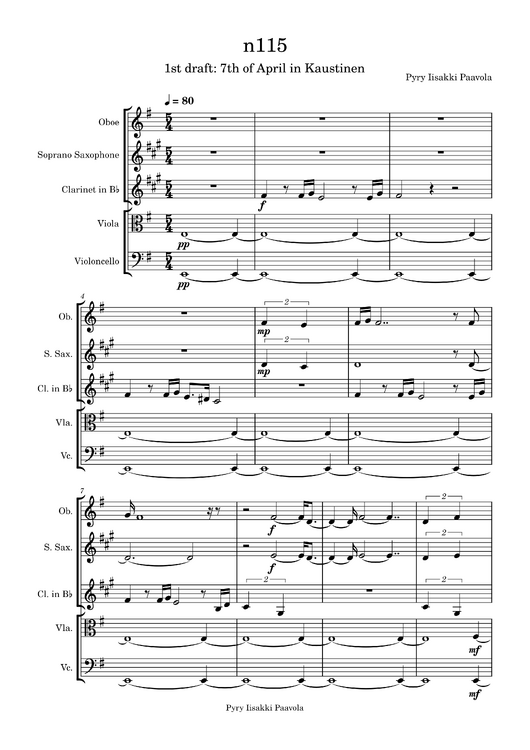
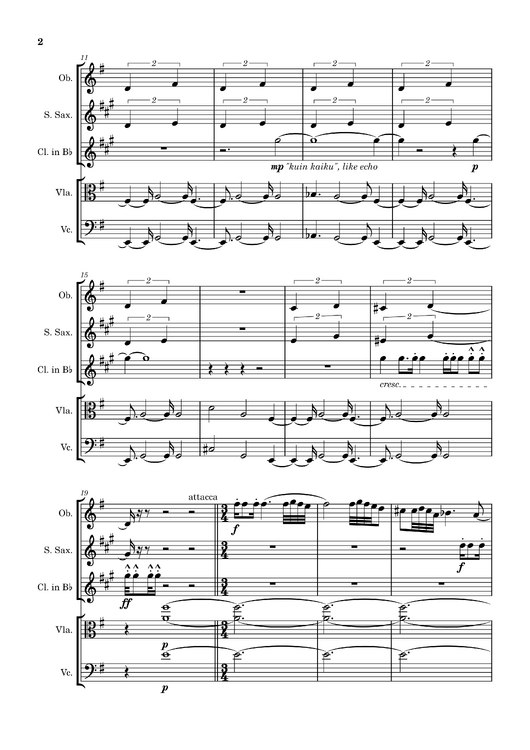
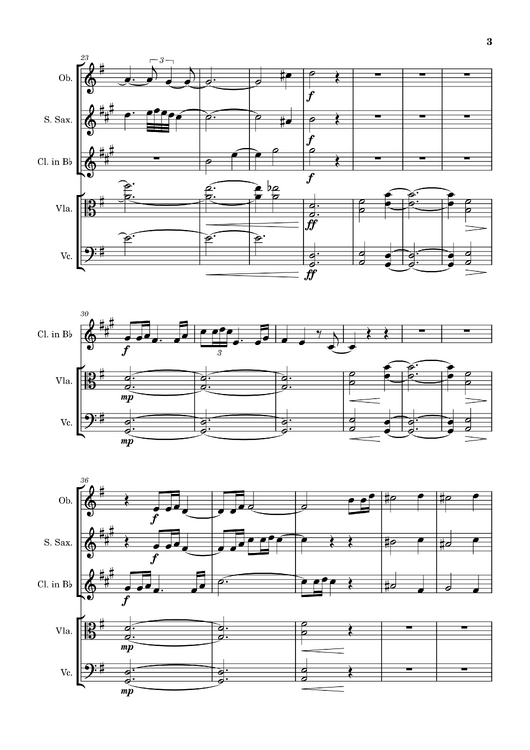
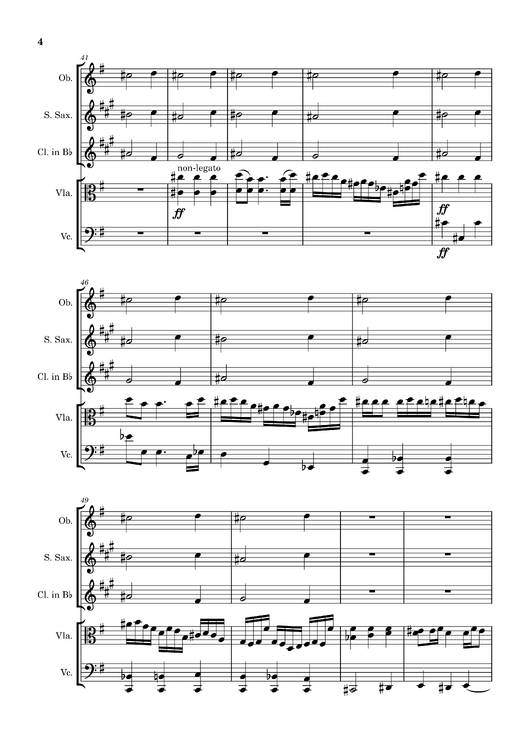
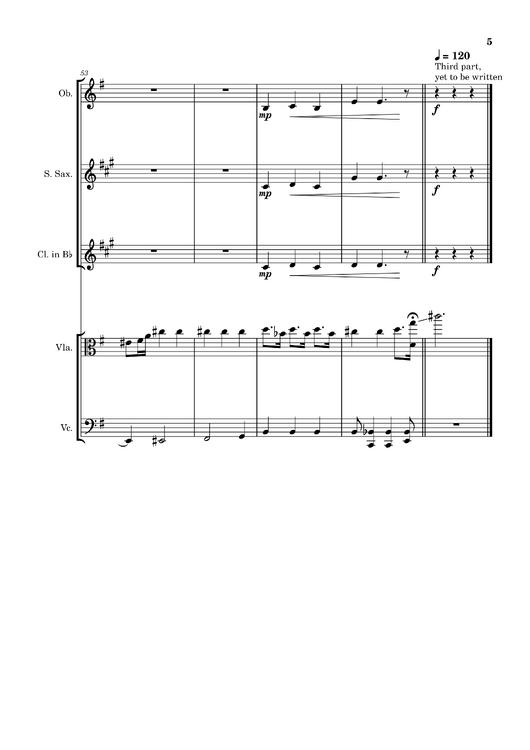
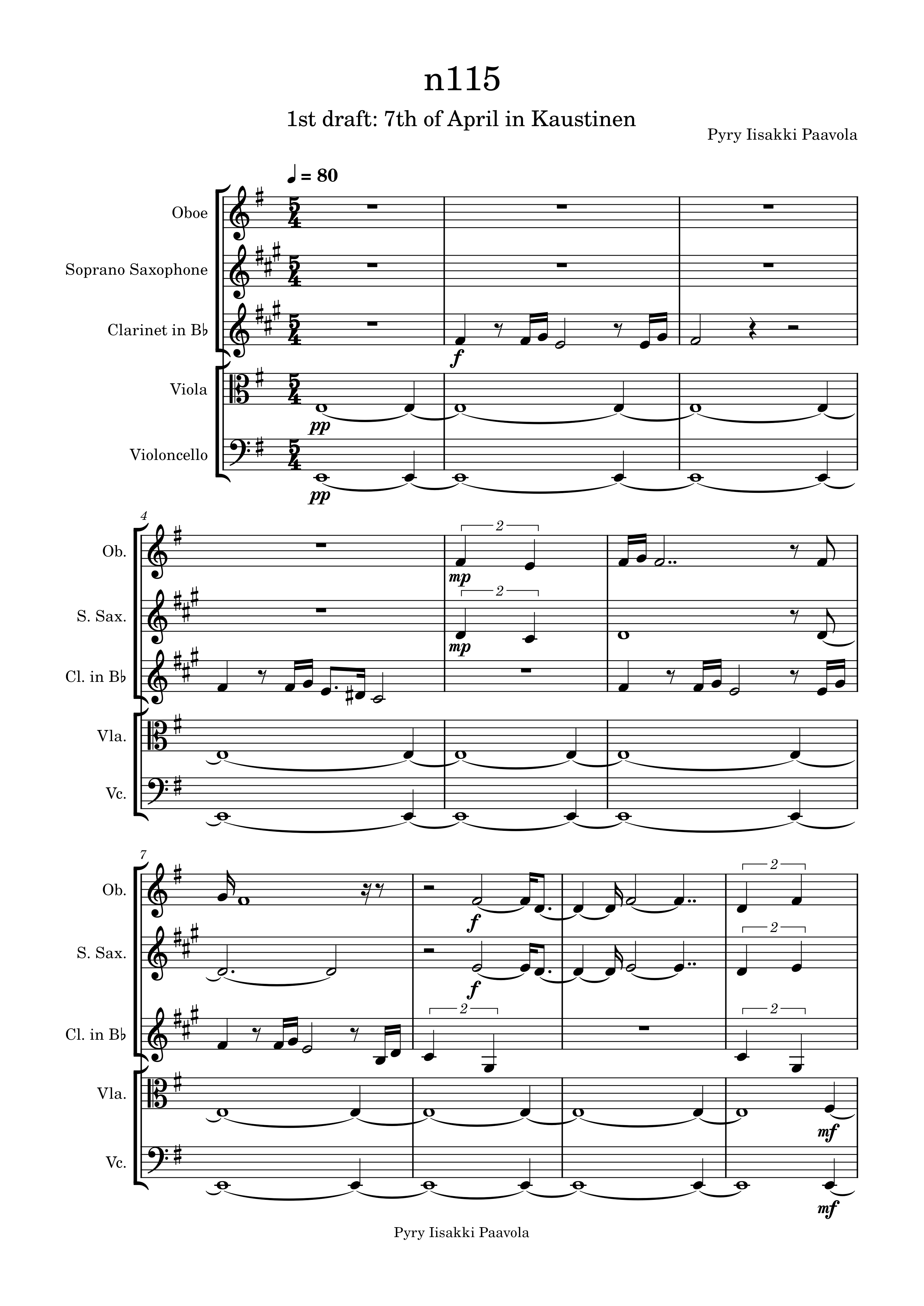
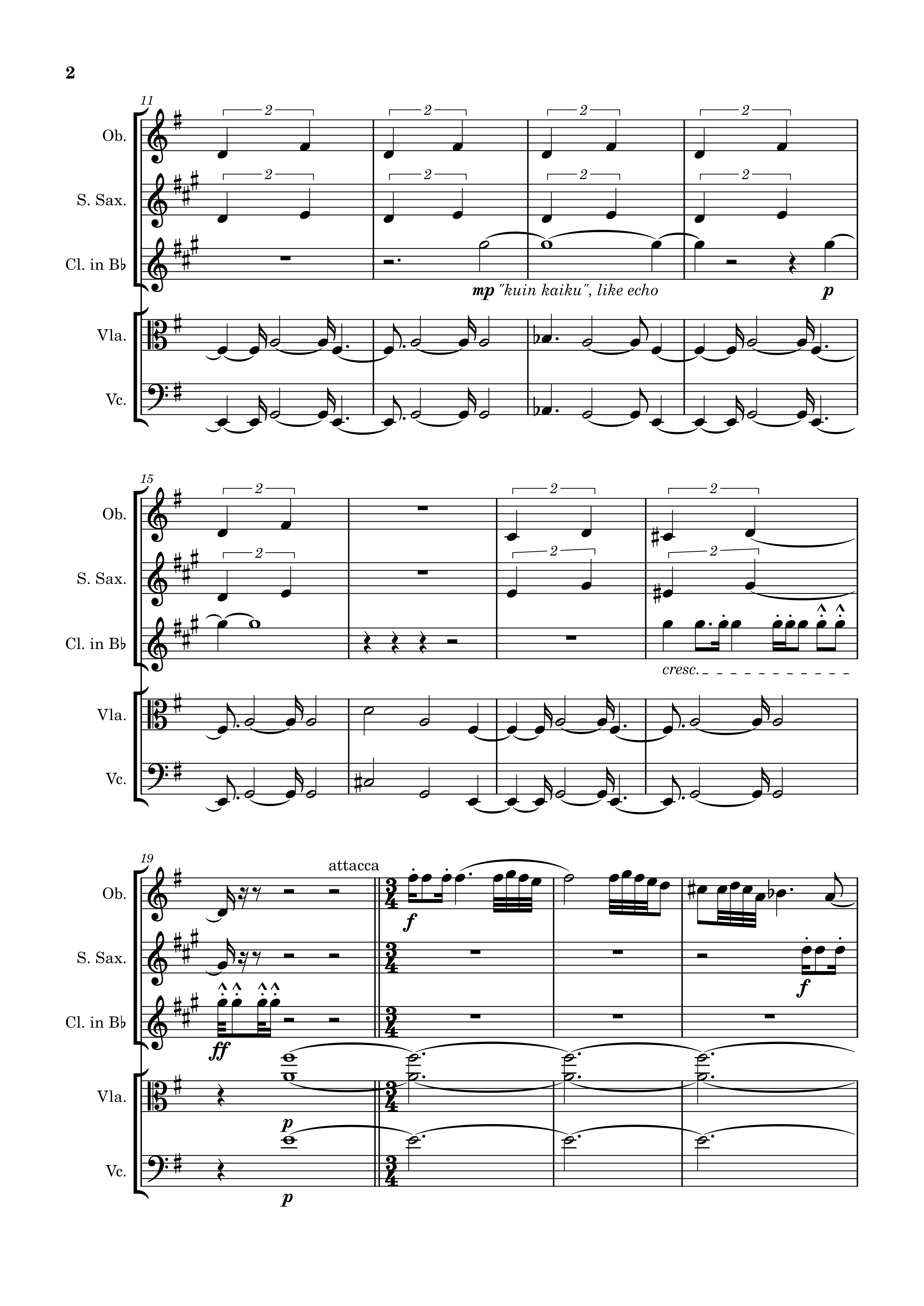
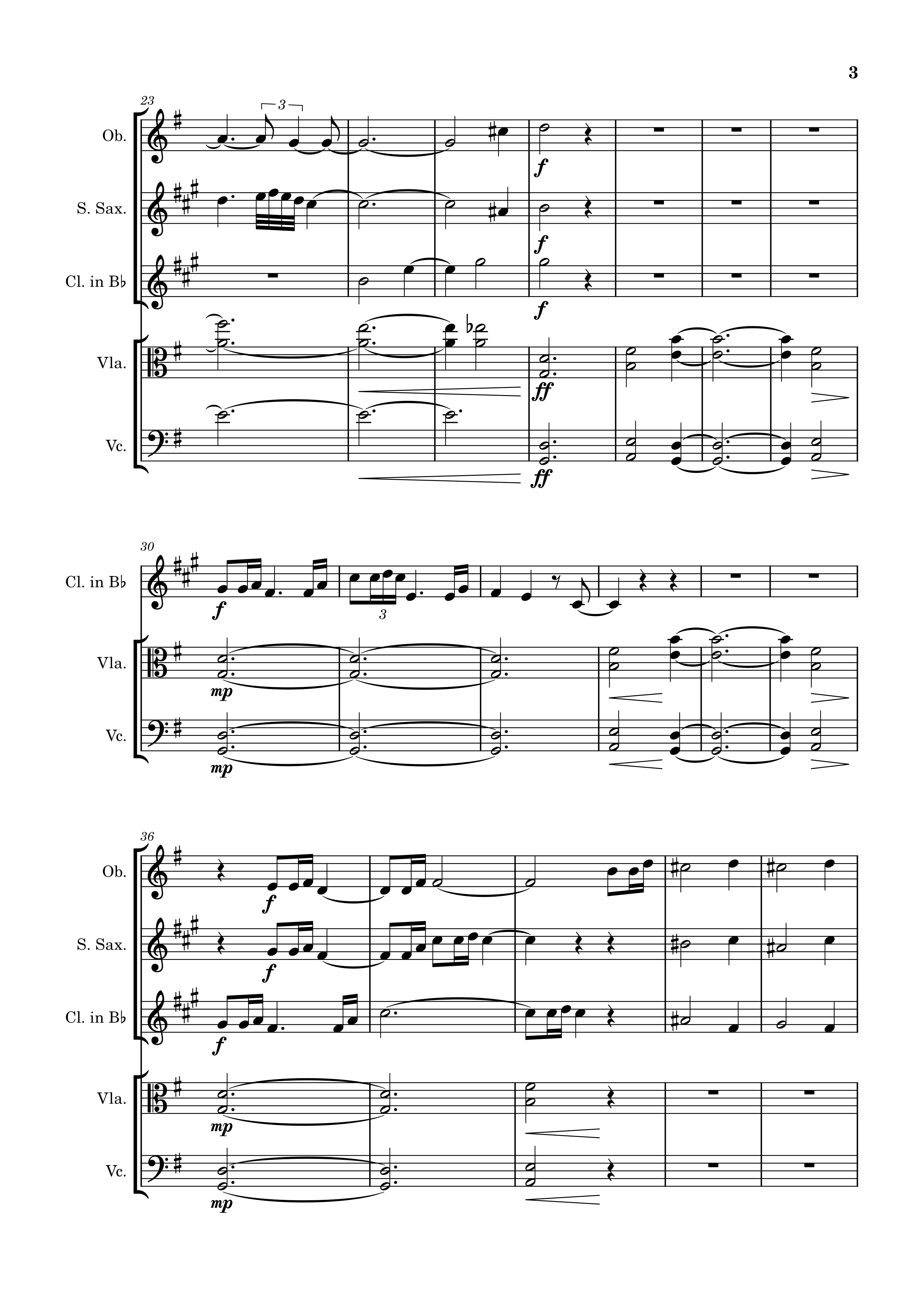
Linked to the following poem (or a cluster of poem around this in my notes, but this is in the same topic): https://poetrycircle.com/forum/threads/28-criscee.136779/#post-1104086 This is a work-in-progress, I ran into a wall with ideas. n115.mp3n115.pdf
- Last week
-
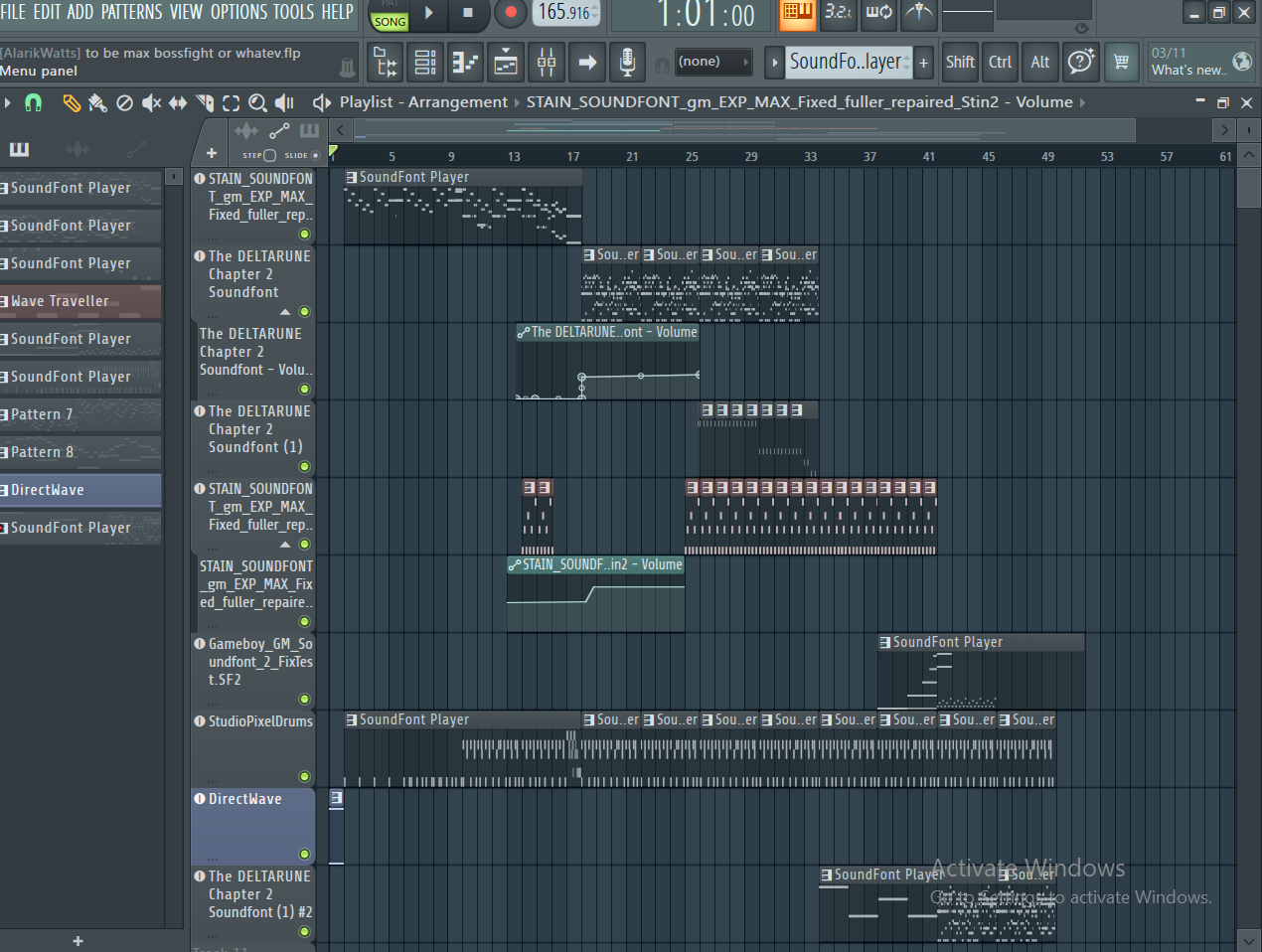
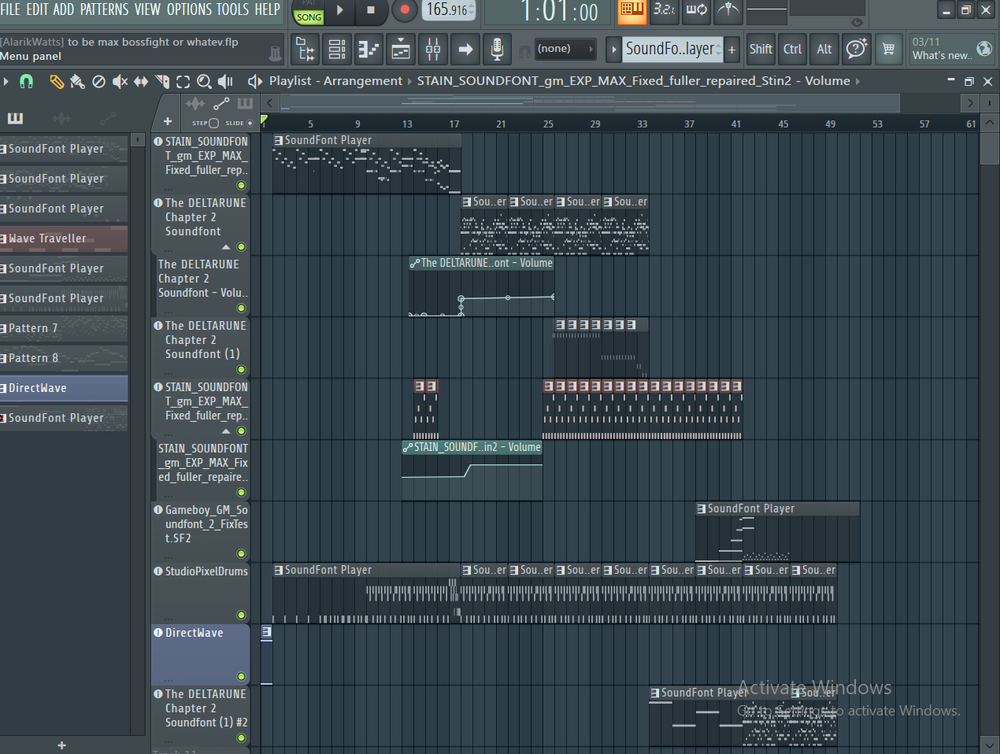
Things added: bass distortion turned down- key change and second chorus- effects to various instruments- bossfight progress 3.mp3
-
Hi all 🙂 Here's a short study for string trio in a rather oriental mood. Hope it will delight you. Best regards, Marc My Shéréazade.mp3 01 - Conducteur - Etude pour trio à cordes n°11.pdf










.thumb.png.8b5b433a341551e913a34392660bc95b.png)

.thumb.jpg.68de6ce8338a30f9d952280fecad70a0.jpg)