Leaderboard
-
Left Unexplained
Members3Points613Posts -
muchen_
Members2Points100Posts -
Omicronrg9
Moderators2Points589Posts -
Enrico
Members1Points6Posts



Popular Content
Showing content with the highest reputation on 11/19/2022 in Posts
-
Following a relatively long pause in my compositional schedule over the summer, I have once more set myself to work, and to my surprise, my contrapuntal skills haven't been as affected as I would have otherwise expected. Thus I have spent the Halloween eve composing this fugue, based on a previously abandoned yet still fairly recent subject. I would say I'm rather happy with how this one in particular turned out: four different pedal points, two stretti, and a number of episodes I haven't even bothered to count, perhaps fearing that I might come to unfoundedly disdain it as too repetitive. Who knows. Anyhow, here it is. Happy Halloween everyone! Halloween Fugue in G-sharp minor. - YouTube1 point
-
1 pointBy the time Bach got around to composing dances, they have generally evolved into a category of movements with general rhythmic and tempo features that are not meant to be danced to. Bach sometimes even disregarded this - for example in this famous Sarabande. The note values used throughout are so atypical that the given name Sarabande is almost an oxymoron! It's also rare for Bach to add non-dances to a suite, but he did it on occasions. The Echo is an example, and another is the Fugue in BWV 997.1 point
-
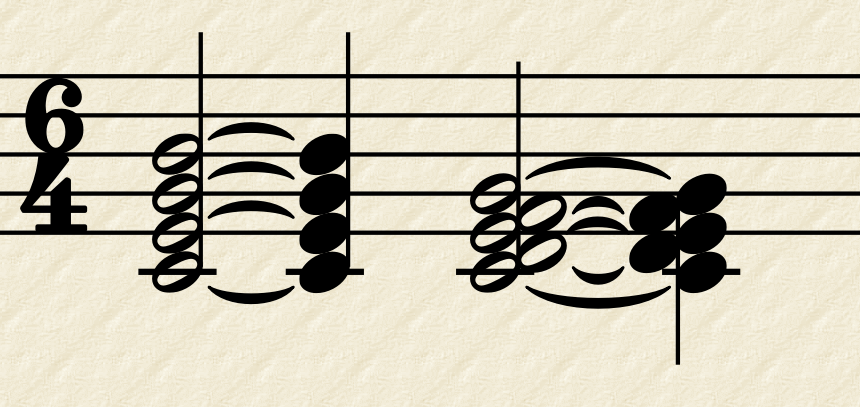
1 pointAh, well that makes sense. A titan as far as I'm concerned in the genre. When will we all realize that Peter is just right when it comes to video game soundtracks. I just started my first plunge into the game, but instantly I'm met with interesting music and genius composition. I'll hopefully continue to update this thread and share whatever I hear as I dive deeper into the game. Back in the day, I played World of Warcraft (cringe, I know) with my roommate at the time, and a particular area featured an instrument known as the Nyckelharpa. Basically a keyed violin of sorts. Very cool. These two do a great job:1 point1 pointTerraced dynamics (and timbre) is available on a dual manual harpsichord. The upper and lower manual pluck different sets of strings giving rise to differing volumes and timbres. Here's an example of a piece which explicitly calls for this. On some harpsichords there's even a little switch at the side which moves one set of plectrums extremely close to the strings, producing a distinctively "brassy" sound often associated with the lute when played. My Scherzo and Trio from the same suite employs exactly this effect.1 point1 pointThat was unexpected, cool and while giving a strong xmas vibe since it's a classical xmas song (according to other comments since I didn't really listen to many xmas carols lol) it had its own "spice", but it ended too soon :(... But I will play it again :). A solid submission in my humble opinion. Kind regards, Daniel–Ømicrón.1 point1 pointI'll go point by point: Okay so a coding language for something specific after all isn't it? I'm sure Unison is easier to understand than LilyPond, I believe this can be seen at first glance either you have experience coding or not right? Let's assume W2 works better than W1 overall. In particular, let's assume that your W2 is better than every W1 out there, in particular, better than the one I use. But it is still an W2 and as you say! I prefer it over W2 because I am literally putting the symbols there. For me (and possibly for many others) this is a great advantage, since we don't have to learn yet another language to write most of what we want. I don't really know that guy but since I don't really use sibelius (I had to use it during a year in a course of musical creativity that was kinda meh, I didn't learn anything, everything was like musescore but kinda worse). Still, I will reiterate that you'll hopefully and most likely get your public because people can share your taste on music score editors and prefer W2 over W1. I must say that the playback feature is essential nowadays —despite some may disagree—, basically because it allows to get a rough grasp of what you've done if you're composing for instruments you don't have (to put an example of how that can be useful). Yeah this is why I prefer W1 over W2, the feeling you get with with W2 is similar to the feeling I get writing with W1. But this is subjective anyway. • 1st example: good, probably not doable (or not easily doable, perhaps via plugins) in musescore (yet). Useful in certain situations for what you mention but can I decide whether that happens or not? If the answer is yes, then I will say "it's more precise". Otherwise it's an aesthetic choice that may improve readability or not depending where the beam is written. I like the choice in any case. • 2nd example: good too, seems like a 6 die face, but this is basically the same feature you did show me in the prior example. I would say this would have been a better example. • 3rd example: same feature but nice to see it applied to other contexts. • 4th example: also good and this time it's a different feature I guess. You'd need to do some tricks to get a similar result in musescore to get the second group of ties right: , specially the E tie needed manual edition. Perhaps, though I'm not against brackets I suppose it is better that way. These are really good examples of your software! Well most scoring software has plenty of customizable keyboard shortcuts anyway. I mentioned that I might be faster than the average unison user using mouse but I am kinda faster on the keyboard as ABCDEFG literally put a note of the selected duration (via numbers). Adding harmonic intervals on top or under the note you're working on is really easy too, just Alt+Number & Alt+Numpad correspondingly do the work. There're certain functions in which I think the direct interaction with the "visual interface" will be faster and more efficient. However, that doesn't mean I disregard this software, I would consider it a neat addition to my usual way of composing, not just because of the visual improvements (as they should be achievable by the both W1 & W2 approaches) but perhaps for editing certain parts. Thank you for the detailed reply. I believe this plus a good playback feature, plus other famous audio format export/import function would be really good for the successful diffusion of Unison as a serious and stable competitor against the big brands that nowadays dominate this specific market. A great advantage you have imo is that your software, apart from its features. has an affordable affordable subscription price, though there's not a lifetime license is there? Kind regards!
 1 point1 pointthank you for carrying on a tradition! I forgot about it, glad to see you're carrying the torch. And thanks. I had to mix it up! Yeah I mean I guess I've grown quite used to my own harmony and theory when it could be a bit of an acquired taste (the last chord). as I said the countermelody was from a music box decoration my family had growing up that played white christmas (v I ii iii) so I just kind of ran with that. It was fun varying it in the first verse and extending it in the second, kind of cathartic to complete a musical idea that's been in my head all these years. Thanks for the kind words and keeping this forum as active as it should be!1 point1 pointThanks ! It is a mistake, hahahahahaha, I don't know why but when reading music my brain loves to see that G note in the bass cleff as A for some reason. Thanks for pointing it out. Yeah, I mean like those, they are all over, since the very first measure there are parallels in the last beat. I usually trust my ear for these things (and I think it's ok since I made sure the fundamental skeleton of the counterpoint checks out), but I like to hear other peoples informed opinion about it because I don't know any musicians in real life. Thanks!! I will post more, I really want to participate more in music communities, so far I have been studying music for years without engaging with other musicians. I hope I can contribute with something someday.1 point1 pointawh thanks brother. Yeah I made it as a joke for my family then decided I actually liked it 😂 might try making real operatic sounds more often. thanks idk I find there to be an interesting pull from bIII - I. Thanks man, always appreciate your warm reviews around the forum.1 point