
Leaderboard
-
PeterthePapercomPoser
Admin5Points2,955Posts -
jawoodruff
Old Members4Points4,233Posts -
Thatguy v2.0
Moderators2Points1,353Posts -

Henry Ng Tsz Kiu
Moderators2Points3,141Posts
.thumb.png.8b5b433a341551e913a34392660bc95b.png)



Popular Content
Showing content with the highest reputation on 12/06/2022 in Posts
-
3 pointsI found this completed Etude in my old archives from probably at least 10 years ago and decided to publish it here. I wrote it in the sequencer back before I started writing all my music on paper. I also wrote it during a period where I was writing more avant-garde or experimental music so it's in quite a different style than usual. It should definitely be possible to play but I haven't actually sat down in front of a piano and tried to figure out the fingerings which are likely to seriously contort the hand. I didn't purposely write it to be really difficult - it just turned out that way (it is definitely beyond my own abilities on the piano). It should be possible because there have been plenty of etudes that require the pianist to play scales in 3rds with each hand. In this piece the 3rds also sometimes expand momentarily into larger intervals which are more difficult to play in parallel. Anyways - I hope you enjoy listening! I tried to make the score as nice looking as possible and if you notice any mistakes please let me know! I welcome any of your feedback, criticisms or observations! Thanks for listening! Edit: I added an updated mp3 of the Musesounds rendition, which I will probably be doing with many of my old pieces that can be improved in this way.3 points
-
1 pointHello! Would anyone mind listening to my latest composition above? I'd particularly love to hear the thoughts of woodwind players as I'm unsure about how difficult it would be to perform. The instrumentation is piccolo doubling flute, oboe doubling English horn, B flat clarinet, French horn, and bassoon. Thank you!1 point
-
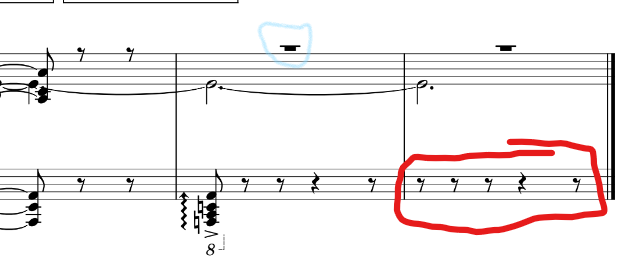
1 pointWTF my brain hurts after trying to visualize myself playing this little étude. The piano soundfont has room for improvement but that's obvious. My only serious criticism is this: Apart from that, some pedalling is questionable unless you want to create pure chaos which is perhaps the aim. This is something that would need in-depth study at least by me and the motive that drives the entire étude is catchy. Thank you for putting the link in the chat 🙂. Kind regards, Daniel–Ømicrón.
 1 point
 -
1 pointAn etude is a type of musical study -usually for a performer. For modern uses of the form, however, we often see composers utilizing the form to tackle different compositional obstacles that deal with 'voice' or 'technique'. That said, in following with the historic usage of the form, I decided to write a series of etudes to provide vehicles to explore fusing differing modern techniques within my own musical language. I'm only sharing this on here at the request of @Thatguy v2.01 point
-
1 point
-
1 pointThanks! Yeah the idea was to add more and more voices as the piece went on. I wrote it that way with the held note in the right hand in hopes of setting the piece up for a transition into a slower contrasting section, but when that never materialized I just decided to publish it as is. I've never actually tried to learn this piece, so am not sure of how possible/impossible it might actually be to play at the speed required. It is an etude after all so difficulty is expected. Just not sure if that difficulty is blatantly impractical or not. Thanks for your attention and review!1 point
-
1 pointJEEEEEEEZ, this is cool! I love the heavy chromaticism, and I like how you start simple and keep making it more complex towards the end. The ending is very cheeky to my ears haha, with the held right hand note and the low chord. I won't dare try to play this, but would be a great exercise in executing those 3rds up and down Thanks for posting this in the chatbox, I had forgotten about it!1 point
-
1 pointNice job! I like this language. It's kinda Bartok meets Hindemith. I think your use of a dissonant language is well mediated by different kinds of repetition that create motivic associations and rhythmic and harmonic interest. This is very interesting and quite musical! Thanks for sharing.1 point
-
1 pointBeen a bit since I've been on here and figured I'd check things out. I've been busy these days working, writing, and listening to some good music. One of my latest passions has been exploring the music from the 1950s to 1970s (which, ironically, was right before I entered the world). To my surprise, there was some really good non-tonal music written in this period that was NOT serial!! Who would've thought!?! This discovery inspired me -particularly in exploring more with the woodwind quintet. Thus, I present my Divertimento for Woodwind Quintet! Some of my inspirations include the vast repertoire of Tomasi (whom I never knew existed) and -of course- the Bagatelles of Ligeti. The work does feature my typical usage of contrapuntal textures within the opening (which is a 5 part dissonant fugue). This evolves to become more interrupted with a falling motif that is, itself, derived from the fugal material. The second section is more textural in nature -an exploration of my love for hypnotic textures that feature a melodic line that is variated slightly. This section isn't minimal per se, but I do tend to sit a bit with it. The section ends with infusions of the fugal material in an attempt to play with the ideas of anticipation. Not sure if it's totally successful(?) Finally, the fugal material returns in a short, fiery closing to the piece. Hope you enjoy!1 point
-
1 pointHey man, good to see you around again. I'd have to dig through your profile, I can't remember your style from years ago, but it's always nice to see people from back in the day popping their head in once in a while. I don't usually listen to this dissonant of a style, but this captured my attention. I think it's your use of rhythmic and textural devices that keeps me engaged. The fugal A section was really interesting rhythmically, and I like how no one instrument stands out as the lead; they're all equally important. The B section was my favorite part, and what a great contrast. You had a wildly imaginative texture surrounded by strong melodic lines that I think worked really well. Very mature use of the ensemble, it sounded like you were a veteran at writing for winds. Even though you aren't, that's how it came across! I will say that the A section's return felt a bit tacked on, and I think you could have made it a bit longer. Maybe that's just personal preference, but it did feel conclusive. Score looks really nice, I was wondering about some of the enharmonics though. There were some spots where you have augmented 2nds, but maybe that's not that big of a deal? Dunno, I'm a noob 😛 All in all, wonderful piece you have here! I'll definitely come back for future listens, well done.1 point
-
1 pointAll in all a very good, refreshing piece. I think the modern inflections are a nice touch. The harmonic language sounds vibrant and expansive. You write very well for the ensemble. That said, I'm going to puruse the forum for some of your earlier works to see how this stacks up to those. There seems to be an air of maturity here -that I'd like to validate against your other works. I hope to hear more in this style and see you push the envelope a bit more. Thanks for sharing!1 point
-
1 pointThanks very much for your kind words here. I'm glad you got the whimsical nature of the piece -that was definitely something I was going for with this work. Fugue is one of my favorite techniques to utilize. As many composers from the past have stated... polyphonic textures are great arenas to explore. Not only does each line provide interest to listeners... but they can all be discern independently and in contrast within the texture. I also take a more nuanced look at post-tonal music myself. I love the sound of dissonance and I strive to make more accessible works while at the same time pushing my own personal use of more advanced harmonic languages and techniques.1 point
-
1 pointThe opening fugal section is so effective. I find it really hard to compose a dissonant, post-tonal fugue but it's really successful here with its playfulness. That entry of Bassoon in bar 44 is so funny. Seems like no other instruments want to join him (an old grandpa?)! All the materials, the slurring fifth/fourth, that repeated note figure in the countersubject are utilized completely in the fugue. The middle section form bar 79 displays a great contrast with the first section. While the first section is contrapuntal and varied, the second one is quite minimalistic, but previous materials does not disappear at all. The falling motive is even more explicit starting from bar 142. My personal favourite is the last section with a double-fugue like fugue, combining the appearance of the subject and countersubject from the first section together. The overall effect is so humorous! I used to hate post-tonal music, but this is one is great!!1 point
-
Yes, you may absolutely share this, I dont mind. Thats odd for the duplication, though.1 point
-
Hey-- First, congrats on your musical staying power! I listened to the first movement. And finished it. For me this is a compliment as I have little time and I usually can't get that far... I think a comment by Omicron sums up my general feeling of the movement: I notice many modulations and ideas coming in and out. Though some are based on the main motive, one could get lost on a first listening. Not that this is necessarily bad, but I feel that the section that begins with the above measures could work alone as a movement itself. I recall from reading when Felix Mendelssohn's father brought a sample of 15 year old Felix's compositions (the piano quartets if I recall correctly) to Cherubini, asking him what he thought- His criticism: Too many ideas in each movement! Focus, develop. Other than that, he recognized a first order genius who would do well. he was right. And so my impression, as an informed listener, is that this movement suffers from to many ideas. While I am convinced you can harmonize anything, and write counterpoint for anything, the real question for any composition is WHY? ( WHY all the modulations? (for example). If things are getting stale, reiteration in another key will only go so far...) As Omicron suggests, focusing on 3 or 4 ideas, developing with an ear towards HOW IT FEELS as a listener would bear immediate fruit. Lead with the heart, not the head. I see you have many philosophical ideas (as did Mahler, interestingly), but music --as any film score composer knows-- is, ULTIMATELY about the FEELS. That is why John Williams is a multi millionaire and _______________ (fill in any academic or late 20th, early 21st century composer) are at best "doing well". Your technical competency is excellent. I would do less to do more.1 point
-
1 point
-
I really love your passion and the amount of work you put into this! I'll touch upon a few points from memory after reading your responses... Investing in sounds I understand why many composers ignore this part. It's the same reason why programmers love to build but hate the debugging process. It's boring! But here is an analogy for you. As a computer engineer / programmer, if I am just building and not talking with the potential customer, and my software is unusable, isn't my obligation to fix the software before I continue building it? Otherwise, no one will use the software. Well its the same for composers, writing the music is just half the battle. Because guess what? The only thing your audience cares about is how it sounds. Most of your audience will not have the critical listening skills that I have, just keep that in mind. So having a really great audio output is extremely important. I clipped a part of my livestream where I talk about nuancing your music, and how important it is. The livestream is over an hour long so that's why I clipped just 60 seconds of it 😂. I challenge you to... Create your next composition with audio output in mind. Keep it under 5 minutes or so, this way you can practice working on your audio. Music Appreciation If you want to become a better composer, the easiest thing you can do is listen to other works! I listen to so much music, not for the sake of becoming a better composer though, but because I absolutely love music. The only reason why I became a composer was because of my love of listening to other works. It's the same reason why I became a computer programmer. Not because I wanted a job, but because I loved the art of creating new things. The more music you listen to (and I mean actually listen, don't just put the headphones on), the more well versed you will become at the art of composition!1 point
-
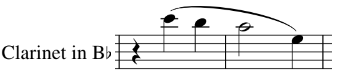
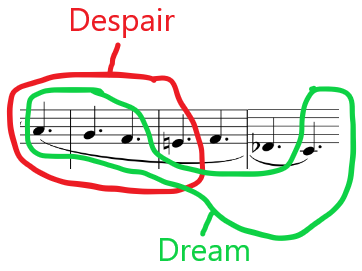
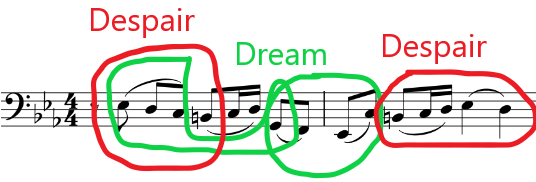
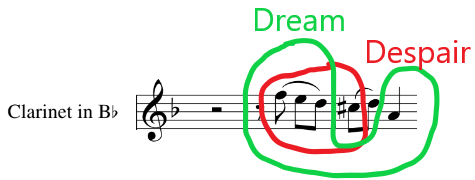
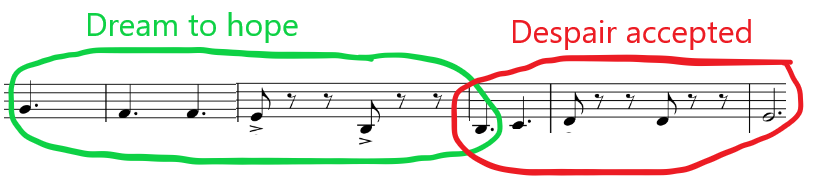
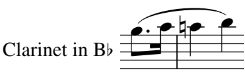
The Design of the Whole Quintet This quintet for me is about despair, dream and hope. I have the first inspiration of the opening theme when I was riding a train, thinking about the despair of humanity and existence. I was thinking about Nietzsche, Kant, existentialism, Ingmar Bergman, and at that time I was listening to Brahms' Clarinet Quintet intensively. And suddenly the theme was born. For me despair and angst in human beings will appear continuously and recklessly to exhaust you to death, just as what Kierkegaard said, "Despair is the "Sickness Unto Death"", in his book "Sickness Unto Death". I've read almost all Kierkegaard's books, so he definitely gives me an insight what despair and religion is. I keep the pacing moving without rest in this piece because I would like to depict the exhaustion despair brings to us. This will for sure exhaust listeners and tire their ears out as @chopin mentioned. It is also maybe because of that you consider this piece in baroque style: I intend for that effect, but don't know whether it is a really good thing to do because most listeners won't want to listen to exhausting music. I make sure there's maximal flow in the music to depict the restlessness of mind during despair. I also deliberately tried to be monotonal to use C minor as the main key in all four movements .When I was planning the quintet back in 2016, I planned to have an A-flat major slow movement instead to allow the escape of despair to dream and let the listeners rest as well, but later found the idea of despair should include exhaustion as suggested by Kierkegaard, thus I banned the idea and use C minor in all movements instead. The Motives The opening motive, I call "Despair Motive", serves as the seed of everything happened in this piece: (Transposed in B flat, will be Eb-D-C-B natural, [0134] in set, or DSCH motive) The beginning of the 2nd subject in the first movement is what I call "Dream Motive", which will later be transformed to "Hope Motive" by changing its context, is the second most important motive in the piece: (Transposed in B flat, will be Bb-Ab-Gb-Db, [0247] in set, or minor version [0138]. But the two motives are quite similar to each of them, with the only big difference of the last note. I combine them for the later movements, for example in the 2nd subject of the 2nd movement: Prime Subject of the Third Movement: And the 1st theme of Fourth movement is directly borrowed from the subject of Third Movement, even more simplified: Even the ending is the combination of them, although despair is accepted and dream transformed to hope: There's also a subsidiary motive of chromatic scale: I understand that these motives need not to be heard during listening, but that's my compositional approach to do that. I am not a composer good at presenting "the moment" like @Omicronrg9, so I have to use these to help myself composing. I will then explain movement by movement, stay tuned!

 1 point