Leaderboard
-
chopin
Administrator3Points2,760Posts -
Omicronrg9
Moderators2Points596Posts -
PeterthePapercomPoser
Admin2Points2,971Posts -
expert21
Members2Points100Posts


.thumb.png.8b5b433a341551e913a34392660bc95b.png)

Popular Content
Showing content with the highest reputation on 12/29/2023 in Posts
-
3 pointsWhile I work on the slur in Music Jotter, it got myself asking the question, what even is a slur? Is it to create legato notes? If so, why not just use legato markings? Is it to help organize music or melody lines? So this got me thinking, let's have a YouTube challenge going over the various "use cases" for slurs. If you want to enter this challenge, just reply here with the piece you wish to be entered. The score is critical. If you don't have a score, you can't enter. Either submit an existing work (or compose a short example) to help demonstrate an aspect of the musical slur. Keep in mind, the slur has different meanings depending on instrumentation. For example, in strings vs piano, there are slightly different meanings due to how the instruments are played. But as you know with music, music is an art, and I'm sure there are other use cases for the slur. What are they? Upon your submission, point out which phrase you want me to demonstrate by giving me a bar number. Then give me a sentence or two as to "why" you used the musical slur in that section of your music. I will compile these results, and put them into a YouTube video.3 points
-
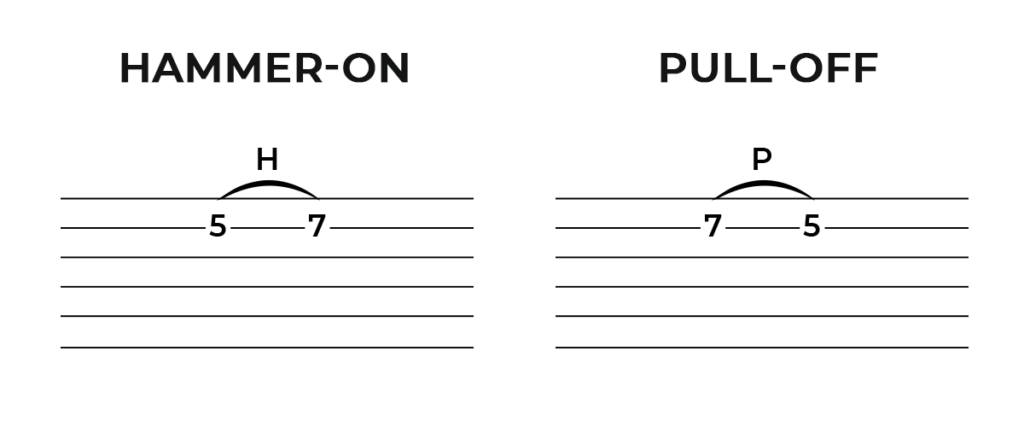
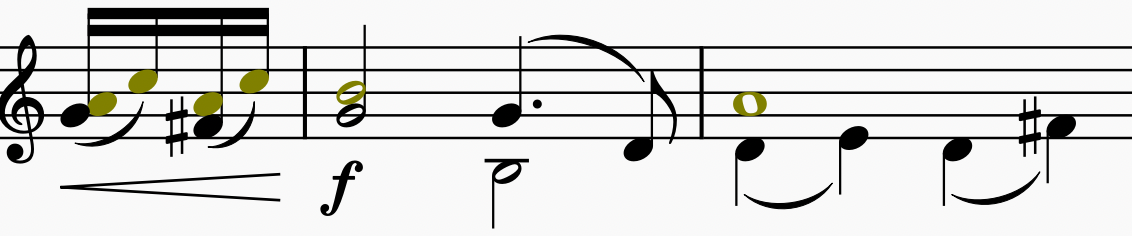
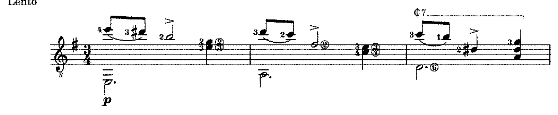
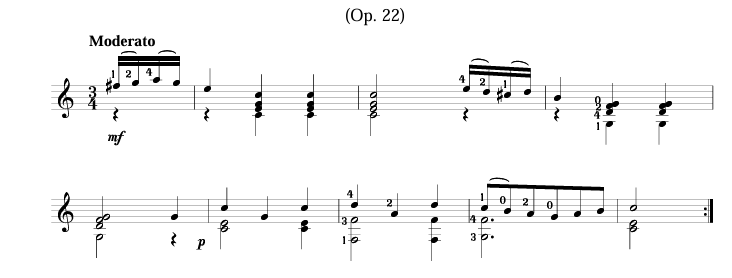
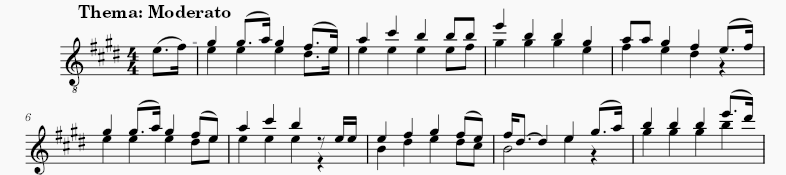
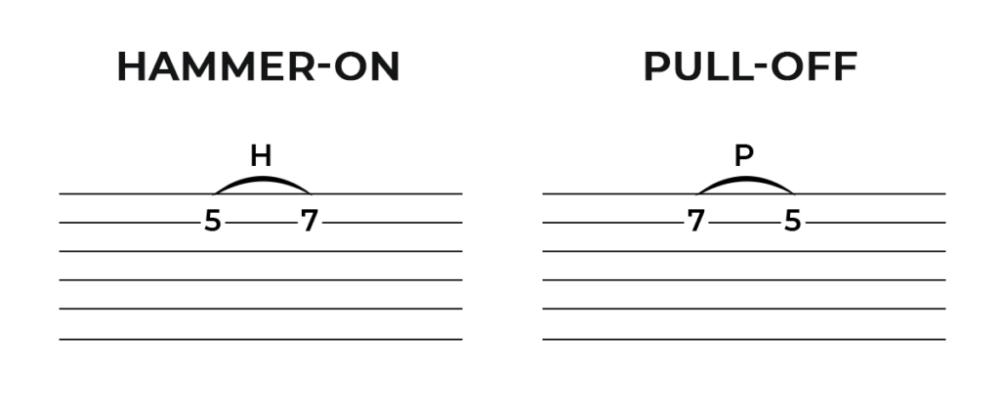
2 pointsIn Guitar playing, there are two ways to play slurs; Hammer-ons and pull-offs. You can also play slurred notes using slides, but that would be using glissando which would probably not come Hammer-ons are, as the name suggests, when you sharply bring a fretting-hand finger down on to the fingerboard behind a fret, causing a note to sound, you "hammer on" to the fret. Pull-offs are when you pluck or "pull" the finger that is grasping the sounding part of a string off the fretboard. They are the opposite of the hammer-on. Examples: Pull-offs; The opening bars of Francisco Tárrega's mazurka "Adelita": Hammer-ons: (contains both techniques but hammer-ons are more prominent): The opening of the theme in my own "Variations on an Old Kiwi Christmas Song": Both Techniques; The opening of Fernando Sor's Minuet No.1 from 2 Themes and 12 Minuets Op.22: Though most slurs in guitar music imply whether they are to played as a hammer-on or pull-off, in more modern guitar notation ( the way the slur is to be played is usually directly stated:
 2 points
 -
I have changed the system settings to allow new topics posted by members to be automatically followed so they're automatically notified when people reply to their topics. But apparently, this change only takes effect for members who register after this change was made. If you want to be notified when people reply to your topics (if like me you often forget to toggle the "follow" button at the bottom of your new topic), go to Account -> Account Settings -> Notification Settings -> Followed Content and click to follow new topics posted by you. Shortcut to notification settings Thanks! Peter1 point
-
Hello everyone, I was really busy the past few weeks so only now I'm able to show you my new project. Estampas_de_España.pdf https://drive.google.com/drive/folders/1xnciHniD_iW3uBUrxphiy_p4QF9xaSEe?usp=drive_link (The same PDF just in case) Basically, I'm organizing a cultural project where composers from all around the globe put piano music to a selection of paintings. The best pieces will be included in a collaborative set that will be performed in the future (up to 16 pieces for the official collaborative album). The best composition will receive a 500 euros prize, the second best work will receive 200 euros prize, I will offer a few 30 euros rewards to other great pieces (up to 3 extra rewards). I hope many people will participate, see you soon! Don't forget to send me your painting choices so I can organize better (to my email ivanmusic1791@gmail.com). Here you have the drive with the paintings: https://drive.google.com/drive/folders/1rR-lpQH18sTy6qRqH2_QcR7DIMd4Z0Y8?usp=drive_link If you have any doubts contact me over email! But I will be able to reply here for a few days, but I might not check it as often.1 point
-
Put on your ugly Christmas sweaters and DANCE, cuz I've got a treat for you! This is a piece that I started over a decade ago (the main theme, first variation and rondo were begun then) but have begun working on again since October 1st. This is by far my longest piece thus far, clocking in at just over 15 minutes. I tried to capture the joy and spirit of Christmas in these variations. I aimed to vary the types of different textures and ideas and keys present, sometimes having the orchestra or sections play with and without piano. There is some virtuosity and fireworks in the piano part which at times is a bit showy. Structure wise, I tried to make each variation smoothly connect to the next and to visit many distant keys throughout (mostly by going through almost all keys actually through rapid cycling through the circle of fifths). I also had quite a bit of trouble making the piano part and orchestra line up as for some reason, in Musescore (since I was using Musesounds for the orchestra and MS Basic soundfont for the Piano) the Piano eventually started falling behind the orchestra and I had to import separate files of just the Piano and just the Orchestra into Reaper where I could realign them if they started phasing. I hope you enjoy the fruit of my labors this Christmas! Any comments, critiques, or suggestions are welcome! Here is the form of my piece with timestamps: 0:00 - Theme 0:38 - I 1:14 - II 1:39 - III 2:12 - IV - "Transcendental" 2:36 - V - "Stately" 3:03 - VI 3:32 - VII - "Sneaky" 3:56 - VIII - "Flourishes" 4:30 - IX 5:06 - X 5:37 - XI 5:55 - XII - "Romance" 6:26 - XIII - "Romance Decima" 6:58 - XIV - "Minuet" 7:22 - XV - "Minuet Decima" 7:45 - XVI 8:16 - XVII - "Siciliana" 8:55 - XVIII - "Siciliana + Silent Night" 9:30 - XIX - "Waltz" 10:07 - XX - "Scherzo" 10:49 - XXI - "March" 11:31 - XXII 11:53 - XXIII - "March + Jingle Bells" 12:31 - XXIV - Cadenza 13:14 - XXV - "Rondo" 14:42 - XXVI - "Lilt" Edit: I've reuploaded a new mp3 processed with @AngelCityOutlaw's suggestions to get rid of clipping. Let me know if it sounds better now!
 1 point
 -
Here's the companion to the sonata in E minor I posted last week. Again, any thoughts on the mixing (especially the reverb and stereo panning) or on the composition itself would be greatly appreciated!1 point
-
I have a couple of unfinished dances which are more...Idk... ethnic-like (...I guess...). However, due to political, historical and geographical reasons, and that I am not exactly sure, I choose not to name them as nations or ethnicities, but to simply name them technically and musically : Ethnical Dance In ( whichever Key ) ( Number/tempo marking/character ). This is also becos Idk wht to name and iI have a lot of other dances. The piece, now titled as "Ethnical Dance In B minor", was titled as Russian Dance No.1 before I've completed it as that was what the general vibes was for me. Just curious which ethnicities you think this piece more closely resemble to ( if you think there is ) . Would greatly appreciate it! https://musescore.com/user/62605720/scores/133635281 point
-
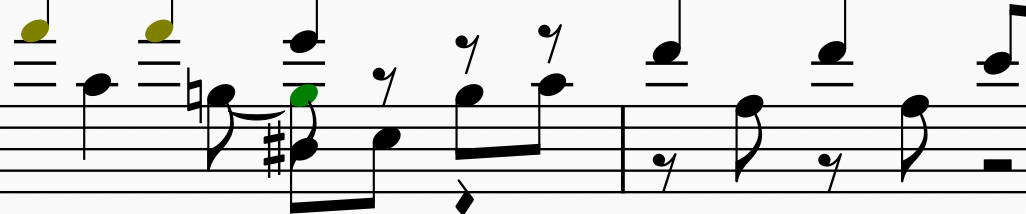
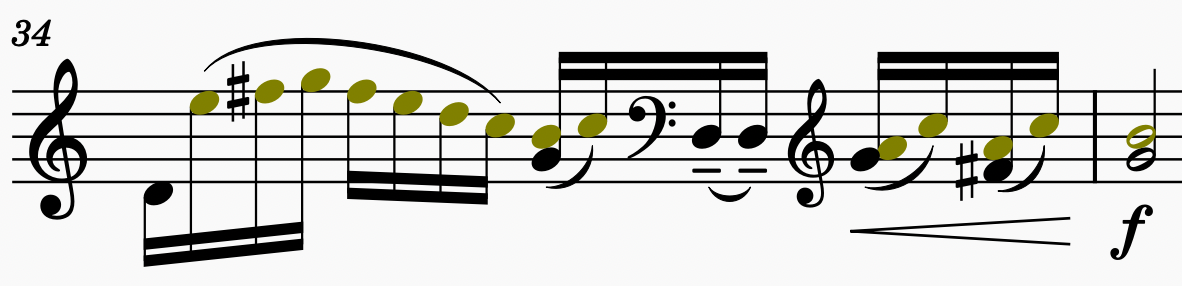
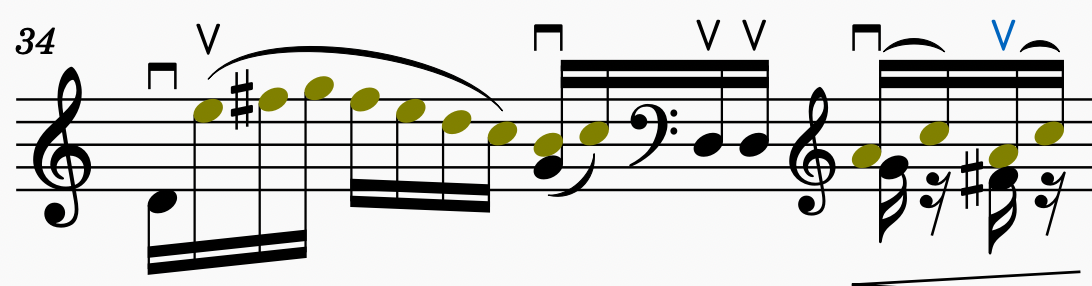
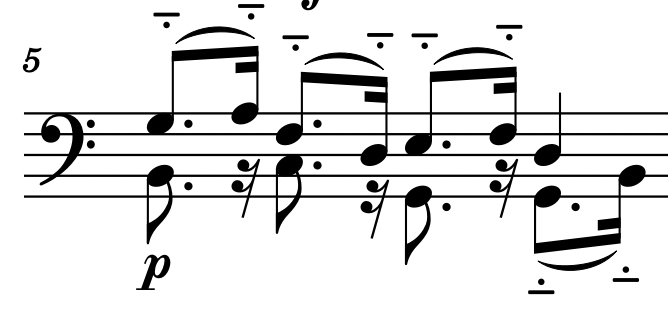
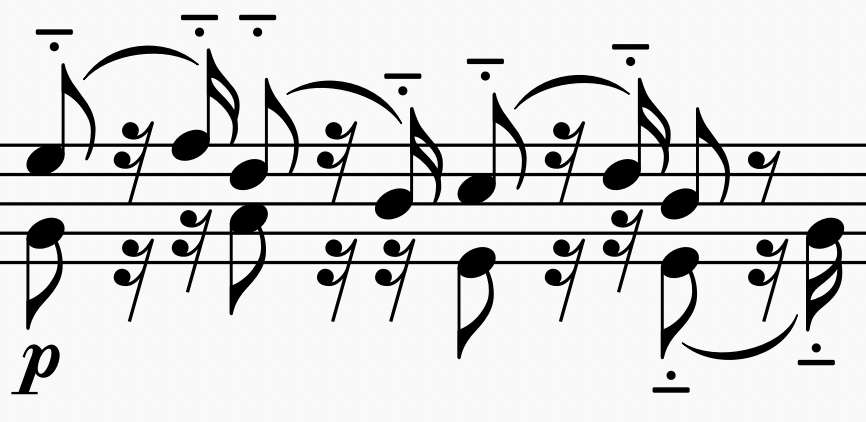
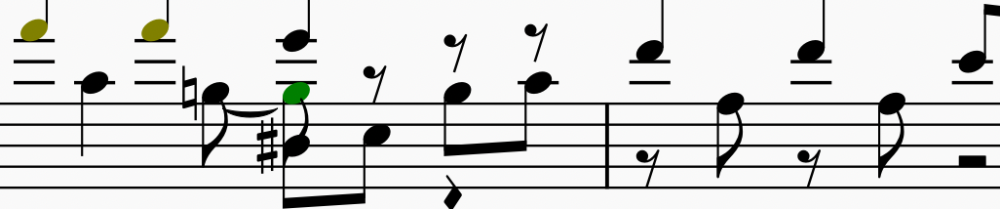
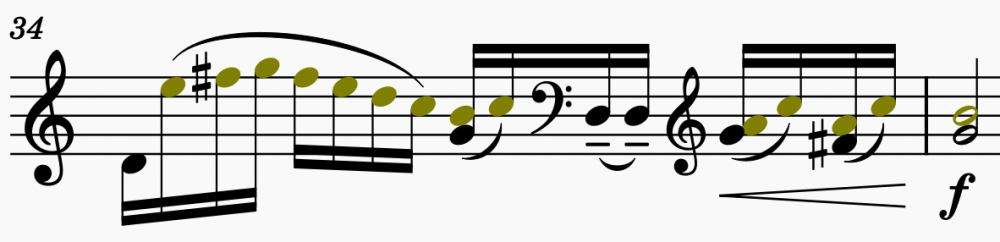
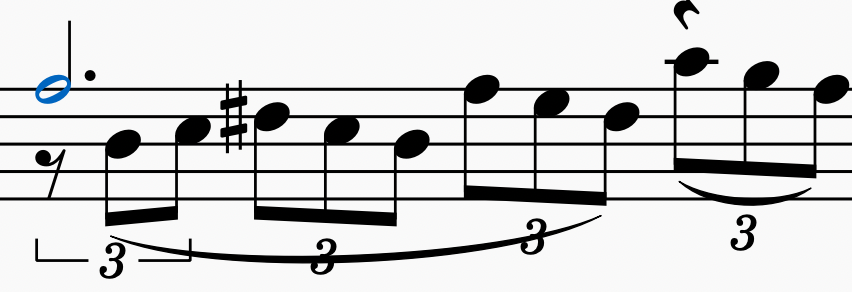
1 pointA share for bowed strings here. First, some comments regarding slurs and bowings: 1. slur indicators for strings should be equivalent of bowing directions 2. string players will most likely adapt their own bowings regardless of what you composed I've just re-realised part of my old work that is quite clear to have Beethoven/Schubert influence, the cello solo sonata in C major. Maybe if I have time and effort I'll eventually re-realise the whole thing on a workable score. I will highlight parts where slur/bowing is of interest. --- Bar 5: this means a bow per beat, with a break in between the slurred notes. the effect is similar even if I don't add the staccato mark (below is a kind of realisation) --- Bar 24: slur crossing strings ("bariolage"), in this case the A and D strings. note that in this instance there are hidden voicings (realisation of a possible intended voicing below) --- Bar 34: notice the low D "slur" with tenuto marks. similar to the first scenario, both Ds are meant to be heard separately (see realisation below) --- Bar 36: notice the apparent absurdity of holding a full note on the A string and separate bowing on the D string. In reality: --- Bars 43-46: similarly, (realisation) alternatively --- Bar 69: upbow staccato. imo this really is just a performance visual effect that is more difficult that the separate bows counterpart but can just sound very similar P.S. you guys are lucky I have not quoted a single instance of tenor clef music here... EDIT: added recording. I haven't touched my instrument lately so it's really rusty, but here we go. I also have the musescore-mp3 (labelled MS) version if my playing is too "rustic" for you... can you believe I wrote this nearly 10 years ago lol EDIT2: bonus points (not really) if you can find where I "cheated" with bowings and why I did that EDIT3: feel free to disagree with me, I'm no expert by a long shot EDIT4: use the new improved recording please I guess

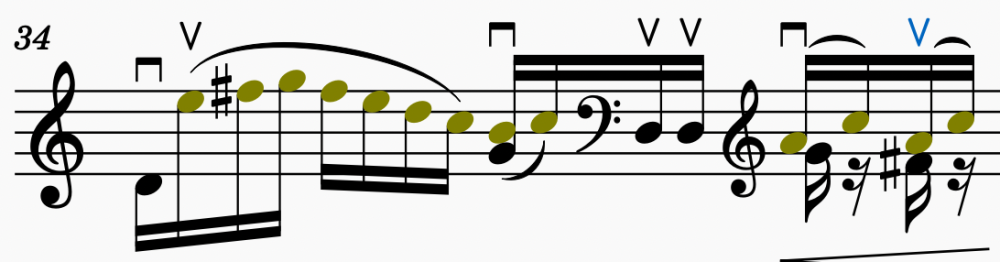
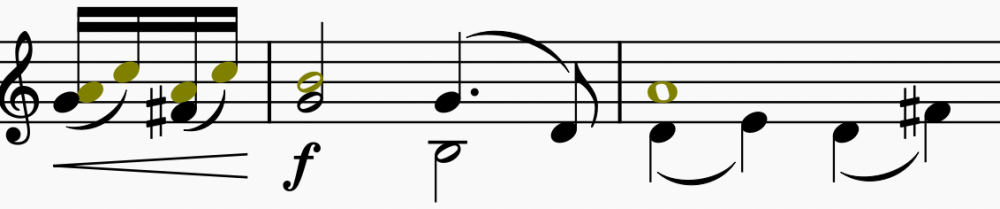
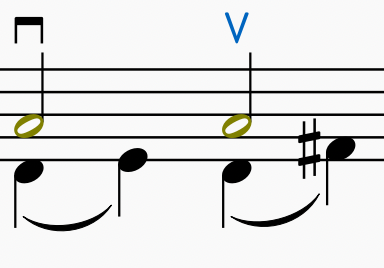


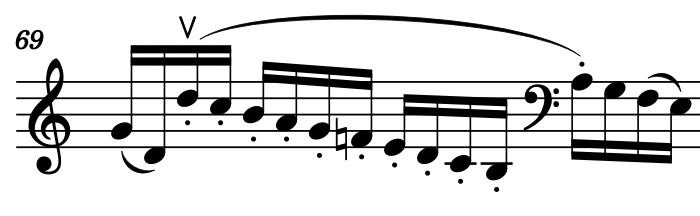
 1 point
 -
1 pointNew year, new project: a cantata! This will be the first (out of four) aria, featuring the timeless classic of solo flute & tenor duo. The structure will likely end up being A-B-B' separated by both complete and incomplete instrumental ritornellos. Note that the score is currently very messy with missing figurings. A few thoughts: What would be a suitable libretto? The second aria will employ Goethe's poem "Wanderer's Nightsong", so anything in that ballpark will be great. I am once again focusing on making the playback sound as good as possible. Are there any good soundfonts for Baroque music (without much vibrato)? How does the playback currently sound? MIDI-like or close to real music? Are there any parts which sound obtrusive or weird? Any other comments warmly welcomed!1 point
-
1 pointKeep monopolizing Henry, this is the way 😎. I will try to find a nice example in my works, though I would say you have plenty here at YC at hand! Kind regards!1 point
-
Here we go. From the theme only you know the sound will be above average. BTW, Peter, I think the score would be easier to follow if you also provided parts (some of them at least). Scrolling a single page after less than 10-15 seconds is unavoidable when there are so many instruments involved, but for a more close and in-depth analysis I would really have preferred to go part by part in some cases. • I: Very spot-on chromatic color. You don't go too far from the original material (yet?). I like the approach that I think you're taking. (You did) • II: This one is more intense, but not denser. Really nice job with this second variation. The dissonances are somehow not strong enough to provoke a feeling of tension, but to bring attention and carry some kind of "background flow". • III: Here stuff begins to get really original. This var. feels so cheerful! • IV: The fact that you make no random pauses (at least for now, up to variation VII) makes it easier to stay I believe (basically I agree with what Quinn said). Kinda difficult piano part! • V: III, IV, V and VI get along very well in my opinion. The transition from one to another is almost not noticeable, specially in case of III, IV and V. • VI: I like how the piccolo (and wooden winds up to some degree?) is kind of the leading voice. The Q&A structure works pretty nicely in this movement; another great job and one of my favourite variations. • VII: here the music seems to be refusing to end, it feels like a great "connection" between VI and VIII. • VIII: really original, though I think this is the 3rd-4th movement with a certain pattern in common. • IX: stuff gets really interesting here, less than in the next movement but I like how the various voices get entwined seamlessly. • X: These harmonic twists here are great. Again, it feels like with each variation, an entirely new piece is arising by deviating slowly but steadily from the original material. This is my favourite variation. • XI: This one felt a bit short to me (but it suddenly made sense). Yet another great variation nonetheless. • XII: Is it me or variations are getting shorter? I barely noticed differences between XII and XIII and it was too late when I realised I was in XIV. Your transitions vary from almost unnoticeable to pleasantly contrasting. This is clearly a piece in which you have put a lot of effort, and in all honesty I wouldn't have expected less! • XII-XVI: I would say these form a subgroup inside your set: flutes and the piccolo keep dancing around the theme, deviating longer from the OG material, before coming back —more and more briefly— to the theme. • XVII-XVIII: another smaller subgroup I'd say. The chromatic scales, this time on the violas (on XVII) & piano (XVIII), sound delicious and more subtle than in II. • XIX-XX: The music flows faster than what I can process, making me go backwards a lot to fully listen the variation subset. This is great music to get up, many thanks for sharing it Peter. • XXI-XXIII: Just another 💯 transition from the lightness of the prior subgroup (which is BTW heavier than the XVII-XVIII subgroup, and that one in time lighter than the XII-XVI which passed like a breeze... It seems that consciously or not, you kind of ordered these subgroups!) • XXIV: noticeably longer than the rest (feels like more than one variation to me), which may even make sense if this was treated as a piano concerto(?). Not sure, but anyway, I liked how you implemented it and where. It felt like a deserved and well placed rest for the orchestra. XXV makes the comeback much more smooth! Piano still holds the main voice, but the orchestra keeps pushing more and more! I love it. • XXVI: A daring one, I would say. Its development is so cool, the combo of measure indications works really good. Up to now, literally nothing made me doubt, I just followed the piece without a single thought of the kind "well this works but I would have preferred XYZ". It just didn't happen, it's so well constructed and well-thought that my brain didn't question it. Until now, at the very end of this great work. I suppose this is intentional: imagine you were recording this set of variations and that you remember that the place where you're doing that is closing very very soon, and thus that the janitor is on his way to open the door and interrupt you "Hey Peter, we're closing". Preventing that, you cut half a page and accelerate stuff, but it's too late he's approaching the door so you end abruptly! This is kind of what I felt here. Not sure if this was the best or worst way to end this absolute impressive work: personally I did not like it and I left the theatre unsatisfied, wanting some more variations to listen to. I've been listening to this continuously like an hour and a half already, and this probably just increased my desire for a "proportional ending". This is all subjective, though: one objective fact here is that this movement stroke me more than others because it was daring, and because I did not expect it to end like this. My perspective of such ending may change over time, but the fact it gave me a really powerful impression will stay: perhaps this was, after all, the best way to end the piece. It must not be a bad ending, nor a bad piece, if it leaves you asking for more! Belated merry Christmas 🎄, Peter. I do hope you to stay around for many, many more years and bring us more of your HQ content. Kind regards!!1 point
-
So I not only listened, but I examined it in Reaper as well. There is one point where it slams the limiter a smidge too hard and goes over by .5 db, but it didn't make an audible pop and otherwise, the clipping has been eliminated. It certainly sounds good as is, but there are a couple things you might want consider going forward: • Definitely always make sure to have a limiter on the master to make sure you aren't clipping and it catches any peak that would go too loud. • You have fixed the clipping problem, but you do have a trade off: The audio is now a bit "squashed" in places. As the compressor lowers the peak to prevent it from clipping, in those FF+ sections, the quieter instruments are also now made (relatively) louder and it upsets the dynamics a bit as there is no longer such a volume difference between quiet and loud. In your piece it's only happening a bit, and it's not a glaring issue, but it would be if those super-loud sections went on for a significant period of time. The crappy thing with digital audio is you can't record to it as loudly as you could with analogue, and consumers today are afraid of turning up their volume for some reason. That obviously poses problems in orchestral music, where strong dynamic range is a valued and necessary component of the piece. The squashed audio problem could be eliminated by simply turning the entirety of the mix down a couple db or more, or maybe reducing the intensity of the limiter, but you'd have to turn it up more on your device as a consequence.1 point
-
1 point
-
I have edited the title to what I now deem suited - Dance In B Minor No. 1 - as many form other forums have commented on the inappropriateness of the initial title.0 points