Leaderboard
-
PeterthePapercomPoser
Admin6Points2,816Posts -
expert21
Members5Points100Posts -
muchen_
Members4Points100Posts -
.jpeg.964ae25a00bc32736a1740ad2241fcd6.jpeg)
therealAJGS
Members3Points230Posts
.thumb.png.8b5b433a341551e913a34392660bc95b.png)


.thumb.jpg.68de6ce8338a30f9d952280fecad70a0.jpg)
Popular Content
Showing content with the highest reputation on 01/06/2026 in Posts
-
5 pointsMy view on the matter is that while any pieces of "music" that are generated using tools like Suno should be completely banned, the use of AI tools like Cantai to generate mock-ups from midi or notation should be allowed as they are not really any different from generating a mock-up using sound samples (as others have already said). With regards to the issue of how we should go about detecting AI "music", I like @UncleRed99's idea, though I recognise @TristanTheTristan's concern that asking for technical music theory things like starting keys/time signatures may unfairly exclude composers who do not work in theory/notation heavy genres. I propose that we require users to write a short description of their piece naming some musical elements/techniques that were used (e.g. chord progressions, instrumentation etc.) alongside any additional details they might want to mention, like maybe what inspired them?5 points
-
3 pointsI think that Ai music is just pure laziness and Is probably one of Three things. 1: I want to win a competition and have a good reputation. 2: I'm just Trying to make a non - Ai song but I want to have some sort of sound effect/thing that I can't get normally, or Three: I'm just pure laziness or not an actual composer. I think that All AI generated/refined Music should be completely banned, with one exception: if the AI did a very small thing like making a sound effect used once or It tells you which note sounds better after a certain one or something. If the actual MUSIC part is generated by AI or almost all of your lyrics (If you have any) should be banned; But if your just playing around and say that it was Ai, and it is not serious it might be allowed. (For 3 I chose other, I think that if someone's music is AI, they should just say so.) oh and It would be really stupid to use AI detection to see if pieces were AI but moderating might work.3 points
-
2 points1. When it comes to platforms like Suno, that should be regulated: it should not be used in competitions, detection should be used, and if there is abused it should be banned. When it comes mock ups in the Daw or in notation (Note perfomer, vst, etc): For the composer plays the notes into the program, and such. Sometimes, we do get lucky and have live performance. I think it would be cool, if there was sub forum to share our live performances. 2. A pianist and composer, I'd prefer if someone who did not use AI. 🙂 3. I agree with @UncleRed99 Idea. In traditional music, you can generally see the key, meter, and etc, but with lyrical songs we can't see that.2 points
-
2 pointsMy answer of "Other" on Question 1; I don't downright "hate" the idea of generated music, as we've adapted as a society from traditionally only ever using real live instruments for music, into the use of MIDI, VST2/3, and other realistically generated playback sound. So I believe it has its uses. I've even from time to time, as a sort of "test" to AI like GPT for example, submitted a PDF and .mp3 copy of something insignificant that I wrote to the AI to see if it is truly able to determine the tonality, mood, and atmosphere of the music, while also experimenting with how well it was able to provide fast and productive feedback on the score itself. I can't say it did as good a job as people here who share my level of expertise and well beyond it, but in a pinch, It was able to identify the mistakes that I made, intentionally, on the score, as a test for what it was truly capable of and what level of knowledge in Music theory was available to it. It was dead wrong about a couple of things, as I tend to notice regularly when you ask an AI a direct question without any leading context. So the advice received should be taken with a grain of salt. Also why I believe that Bot generated music can N E V E R be a genuine form of music simply due to the fact that it's incapable of understanding the true purpose of music, it's intended affect on the human mind and emotional center, and will never be able to live up to the true original's standards of creativity. All it will do is utilize what it can find online and on streaming platforms to mimic impactful sounding music. Which to some may be enough, but to me that undermines the entire community of people who spend hours, days, weeks, months or even years to compose something intricate of the same length / duration of music that could be created with AI in seconds, and is created without any true "thought" or "feeling" put into it. Regarding my Other answer of the last Question; Potentially, we could add a form to fill out with required fields in the sub-forums for music submission posts... Such as; Work Title (untitled if not yet established): _________________________________________ Composer/Username: _____________________________ Key Signature (Maj./Min.): _______________________________________ Starting time signature: ______________ Instrumentation or Ensemble Type: ___________________________ Additional Details: ___________________________ Description of Piece: _______________________________________... *required Please attach a plain (or) watermarked PDF copy of your score (for Notation Software Users), including either a YouTube Link or attached .MP3 file for playback. If using DAW software, please attach both a MIDI file, .MP3/YT Link, as well as a description of MIDI, VST2/3 Instruments used and a few of the FX Editor plugins that were used, in order help maintain the orchestral compositional authenticity of our community 🙂- Sorry, must've had a brain fart right here. fixed it. Obviously this is simply a suggested set of questions that would be up for consideration, editing/alteration, omission etc... but I feel that this would curb most if not all low-effort "hey guys look, I just wrote this today" **(Attaches a fully mastered, 5 minute long EDM track, fresh out of the shower wearing Day clothes after trying to pass it off like they created a fully completed track with full mastering and editing by working on it tirelessly all day long just for it to have been an AI the whole time after they simply asked it like 3 prompts to alter results...)**2 points
-
Here is a list of Manually-Awardable Badges that aren't directly related to a competition or event: Musical Debator Melophile Holding Strong Opinions History Buff Philosopher of Music Theory Buff Orchestration Buff Keen Ear Keen Eye Musicologist Ivory Tickler Symphonist Chamber Guru Troubadour Concertophile Outstanding Orchestrator Maestro Soloist Master of Improvisation Skilled Arranger Film Buff Video Game Buff You've Got Rhythm Got Published Got Performed Tune Smith Prolific Composer Counterpoint Wizard Sick Beats Period Composer Ardent Producer Hepcat Aleatoric Composer Bando Drum Major Pop Song Aficionado Brass Aficionado Woodwind Aficionado String Aficionado Film Composer Recording Artist Musical Dramatist Challenger Avid Listener Musical Socialite Ingenious Harmonizer Dance Music Impresario Headbanging Rocker Musical Storyteller Musical Explorer VGM Enthusiast Film Music Enthusiast Sculptor of Sound Audiophile Idea Peddler Star Performer Choir Master Musical Architect Immaculate Engraver Impeccable Taste Local Lurker Abstract Composer Guitar Guru Collaborator Accomplished Virtuoso Musical Advisor Elegant Classicist Amorous Romanticist Programmatic Composer Master of Subtlety Dedicatee Lo-Fi Audiophile Better Than Thatguy Lavender Hands Effect Ardent Reviewer The Colossus of Prora Feel free to suggest badges as well! - PeterthePapercomPoser P.S.: And if you'd like to request one of these badges to be awarded to someone (another composer or yourself as well) feel free to nominate them in the Award Request Thread!1 point
-
1 pointThanks to all 20 participants who submitted a whopping total of 26 submissions to the 2025 Christmas Music Event! They will be the recipients of the "2025 Christmas Participant" award! - A Christmas Mash-up by @PeterthePapercomPoser Jesus was Born this Day by @Vonias Another Christmas Mash-up by @PeterthePapercomPoser My submission to the 2025 Christmas event!!!!!!!!!!!!!!!!!! by @therealAJGS Song for the Fallen (2025 Christmas Music Event Submission) by @Musicman_3254 Submission to the 2025 Christmas Music Event by @TristanTheTristan March of the Gingerbread People (2025 Christmas Event Submission) by @Crescent Roulade Fugue on "We wish you a Merry Christmas" (2017) by @J. Lee Graham Motet a 8 "O Magnum Mysterium" in E-flat Major by @Fugax Contrapunctus fantasia on jingle bells (2025 Christmas Event Submission) by @Monarcheon March of the Snowflakes - 2025 Christmas Event Submission by @Vavrinec O Soul, Seek Revelation 14:9-11 by @SeekJohn14v6 (Very Casual) Christmas Mesh Up by @HoYin Cheung The Empty Church - Submission to the YCF 2025 Christmas Event by @Wieland Handke Highland Shepherds - Submission to the YCF 2025 Christmas Event by @Wieland Handke Jingle Bells and Dashing Through the Snow by @chopin Christmas Carol by @Aiwendil Instead of Christmas (Submission to 2025 Christmas Event) by @Luis Hernández Coventry Carol (Christmas 2025) by @mercurypickles With Every Beat My Heart Knows by @HoYin Cheung A Christmas Scherzo by @PeterthePapercomPoser I composed a Christmas Song! - It went great! by @raymond doerr My Christmas Submission by @Mooravioli Christmas Mash-up No.3 by @PeterthePapercomPoser Glory to God by @SeekJohn14v6 Nutcracker inspired final by @Tunndy And thanks to all the reviewers who ardently and painstakingly reviewed all the entries to the event! (the AI generated ones aren't required): @chopin, @Henry Ng Tsz Kiu, @Wieland Handke and @PeterthePapercomPoser. They will be the recipients of the "2025 Christmas Reviewer" Award! - (Note that if people still want to review all the submissions after December 31st, they are free to do so and be added to the list of "2025 Christmas Reviewer" Award recipients ex post facto. Check how many more reviews you need to make before getting the badge in the 2025 Christmas Music Event Reviews Spreadsheet. If you're not on the list yet I will add you once you review a more substantial number of pieces.) And thanks to @PeterthePapercomPoser for the event announcement thread, managing new submissions, creating the Christmas calendar event, advertising the event in various discord servers as well as making this conclusion thread! He will receive the "2025 Christmas Organizer" Award! - And we all hope that you had a Merry Christmas and that your 2026 year will be great!!! To see the 2025 Christmas Music Event announcement thread go here:1 point
-
1 pointLet us and the other members of the forum know how you feel about including an AI sub-forum on Young Composers Forum! Reply to this thread if you don't see an answer in the poll that you'd like to see (click "Other"). The staff will take into account the opinions of the members at large but reserve the right to make the final decisions regarding the future of AI on Young Composer's Forum. During the recent 2025 Christmas Music Event the Young Composer's Forum has experienced an unprecedented influx of AI generated music into the forum. This has caused quite a bit of contention and adversity not only for the members but also for the staff. We have argued about all the different reasons why AI should and shouldn't be included in the forum and have given many different rationales for each point of view. Here are some of our thoughts: @chopin: I'm ok with it, as long as submissions are handled in a dedicated subforum, AND the following: You must explain your process. Did you write a series of prompts? Did you mix tracks? If so, are these tracks AI or human created? If this is a song with lyrics,the lyrics must be original. @Thatguy v2.0: I think AI generated music should be banned on our forum. I'm not talking about it's use in sound samples, like AI generation in voice samples for a vocal piece, or making string instruments sound as lifelike as possible. Sound samples are just really good now. This is a composing forum, dedicated to the art of composition. Typing words as a prompt for machines to output sounds is offensive to me as an artist, especially when calling it your own composition. The issue I have with an AI subforum is that it will always be tied to the site as a whole. The original intent of a place where young people could learn from more experienced composers and also share compositions of all styles and skill levels is gone. I'm sure it's neat to see what AI comes up with with whatever creative words one could share with it, and I'm also sure that we could all learn some interesting things from it's output. But do we need YC to have that? Or should that knowledge be gained somewhere more appropriate? Analyzing it from a studious viewpoint isn't something I'm guessing would be the reason people are sharing their AI music. It will mostly be just promotion, but maybe I'm wrong on that (I guess a lot of people already use YC for that lol). @Henry Ng Tsz Kiu: I am against AI music, since I think it's sacrilegious to those who really work hard on their own to write their music. Using AI to compose for me is just an act of theft without really assimilating those great music in the past. To involve AI to their creative process to compose and call the outcome "their" "music" and call themselves "composers" is just a shameful act. YC to me is a place where both the composer and the reviewers can learn by giving and receiving feedbacks, and both sides should have give and take. In the case of AI "composers", they can only take and wouldn't be able to provide useful feedback except luring other members to use AI like them (just like drugs), and when they receive any feedback they wouldn't be able to change the details of their very "own" "music", apart from clicking another button to create another music track. This will literally ruin the crucial function of YC as a forum. Nonetheless I still welcome an AI subforum, definitely not for the reason of liking AI music, but to me it's like the legalisation of alcohol and smoking. There's no way to prohibit people using AI to "compose" at all, and given the trend the number of AI "composers" will only increase. Having an AI subforum may attract those newcomers who don't know how to write to our forum, check out other members' works and start to really write with their brain, instead of outsourcing their brain to AI. Also, AI may develop in a way that knowing its trend would be important, and having an AI subforum would be beneficial to knowing the trend. Prohibiting AI music to enter any events/competitions is my bottom line. @Omicronrg9: (he is sick and will express his opinion in due time) @UncleRed99: (see his reply below) @PeterthePapercomPoser: My rationale for why AI music should be included is that I, as a composer, value good music and good musical ideas regardless of where they come from and am always willing to learn from whatever piece of music gets created either by human or machine or a combination of both. My rationale for not including AI is that it might open the forum up to people who inspire dissent on both sides of the aisle. Composers who don't use AI may inspire dissent because they don't want to be classed among others who just wrote a prompt for an AI and want to call themselves "composers" for that reason. People who support AI and use AI to make music may inspire dissent because they think they belong to our community without the knowledge and effort that such membership usually requires. Those "composers" then feel on an even playing field and feel free to critique or evaluate other composers music without really knowing nor caring how much know-how it takes to create your own piece of music from scratch.1 point
-
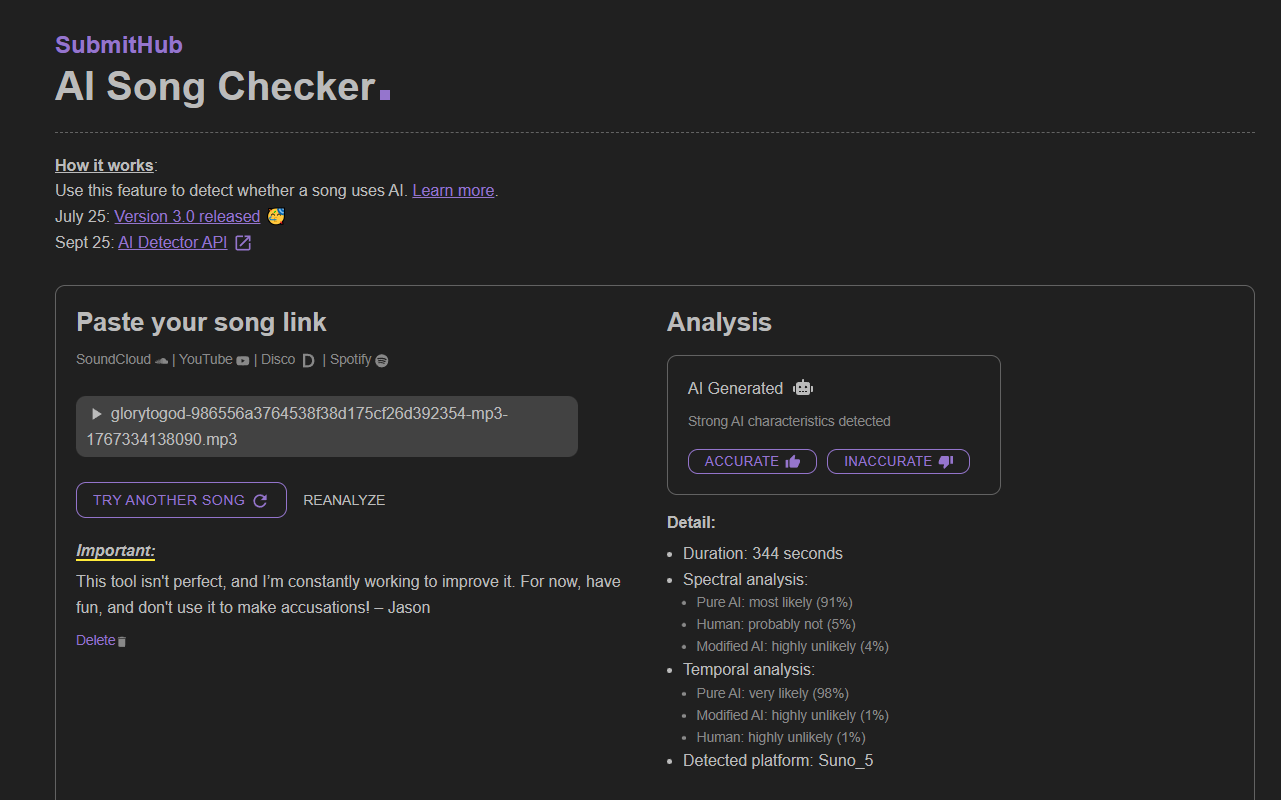
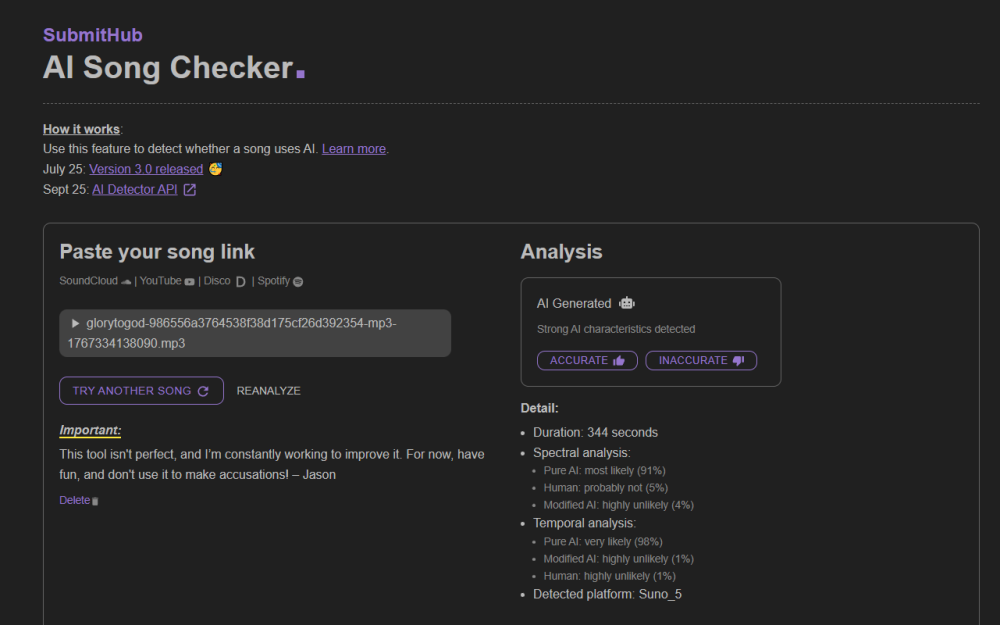
1 point1 pointThis is a secco recitative in the late Baroque style for alto, part of my cantata WIP. The text is taken from Goethe's Die schöne Nacht. An example translation of the text can be found here. I have also attached a little preview of its paired aria 🙂1 pointYeah, definitely include a key/legend of the extended techniques you use in the piece as is common for pieces that use extended techniques. I personally have never tried to play microtones nor multiphonics on Clarinet so I would definitely need an explanation on how to achieve the necessary sounds.1 pointThat's covered by the "Musicologist" badge. Google: "Musicology is the scholarly study of music, exploring its history, cultural contexts, theory, and social impact, encompassing all musical traditions from classical to popular music, beyond just performance. It uses various methods, including analysis, history, and anthropology, to understand how music functions in life, its development over time, and its relationship with psychology, sociology, and other fields. Traditionally divided into historical, systematic, and ethnomusicology, modern musicology is broad and interdisciplinary, focusing on meaning, practices, and the "web of culture" surrounding music."1 point1 point1 point1 pointI especially love the meditative prelude. The section beginning at mm. 26 with repeated notes and chromatic harmony is extremely elegant and tasteful. The bass line is particularly well-written, and patterns like mm. 51-53 brings subtle drama. The entire piece is playable too! Personally I think some reordering/transposing/rerun of the material here would give the piece better cohesiveness. The reappearance of the quaver-dominated opening material at mm. 15 for example can be in the dominant or relative key, and rerunning it again later (though maybe not in its entirety), particularly near the end brings not only unity but also some excellent contrast to the surrounding French overture rhythms.1 pointThank you @PeterthePapercomPoser, very kind words! I have no idea why Musescore decided not to label the instruments, haven't had this issue before, and I only noticed it now😅. I'll check out Mahler. The inspiration came from a simple sort of I-bVII-II-bVII-I idea that was looping in my mind for some reason and somehow I ended up in this obscure scale while experimenting. Difficulty was to avoid it collapsing into an F major sound, but I think I managed to avoid that for the most part - although the tonic is unclear to me for most of the time. As you are a clarinetist I'd like to ask, how would you prefer the fingerings to be shown? Should I stick a chart into the score? And how about the multiphonic in the end (just requires you to go a bit further down on the mouthpiece and adjust pressure): Idea is that both tones would be present. Thanks!1 pointAbsolutely! It's a real pain in the arse to do in Musescore though 😄 It's added to my to-do list (along with some dynamics shadings). I'm acutely aware of the problems of creating actually good-sounding music and I'm very grateful for you pointing this out. One of the nice things about the Baroque ritornello theme in a vocal context, is that your theme does not even need to be singable. The tenor aria from BWV 81 provides a particularly striking example. A common and easy solution for this problem is to just have your soloist sing an independent melody in counterpoint with the ritornello theme whenever it is reused. I've attached an example of this technique for my aria.1 point1 pointProbably, but it's not actually doing anything that isn't already a standard feature really in drum kits for years. Premade beats. I would point out that on marketplaces like gamedev market, they forbid AI art assets, but allow composers to use AI cover art.1 pointHi @PaavolaPyry and welcome back to the forum! I think the solo Clarinet line dancing microtonally around a single central tone in the beginning sets the stage well for the piece that follows and is yielded from that beginning line. I feel the piece is very logical and cohesive. I can listen to it many times in a row and not get bored of it - which I usually cannot do with an unaccompanied solo piece. But this isn't unaccompanied and only starts that way which is a very entrancing way to start a piece that eventually becomes a Wind Quintet (although for some reason the instruments aren't labeled in your score? Assuming that it's for Flute, Oboe, Clarinet, French Horn, and Bassoon). The harmony is dissonant but in a deliberate way that is very digestible (at least to me). It somewhat reminds me of the slow Adagio movement of Mahler's 10th Symphony (the one movement he actually finished himself). The microtones on the Clarinet don't seem to disturb the harmony but enhance it. It's around the 4 minute mark where your Clarinet melody reminds me of Mahler 10 (measure 51). I am a Clarinetist myself but haven't played in a while and wouldn't dream of using these extended techniques that you've employed here - but you're informed by your own experimentation so by all means keep going! Great job and thanks for sharing!1 point1 pointDoes GarageBand Drummer count as AI? I've used this once or twice in the past. Though I made lots of manual tweaks to create alternating rhythms and percussion techniques in different sections of the piece. So it wasn't purely AI driven. I've also used AI to create cover art for my scores.1 point1 point1. I'm not sure if the anti-AI detection algorithm would work 2. if we accept AI in compositions, submissions must thoroughly declare any AI involvement in composition (explain which exact ideas/parts/transformations/revisions/etc. were driven by AI and how exactly was AI used in those parts like, total LLM prompt? vague idea? proofreading? etc. generative vs analytic?) 3. I think a complete ban on AI might look close-minded (even though I am actually not against this entirely at all at this point in time), but the world is still at its infancy of dealing with AI/LLM (which itself is also at infancy), and right now at most I would be open to a severely restricted use of AI. As time goes by I might eventually be more open. 4. the problem with enforcing these rules is we might "overcorrect" and label genuine works as "AI"esque. this goes back to my first point, we don't want to mirror YouTube's AI-takeover in doing copyright claims and reports which mostly just benefits big companies.1 point1 pointAi should only be used for learning composition, not doing composition.1 point1 point1 pointMy feeling is that, regardless of your opinion on AI music, this is a composition forum. Prompting an LLM to generate music is not composition. Therefore, it has no place on this forum. It's as simple as that for me.1 point1 pointQuoting what I wrote in a thread earlier: Furthermore, unless a sub-forum for AI music can be quarantined, I strong believe that all AI music should be banned. Quarantining in this context means nothing posted in this sub-forum will be presented to users by default, unless they specifically looked for it (new posts/replies in this sub-forum will not show up on the sidebar on the main page etc). Without quarantining, just making an AI sub-forum is the equivalent of allowing AI to exist on this website in its current form.1 point1 pointI wrote this piece over the past two months as a sort of challenge to myself and as a demonstration for a few other people on writing pieces out of short themes. I think it's structurally a lot more complicated than typical sonata allegros, but I kind of got carried away (especially in the recapitulation). Honestly, it sounds to me more like the scherzo (third movement) of a four movement sonata rather than the first movement, and I kind of tried following the scherzo form a bit by introducing some new material in the development section.1 point1 pointThis is interesting in and of itself. For your use case, AI actually does help you getting what you want faster and better than you yourself could do without that brush. But I may ask, why would you need to learn "more tricks" on Suno or Udio if an AI could do that for you? Where do we stop that neverending cycle or why should we? If an AI can help you make better lyrics faster, why would you not use it? Most free AI song checkers, maybe. You can yourself try and investigate. In my experience and doing lil' research, only certain operations that act non-linearly over the audio actually confuse the checker. Suno is in fact the easiest one to spot nowadays, both humanly and with computer assistance. Other lesser known software gives more uncertainty to the blocks. This is from your latest version. The other one was also "AI Generated". Usually with other sources I get a more mixed percentage. You can try the operation of re-recording or other stuff to check if there's something that tricks it. But it'd be a waste of time imo. https://www.submithub.com/ai-song-checker Returning to the initial topic: my solution to these questions is simple -> Composing is not a tool for me like it is for you. Composing for me it's the goal, not the route towards it. I don't have any other aim with the music I do but to do it, perform it if possible, share it sometimes. Whatever else happens, so be it. Your objective has nothing to do with that, so it makes sense for you to cut time and effort wherever possible in steps that you don't control. But mind that this is the key difference, you cannot get too nitpicky with Suno, Udio or others. You can run the slot machine as long as you want but if you wanted to make a series of minimal changes it would become increasingly difficult and tedious to do so. Advancing in your knowledge of music may become a pain more than an aid because you will begin to detect things that are off in AI songs that are not off even in mainstream songs. That leads us to your next I would say weird statement: But AI does not learn the way we do. It cannot become a composer who developed his own voice for half a century. You can ask AI itself about that, if my word is not convincing. AIs like Suno can imitate some styles up to a certain degree by prediction. It may be unfair but what you describe does not match with the state-of-the-art knowledge of AI models we possess. Feel free to send that video for reference. Also: I'm sure there will be. Right now they're not very good as some members here can assess. Suno itself has the capacity of extracting tracks and converting them to MIDI if I'm not mistaken so you wouldn't even need another AI as long as you handle some software that reads MIDI as sheet music. You can ask AI to generate a sheet music , it's code after all, but more often than not it will fail because there's a fundamental barrier for pieces that are heavily polyphonic. In other words, feel free to try with a symphony movement any of the tools (paid or free) available that use AI to convert audio to PDF sheet music directly. Sure, you may get a single-instrument or a piano transcription, but mind that AI is not magic, it's math, and math used to craft AI cannot solve certain problems that easily. Mind that you do NOT need that either. That they sound and set me off kinda in a similar way that your piece does. Different styles, yes, but very similar brush, similar way of crafting that can nowadays be perceived. That makes them sound not very good to me, but probably they are acceptable for masses. Mind your target, your target ain't people like me. These people have told you a half-truth. You can indeed export a midi or get a midi, edit stuff and then re-Suno-ise it. Problem is that even the best workflow is far from perfect and that you do need some musical knowledge to change the "note". More often than not you will end up just "rerolling" till you get something you convince yourself it's the best output because you don't remind what the first iteration was. Imo, this is a waste of time specially with Suno because it will anyways Suno-ise everything you throw at it. Voices will still be weird no matter the note, this characteristic noise will still be present, and more often than not you would not do a dramatical change. But once again, let me repeat. From what I extract from your words, I would say you do NOT need to be a perfectionist in any way or form. The more you approach that with AI, the less sense it makes to go through it cause the time you consume trying to get exactly what you want grows non-linearly. My recommendation for you would be: don't try to paint a hyperrealistic portrait with a single big shiny brush. If you're already satiisfied 🤔 Man, what are you talking about? Paper does not need internet either. Sheet music is the main medium of music transmission for a reason. Engraving things on stone on a mountain 😁? Pretty expensive probably, I would prefer other more traditional stuff. I have my stuff secured offline just in case. Not sure if there was anything that I did not reply, I just went out and came back leaving this message as a draft. Attaching 3 things: the audio you requested and what happens when I throw it to some AI that promises to get a piano transcription or a score of my audio: Kind regards! Third eye AI transcription.mp3 Third Eye (Arr.).mp3 Third Eye (Arr.).pdf
 1 point1 pointHey, I was hoping it would be okay to put some of my recordings that are not compositions here. I play early keyboards, so harpsichord and clavichord. Here’s a sample:1 point