All Activity
Past hour
-
@MK_Piano Please note the following in the competition announcement page: I did not have the opportunity or ability to compare the two versions of your score and rendition to see what might be different but hopefully it isn't too drastic as it might undermine the fidelity and consistency of the competition.
-
Well done @Omicronrg9 ! I agree that this gives perfect Halloween vibes. I think this would be a ton of fun to see performed live, with all those chromatic runs. Your use of harmony is just mysterious enough to give this piece a unique quality and purpose. You do a good job maintaining momentum so that the chromatic material feels intentional rather than wandering. I imagine this music would be stunning if performed on a dark evening in a room with tons of reverb (like an old church), perhaps by candlelight. Personally I’d love to hear this music in that kind of space. I like how you initiated a contrasting section at 2:16. However it doesn’t stay contrasting for long, but jumps back to that chromatic action right away. It might be nice if you had a real contrast at that spot, at least for a bit longer. If you delay the return to the chromatic waltz vibe, it will be even more satisfying when it returns. The contrast doesn’t need to last long; it just needs to clearly make its own little statement. I think about Chopin’s mazurka in F# for example (https://youtu.be/mkveDJgf73U?is=fEcIbMDCWQQihPus), The contrasting sections in that piece are very short, but they are distinct, and clearly create punctuation within the overall form of the piece. Those little sections take you away from the main theme just long enough that its return is a happy reunion. And importantly, those contrasting sections don’t remind us of the main theme. Just a thought! As they say, the point of a bridge isn’t just to make you enjoy the bridge, but to make you crave the return of the main theme. Thanks for sharing! I love the cool video too!
Today
-
-
Thank you so much @Omicronrg9 for listening and for your feedback! It always surprises me how we can all pick up unique and special vibes from the same piece of music. To me this music has always reminded me of a difficult time and of struggle, but then to someone else it comes off as smooth and peaceful. And both can be true. The poem is very peaceful, but it also longs for a time when the sun was shining. This is something so glorious about music: we can listen to the same notes, but all of us hear different things in it, feel different feelings, experience our own private epiphanies. It brings me so much joy to know that you enjoyed the music. Yes Edward is a super talented pianist, well beyond my skill, and he enjoys playing new music. What a gift for someone like me, who prefers to compose rather than perform. I really appreciated hearing your perspective. Thank you for taking the time to share! Cheers! Jonathan
-
Hey there, Wieland Your music has a lot of qualities I'm envious of, like your knowledge and inspiration from baroque music, engraving technique, clever counterpoint, FUGUE writing, etc. You're very different from me, and I love that I can explore your music to help prop up my weaknesses. I'm a guitarist, and I've probably listened to this about 10 times by now (literally :D). I won't go into detail like @Omicronrg9 did about the accordion with your guitar part, mainly because you didn't really give me much to go off of. You have three polyphonic instruments, yet you took special care to notate fingering and button markings or whatever for piano and accordion, but the guitarist is left trying to figure out hand positions and fingerings. Why? Is it because you're unfamiliar with the instrument? If so, so be it, that's okay, that can be learned. But not one slur?? Only a few chords? Our chords RING, you should use them more. I felt like you treated the guitar like a violin. Sorry, I just found it offensive when going through your piece. Again, it's okay if you're unfamiliar, but I think the piece would have been better off with another instrument substituting the guitar (especially with the care given to the accordion, which I assume you haven't written a lot for as well?) Don't get me wrong, the guitar part is all playable, but the excessive dynamics and lack of articulation when compared to the other instruments just had me hyper fixated with that. Sure, the dynamic markings are probably for the playback, but I would have made a lot of those marks invisible for the score (if your program allows it, ofc). All in all, this music is good, you have talent as a composer, but the guitar part in particular just rubbed me the wrong way playing through the piece. Sorry if I come off harsh 😰, but I'd rather let you know faults in part writing then just showering you with praise, because I like you. I like what you have to offer the world with music, and I like what you do for our community here at YC. You're a gem, my friend. Keep composing!!
-
Would you be open to sharing the score for the most technical review? Our ears only go so far :)
-
Whether you win or lose the competition, saying this means you actually won something much better. You know, I've read through everyone's comments, and a lot of what others have said about wind breathing, harp writing, orchestration, etc. all holds true. Take note of it; it's free advice that if applied will help you improve. BUT Your style, your voice, your raw talent that you're hopefully always going to keep working on was really fun and a treat to listen to. Your music is emotional and definitely applicable to the poem. I really really love how you treated the vocals (cool to incorporate vocals btw!). There were large gaps between the phrases, and I think that lead to a balanced feel of it all. You gave solos to the different instruments, letting them all sing on their own and together when necessary. Even though I think the winds could have been fleshed out more and the harp used more effectively, the point is you TRIED and branched out from your comfort zone to compose this piece. You hopefully learned a lot, and with the feedback you've gotten you're more equipped with technique for future pieces. This was definitely one of my favorites so far for the reasons stated. Well done sir, you should be very proud of this piece :)
-
Any type of style you're interested in? Jonny Greenwood from Radiohead is awesome, he's written concert works too. Stockhausen, Messiaen, Ligeti, Xenakis all come to mind. Here's a weird one for ya :D
-
Wanted to make something that captured how I felt exploring the great Midwest. The basic premise is sunrise, birds awakening and then taking flight through various environments, from the great expanse of the plains to the soaring mountains. Open to any and all criticism! Fortunately, music is only a hobby and not my job. Low-cortisol enjoyment. HotR_FINAL.mp3
-
Bela Bartok Takashi Yoshimatsu Masayoshi Takanaka In fact I'd like to recommend a specific album by the latter composer that I love: In hindsight I don't really think this album is quite "Avant-Garde" but I think it's great music anyways. It probably belongs more in that other thread - https://www.youngcomposers.com/t49833/sharing-musicians-and-works-lets-meet-new-music/
Yesterday
-
Hey Wieland, no rush at all! I didn't rush the post either, in fact it took me longer than I planned 😀. Again, good luck!
-
Hello @Omicronrg9 ! Thank you very much for this urgent and detailed response! I’m still a little overwhelmed, so that I will need some days to study that all thoroughly – I’m sure, I will learn a lot from it! I’ll get back and reply as soon as possible. Wieland
-
I would say Igor Stravinsky and George Gershwin are quite avant-garde but I'm not sure about George Gershwin.
-
Melodies Themes Motives Harmony Chords Textures Form Development Structure Time Originality Creativity Score Presentation Instrumentation Orchestration Playability Execution of Given Challenge Taste 7.75 10 7 10 10 8.5 7.5 8 Avg: 8.59 Very clear motif throughout, and the whole tone harmony makes this sound more like a fantasy. What's interesting is that I think you mix the harmony with bits of pentatonic. Thus, we have lots of tension and release throughout which helps keep you on your toes. At times I felt like this piece turns into a thriller, and this has a lot to do with your chosen harmony. The piece therefore gives us a mixed bag of emotions. Sometimes I feel like we are in a fantasy world perhaps in a forest. Then there are peaceful sections which could be the summer afternoon setting. The pentatonic sections remind me of beautiful vast fields or feelings of zen. Then we have the viola sections which could be a chase scene. Finally, your harp runs sometimes creates a mood of terror. Nevertheless, this is a very fun and interesting piece, and a good lesson on how harmony can really transform moods from one to another!
-
Melodies Themes Motives Harmony Chords Textures Form Development Structure Time Originality Creativity Score Presentation Instrumentation Orchestration Playability Execution of Given Challenge Taste 7 8 9 9.5 8 8 7.5 8 Avg: 8.125 This is like a mini Beethoven piano concerto, how cool! If I were to rate just the first half, your harmony would be 4 or 5. I'm unsure if the choice of the French Horn as a solo contributed to this. But after the first half, things start to get much more interesting. The piano sections and your choices of rhythm and harmony absolutely remind me of a Beethoven piano concerto. The harmony is no longer a 4 or 5, and the rhythms and melodies mesh together really well.
-
Hi @Matthew M ! This one does portray the joyful mood of summer in the poem! There are things to maybe take note of: First it’s the harmonic colour varieties. I know that you build a good contrast between G major and E major in two sections with different time signatures which is good. But within each section there is almost no modulations as each section remains in G major/E major which makes the moving force weakened. For the chamber writing there is almost no interaction between the instruments, they are all accompaniments which rarely carry melodic weight, and rhythm are more homorhythmic and usually in pairs. They almost always appear all together without some spots when you let some instruments rest, which lessen the variety of spacing and texture, More Instrumental Interludes should be added between stanzas/sentences to allow more varieties in texture and allow the instruments to sing the melody as well. The strings and piano should have slurs to indicate Bowing/ legato playing/ phrasing. @Wieland Handke and @MK_Piano are right on the marking of syllables, as for the melismatic notes you would need to indicate which syllables would be sung with which notes by hyphen. Also vocal scoring is a bit different: grouped notes represent they will cover a syllable, while separate note-head represent syllabic lyrics. So for example for your first three words “so on a”, the three Ds should be marked as 3 separate notes instead of grouping together. The high B5 and D6 in b.37-39 would be really difficult to sing with even for sopranos. And you should add more rests for the soprano to breathe! Now it almost becomes a never ending Wagnerian melody with no spots to breathe! Thx for joining the competition! Henry
-
Hi Martynas. There are countless ways to continue that, even only using the material you have already engraved. Among the simplest of options you would have: transforming it by augmentation, retrogradation, diminuition, transposition, sequencing, and a large etc. Of course, you can go further and further on. Now, roughly speaking you go from I to V to I in a quite straightforward way. Next section could begin in V and go back to I, or from V to V, or somewhere else, etc etc. And that's only the surface of the surface of what you can do. Therefore, the important thing here is that you experiment, imho. Since you only asked for feedback on how to continue and not of the excerpt itself I'm abstaining of giving anything but the bare minimum here so you go your own path, of course. Here's a simple semi-improvised example. The PDF explains briefly what I did with some of the material. Best wishes! Example for Martynas.mp3Example for Martynas'.pdf
-
Hi Seni-G. I have listened to it twice. You seem to have your own voice. Classical or modern, Modern classical, I don't know. I went directly for the piece, then read the poem. I am surprised this work lasts almost 6 minutes, as it definitely felt briefer! I like the way you composed this, not sure if the rest of your music is similar or... Do you "jump from place to place" in terms of styles, forms, etc.? I suppose that in your opinion, much like healing, your piece would require patience and come with pain. I must disagree with that view, not even when the piece seems to try I feel anything similar or reminiscent to the process of healing, or recovering from a health issue. But I get that we are probably talking about different things that one heals of. Perhaps taking a hot drink to calm the throat... But well I wish my POV of that process was as smooth and peaceful (at times) as what this piece has transmitted to me. No dissonance felt violent, and this flow (or even groove, at times) accompanied me during the whole piece. It is, at least for me, very easy to listen and to enjoy. Congratulations, great work. On the engraving aspect, the scoring is pretty clear and clever. There are some overlappings here and there but nothing severe (similar to M109, M111). Kudos to Edward Cohen, some of these leaps seem quite difficult to me and it all feels very very poise, did he record the midi or how was the process? Many thanks for uploading your work here. I am sure more than one will find this piece very enjoyable to listen to. Kind regards!
-
It's obvious this is really great! Although a tad piano heavy, it's really balanced otherwise. I agree with @Henry Ng Tsz Kiu that the string writing could have benefited from a little more counterpoint, or even variation in the rhythm. Several times I wanted the violin melody to at least have a dotted quarter- eighth rhythm during the quarter note passages, just to give the notes it's climbing to some added punch. That's subjective, and as it is it's wonderful. You're right about the string staves being a bit smaller, it is the more proper way to have the final score since it's a piano part. I think it's also beneficial to have a "composer's" score too, where all the parts are equal in size to better read. Not saying you should have 14 versions of your score to appease everyone, but I think that's where that little nitpick comes from. I love the lush nature of this piece, I think it's picture perfect for the subject material. The beauty of summer goes hand in hand with your audio interpretation of the poem. This is music that is just plain enjoyable to listen to, and although I've been busy with life lately, every time I see your name pop up here I have to check it out. Please continue to keep making a name for yourself, you're obviously very passionate and dedicated to your craft. Your engraving is marvelous, and it's music that I'll continue to reference for my own engraving. Thanks for sharing this, and good luck with the polls! I'm excited to hear what you'll have for us next :)
-
Very cool piece @Fruit hunter ! You ever play the Final Fantasy games? This reminded me of Blitzball on the beach from FFX haha. This is a piece I'll probably come back to, it's well crafted and fun to listen to. Not a big fan of being told how to review/listen, but I did enjoy this. I feel like you'll benefit much more from what strikes each individual listening rather than an emotionless number. Thanks for sharing
-
Hey there @Kvothe ! Lovely piece, it's definitely reminiscent of summer, and it fits well within the "love" theme of the poem. Your instrumentation is a little strange, but as you said, you wanted to branch out of your comfort zone and I'll always commend experimentation and trying out new things. I mean, look at the feedback you've already gotten... you must have learned a lot from Luis, Henry, and others. :) This had some cool moments. I especially liked the change at bar 19, I just wish you featured that more! It gave a nice break from the flowing harp lines you mostly use throughout. You gave pedal markings for the harp near the end, should there be one in the beginning too? I'm no harpist, but the parts seem a little difficult at that tempo. Maybe something to double check for your future harp pieces. Another thing I'd like to mention, and this goes for the other pieces of yours I've heard, is that the phrasing seems a bit off. It feels like reading run on sentences at times, like the beat is landing or starting where it shouldn't. For example, I would have let the opening viola melody rest after the B note in bar 4, just to let it breathe a little. It might be easier for the listener to grasp ahold of your ideas a little better too. That way, when you add variation to your melodies or motifs, the listener can more easily follow along. Nice work Kvothe, and thanks for participating! Hopefully you had a lot of fun working on this, and good luck in the voting :)
Last week
-
This one made me laugh. Yeah, impossible not to, I guess? 🤣 I agree, but honestly, anyone up to the challenge would do it for me, be it from the russian school or from Madagascar. Thank you for your comment, Lithl!
-
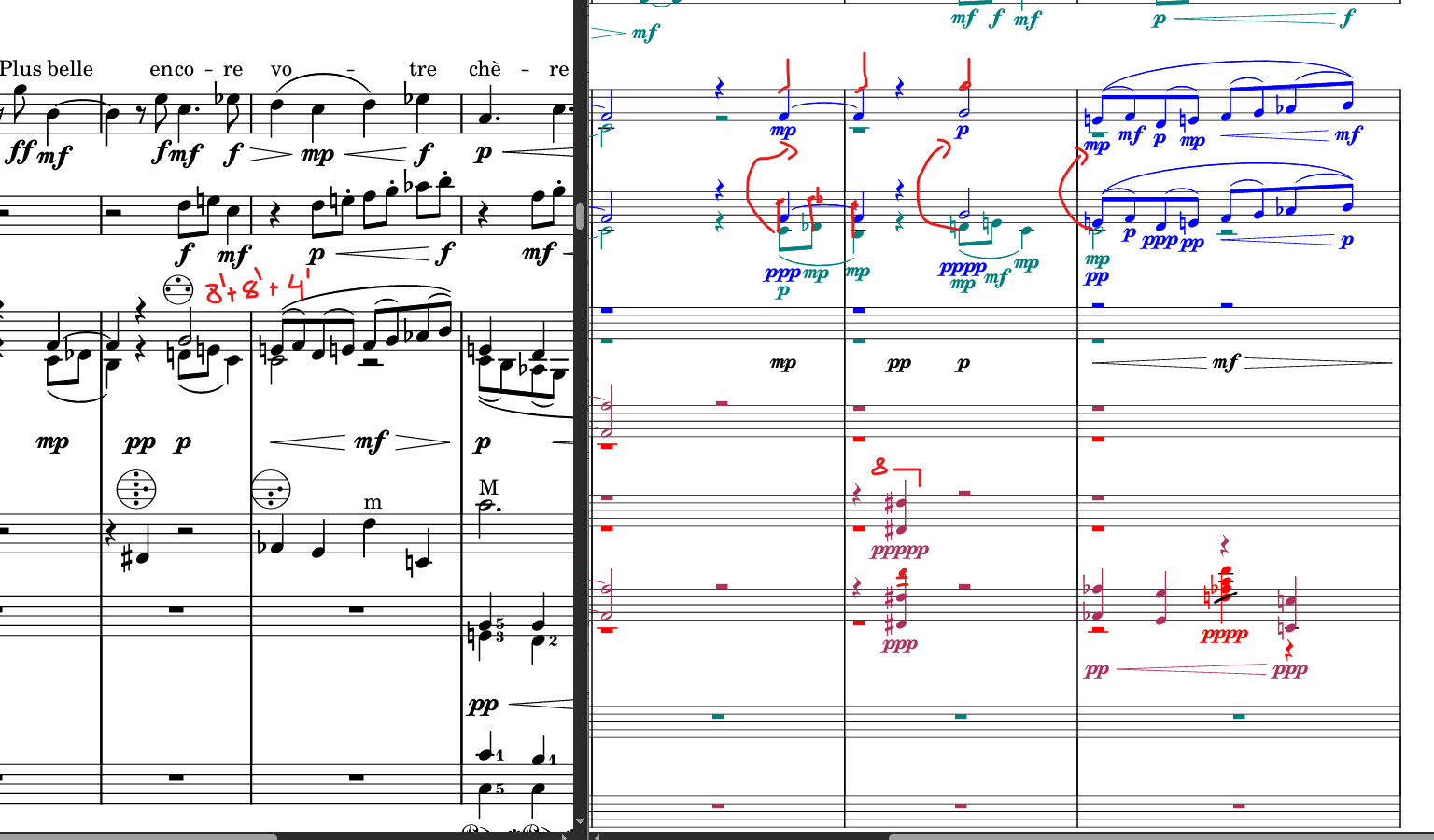
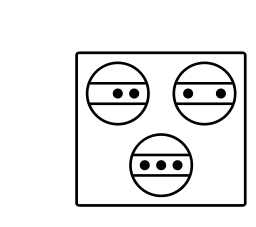
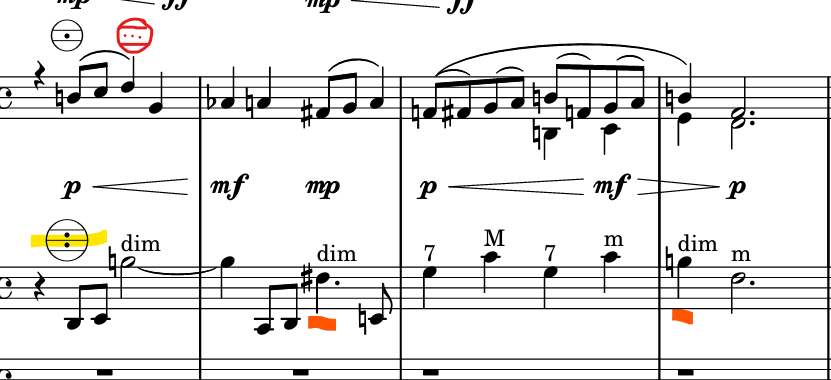
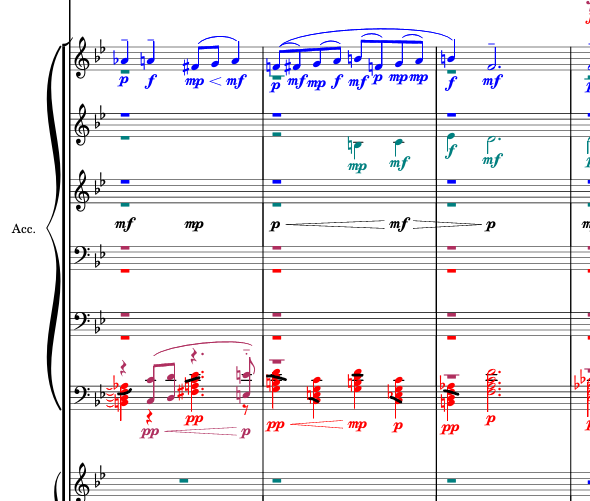
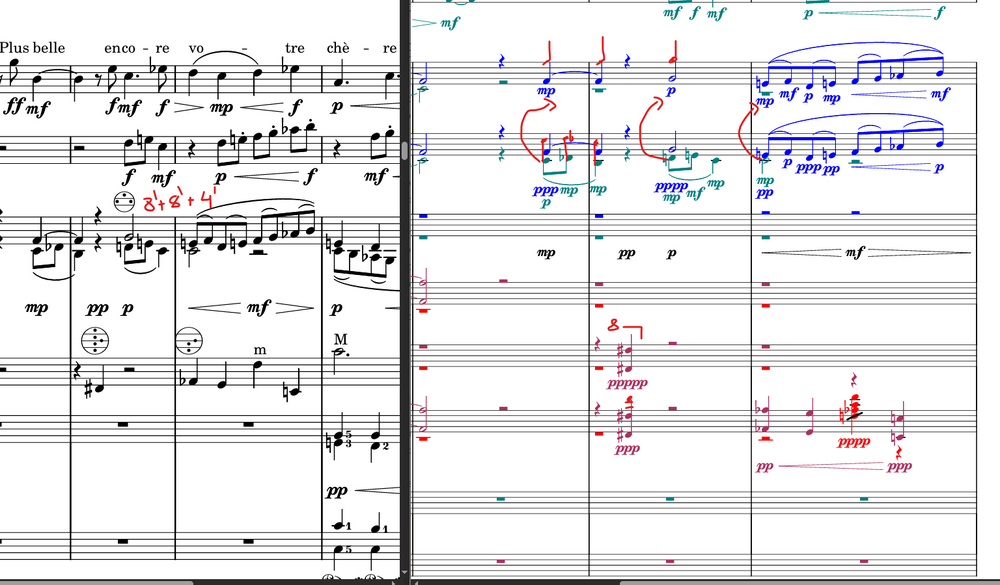
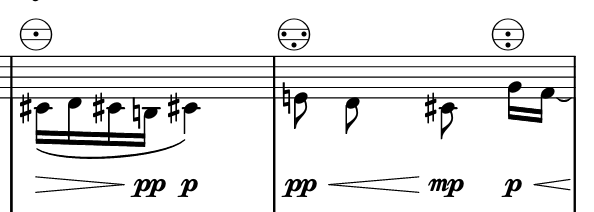
Hi! Just assessing Henry here, I guess. @Henry Ng Tsz Kiu note that accordionists overall, specially those who are amateur, or just interested in performing, will know as much as any non-player (but musician) of the ways this instrument may be properly engraved. More often than not, as it happens with many other instruments, we "convert" the information to our format on the go. I fear something similar would happen to the piece you've brought to my attention. Now, in regards of the accordion scoring of this PDF I'd say that : RH specified at the beginning of the piece do not match with the provided sounds (LH could, but I'm not certain, it sounds like a Soft Bass and it definitely has no soprano voice sounding in those very first bars that I'm discussing right after this bullet) MMM or MM for the RH are the ones you're looking for, at least judging by the soundfont which appears to be a french musette, so it's either that or open violin register. Note that no registers work for providing thirds neither accordionist spawn them on the go. I'm seeing the working score and I just don't get why there are so many notes that are just not present. Note that not all accordions have these, some 3-voice Piginis and other famous italian concerto accordion brands prefer the dry sound of the harmonium register, LMH. or 4' + 8' + 16'. Your sound is 8'+8' or 8'+8'+8', assuming it's the one you are seeking for. Chord movements by semitones are to be avoided if possible. Otherwise, you'll be inflicting tremendous pain to the accordionist, assuming Stradella system since it's the one you're using. So, without extending myself much, let's just review some examples. These are M15 to M18 if I'm not mistaken. RH register, according to the audio, should be MMM or MM as I mentioned. Bass voice doesn't sound like Soft Tenor but that's minor. What's not minor is that F#dim and Bdim are so far away from each other and from the G7 and C buttons, demanding unneeded agility. Here there's no other option than to briefly discuss voicing. The voicing on standard 6-row stradella accordions with 2 rows of basses and 4 rows of chords is root+m3+7dim (and depending on the register, that can be doubled or tripled in octaves above and below). There's no fifth sound, neither in the 7 button chord, allowing the accordionist to essentially do a Xm6 or a Xº by using the dim button and the proper bass, and some other interesting combinations. And thus, all these red notes are... Not quite accurate, to say the least. According to the register you are using in the score (soft tenor), chords should be an octave higher with the proper voicings. No chord button alone produces more than 3 notes. M/m -> 1-M/m3-5, and for the other two (7, d), you take the 5th. You can find more information about Stradella voicings here in case you be interested in making it right. I have briefly talked about this for a reason, since you're not doing the complete Xº tetrad, the symmetry of chords marked "d" is in principle broken. But since I don't think it's gonna be a problem because the F# is already being played by another instrument, in that excerpt I would change F#º by Cº, which is very close to the G an C chords you're gonna play afterwards, and also, on a similar fashion and by using a similar argument, I would change Bº → Fº. Note that similar occurences happen throghout the whole piece. Finally, there are many register changes that are not reflected in the audio at all. In fact, since the very beginning it's clear that there's no "Clarinet M" sounding, but a French musette. While I can understand the limitations because most usual accordion soundfonts come with musette or in two voices already, there are plenty of incorrect examples. Here I tried to point out some. M26-28. The "Master" register uses 5 voices in the bass buttons, 5 because the contralto doubles the alto voice in half of the octave and the tenor voice in the other half, adding to the previous Soprano (2') + Alto (4') + Tenor (8') + Basso (16'). The website I shared notes C to F in alto and F# to B in tenor, but truth be told, this depends 100% on the manufacturer. On the right hand we got a fair deal of strange stuff too. You write "Musette Imitation", which consists on 2 middle voices (8'+8', one lightly detuned forward, usually) and a voice that's an octave higher. And that's for all notes, not jut for the ones you'd like to double, sorry. What's usually the benefit of changing registers that much in a piece? Little, unless you are Gianfelice Fugazza and you know exactly, and I mean exactly what you're doing, in the context of a pedagogic piece, an étude, an example, or a concerto piece. So I can assure you that with no loss of sound quality or musicality, had you removed all RH register changes and replaced them by an open violin (8'+8') and/or a musette (8'+8'+8') register, the sound would be closer to what the audio depicts and probably to what you were seeking for, since: Accordion, yes! Any accordion? Nein! A French musette accordion, a Cavagnolo, a Mengascini. Not a dry Pigini and if you wanna be just right about the french sound, not even a Hohner would do the trick. Ah, and these are often traditionally button accordions, not keyboard accordions, but you'll find a handful of them too. By doing what I suggested, you'll get rid of difficult/uncomfortable sections. Apart from the chord issues, we'd clean up things like these: Not impossible at all. But if you don't have one of these expensive accordions (that won't sound like French musette) that come with chin switches, you'd better pray these three registers are close enough. And just in case, the other hand is busy handling the bellows. And again, your working score (which I assume you used for the audio) doesn't correctly notate the passage according to the registers of choice. That said, the piece was nice to listen to. Not my turn to evaluate it, and I don't really want to bore you further, but the "Engraving" and "Playability" parts (which are definitely related in my opinion... Something may be possible to perform but its actual playability could be demeaned by its poor engraving) would not get a pass from me, sorry Wieland. I mean: your score frontpage looks very nice, it's original, and imo shows great care for it (though, why does it say 15 of 24 if this is the XXI? Or I'm in the wrong?). So, what happened here? Why none of that permeated into the score itself? Lack of time? Perhaps indolence? Lack of inertia or eagerness cause many may not make use of it for judging? I'm sorry if I'm being hard, but I'm not ill intentioned at all here, I just do not understand. I may not agree with every engraving choice you made in your XXI Praeludium for piano solo but that shows how you could have got a way cleaner score out of this. Or maybe not? If you don't mind, Wieland: what software are you using? Musescore 4? I think this reply is long enough already. I wish you the best for this competition. May you find any of this of help. Best regards, Daniel–Ø.
-
Hi Wieland, Finally able to reply after some business with school/ life. Not here to do whole reply addressing all of the comments you made, but I wanted to say thank you for leaving one and the nice words you left within them. To your comment on score engraving, sizes, and more, there is a reason for all of it. Here is my list addressing them: 1. Hairpins. In classical literature, it is common to see hairpins from a composer without the outer dynamics specified. The practical implication is that the hairpin is to be executed within the bounds of the provided dynamic. I.E. if you start at a piano marking, followed by a crescendo and decrescendo hairpin, you are meant to crescendo (possibly to mezzo piano or mezzo forte) and back down to a piano dynamic. Unless otherwise specified by an ending dynamic, this would be the assumption. Even a young performer knows to get louder, then get softer, around the same of what they started. In my opinion, it is also beneficial for a performer as they can explore the bounds of such an instance. 2. Score Size. The size of the string staves comes from the following: Chamber works are performed without a conductor (most of the time). Both speaking on my own performance experience and my studying, the score for chamber works is the piano part. We read the piano staves of course, but for our role as an accompanist or collaborator, we need the other parts for clarity within the ensemble. It can also act as a reference for the other parts if they need to check something. Thus, why make the other instrument staves smaller? Well, to save space, paper, and ink! We don't want to do 1,000 page turns, nor do we need to read the other parts. Thus, you make them smaller so we can focus on the piano part without any issue. In my score, the other staves are 80% the size of the piano staves. Attached are some IMSLP links ranging from classical to impressionistic chamber works to showcase this point. All of which are from different publishers: L. Beethoven Op.11 - Gassenhauer Trio in Bb-major A. Beach Op.67 - Quintet in F-sharp Minor F. Mendelssohn Op.49 - Trio no.1 in D-minor C. Debussy CD.148 - Violin Sonata 3. Fonts. I never considered your point on older notation style, like Henle, Bärenreiter, or Breitkopf & Härtel. That and how it may help the monotony of clean or "cold" fonts you may see today. I will consider it for the future!
-
Yes, that would be interesting to find out what he thinks of my „funnyly placed“ register symbols and my bass notation. I think, the accordion is often too underrated, and so the challenge of that competition was a great opportunity to compose a piece for the accordion as well. I’m very glad you noticed noticed and mentioned that. Indeed, since I this year did my first exercises in orchestration for a full orchestra, I have tried to apply those experiences to the “Quintet.” So I didn’t simply take the original piano composition and translate its four-part voice leading literally to—let’s say—a string or woodwind quartet; rather, I tried to distribute the four voices among the instruments in such a way that the melodies and textures flow more seamlessly from one to the next, as is often found in the magnificent orchestrations of Romantic composers. And that’s exactly the reason - considering the ensemble as an „orchestra“ - why I have chosen an orchestral notation rather than one used in chamber music, which has led to the somewhat unusual instrument groups or families (where the brass, plucked string, and string sections consist of only one instrument each, and the percussion/keyboard section includes the accordion and piano); the bracketing of that „groups“ and the connected bar lines between accordion and piano have already been criticized therefore. The idea for the fugato came to me while I was looking for a form or a “model” for the piece. As I described earlier in my introduction to this post, I recalled the prelude from BWV 852, in which Bach apparently faced “the same challenge”—namely, moving from “nothing” to “something”—and therefore combined three different musical ideas: an introduction in a rather improvisational style, a “chorale,” and finally a fugato in which the first two ideas were ultimately developed together. And since I’m a “counterpoint guy,” I always feel comfortable when I can develop melodies in a fugal manner, even though it was difficult this time, as the flow was somewhat interrupted by the passages where the second and third stanzas begin. T So I finally didn’t end the piece with an ever-escalating fugue, but rather recapitulated the introduction, beginning at rehearsal mark F. Thank you very much. Often, you don’t even notice the dissonances yourself anymore once you’ve listened to your own piece dozens (if not hundreds) of times.
.thumb.png.8b5b433a341551e913a34392660bc95b.png)