All Activity
Past hour
-
Hi @CrystalCanon ! Great job with the crafting of this piece as well as live performance! Did you perform this yourself, or did you record your friend playing it? It's very charming with many romantic era harmonic tropes (such as dominant 13th chords and modal interchange). Thanks for sharing!
-
Hi @PeterthePapercomPoser! I really enjoyed your short piece, with its flowing polyrhythms. It has a distinctly nonwestern sound to it, perhaps some gamelan influence? It’s definitely its own thing though. I find it interesting how seemingly arbitrary constraints can help define successful and engaging music. As Stravinsky wisely said, “Whatever diminishes constraint diminishes strength”. While I’m not superstitious, I also find it artistically stimulating to think of music in symbolic terms. For example, I naturally each pitch with a specific color. Besides, composers already tend to associate musical themes with concepts in individual works.
Today
-
Hello everyone! I’m happy to be posting my first piece on this forum. It’s a short and unpretentious waltz for piano in A major. After a couple years of much reading and sketching, but without a single completed work, I decided to revive one of my old ideas, with the encouragement of my best friend. It took me a little over a week to complete, during a vacation in Paris, and it’s very satisfying to be able to put a double bar on the end! I’m dedicating it to my friend, who plays the piano herself, and now lives on the other side of the world. It’s in a very tonal and functional idiom, and I had no intention of making the piece stylistically distinctive, though I think a few elements of my personal style definitely found their way in, such as a certain motivic organicism, and penchant for harmonic variety. Any feedback is greatly appreciated! (Sorry for the bad recording—I figured it was still better than the MIDI output, especially since I don’t know how to configure dynamics playback in Dorico yet). Home recording - Waltz A major .mp3 01 - Full score - Waltz in A major.pdf
-
@CrystalCanon I completely agree that neoclassicism is a continuation (following a hiatus of more than a century). Of course, these composers looked to everything that came before, in response to what they considered “chaos” in the 20th century. But what prompted me to start this thread is the fact that many people automatically label music as neoclassical simply because it sounds like 18th-century music even though it was composed today. And that’s not the case. Neoclassicism has its own (new) characteristics. It uses dissonance—sometimes very subtle, other times blatantly so—along with polytonality. It employs surprise through rhythms and/or accents that become irregular and ever-changing. It shuns the idealized beauty of Classicism and seeks instead a sense of detachment and intellectual order (many composers omit violins for this reason). Here’s a very clear example:
-
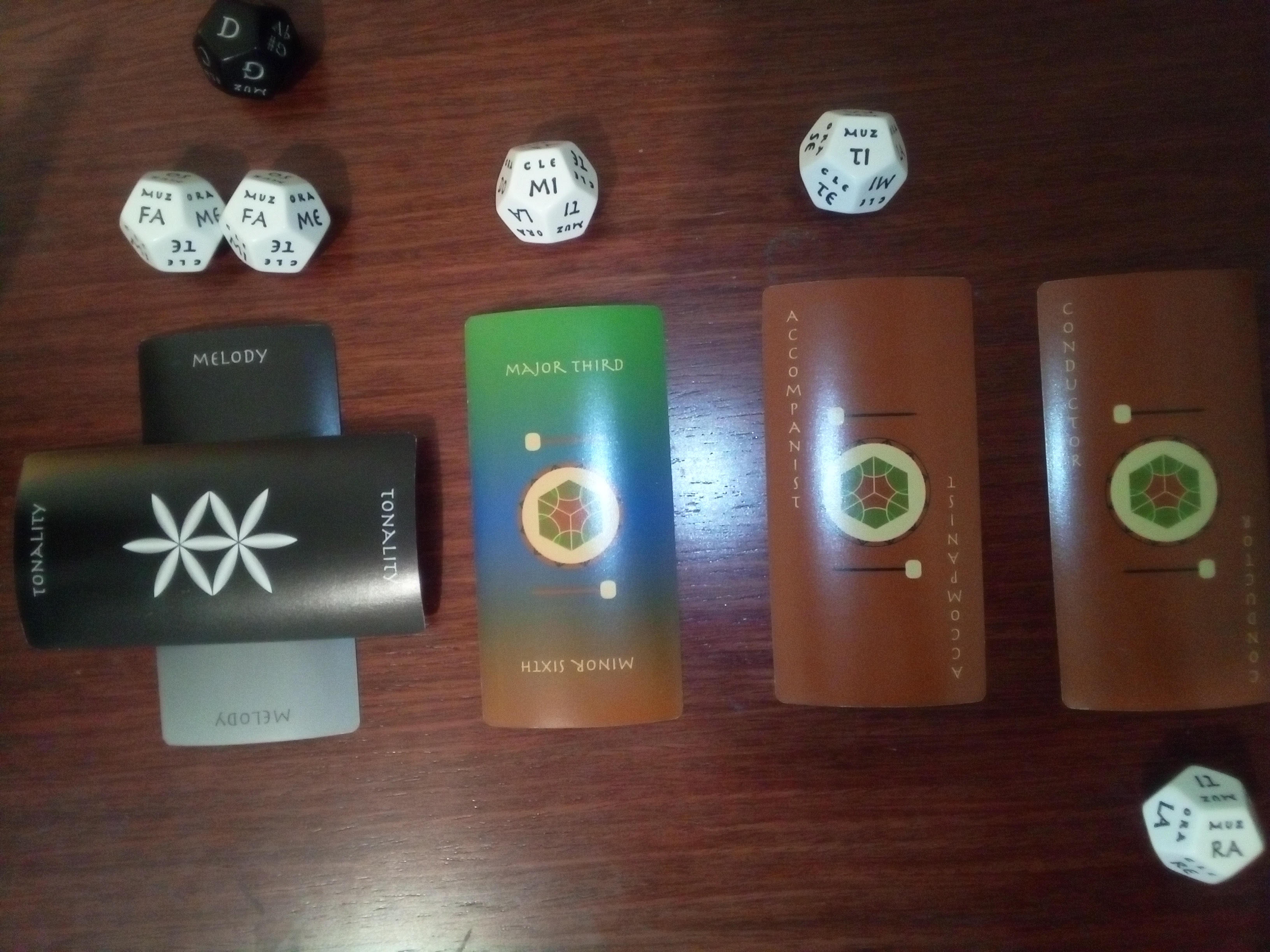
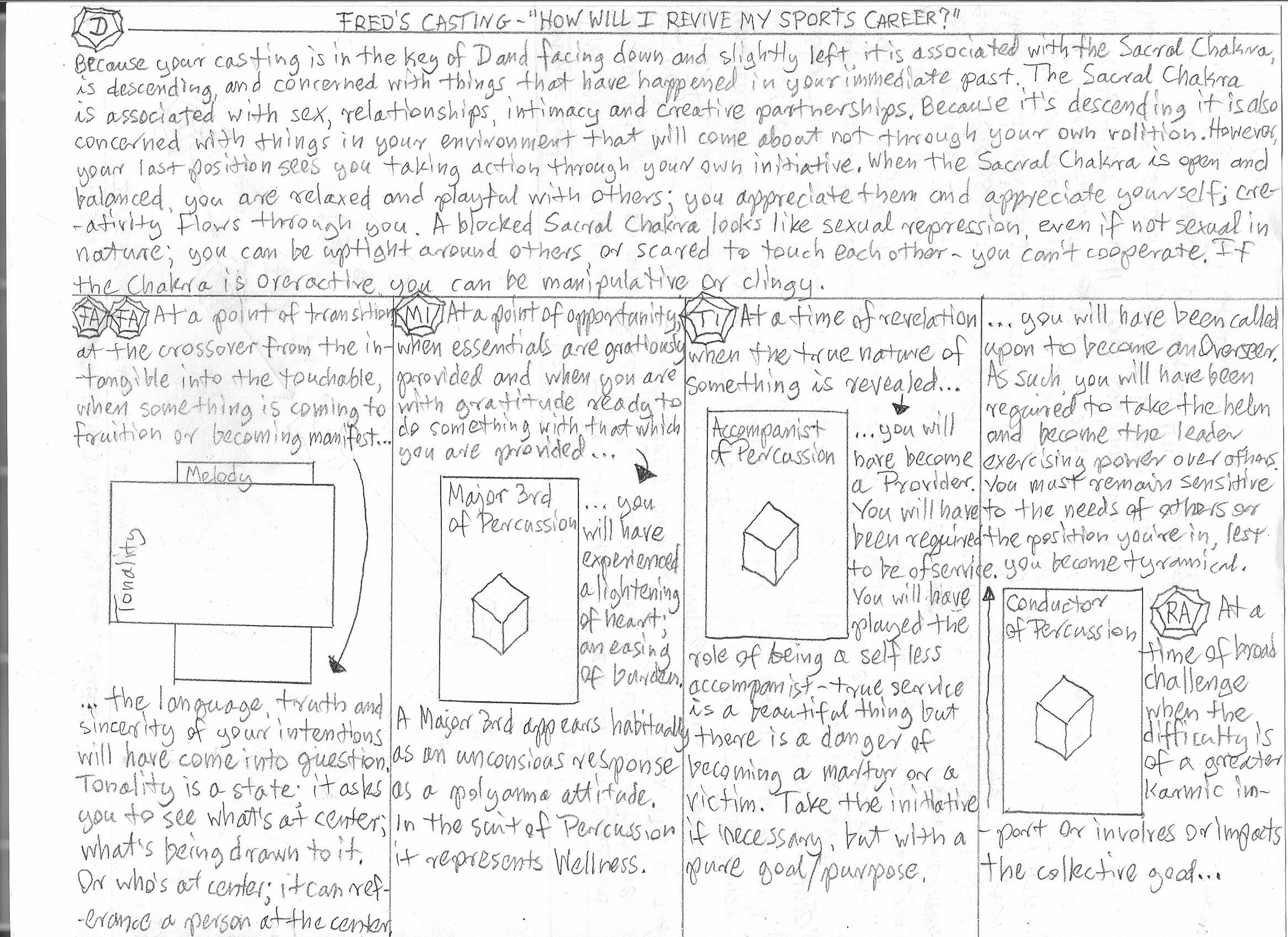
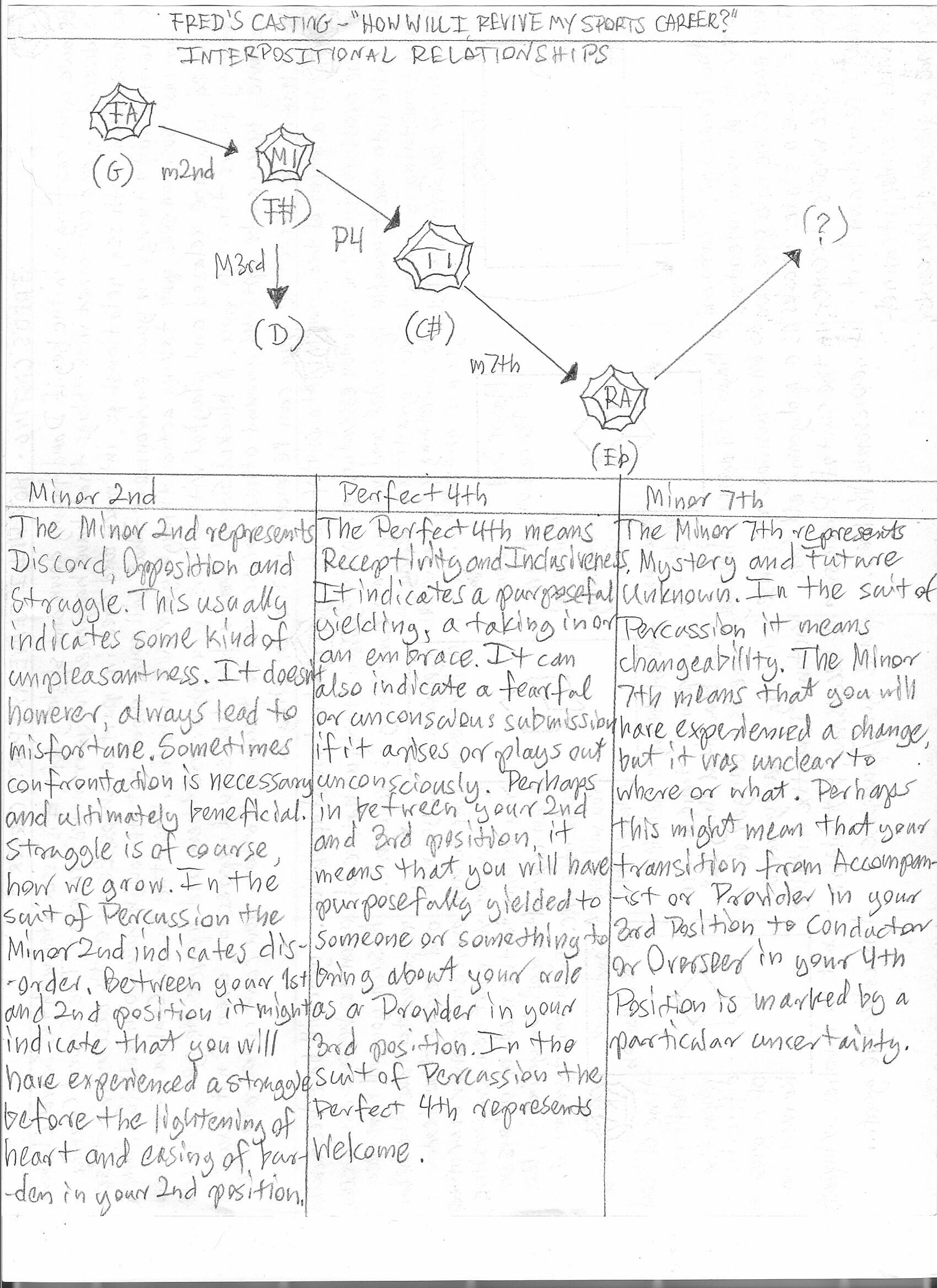
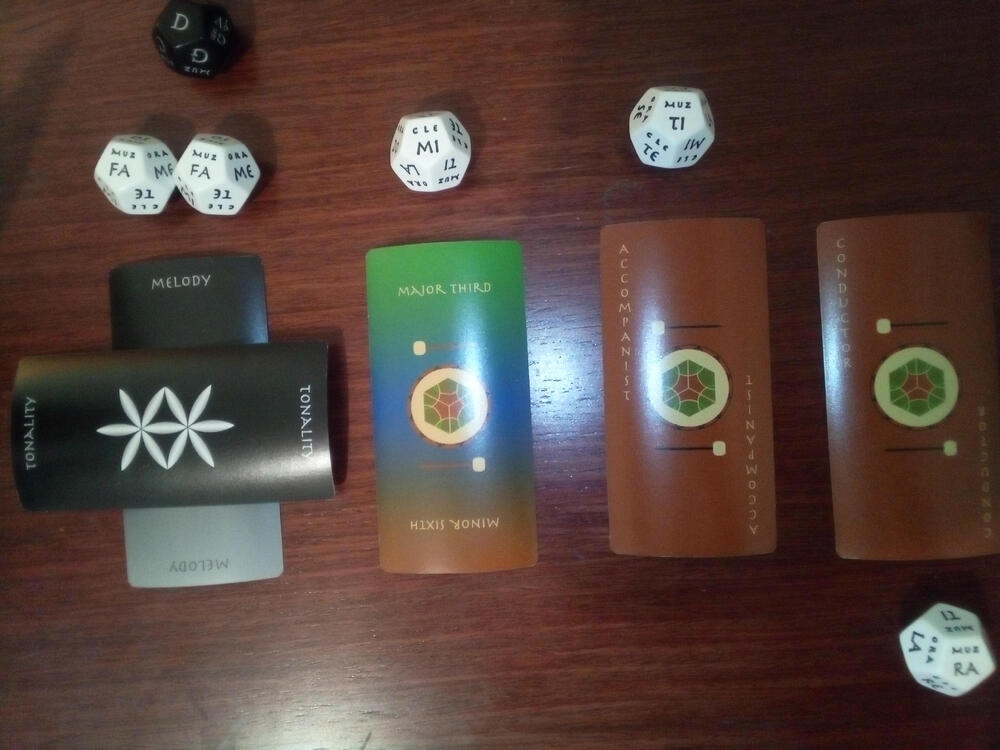
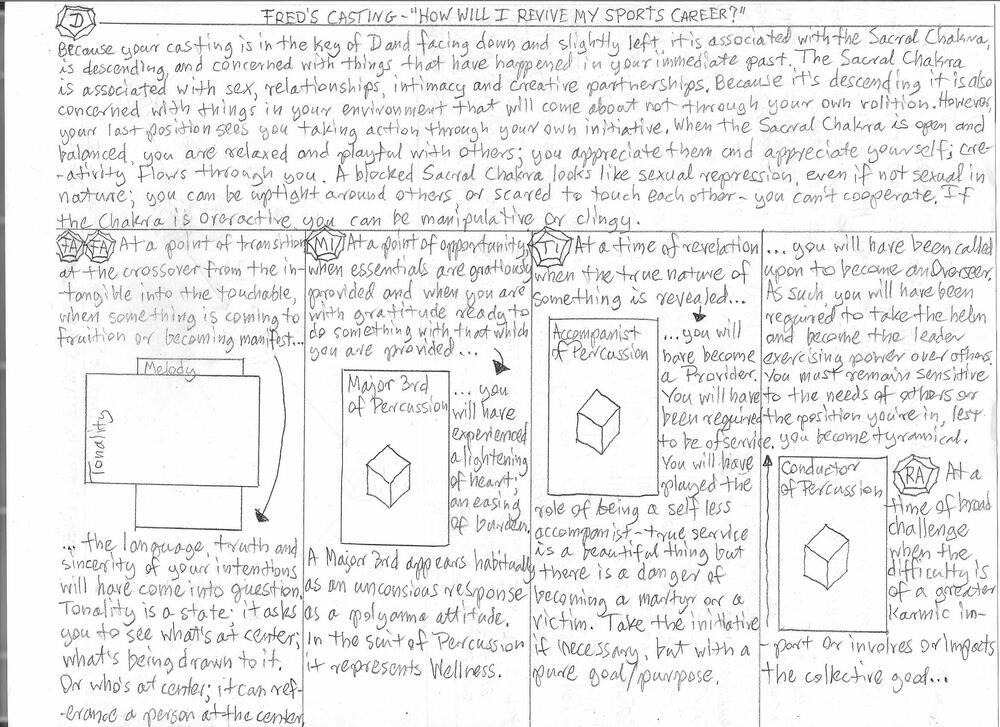
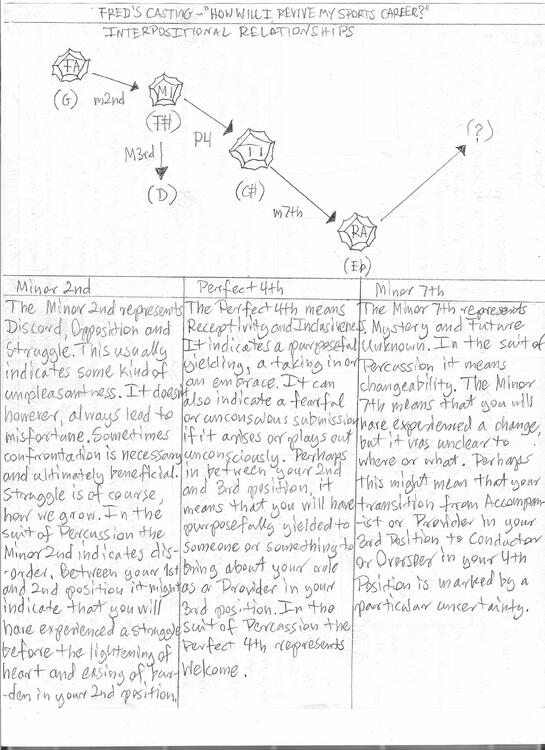
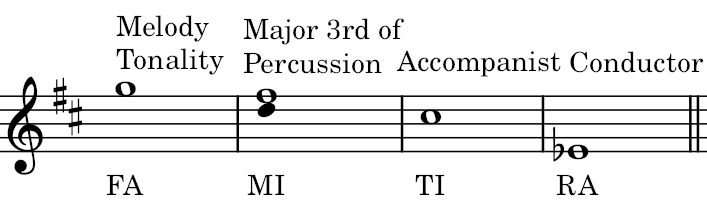
For my 15th casting Fred asked the Muzoracle "How will I revive my sports career?" (Muzoracle is a storytelling/fortune telling/divination tool similar to the Tarot card deck, but with cards with musical concepts and 12-sided Musician's dice and Solfege dice. Perhaps it may be thought of as a special musical Oracle card deck.) My interpretation of the cards and dice are displayed below. Since the black 12-sided musician's die landed on D, the piece was set in that key and pertains to the Sacral Chakra. All the cards drawn were in the suit of Percussion (besides the two elemental cards in the 1st Position - Melody and Tonality). So I chose Crotales, Vibraphone and Woodblocks as the instruments for this casting. If you'd like to find out more about Muzoracle and how castings are interpreted go here: https://muzoracle.net/ This short musical representation of Fred's 2nd Casting is about a minute long. I created the following melodic/harmonic underdrawing guided by the cards and dice. I started the melody in the Crotales and only once the melody hit C# (Ti) did I introduce the Vibraphone and Woodblock accompaniment, guided by the position of the Accompanist card. If you've gotten this far, thanks for reading! And I hope you enjoy listening to this short chamber work I wrote to represent Fred's 2nd Casting. Comments, critiques, observations and suggestions are of course always welcome. Thanks for listening! Fred's Casting No. 2.mp3 Fred's Casting No. 2.pdf
-
Thanks for sharing @Alex Weidmann! I’m not qualified to comment on the orchestration, but I really love Koechlin’s colorful sense of harmony and sonority. It reminds me of Mompou in some ways, though less static. I’ll have to dig deeper into his work…
-
-
-
Becoz there ain't no fairy tales in modern world now lolol 😝 Also it reminds you drinking more milk lolol
-
Greetings all! Just wanted to post my latest orchestration. It's another piece by Frank Bridge called "The Fairy Tale" (why does it keep autocorrecting to "The Dairy Tale"?!) I've only tackled the first movement so far (titled "The Princess"). The original piano work is very light: so I've tried to keep it so here. At one point I alternate between pizzicato and staccato in the 2nd violins, to provide a different colour. Not really sure this works? Perhaps I should've stuck with staccato only. The poor doublebasses have nothing to do. I wonder where they could play a role? Perhaps pizzicato would work somewhere? The celli also could do with more material; but not sure where to bring them in? All tips very welcome! N.B. I haven't bothered to write in alternations between the 1st and 2nd flutes, clarinets and oboes as yet. I will add some later, so they don't run out of breath. Bridge - A Fairy Tale (orchestration) #13 (added ZL compressor).mp3 Bridge - A Fairy Tale (orchestration) #13 (added ZL compressor).pdf
-
Thanks Mark. Hopefully I've converted you to Koechlin! Many of his pieces can be found on You Tube, as well as an interesting documentary about his life and works.
Yesterday
-
Hi @MJFOBOE ! This piece was not written by Alex, but by @gmm .
-
A lovely pleasant piece of music. Remember woodwind players need to Breathe! Why the Oboe D'amore? Not many players own one. Why not substitute English Horn? I also think in this composition the tone would be more fitting. Mark
-
Schizophrenia is a terrible illness, but of course many people recover and do very well and function very well. I hope your health is good. I am actually writing a piano piece about Schizophrenia at the moment, which is about 90% completed. I will try to share it on this website when it's done. Your Andante sounds really good :) Mental illness is absolutely a difficult topic, so my hope is that by using music, there are some things that can be communicated that words cannot.
-
Hi I listen to the original piano work; although your orchestration is full of color and is well thought out and quite enjoyable. The orchestra version from my mind when compared to the piano is not as ethereal/light or distinct as the original piano version in feel. I guess orchestrating from piano is not easy at all. Mark
-
Once again very nice sounding work ....
-
Alex, this is a lovely work. My only observation/suggestion is all the doubling in the woodwinds. When playing with multiple persons tuning the octaves among the players takes a bit finesse. Mark
-
I am not familiar with examples in any genre of music that deals specifically with this subject - and it's sort of a difficult topic too. I myself have mental illness and wrote my Andante for Strings while I was developing Schizophrenia.
-
-
PeterthePapercomPoser replied to PeterthePapercomPoser's topic in Music Appreciation: Suggest Works or ArticlesKirby Super Star - Cocoa Cave:
-
Hello Peter! @PeterthePapercomPoser . I am doing exactly what Henry did 3 years ago! (nice) I would first like to provide a description on 'Gavotte'. I have written this myself. 'Gavotte' is a French dance that originates from the word 'Gavot', a folk dance. just like the Polonaise from Poland, or the 英歌 from China. Gavottes are usually in duple or quadruple time. Some of my favourite Gavottes are: Saint Saens Gavotte in C Moll Cecile Chaminade Gavotte in A Moll Johann Sebastian Bach Gavotte from French Suite No.3 in B Moll. That was my description of the 'Gavotte' as a dance, overall, as well as my favourite picks. The following will be a loose analysis of your piece. <Not done yet!!!>
-
Hello everyone, I've been trying to look out for depictions of mental illness in music. I asked ChatGPT and the response was a bit underwhelming. There is always speculation and sometimes confirmed facts about composers with mental illness, which is interesting to consider, but not precisely what I am trying to find. Does anyone have any recommendations for this sort of stuff? Context: I am trying (and have already written) solo piano pieces trying to capture the essence of various mental illnesses. Genre doesn't really matter. I found some more popular pop-like music that moreso deals with people's lived experience of mental illness. I mean that's cool too, sort of getting warmer. But mostly looking for music attempting describing the illness through the music (not necessarily through the lyrics), if that makes sense. Things like depression/bipolar/ADHD/anxiety/schizophrenia/addictions etc. Hopefully someone can recommend something, thanks in advance :)
-
Hello, Sometimes the problem with writing so much music is that it takes so long to listen to it all. I have been listening to the your pieces gradually in the last few weeks while at work to try to take it all in. I think others have made more specific comments, I'll just say a few things about overall impressions. Maybe there are more thoughts after...but I think when you've created something like this - it sort of takes on a life of it's own. I mean from the most fundamental level, I find your music interesting to listen to and I enjoyed listening to it multiple times. So in that regard, from a subjective perspective, I am a fan. I dig your style. The opening notes from your first prelude sort of says: This is Classical music, but the chords are gonna be a little spicy at times. Which is great. Listening to your music feels familiar enough for me, but also exciting enough through the nice harmonies and ideas you got going on. It's clear that you have put a lot of thought into it all. The pacing works great. I'm thinking that the 10 pieces need to be played in this order. So the second thought is...can you actually play these compositions yourself? It gets very virtuosic at points. I would absolutely love to hear a recorded version of yourself playing it. I think there is only so much that comes through in these simulated recordings. The third thought is that you clear have a style that shows through. Prelude 5 goes a bit off on a tangent stylistically from my ears, but I mean I think I hear a distinct "SergeOfArniVillage" style if that makes sense. My favorite is probably Prelude 7. The right hand accompaniment that you do throughout is so nice. Really tickles the right places in my brain, if that makes sense. While you have the "loud" songs and the "soft" songs. I think I prefer the more quite and contemplative ones. I also enjoyed Prelude 9 very much. Probably my second favorite. I'm a big fan of adding descriptive titles to your pieces. I totally get if that's not your thing, but it would be so amazing to hear your own thoughts on what inspired you and what you were sort of going for when writing these pieces.
-
I recently showed a draft of a piece I was working on to one of my friends. With the piece being in 13/8, which has multiple ways of grouping, I decided to write the time signature out as (3+2+3+3+2)/8 instead of simply putting 13/8. My intention here was to make it easier to interpret and learn, but I was told my choice made it more confusing. Would it be better to notate it as an alternating pattern of 8/8 (or 4/4) and 5/8? Or simply 13/8? Or is there some other solution that I haven't considered?
-
Hello @Luis Hernández, I’m glad this topic was brought up for discussion! It may be useful to distinguish a few senses in which the term can be understood. First, neoclassicism can be understood in an inclusive sense—as the employment of stylistic traits of classicism within a new or later context. In this sense, works composed before the 1920s could be considered "neoclassical", such as Saint-Saëns’s wonderful Septet in E-flat major (1880) or Grieg’s Holberg Suite (1884), as well as works being written today. In this context, "neoclassicism" is used in a similar way to descriptors like "neo-romanticism" or "post-impressionism" (both of which, arguably, can be understood in a more limited way as well). There is, of course, a difference between this broad assimilation of classical elements and the seeming "distortion" of them that we often observe in Stravinsky or Hindemith. Perhaps it’s in this latter sense that you speak of "Neoclassicism" as a specific historical style and era. Yet Stravinsky and Hindemith didn’t view what they were doing as "distorting" classicism, but rather as continuing it—perhaps as a reaction against the saturation and monumentality of much German Romanticism. Stravinsky himself, the composer most closely associated with this movement, famously stated: "Neoclassicism? A label that means nothing whatever." In fact, almost all of the composers tied to Neoclassicism wanted nothing to do with the term. So while I think it’s a bit pointless to fret over the "correct" use of labels in art, I feel justified in using the term in its more inclusive sense. For me, it’s a helpful tool to describe music that is influenced by the Western art music of the 16th–18th centuries, approached from a modern perspective with varying levels of reverence for classical norms. I don’t think those who use the term in a narrower sense are necessarily more "correct" (though I do take issue with using the descriptor for mainstream 'peaceful piano' music—but that’s another story best left for another time!). Some works I love that I could be considered neoclassical, albeit in different ways:
.thumb.png.8b5b433a341551e913a34392660bc95b.png)