All Activity
- Past hour
-
 A lot of voice leading things that are weird. Very postmodern sounding to. I somewhat appreciate the dissonance. OK, I like the change to pace. I appreciate the different folk aspects of this piece. And I definitely like that electric guitar cadenza. A mixing issue with the winds burying the main theme. We are back at measure 59 with the folk melody There may be some difficulty at 83 and before that with the double tongue in the brass. I also like how some of the other instruments double the guitar with the runs. Why is the viola in the bass clef. I like the rhythmic interpretation and variation around 111. I enjoy the guitar solo and also the irregular variation with the rhythm although that the playback may not support this make sure you write some slurring around. At 179 a previous theme returns. Along with the folk melody running after that. Some of the guitar material had returned. And I like the end. Good job and I appreciate the amazing structure and the cool material that you have given throughout the first Movement
 - Today
-
Reach the Highest Rank "Transcendent" on 31st January, 2026, after joining the forum for 3 years and 9 months.
-
.thumb.png.8b5b433a341551e913a34392660bc95b.png) The prompt for this polychordal Persichetti produced piano piece was "6. Extend the passage of broken polychords (three units) for piano." Thanks for listening and I'd appreciate any of your comments!
The prompt for this polychordal Persichetti produced piano piece was "6. Extend the passage of broken polychords (three units) for piano." Thanks for listening and I'd appreciate any of your comments!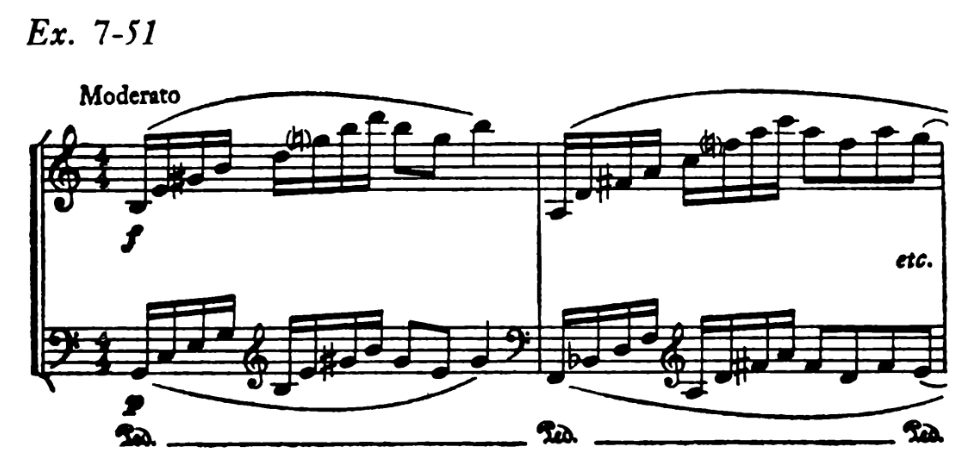
-
Favorite Musical Book Quotes?
PeterthePapercomPoser replied to PeterthePapercomPoser's topic in Composers' Headquarters
I come to you with yet another quote from Gary Lachman's "Beyond the Robot: The Life and Work of Colin Wilson". There is a pertinent insight about creative artists at the end of the quote in this chapter which has to do with peak experiences. Go forth and dominate the world with your creative "originative intellectual work"! -
Greetings, Space Cowboy! "Neo-Tokyo," describes the, Hayabusa Feather, coming home after gathering, Asteroid. As the space vessel operates, large asteroids clash in the background. I think there are at least 7 fugues represented in the piece. Some from, "Seraphim," some from Symphony No.2, two more on general texture, 1 final in the background, constant. Feel free to make 'stamps,' or short samples, to use for your work. If you wait until the fugue ends, make a sample, you have a 1 minute sample. 30 seconds of that could be used for anime, AI, or entertaining yourself. Complexity Magnitude, is the most complex fugue I could come up with, and it ended up surprisingly simple. Easily underestimated, easily understood, I wrote a tutorial: Atonal Fugue Writing Tutorial Other than that, feel free to alliterate from your favorite media - and keep the good times rolling. Splendid night, Space Cowboy! Complexity Magnitude_Harper.mid
- Yesterday
-
I want the melody around 25 seconds in to the piece to have a more “jumpy” rhythm, that sounds like the audio recording below. Not sure what exactly is happening tempo wise. Any help is appreciated.
-
Starting with what you've got is a great idea. Start with whatever you already know and are comfortable with, and then you can build from there. So you can try coming up with a tune to play on guitar, and then try writing the notes down accurately using free software like Musescore. Or, the reverse, try writing something for guitar using Musescore, and then try playing it. Either will help you get better at knowing when something is a half note, or a quarter note, or a dotted eighth note. Either will help you get better at reading and writing pitches and knowing when to use accidentals, and when the sharps and flats are part of the key signature. I like the advice to start with children's songs or folk music. You could also add Christmas music to that list, or songs from summer camp, or any music that you know by heart. Anything you are very familiar and comfortable with is a good place to start. Do one or two of those, and then when you feel like you can accurately write down the notes and rhythms you want and know the basics of the composing software you are using, you can start arranging pieces, or writing your own tunes. It's like learning to read and write. We start with picture books, so we know what is going on, even if we get stuck over the reading. We start with being read to by someone else, and following along with our finger on the page, and writing letters with a pencil. We start writing short, simple sentences. Then we write short stories or poems or book reports, and can read more fluently, and we learn to use Microsoft word and type quickly, and then can write whole novels if we like. But for now, don't overthink it, just get started. 🙂
-
I'm so confused... 😵💫
-
I have an electric guitar as of now, so should I start playing with it, right?
-
Yeah, I had some but a long time ago. 35 WOW! you are professional. Do we need real players to do experiments with compositions? Thank you for your advice! I'll do this.
-
Great advice! I do it sometimes but from now onwards I’ll make a habit to do it everyday. I think first I should start with self learning after clearing some basics then should invest in a physical teacher maybe?
-
There is an in-born thrownness in we human beings...
-
 Shuma joined the community
 -
Baião de seis(Flute,oboe,clarinet, horn, cello and double bass)
dhslamas replied to dhslamas's topic in Chamber Music
- Last week
-
 Fantastic, even better because it doesn't sound strange at all. And the bass is very powerful.
 -
Thanks for your review @Luis Hernández! No I usually keep the Violins and Violas on basic triads while giving the Cellos and Basses on added notes that don't belong to the upper triad. In the first few bars the Cellos and Basses have F (while C major above), Bb (with G7 above), A (with C major above), G (with D major above), C (with G major above), B (with C major above) ... and etc. I always try to give the Cellos and Basses a foreign note to the predominantly triadic harmony above. You should post some of your exercises here as well! Thanks again for commenting!
-
Hello I have some questions about this exercise. I already mentioned that this book by Persichetti is like a “bible” to me. I also do the exercises he suggests. In this case (I have the Spanish version, but I think it's well translated), I think it says that the added notes are on the cello and double bass (in octaves). Strange, isn't it? I've only analysed the first few bars, but I think your added notes are more in the upper registers, is that right? Regardless of all that... it doesn't matter. The piece is very beautiful. It sounds emotional and intimate, and everything fits together very well. Perhaps it's a very heterophonic style (I mean, with little counterpoint), which I don't think is bad. It reminds me a little of some of Mahler's work. Very good work.
-
Verse 1: Woke up, it’s raining again Empty room, still holding my breath Trying to smile, but it slips through my hands Like I’m watching my life from the edge Pre-Chorus: Was it always this quiet? Was it always this cold? If I’m meant to be living Why do I feel so alone? Chorus: Why am I here? Standing out in the open Searching for meaning, but nothing is clear Why am I here? Drifting through all of these moments Wishing my purpose would finally appear Tell me, why am I here? Verse 2: Eyes wide, I’m lost in the crowd Wearing masks I can’t figure out Moving slow, but my mind’s running wild I keep waiting to feel something now Pre-Chorus: Is there something I’m missing? A part I forgot? If I’m meant to be someone Why does it feel like I’m not? Chorus: Why am I here? Standing out in the open Searching for meaning, but nothing is clear Why am I here? Drifting through all of these moments Wishing my purpose would finally appear Tell me, why am I here? Bridge: Maybe someday I’ll know Maybe truth’s in the unknown Till then I’ll try to hold on To hope I can call my own Chorus: Why am I here? Standing out in the open Searching for meaning, but nothing is clear Why am I here? Drifting through all of these moments Wishing my purpose would finally appear Tell me, why am I here?
-
 At 14, Adam talked about summer dreams On the train and he's laughing with me Talkin' 'bout skateboards, his cat, and the girls that he likes I ask, “Have you got someone in mind?” She’s at the all-girls school He says something about loving her smile Suddenly questioning mine بياخد مخدرات و هو بيتعلم سواقة بيقضي وقت معاها He likes a girl, he likes a girl He likes a girl, he likes a girl And I'm not a girl, I'm not a girl I'm not a girl, I'm not a He likes a girl, he likes a girl He likes a girl, he likes a girl And I'm not a girl, I'm not a girl I'm not a girl, I'm not Used to pretending I'm cool مش ھاقدر أشرح Why my stomach is tangled in blue احساس جدید لیا He’s half-French with a crooked grin Cherry cola, bright on his skin Wasted on some girl who lets him win But why do I feel hollow within? Why am I burning? ما تفوق شوية He’s not your boyfriend He likes a girl, he likes a girl He likes a girl, he likes a girl And I'm not a girl, I'm not a girl I'm not a girl, I'm not a He likes a girl, he likes a girl He likes a girl, he likes a girl And I'm not a girl, I'm not a girl I'm not a girl, I'm not a girl I'm not a girl F**k that girl.
 -

2-part invention in counterpoint
Frederic Gill replied to Frederic Gill's topic in Piano Music, Solo Keyboard
I have made changes to measure 13, last note: C3 instead of C. Leave the C in Bass, for modulation.- 2 replies
-
- 1
-

-
- invention
- counterpoint
- (and 1 more)
-
 Since I have been long fascinated with crazy, unusual ensembles I present to you the piece "Always something unique" for flute, clarinet quartet, accordion, marimba and double bass. Composed in 2023 for the Alpe Adria festival of Music, it was premiered in November in my hometown Mengeš. It is not a perfect performance, there were some mistakes so do follow the score with the performance. It is a pretty demanding piece, particularly in rhythm and overall coordination (there was no conductor). I follow my standard fast-slow-fast form, with finale being pretty high pitched and ear penetrating. The style could be described as a mix of some Stravinsky, modern French music and my own personal idiom.
-
- 1
-
-
Baião de seis(Flute,oboe,clarinet, horn, cello and double bass)
Sojar Voglar replied to dhslamas's topic in Chamber Music
It is a nice piece. I like it because it is not so much cross-over in style but rather more of a classical art music, based on baiao dance rhythms. It is the similar approach I took on my five tangos for various ensembles. The only problem I see (hear) in no real climax. I wanted something more. Otherwise, good job! -

2-part invention in counterpoint
muchen_ replied to Frederic Gill's topic in Piano Music, Solo Keyboard
Welcome to the forums. Can you provide a score to your music? I'd be able to provide better feedback with a score.- 2 replies
-
- 1
-
-
- invention
- counterpoint
- (and 1 more)
-
 This is really great. I am astounded by how beautiful this work is!
 -
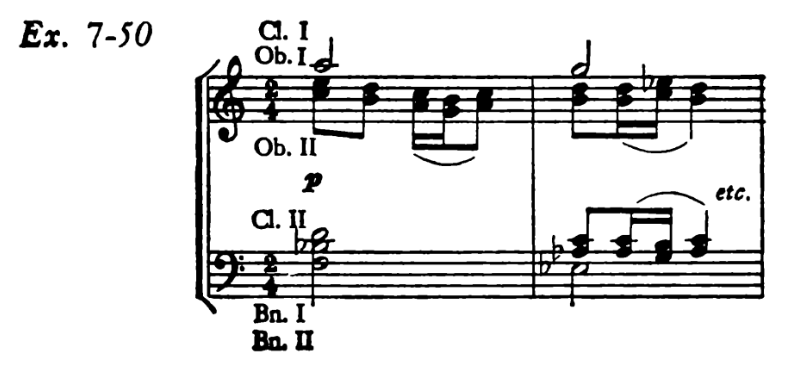
This time the prompt was "5. Extend the woodwind passage featuring polychordal ornamentation." Thanks for listening and I'd appreciate any of your comments!
-
Hi everyone. So far, I have studied with Percy Goetschius books and am practicing small 2-part inventions (about 1 minute long) as taught in his Elementary Counterpoint and Applied Counterpoint books. I wonder if there are other beginners working on this and willing to share our works. My goal is to use counterpoint with freedom, yet in a sensible way. I use Myriad Melody Assistant piano. Here is one example, with a motive from Handel (F maj). I apologize for the poor sound quality (I'll try to find a good alternative for my .myr files). Thanks!
- 2 replies
-
- 1
-
-
- invention
- counterpoint
- (and 1 more)