All Activity
- Past hour
-
Why do you call Peter "Peter Toilet Paper Composer"? That's VERY IMPOLITE of you to say so. He is very well respected among us and NO ONE should stigmatize him with such nasty nicknames. Henry
-
Jesus, Peter Toilet Paper Composer; CALM DOWN! I think you are a talented and competent composer, but stop taking things so personally!
-
Here's a masterpiece of a Violin Sonata: Brahms: Violin Sonata No. 1 in G major, Op. 78 (with Score)
-
It is by Outis, Ancient Greek for Nobody, so obviously, free to play around with; public domain. It is such a masterpiece, though...🤣
-
Space Nerd Free Sheet Music by Outis for Piano/Keyboard | Noteflight ...My piano MASTERPIECE!!! 🤣
-
To complete, I would actually have to do some ANALysis! Work on variations of that chord...bit too drunk right now! 🫠
-
Sh*t, I'm not digging! Never expected this trifle to have so many views! I may finish it, but it will be no masterpiece! Cool chord, though! 🤣
-
Usually if you keep digging your own posts it will attract views. 🤣
- Today
-
That many views, and so I have to finish this piano prelude eventually! You people are MAKING ME WORK!!! 🤣
-
We start the competitions based on the members interest in one.
-
It’s been a pleasure Out of curiosity, when’s the next competition in the timeline for its course?
- Yesterday
-
Hi @Fugax Contrapunctus ! I concur with Jordan! I think this fugue is one of your best! I especially like the ending. It doesn't overwhelm the listener with overactive counterpoint. Concerning the portamento I'll once again quote what @Alex Weidmann taught me in a previous post: Thanks for sharing!
-
-
Hi, Bjarke. This is certainly an exciting piece! Lots of color and rhythm. I'm curious... what were your goals/aims as a composer for this piece? What were you representing or symbolizing or trying to evoke? Knowing the composer's intent is very useful when trying to provide feedback. Best, Jordan
-
Hi, Marc. This was a pleasant listen. It evoked a sense of carefreeness, like watching clouds in a spring meadow. The melodic writing could use some attention. I felt like it competed with, rather than complimented, the rhythmic structure of the piece. Some of the harmonies were a bit ambiguous, too. I think the piece needs a more cadential framework so that the harmonic progression doesn't float around so much. I loved the various imitations of the main theme in the different voices! Thanks for sharing. Best, Jordan
-
-
This is a beautiful fugue, well-developed and carefully crafted such that each voice has its "time to shine." The voice leading is impeccable! Honestly, I don't have any critiques to offer, just wanted to applaud your efforts here. (I do have a comment on the recording: it sounded like the violins were on constant portamento. I'm not sure if that was intended but it was a little off-putting to me.) Happy composing! Best, Jordan
-
The competition is now over! See the winners and results here:
-
A very beautiful piece; I like the way it has such a restrained use of colour. And the piano part is very characteristic of the style. Well done.
-
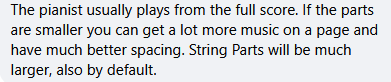
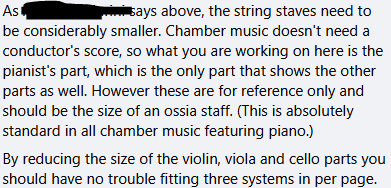
This is a close race!its kinda rare for me to wake up and immediately try to respond to a comment first thing in the morning, but here we are i disagree. i'd argue the empty spaces are there to let the music breathe, and i have considered of keeping the "movement" going in one way or the other, either by the piano playing scales, rapid lines, the syncopated triplets, arpeggiando on the strings, timpani rhythms, etc. also, i dont think every empty space has to be filled with motivic movement. does every piece has to have a melody "naked"? and i pretty sure have varied the harmony and texture. the first introduction to the full theme its literally just pizz. string and high register piano playing 6th broken up (which adds movement, by the way), the repeat of which (b.194) just removes the piano entirely, the first entrance of the second theme is played by cello only, with piano and pizz violin to accentuate the syncopated rhythm, the measures before that is another thinning of textures after a loud section, etc etc. i mean, i like it, so...oh well lol yeah, the themes are long and therefore had to be repeated. however, if i cut those repetitions the themes wouldnt be prominent. hell i did in fact cut the first theme in the repetition. most of the systems include 2-4 bars, with the exception of a few bars where there are few notes to play. i do not think crowding is an issue here. response: added references: and probably more. i couldnt find anything outside facebook discussions to be honest. HOWEVER, most of the chamber pieces including a piano that i've score read have the non-piano instruments be in smaller staves. response: also note, i'd rather have a seemingly impossible part and have to revise them after some feedbacks than not using the instruments to its fullest potential. part of why i fell in love with classical music is that you can get SO MUCH out of one singular instrument. the fact that composers have exploited many ways out of an instrument to serve their vision is so fascinating to me. maybe its innocent for me to think that way. of course, you have to consider the performer and the rehearsal, but, im gonna be real, i dont think this piece is ever gonna be performed. AND, if it was, or if i were to compose a piece that WILL be performed, then yes, i'll absolutely not go overboard and stuff, strip down the techniques, and be more lenient with them. this DOES NOT mean i do not think of idiomatic writing (refer to the my quoted response). also 6 bars of left hand open strings pizzicato played near the edge of the fingerboard is impossible? but, as all art are, it comes down to taste. so, fair enough thanks for the comments!!!




- Last week
Hi, Jonathon. Please see my evaluation of your submission below. Melodies Themes Motives Harmony Chords Textures Form Development Structure Time Originality Creativity Score Presentation Instrumentation Orchestration Playability Execution of Given Challenge Taste Overall 7 6 7 7 7 8 9 7 7.3 Melodies/Themes/Motives: I noted a couple of melodies/themes in this piece that recurred in varying voices and keys - and you even altered the note lengths to improve the variability. I can tell you've improved a lot in this area since a few years ago (when I was last active on the site)! There were some issues with voice leading, though, where the melody became overshadowed by supporting voices. Harmony/Chords/Textures: You had some good ideas here and I could tell what you were trying to do, but I think that, unfortunately, it fell flat in some places. I liked that the piece didn't stay in one key but instead wandered around into others. I especially loved the polychords (for example, in m. 67) that resolved to the tonic. However, the harmonic motion otherwise felt a bit stale, with too much parallel movement, and many of the tonal centers shifted without effective cadences. Form/Development/Structure/Time: The piece was well-structured and had good development. The emergence of the various themes was handled well, I thought, and they changed voices and timbres throughout. I did feel that the piece suffered a little from poor pacing, where the repeated themes left me wishing for something different. Originality/Creativity: I felt this was sufficiently original, though musically it was relatively tame. Score Presentation: The score was adequate. I felt like it needed a little more spacing in places, but the articulations and directions were nice and succinct. Instrumentation/Orchestration/Playability: This piece is very playable. I do question the choice of English horn (other than for its pastoral vibe, I suppose), since you wrote in the range of the oboe, but, aside from that, everything seems to be written idiomatically. Execution of Given Challenge: The piece did an excellent job capturing the quotidian joys (and worries) of being a Carpathian shepherd. Great work! Taste: Sure, the piece wasn't the best it could have been, but I nevertheless found it quite enjoyable. I'm impressed at how much you've matured as a composer in the past couple of years! Thanks for submitting, and happy composing! JordanInteresting, how different the subjective impressions are: That's a good advice. I'll try it out to soften the trills and glissandos of the "nightingales" when I'm going on to finally polish the solo piano version of the piece. Thank you very much! And yes, there is an accelerando/decelerando in tempo, but very subtle (from 8=81 up to 8=96). While I took all noises around me „verbatim“, creating a piece by „onomatopoeia“, I wanted to have the speed change of the train expressed by the rhythmic pattern of the „theme“, where the 13/16 time signature is treated as a compound meter of 3 + 4 + 6, which suggests the idea of acceleration (of the train), and, when reversed to 6 + 4 + 3, that of deceleration (as the train enters the station).Hello @Tónskáld . Thank you very much for your review, which I consider to be the most thorough, honest, and balanced of them all. I think you’ve literally addressed everything there is to say about my work, pinpointing its weaknesses while also highlighting some of its strengths, and in your final assessment, you’ve acknowledged the ideas and effort I put into it. I really appreciate that, and it helps me a lot to evaluate where I stand with my work—especially with this particular piece. Usually, when composing, I focus primarily on thematic development, since my compositional genre—writing preludes and fugues, that is, the application of contrapuntal techniques—inherently requires this. But for this special competition, I took the opposite approach as otherwise, focusing first on the story and the “soundscapes” to be depicted, with the result that the thematic and harmonic development is indeed somewhat “thin” and “simple.” And interestingly, I was the only participant who interpreted (or misunderstood?) the challenge in this way—translating sounds or noises from nature or civilization into music—and thank you, now I know the technical term for this approach: “onomatopoeia.” 😀 Yes, that’s right. Even though this is a new composition for the competition, I just started to compose the piece for piano solo (since it is easier to it sketch out first, and on the other hand I wanted to include it in my collection of preludes and fugues) and in a second step „enriched“ the piece with the further instrumentation by the strings. Perhaps, if having some more time before the submission deadline, I had elaborated the string parts a bit more to avoid the unisono with the piano, at least there is a theme or motif in the “Nightingale” B section, played by the strings (measures 35–37 by the cello and measures 44–47 by the violin), that does not appear in the initial version for solo piano. Why two pianos while not often playing simultaneously? I’m a bit scared about the playability of such long passages with (fast) tremolos by a single player. Thus the main objective for the two pianos was to give the players/hands enough rests between the tremolos. On the other hand, the two pianos produce a bit more color in the main texture which is, in fact, completely performed by the piano(s). Thanks, but maybe I went a little overboard; I just wanted to spell out the exact execution of the tremolos, glissandos, and trills.



.thumb.png.8b5b433a341551e913a34392660bc95b.png)



.thumb.jpg.a1bd070fa88caa1c83527ffe77c97a41.jpg)