All Activity
- Past hour
-
I found myself on fat-finger spell check in the middle of an e-mail and was interrupted by a female friend of mine who comes most every day to help me clean, and what I returned to was Whither in the livin. It was to her and I was talking about cleaning, and I was saying "whether in the living room or in the computer room." When the curtain is lifted in Act 1 of Mozart's Die Zauberflöte, the prince Tamino is being chased by a giant slithering snake, when the Queen of the Night's three Warrior Hunettes armed with bows slay the snake and rescue Tamino. He didn't know what he was getting into! He fell in with the Königen der Nacht. How much sense does the plot of Die Zauberflöte make? About as much in English as in German: absolutely none. I was communicating with a female friend who helps me clean and got stopped by that "writher in the livin but it got me to thinking...Writher, Slither; that Schang chasing Tamino was just slithering in the livin! Those three Warrior Hunettes perforated him and ruined his day. If I were a snake, I would be slithering in the livin' too!
- Today
-
Wow even more attractive haha!
-
I had to bump this myself; confirmed myself this morning that this is just the second copy; anything else is a missing accidental, and I really need to watch myself on unnecessarily anal courtesy accidentals! If ever performed, the suite is easily excerpt-able as: Three Piano Pieces I. Barcarolle II. Allegro III. Toccata These two are obviously composer joke pieces; bad intentionally. II. Fuga Academica IV. Blues

-
-
Hello I’ll share my experiences as an amateur ‘composer’, though I do have extensive training (both self-taught and formal) in harmony, counterpoint, fugue, etc... and I’m currently working on orchestration. At first glance, it might seem that a concerto for a solo instrument and orchestra is easier than writing for an orchestra on its own. Because you think: “Ah, as there’s a soloist, it’s easy for them to take the lead and develop everything, etc.” But I believe the opposite is true. With a solo instrument and orchestra, the compositional difficulty multiplies, unless you want to limit yourself to a soloist and a few instruments playing chords. I think a good progression for composing is: 1) Write for piano. Even if it isn’t your main instrument, get hold of a MIDI piano, study how the classical composers wrote, and keep practising until your piano writing sounds natural (like proper piano music, not just a series of chord blocks). I see it this way because the piano is polyphonic and allows you to sketch out anything. 2) Write for small ensembles: string orchestra, small early classical-style orchestra. 3) Expand your palette by thoughtfully enlarging the orchestra. More instruments doesn’t necessarily make it better. 4) I always study the orchestration. Know about each instrument, its origin (which explains a lot about why an instrument is the way it is), what dynamics, ranges and articulations are possible, and at a ‘normal’ orchestral level. It makes no sense to write extremely difficult parts for orchestral sections. 5) And finally. Add a solo instrument. You can write short pieces. That’s what I’ve done so far with soloists. You need to understand very, very well how an instrument works to develop it as a solo part. Even Brahms consulted the violinist J. Joachim on his violin concerto.
- Yesterday
-
-
I remember it's high B?
-
-
@BipolarComposer Hello, perhaps I didn’t explain myself clearly. I didn’t mean that the register is too high for the bassoon in that passage, but rather that in such high passages, the part is usually written in tenor clef.
-
Mozart also did it in the Marriage of Figaro overture. Around measure 217 (my score of that doesn’t have measure numbers so I might have missed counted) with the Bassoon playing the melody, up to a high G at piano.
-
Hello @Mango ! Welcome! I think if you really want to just try the genre you can write a basic beginner's concerto based on some specific technique that you know beginner cellists learn. Look at some scores of existing cello pieces or concerti or watch YouTube demonstrations of cello techniques and use those techniques to build a basic melodic motif that you'll use in your concerto. That's how I would approach it! Great question!
-
Yes, he did!
-
Hi @Mango , Welcome to the forum! Why don't you write a concerto for an instrument you are familiar with? Writing a concerto requires a more thorough understanding of the solo instrument to allow an idiomatic and virtuosic display of the instrument. Maybe you can start with a cello sonata first? That would really help you know more about the instrument before using it in a more virtuosic setting with an orchestral background. Henry
- Last week
-
Mango joined the community
-
-
Also for @Luis Hernández bringing up the instrumental issue, I think Stravinsky intentionally used the high register of Bassoon for that nasal timbre, which works really well for being the “Augurs” of spring in the introduction and for later movement. I think Stravinsky works really well there. I don't think it's hard for Bassoonist to play mp in high register, since in the high register it’s easier for them to play mp than f, given the nature of double reed instruments (same for oboe and cor anglais.) Henry
-
As promised yesterday, here is the YouTube-video of the piece which I suggest to watch, since it automatically pages thru the score (sorry for the advertisement). For more background, here are a few YouTube-links with scenes from the Berlin S-Bahn in the 1980s which are characteristic for that time and have inspired me for the A-part of the piece: Scene on the platform, closing the doors and departure of the train: https://youtu.be/F-oexAoylmI?t=1461 „With a jolt, the train starts moving.“ … „The train is passing a railroad crossing.“ https://youtu.be/F-oexAoylmI?t=736 „The train stops and makes its typical hissing sound when the compressed air escapes.“ https://youtu.be/F-oexAoylmI?t=486 As a kind of „non-AI proof“ I also attached my „working score“ from which the MIDI is generated. It is nearly unreadable and of cause not intended for playing but shows in detail all dynamics, articulations, agogics etc. I applied to achieve the final recording. Finally, there is an audio of the „concerto“ by a number of nightingales in a park I recorded in April 2025. Nightingales-in-Berlin.mp3 WORKING-SCORE-P17.pdf
-
Ah yes...the infamous bassoon passage form the rite of spring. That did not go well.
-
For the Bassoon, I get your point, however, in the Rite of Spring, Stravinsky has the Bassoon start on a high F at mezzo-piano and in the “Kiss of the Earth” section, he has it hold a high E for three measures at piano. So, it is possible.
-
Candlelit Catacomb Ball
-
feemych joined the community
-
Entry: City rail and Nightingale Melodies Themes Motives Harmony Chords Textures Form Development Structure Time Originality Creativity Score Presentation Instrumentation Orchestration Playability Execution of Given Challenge Taste 8 9 10 10 5 6 8 8 Average Score: 8 Review: I definitely could hear the imagine you were trying to capture in this piece.
-
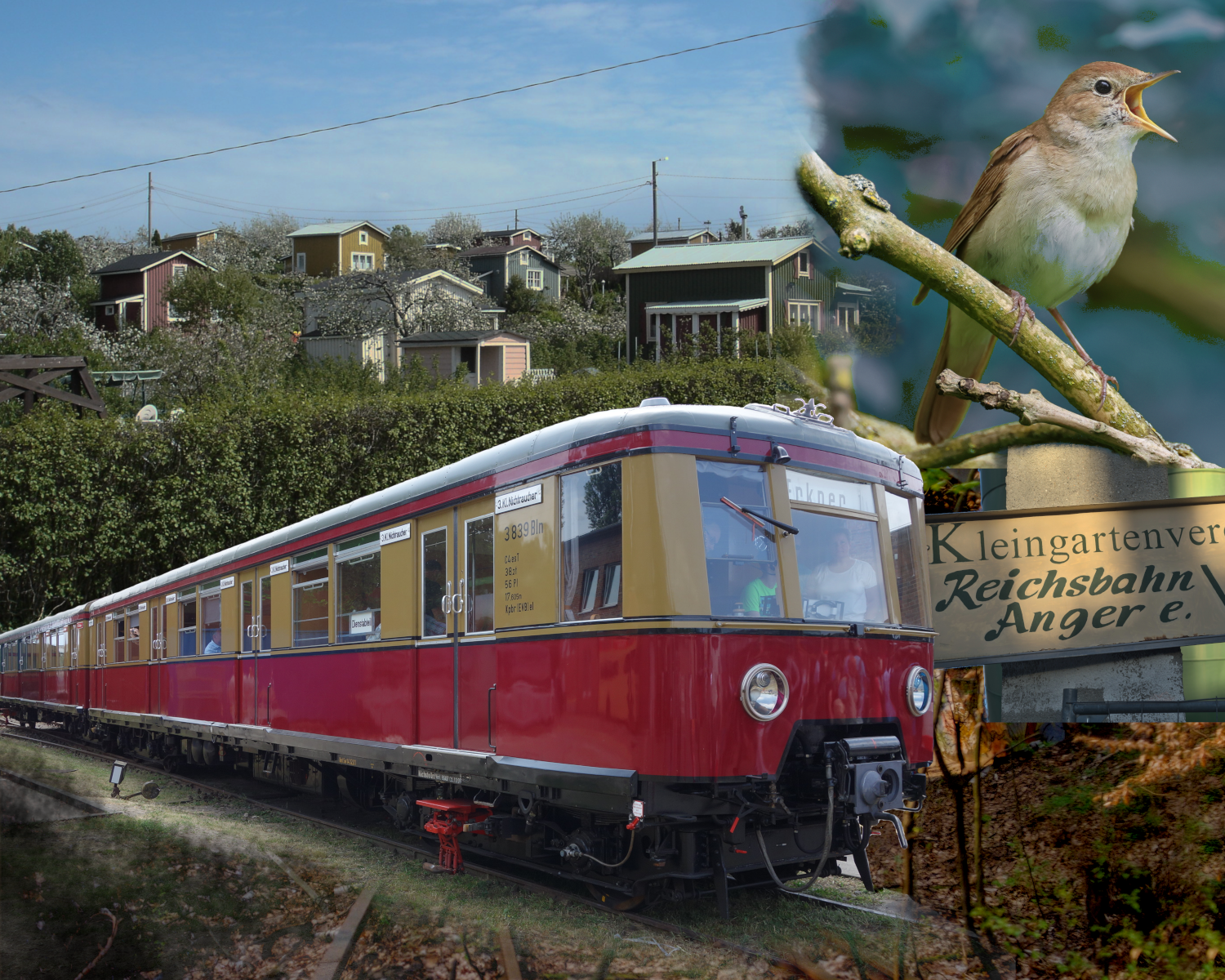
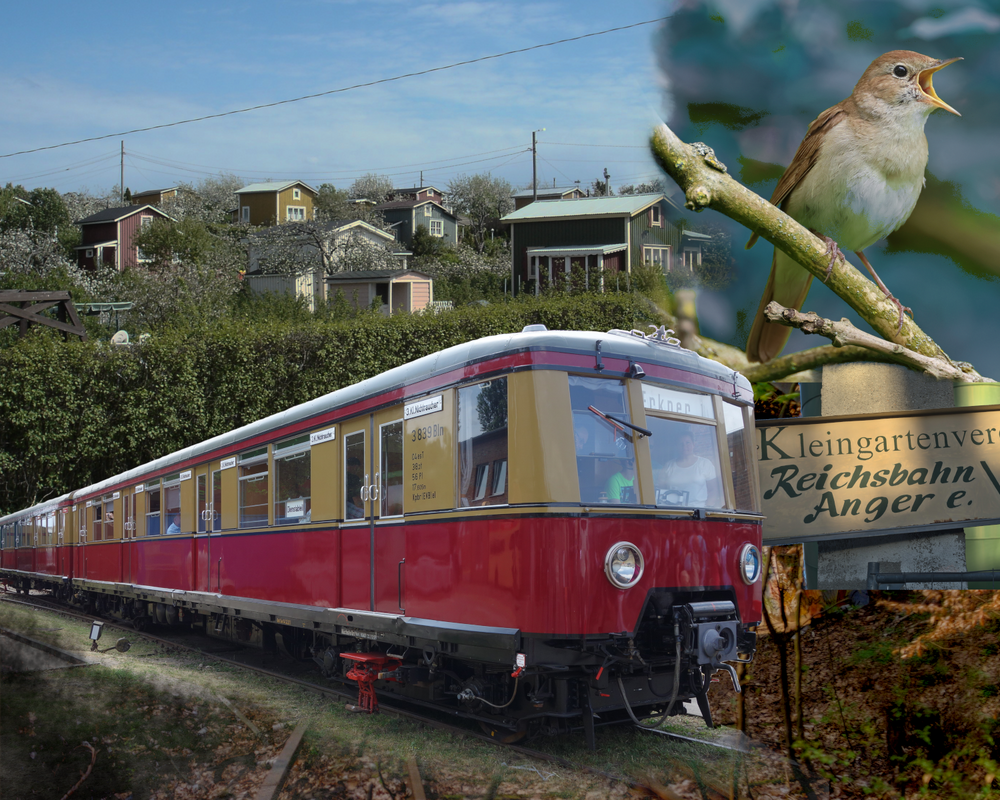
Dear fellow composers, I’m pleased to present you today my submission to the YCF 2026 Spring Competition! Here is the picture showing a historic city rail (S-Bahn) train and a nightingale capturing the sounds of spring in Berlin. The idea behind the piece is to describe the contrast between the noise of the big city and the tranquility of nature. I know that some of you, especially if you’re from Asia or the U.S. will smile when I refer to a city with not even 4 million inhabitants as a “big city.” And yes, that’s actually the case: Berlin is indeed a “huge village” with a surprising number of green and quiet areas. The piece tells the story of a journey with the city rail from the crowded city center to a suburb where are allotment garden communities are located. Since modern trains are more or less „sterile“ and lack their unique sound, I imagined taking this trip on a historic train, like the ones that ran in Berlin from the 1920s through the 1990s and were known for their characteristic noises, such as the slamming of doors and the typical hissing sound when compressed air escapes. Once you’ve arrived in the suburbs—so the story goes—you leave the station and head to the allotment garden complex. As you stroll along the garden paths, you’re surprised to notice nightingales giving their evening concert. And yes, it’s actually true that throughout Berlin, from April through June, you can hear many nightingales every evening and every night. The nightingales are really loud and have a distinctive song, so I’m very surprised that there are so many people who tell me they’ve never heard a nightingale before. The piece is a string quintet featuring a violin, a viola, and a cello, accompanied by two pianos. I have decided to use two pianos so that they can share the extensive tremolo and trill passages, which improves playability. It has an A–B–A form, with the A sections representing the S-Bahn ride. I’ve chosen the unusual 13/16 time signature—initially as a challenge to myself— but while working on it, I realized that the 13/16 time signature can be considered as a compound meter of 3 + 4 + 6, which evokes the idea of acceleration (of the train), and, when reversed to 6 + 4 + 3, that of deceleration (as the train enters the station). The B-part is in 12/8 time signature with a lovely, lulling siciliano rhythm, thus emphasizing the calm scenario while walking through the gardens. I hope you’ll enjoy the piece as much as I enjoyed working on it (although I somewhat underestimated the effort needed …). The YouTube video is coming soon. Thus, stay tuned! Praeludium-XVII-A-flat-major-quintet-mix.mp3 Praeludium-XVII-A-flat-major-quintet-with-coversheet.pdf
 Maicon Lopes joined the community@Luis Hernández is historically correct. the romantics drew from the previous composers and reinvited it.A Grand and Ghastly Meal in Tartarus Version IX:Check this puppy out. Very pleased with it indeed.











.thumb.png.8b5b433a341551e913a34392660bc95b.png)