Leaderboard
-
Markus Boyd
Members4Points307Posts -
Luis Hernández
Members3Points3,280Posts -
Petr Kopuletý
Members2Points16Posts -
ComposaBoi
Members2Points134Posts




Popular Content
Showing content with the highest reputation on 05/22/2026 in Posts
-
Fair enough. But Henry did mention "It's a work in four movements". But the way he has time stamped it on the video does indeed suggest it's a single movement. I guess where I was coming from initially regarding the time is that we share music on here mainly for feedback, right? The longer a work, the more onerous that becomes and so that feedback may become more general and less targeted to actual technique. The most detailed feedback I have given people on here relates to relatively simple music composed by beginners. None of this is relevant to Henry's music, here; I am just offering my reflections.1 point
-
Minuet in C for String Quartet.mp3Minuet in C for String Quartet.pdfHi all, A professional string quartet is visiting my home island and are wonderfully taking compositions from local artists to perform. It is such a rare opportunity for me, as someone who has never had my work performed in public. For this I adapted several pieces I have composed over the years for string quartet and to which I have made extensive revisions. Overall I am pleased with the music. One interesting thing I have been doing recently is utilizing AI to provide perspectives around the rule based system on which tonal music rests. I recognize that some of my understanding around certain rules could benefit from more flexibility and AI can really challenge my thinking. Although where it is terrible is in actual advice on voice leading in practice. For example, if you give it a passage to harmonize - even with a well crafted prompt with necessary context - it will often fail. I hope you all find the pieces enjoyable and please feel free to provide any comments as usual. A bit of baroque Fun!.mp3Staccatisimo.mp3A bit of baroque Fun!.pdfStaccatisimo.pdf1 point
-
Hello These two pieces sound fantastic. I really like the contrapuntal style of the first one. It’s also a pleasure to see that the scores are so well-crafted, both in terms of their appearance and the dynamics and accents. Also, the sound library looks brilliant – may I ask which one it is?1 point
-
Btw, this IS only one movement, and 21 minutes is a perfectly acceptable length for a romantic-style sonata form movement. Not everyone has the attention span of an ipad kid.1 point
-
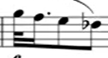
Hey Henry! I remember when you originally posted this piece on this site, and at first, I couldn't get past the awful instrument sounds, but I knew there was something great hidden behind those ugly sounds. So, what I did was I opened the score and I opened musescore 3 and I copied it by hand (only got through movement 3). Doing this, as well as listening to the older versions and reading their descriptions, really helped me to understand the structure of the piece, and its philosophical journey. And the piece is really masterfully conceived, especially structurally. Now there were issues with it, in particular, being a tonal piece, it had some counterpoint issues, and the instrument parts weren't written the most idiomatically either, but these issues you addressed in this revision. And this revision has its improvements, but... I fear it comes from an idea that the original was somehow lacking or "not good enough." I'm going to be honest; I still very much prefer the original version. I listened to the revision a few times now, and some of it just kind of disappoints me. I felt like the modulation into the second theme being shortened wasn't a necessary change and now feels abrupt to me. I thought the dissonance at m. 344 was really interesting without feeling out of place, and that was removed. What really disappointed me was the change you made to the retransition; why remove the dominant pedal for the beginning of the retransition and what is with that awkward clarinet note on 384? IMO it completely ruins the great momentum it had before. I'm also pretty confused why you notated many of the grace notes like this? Was it to fight the playback? It just really looks weird, and you're not consistent with it either, as you sometimes DO use actual grace notes. That being said, there are definitely some things I like. For example, adding pizzicato accompaniment to the cello solo in the exposition's transition was a good move, and I LOVE the additional chromatic lines at the end of the second theme. It's also good that you kept breath in mind for the clarinet and bowing for the strings this time. And overall, the counterpoint was improved (think it could still be better though U.U). I really do love this piece of yours, more than your sextet even, and I think you should be happier with it overall. Some composers here have criticized this movement for having too many ideas, being too long, etc. but I really think that they're just approaching this piece wrong. The piece is a philosophical journey, from point A to point B, and all the steps that you take are necessary for it to be as effective as it is. This movement in particular is tragic--it introduces several ideas and breaks them down. The second theme is derailed, the beautiful climax in the middle is derailed, and the surprising return of the second theme is derailed and corrupted. It's really effective, and really powerful and moving. You're like Mahler but for chamber music lol. I hope you appreciate my praise lol. And understand my issues with the revision may just be my own bias from having studied and loved this piece for so long. Seeing as the middle 2 movements, while also AWESOME, were imo the least polished, I look forward to seeing how you revise those :)
 1 point
 -
1 pointOf course, I didn’t mean it quite that literally 😅 Form and knowledge of music theory are obviously important, I just meant to say that the form I incorporate into my compositions isn’t always immediately apparent 🙂1 point
-
1 pointHello, thank you for listening, I really appreciate it! I view music as something living and fluid, much like flowing water. Even when the structure is crafted beneath the surface, I prefer the form to avoid feeling obvious or rigid upon first listen. My approach, therefore, focuses less on strict harmonic formulas and more on movement, texture, color, and the natural evolution of musical ideas. While traditional harmony and voice leading remain important to me, I treat them organically and flexibly rather than as strict academic exercises.1 point
-
Hello I've recently decided to take orchestration seriously. Just as I did with counterpoint back in the day... Yes, although I study on my own, I have always been self-taught, at some point you need guidance from an expert. So I am taking a course in orchestration. It is really for a very small group (only four people), which means the feedback is very powerful, as each person's work is reviewed in depth. I've learned a lot about the classical style (paradigm: Mozart). Why and for what purpose each thing is used. And here I share my version (reviewed by my teacher) of the orchestration of the first movement of Mozart's Piano Sonata No. 5. Now I'm working on Mendelssohn.1 point
-
1 pointThanks. What is your theoretical approach to composition? Do you think in chords, voice leading, traditional harmony etc?1 point
-
Nice ideas Henry! Nicely lyrical. I do find your voice leading strategies at times in need of work, particularly in the bass. But I recognize that your conceptual approach may ultimately differ from mine. I would suggest that for such long works, that you post each movement separately. It could improve your engagement with the piece overall, as most people I don't expect to watch beyond 5 minutes.1 point
-
Well, considering what’s available for voice-overs, it sounds great. It’s true that English isn’t my first language... I found the composition very fresh, and the text too.1 point
-
1 pointHello, Little fugue i wrote today in the north german baroque style. First musical output in years. Simple in harmony, joyful and melodic in theme and counterpoint. Scored for four voices, work well enough with organ or strings. Fuga in g.mp3 Fuga in G.pdf1 point