Leaderboard
-
Tónskáld
Members10Points653Posts -
SergeOfArniVillage
Old Members10Points2,127Posts -

ferrum.wav
Members7Points168Posts -
Wieland Handke
Members7Points194Posts


Popular Content
Showing content with the highest reputation on 06/08/2026 in Posts
-
i definitely can paint a landscape with this piece!! from the mechanical movements of the historical train to a stroll along a garden complex, it encapsulates the journey effectively. i like the depiction of the moving train itself using the tremolos and the wandering upward melody line. that upward melody line here signifies a "progress" i think? the B section is about taking a stroll through a garden complex and i notice it being used there but slowed down. the contrast between machines and nature is very clear: the mechanical dissonant of the old train and railway machinery is contrasted against the light wandering melody of the B section. the nightingale depiction with the trills is also neat. i wish the strings got a more prominent presence here!! theyre mainly used as a doubling with a piano and overshadowed by the two pianos imo. those low thirds on the cello (b8) might be difficult. its fun to read the score because how the programme is woven into it. i like reading what one passage is supposed to represent. and lastly, the story is just so simple yet warm. you take an old historical train in the evening to a garden and notice some nightingales, d'awwwww how cozy and nice i love itttt Melodies Themes Motives 8 Harmony Chords Textures 8 Form Development Structure Time 10 Originality Creativity 9 Score Presentation 8 Instrumentation Orchestration Playability 10 Execution of Given Challenge 10 Taste 8 Average Score: 8.9 end note: how i feel when describing the story
 3 points
 -
I think you have a lot of natural talent and creativity. Attending a class for something is nice, and can be really helpful, but there's really no substitute for just doing something and seeing and hearing for yourself what works, and what doesn't. Listening to and analyzing what other composers have done is an incredible education in and of itself. It's impressive that you wrote this in such a playable and natural way! I hope you hold on to this colorful whimsy, too. Thanks for sharing! This was a lot of fun to listen to.3 points
-
Just a little update on reviewers and their reviews: @TristanTheTristan you've done 6 reviews - you need 2 more to get the Welterweight Reviewer badge, otherwise you will be a Featherweight Reviewer @ferrum.wav you've also done 6 and need 2 more for Welterweight @HoYin Cheung you've done 5 and need 3 more for Welterweight @Fruit hunter you've done 7 and need 1 more for Welterweight @UncleRed99 you've done 4 and qualify for Featherweight Reviewer3 points
-
2 pointsHi, Alarik. Please see my evaluation of your submission below. Melodies Themes Motives Harmony Chords Textures Form Development Structure Time Originality Creativity Score Presentation Instrumentation Orchestration Playability Execution of Given Challenge Taste Overall 5 3 3 6 1 1 5 5 3.6 Melodies/Themes/Motives: There was something of a melody present in the piece, and I noticed themes that were repeated throughout. However, none of it really kept my interest as there was little deviation. Harmony/Chords/Textures: The piece was stagnant, never drifting from b minor, and the note intervals likewise rarely changed. Form/Development/Structure/Time: The structure of the piece was severely lacking, with themes popping up randomly here and there, and new ideas introduced that (from what I could tell) didn't build upon previous content. Originality/Creativity: I found this submission a little stale, but still somewhat original. Score Presenation: In a word, the score is abysmal; it doesn't have even the barest of minimums. I don't know what instrument is playing what. There are hanging ties. No key signature to speak of. The enharmonics are all wrong. Instrumentation/Orchestration/Playability: This is, unfortunately, totally unplayable. Moreover, the writing isn't idiomatic as evidenced by the fact that even without staff names, I can't tell which instrument is which based solely on the written music. Execution of Given Challenge: Despite the problems with musicality, I did find the piece vaguely reminiscent of a rainy day. Taste: I think you have potential to write good music - given a bit of dedication to music theory and notation. Yes, the music was repetitive and chaotic, but it was not unenjoyable. Thanks for submitting, and happy composing! Jordan2 points
-
Hello @ferrum.wav , thank you for your kindly review of my piece. I’m pleased that you could follow the imagination and story I wanted to depict musically! Since there was still plenty of space on the score, I decided to follow the example of @Henry Ng Tsz Kiu 's “Joking Fugue on Jingle Bell …", which also includes such humorous comments ... Yes, that’s right. Even though this is a new composition for the competition, I just started to compose the piece for piano solo (to include it in my collection of preludes and fugues) and then „enriched“ the piece with the further instrumentation by the strings. Therefore, the main texture is performed by the piano(s) alone and the strings serve to create more „color“ or „soundscapes“. However, there is a theme or motif in the “Nightingale” B section, played by the strings (measures 35–37 by the cello and measures 44–47 by the violin), that does not appear in the prelude for solo piano.2 points
-
Hi, Bryan. Please see my evaluation of your submission below. Melodies Themes Motives Harmony Chords Textures Form Development Structure Time Originality Creativity Score Presentation Instrumentation Orchestration Playability Execution of Given Challenge Taste Overall 7 6 7 8 6 7 8 7 7 Melodies/Themes/Motives: Haunting and beautiful, the themes and motives presented here I found to be delightful. The melodic writing, however, was somewhat troublesome as new rhythms were constantly introduced. Harmony/Chords/Textures: This is probably where the submission struggled the most. The piece never strayed from d minor (aeolian/natural), rendering the harmonic progression repetitive and predictable, and leaving my ear wanting for something a little more adventurous. Form/Development/Structure/Time: The development was done satisfactorily, with the eerie opening slowly becoming more driving, and then finally returning at the end of the piece. Originality/Creativity: Excellent choice of two double-reeded instruments paired with the lilting harp. Score Presenation: The score is adequate. It could stand to be "beefed up," with more articulations, hairpins, and cleaner notation (especially in the harp part) added. Instrumentation/Orchestration/Playability: The piece is relatively easy to perform, though the bassoon will find the soft, high passages a bit challenging. The harp part is sparse and repetitive; I think more attention should be given to that instrument. Execution of Given Challenge: I found this beautifully evocative of a lake in the morning. Great job! Taste: This pentatonic-adjacent, lyrical piece was quite enjoyable, even though (or maybe because) it was simple and straightforward. Thanks for submitting, and happy composing! Jordan2 points
-
Hi, L.P. Please see my evaluation of your submission below. Melodies Themes Motives Harmony Chords Textures Form Development Structure Time Originality Creativity Score Presentation Instrumentation Orchestration Playability Execution of Given Challenge Taste Overall 5 2 5 8 6 7 3 3 4.9 Melodies/Themes/Motives: As this submission contained roughly three instruments capable of producing controlled pitches, use of melody was sparse (but not nonexistent); however, melodic writing was underdeveloped. Some themes and motives were noted. Harmony/Chords/Textures: There were very few chords or polyphony throughout, but there was ample texture. Unfortunately, the lack of harmonic progression was a significant detriment to the piece's overall musicality. Form/Development/Structure/Time: The structure was sporadic and a little random, though some patterns were discernible. Originality/Creativity: Regardless of the musicality, this submission was highly original! Score Presenation: The score was acceptable. I noted a few places where hairpins were used but no dynamics supplied, and the score overall was too crowded for my tastes. Instrumentation/Orchestration/Playability: I'm no percussionist, but this seemed playable. Perhaps a little challenging with all of the quick instrument switches. Execution of Given Challenge: I mean, this had a great driving rhythm but it in no way evoked a sense of being lost in the wilderness. Taste: Obviously a personal thing: I'm not much for percussion-heavy works of music. I'm sure the percussionists of the world would thank you for this piece, though! Thanks for submitting, and happy composing! Jordan2 points
-
Hi, Elle. Please see my evaluation of your submission below. Melodies Themes Motives Harmony Chords Textures Form Development Structure Time Originality Creativity Score Presentation Instrumentation Orchestration Playability Execution of Given Challenge Taste Overall 5 7 5 8 10 6 4 5 6.25 Melodies/Themes/Motives: The melodic writing was almost nonexistent, instead replaced with chordal columns that seemed to go nowhere. There was motivic or thematic development; however, in my opinion, not enough was done to clearly distinguish such themes, and the result was rather muddied and obfuscated. Harmony/Chords/Textures: Not much triadic/diatonic harmony (which is fine by me), and the tonal palette employed was used quite effectively. In my opinion, the harmonic structure could have been improved if the harmonic progressions were more consistent rather than seemingly random. Form/Development/Structure/Time: The piece was beautifully textured but the long, sustained notes (often in harmonics and/or stops) were frequently syncopated and combined into rapidly altering time signatures. The structural ambiguity is not helped by the lack of discernible musical patterns (I can tell there are patterns from looking at the score, but not by listening or playing). Originality/Creativity: I found this to be exotic and refreshing, and very much unlike other submissions. Score Presenation: The score was flawless. Excellent job! Instrumentation/Orchestration/Playability: The piece was chock full of stops and harmonics, had nebulous time signatures, maintained no clear rhythm, and possessed copious amounts of syncopation. The detailed score helps a great deal with interpretation, but the piece still emerged as agonizingly difficult to perform. Execution of Given Challenge: While beautiful and evocative, this piece brings to mind etherealness and aimless wandering - not the grandeur of the Zhangjiajie mountains (nor the flora sprinkled at their peaks). Taste: I enjoy non-diatonic harmonies, which your submission employed. However, I felt that the musical effects were too "on-the-nose"; i.e., you overused harmonics to evoke a sense of floating in the clouds and the "going-nowhere" harmonies made the piece a bit too stagnant - at least for my tastes. Still, your submission was very impressive and I think you're someone the music world should keep their eye on! Thanks for submitting, and happy composing! Jordan2 points
-
Hi, Luckas. Please see my evaluation of your submission below. Melodies Themes Motives Harmony Chords Textures Form Development Structure Time Originality Creativity Score Presentation Instrumentation Orchestration Playability Execution of Given Challenge Taste Overall 7 9 7 5 6 N/A 6 7 6.7 Melodies/Themes/Motives: Satisfactory in my opinion. You maintained a cohesive rhythmic structure throughout the Pavane and into the Galliard. Harmony/Chords/Textures: Truly the shining glory of this submission. You perfectly evoked the Renaissance style and harmonic movement. Form/Development/Structure/Time: The contrasting sections were nicely done and helped to bring balance to the piece. Originality/Creativity: While a beautifully rendered Renaissance-style dance suite, this was, in my opinion, neither original nor creative. Score Presenation: The score met the barest minimum requirements; there were no dynamics markings or tempo indications. If I were to conduct the piece based on the provided score, it would very likely sound nothing like the submitted recording. Instrumentation/Orchestration/Playability: I'm not even the slightest bit familiar with Renaissance-era instruments, hence I don't feel equipped to evaluate this aspect of the submission. Execution of Given Challenge: Unfortunately, this wonderfully crafted Renaissance dance suite did not remind of me of the Lombardy region aside from the historical possibility that pavanes and galliards were performed there at some point. Taste: To be frank, I liked the piece. It was well constructed and cohesive, with enough substance to maintain my curiosity throughout. Good job! Thanks for submitting, and happy composing! Jordan2 points
-
There's many different ways to analyze pieces, so really, that's entirely up to you. For example, find a piece of music that you absolutely love. One of your favorites. Listen along with a score of the music. You could ask yourself any of the following questions: "What is it about this piece I love so much? Why did the composer/song writer choose this chord, or voice the chord this way? Why did the composer develop their material this way? The composer changed direction here -- why, and to what effect? What kind of thing(s) is the composer trying to express?" My word here, "analyze," sounds like dissecting a frog in a lab to understand its biological function. And you can literally analyze a piece, and assign all the chords and progressions, "this is the tonic, the dominant, subdominant, here's a lydian scale, etc." But simply mindful listening and meditating on what you're hearing, along with experimentation to see what works and what doesn't, goes a long way.2 points
-
This is a well-written and playful piano piece! I really liked the modulations — they add harmonic interest to the music. They are so smooth that I didn't even notice the beginning of the recapitulation at the four-minute mark when I listened to it. Very well done! Inspired by Schubert, perhaps? I always admire composers here who write sonatas. Nice autograph, but I had trouble keeping track of the score, maybe because I am not used to seeing tiny notes.😅2 points
-
this sounds very outgoing. it does sound like going on a hike on a big mountainous region. i imagined those accented chords in the beginning as one seeing the big trees and gets a little overwhelmed by them. loooooove the harmonic color in this, very distinct and pretty. the chaotic contrapuntalness of this reminds me of richard strauss a bit ngl lol the 16th notes flourish on b.5 and scattered throughout is a bit questionable. i have seen those figures before and heard that its awkward to play. the inclusion of flute amongst the string quartet is unique, but i do think is buried against the quartet sometimes with those low register notes clashing against the loud dynamic strings. moreover, as @Henry Ng Tsz Kiu have said, i do think it couldve had the spotlights in more sections. with contrasts, i do notice them! they're not very stark but appropriate for a ~5 mins piece. score is Melodies Themes Motives 8 Harmony Chords Textures 10 Form Development Structure Time 8 Originality Creativity 10 Score Presentation 9 Instrumentation Orchestration Playability 8.5 Execution of Given Challenge 10 Taste 9 Average Score: 9.0625 end note: when i accidentally point at the top of a mountain but im just describing this piece

 2 points
 -
I always feel smarter after I listen to your pieces, like I've learned something, or just feel inspired. What a gift! A prelude with all sorts of "gem" moments, some rather subtle. Measure 4 beats 3 and 4 are smooth as butter (props to Henry, of course). Ms. 14 2nd and 3rd beat are so clever. And it's so weird to hear a contrapuntal-heavy piece sound so ... homey and warmly nostalgic. The vibes are right. Thank you for sharing!2 points
-
hey this is pretty great! I've never really had concrete composition classes, so I can't give any specific tips but I do play a bit of piano and enjoyed this quite a bit. Keep up the good work and thanks for sharing your creativity!2 points
-
1 pointThis is a project I have slowly worked on for about a year. Thoughts/comments/criticisms welcome. Edit: I have cleaned the scores up a lot. Prelude No 1.mp3Prelude No 2.mp3Prelude No 3.mp3Prelude No 4.mp3Prelude No 5.mp3Prelude No 6.mp3Prelude No 7.mp3Prelude No 8.mp3Prelude No 9.mp3Prelude No 10.mp3 Prelude No. 1.pdf Prelude No. 2.pdf Prelude No. 3.pdf Prelude No. 4.pdf Prelude No. 5.pdf Prelude No. 6.pdf Prelude No. 7.pdf Prelude No. 8.pdf Prelude No. 9.pdf Prelude No. 10.pdf1 point
-
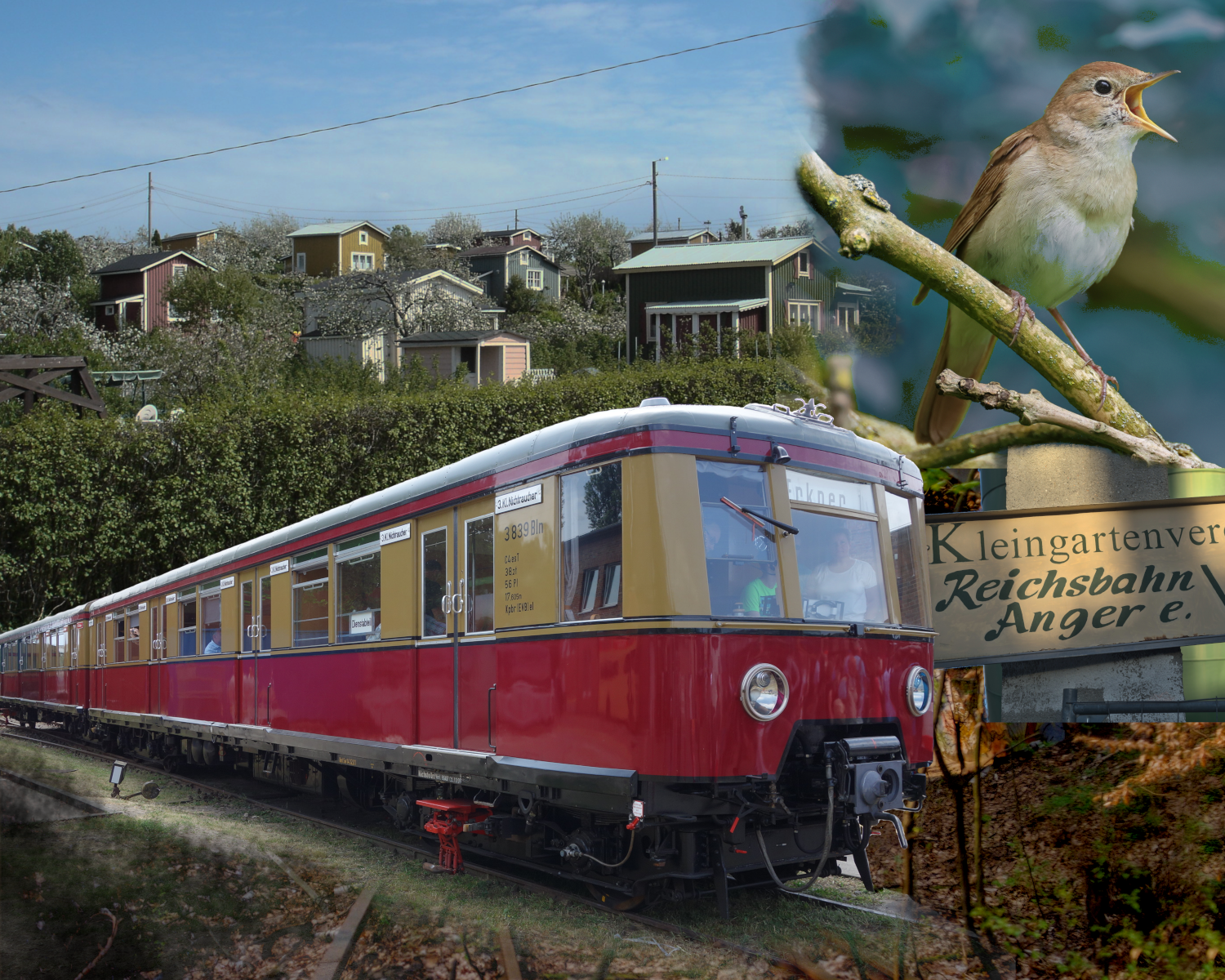
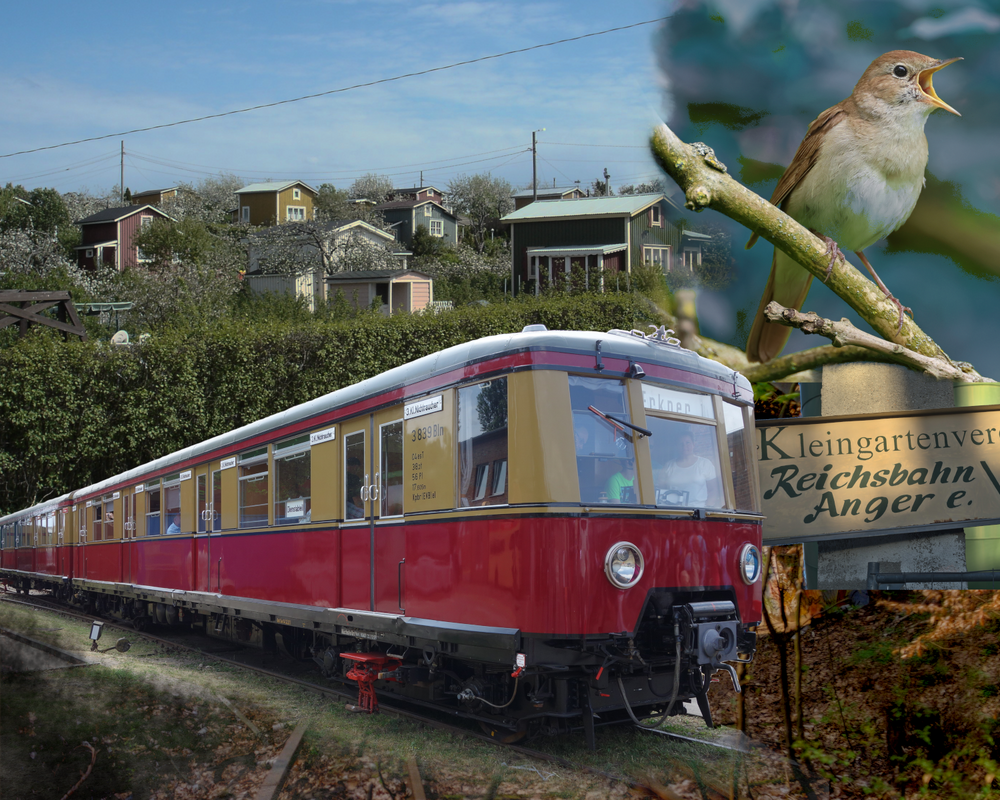
Dear fellow composers, I’m pleased to present you today my submission to the YCF 2026 Spring Competition! Here is the picture showing a historic city rail (S-Bahn) train and a nightingale capturing the sounds of spring in Berlin. The idea behind the piece is to describe the contrast between the noise of the big city and the tranquility of nature. I know that some of you, especially if you’re from Asia or the U.S. will smile when I refer to a city with not even 4 million inhabitants as a “big city.” And yes, that’s actually the case: Berlin is indeed a “huge village” with a surprising number of green and quiet areas. The piece tells the story of a journey with the city rail from the crowded city center to a suburb where are allotment garden communities are located. Since modern trains are more or less „sterile“ and lack their unique sound, I imagined taking this trip on a historic train, like the ones that ran in Berlin from the 1920s through the 1990s and were known for their characteristic noises, such as the slamming of doors and the typical hissing sound when compressed air escapes. Once you’ve arrived in the suburbs—so the story goes—you leave the station and head to the allotment garden complex. As you stroll along the garden paths, you’re surprised to notice nightingales giving their evening concert. And yes, it’s actually true that throughout Berlin, from April through June, you can hear many nightingales every evening and every night. The nightingales are really loud and have a distinctive song, so I’m very surprised that there are so many people who tell me they’ve never heard a nightingale before. The piece is a string quintet featuring a violin, a viola, and a cello, accompanied by two pianos. I have decided to use two pianos so that they can share the extensive tremolo and trill passages, which improves playability. It has an A–B–A form, with the A sections representing the S-Bahn ride. I’ve chosen the unusual 13/16 time signature—initially as a challenge to myself— but while working on it, I realized that the 13/16 time signature can be considered as a compound meter of 3 + 4 + 6, which evokes the idea of acceleration (of the train), and, when reversed to 6 + 4 + 3, that of deceleration (as the train enters the station). The B-part is in 12/8 time signature with a lovely, lulling siciliano rhythm, thus emphasizing the calm scenario while walking through the gardens. I hope you’ll enjoy the piece as much as I enjoyed working on it (although I somewhat underestimated the effort needed …). The YouTube video is coming soon. Thus, stay tuned! Praeludium-XVII-A-flat-major-quintet-mix.mp3 Praeludium-XVII-A-flat-major-quintet-with-coversheet.pdf
 1 point
 -
I can’t believe you quote this piece as this is probably my worst piece ever posted on YC!
 1 point
 -
Hello my dear friends. Here my latest binary Sonata no 24. I hope you like it.1 point
-
Thank you, my dear friend, for your kind words, your attention, and your appreciation of my sonata. I am truly delighted that it sounded smooth and natural to you, as this is always something I strive for in my music: to make it organic and flow naturally. My binary sonatas were initially modeled on Scarlatti, but over time I have begun blending into them elements primarily from the Classical era, and occasionally from the early Romantic period as well. Schubert, whom you mentioned, is the composer who has influenced me more than any other, and yes, you will almost always hear something that recalls him in my music, especially in the modulations. In general, I seek the clarity and dramatic sense of the Classical style combined with Schubertian harmonic language. When these elements come together successfully, the binary form acquires greater value for me. In fact, the sonatas I write in binary form are my personal diary. I have set myself the goal of writing a very large number of them (though certainly not more than Scarlatti did, hahaha!). Once again, thank you for your kind words.1 point
-
Thank you very much! I'm glad to hear that my composition was able to evoke the image of a moving train – with its special noises and its accelearation and decelaration. That's interesting. I used two different soundfonts, one is a Fazioli Grand F308 and the other one is, I think, a Steinway. Since I did only add very few reverb at the pianos, but a much more amount at the strings, the combination might have produced that „metallic“ effect. I attended a concert for piano for four hands last year, where „Pacific 231“ was on the program. Unfortunatly that piece was replaced by another one. Therefore, I „know about it“ - and it seems to be one of the most famous (steam) train related pieces - but I just haven’t had a chance to hear it (live) yet, aside from a few short clips on YouTube.1 point
-
i have not taken any composition classes before and also the title of the piece is just a placeholder, the reason why it's called Fiesta is that that it's the name of the song the melody originated from (also if u cant tell, the audio is just extracted from musescore) any feedback would be appreciated! thanks for checking it out! advanced.mp3 advanced.pdf1 point
-
thank you for your comment! im glad you enjoyed it. i actually did play the piano before as well but stopped cuz i switched focus to the violin, lol!1 point
-
Thank you very much, my friend. I’m glad you enjoyed it and appreciated it. Beethoven’s autographs, and especially his sketchbooks, always fill me with awe. They reveal just what an extraordinary composer he was. For me, studying his sketches is one of the most fascinating experiences, even though most of the time I don’t really understand what I’m looking at 😅. Still, being able to witness his creative process unfolding on the page is something truly unique.1 point
-
Hello there! Here is the latest installment of preludes, no.16. This one deals with a lot of two voice counterpoint and a relentless ramble on one theme. As a personal side note, these have been a lot of fun to write, and it's been great simultaneously writing a bunch at once. I had a sporadic burst of ideas when I started this one, and it lead to a lot of spread out writing. I guess what I'm SAYIN' is... more to come! :D Thanks for listening and reading... any comments of any kind are welcome! P.S. some of those tempo markings are to mimic rubato, dunno I suck as an editor Edit: 🔥 @Henry Ng Tsz Kiu 🔥 Prelude No 16 - Score.pdf Henry Prelude no.16.mp31 point
-
1 pointI like the sparse atmosphere, and I think you developed the material in a creative way on the 4th page, cranking up the dissonance a bit. This has an exotic flair to it. It's got a chill vibe, but a potent flavor. Cool! Thanks for sharing!1 point
-
1 pointJust a simple piano romance for my girlfriend Julia (for her birthday). Thanks for listening and I hope you enjoy and let me know what you think! A Romance.mp3 A Romance.pdf1 point
-
1 pointI love this, particularly since I'm a sucker for heavy reverb, The harmonies are quirky, in a good way. The only thing that really sticks out to me is specifically ms. 10. I'm craving some kind of descending bass there, to offset the parallel motion, especially since that mirrors mss. 33-34. Maybe L.H. E-Eb-D-C#, and last chord is A/C#? Keeps the chromatic flavor. Just a thought. Thanks for sharing this, this is really lovely.1 point
-
I just came from watching this on YouTube Channel! The sprinkle of chromaticism (modal mixture and bII6) is a colorful touch. The sudden modulations reminds me of Beethoven and other romantic composers. I do agree that Beethoven manuscripts are readable. :)1 point
-
Title Melodies Themes Motives Harmony Chords Textures Form Development Structure Time Originality Creativity Score Presentation Instrumentation Orchestration Playability Execution of Given Challenge Taste AVG Sacrificed to the wilderness 7 8.2 7.5 9.5 8 8.5 8 9 8.21 Hi @Fruit hunter! You definitely achieved good texture in the music through the selection of a variety of interestingly picked instruments. It is a lighthearted and enjoyable piece to listen. Regarding the orchestration, if it is not for this competition, I will definitely go for more instruments in my work just like you do - but I still have to address the 3-5 instrument rules into the marking. Regarding the score, the notations are okay. However, I would love to see more visible lines and with the empty staves hidden, which I think is achieveable in the software settings.1 point
-
im really fond of how experimental this is. the variety is wilddd and the inclusion of handmade instruments?? very creative. i quite like how blended the different percussion timbres are and they definitely provide unique textures. it's fun listening to the rambunctiousness of the different percussions as they come and go. unfortunately, as @UncleRed99 has pointed out in the rules, there should've been only 3-5 monophonic or polyphonic instruments present. HOWEVER, i am not even going to try to discourage you cus this piece is funnn to listen to. i notice that the themes have distinct characters. they clearly portray a set of vibes and imagery. i can imagine a landscape according to the story. the score couldve been presented better. its very small and reminds me of my score entry for the "bits and bangers" yc competition years ago lol although the middle section feels directionless, the return of the beginning theme and texture ties it up!! its also appropriate for the context of the piece. the story that youve provided is very whimsical and i thoroughly enjoyed reading it!!! its honestly nostalgic for me cus i used to play and wander with my childhood friends too when i was a child. not to the extent of forests and a colonial place per se, but it was definitely an adventure. goood job!!! Melodies Themes Motives 6 Harmony Chords Textures 8 Form Development Structure Time 7 Originality Creativity 10 Score Presentation 3 Instrumentation Orchestration Playability 10 Execution of Given Challenge 5 Taste 7 Average Score: 7 (how rounded) end note: handmade instruments
 1 point
 -
Melodies ThemesMotives Harmony Chords Textures Form Development Structure Time Originality Creativity Score Presentation Instrumentation Orchestration Playability Execution of Given Challenge Taste 8 8.5 7.5 9.5 10 9 8.6 6.3 I have again listen to this in the car before, but not actively scoring it so I must’ve forgotten a bunch of aspects of the peace. It’s not my cup of tea, but I listen to parts of it again and give the scores for the reason. Anyways, it’s a good piece and I love the cover art of this and also is this possibly an educational piece I do see finger markings1 point
-
im not that well versed in renaissance writing style (and instruments), but it does certainly sound like it. however, i do find it difficult to associate with the given landscape. i also think its hard to do originality since you chose a distinct style and has to follow the rules in order to sound like said style. nevertheless, i quite like the harmony and melody. they sound playful, especially on the 3/2 section. Melodies Themes Motives 7 Harmony Chords Textures 8 Form Development Structure Time 10 Originality Creativity 6 Score Presentation 9 Instrumentation Orchestration Playability 9 Execution of Given Challenge 6 Taste 6 Average Score: 7.62 end note: renaissance good1 point
-
After reviewing eight of eleven contributions to the contest, there are now three ones remaining which challenge me the most. That are the ones of @InstrumentalistElle , @BipolarComposer and @HoYin Cheung . The reason for this is that they have so much in common, both in terms of their qualities and their style and mood. Since my comments would hardly differ, I have decided to copy and paste passages verbatim, which I will therefore highlight in blue, while my individual thoughts are written in the standard color as usual. With your submission(s), you have presented compositions that best meet the expectations one might have given the “Landscapes-Soundscapes” challenge: Pieces that depict a landscape as a “still life”, utilizing every conceivable timbre of the instrumentation, blending, etc., to create true “program music”. When listening, one can easily imagine a scenery from the nature: clouds, trees, a quiet lake or sea, a sunset etc. All this has been executed very well. On the other hand, the piece(s) are sometimes hard to memorize because there is few or even no thematic material in the sense of a recurring melody that is developed throughout the piece, giving it its own unique and memorable character. In fact, to be honest, as I listened to them in a loop —which is exactly what I did during a walk to familiarize myself with all the submissions—I sometimes thought the next section was coming up in the first piece, when indeed the next one had already begun. So I could imagine that this kind of music would work well as “ambient music”, for example, a CD someone might listen to at night if they have trouble falling asleep. Melodies Themes Motives: The motivic or thematic material of the piece(s) is used primarily to create a „soundscape“ depicting the certain scenes or images, such as the clouds, trees, mountains etc. However, the motifs are pleasant and simple, thus producing an impression of a never ending melody. Harmony Chords Textures: The harmonies emphasize the tranquil character of the piece. There are no surprising modulations or tonality changes. Form Development Structure Time: The composition is not in a specific traditional form, the different sections or passages could be considered as „episodes“ or different „pictures“ of the entire imagery, which is fine for a piece intended to portrait a certain scenary from the nature. Originality Creativity: The creativity and originality clearly arises from the way how the different motifs create „sound snippets“ which finally draw the „soundscape“. While the somewhat repetitive character of the piece does not produce enough memorable impressions to ultimately create a sense of „uniqueness“, it is easy recognizable for its unique instrumentation. Score Presentation: The score is easy to read with no engraving issues. Instrumentation Orchestration Playability: The choice of instruments—the oboe and bassoon combined with the harp—gives the piece a mysterious and ethereal atmosphere that perfectly captures the image of a morning when a light mist hangs over a still lake. Execution of Given Challenge: You have clearly mastered the challenge of the contest with excellence, creating an inner imagery for the listener with your „soundscape“ that depicts the „landscape“ as described by the posted picture. And the term “soundscape” perfectly captures the nature of the piece. Taste: It's very nice for relaxing, though I prefer music that focuses more on thematic material and form (perhaps that's why I'm more of a fan of the Baroque or Classical periods than the Romantic one). Melodies Themes Motives Harmony Chords Textures Form Development Structure Time Originality Creativity Score Presentation Instrumentation Orchestration Playability Execution of Given Challenge Taste 8.5 7.5 8 7 9 9 10 6 Average Score: 8.1251 point
-
After reviewing eight of eleven contributions to the contest, there are now three ones remaining which challenge me the most. That are the ones of @InstrumentalistElle , @BipolarComposer and @HoYin Cheung . The reason for this is that they have so much in common, both in terms of their qualities and their style and mood. Since my comments would hardly differ, I have decided to copy and paste passages verbatim, which I will therefore highlight in blue, while my individual thoughts are written in the standard color as usual. With your submission(s), you have presented compositions that best meet the expectations one might have given the “Landscapes-Soundscapes” challenge: Pieces that depict a landscape as a “still life”, utilizing every conceivable timbre of the instrumentation, blending, etc., to create true “program music”. When listening, one can easily imagine a scenery from the nature: clouds, trees, a quiet lake or sea, a sunset etc. All this has been executed very well. On the other hand, the piece(s) are sometimes hard to memorize because there is few or even no thematic material in the sense of a recurring melody that is developed throughout the piece, giving it its own unique and memorable character. In fact, to be honest, as I listened to them in a loop —which is exactly what I did during a walk to familiarize myself with all the submissions—I sometimes thought the next section was coming up in the first piece, when indeed the next one had already begun. So I could imagine that this kind of music would work well as “ambient music”, for example, a CD someone might listen to at night if they have trouble falling asleep. Melodies Themes Motives: The motivic or thematic material of the piece(s) is used primarily to create a „soundscape“ depicting the certain scenes or images, such as the clouds, trees, mountains etc. The development of the motifs does not create any melodies but ongoing sound structures which themselves produce an interesting progression. Harmony Chords Textures: The texture is amazing. Together with the dissonances, the piece – while being slow in pulse – creates scenes with constantly growing tension or, vice versa, release, thus having a very cinematic character. Form Development Structure Time: The composition is not in a specific traditional form, the different sections or passages could be considered as „episodes“ or different „pictures“ of the entire imagery, which is fine for a piece intended to portrait a certain scenary from the nature. Originality Creativity: The creativity and originality clearly arises from the way how the different motifs create „sound snippets“ which finally draw the „soundscape“. Even if there is no „melody“ – which usually makes it more difficult to memorize a piece – the entire impression based on its mysterious mood and timbre makes it unique. Score Presentation: The score is easy to read with no engraving issues. Instrumentation Orchestration Playability: You’ve mastered to evoke an astonishing colorfulness from the string quartet, particularly by applying natural and artificial harmonics and flageolets, whereas that might be challenging to perform. Execution of Given Challenge: You have clearly mastered the challenge of the contest with excellence, creating an inner imagery for the listener with your „soundscape“ that depicts the „landscape“ as described by the posted picture. And the term “soundscape” perfectly captures the nature of the piece. Taste: It's very nice for relaxing, though I prefer music that focuses more on thematic material and form (perhaps that's why I'm more of a fan of the Baroque or Classical periods than the Romantic one). Melodies Themes Motives Harmony Chords Textures Form Development Structure Time Originality Creativity Score Presentation Instrumentation Orchestration Playability Execution of Given Challenge Taste 8 10 8 8 9 10 10 7 Average Score: 8.751 point
-
Melodies Themes Motives Harmony Chords Textures Form Development Structure Time Originality Creativity Score Presentation Instrumentation Orchestration Playability Execution of Given Challenge Taste N/A 7.5 8 9 1 5.5 7.5 7 Average 6.5 The piece was pretty fun, fairly simple too, and it sounds like good percussion music, but it seems like you maybe are more familiar with large percussion sections in bands rather than percussion ensembles, because I would NEVER write out so many staves for a single percussionist. And the amount of instruments each player has would be a pain to set up effectively in a concert hall. But again, the piece was enjoyable to listen to, and the idea of only percussion is fairly unique compared with other submissions1 point
-
Melodies Themes Motives and Harmony Chords Textures: As inherently for a piece for drums, the motifs are more rhythmically focused, than melodically, although the usage of pitched percussions introduces melodic passages. The textures are well balanced given the piece a natural unfolding. Form Development Structure Time: I couldn't identify any specific traditional form or structure, so I would describe the piece as a series of different scenes, which is perfectly fine as long as the music is designed to illustrate the story you're telling. Originality Creativity: This was your intent to focus on and you have nailed it! You deliberately took the risk of potentially losing points in the other criteria due to this instrumentation, but I consider that a wise decision. Score Presentation: This is a comprehensive score, which makes it difficult to read and follow (I literally can’t scroll fast enough), but the intention to present all voices separately helps the reader follow the details for as long as they like. And although the curly grand staff brackets look a bit strange, they clearly express your intention to group that particular „voices“ together as one instrument. Instrumentation Orchestration Playability: The orchestration is rich and well blended. Concerning the playability, I think you have distributed the playing and resting voices well, so that each of your „drum instruments“ shall be playable by a single player. Execution of Given Challenge: There have been discussions whether or not your piece formally meets the requirements of the contest to have „any combination of 3 – 5 monophonic or polyphonic instruments/voices“. And as there where „a Pierrot ensemble“, a „kazoo trio“ and a „quartet of Tibetan throat singers“ mentioned as examples, I can well understand your creativity to assemble your own five polyphonic drum instruments from all sorts of “sound-producing” objects. So my judgement is therefore that you did not violate the formal criteria of the competition, while being borderline. However, the result you ultimately presented makes me happy to turn a blind eye: You impressively depicted a somewhat mysterious scenery in a wood - which perfectly corresponds with your story. Taste: I enjoyed the piece as a welcome change from the other, more traditional romantic compositions. And since it’s well composed, it holds its own among them. Melodies Themes Motives Harmony Chords Textures Form Development Structure Time Originality Creativity Score Presentation Instrumentation Orchestration Playability Execution of Given Challenge Taste 7 8 6 10 7 9 9.5 7.5 Average Score: 8.01 point
-
1 pointI would get to Transcendent rank in a much quicker pace if I posted like you haha.1 point
-
1 pointI wrote another Romance for my girlfriend Julia's birthday. I hope you enjoy and let me know what you think! Romance No. 2.mp3 Romance No. 2.pdf1 point
-
1 pointHey Peter, I enjoy this one more than the no.1 one, probably since if I were Julia, I would enjoy a more sugary Rachmaninoffian style than any compositional thoughts haha *0*. This one sounds Brahmsian to me though because of how you handle the motive with saturation. Nice ending as well. Henry1 point
-
Read Beethoven piano sonatas on the toilet instead of People magazine, and that is part of it.0 points
.thumb.png.8b5b433a341551e913a34392660bc95b.png)