All Activity
Past hour
-
-
Today
-
-
@Lithl Hello I’ve listened to the music you mentioned by Jon Batiste and RDJ, as I wasn’t familiar with it. I think these artists have certainly chosen a style, but they haven’t created anything new – that is to say, a style of their own. There are loads of songwriters and composers who do this sort of thing, mostly by fusing styles or reinterpreting compositions. There are countless examples. From Stokowski with his orchestral versions of fugues and the like, to, for instance, Ben Lierhouse in the 2000s and his extensive discography, taking Wagner and infusing it with Cuban, Spanish and jazz rhythms, amongst others. Or, for example, Max Richter with Vivaldi’s Four Seasons. I think the examples you give follow that line of thought. And it’s fantastic music, of course. But the things they do or have done don’t introduce anything new. No compositional technique, or aesthetic… For example, the most recent composers (that I’m aware of) who have developed distinctive musical languages are Arvo Pärt and E. Rautavaara. Philip Glass, who developed his technique (which, according to him, isn’t minimalism) over decades. These are composers who are recognisable by their music. And on a different note, for example, Wuorinen is a fairly well-known composer (the opera Brokeback Mountain, etc.). But he uses dodecaphonism and serialism, which were invented over 100 years ago. There may well be other composers in this category whom I am not familiar with, of course. And I don’t think that’s a pessimistic view. Not at all. You can’t keep producing radical innovations all the time. And there’s no need to. In short, what I understand by ‘personal style’ has several levels. Is doing what you want or what you like a personal style? Well, all right then.
-
This is a lovely piece, @kaiyunmusic. It would be wonderful to listen to this while sipping coffee in the morning sunlight and gazing out the window! Or perhaps playing it quietly by yourself on an upright piano at night... that would be lovely, too! The piece itself isn't long, but it is really nice and deeply evocative. It creates such a peaceful atmosphere. Thank you for sharing! Best, Lithl.
-
@Wieland Handke, your analysis is intriguing. I agree with you. That being the case, we would need to define Personal Style itself and categorize its types. For example, as Wieland mentioned with the YCF members, I think there are many people in this day and age whose personal styles can be recognized just by listening to them. I share your view on that point, @Luis Hernández. While everyone in this forum creates wonderful music, establishing a truly unique style is still difficult. Hmm, I wonder. I don't think we need to be so pessimistic about today's music scene. I think many musicians in this era have established styles that define who they are. For instance, in terms of "an individual style where you know who it is just by listening," Dorian Concept is immediately recognizable through his minimal compositional format. Jon Batiste is also very clear. If you listen to his recent work, such as "Black Mozart," his approach and sound are distinct enough that you can easily tell what he is doing. Also, I'm not sure what specific era you mean by "current music scene", @Luis Hernández, but I think RDJ (Aphex Twin) is still undoubtedly a composer with a "historically influential individual style"—that is to say, at the level of music history in 2026. While we shouldn't deify him thoughtlessly, considering his influence, his unique style, and the innovations he brought to that era, I believe he is undeniably worthy of appreciation. What are your thoughts on RDJ? A composer may establish a personal style, which is truly wonderful, but that doesn't necessarily mean it will become a Personal Style that leaves a massive impact on future generations. At any rate, while I generally agree with @Luis Hernández's opinion, I don't think we need to be quite so pessimistic about the current music scene :) I also agree that synthesizers have a low barrier to entry. Once you master the procedures, adding reverb to a sine wave allows you to instantaneously create an ambient piece that sounds convincing enough. The democratization of music is remarkable. Including technological advancement, it is a wonderful thing. (Though at the same time, it does result in a flood of not-so-good music.) Furthermore, establishing a personal style in this day and age is likely far easier when using synthesizers and similar tools. This is because, unlike orchestral instruments, a synthesizer allows you to use the sound itself as an element of your style. While subtle differences in timbre exist among violins, a violin is generally just a violin sound. (You could produce an even wider range of sounds by incorporating playing techniques like those of Helmut Lachenmann, though!) On the other hand, using a synth allows you to generate entirely different sounds from the same instrument, making it possible to create a unique sound. We must also be careful with the concepts of "easy" or "difficult," as they tend to foster the simplistic notion of which approach is superior. It is true that synths have a low entry barrier, but I feel they are just as magnificent as composing for an orchestra or classical instruments. Best, Lithl.
-
Here is my first variation; I need feedback. Variacijos Es-dur pagal L. van Beethoveno Eroikos temą Op. 1.mp3 Variacijos Es-dur pagal L. van Beethoveno Eroikos temą Op. 1.pdf
-
Thank you so much @Some Guy That writes Music! that’s an incredibly generous offer, and I would love to take you up on it! I’m approaching this cycle at a very unhurried, deliberate pace, so it will likely be a couple of months before I have a polished draft ready for you to test/review. I will reach out via DM once I have a useable draft of the vocal part. I really appreciate your generosity, and look forward to getting your feedback down the road!
-
Hi @interlect , For sure we are not Gods, but we do have forum etiquette to follow: You may check out rule 2a and 2b: It's our responsibility to keep the thread on topic. I think except for you, the fable simile and that PNG aren't related to the topic at all and what it does is move other members' attention away from real discussion of a truly meaningful topic. I hate everytime when the forum etiquette post has to be quoted, because that means someone violates them no matter intentionally or accidentally, since normally the rules are followed even without knowing their existence. But if they aren't followed, we have the responsibilities to have you acknowledged. We really apperciates your time here, but make sure you follow the forum etiquettes so we can enjoy your longer stay here! Henry
-
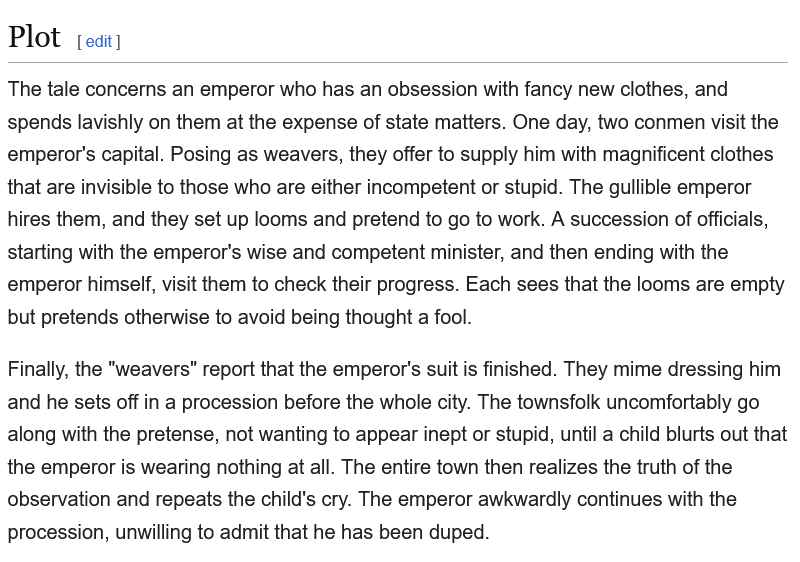
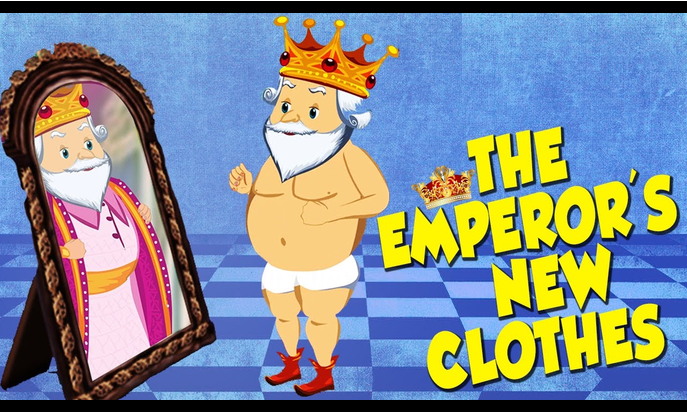
so now your a MODERATOR ?, ................Telling people what they can and cannot say ? using words like UNSOLICITED MATERIEL ?.... In this regard your judgement is Flawed. in my opinion the concept discussed above, is exactly like the FABEL.....The kings new clothes. so please stop functioning like GOD
Yesterday
-
Kindly Interlect, I do not see how this holds any relevance to this thread or the whole of YCF. As a newer member to the staff, I must remind you to keep posts and comments oriented to their respective threads or forums. Unsolicited PNGs, links or other material not related to the forums is a violation of the YCF etiquette and can be subject to removal. Any subsequent comments not related to CrystalCanon and their thread will be removed for irrelevancy. Please funnel concerns in a direct message to a staff member.
-
Thanks everyone for the constructive feedback! I have some learning to go, especially with notating music😆 @PeterthePapercomPoser I agree it should be 3/4 instead of 6/8. I don't know why I didn't catch that. The time signatures and notation always gets me. Thanks for pointing that out! @Grant Weep I am glad you enjoyed the piece and it's simplicity! Feel free to use it in your home video. All I ask is that my name, Kaiyun Music is credited to the piece. Thank you!!
-
-
Kai.Alexis.Poveda joined the community
-
Hello @elmarad40! I enjoyed the piece really being a „sweet nightmare“ concerning the contrast between the „sweet“ and „dark and mystifying“ musical motifs or themes. The first „theme“ (mm. 1-16) is indeed very pleasant. It reminds me somewhat of pieces written for the Christmas or winter season, in the sense of „Jingle bells“. Now (from mm. 17-31) it gets „broader“ and I would call that theme somewhat „hymnal“. Suddenly, the nightmare starts (mm. 33-48), it seems as the blood is going to freeze in one’s vessels. The fourth theme or motif (mm. 49-65) one could call „the battle“ since it reminds me of a film score – let’s say something like „Star Wars“ (even if I’m absolutely not familiar with movies …), ending with a general rest (mm. 65) – and the four themes return. I like the instrumentation, particularly the dramatic use of the „women’s choir“ in the „nightmare“ theme. Aside from that, there are just a few “minor details” or questions left: You would need four flute players to perform the melody and the chords in the „Jingle bells“ theme, just in the opening bars. In almost all of the timpani passages, I think I hear a snare drum instead (which itself has even not one note in the score).
-
Hello, What a wonderful piece. Obviously it's going to be a patriotic piece of music. I am assuming that you are Ukrainian and therefore, I am wishing your peoples the the very best during this very difficult situation for your country. I am not too knowledgeable on fugues, so I can't speak to the counter point. I had a listen to the Ukrainian national anthem and I can clearly hear the inspiration behind your piece. I have some minor degree of interest in listening to different anthems in the world. Most anthems are a bit more bombastic and simple. I think you've taken something more simple and really made it something more, while retaining the original spirit of the theme! Your explanations at the time stamps are very helpful. Overall the piece sounds very intricate to me. The sheet music is absolutely beautiful, you must have put a lot of effort into it! at 2:47, there is a moment which reminded me of schubert...so much so that I just had to look it up. I believe that the notes are very similar (schubert repeats the E 3x, you repeat it 2x) @ 0:24 of the below youtube video: Love the tremolo ending! Bravo!
-
I am FINALLY done with my piece
-
Some Guy That writes Music replied to CrystalCanon's topic in Incomplete Works; Writer's Block and SuggestionsThen I can help if you want, https://www.youngcomposers.com/t46963/offering-my-experience-as-a-singer/. I could run through some of your phrases to help you get an idea of what it'd be like in a voice. I'm okay with giving continuous feedback if interested.
-
Hello @L.S Barros! Indeed, a lovely Galliard, and thus, another example for your „personal style“! Since we have no score, I can only express my „subjective“ impressions which arose by listening. I learned, that a Galliard is a Renaissance dance in a faster tempo in 3/4 (or 6/4) time with typical steps (and even leaps, jumps, hops etc.). My only concern is that, given the contrapuntal approach, the emphasis on these steps sometimes sounds a bit too much like “block chords.” Perhaps, there could be more motion beneath that „steps“ in the continuo (i.e. on the harpsichord), in that way as it appears starting at around the middle of the piece performed by the cornettos and the recorders. And, by the way, could (Renaissance) cornettos even play that fast?
-
Hi all, My entry for the "From Nothing, to Something" Summer 2026 Composition Competition is a short mixed quintet called "Your dear beauty lovelier still". This was definitely the most challenging piece I have made: making something from nothing was by far the hardest thing I have done so far here. I couldn't find anything that would represent summer apart from giving this song the lyrics of the poem this competition is based on (Donc, ce sera par un clair jour d'été). Btw, since Musescore doesn't have any soundfonts that can sing lyrics, you won't be able to hear the lyrics in the audio. Here is the pdf I hope you enjoy 😁 your-dear-beauty-lovelier-still-musicbro456.custom_score.mp3
-
This whole concept sounds like a "Fable" ?........... "The Emperor's New Clothes"
-
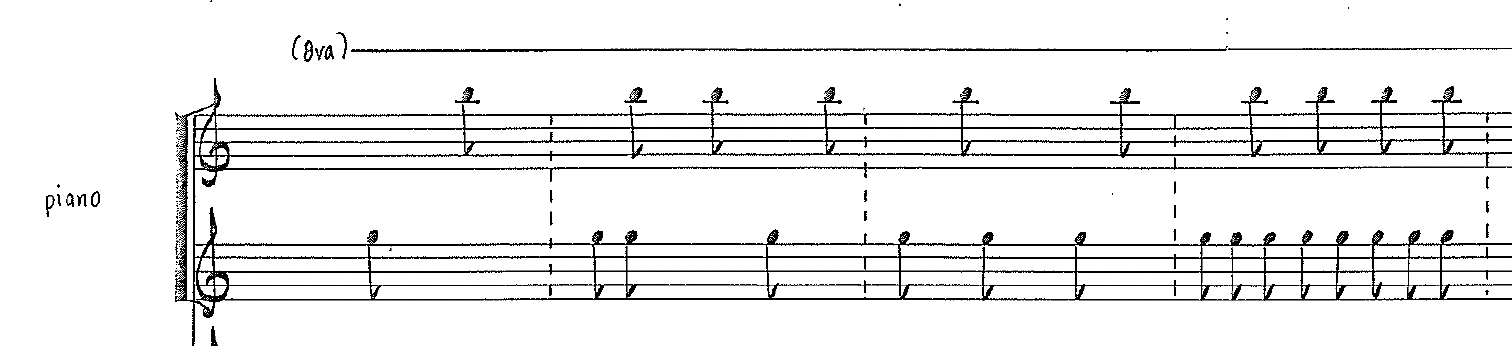
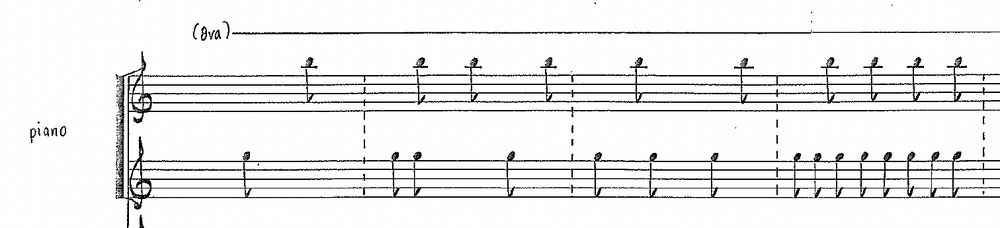
Hello In his short treatise, Messiaen says the following on this subject: To ensure this system is executed correctly without taxing the musician’s mind with constant changes in time signature (such as 5/16, 7/16, 11/16), Messiaen offers the following advice regarding the score: Omit the numerical time signature at the start of the system. Use bar lines only to delimit musical phrases or complete rhythmic periods, not to mark strong accents. Keep the plicae grouped together in logical clusters of notes so that the performer can visually identify the original ‘skeleton’. It is true that this system (I believe the composer himself mentions this as well) is not useful for orchestras, or even chamber ensembles, where changes in time signature must be indicated.
-
My dear fellow composers, (exactly) a half year ago I presented my Fugue XIII in G flat/F sharp major. Today is the right moment to post the corresponding prelude: The prelude againPraeludium-XIII-F-sharp-major-with-coversheet.pdf has the Ukrainian national anthem as its central thematic background (as it also appears in the fugue as additional „subject“, and – as a reference to the date - today is the 35th anniversary of Ukraine’s independence). Here in the prelude, however, the anthem appears in the lightest key of F sharp major with an optimistic character, light and playful in 3/8 time. Some words about the structure or form of the piece: 00:00 (mm. 1-22) Exposition of the „summer“ theme: A joyful, exuberant and perhaps dance-like theme, with accentuated rhythms and chords, although being composed as five-part voice leading. 01:01 (mm. 23-50) The texture and rhythm of the „summer“ theme is continued, but somewhat more restrained in terms of dynamics. The second verse of the anthem is played in the upper voice. 01:43 (mm. 51-75) The key signature changes to G-flat major, initially creating a peaceful atmosphere, much like that of a playground. However, this tranquility is suddenly disrupted by dissonances and tritone steps in the bass, symbolizing the horrors of war. 02:23 (mm. 76-94) The fugue subject (“dona nobis pacem”) appears four times (tenor, mm. 76-79; bass, mm. 81-84; soprano, mm. 86-89 and alto, mm. 91-94), symbolizing hope and leading back to the key signature with sharps. 02:52 (mm. 95-114) Recapitulation of the „summer“ theme, now in pianissimo and in the key of D sharp minor. 03:31 (mm. 115-140) The repetition finally leads to the triumphant finale in the coda: The third verse of the anthem is sung, ending with a bright F sharp major chord after a minor plagal cadence, expressing confidence. I hope, you'll enjoy it. Wieland Praeludium-XIII-F-sharp-major-piano-steinway-b.mp3
-
Hello, This is a very nice piece. It makes me feel something deep inside, which I don't get from most music. I see the comments with the Phillip Glass mentions. I am guessing this piece is more in the minimalistic style. I personally get more of a nature vibe from it. The title, Time and Reflection works extremely well too. I think at measure 62 a fermata would be nice? But yeah, the length is perfect (just under 3mins). The little deviations from the pulse of the piece here and there, the build up and eventual ending. It all works really well. Bravo! I look forward to hearing more from you. P.S. Would you mind if I included this piece in some of my home videos that I edit? (Just for personal use)
-
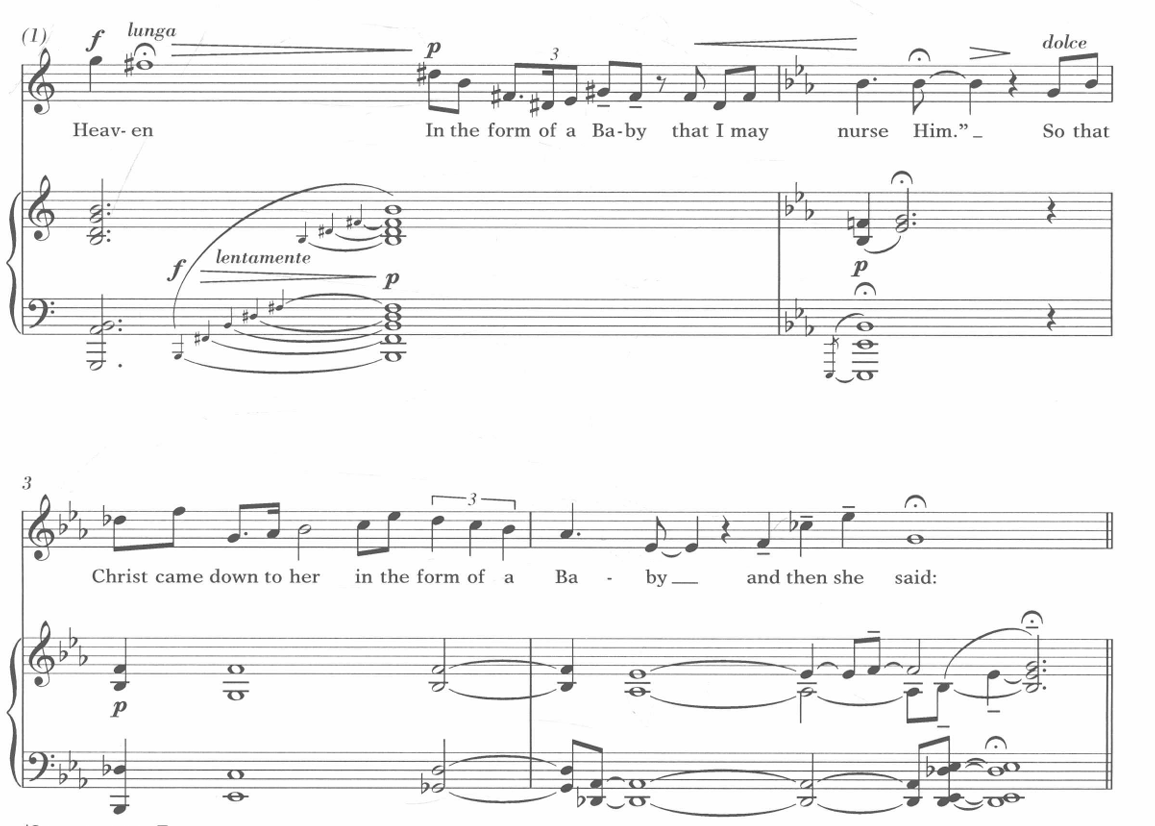
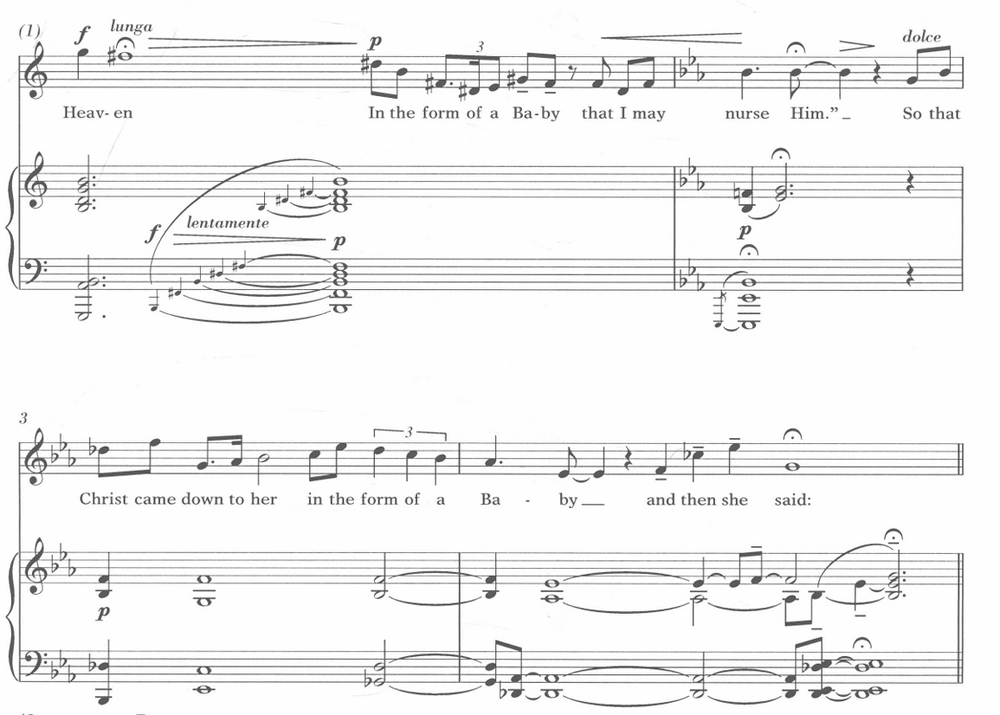
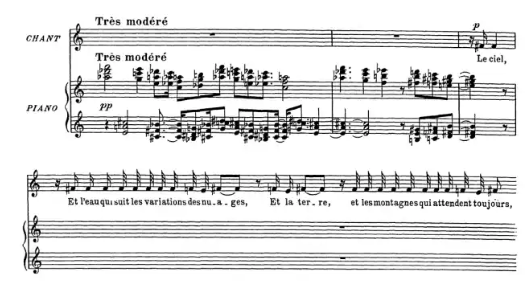
I can see that some composers of art songs (Messiaen, Barber, etc.) omit time signatures entirely in their art songs. I wonder if this is an option -- though probably less practical for larger instrumental groups?
-
𝐼𝑇𝐴𝐿𝐼𝐴𝑁 𝐵𝐴𝑅𝑂𝑄𝑈𝐸 | 𝑠𝑚𝑜𝑜𝑡ℎ-𝑡𝑜𝑛𝑒TM DEVINE BAROQUE by Mavell.mid DEVINE BAROQUE 2 by Mavell.mid ITALIAN BAROQUE - smooth-tone&amp;amp;lt;span class="ipsEmoji"&amp;amp;gt;&amp;lt;span class="ipsEmoji"&amp;gt;&lt;span class="ipsEmoji"&gt;<span class="ipsEmoji"><span class="ipsEmoji">™</span></span>&lt;/span&gt;&amp;lt;/span&amp;gt;&amp;amp;lt;/span&amp;amp;gt;.mp3 ITALIAN BAROQUE 2 - smooth-tone<span class="ipsEmoji">™</span>.mp3 DEVINE BAROQUE 2 by Mavell.pdf DEVINE BAROQUE by Mavell.pdf