

All Activity
- Past hour
-
Okay, thank you!
-
Ah. Back to @Henry Ng Tsz Kiu point! I would not start with Chopin. Start with Bach.
-
Ahh, sorry! I am an advanced oboe player!
-
No. I meant your skill level at playing an instrument. 19th century music falls into CPE. Thus, depending what you can play that would be first stop, my friend. :)
-
Hello @Tristan25 Below is my feedback of your piece. Motive(s): Throughout the piece you have recurring motive that makes the piece cohesive. And yes, there is variation of the motive to interest, overall. However, I feel that interest is lost after so many times we hear it. This creates your thematic material short melodic phrases. This is usually fine. However, there is need something else to grab our attention. Harmony: As your first piece, it is fine to stick to more diatonic harmonies. Later, you should try learn chromatic harmony! Form: I am not certain what the over form of the composition is. Overall, it is great start
-
I am an intermediate composer
-
Thank you!
-
What is your skill level?
- Today
-
Last year, I decided to try my hand at writing an opera. I have just one more scene left to finish, along with the overture and an Act 2 interlude. It’s written more in the style of Debussy or late Wagner, so there are no choruses, duets, trios, or arias (though there is a “folk song” at the beginning of Act 1, Scene 4, sung in character by the female lead). My vocal emulations aren’t very good, and it can be a little confusing to distinguish between multiple tenors, sopranos, and baritones. However, I was listening to just the orchestration and decided to bounce those tracks out without the vocals, essentially, opera without the words. I’ve started scoring it (I hate scoring), and the first scene is already done. Once I get the whole thing scored, I’ll add the vocals, since that will make it easier to follow which character is singing. I’ve included a short summary of the scenes. The story is a variation on the biblical tale of David and Bathsheba. If you have a moment to listen, I know that without the score you might not be able to give detailed comments, but I’d appreciate any impressions you have of the music. Another Man’s Cage Setting: Salem, West Virginia, circa 1910. Act 1: Scene 1 – Train Station Nathan and his son David arrive at the train station in the small West Virginia coal‑mining town of Salem. It’s immediately apparent they are not close, as they argue, Nathan accusing David of being a playboy who only cares about having a good time, while David fires back that he learned not to care from his father after his mother died when he was young. Their argument is interrupted by the mayor, a band, and a small group of residents who have come to welcome them. Nathan has recently purchased the town’s coal mine and has come to inspect it. David is shocked when his father announces that David will be staying to run the mine. After the crowd leaves, Nathan informs David that he will either run the mine and do a good job or be financially cut off. Nathan reboards the train and leaves town, while David is left behind. Act 1: Scene 2 – The Creekside Later that day, a group of women wash clothes in the creek and talk about their husbands. Among them is Elizabeth Hutton, the wife of the mine foreman. After the other women leave, Elizabeth stays behind and is startled when David appears, he has been watching from the trees. David is immediately struck by her beauty, but Elizabeth is not charmed. When David remarks that she reminds him of himself, “trapped in a cage,” Elizabeth quickly leaves. David watches her go, remarking that she is the only thing of value in the town. Act 1: Scene 3 – The Creekside The next morning, Uriah Hutton, the mine foreman, gathers several miners and their wives to host a reception for the new boss. Uriah grows irritated as David is considerably late, and the others joke about why that might be. When David finally arrives and meets everyone, tension rises as Uriah introduces his wife and David remarks that they have already met. After David gives a short speech and leaves, Uriah mutters that David isn’t here to work, only to please his father. Act 1: Scene 4 – The Hutton House A few days later, Elizabeth sings a folk song about a mountain girl who dreams of going to the big city, a dream Elizabeth shares. A knock interrupts her. It’s David. After telling him that Uriah is at the mine, Elizabeth learns David has come to see her. He makes an impassioned declaration of love, but Elizabeth insists he would only bed her and leave her to face the scandal alone. David continues trying to woo her, but Elizabeth orders him to leave. As he walks away, she stands in the doorway watching him go. Act 2: Scene 1 – The Mine, East Tunnel A few months have passed, and David and Elizabeth have begun an affair. Some miners gossip about it and how oblivious Uriah seems. When Uriah approaches and asks what they’re discussing, no one will tell him, though he clearly suspects something. Alone, Uriah admits he has noticed David’s attraction to Elizabeth but cannot believe she would betray him. He informs the men they will soon be working in the West Tunnel, which needs repairs, and vows he will not give up his wife to David. Act 2: Scene 2 – The Royce House David and Elizabeth lie in bed after being intimate. When David asks what’s troubling her, Elizabeth reveals she is pregnant. She knows their affair cannot be hidden now, no one will believe that after years of marriage to Uriah, she is only now with child. David insists that nothing will stop them from being together. Act 2: Scene 3 – The Mine, West Tunnel As the men inspect the West Tunnel, Uriah notes that the beams need replacing, but David is impatient and wants progress. Suddenly, one of the miners hears something, and before they can react, the tunnel collapses. When the dust settles, David and Uriah are cut off from the others, who tell them to stay put while they dig them out. David presses Uriah about Elizabeth, and accusations fly. As one of the beams begins to give way, David realizes the only way to be with Elizabeth is to eliminate Uriah. He pushes Uriah beneath the falling rocks, which crush him just as the miners break through the rubble. They are shocked to find Uriah dead under the collapsed beam, while David lies and claims that Uriah saved his life by pushing him out of the way. Another Man's Cage - Act 1- Scene 1.mp3 Another Man's Cage - Act 1- Scene 2.mp3 Another Man's Cage - Act 1- Scene 3.mp3 Another Man's Cage - Act 1- Scene 4.mp3 Another Man's Cage - Act 2- Scene 1.mp3 Another Man's Cage - Act 2- Scene 2 .mp3 Another Man's Cage - Act 2- Scene 3.mp3
-
Since because I’m out of my house and I don’t have two devices on me to keep stuff in a sort of judge, tape manner, I’ll just say what came up in my head during each part So in the structure to point out for sure there are many sections as you could see each are all related, but there is some distinctions and yes, there is a great range of dynamics and beautiful orchestration. The message that you intended is sent through in the message is read how it’s intended to be read.As a scerzo
-
I actually already did that on Page 8: so the thought had occurred to me. (At least they have most of the figure, minus the first three notes.) As to my overuse of woodwinds, they just seemed appropriate to Faure somehow. I think they suit the material. I did try to mix it up a bit with some percussion and harp. My French horns are criminally underused though: one of them has only one note to play for the entire piece! One wild thought I had last night, was to use marimba for the cadenza. Not sure it'll work; but might be fun to try.
-
MusicKing13 joined the community
-
Thanks very much for your comments! These are the solo violin and solo cello sounds available in Noteperformer. This is a standard scherzo form, with an A section (up to m. 19), a developmental B section (mm. 20-39), and a return of the A material (mm. 40-56). I don't feel any need to have every instrument playing all the time in a piece like this, and the inactivity in the strings for a few measures is, I think, quite typical of the genre. I do think that I'll probably omit the repeat of the second section of the scherzo proper and of the second section of the trio. Perhaps if you're feeling that the developmental B section is wearing out its welcome, that would help.
-
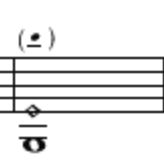
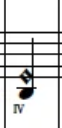
I've been playing violin/viola for over 20 years now and I still find it hard to describe harmonics, lol. There's like a whole physics lecture behind them and most of it goes over my head Basically, there are two kinds of string harmonics: natural and artificial. In short, natural harmonics occur when the player lightly touches a point on the string to produce the harmonic tone. These are a little confusing to notate since what one might see on the page isn't necessarily the pitch heard. I In the example above, it's basically telling the player to lightly touch the note where the player would normally play the E on the open G string. This will produce the B harmonic (as notated in the parenthesis). Some composers might just notate the diamond note on the E, and not have the G...players will know what to do. . Artificial harmonics are a little easier to notate. In the example above, you're telling the player to press the string (in this case the G string...the IV means G string...but the B notated is only possible on the G string so it's redundant) with the 1st finger (the index finger), and then lightly touch with their pinky finger a fourth above (if the player presses hard with their pinky finger, the note produced will be an E). The resulting pitch will be a B, but a harmonic that sounds 2 octaves higher than notated. These perfect 4th harmonics are pretty much standard in orchestral repertoire and will always produce the lower regular note 2 octaves higher than notated. Obviously, you can't do these harmonics on open strings, there always has to be a stopped note. Both examples above will produce the same B harmonic. The natural harmonic might be easier for players to play/find. Hopefully that made sense!
-
C Major.mp3 Stück in C.pdf
-
I do not like the rule "your name should not appear on the score" Sorry, but that sounds rather fishy to me.
-
Entry: I do not what to put here? Melodies Themes Motives Harmony Chords Textures Form Development Structure Time Originality Creativity Score Presentation Instrumentation Orchestration Playability Execution of Given Challenge Taste 1 2 1 5 1 0 0 1 Average Score: 1.375 Same reasons as @Kvothe
-
This is a very short piece of music I composed, and it contains three parts, which are Chinese instruments. I do not have a specific photo this music is based on, but a close one will be This one. It is 'A hundred birds saluting the phoenix', as the trills and tremolos can be interpreted as bird-songs. The piece is in A Major, (A Dur), and approximately 1 minute 20 seconds long. (I think.) It contains 78 bars of music. The instrumentation is Guzheng, Dizi and Erhu. (古筝,笛子,二胡。) Please enjoy! https://musescore.com/user/96214813/scores/34228625 -TristanTheTristanTheTristanTheTristanTheTristanTheTristanTheTristanTheTristanTheTristanTheTristanTheTristanTheTristanTheTristanTheTristanTheTristanTheTristanTheTristanTheTristanTheTristanTheTristanTheTristanTheTristanTheTristanTheTristanTheTristanTheTristanTheTristanTheTristanTheTristanTheTristanTheTristanTheTristanTheTristanTheTristanTheTristanTheTristanTheTristanTheTristanTheTristanTheTristanTheTristanTheTristanTheTristan... Chinese Fuge.pdf
-
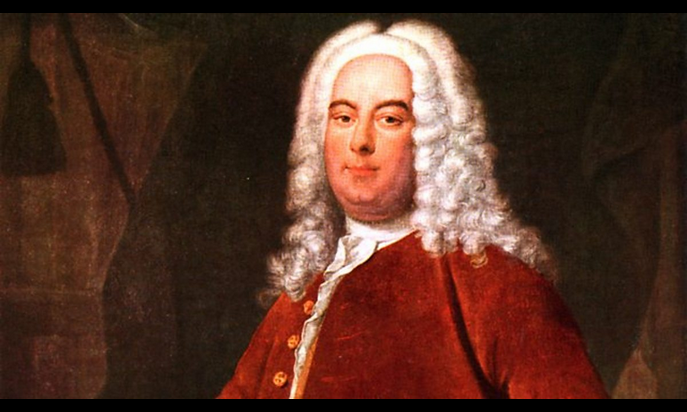
A lovely Hymn from HANDEL..................Just in time for Christmas Handel Joy to the World.mp3 Handel Joy to the World.mid Handel Joy to the World.pdf
-
Listen more, analyze more, find some good harmony books on it! Henry
-
How would I go about learning romantic harmony like Chopin or Tchaikovsky?
-
Colenbacher joined the community
-
-
All right, so I'll be looking at your structure of this. Since because this is a canon by nature, it should have a really good structure intact with it. I do see some call and response sort of situation in between with the strings. However, though, I think this is due to the nature of the canon, how the melody is kind of like twisted in that sense. Just a little bit of mixing and balancing, I do believe that the chorus is a bit too loud compared to the actual orchestra itself. I don't know if the score is condensed, but I don't see any brass. So what I would just do is just blend in, fix that. Nice change of melody and great job with the ending. I appreciate uh the very satisfying ending. I do see that you do are changing keys a lot. You're getting into territory that there are double flats and also weird enharmonics, so for example, like B sharp and like C flat and so forth, and like F flats, all that crazy stuff. But anyways, though, I would treat this like a really good uh orchestral warm-up in a sense. Really good work.
-
Hello, I will be looking at your structure and your development of your music today. I'll be specifically looking at Cthulhu. I will also have the score pulled up, Very interesting we have here. A very interesting, very stable introduction here. And I could see the use of tarrace dynamics. Okay, so I see stepwise movement to and fro thereout. It reminds me of the Rite of Spring a lot. You must have probably drawn inspiration from that. The score is not presented well, though. There is a lot of smearing of notes, and I don't think the recording does go with the actual score. Okay, that's pretty much it, though. And really good job. .
-
PeterthePapercomPoser replied to PeterthePapercomPoser's topic in Announcements and Technical ProblemsSome more ideas for the Landscapes - Soundscapes competition: "The Peace of Nature" award "A Rustic Mood" award "Nature's Garden" award "Nature is wild" award
-
Brilliant, thanks! Will repost once I've made some changes. I think I'll keep the harp glissandi, as these seem to work quite well. The effect creates a new texture to end the cadenza. (Though maybe others disagree?)










.thumb.png.8b5b433a341551e913a34392660bc95b.png)