All Activity
Past hour
-
There were 9 entries though🤣😂
-
As a judge, it was honor to review each of 12 entries of this competition. I enjoy give feedback to this composers. I hope they learn from this experience! I feel that (maybe) having at having work in the ensemble category and possibly others and showing how members how you can take draft to full polish piece could be requirement. Again I said maybe.. For the time requirement: 3-6 mins with a 5 mins would work. Ensemble: we can always vote on this. Let us add style to the mix! Let challenge them only write in one write style and see what happens. So the core requirements: “Write a piece in early romantic style (Chopin, Schuman, Schubert) that is roughly 3-7 mins long given the following forces..”
-
Thank you so much, my dear friend! I’m really happy that you noticed those false cadences. I invest a lot in the dramatic aspect of my music, and I generally love surprises and unexpected moments, but always with balance and naturalness. Although the Classical era is always like a shadow behind my writing and continues to influence me, these unexpected elements are something I learned especially from Scarlatti. I feel incredibly blessed that I discovered his music and had the opportunity to understand and absorb so much from his unique way of writing. Thank you again for listening so carefully and for your beautiful words. They truly mean a lot to me!
-
@Vasilis Michael This is a delight. It sounds like it’s right out of the classical repertoire, though with touches of modern harmony in there. Perfect music to help someone relax. It’s light, graceful, and airy. You have a really nice touch. I like how you pepper in lots of false cadences, when it sounds like it’s about to resolve but instead presents a bit of mystery to the listener. Those moments help keep the drama flowing throughout. Well done!
-
Hi Everyone! Quite a bit of work later, I am happy to finally share my third completed Sonatina! I would love to hear your feedback and opinions on it. I know it is quite lengthy, so I really appreciate anyone who is willing to take the time to listen to my music, as always! If you only have time for a single movement, I think you might enjoy the third one the most, as it is fun and quick. :) I. Andantino – A sonata-form movement that explores motif economy and establishes the overall tone of the Sonatina. II. Adagio – A lullaby-like ternary piece, providing a moment of relief and contrast before the finale. III. Allegretto – A variation on rondo form that brings the Sonatina to a playful conclusion. This is my favorite movement of the piece, and I like to think of it as a “Drunken March.” YouTube link Score Timestamps: 00:00 — I. Movement 04:15 — II. Movement 05:37 — III. Movement Sonatina No.3.mp3 Sonatina No.3.pdf
Today
-
My dear friend, thank you so much for your kind words. I’m really happy that you liked it. I may have Scarlatti as a model for my binary sonatas, but my writing is more classical in character. In general, it is a blend of everything, and when it comes to structure, I focus more on classical musical dramaturgy. Thank you once again!
-
Love this! Quite an interesting mesh of Baroque and Classical style. What I find rather baroque is the rather contrapuntal texture in this piece, although there are still some clear melodic lines like in Classical music
-
-
= Short Piece for Cello / Piano / Granular Synthesis = = Background One day, I thought of a cellist and a pianist performing over a backdrop of electronic noise, and this piece was created based on that idea. As the title suggests, the composition features cello, piano, and granular synthesis. The composition process began with creating the granular synthesis textures, followed by adding staccato cello notes and piano. I imagine a space that looks like a compact design. = Note I don't have a specific message I'm trying to convey with this music, but I would be happy if someone found it enjoyable. To be honest, I was reluctant for a while to upload this piece; I felt a bit hesitant about creating something annoying when everyone else is composing beautiful orchestral / chamber or keyboard-based works, haha. Still, I decided to take the plunge and upload it. As for the score, since I don't know how to notate it, I can't upload it now. I’d love to hear your impressions, criticism, and feedback. Again, I hope you find it interesting and enjoy it. = Music / Artwork: Lithl = Finally If you know any pieces that are similar to this piece of mine, please let me know. I'd appreciate it. Thank you for listening, and have a nice day :) Short Piece for Cello : Piano : Granular Synthesis.mp3
-
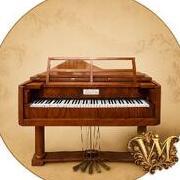
I am very happy to share my 27th Piano Sonata, written in binary form. The work is written in an Allegro character and explores contrasts between lively, restless passages and more expressive and introspective moments, with changing harmonic colours and a gradual movement towards a quiet and gentle conclusion. I have dedicated this Sonata to my dear friend Henry, as a small expression of my appreciation and admiration for him, both as a composer and, above all, as a friend. It is a great pleasure for me to dedicate one of my works to someone whose music I appreciate and whose friendship I value deeply. The performance is my own, using the J. Weimes Fortepiano (1808) from Pianoteq 9. I hope you enjoy listening to it, and I would be very happy to hear your thoughts and impressions.
-
I composed short prelude for harpsichord. Prelude for harpsichord.mp3 Prelude for harpsichord.pdf
-
-
this went well I do want to reuse some stuff from earlier and also maybe experiment with more instrumentation. I do have ideas for other themes as well if they are selected resample with the medley thing I do want to compose for a string Orchestra as that the idea I have would work perfect for that. I think these competitions should be somewhat semi casual with a very competitive sort of feeling around it, but also do not include money into the thing but something where people are pumping out actual hard work and where people have to kind of put up a good fight to get like first place and what not
Yesterday
-
2. If you didn't submit music to the competition, why not?I just wanted to review this time
-
My dear @Henry Ng Tsz Kiu , you truly moved me beyond words. The fugue subjects are absolutely beautiful, and the Laments, especially the third one, touched me incredibly deeply. What I admire most is the classical writing — that strict classical style, its clarity and its structure. For me, music written at this level hardly needs any commentary at all, at least in my case. A huge bravo, my dear friend!
-
Hello, second post on this forum. I would like to share with you my new piano collection called Feminine Fragments. Any feedback and suggestion is well accepted. For the score on video visit my YT page on the link below, aswell if you're curious about my other composition. Thank you! Click here Feminine Fragments.mp3 Feminine Fragments.pdf
-
Hi @Vonias! This piece is creative, with great sound design. Is that the sound of thunder or blowing wind? I think if you bring the bass drum closer to us and make it stronger, it would work. It is well panned and the concept of the church bell is also interesting. Sounds really good, well done, thanks for sharing. I liked this piece! Best, Lithl.
-
Thanks for the comments. Some things I wish to reply back on, however, I will preface this by saying in my reply to Wieland earlier in this thread, you can see some of my comments on engraving decisions like the score/ stave size. Comments: "be consistent with your Ped marking, sometimes it's the lines sometimes it's the asterisks" - As a concert pianist, while it can be nice for aesthetics to see one pedal notation, or for simplicity of having one system, the information is the same. Personally, I did not want to flood the page with pedal marks and the rose symbol. When the pedal changes happened less frequently, in the beginning for example, I opted for the rose, while on the main content, I kept the pedal line as the changes happened to frequently for me to warrant duplication of the "Ped." and rose. Thank you for pointing out some detail engraving things like bowing info, dynamic markings and missing articulations. Of course, some things can be missed in the final stages as we are trying to get to the end goal. Some of my hairpins are meant to be ambiguous. While it can be nice to have explicit information for every hairpin, in my composition philosophy, I do not believe it sound to notate every possible dynamic marking. Taking from classical literature, it is quite common to see dynamic information like a hairpin be placed without a landing dynamic or for it to be implied within the bounds of an established dynamic marking. Thus, unless I specified the changes, I wanted to leave the interpretation to the performers as they explore the bounds of my music. Poem translation. This, to me, is the realm of most debate as anybody today can use a translator program to covert the original source material to English. Currently, I would argue it's fine as it's going to be similar and identical at points as we're all referencing the same text. Yet, this more semantics and now that you made me aware of it, I am not sure the action I will take next in regard to the front matter. As you mentioned, this work is playable for a string player. I was conscious of the playability from the start and while it may be "better" to have a second violin to support some of the octave choices, I will be as blunt as possible and say that is what I wanted. It was not because I was "just doubling the piano," while at times, it does serve that role. I have fallen in love with octave double stops on the violin this summer and wanted to use them in my own way. This is my first work where I implement it for a long time. With the writing as a whole, I do not shy away from making uncomfortable music for the player. It may be easier for the viola to play on the downbeat in the spots you mentioned, but ensemble wise, the other instruments fill the downbeats. The viola serves as a means to add the harmony in the space of time the melody is sustaining. However, as I have discussed amongst my peers, there are some things I will not repeat in subsequent chamber works in regard to doublings. Lastly, with rhythm, I understand the desire to have more variation in certain spots, however, I simply did not want those changes. I truly wanted to keep it simple. The simple range of the melody, its contour, its rhythm. I am fond of how simple it is and how it can go a long way. It may not be the most diverse piece of music, but I am most pleased with it. Thanks again!
-
Thank you Seni, but I insist it's great that we get to discuss this stuff that lies some layers behind the surface. This is probably the best place I know to overthink stuff in this regard! That's real feedback, something that you can hardly get on Youtube for obvious reasons. Again, many thanks 😊
-
That's for me to know and for you to find out :)
-
I don't know if I'm allowed to talk about it yet! LoL .. but don't worry .. we'll publish it here when it's done!
-
ooh what piece is this!
-
@Grant Weep your comments made my day! I just love that. You totally nailed it. I usually try to write music that sounds spontaneous but also somehow inevitable, structured but also free. I don’t often succeed at achieving this balance, but I appreciate that you felt what I was reaching for. Thanks for taking the time to listen and comment!
-
A very vivid, lucid and dramatic piece! I thoroughly enjoyed its textures and unique musical gestures. I found the diverse elements of each of the individual instruments in the piece to be somewhat at odds with the desired topic/theme of the competition though. It is definitely a good idea to have the soprano and tenor sing separately first and then together in the last stanza. But the instrumental parts seem to create an atmosphere of tension and the harmony reminds of music for a horror movie or game such as Metroid. The tremolo Viola part especially reminded me of Super Metroid. And the harmonies between the Soprano and Tenor are often not palatable to a sensation of love or summer. The piece is composed quite well however and with quite a bit of craft! It is very intriguing to listen to and definitely holds my attention from beginning to end. Thank you for your participation and good luck in the polls! Melodies Themes Motives Harmony Chords Textures Form Development Structure Time Originality Creativity Score Presentation Instrumentation Orchestration Playability Execution of Given Challenge Taste 8 8 9 10 10 10 3 7 Average Score: 8.13
-
It’s a beautiful trio consisting of Horn, Violin and Piano. I’m sure it’s already been mentioned that for a chamber work like this the proper score order would be Violin, Horn and then Piano at the bottom. Another thing I’m sure has been mentioned is that you should place double bars at key changes and get rid of redundant key changes. The music has a variety of different textures and not all the instruments are playing all the time with plenty of much needed breaks. The horn’s full range is well utilized. As of the writing of this review I am currently playing horn everyday in preparation of recording a solo horn sonata and I can attest to the playability of your horn part. The solo piano Cantabile section at mm. 25 shows off your ability to write a beautiful melody and dress it up through variations in the Violin. The I 6/4 chord at mm. 85 makes one expect a cadenza. Then you have the solo horn come in on the lowest of notes in the whole piece. I wonder if there’s some extra-musical meaning behind this. Thanks for your participation and good luck in the polls! Melodies Themes Motives Harmony Chords Textures Form Development Structure Time Originality Creativity Score Presentation Instrumentation Orchestration Playability Execution of Given Challenge Taste 9 7.75 9 9 7 9 9 8.25 Average Score: 8.50
.thumb.png.8b5b433a341551e913a34392660bc95b.png)