All Activity
Past hour
-
Thanks for sharing this. I’ll have a proper dive soon. I read he composed this in the mid 1840s. Initially the form seems unusual and some ideas are wanting more imagination and drama. But I need to listen to the whole thing to make a proper assessment. I feel that i’d have rather not known he was not successful commercially for i wouldn’t necessarily be looking for reasons to validate that 😅☹️
-
Hello, composers of the forum! I’m curious if anyone’s acquainted with the work of Swedish composer Franz Berwald (1796-1868). His music wasn’t received well in his own lifetime, and he had to take other jobs to support himself. Liszt praised his work, telling him “You truly possess originality, but you will not enjoy success during your lifetime. Nevertheless you must persevere.” This Symphony in C major, never performed until sixty years after his death, is full of harmonic color, and formal innovation, not least in its merging of the Scherzo and slow movement into a single movement. I definitely hear it as an early precursor to Sibelius, and it has some lovely and quite striking moments. What do you think of it?
Today
-
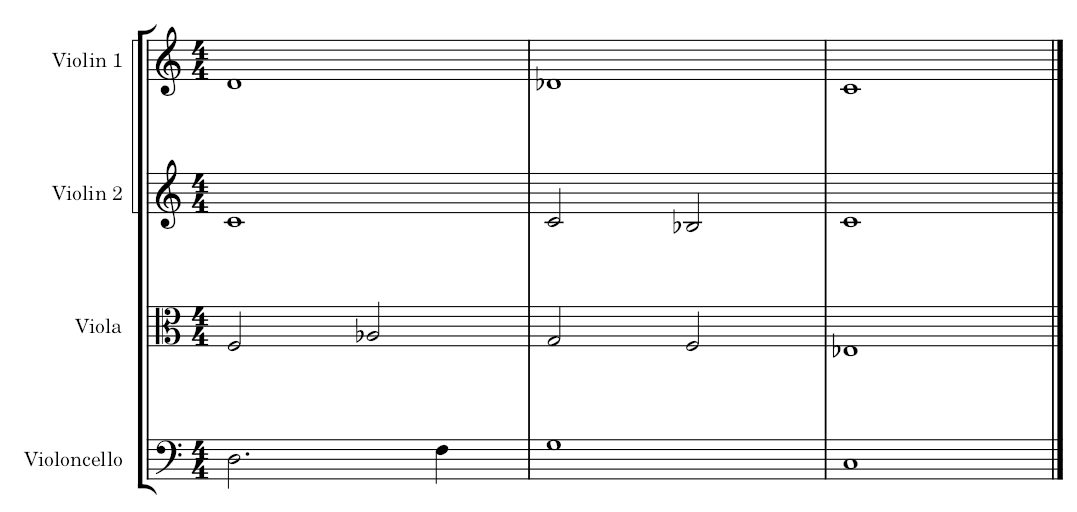
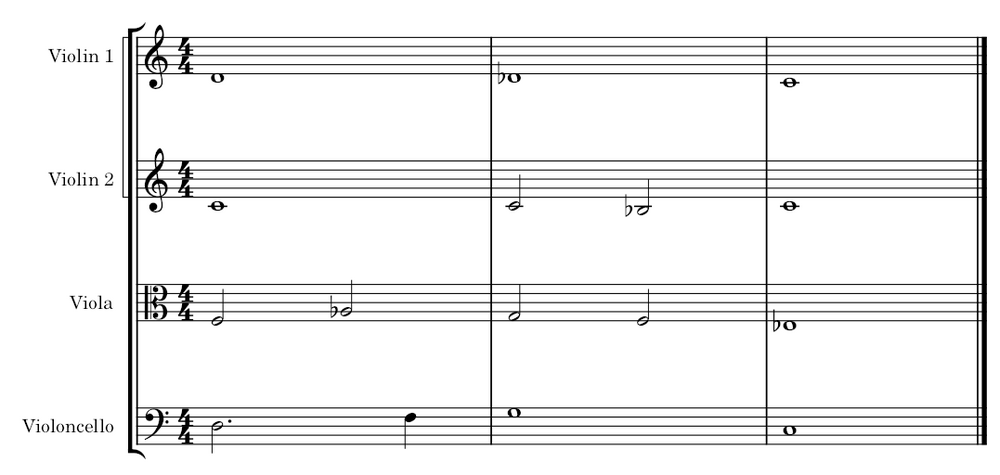
I’ll admit the B flat rising to C in second violin sounds odd, perhaps because i want to interpret the b flat as a 7th, which in traditional voice leading always falls by step at resolution. I wonder perhaps this passage could instead pivot into A flat major harmony, there the B flat falls to a flat and g (bass) rises to A flat - a further evasion.
-
Thanks for the tag @Lithl It’s difficult to recommend how one should learn ‘music theory’ on here without understanding what type of music they wish to compose. This forum is so diverse and it is thus inappropriate for me, for example, to apply the 18th century paradigm (that i’ve trained myself in) in a generalized way, as if all other paradigms are dependent on its method. So before I even attempt to answer that question, understanding one’s intentions is often my starting point. That said, I do believe in learning the fundamentals of tonal music before branching out into one’s preferred domain. Start by understanding what makes you passionate in music. Which composer’s music resonates with you most? Does their music influence your own aspirations? Next, listen widely. I listen extensively to music largely in my preferred idiom (18th century and early 19th century) and many of the patterns and narrative techniques associated with that school have become more or less embedded into my consciousness. This doesn’t help with theory per se, but it is invaluable for generating my own melodic ideas. Crucially, it will be your own passion that will lead you down which rabbit hole. I have books i can recommend to aid your journey, but i’d rather understand your intentions first. There is an analogy that likens the knowledge of music theory to that of an iceberg: the deeper one goes, the more specialized that knowledge becomes. But it is worth recognizing that different styles of music will have their own ‘iceberg’. We do not master them all, but tend to focus on that relating to our own preferred domain (eg. Jazz, common practice, romanticism, serialism, modal, cinematic, etc…). Feel free to message me directly with any questions you may have.
-
It's me. I don't know much about music theory, and while I'd like to learn, as someone who chose not to go to a music university and hasn't received formal musical training, it feels difficult. I think there are some people who started learning by themselves. I'm aware that there are very useful tools available for learning it, but it takes time, and I haven't gotten around to it. The problem with not learning about music theory in YCF is that my reviews are not going to be good. I often feel that my feedback might not be all that constructive, but I imagine people are happy to receive impressions from others, so I write reviews as a way of giving back. I have much respect for those who provide detailed feedback grounded in music theory, such as @PeterthePapercomPoser, @Luis Hernández, @Henry Ng Tsz Kiu, @MK_Piano, @Markus Boyd, @TristanTheTristan, @Wieland Handke, @Kvothe and others. I usually use a synthesizer, so I don't directly need to use music theory for composing, but I think learning music theory brings more diverse ideas and makes compositions better. So, I believe learning music theory is great. In this post, @Kvothe kindly responded to my question about how I can learn notation. It's about notation, not theory, but please check it out for your reference. How Can I Learn Music Notation https://www.youngcomposers.com/t49854/how-can-i-learn-music-notation/ Best, Lithl.
-
That was lovely! It was somehow both serious and playful, which is, I suppose, what good parenting can sometimes look like. Well done, and great performance too!
-
I started composing 1 year ago and i have learned a tiny bit of music theory since then but I still don't really know that much. Anyone else here who doesn't know a lot?
-
influenced by chopin prelude 1 :D ik the title is prelude and other things but I havent composed "other things" yet lol prelude and other things.mp3 prelude and other things.pdf
-
oh i didnt know it had to be in 3/4. also i was also thinking about getting rid of the suspended chords. the reharsal markings are just for how it is split up, i'm not gonna include them in the final product. tysm for the feedback :D
Yesterday
-
-
-
Hi, I'm a folk musician and a software engineer. I've been trying to do music transcription with AI for over a year now with limited success but when GPT-6 Astra came out last week it started perfectly transcribing all my tunes. It was amazing so I used my software skills (and AI) to make https://getthedots.com so my other non-technical musician friends could use it. It's only been used for some simple folk tunes so far, so try it out and let me know if it works for you too. I'm providing one free transcription per month and then the ability to buy credits for more transcriptions. Cheers, Tom
-
tamhas joined the community
-
@PeterthePapercomPoser I think it’s a very good solution. Although there is a descending fourth interval in the bass (entirely associated with functional harmony), the modal character is very much present due to the D flat and the absence of the leading tone (B flat instead). You have to bear in mind that introducing an entirely foreign element is bound to strike the listener as odd. Turn it round: imagine a piece in C major that ends with a Locrian or Lydian cadence… It wouldn’t sound right. There are loads of pop songs that are modal—some 100 per cent so—and they’ve been ‘slipped past’ us as if it were nothing out of the ordinary. For example, ‘Stayin’ Alive’ (Bee Gees) is in the Dorian mode.
-
Hey @Markus Boyd ! I thought I would just add my 2¢ with regards to the question of how to end your piece. There are lots of options! I don't recommend a fadeout since it would be the cheapest and easiest. I personally also don't hear your current ending as a mistake. The only thing that's a bit out of character for the rest of the piece is the picardy third itself. It you simply changed that E natural to an Eb at the end, it would go a long way towards remedying the problem. I have taken the liberty of making my own version of your ending based on @Luis Hernández 's suggestion of using a kind of Phrygian cadence: AncientRuinMB.mp3
-
I actually thought that was the kind of thing you wanted to express in this final section. And yes, I think that’s a good idea. Since pieces in this genre tend to be fluid—often lacking a definitive, settled ending—pulling that off would result in a unique and compelling work. That said, as it stands now, it does feel a bit abrupt. So, perhaps it would be best to use that final part as a hub to introduce a melody and bring the piece to a tonal conclusion? I’m not well-versed in music theory myself, so Luis's perspective is definitely the one to go by. I did try to quickly experiment with some ideas earlier—just for five minutes, as I’m quite busy—but it didn't work out. It seems like achieving a tonal ending is going to be difficult. Honestly, I do not know, sorry. As you know, various techniques can be employed—such as layering, fading out, or concluding in a way that leaves a lingering resonance that is incredibly fluid yet somehow unsettled. Or you can develop that fluidity to a bigger volume and suddenly turn it off. Since this type of music is fluid, the easiest way I can come up with is considering which instrument to use. If you use a triangle or something like that, you probably won't be able to give a rational tonal finale, but you would be able to maintain the atmosphere with a tonal end. Have you kindly already shared it? If there are any other examples, I would love for you to share them as well :) Best, Lithl.
-
@Grant Weep, this is so lovely. The reverb of the piano sound is beautiful, as are the beautiful chords. Sometimes it sounds jazzy, reminiscent of Bill Evans, and I felt a sparkling quality in the sound. I suppose these pieces for your kids are going to be very personal and deep-seated, meaningful works for you. To me, it felt like a calm lake, bringing a sense of nostalgia with many different aspects. Finally, looking at your profile and seeing that you joined the Young Composers Forum when you were still young, and now you have a family, really warmed my heart. I sincerely hope that you and your entire family have a wonderful family life. Best, Lithl.
-
Hello, everyone, I hope you’re all doing well. After quite a long time, I’d like to introduce one of my new compositions to you. It’s called “Duo for violin and cello.” It’s not exactly easy to listen to, but I believe some of you might enjoy it. Unfortunately, I’m a poor student, so I can’t afford to pay live performers, that’s why the recording was once again made using VSTs, but it’s better than nothing :) I’d appreciate any comments. Thank you very much.
-
OK. They’re different things. I don’t think these systems can be compared because their foundations are very different. That doesn’t prevent them from being used in combination or simultaneously. What I said in my previous message applies to anything in music. If you introduce something completely unrelated to what’s playing—suddenly—and it doesn’t reappear… it will be perceived as a mistake. That’s why, if I were to do something like that (and I know I’ve done it many times—after all, modal exchange in tonal harmony is based on this very principle), I would combine both systems as the piece unfolds, so that it doesn’t sound strange. Repetition in music gives a piece familiarity, coherence, and memorability. Another way to do this—though I think it goes beyond what you’re aiming for, since it sounds much more radical—is what was common in Bartók’s music: polymodal chromaticism. That is, writing simultaneously in two modes. One can be tonal and functional, and the other can be non-tonal. Here: BARTÓK: CROMATICISMO POLIMODAL
-
Please take a listen to this Rondo I composed. I wanted to capture some early-Romantic fire with this one, and I hope you enjoy! Beethoven was looking over my shoulder the whole time I wrote this, so this music definitely will not make any kind of hyper-modern statements. Though maybe there's a touch of modern in there, especially the middle theme. I appreciate any and all feedback! 3. Rondo.mp3 03 Rondo.pdf
Last week
-
Hello, It's been a blast listening to all your pieces for the past few weeks. I joined this forum many years ago when I was a "young composer". Writing music has always been a hobby of mine, though I am no longer a "young composer". I have a career, I have a family and I have kids. So, this is a song about my two boys. I wrote a set of 14 piano pieces for my kids meant to be played as a set last year. I've been working on getting the sheets engraved nicely and making some nice recordings at home on a grand piano. This one is called Kid's Perfect. It's a bit of a play on words I guess. The idea behind this piece is that I'm just messing around with perfect fifths. The twist is that I challenged myself to only play 6 sequential perfect fifth notes in any bar/phrase. So, it all starts with FCGDAE, or the first 6 notes of the C major scale rearranged, or a D minor 11 chord. I guess it's all the same thing in some ways. But I try to make it a bit more interesting later on. Thanks for listening, and let me know what you guys think. If you crank the volume up, you get to hear the rich harmonics that resonate in the piano sound board. https://youtu.be/U4IetXzY2Us
-
I do appreciate you saying that we should not compare tonal and modal music; for each are trying to very different things. I’m genuinely interested, though, in ways to combine the two…
-
Modal musical ends with the cadential harmony, in this case bII - I = Db - C min. Mixing modal and tonal is possible, of course. But if you stay modal along the piece and at the very end you use a perfect authentic cadence it sounds as a mistake. If you want to make a mixture you have to do it not only in the end. This is the way our ears will take it as “normal”.
-
@Lithl I agree with your comments. I had considered lengthening the opening, actually. I couldn’t quite pull it off but there must be an effective way to extend the idea. It’s interesting that you and @Luis Hernández expressed disengagement with the ending, that is the first and only genuine tonal cadence. My rationale was an attempt to somehow merge the tonal and modal into a simple and relatable narrative: anguish first, uncertainty in direction that follows, before a somber finish with a picardie third cadence that offers some form of renewal. That was the concept, anyway. I can certainly play around with it more, but i have a question… If a tonal conclusion is not satisfactory for this type of music, where the expectation is perhaps sustain ambiguity above all, how should it end? I am aware of layering technique in this genre, where essentially in the latter sections the music just falls away - disintegrates if you will - as a collapse. It leaves not resolution but a lingering unease. In the ‘more’ tonal music of Jeremy Soule, he sometimes ends the music with a central motif but with ‘messy harmony’ with ‘sonorities’ that correspond not with the harmony but contribute towards a lush atmosphere that sounds beautiful but does not make much logical sense. I’ll share it, if you want to hear.
-
Hello, As you mentioned, the E major one sounds very chopin-ey, can hear direct quotes from the waterfall etude...but it's in E major! The C# Etude sounds absolutely wicked, in a good way. Of course it's very impressionistic. However! I accidentally opened two of your youtube links, so I had two versions of you playing, slightly out of sync and it sounded really cool. Obviously, you posted this with the general idea around classical music. But I wonder if some music producer could remix your works somehow, add a bit of delay or something. Maybe what you weren't thinking about...try it and let me know what you think? Both etudes in very different styles...Bravo!
-
Hello. A super interesting topic that could go a long way.... First of all, let me say that your short piece sounds very beautiful and I love it. I would only change one thing, which I will comment on later. I’m definitely going to say it here: I consider myself quite deeply involved in these matters of modality; in fact, my own curiosity led me to write a mini-manual where I explain how to develop musical systems from a scale-mode (any of the hundreds out there). The first thing to point out is that I think it’s a mistake to compare modal systems with tonal ones (and these with atonal ones). We need to forget about voice leading, 'forbidden' parallels, etc.... Modal music predates tonal music by more than a thousand years, and it didn't need any comparison. It must be understood as a horizontal, melodic system where there are no notes to avoid, and where certain colors (characteristic notes of the mode) are highlighted. The fact that we use chords in modal harmony today is a much later 'construct' in which the concept of the triad-chord is applied to the vertical coincidence of melodic lines in modal music. That is how harmony was born... From our perspective, since we are already familiar with functional-tonal harmony (which has thoroughly saturated our brains), we can approach a composition from an extremely wide spectrum. You can be purely modal, purely tonal, or a varying mix of both. Anything goes. In your composition, and based on your comments, one can sense a hesitation that comes and goes, which is more conceptual than musical, since the piece is completely valid and effective. But let me comment: the beginning establishes a C-G drone... typical modal style. It doesn't matter that you haven't introduced the third. The very moment the first Db note sounds on the violin, you are defining some mode of C Phrygian. In fact, it is a note that is heard at many points. If you were strictly following C Phrygian, the notes would be C, Db, Eb, F, G, Ab, Bb.... However, in measure 4, we see an E natural in the bass, then an F#... These can be interpreted as approaches to the following notes they resolve to... A typical tonal concept. In tonal music, notes resolve; in modal music, they don't—they are there to provide color. You want to use notes outside a scale-mode? There is no problem at all. It's just like using chromatic notes in a tonal composition. The problem is that if you want to maintain the color, the specific flavor of a mode, you have to be careful not to use tonal-functional resources that easily destroy that 'modal framework'. And that is what happens at the end of the composition, where there is a ii - V - I pattern ending in C major, which, for me, cancels out everything that came before. I insist that one can do whatever they want when composing. But our ears are so contaminated by tonal music that this progression ending in a perfect cadence G - C.... takes you right back to any period of the common practice. Especially the B-C..... That sounds like leading tone-tonic anywhere. But like I said: very beautiful music.









.thumb.png.8b5b433a341551e913a34392660bc95b.png)