All Activity
Past hour
-
Prelude This is a nice piece. I like it! It has a surprisingly 'full' feel to it. I like how you have used dotted rhythm in the piece to create a setious yet playful emotion. I really like these 123-123 feels. Great! I am pretty sure that it is 'leggiero' not 'leggero' though. Fugue Interesting. The theme is innovative. I don't understand the tempo marking. This is otherwise a lovely piece, and the Picardy Third ending was so good. Good Job! -TristanTheTristan
-
-
Today
-
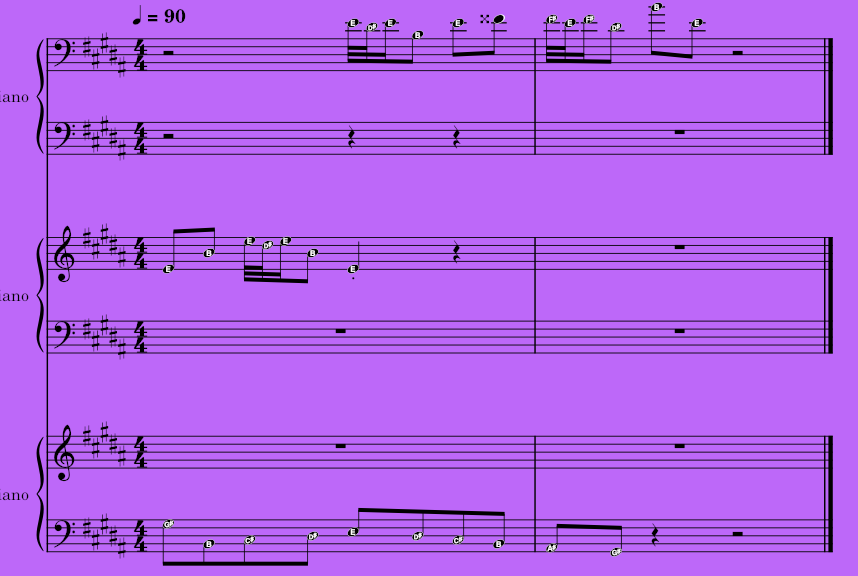
Writing a good melody is difficult. Writing a pair, a trio, a quartet of melodies that can be played all at the same time to good effect is astronomically difficult. One has to observe several different rules, many of which are quite restrictive, such as avoiding parallel Perfect Fifths and handling dissonances properly. Yesterday, I sat down to a project that I had long wanted to start. With the help of Google Gemini, I began writing the code for a computer program that turns what is astronomically difficult into a quick and simple matter. The program is now more or less entirely complete. What does the program do? It takes as input a folder full of MIDI files, each containing a melodic passage and, in a matter of seconds, finds potentially dozens of superimpositions of these melodies that follow the rules of good counterpoint. Different combinations of these melodies, along with simple transformations of these melodies (i.e. time-delayed versions, transposed versions, sped-up versions, and slowed-down versions) are quickly tested, one after another, and those that pass are added to a pool for the user to listen to and export for use in larger works. The user can also force the program to try combining melodies with one specific melody (possibly including itself) rather than combining them entirely at random. All of this makes the program ideally suited for writing compositions that involve not only counterpoint but extensive imitation (imitation means the repetition in one voice/instrument of a melodic idea that appears in another voice/instrument), such as appears extensively in that venerable type of music called the fugue. Right now, my task is simply to compose as many different pleasant-sounding melodic passages as possible, so that I can feed these to the program and have it superimpose them in ways that I never would have come up with without its assistance. For those interested, the code makes use of a genetic algorithm and an artificial intelligence that learns how to avoid melodic combinations that are likely to fail, based on prior experience, speeding up the program's workings and improving the quality of its output. Here is a screenshot of a very short and simple passage that this program wove out of three motifs. The harmony in this passage is almost entirely two-voice, but the program can write passages that are arbitrarily dense, up to the point that it would be theoretically impossible to thicken the musical texture without breaking the rules of counterpoint. It can also write much longer passages, although listening through them would become increasingly time consuming as they got lengthened. Much better to write short passages and weave them together within a larger work. (You'll notice that there is one perfect consonance by similar motion. I decided to permit this because it isn't strictly forbidden, and in some cases is unavoidable. The program is coded only to rule out completely those passages which break the hard rules, such as ones that include parallel Octaves and unacceptable handling of dissonance. If the program writes a passage that breaks a suggestion rather than a hard rule, and the user doesn't like this, the passage may simply be discarded. I kept this one because I like how it sounds.)
-
Hi everyone! :) As i am in my village in southern Greece for vacations, i am away from my music studio in Athens. However i still have Musescore 4 for arranging ideas and i just finished orchestrating my composition "Calling For Inspiration". I am still doing lessons in music harmony so for my orchestration and arrangement ideas i just follow my instict and ear. Of course the final audio quality is not the same as if i would have composed the piece in my sequencer (with many proper audio libraries), but still i think that musescore does a decent job in rendering the sounds. Calling for inspiration...through the Renaissance times, music evolved to soothe the spirit and help the psyche reach the skies, outer and inner... Please i would love to hear remarks, reviews and opinions in the piece and in which ways i could improve the orchestration and arrangement! Kind Regards, Lampros Marantos CALLING FOR INSPIRATION.mp3 CALLING FOR INSPIRATION.pdf
-
-
-
-
Lithl, I think about this all the time. In some ways, I think that pure music has been mostly "solved". As an avid chess player, it's like seeing Magnus Carsen play chess. He often just doesn't even bother with the best opening theory (which is once again...pretty much solved) but rather uses his innate abilities to play slightly weaker lines and grind the advantage out. But yeah, in pure musical terms...even if something is solved, I think there is plenty of room for innovation and individual expression. I think perhaps it was Schoenberg that said something like, "plenty of good music in C major remains to be written?" But yeah, I hear you man. Personally, I feel like it's hard to tell apart really scrafty music and music that sounds like scraggy if that makes sense. I sometimes feel I like need a PhD in music or some formal training to appreciate some of the music that sounds like scraggy. On the other hand, as you have stated, I sometimes feel because of the low barrier to entry to write and share music, there is a lot of really scrafty music out there that people should probably just keep to themselves. To your point about pushing buttons and getting novel sounds, I disagree about how you view this somewhat. Obviously as musicians, our greatest asset is our ears. And even if we are not directly making the sounds and even able to perhaps replicate the sounds on our own...music will always be music. At least that's what gives me hope as a composer. If it sounds cool and good, then it was worth it all along. Just my 2 cents, thanks for articulating some feelings about composition and starting a discussion.
Yesterday
-
-
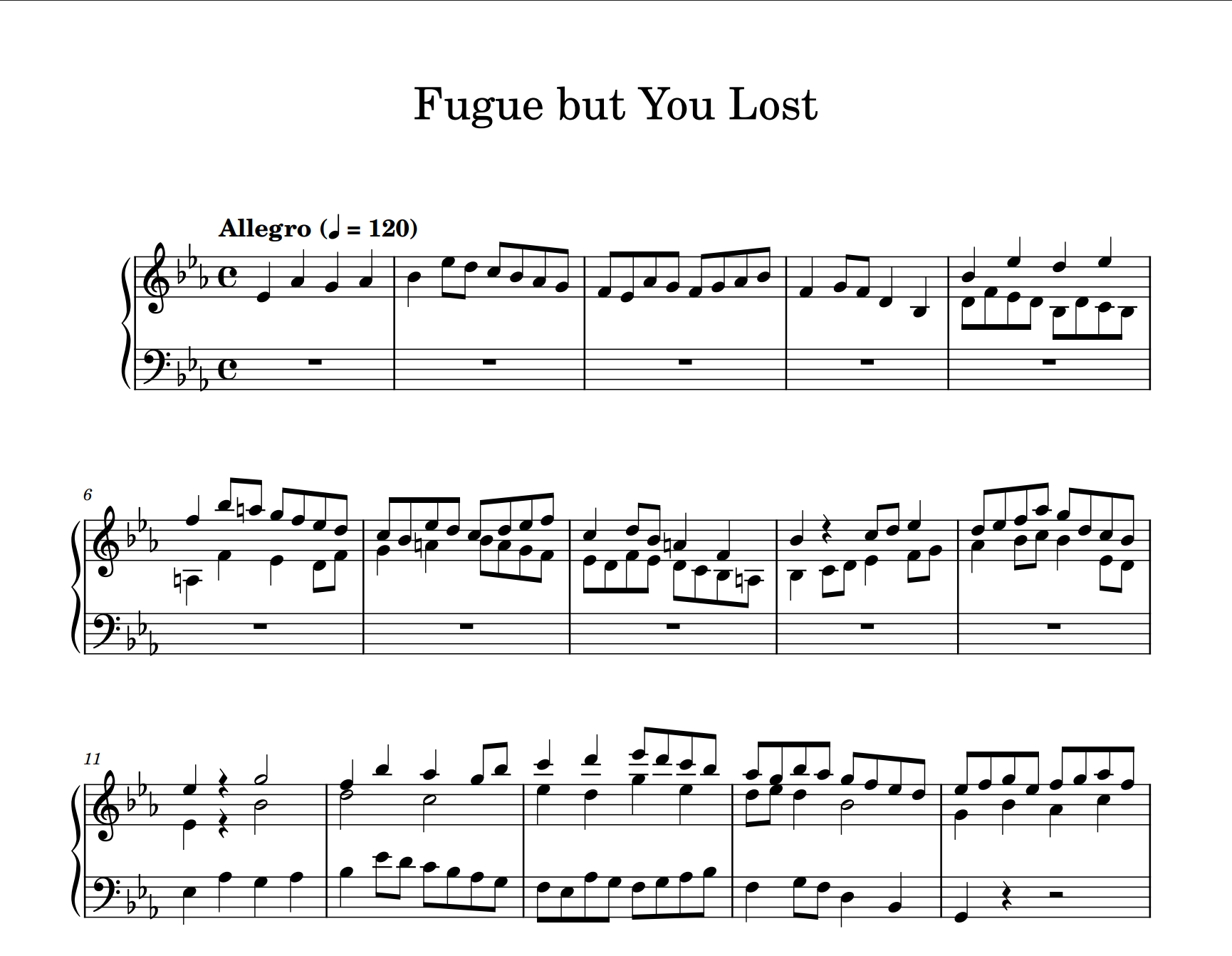
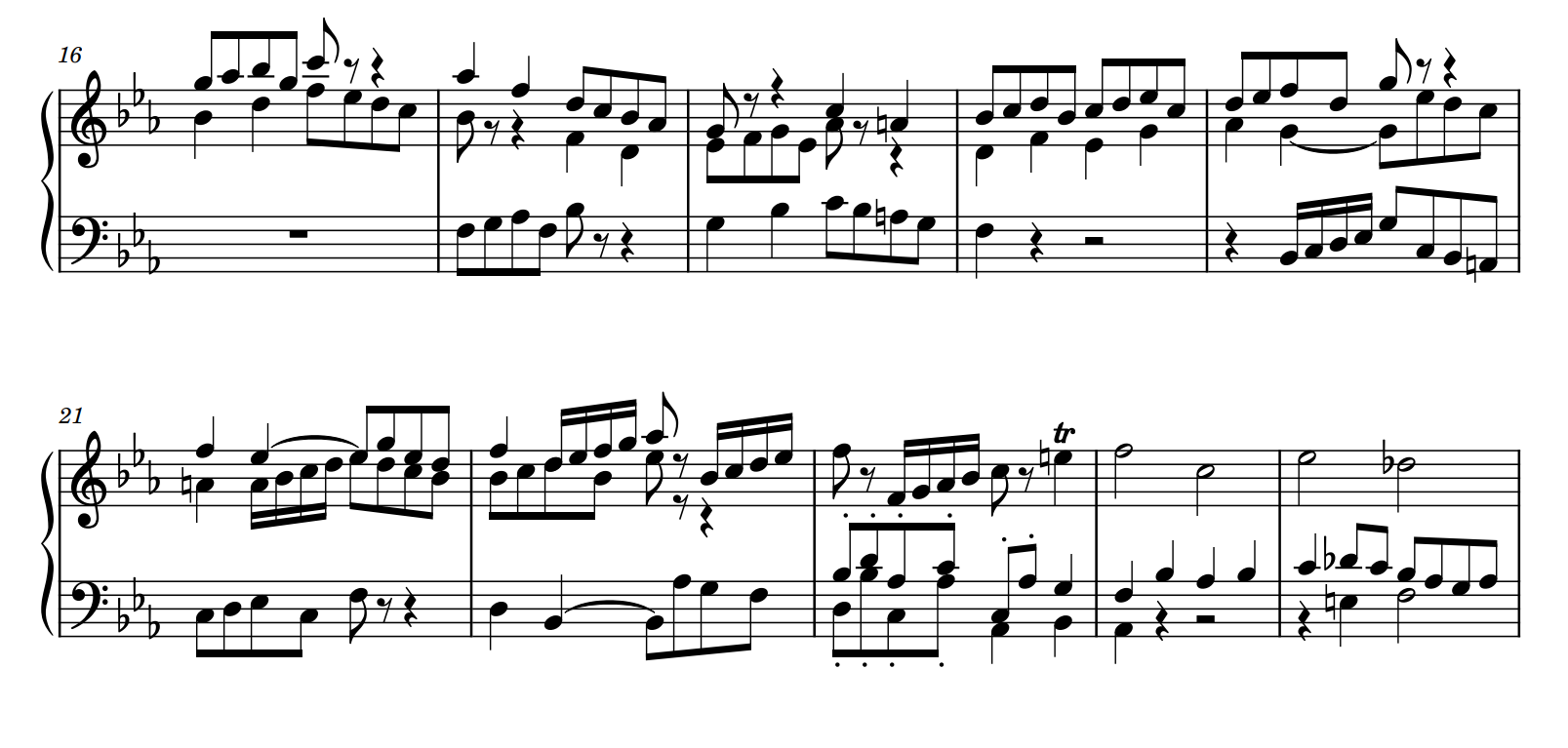
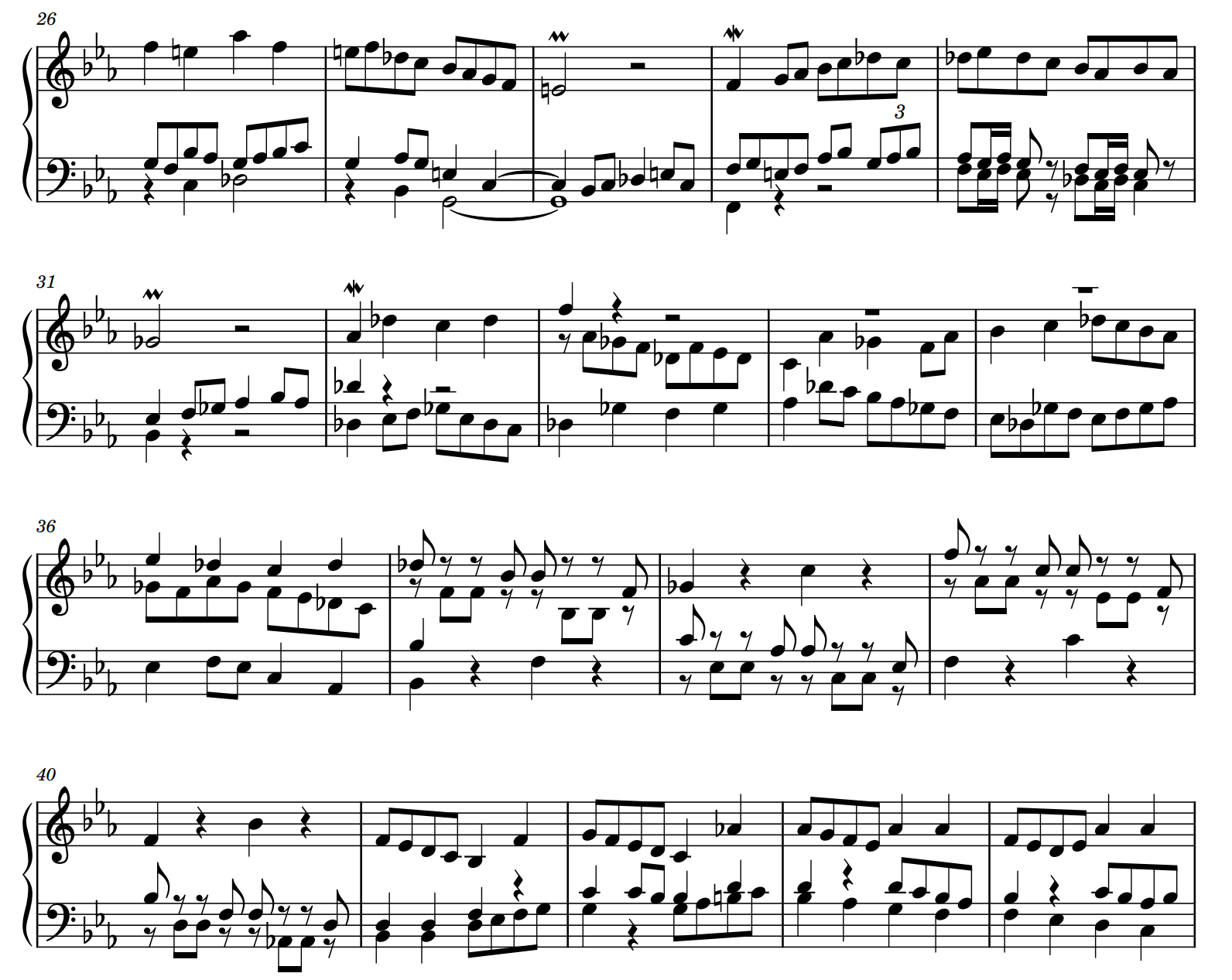
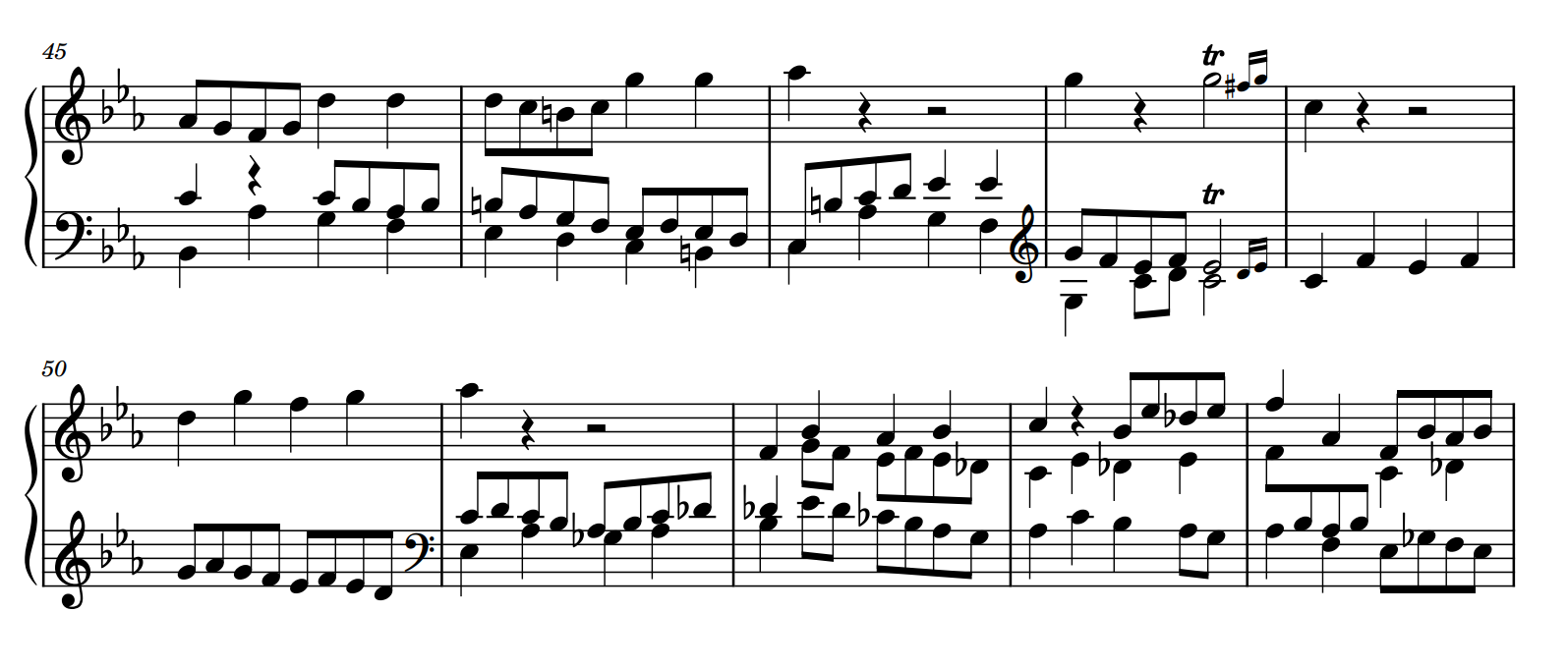
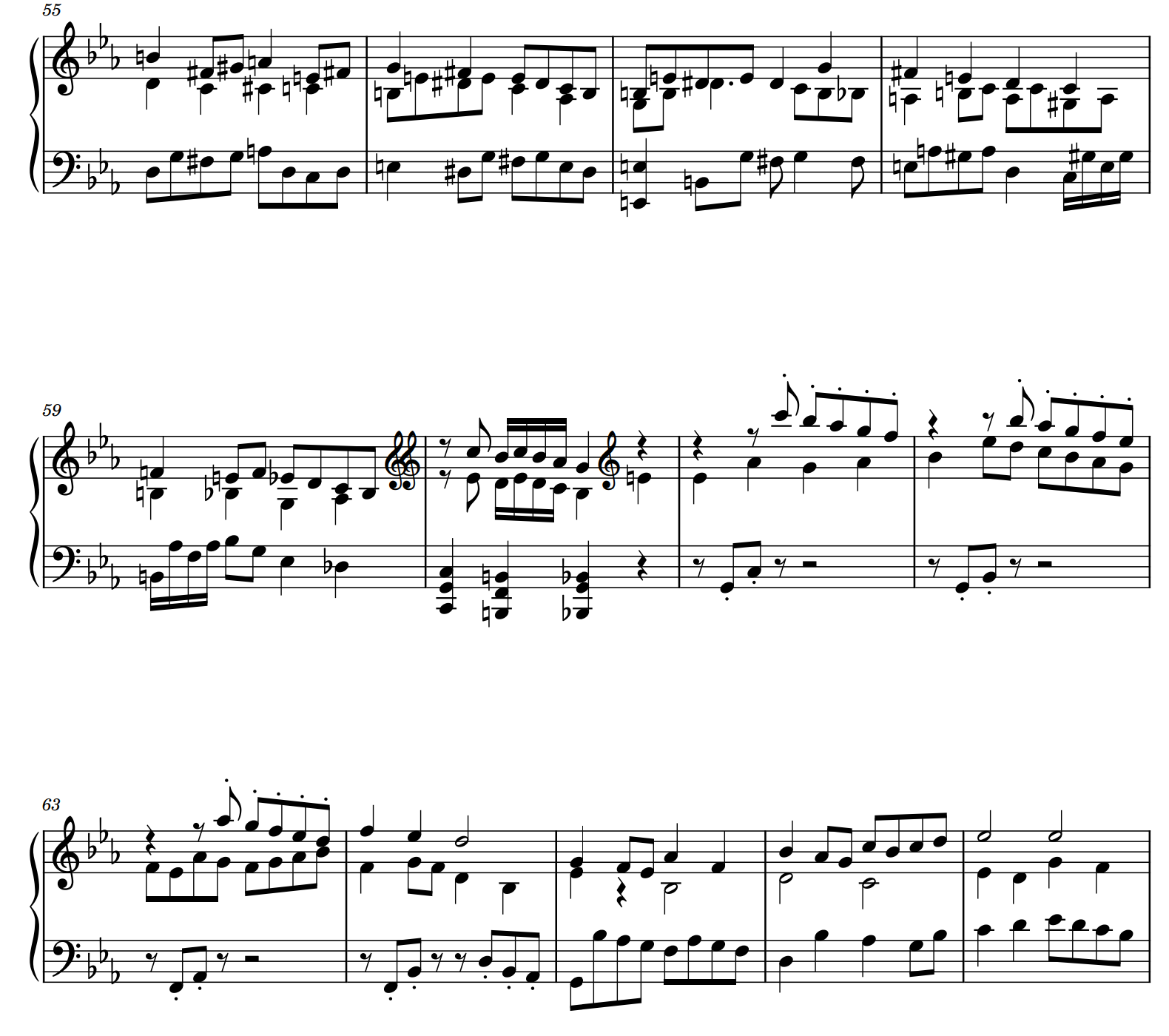
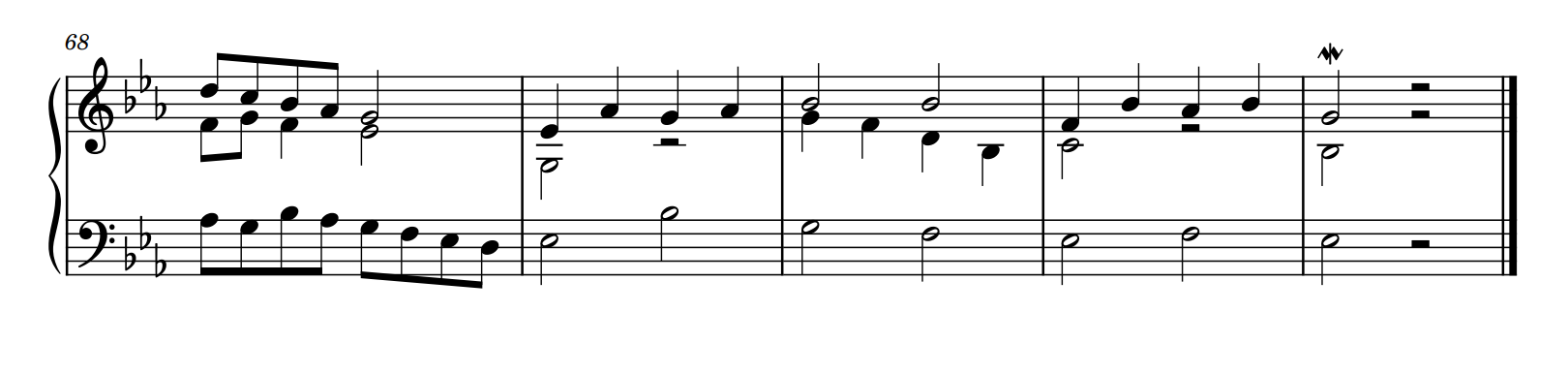
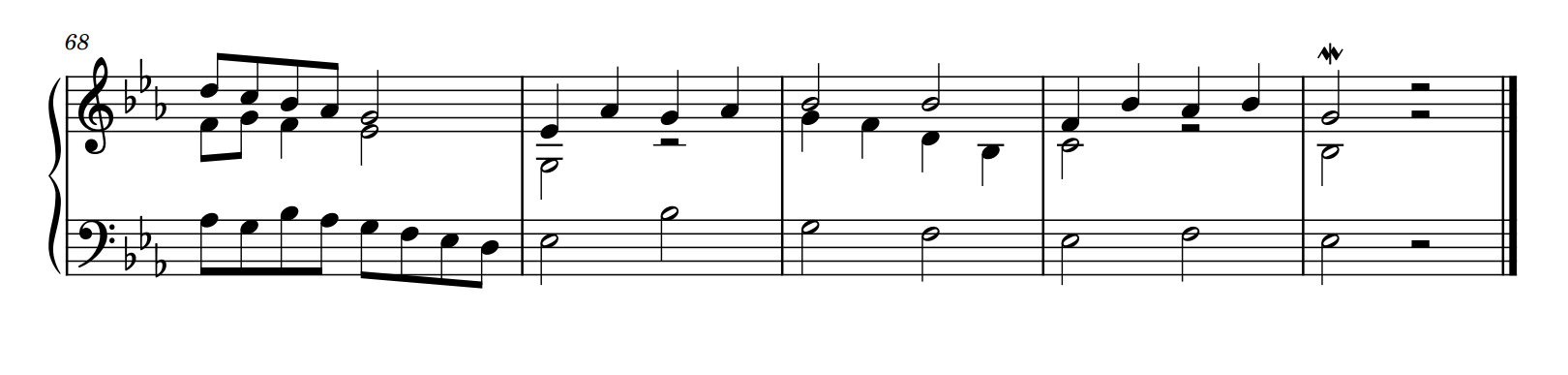
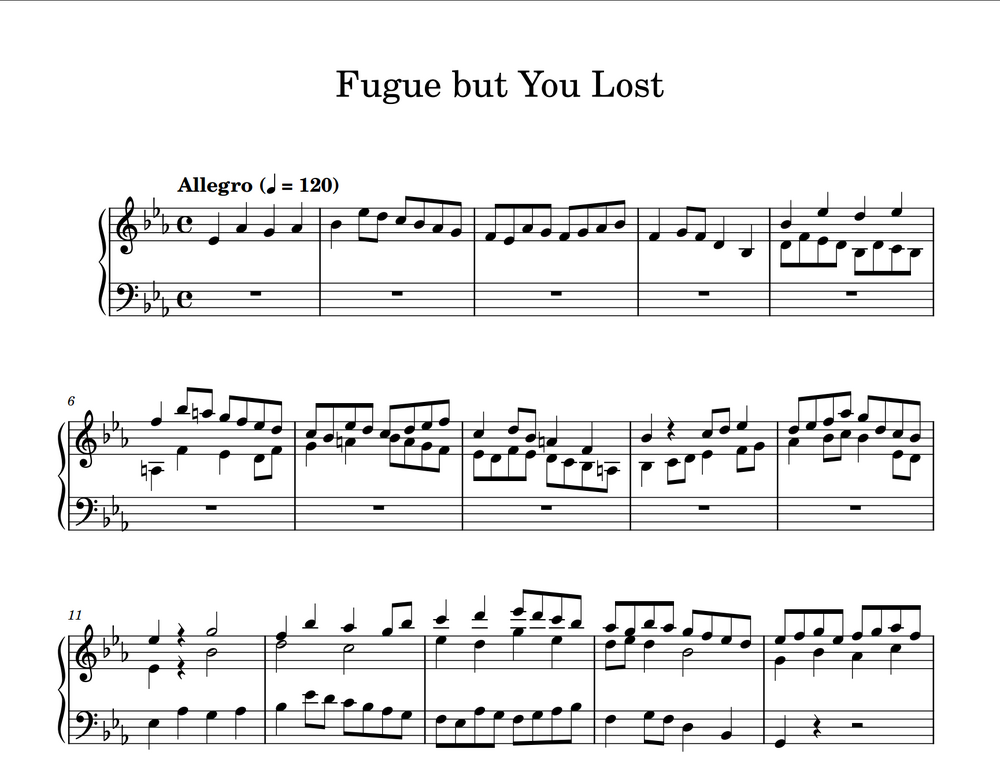
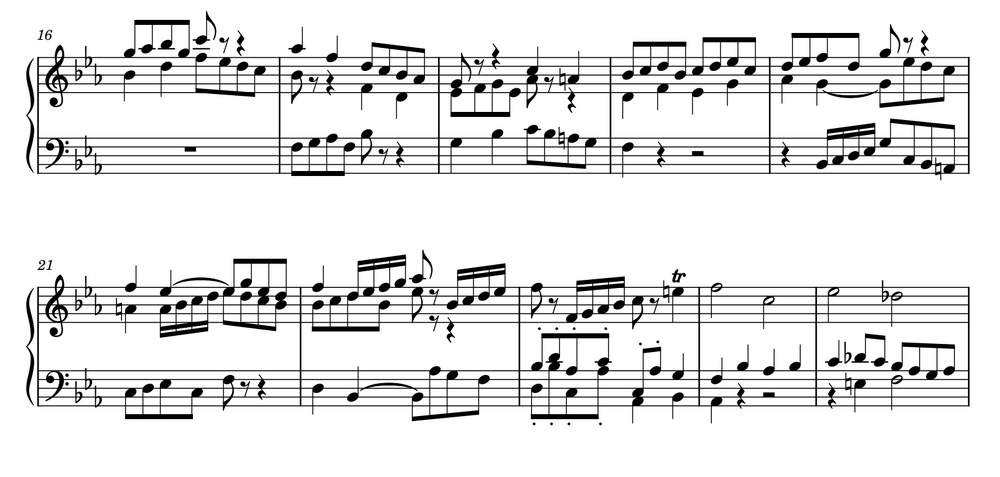
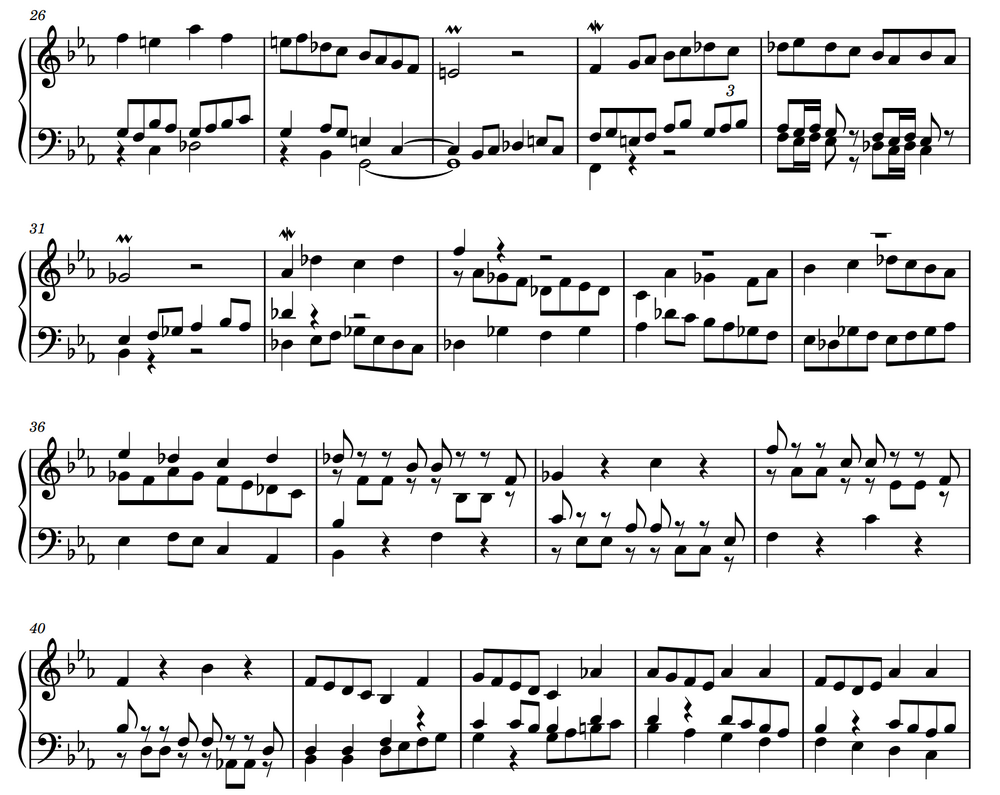
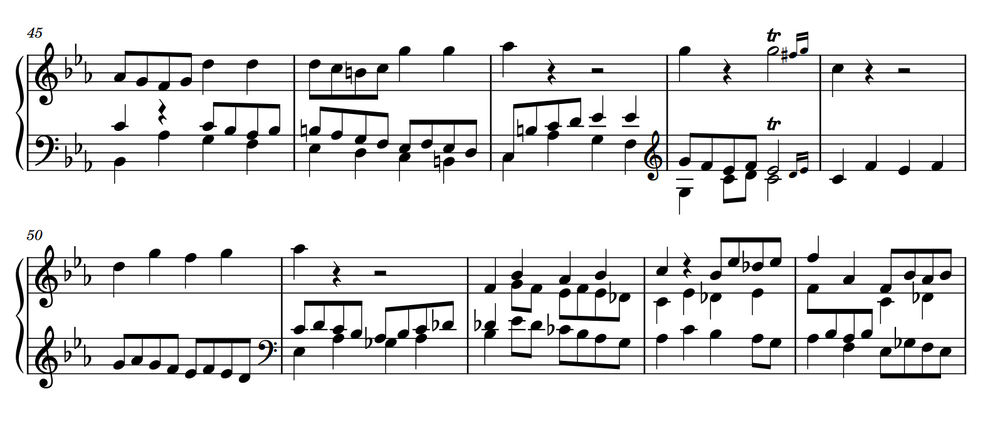
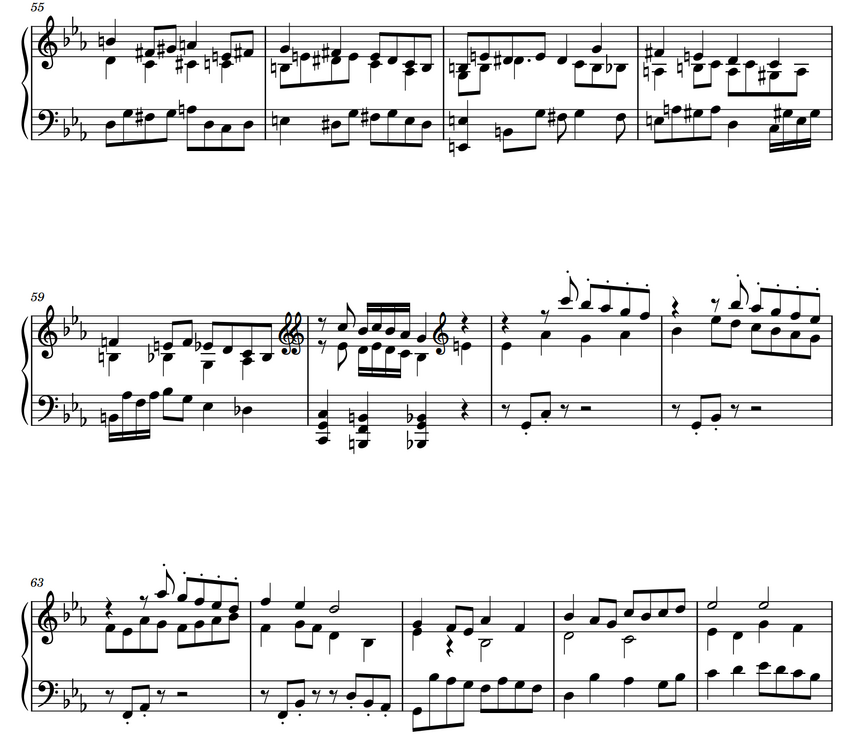
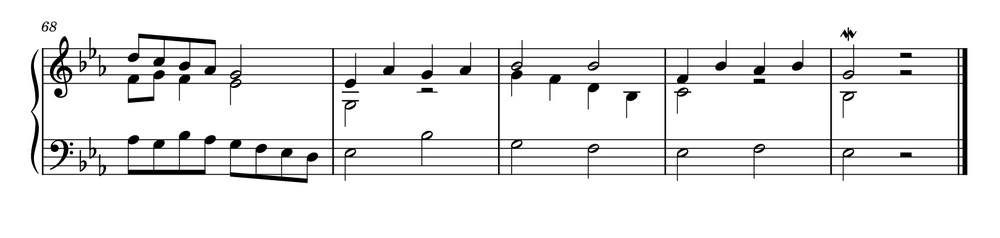
Analysis!!! Title+Bars 1-15 So, firstly, the title is just 'Fugue but you lost'. Where is the composer name? Also, I recommend (personal preference) saying something like Fugue on the theme of 'Insert something'. Writing 'Fugue but You Lost' kind of makes it seem unprofessional. (You have told us the reason behind it.) I like how you wrote Allegro (♩= 120). It gives an approximation of practice tempo (♩= 96) if this were to be performed. You never know. The beginning phrase (Eb Ab G Ab) makes it feel like Ab major a bit. I like how it is disguised. The whole opening phrase (bars 1-4) is is completely playable and musically intresting. Good job. Trouble starts at Bar 5, where you expect the performer to be Rachmaninov. Or Liszt. Or an alien. one of these three. Please do keep in mind that normal humans cannot reach such like the compound minor 6th in the first beat of the 6th bar. If instead you meant to split up in the two hands, however, then please delete or hide the rests. Do mind the parallel movements in the section. In Bar 11, a third voice is introduced effectively. We have heard the theme in two voices before. but now, it is also in the third. I would like point that the rests on Bar 11 Beat 2 feel completely unnecessary, and should just be a minim. (starting on the first beat). Bars 16-25 Bar 16, we have this nice ending to the ascension of a single hand. I do not believe that a rest is important here, as the notation should best kept simple and human-legible. By Bar 20, we already have semiquavers. Nice use of rhythm to add texture, although I don't really like Bar 23, with all of those staccato notes in the bass, although I love how you reused the main theme in the bassline of Bar 24. Bars 26-44 (Page 2) In Bar 26, you continue the development beginning at Bar 24. I really like this bar, and also the two bars right after. I don't really like the triplet in the bass of Bar 28. It feels unneccasary, and perhaps, a single G would do better. The following might sound better on a real instrument, so I will leave it as it is. It is a unique idea. Bar 31, that upper mordent could change to a lower mordent and the lower mordent in Bar 32 can change to an upper mordent. It feels more 'optmistic'... I don't know... Something tells me that is better. I also love how you came back to the theme in Bar 32. *passage from bar 33 to bar 36. Not too interesting.* Bar 37 introduces one of my favourite matierials in the whole fugue. You have used repeated notes to it's best extent at the best time you can in this fugue. Tremendous. This continues until Bar 41. Bar 41 feels too chunky. Bars 45-54 The passage from Bar 42 to Bar 46 is not bad, but Bar 47 is GOLD. That hesitation at the end of the bar feels like you are hanging on the side of a cliff. You reannounce the main material (I lost the game) in Bar 49-50 explicitly, but notice your great use of it in other places too, such as the bottom voice in 51, the top voice in 52, the second half of 53's top voice and the full bar of 53's middle voice. You also sneaked in even more in Bar 54, with that inverted material in the voice, and at the end of the bar you top voice, if you take out the bottom voice, only quarter note values found, you get Ab, F, Eb, F, which is also the inverted material! Absolutely ingenious section! Bars 55-67 (Page 3) Ok. Transition metals are Scandium Yttrium Lutetium Lawrencium Titanium Zirconium Hafnium Rutherfordium Vanadium Niobium Tantalum Dubnium Chromium Molybdenum Tungsten Seaborgium Manganese Technetium Rhenium Bohrium Iron Ruthenium Osmium Hassium Cobalt Rhodium Iridium Meitnerium Nickel Palladium Platinum Darmstadtium Copper Silver Gold Zinc Cadmium Mercury ... I did all of that as a joke... So anyways, you transition into a lot of different keys, I won't keep up. This goes from bar 59. I don't know what happened in bar 60. I guess I missed Sheet Music War 1 (SMWI). Seriously. Why are there 2 treble clefs? do you require such notation? Can't you just use a Tenor Treble Clef thingy? Also, there is something weird happening from Bar 61-63, but it sound good and seem playable to me so ok then. Bars 68-72 The rest is just a coda, which is good, but you could improve it by extending the note length of the final chord. Overall, it is a nice, cool, piece that has some potential! Congrats! -TristanTheTristan
-
Nice relaxing piece: reminds me of Vaughan Williams. I could definitely hear the ebb and flow of the ocean waves. I just have one small notational point: from Bar 28, I don't think it's correct to have those full bar rests in the harp. I would replace them with dotted crotchet rests. Would also insert dotted crotchet rests into the upper staff for the same reason (rather than having blank spaces). I'd also be inclined to use cross-staff phrasing slurs across each full bar.
-
A fantastic piece that I really liked. And a very detailed score.
-
Just bumping this, because it's received no comments yet. I guess nobody has heard of Koechlin! Though I think he's a very interesting and underrated composer.
-
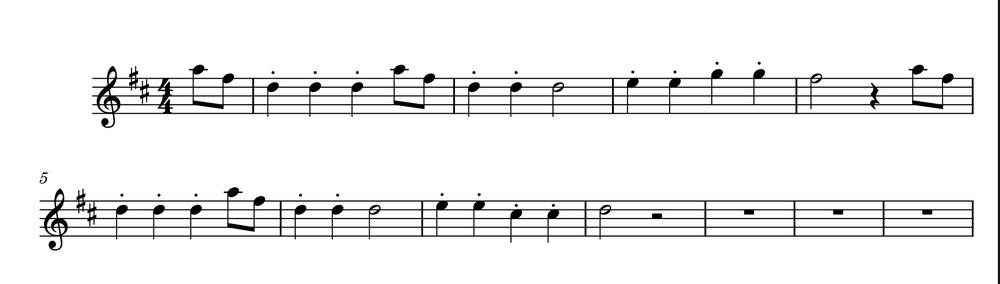
Hello @Martynas123, I enjoyed your scherzo—it shows good compositional instincts and creativity! Here are my comments: Score legibility: The first thing I noticed is that your piece is not in G major at all (as implied by the key signature), but D major. Bars 25-39 should have the G major key signature, on the other hand. Additionally, the Ab in bars 34-38 should be changed to G#, is its the third of an E major chord. This is a bit more far-reaching—but I’m convinced that your piece is in 4/4 rather than 3/4, excluding the middle section from m. 25-39. I took the liberty of re-notating the first few bars in that way: The left hand in bars 40-49 should be notated in treble clef for consistency. I would have you consider revising the pedal markings, as some of them conflict with chord changes as well as staccato articulations. I would actually omit them entirely — they’re not really necessary in this piece. I liked your use of staccato markings! You might consider adding slurs as well on some of the figures you’ve left unmarked. Hairpins are also good to bridge some of the abrupt dynamic changes and lead to climax points. Some of your minims had staccato markings, which shouldn’t be the case. I don’t think the middle section needs to be marked “Minuet”. Since this is a scherzo, you could mark it as “Trio” instead. Compositional decisions: The form itself is well thought through! I see an A section (m. 1-24), a contrasting B section with transition (25-39), and a recap of the A section with short coda (40-62). The contrast of different tonalities is good too. I would omit the one-bar moderato introduction—it doesn’t really connect to the rest of the piece, and the dotted crotchets are unnecessarily complex to read. Since the A and A’ sections have a lot of repetition inside them, I would the omit the repeat bars in those parts. Otherwise the repetition gets a bit tiring. I would suggest revisiting the middle section—the harmony feels a bit incomplete, starting on a second inversion tonic triad and ending on an unaccompanied tonic note. That’s my main feedback on the piece. Great work overall! I’m curious—what’s been your compositional training so far? Have you studied any harmony/counterpoint/form, or are you mostly self-taught?
-
-
Although Cantai works with Musescore, the lyrics I used are in French and Cantai only works with English and Latin lyrics
-
-
-
Last week
-
First of all, thank you @PeterthePapercomPoser for your review. I have learned so much from you, and your feedback is greatly appreciated! Hope that's a compliment 😆, but I agree. That's actually something I noted in my program notes. The title is (and by extension, the piece), symbolic of my growth as a composer. Most of my early compositions were just SATB pieces, before branching off to explore writing for instrumental ensembles. The corral sections are some of the material I feel most personally connected to in the peace, and that style of writing comes very naturally to me. I wanted the B section to feel more "grounded", hence why both the A and B section are in meters that are "equal", but 3/4 feels more grounded here, as opposed to the more waltz like 6/8 theme. And I think it provides a nice contrast to the material it is surrounded by. The return of the chorale character later in the piece is so far removed from the chaotic C section material that preceded it, but now develops into something different. 😅 This is actually one of the things that bugs me about the piece and certainly proved to be a challenge. My theory professor loves teaching form, but I also decided to skip a lot of class around the time that unit was covered 😆, so I've never felt too too confident in my knowledge of form. And I saw the holes from the beginning, but in that mindset of just wanting to push through and finish, I tried to think of ways to make it work. And I think it turned out alright. I'm glad the modulations ultimately worked for you, but I would still like to hear what you thought sounded objectionable 👀 I agree, when listening in Finale, they're more audible, but the playback is also horrible so 😬. I'm hoping to get this performed by an ensemble at school, so that's something that I will be sure to communicate to the performers. Thanks again!!
-
youreastallasplanetree.mp3 you are as tall as a plane tree I fall asleep sitting up and you catch me I could bury you up to your nose in pear soda cause Origen’s praying for us you are as tall as a plane tree when we’re Lake Superiors away you loom over me that shadow you cast over the shrovetide mass makes leo quake and strip his dandy vestments sometimes as small as a birdseed when i'm a pigeon and you feed me star anise but I’ve seen you freeze before in the falconry store so it must be the phantoms I keep I am as poor as a penny I walk up to your room and you take me I know marx didn’t die for me to cream and cry but you know just when I am needing when you're raptured up to armenia and I’m burning down make sure Origen’s praying for me in one tiny bed we could fall asleep but you get red when you can’t see into me but we ate Sherpa pie where the daisies did die so it must be the phantoms I keep we stewed Presidents’ eyes where we told our first lies so we drank from the fairies you’d steeped and we burned Baptists’ blood when we played in the mud so it must be the phantoms I keep cause you’re as tall as a plane tree when you eat chickpea thali in a glorified body see that Oregon’s waiting for me cause you’re as tall as a plane tree make sure Origen’s praying for me cause it must be the phantoms I keep make sure Origen’s praying for me cause you’re as tall as a plane tree make sure Origen’s praying for me cause you’re as tall as a plane tree
-
Hello @latebeethoven_addict ! This fugue has a nice idea. The theme is very good. Analysis!!! Title+Bars 1-15 So, firstly, the title is just 'Fugue but you lost'. Where is the composer name? Also, I recommend (personal preference) saying something like Fugue on the theme of 'Insert something'. Writing 'Fugue but You Lost' kind of makes it seem unprofessional. I like how you wrote Allegro (♩= 120). It gives an approximation of practice tempo (♩= 96) if this were to be performed. You never know. The beginning phrase (Eb Ab G Ab) makes it feel like Ab major a bit. I like how it is disguised. The whole opening phrase (bars 1-4) is is completely playable and musically intresting. Good job. Trouble starts at Bar 5, where you expect the performer to be Rachmaninov. Or Liszt. Or an alien. one of these three. Please do keep in mind that normal humans cannot reach such like the compound minor 6th in the first beat of the 6th bar. If instead you meant to split up in the two hands, however, then please delete or hide the rests. Do mind the parallel movements in the section. In Bar 11, a third voice is introduced effectively. We have heard the theme in two voices before. but now, it is also in the third. I would like point that the rests on Bar 11 Beat 2 feel completely unnecessary, and should just be a minim. (starting on the first beat). Bar 16, we have this nice ending to the ascension of a single hand. I do not believe that a rest is important here, as the notation should best kept simple and human-legible. By Bar 20, we already have semiquavers. Nice use of rhythm to add texture, although I don't really like Bar 23, with all of those staccato notes in the bass, although I love how you reused the main theme in the bassline of Bar 24. (Only doing this amount so far. Still in work.)
-
Hello Brs and welcome to YC! I think you should just write a piano part and then no repeat, but actually just the orchestra playing the material together after a few bars. -TristanTheTristan
-
Hi In a piece for soloist and orchestra in a section with a repeat, is there a common / accepted way to show that the soloist plays solo the first time through and then the orchestra joins on the repeat? Or do you have to just write it all out without a repeat and let the orchestra come in as notated?


.thumb.png.8b5b433a341551e913a34392660bc95b.png)