All Activity
- Past hour
-
- Today
-
Hello everyone! This weekend I experimented with a really simple atonal technique and I turned the experiment into this piece for piano. The technique is "mirror writing". I applied it in the simplest way possible. The process was the following: 1. I decided on using four voices and mirror them around the middle C axis. 2. For each melody note, I added the mirrored bass below it (for example, a top note A is accompanied by the bass Eb, both a major sixth above/below middle C). 3. After that, I chose both internal notes (considering that those need to also be mirrored against each other). Except for two measures, the whole main theme was created through that technique. Afterwards I composed a tonal middle section and turned the piece into the form ABA'B'A''. This time I tried avoiding excessive exact repetition (with techniques such as changing octaves, creating different melodic contours and accompaniment, or mixing final restatement of main theme with the coda) in order to add some variety to the whole. That is because I tend to just copy and paste most of my sections and I want to get rid of that habit. In addition, the first measure copies the beginning of Schubert's Impromptu No.1 in C minor. As always, every feedback, comment or suggestion is more than welcome and hope you enjoy it! Thank you! PD: My main concerns are in m.39~40, where I change the ending of main theme making it maybe too dissonant, and the fact that the first time that I introduce the B section (m.13) I do not use the continuous tresillo accompaniment.
-
-
Did you check out these? or piano I was expecting this type.
-
Overall, it isn't very bad.
-
A lot of overlapping perfects. I see you tried to imitate birds and animals. I see you have done it in a creative way, so I gave you a 10.
-
I just realized that I have the option to dial the consonance levels all the way up. The remixes are coming out substantially better now. Below are three compositions processed by the program I designed.
-
A few days ago, I wrote a very short piano work for my brother's birthday, which is not something I normally do. I realised early on in the week that I had not yet got him anything and decided to write and put together a music video in one day, as one does. Of course, I paired it with some colourful lyrics to express my utmost brotherly love and affection for him (translation: extol his persistently annoying behaviour and call out embarrassing moments in his life). To my surprise, he did enjoy it more than I thought he would, so that was a success! I've removed the lyrics for seriousness' sake in the PDF, but I hope you'll find something of interest in here. As usual, I am also always looking for feedback and ways to keep chipping away at my pieces even after I've written them. Are the two main themes different enough in character? Does the form feel awkward or bloated? Anything else of concern or note? One thing I will admit is that I probably should not have notated swing entirely with triplets, so that's something I've started to fix up at the moment... Promenade (2026).mp3 Promenade (2026).pdf
-
Hi!! Thank you for your feedbackk. I actually tried to imitate harmonies from as many Chinese composers as I could find (could only find a few so took some inspiration from some Japanese composers too) and I thought that I did alright. I was wondering, what made you think it's atonal? For reference, here were my biggest inspos: https://www.youtube.com/clip/Ugkx9sWO_07nOcVc31RWLQukpCSRIRGoLMvi https://www.youtube.com/clip/UgkxCY-tbOrbg9ovMKSOY2F8QWCYvY1tz2w6 https://www.youtube.com/clip/UgkximtvrASDQuNCaQ47ieLpRZ6iXuaxGym1 https://www.youtube.com/clip/UgkxJnJpo0JuB56eB7LF3MQe0J9b-F1EbNEy tytyyy btw !!!
- Yesterday
-
There, I've done it. I fixed the last issue, which was stereo wobble. Now the right and left ear are always balanced, to what I think is very pleasing effect. Here are some samples. Be sure to put on your headphones to enjoy the fruits of my labor.
-
Regarding the "Classified-Information" of the software, i cant discuss that in detail, except to say , that's its the FASTEST way of creating Any type of music,extremely easily. The Video production/ photos / websites etc, are all using Basic software programs, that are decades old. I cant read music, so as pretty as the score pdfs look...........their meaningless to me. Launching a New software-Keyboard-Program,globally is no easy task, and will probably never happen.
-
I fixed a major issue in the workings of the program. Now, the continuity of the transitions has been more or less perfected, and the sound quality is, as a result, vastly improved. I think, at this point, it sounds about as polished as it needs to be. I have one other idea floating around in my head, but I'm not sure I'm going to pursue it. Maybe, maybe not. Here are some samples:
-
I admit that was my implication, yes. Also, appreciate the graphic, as that is information I already know. I will also confess that seeing all the photo and video graphics in quick succession with your posts does give the impression that you use gen-AI to create the videos, photos, or other graphics (on your profile for instance) in tandem with the music creation. Thus, it has also made me wonder if the music, usually electronic in sound, was also gen-AI. Apologies if I have casted an offense, as I do not mean to do so; this is more of a personal curiosity. I don't mean to take this comment section away from your post, so I do not mind chatting in a direct message thread instead.
-
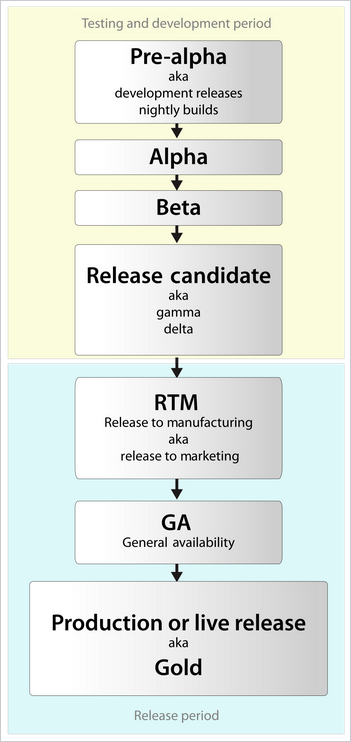
Hi MK When you say is this "Generated-Media", i presume your asking is this : Artificial Intelligence ? NO definitely not . Im using an ALPHA/Pre-Release software keyboard that's currently unavailable. The Developer/Programmer/Coders ,have been increasing the flexibility of this software over time. This software does not have a Score-Creator, this Software is still in a release life cycle.
-
Heya and thanks! Yeah I've been sitting on this for a bit now, I sort of had the earlier theme make its way too strongly into all new attempts at a new theme. I am not writing for a deadline so I am free to wait until inspiration hits again. Thanks for stopping by! Pyry from Finland.
-
This a very intriguing work ... I love the meter contrast and harmony. Introducing a new theme to contrast the first movement might be the way to go. The introductory material screams in its dystopian feel and needs conflict and then resolution. Mark
-
THIRD MOVEMENT!!! Just kidding; this doesn't make the cut! I wrote a little joke piece this morning. Maybe to keep myself from writing the third movement! Space Nerd Free Sheet Music by Outis for Piano/Keyboard | Noteflight
-
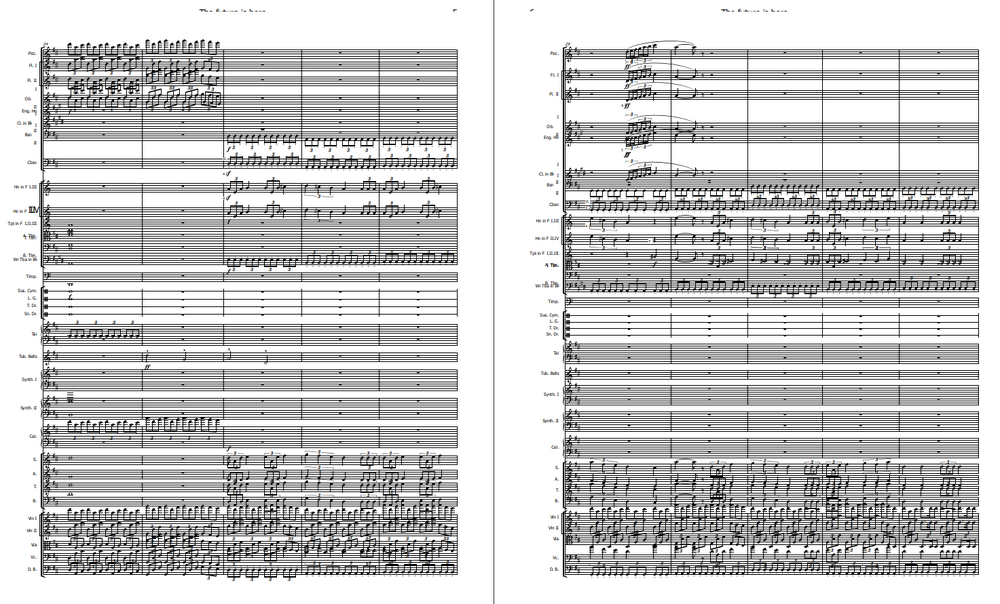
Hi there! I wanted to ask if you wanted any feedback on the work? It is very cool regardless of the time spent composing! As a brief comment, I am unsure if the score is meant to look this way: The staves are all stacked and combined on top of each other when you look at the PDF through the website. It makes it really hard to read/ process the score currently.
-
Hey Interlect! Interesting piece here; I will admit I have been seeing your increase in activity with a plethora of new submissions across the forum. However, I never see a score to look at with your music. I tried looking on your profile to see if you linked your scores elsewhere, but confess I did not find anything either. Can I ask how you go about creating these works? Do you make scores? Is this generated media instead?
-
-
Thanks for posting @Sebastian Guzman ! It's been a while since I've listened to the Liszt B minor Sonata, but I am definitely getting vibes of it here (most assuredly from your B-octave motif). Your musical language in this work does feel very Lisztian to me, which is inclusive of the harmony and the piano textures, and that I mostly do mean as a compliment. I'm curious to know what other influences/inspirations you may have had while writing this movement though, as some sections do seem to draw from other wells of musical ideas (e.g. the harmonic movements in b. 91-105 felt distinctly modern to me). I confess that I am not really in a position to offer super helpful advice but I hope you'll find this useful anyway. I also don't mean any suggestion as an attack on your writing, of course, but as an exchange of ideas that you could optionally disregard :) Exposition The B-octave motif is very reminiscent of one of the motifs in the B minor Sonata, haha. I see that the majority of the dotted rhythm in this motif is the backbone for the rhythm of the A theme, if I am correct... I noticed in your trimmed-down video you seemed to have cut out b. 54-62 from the A theme and b. 105-118 from the B theme? Admittedly, I prefer the abridged version as I thought the material in question to be a little redundant, given that you do cover well and to great length both themes in the exposition. My thematic economy side of my brain would like to think that one should only state a theme until the listener is familiar enough with it to recognise said theme when it pops up in the development. If you wanted to keep said material for symmetry/form-related reasons/other personal preferences, though, by all means do so. I do love the B theme in all of its mellow sweetness, especially its first half. The second half of the B theme feels a bit static with the repeated notes, but coupled with the rolling left hand accompaniment, it does give a sense of floating/gliding, if that is what you desired. As I said, I quite like the harmony you move through in b. 91-105. A charming change in texture from b. 154 onwards! Development The fugato start of the development seems a bit dry? I can see where you are going with the material but I'm not super convinced by b. 164-187, though I suppose some pedal would help, or varying the articulation and texture a tad more even if a fugato. I didn't quite exactly get fugato vibes from it either, given how long the statement of the theme is. This is completely a suggestion, of course, and it is up to you as to how you'd like your sonata to work, but perhaps using only the first phrase of the theme (b. 164-166) and then building up a series of entries in other voices could be rather effective. I somewhat find this example to also be a bit dry, but I like the energy build-up of this fugato moment in the development of the fourth movement of Scriabin's Third Sonata, if you wanted something similar. Interesting, from b. 178 onwards in the fugato, you introduce another voice that is the B theme, or at least an echo of it, if I'm correct? I am a big fan of juxtaposing thematic material in the development sections of sonatas, if so... The material in b. 196-215 seems a bit overly virtuosic? I'm uncertain whether there might be some significance in the chords/harmonies you use here, but I think it'd be great to insert more of the existing thematic material in here, fragmented or whatnot. Overall, the development feels short to me, not in the least because I feel like you could've pulled out your compositional chops a bit more. Given the length of the exposition, I think this deserves a heftier development with varied treatment and inclusion of all three of the A and B themes and the B-octave motif. Trying to set the tempestuous A theme or the B-octave motif into the suave atmosphere/mood of the B theme, for example, or more chopping and changing, there are a wide variety of things you could do. Liszt can of course be a great source of ideas here! Recap Nice to restate the B-octave theme. Maybe the transition from the end of the development could be made smoother? I'm not sure though. I like the recasting of the textures in the recap of the A theme, but it feels a little airy? I'm not sure if you were going for that feel, and if you were, then I am in no place to complain. I suppose you could add some deep bass notes on the offbeats to give it a bit more body and hold them with your regular pedal, or see if the sostenuto pedal could work (though it could make the right hand arpeggios rather dry). I also appreciate the A theme being a bit shorter here... With b. 236 onwards and B theme, the energy seems to drop somewhat, with almost the exact statement of the original B theme but transposed. It is once again up to you, but you could also recap the B theme in a different texture, as you did with the A theme. I felt like the energy levels ought to have ramped up a bit more moving further and further down to match the energy of b. 282 onwards to the coda, possibly? At the moment, the ending feels mildly content with itself, though I would think the large chords and dynamics would suggest otherwise. With notation and formatting, I also admit I'm not the best person to offer advice, but there does seem to be the occasional odd things, e.g. whatever is stretching out b. 122 (the rest in the upper staff can also be removed there), the clipping of text at the end of the system at b. 248-250, and the slightly overzealous floating slur in b. 288. I've been told that with hairpins, it's best practice to state exactly which dynamic the hairpin starts and ends at, including double hairpins like < so >, but I am open to corrections. Yeah, that's most of what I have to offer with thoughts. Excellent playing, by the way, I almost forgot to mention! This already looks like a difficult sonata so far with this first movement and you interpreted it very pleasingly, at least to my ears, and in a very convincing way (though I suppose it is up to the composer yourself to decide whether it was served justice, lol).
-
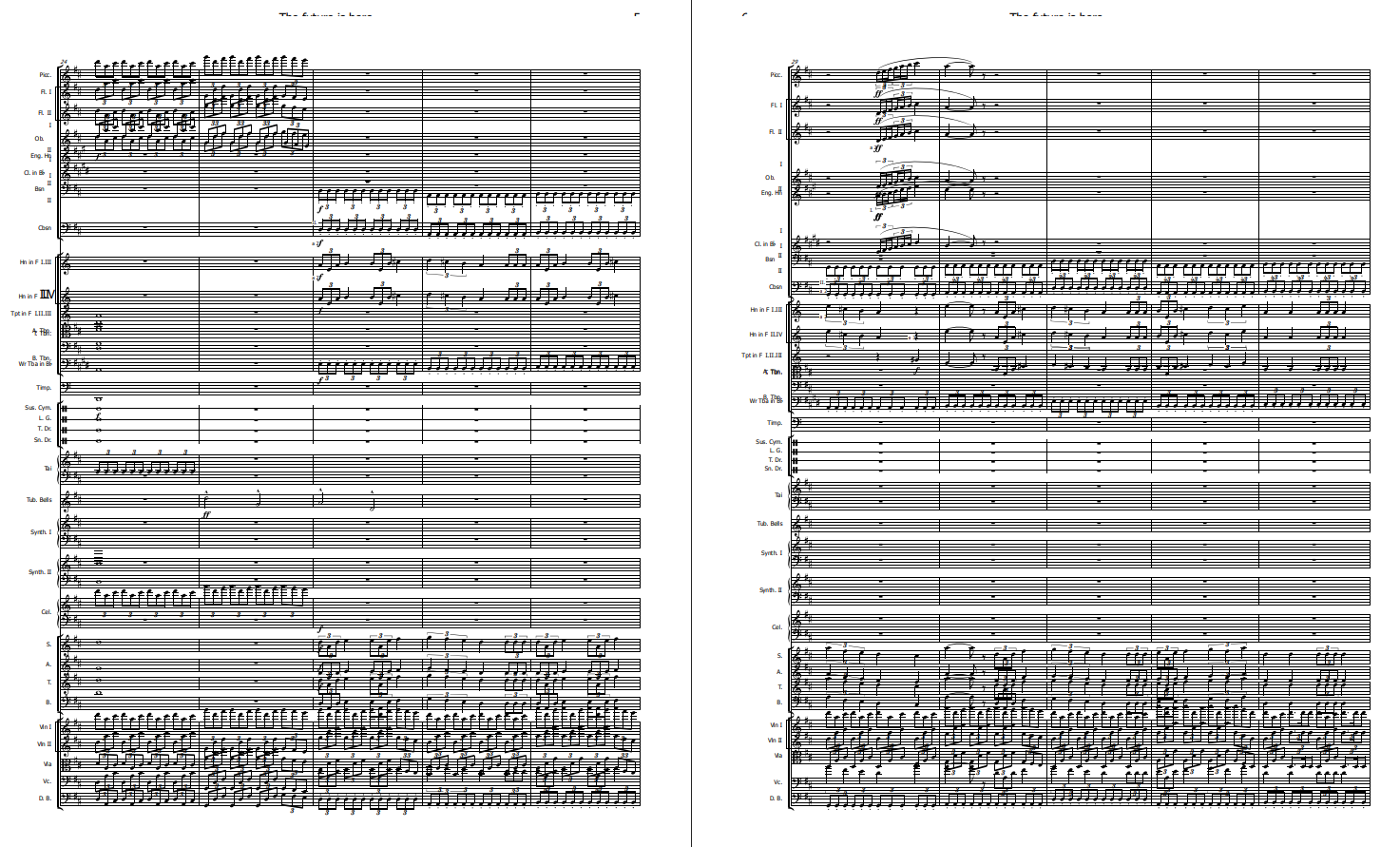
The future is here - Bjarke Tan - Flow 1.mp3The future is here score.pdf Here is a speed writing attempt made in one day.
-
As a chinese person, I appreciate your love for my motherland. Anyways, the music is atonal. I think that isn't the BEST way to describe this place. The structure is weird too. I liked the brief g major chord parts. Melodies Themes Motives 2 Harmony Chords Textures 1 Form Development Structure Time 7 Originality Creativity 10 Score Presentation 10 Instrumentation Orchestration Playability 8 Execution of Given Challenge 6 Taste 6 Average 7.5
-
Hi. Good job here! Weird bar 33. Otherwise perfect to me. That is rare to hear from me. Good job! Melodies Themes Motives 9 Harmony Chords Textures 10 Form Development Structure Time 9 Originality Creativity 10 Score Presentation 10 Instrumentation Orchestration Playability 10 Execution of Given Challenge 10 Taste 10 Average 9.75
-