All Activity
- Past hour
-
 hello finally finished this piece, just gonna quote some info from the scoring progress thread (which you can find below) ost (starts at 29:50, lyrics appear faintly at 30:09): yknow, i enjoy composing on a small ensemble like this one or daunting steps. it's the right amount of options for color, but not too overwhelming like an orchestra voicebank/singer: Kumi (https://cubialpha.wixsite.com/kumivoice) analysis if you wanna read it: -------------------------------------------------------- INTRODUCTION. (b. 1-121) > introduces the themes, containing three sections. we'll call the three intro sections 1', 2' and 3'. 1' (b. 1-44) and 3' (b. 97-121) sections are inherently the same. the 2' section (b. 45-96) is a variation/development of a motif from section 1' (the first three notes). i call it the "Look to the sky" motif, very important, appears everywhere. the oboe part of the 3rd section (b. 103) introduces the B section as a counterpoint. b. 88 piano introduces the first part of the real main theme of the piece, and b.103 oboe counter point is the second part, which appears in the B section later. basically, the whole piece is a journey to combining these parts together, just like in the OST. Furthermore, 1' and 3' are just rhythmically augmented versions of the first part (quarter notes instead of eights, added triplets), while 2' is created from the motif and exists as its own theme. TRANSITION (b. 122-136), variation of 1'. ======================================= A. (b. 137-204) > pretty much the combination of the intro's three sections. vocal entrance (b. 151). section 2' are thoroughly woven and augmented between the vocal melodies. sax part at b. 180 is the B section, again, as a counter point. the vocal part sings a lot of the motif's variation. the lyrics are repetitions of Look to the sky Don't contain me I'm not here TRANSITION (b. 205-219), same as the previous one, different instrumentation B. (b. 221-278) > b.221 is a slight variation from section 2' (b.63). pizzicatos from b. 227 onward is the motif. oboe at b.229 restates the the main theme's first part while the left hand piano keeps the same rhythm from b.221 throughout. b.232 is the same counter point as previously, albeit variated. b.237 strings and celesta form an ostinato from the main motif, leading up to the vocal entrance. on b. 238 onwards, the vocal sings the main theme with slight variation (repetition of "sky" and "me." the rest before "sky" was done to make it singable). viola scatters the motif everywhere while woodwinds variate the main theme's second part as counter point. from b. 247, a new rhythm is introduced on piano left hand, sax, and viola, depicting troubling wave-like upward motions. finally, the vocal introduces the second part of the main theme alongside a new stanza. In the dark I am free Out to sea I'm just drifting here floating the instruments try to restate the newly sung part (b.262) but immediately get interrupted on b.266 by the return of 2'. the section builds up into: TRANSITION (b. 280-292), another variation of 1', more epic. A*. (b. 293-347) > instead of the strings, the piano grandly introduces the section. the rest play out just like the previous A with different instrumentation. variation of the accompaniment, most prominently with the active celesta section and the climax at b.329, which is taken from b.180 onward. The counterpoint from that section is now sung by the vocal with a new stanza, which is another piece of the second part of the main theme: from the sky x to y distant light just keeps calling me from the sky B*. (b. 348-398) > b.221-246 is now in a major mode and it is lighter. some figures are developed here as well (intro section 2' makes an appearance on b.376). this is a step forward toward piecing the main theme together. however, this quickly gets interrupted on b.380, returning to the original texture. it has the same melody but with stanza from the previous climax (b.329). along with that, one final important line is added: let me fly! this line marks a climax, which is teased in the subsequent bars (viola b.375, sax b.376). the climax also comes with an ascending leitmotif (b.395, sax, which is just the Look to the sky motif in an upward arpeggiated line) that signifies the sung line, let me fly! this then transitions into the return of intro section 2'. however, instead of restating b.55 on b.409, the piece finally states the full main theme (b.408-428), as it is similar to the original song. this leads to the penultimate climax (b.441) of the entire piece. one that will then transition into the final section. FINALE. (b. 450-521) > offbeat celesta ostinatos and strings harmonics begin the section. piano introduces the familiar theme as the preceding saxophone signals the vocal entrance. the vocal part combines the two stanza. let me fly! repeats in the vocal, finding a resolution as the whole ensemble rises until the climax on b. 486, finally resolving with a simple plagal progression. with the main motif ostinatos, the piece calms then moves to reiterate the intro section 1'. the dissonant on b.514 (taken from b.17) slides into a D maj 9 chord while the oboe resolves the main theme, ending the piece. -------------------------------------------------------- i'll definitely make a youtube score reading video of this. hope you all enjoy !!
 - Today
-
.thumb.jpg.a1bd070fa88caa1c83527ffe77c97a41.jpg) MP3 Play / pause LOB 43 Corpus omne perseverare 0:58 3:18 volume > next menu LOB 43 Corpus omne perseverare > next That's awesome. What was the program you used for the voices?
MP3 Play / pause LOB 43 Corpus omne perseverare 0:58 3:18 volume > next menu LOB 43 Corpus omne perseverare > next That's awesome. What was the program you used for the voices? -
concert band "March Hare", March for Wind Band
MrBelegro posted a topic in Orchestral and Large Ensemble
Good afternoon! I already wrote 50 or 60 marches for piano and this is my 3rd or 4th one for some type of ensemble and the 1st one actually for wind band. Feedback much appreciated. The score is in Russian and I'm too lazy to translate it, but here's the instrumentation: Piccolo; 2 flutes; 3 clarinets in B-flat; Bass clarinet in B-flat; 2 alto saxophones; Tenor saxophone; Baritone saxophone; 3 trumpets in B-flat; Flugelhorn; 4 ["French"] horns; 2 trombones; Bass trombone; Euphonium; Tuba; Timpani[1]; Glockenspiel; Hand cymbals; [Other] Percussion[2]. [1.] The timpani are tuned Ab, Eb, C, Bb for I1 through B2 and then Db, Bb, Ab, Eb, but after I3 they switch back to Ab, Eb, C, Bb. [2.] The percussion consists of triangle, snare drum, tambourine and bass drum. The score is condensed as follows: Piccolo; 2 flutes; Clarinets in B-flat 1 and 2; Clarinet in B-flat 3; Bass clarinet in B-flat; 2 alto saxophones; Tenor and baritone saxophone; 2 trumpets in B-flat; Trumpet in B-flat 3 and Flugelhorn; ["French"] horns 1 and 3; ["French"] horns 2 and 4; 2 trombones; Bass trombone; Euphonium; Tuba; Timpani Glockenspiel; Hand cymbals; Other percussion. -
this is a really nice and short piece !! despite how simple it is, i find it fascinating how you manage to use all of the fragmented ideas effectively. for example, how you use the cadence on b15-16 and the subsequent usages of which throughout for the ending and just leave it hanging at the V, it really gives you that floating feeling. add that with the gentle arpeggio, harmonies, and melodies and you've successfully painted a tranquil feeling on the mind if i could give feedback, i'd probably give ones for the score. maybe it could be given more information such as the tempo, slurs, dynamic, and expression markings other than that, it's a great piece. i thoroughly enjoyed listening to it. thanks for sharing !!!!!!
-
 coce11 joined the community
 - Yesterday
-
From program notes~ Event Horizon brings many ideas up, but the idea of inevitability is one of them something that you can't control and something that is bound to happen something that just leaves you laying around vulnerable to the vast cosmos This piece of music also types in with some personal experienceas well with falling in love with a four part structure bliss , self denial, in love and the singularity. "once you enter,there's no going back" * extended technique, there is a lot of overpressuring bow control. This is to create subharmonics, which will sound an octave approximately below the fingered note*
-

solo viola "Hola Viola!", A Solo Viola Piece (Of Which Do Exist)
Luis Hernández replied to MrBelegro's topic in Chamber Music
Sounds great. I suppose technically all those double notes are possible. The sound is acceptable except for the trills and tremolos... -
That sounds fantastic. Perhaps a version without so many annotations would be clearer. Although for educational purposes it's great. And well, you've left me wanting the second part.
-
 Hello! This piece is dedicated to a friend of mine, he gave me the text and i quickly got working on it, i finished it in 1 day and im pretty proud of it. I tried to mimic the style of Orlando di Lasso a bit but it didn't quite work out the way i wanted, so i just decided to stick with my own style. Enjoi! Text: Corpus omne perseverare in statu suo quiescendi vel movendi uniformiter in directum, nisi quatenus illud a viribus impressis cogitur statum suum mutare.
 -
Small renaissance motet wich i sadly wrote the text wrong :(
L.S Barros replied to L.S Barros's topic in Choral, Vocal
Thank you! I will check on the score. -

2-part invention in E minor
Frederic Gill replied to Frederic Gill's topic in Piano Music, Solo Keyboard
- 7 replies
-
- 1
-

-
- invention
- counterpoint
- (and 1 more)
-

Rachel Moore Choral Composition Contest
TristanTheTristan replied to The Choral Project's topic in External Competitions
And I am too young! -
MP3 Play / pause Persichetti Exercise 2 - 57 0:39 1:25 volume > next menu Persichetti Exercise 2 - 57 > next PDF Persichetti Exercise 2 - 57 Nice! You have a nice sense of atonalism. It has an eerie and mysterious feel to me. (ending on a V7? That is one reason.) Also the use of the whole tone scale is nice and surreal. It is not fully used, but definitely has the characteristics of it.
- 1 reply
-
- 1
-
-
2-part invention in E minor
Wieland Handke replied to Frederic Gill's topic in Piano Music, Solo Keyboard
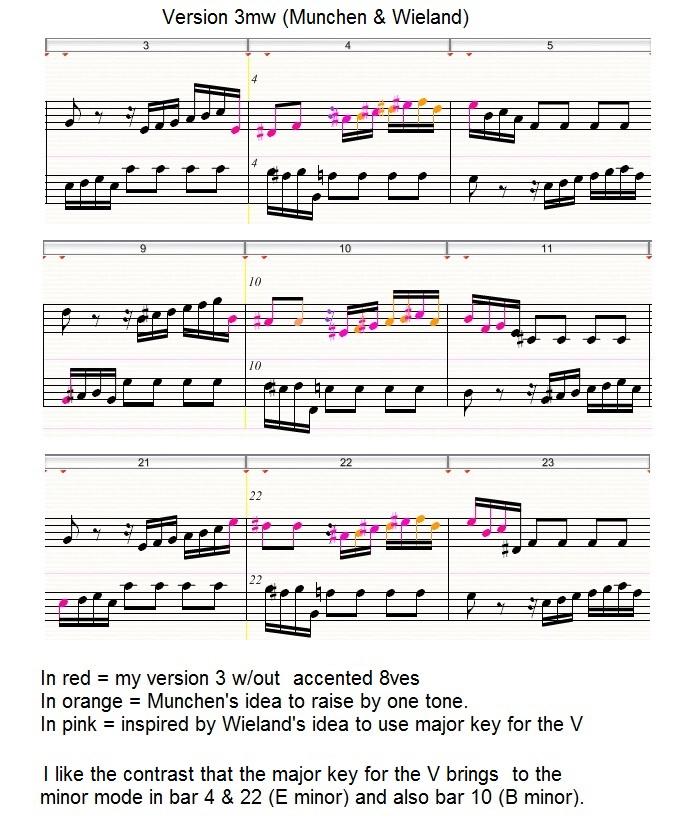
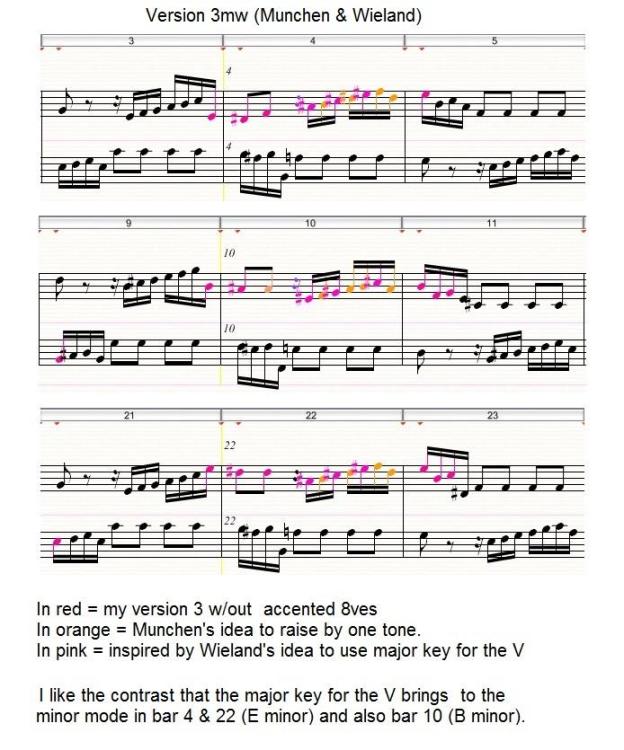
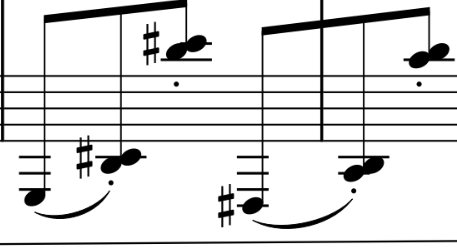
I‘m glad to hear that, and to see that you are not too „disappointed“ or overwhelmed by the discussions. Since I see that you are (again) in „good hands“ with @muchen_ continuing a detailed discussion, I will not go so much in detail, but give only some more general thoughts. I‘ve noticed your new version (v3.mp3 – not yet v3m.mp3). Will say that I put it together with the first one on my playlist and listened them, in a loop, perhaps a dozen times while walking. I do the same with my own compositions (where I use different piano soundfonts producing 10 different recordings of the same piece) and listen to them extensively while I take a long walk. This approach helps me to judge the piece whether it is fluent and I get distracted from my thoughts every time something „rattles“. Will say, a more relaxed review on the work thru listening only – being away from the score – is very useful to find out bars which need overhaul or get new ideas how a piece could be continued. Coming to the two versions of your invention I‘ve listened, I must say they are only slightly different (which is good in the sense that your corrections/modifications had no impact on the overall mood). The longer I listened them, the more I loved the subject with the repeated notes! Yes, in the first version there are the few bars, where the „octaves“ produced a bit „thin“ sound in the counterpoint. They have gone away in the newer version (what is good) except of – in my listening impression - two bars, one at the first subject entry in the lower voice and one bar nearly the end. So, I will now look to the score to see whether I can find out what I thought to have heard. ... The one bar which retains to sound „thin“ is bar 4 and the other one is bar 22. Yes there is an octave on an A on the second of the repeated notes. But I think, it‘s not the octave only - there are other ones on a C in bar 3, last of the repeated notes and on a F# in bar 5, second of the repeated notes – which don‘t need „correction“ in my listening impression. I think the „problem“ in bars 4 and 22 is more harmonic nature, I would replace the three sixteenth notes in the upper voice [G A B] with [E# F# G#] emphasizing the dissonance between B major and the four repeated A naturals. Because this was more detailed than I initially intended to be in this repost, so take it not too seriously. The more general question I have – and you probably have yourself – is what do you intend with, for example, this particular invention. If it is an exercise, you‘ll have learned something, especially about „octaves“ – and can leave it at that, going to the next one. But perhaps this is not the best idea to continue with the 1601st exercise, as you seems to me to be already somewhat „overteached“ and „overpracticed“. If you are about to create a „full fledged“ composition of it, we could further talk about episodes, cadences and a more elaborated ending. However, I suspect that you would prefer for that purpose another piece with a subject of your own, which than will be „complete your baby“. For that case, I would suggest you to put your composition in a more larger „framework“, such as in a cycle of, for example of six or twelve inventions, calling it somewhat like „Mein Notenbüchlein“ 😅. I think, that‘s quite enough for today! Greetings, Wieland.- 7 replies
-
- 2
-
-
- invention
- counterpoint
- (and 1 more)
-
I have 3 new Symphonic Fantasies on my youtube channel, I think these are closer to what I want than in my previous post. They are more spacious and airy I think. Still, they follow my thoughts, I might occasionally develop an idea, but not in a fixed way. The developments are mostly very "free". All are written in Dorico 6 pro, and the sounds are all from Noteperformer 5. "Anticipation - Symphonic Fantasy": https://www.youtube.com/watch?v=RSttXzJnEDs "Arriving" - Symphonic Fantasy": https://www.youtube.com/watch?v=tCb13vp-pvk "White Mushrooms - Symphonic Fantasy": https://www.youtube.com/watch?v=s7EDQycTcGQ I have provided links to the scores in the description on you youtube.
-
It'll take some time though.
-
Oh yes, please do. I'm convinced it will sound different - and better.
-

Small renaissance motet wich i sadly wrote the text wrong :(
Fermata replied to L.S Barros's topic in Choral, Vocal
Very expressive and tasteful writing — stylistically convincing, with beautifully balanced imitative lines. Honestly one of the prettiest pieces I've come across on this forum. (By the way, I noticed a parallel fifth right before the tenore's very first re-entry between the bass and alto (A–E, G–D), and I think I heard another similar moment elsewhere. Were these choices intentional? The piece is so stylistically assured that they caught my ear — not because they sound harsh (they don't), but because they stand out a bit against the otherwise very refined, Renaissance-authentic counterpoint.) A very enjoyable work! -

Unfinished C major project
Alant replied to Alant's topic in Incomplete Works; Writer's Block and Suggestions
Here is an extended and revised version of the piece. I’m still experimenting with having a wider variety of instruments, for now they are the same. I’m in over my head with making arrangements like this so all feedback is appreciated -
.thumb.png.8b5b433a341551e913a34392660bc95b.png)
Favorite Musical Book Quotes?
PeterthePapercomPoser replied to PeterthePapercomPoser's topic in Composers' Headquarters
This time I share with you a musical quote from "The Occult" by Colin Wilson. And if you've gotten this far, thanks for reading! -
I could play this... Should I record?
-
2-part invention in E minor
Frederic Gill replied to Frederic Gill's topic in Piano Music, Solo Keyboard
“It’s a huge…comment!” Lol. Thanks for the supportive and constructive feedback. I have inserted my comments inside brackets: “It's a huge improvement from the previous piece. The countersubject you've written is very melodious, and you've exploited its scalar nature and its rhythm very well for the rest of the piece.” [The original motive is longer than you thought. There is an important stretto in this #10 (see pic) and I cannot take full credit for the scalar line and the rhythm]. “ The harmony in your counterpoint is very apparent and well-constructed too: the first bar outlines descending thirds, and the second bar is a dominant chord. The issues regarding accented 8ves are also no longer there. You can refine your countersubject slightly though. All of the semiquavers in bar 4 should be raised by 1 pitch. This will both highlight the underlying dominant harmony, and also lead to the E in the following bar more smoothly. “ [yes it sounds better! I made this change to bar 4, 10 & 22. I have also changed some registers because it became too high or separated. Then I made a few adjustments in bar 10.17 and 12.83 (see v3m.mp3) ] “With this change, your solution will be perfectly acceptable, but a slightly more musically "interesting" solution will be to turn the beginning of bars 3 and 4 into 4-3 suspensions.” [The motive ‘forbids’ that change, I suppose. It could be possible at bar 3. For bar 4, on the other hand, I cannot have there a 4-3 suspension because the 3 doesn’t belong to the V chord. In fact there was a 4|7 at bar 4 in the original motive, but I cheated and replaced it with a 8|7 because I wanted a VI, not a iv or a ii° chord. Am I wrong? Should I bring back the 4 of aiv or ii°? ] [And for the 3 other points, I’ll look at it closely and rework my piece. Thanks a lot for this precious advice ;)]
- 7 replies
-
- 1
-
-
- invention
- counterpoint
- (and 1 more)
-
Very nice. It is tasteful. Its easy to follow, even for a child. And that's a compliment! It's not like other composers who try too hard to be original and sophisticated, sacrificing fundamental qualities of music like accessibility and consistency. Sophistication is in the details and originality is a subjective concept, unlike authenticity.
- Last week
-
 Steven1990 joined the community
 -
A musical joke. This is a revision where pizzicato trills were omitted.
-
MrBelegro changed their profile photo
-
MrBelegro joined the community
-
Hallo @TristanTheTristan! Even your Sonatina has a length of a Sonata, I think it was wise to call it „Sonatina“ only, due to its youthful spirit and its refrain from the drama and heaviness of a „full-fledged“ sonata. So it is a cheerful, enjoying piece at all! However, what refuses me to count it as a piece that I would enjoy to put in my playing list is its hyperactivity expressed by the much to fast and repeating passages with ornamentations (trills, tremolos etc.) which heavily remind me on your signature „TristanTheTristanTristanTheTristanTristanTheTristanTristanTheTristanTristanTheTristanTristanTheTristanTristanTheTristanTristanTheTristanTristanTheTristanTristanTheTristanTristanTheTristanTristanTheTristanTristanTheTristanTristanTheTristanTristanTheTristanTristanTheTristanTristanTheTristanTristanTheTristanTristanTheTristanTristanTheTristanTristanTheTristanTristanTheTristanTristanTheTristanTristanTheTristanTristanTheTristan ….“. I can therefore only emphasize @PeterthePapercomPoser' questions about playability for a human performer and would love to hear the piece as it would be interpreted by a real pianist, whether it's a live recording or a recording from a MIDI file. In the latter case, however, more sensitivity to the technical abilities of a human pianist and their enormous nuances in articulation, dynamics, tempo, etc. would be required.