All Activity
Past hour
-
It’s been forever since I done this sort of method of judging with sort of a transcript of a judge tape, but I’m going to try it for this piece or what basically happens is that I listen and I speak my notes in here. This allows me to pull things up immediately that I have noticed rather than using my memory. I appreciate the little dissonances and passing tones in the first Movement and the model interchange as well (2nd movement) This sounds very medieval like a quartet of crumhornes I kinda like the stylistic blending of the baroque, and also the medieval sound and sort of that renaissance, sort of idea in good attention to dynamics the trio given in the middle of the second movement does a good job to give the listener sort of a pallet cleanser and to redirect the energy and attention I appreciate how you use the full instrument of the Sopranos saxophone although that there it would be much nicer for a full sax Quartet (satb) I still give major respect to the versatility you present with only one instrument that is held by four different players The third movement has a good range of dynamics, and I love the low end of the dynamic spectrum given in the opening statement. I also like the harmony being used as well giving a Coventry Carol feel This also should represent the sunset as well in the idea of a sunset. Lovely ending with a pickerdty third. i’ll now give my scoring and explain any faults that may have happened MelodiesThemes Motives Harmony Chords Textures Form Development Structure Time Originality Creativity Score Presentation Instrumentation Orchestration Playability Execution of Given Challenge Taste 8.5 9.15 9.7 8.4 9.6 7.88 9.5 8.56 your average is 8.91. excellent quality on your composition. Also, did you perform the whole entire thing if this was a live recording then kudos to you anyways, I had explained your orchestration score. If only you used more members of the sax family you may be able to get a much more wider sound however though your purpose kinda does justify though if you want to keep it just to one instrument. just like I had said to other entries, I had tanked the creativity score however, though I kind of brought a little bit up to you due to the creative melody and the creative harmony, and feel that your piece gives off it kinda does fit that cookie cutter idea of that aesthetic that everybody else is convergently going for so there’s not really much uniqueness in that purpose purpose there. other than that excellent job
-
Hi Henry, Well done on your revision of this major work: it must've taken such a long time to do! I'm very impressed with all the detail in your structural plan. (Don't think I could stick to something like that, as I tend to write organically by instinct alone.) Are you hoping to get a performance by real musicians? Alex
-
I finally finished! I thought we were supposed to adapt the poem to be sung, so that's what I composed. For voice and piano trio! Attached is the link to the youtube video, as well as the pdf of the score and the mp3 audio.So on a bright summer day.mp3So on a bright summer day.pdf
Today
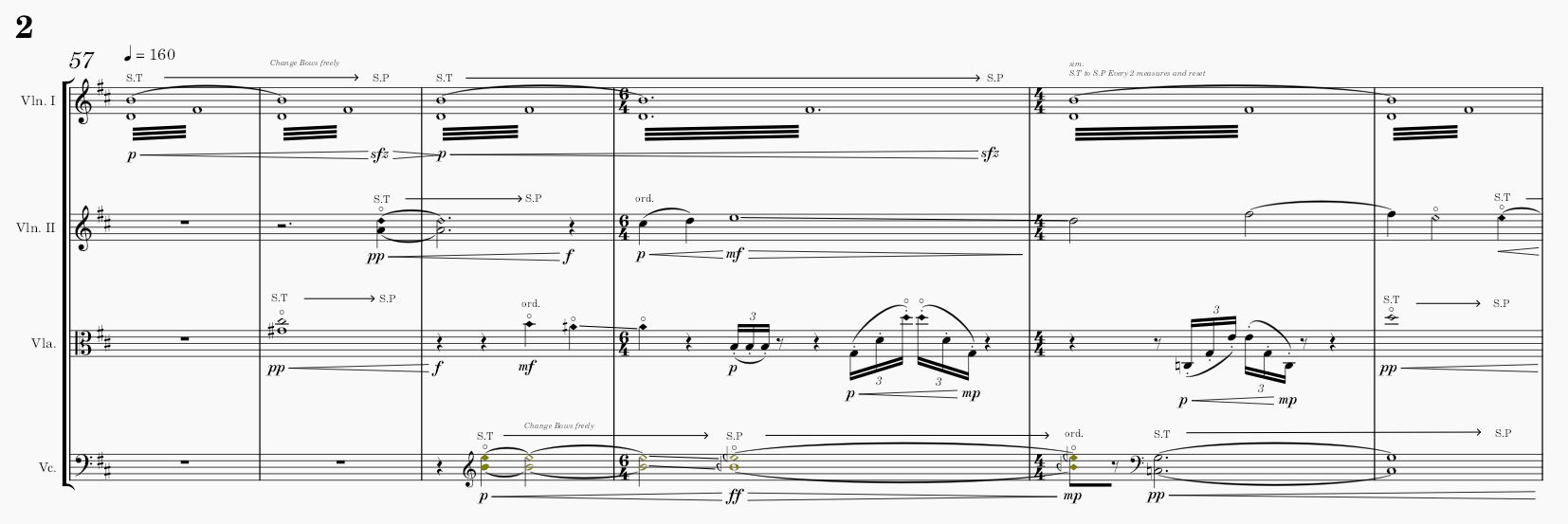
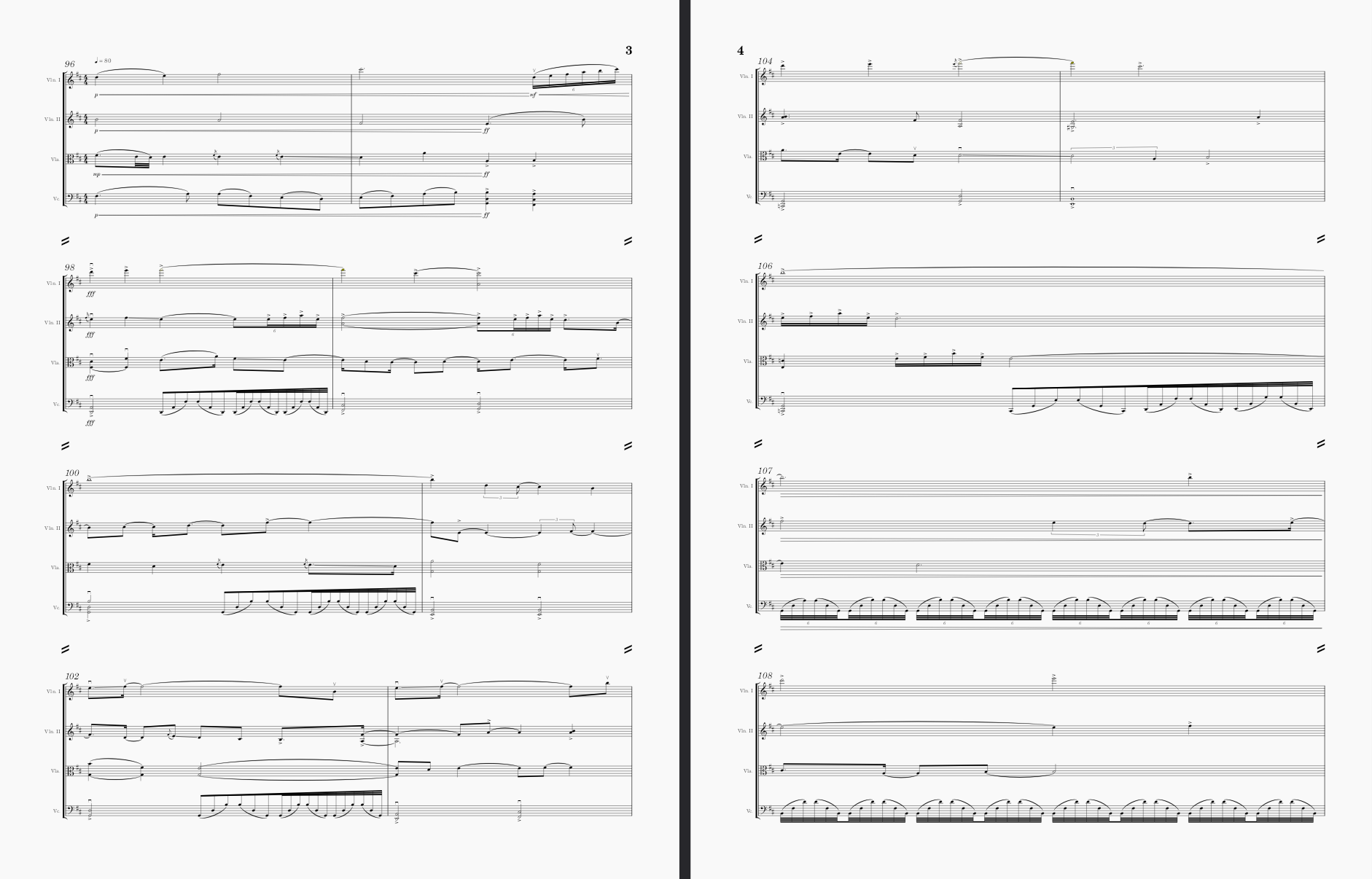
You can reply to individuals by using @ followed by their user name, like this @LuckyComposers and sound artists are invited to the 2nd Aion Digital Art Prize (2026–2027), organized by Aion Laboratory, a division of Ise-Shima Art Company in Japan. The competition welcomes both visual art and music in digital form. Music and sound-only works are eligible; a visual component is not required. Electronic and electroacoustic music, sound art, audiovisual works and other digital creative practices are welcome. Audio formats include MP3 and WAV. Open to all ages and nationalities. Individual and collaborative works, including previously exhibited or awarded works, are eligible. AI-assisted work is accepted if its use is explained; works created solely by AI are not eligible. Deadline: 1 March 2027, 23:59 GMT. Entry fee: JPY 3,000 per work, non-refundable. Each work requires a separate application and payment. Awards: one Grand Prize of JPY 50,000 and a printed certificate; up to 35 Aion Digital Art Prizes with certificates. Results: 5 May 2027, by email and on the official website. Submit a link to the work and a description through the online application form. SoundCloud, Google Drive and other accessible hosting services may be used; keep the work available until the results announcement. Full rules: https://www.aionlabo.com/en/blank-2 Application: https://en.iseshimaart.com/digitalartprize Contact: info@iseshimaart.com Copyright remains with the creator. The full rules explain the organizer's permission to introduce, share and exhibit submitted work. Please read them before applying.I finally finished! I thought we were supposed to adapt the poem to be sung, so that's what I composed. For voice and piano trio! Attached is the link to the youtube video, as well as the pdf of the score and the mp3 audio. So on a bright summer day.mp3 So on a bright summer day.pdfIs there an option to reply to specific people on here or does it just reply to the whole thread? Anyhow, thank you for the feedback (both of you)! I do plan to maybe share a little more here, so that would be cool! A little problem with that might be the fact that I'm currently on a streak of having a bunch of these great ideas but not finishing them out because I'm very busy with other things. Currently trying to submit for the National youth Composition Challenge though and these are some unfinished/unpolished excerpts from the score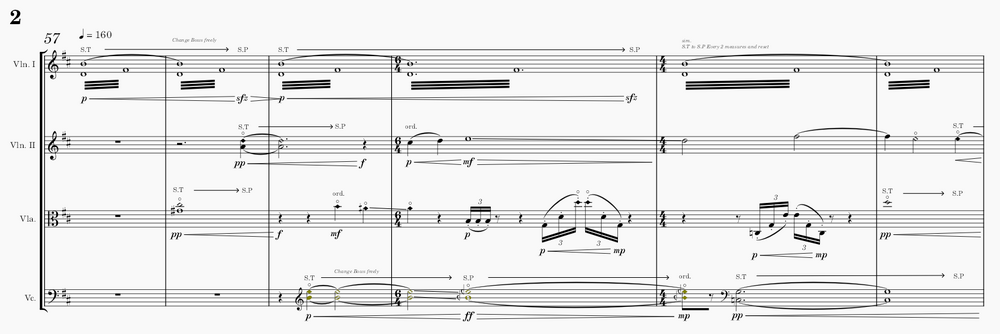
 Straight away you get to the point with the very nice intro. It has a distinct theme and haunting harmony. The fugues are very beautiful, and the transitions are quite smooth. But I especially love the intro. The intro has a Tchaikovsky feel to it, very dark, emotional with lots of soul. The fugues are fun and I can tell you paid close attention to orchestration. It seems that your key changing is pretty tame in this movement, at least within sections. Your transition from the 8 minute mark to the 9:20 mark is particularly well done and I like how you split this movement into 2...where the first section is the darker side, and the second section is the happier side. It gives the piece a nice balance. The second section reminds me a little of Bach's inventions, before you remind us of the darkness of the entire piece by shifting focus back to the intro!Hi @Grant Weep—a bit late to comment on these works. My impression is that these are wonderful, lovely, and truly nice pieces. The backstory behind the works is just fantastic. When it comes to a piece that holds such significance, there’s really nothing for me to add. I'm a total stranger to your kids, but tell them to enjoy childhood, and good luck! ☺️ I said so before, but again, I truly hope you have an amazing family life! Best, Lithl.This is the 3rd movement of my Clarinet Quintet in C minor, which is completed 4 years ago and I'm revising it. Thx to my friend Vince @Thatguy v2.0 for making the audio! Here is the pdf, audio, video of the movement. I have also made a structural graph since this movement is a fugal one and I want to show the structure more clearly. https://youtu.be/QMQyFbriSmM (For YT)Clarinet Quintet in C minor 3rd mov Final Version 20260906.pdfClarinet Quintet in C minor 3rd mov Final.mp3Clarinet Quintet 3rd Mov Structural Plan.pdf To me this is core movement in the piece and my favourite. After 2nd movement's anxious power I finally calm down to reflect subjectively and (more)objectively, which are represented by Lament and Fugue respectively with the following structure: 0:00 1st Lament, using the despair [0134] motive again, then incorporate the (future) fugue subject in the clarinet while strings keep lamenting, and ends with one more question of despair. Real lament after what is suffered in the first 30 minutes of the work. 1:10 1st Fugue. Appearance of prime form of the subject. I always go for F minor in any secondary themes or answer in my C minor works because G minor is always too weak for C minor. Only F minor is dark enough for it. First stretto in 3:05. Ends in F minor with angry despair. 4:03 2nd Lament. A complete new part for this movement added only in this final version, sounds more dissonant than anything else in the movement, further intensifies the pain. 5:00 2nd Fugue. Using the retrograde form of the subject as main subject, denoting the backward reflection of me on despair. The flow here is also more fluid. [BACH] in viola in 6:56. Prime subject joins again in 7:16 to have stretto with the retrograde subject. Ends in F minor again with augmented subject in 8:07. 8:25 3rd Lament. My favourite of the movement, the sheer pain especially in 8:41-9:00 always aches my heart. But human beings only change after pain and I am no exception, so after this painful passage some hope is finally invited to the party to modulate to E flat major for next part. 9:40 3rd Fugue. Using the inverted form of the subject as main subject, denoting the complete upside down of thought from despair to hope. Later the retrograde inversion form of the subject enters in 11:08 to represent even further distance from despair. The climax in 11:48 is the most hopeful passage in what's happened in the entire Quintet up to this point. But after it doubts continue to enter. Despair starts invading in 12:42, and in 13:18 the prime form in tonic c minor enters in a subconscious Viola entry plus an augmented 2nd violin entry. I think a lot on whether to extend the transition or not, but finally I just decided to keep it this way since an early defeat of hope can represent the cruelty of despair and the weakness of hope more. I love the sheer pain here, and the return of prime subject on cello in 13:40 means the struggle of hope is futile. An E flat major prime entry on Clarinet try to struggle once more but falls to despair again, a final prime subject on cello in 14:11 announces the defeat of hope. The section ends on a German Sixth chord to leave the music suspended. 14:36 Final Lament and coda. Solo by Clarinet, wants to escape by quoting the dream motive in G flat major like in 1st movement but has to accept despair. In 15:19 the opening returns to remind unsettled affair. In 15:36 all four forms of subject appear for a final conclusion and lament and acceptance of despair and tragedy. Only by acceptance you may recover from it. The biggest change I made in this revision is the addition of 2nd Lament and repetition of 1st Lament. This is my original plan but with the bad sound sample I deleted them in my final draft. But now with Vince's great rendition I think it's better to retain them and extend the Laments to match the overall narrative structure. I also change the entrance order of the instrument, some counterpoint and details here and there etc. In terms of fugal treatment I make use of all four forms (prime, retrograde, inversion and retrograde inversion) of the same subject to denote the ups and downs, thinking backward and forward of me, so they are not merely fugal devices but also have narrative function. Hopefully you enjoy the movement, feel free to criticize it and leave comments here. It's a long movement and a long description, and I gratefully thank you if you listen and read till the end! P.S Here are YC posts of previous movements: 1st Mov: 2nd Mov: HenryThe only exception is, you know, "that guy." 😏 By the way, what about the "Creative Composer" badge? This badge is awarded to composers whose work feels creative or who demonstrate uniqueness—such as through the fusion of different genres. Best, Lithl.I won't want to have that lolololHello, If this is something you wrote a year ago, I'd be interested in hearing how your more recent compositions! The intro was pretty cool, the use of effects there was great. I tried to follow on my keyboard, since there was no sheet music. I think I got the main musical ideas. The cool thing about using the D major and occasional D minor chords is that it gives a bit of an epic feel to the piece. As you mentioned, not using the tonic always makes me feel like the music gets this short of push to it. Like, on the move. To me, it gives this sort of subjective quality like a journey. So that's pretty cool! From a structural point of view, I am hearing A/B/A/B/A. Kinda like verse/chorus/verse/chorus/verse. I mean your piece is pretty nice already. The type of structure that you have is great. Sometimes, experimenting with the structure can really make a piece of music sound special. Like any pop song, you could try adding an intro (which you kind of have, but you used effects so I have mentioned it). You could try adding a bridge. You could try adding an outro. Once again, these are all matters of subjective taste. Many great pieces written A/B/A/B/A structure, the length of your piece is also not too long, so it works. But yeah, I like how you are doing this little variations to make things interesting...alternating between the A - E - A -E, and then going E-A-E-A. I think while the overall musicality is fairly simple, you are doing some nice things with it. I find that music can be very dialectical, depending on how you look at it. Like, truly good music is slightly surprising and also comforting. You want to try to be innovative and find your own sound, but also not write something so innovative that nobody can understand. You'll want to take risk and be safe, but perhaps sometimes taking a risk is the safe thing to do, and perhaps keeping it safe is taking a risk? Anyways, just some ramblings from an old guy, welcome and hope to see you around more often.I thought that was lovely! This captures a pop/rock vibe that gives the piano a lot of drive and motion. The mysterious chords at the start do an excellent job of setting up the dramatic section (starting at 37 secs). You nailed it with that powerful section, and the music really gave me nostalgia for the video game Donkey Kong Country 2, which contains some of the best music ever composed for a Nintendo game (composer: David Wise), so in my book you’re doing great! I think this music could shine even brighter with the layering in of other instruments, especially bass and percussion. A simple beat with bass layered over this could take the whole thing to another level, and it may even open you up to adding more layers. As an example, check out this song from Donkey Kong Country 2, and notice the difference between the beginning (which has no percussion) and the section where percussion comes in (1:09). Both sections are great, but the introduction of the percussion really juices up the vibe. And your music reminds me of this song, a song I’ve always cherished. Would love to hear more from you. Cheers!PeterthePapercomPoser replied to PeterthePapercomPoser's topic in Announcements and Technical ProblemsI honestly had to take some time away from reading this post to fully absorb what it was that you were trying to say LoL. So the first thing is (and what I also told Fruit hunter) is that these kinds of awards cannot be created because every member of the website would want an award created for their name "The Fruit hunter Award of Excellence", "The TristantheTristan Award", "The PeterthePapercomPoser Award", "The Chopin Award", "The Henry Ng Tsz Kiu Award" etc. etc. etc. These kinds of awards would be meaningless and wouldn't bestow any kind of honor or significance to those they would be given to. The other problem is that awards are still bestowed by the staff so there would be a logistical challenge since you'd always have to ask a staff member to bestow the award to someone for you. Finally - you do have a good idea hidden in your post - the idea of having an award for a good Theme and Variations. Now you'd just need a good concept for such an award and what kind of graphic might fit such a concept. Thanks for the idea!Not VSL it’s Vurtual drumlime as the VSTHi! New here, just trying this out. This is a composition on piano I made like a year ago just as a sort of writing practice thing to see what I could do without using the tonic A Minor chord. Hope you enjoy! (Also prob not gonna share the sheet music here since i didn't have the playability in mind and the notation is god awful and this is one of the first times I used a DAW to produce the music lmfao) Azalea.mp3You mean, VSL. Cine Perc is rather solid library. Still used today in demos. I own it (Musio). When I can afford it, I would like to own BBSO and oddities.Lucky changed their profile photoLucky joined the community
Yesterday
I used vdl and Cine percJust a little something for orchestra with a nice percussion section. Sequence I-VI.mp3 Sequence I-VI - Score.pdf@Kvothe Please don't spread misinformation like this about the contest entries. The piece is 6 and a half minutes long and therefore meets the duration requirements of being between 3 - 7 minutes long. The piece is also written for a quartet of saxophones which is an acceptable instrumentation as the competition is for 3 - 5 individual instruments.Entry:Un clair jour d'été Melodies Themes Motives Harmony Chords Textures Form Development Structure Time Originality Creativity Score Presentation Instrumentation Orchestration Playability Execution of Given Challenge Taste 10 10 10 10 10 10 10 10 Average Score: 10 Review: I was blew away by this entry. Great job.









.thumb.png.8b5b433a341551e913a34392660bc95b.png)