All Activity
- Past hour
-
 mariano joined the community
 - Today
-
Award Request Thread
MrBelegro replied to PeterthePapercomPoser's topic in Announcements and Technical Problems
Oh I see. Sorry for this. Your username sure is "generic" though and that could have led me to even more "trouble". -
.thumb.png.8b5b433a341551e913a34392660bc95b.png)
Persichetti Exercise 2 - 56 for Clarinet Duo
PeterthePapercomPoser replied to PeterthePapercomPoser's topic in Chamber Music
Yeah, I admit that this particular exercise ended up being a little bland and unmusical. Thanks! I feel like these exercises have expanded my mind about my use of dissonance. I've already composed a piece that I feel has benefited from them, although ironically the piece is completely diatonic to A major, which was a totally unintended side-effect - but the way I approached it and composed it was heavily influenced by the chapter on quartal constructions. Thanks for your review! -
Wow this is great! And you're getting a performance? Very happy for you, you should update this with the audio once you get it! I've made edits to my music posts too, and I think it's easiest to add the revised audio to your original post, or just remove the old one and replace with the new. That way when people click on your music they're greeted with the version you want them to hear 🙂 Great stuff, looking forward to hearing more from you
-

Persichetti Exercise 2 - 56 for Clarinet Duo
Thatguy v2.0 replied to PeterthePapercomPoser's topic in Chamber Music
Dude these are hard to keep up with lol... but I guess I've been busy and haven't been on here as much... sorry! Listening... Ok cool! I'm almost finished with a counterpoint in two voice piano type of piece, so this is right up my alley. The language is different, but the upper part kinda looks familiar lol. I really wonder if it would have sounded better having the intervals closer together, but with them far apart it was like an eerie bi-tonal carnival ride to me or something 😄Were you mainly thinking of the consonance of intervals? It was dissonant but smooth. I know it was just an exercise and you had a prompt, but what about texture change? I'd love to hear staccato bass or something, even if just a segue in the middle. Cool piece! Have any of these exercises given you grander ideas for the themes you've used? What do you feel you've gained so far in these compositional studies? Hopefully your next major work has even more craftsmanship from your work. Well done! -
Award Request Thread
Thatguy v2.0 replied to PeterthePapercomPoser's topic in Announcements and Technical Problems
Some badges must me earned. Some are given freely, but there is one badge that rules them all. Legend holds that a mysterious "better than thatguy" badge is given only to a chosen few. You must search through the members profiles and sift through their badges to gain further knowledge. I wish you well in your quest. -

Award Request Thread
Henry Ng Tsz Kiu replied to PeterthePapercomPoser's topic in Announcements and Technical Problems
Hi @MrBelegro! Welcome to the forum! For the Outstanding Orchestrator badge, you may look into pieces below which are awarded the badge for your reference: For the "Better than Thatguy" badge, actually it's named so because one of our moderator's username is @Thatguy v2.0, so you may check out his works to see if you are better than him or not lol! Henry - Yesterday
-
Bohemian Rhapsody- Orchestral cover
Wieland Handke replied to Tunndy's topic in Orchestral and Large Ensemble
Hello @Tunndy! You have picked the perhaps most covered or orchestrated rock/pop song ever, the iconic Bohemian Rhapsody, which I consider to be a huge challenge. Everyone who hears the piece knows it and has its own expectations in the sense of „does it sound like the original“. I had the chance two years ago to attend a live performance of an orchestra and choir, and I was impressed how realistic that was performed - very close to Queen’s original sound. But that's also the problem when everyone is sensitized to noticing every little “mistake” or deviation from the original: you're faced with the challenge of bringing your own personal touch or interpretation to it. And that's exactly what you've done very well. The longer I listen to your orchestration, the more I notice some beautiful interpretations that really make it “your” piece. I particularly liked the ending, from bar 103 onwards! However, I could imagine that this personal interpretation could go even further. Therefore, as an inspiration, I have linked a YouTube video of David Bennet who reinterprets Bohemian Rhapsody in different modes or scales, which I find very fascinating. Thank you for sharing, I very enjoyed it! -
 MP3 Play / pause bossfight! 0:02 0:59 volume > next menu bossfight! > next https://youtu.be/oi3X_M6f1sY?si=VLEYgUQipR2Am9Jb https://youtu.be/yKmtb77eou0?si=omMex4e4pj1Ch0RQ https://youtu.be/sdeCKvrSPuI?si=SrtSRmd9kRyO_jTb https://youtu.be/s6qCM2V2G3k?si=sRLZN5yOcbanKvFO https://youtu.be/1kbGRgSRjhw?si=LhQXi-FI2Xjv9dKK https://youtu.be/YC0BnJhBc1o?si=0tBAEsHwqaq6Y-D2 https://youtu.be/Dl6zlUSsltc?si=EayWKoF_7x-Pob-K
 -
Award Request Thread
MrBelegro replied to PeterthePapercomPoser's topic in Announcements and Technical Problems
Outstanding orchestrator and Better than thatguy (in this case I've outbeaten Julius Fucik and Leo Chernetsky and that was my goal) for "March Hare" march -
Award Request Thread
PeterthePapercomPoser replied to PeterthePapercomPoser's topic in Announcements and Technical Problems
Thanks for your enthusiasm! Do you have a specific piece you want a specific badge awarded to? -
Award Request Thread
MrBelegro replied to PeterthePapercomPoser's topic in Announcements and Technical Problems
I'm surprised no one wrote anything here YET, so: I'm a history buff, theory buff and orchestration buff I got performed just once... Am a period composer (of late 19th century and early 20th century dances) Brass aficionado and woodwind aficionado Dance music impresario for that matter Amorous romanticist Programmatic composer I don't know if 1930's cartoon music counts for "film buff" or "film music enthusiast" but I am a buff of that And I almost composed the soundtrack to a pastiche of that but that thing was cancelled so I'm not even a debatable "film composer" -

Jewelz Casting - "Should I go into teaching?"
chopin replied to PeterthePapercomPoser's topic in Choral, Vocal
A high tension piece that wants to resolve but ultimately fails in doing so. We almost get there at 0:20. It makes me wonder if you don't really want to go into teaching, or if you have anxiety over the prospect! Overall, I'd say one of your more interesting castings. Honestly, I was surprised that you resolved this at the end.- 1 reply
-
- 1
-

-
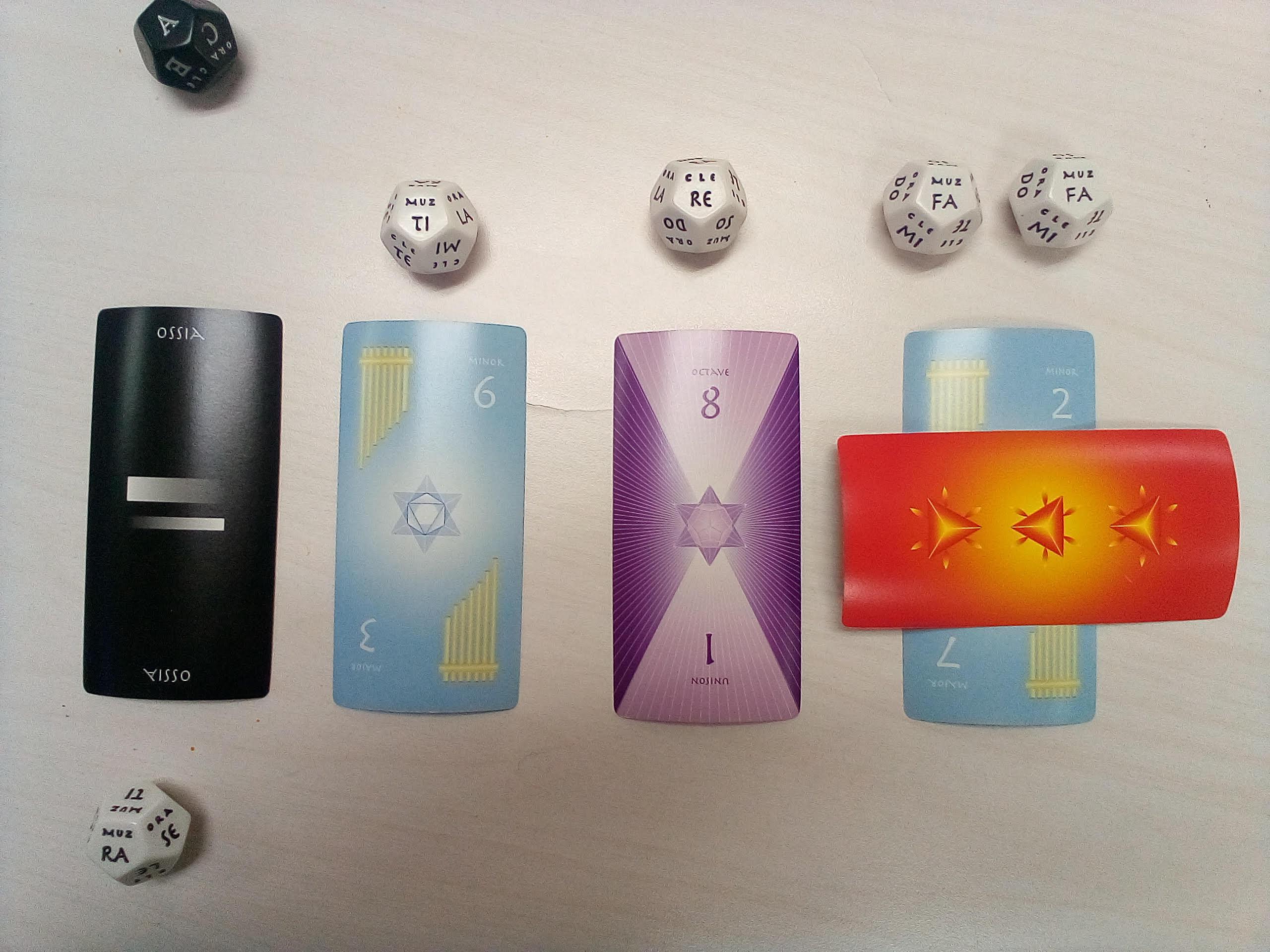
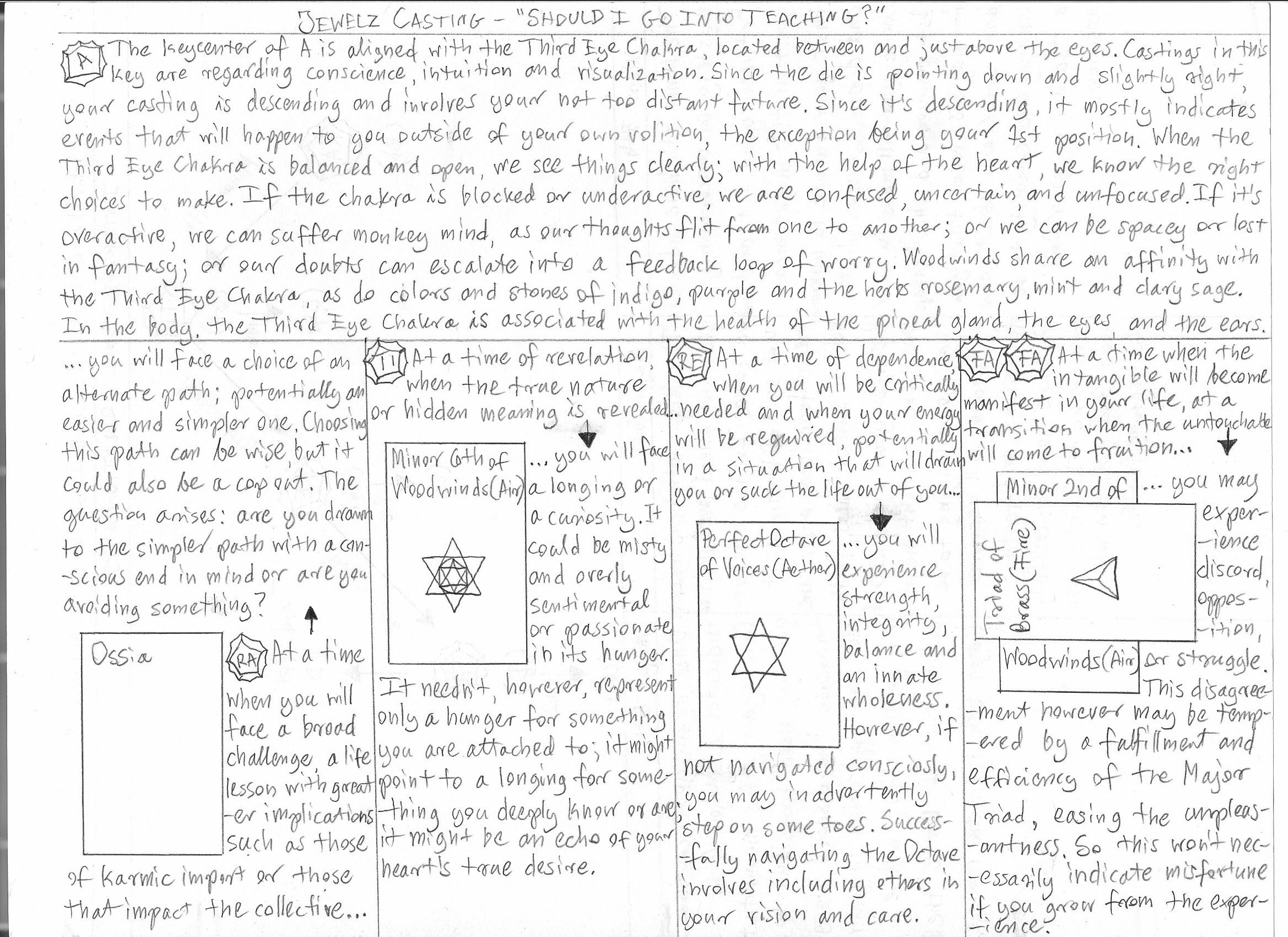
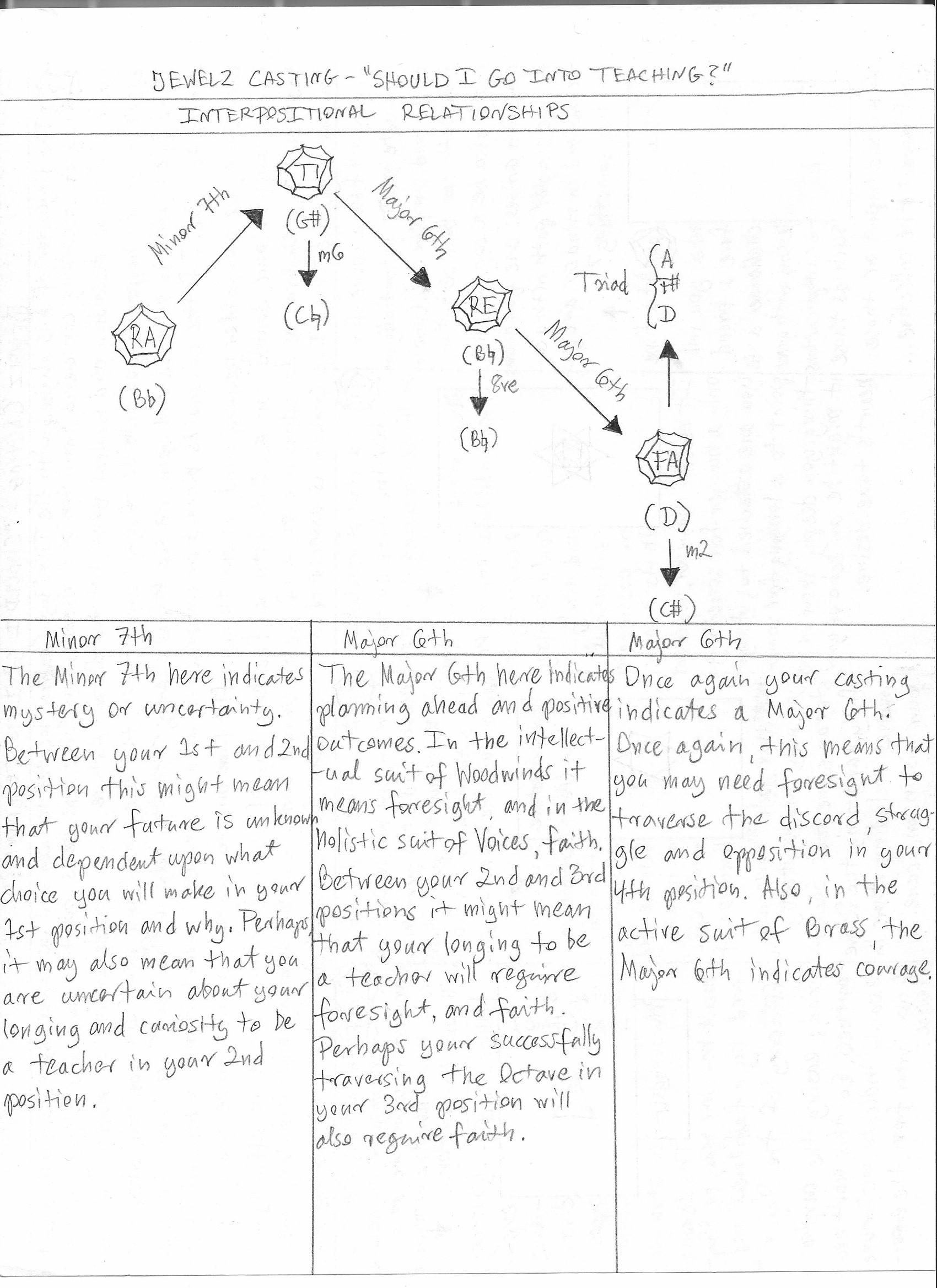
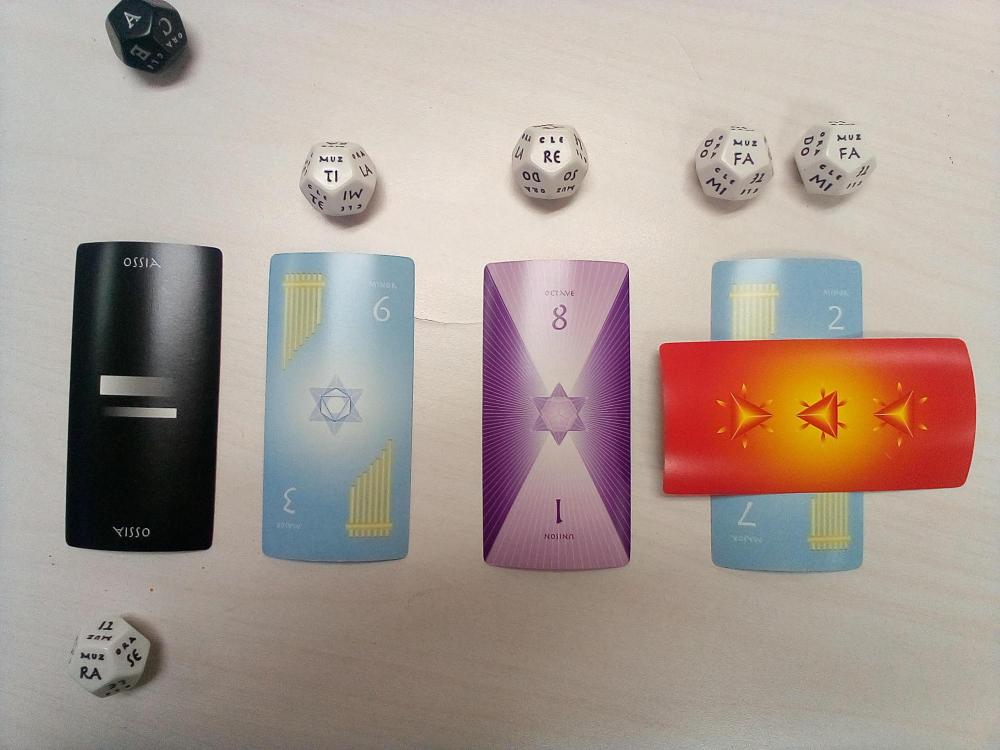
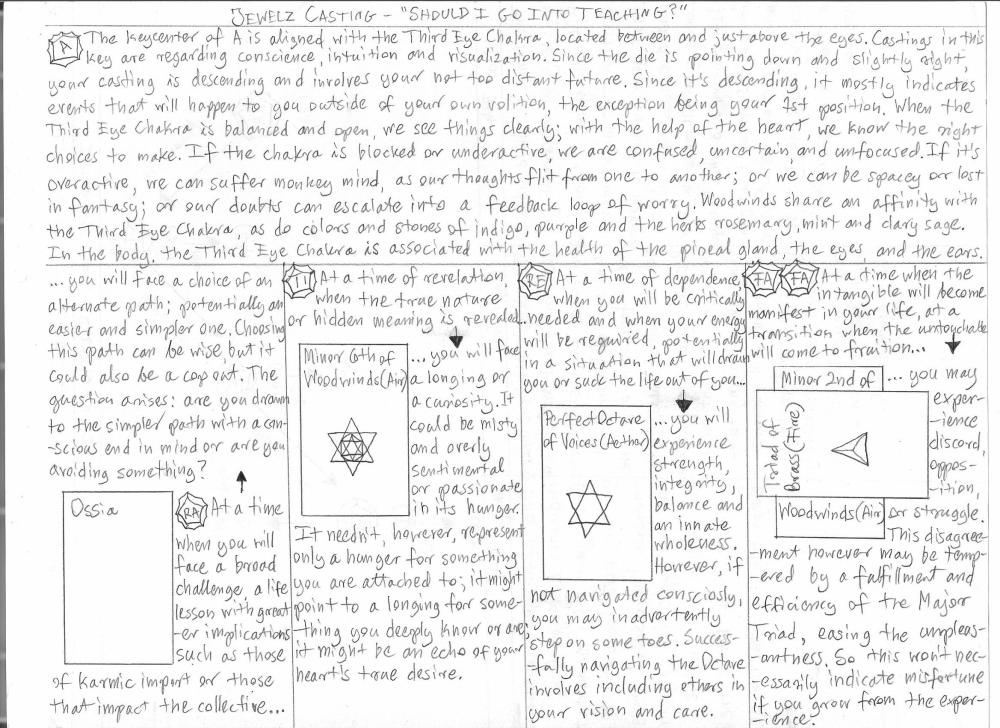
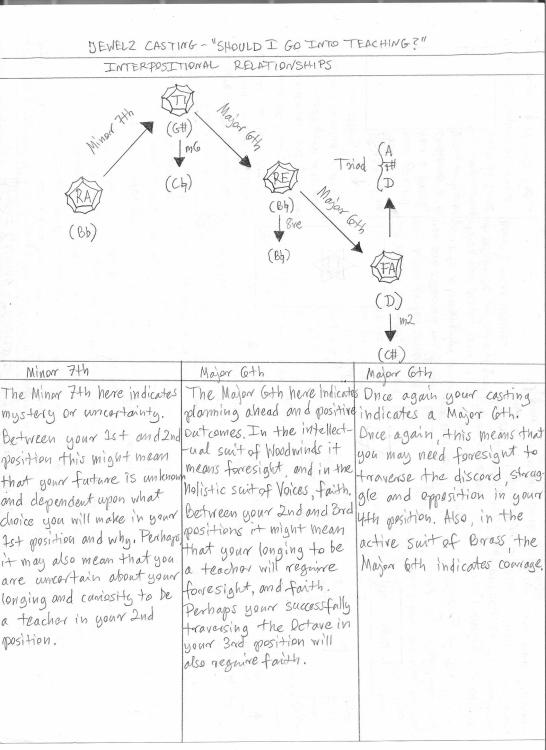
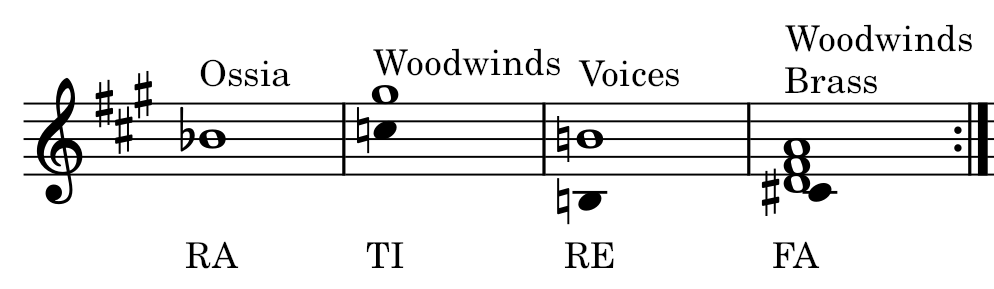
For my 14th casting Jewelz asked the Muzoracle "Should I go into teaching?" (Muzoracle is a storytelling/fortune telling/divination tool similar to the Tarot card deck, but with cards with musical concepts and 12-sided Musician's dice and Solfege dice. Perhaps it may be thought of as a special musical Oracle card deck.) My interpretation of the cards and dice are displayed below. Since the casting was in the key of A (because the black musician's die landed on A), it pertained to the Third Eye Chakra which is associated with woodwinds. Then, two more woodwinds cards were dealt so I picked the following three woodwinds to include in the piece: Flute, Clarinet, and Bassoon (Jewelz played Clarinet). Then there was a card in the suit of voices in the 3rd position so I included an Alto in the piece. And finally in the 4th position we dealt a triad of brass card so I used three trumpets. If you'd like to find out more about Muzoracle and how castings are interpreted go here: https://muzoracle.net/ This short musical representation of Jewelz Casting is about ~1:30 minutes long. I created the following melodic/harmonic underdrawing guided by the cards and the dice. I started the main melody with Flute and Clarinet on Bb and a rising chromatic line suggested by the dice. This was accompanied by an Alto voice singing B octaves and finally with three trumpets playing D major triads. If you've gotten this far thanks for reading! And I hope you enjoy listening to this short chamber work I wrote to represent Jewelz casting. Comments, critiques, suggestions, and observations are of course, always welcome. Thanks for listening!
-
Excellent pacing and nice job keeping the momentum Excellent transition to a heavy section. And nice keychange Excellent orchestration with the brass. Also, good job with the technique and articulation use within the strings. Other than that, there are some engraving problems, but those could possibly be artifacts of composition, which I am also admittedly, prone to habit. Anyways, though I’m being a little late to this excellent job and you prove that you could definitely orchestrate. The structure and waltz fits perfectly.
-

Mother and son - Trio Oboe, Clarinet, Bassoon
Fruit hunter replied to MJFOBOE's topic in Chamber Music
I love this piece. A very nice trio. If I was ever a chamber music teacher, I would recommend this to a woodwind trio who have the skills and instruments and means to do so. Anyways, this seems not too hard to be a collegiate level work, but a simple pedagogical piece of music. The school I go to does not have any chamber, music, ensembles or classes other than a few student lead performances throughout the year. It would definitely be perfect for one of those occasions and this would be a lovely applicator for practicing and or teaching staccato and different tonguing techniques. - Last week
-

Bohemian Rhapsody- Orchestral cover
Alex Weidmann replied to Tunndy's topic in Orchestral and Large Ensemble
Hi Tunndy, I notice your glissando lines have gone a bit haywire in Bars 54-55. Also in Bars 23 and 41 Violin II, you should flip the direction of the note stalks to make it clear what's going on there. Same in Bar 61 Violin I. Bar 55: some rests need deleting in the harp and Violin I. Same in Bar 66 Bass Drum, and Bar 69 various instruments. Plus a few more places where you have unnecessary rests. Bar 74: voices need tidying. Other than that good job! Also liked your recent Liszt orchestration of "La Campanella". -
it's been a while since I posted here, here's my attempt at covering Bohemian Rhapsody 😁 Bohemian_Rhapsody for orchestra.mp3 Bohemian_Rhapsody orchestra.pdf
-
Cool bass beats along with a fun motif! Gets a little repetitive, but maybe this can be used for a boss fight. One thing you will notice with AI tunes is that the harmony can get quite stale. Even with the interval key change, this basically is the same harmony for the full 1:40.
-
Vonias Wonderful composition, so lovely and spiritual,and the vocal choir is Amazing, the sort of sound you hear in Big Films Iv never heard any thing like this ...thankyou ,and i wish you every success in life.
-
The second part of the fugue (and the entire fugue at all) is now available on this separate thread. I hope, you'll enjoy it and awaiting comments/reviews.
-
please delete my account , thankyou.
-
Here now the fugue in its entirety with a YouTube-video and the complete score!
-
Hello my fellow musicians, now I present the second half of the fugue with the „special feature“. Today is the 24th of February and it is now exactly four years ago since the Russian invasion in Ukraine. As I composed the fugue between February and May 2022, I decided - after I had accomplished the first half - to integrate the Ukrainian national anthem as further theme in the second half of the fugue – as a dedication to those which suffer from that terrible war, or more worse, have even lost their lives. For continuing the „analytic comments“, we cannot speak from now on of „development sections“ and „episodes“ since the fugue is now structured by the verses of the anthem and interludes between them: First Verse of the Anthem (mm. 51b – 43a). The first verse in B flat minor in the soprano is „accompanied“ by three subject entries: • B flat minor, inverted, bass (mm. 51b) • F minor, tenor (mm. 55b) • D flat major, diminished, alto (mm. 58b) Interlude (mm. 60 - 66). The interlude, dominated by a sequential motif which appears three times in normal form and three time in inversion. The fugue subject appears once in normal and once in the diminished form: • D flat major, bass (mm. 60b) • E flat minor, diminished, bass (mm. 64b) Second Verse of the Anthem (mm. 67 – 74). Similarly, the second verse, again in B flat minor in the soprano has tree contrasting subject entries, where the last, diminished one could be counted to the following interlude, too: • F minor, tenor (mm. 67) • B flat minor, bass (mm. 71) • D flat major, diminished, tenor (mm. 74) Interlude (mm. 75 - 82a). This interlude consists of four sequences, each featuring an entry of the diminished subject, which perform the modulation from the „sad“ keys with flat key signatures used so far (for example E flat minor) to the „triumphant“ keys with sharp key signatures (finally to F sharp major): • D flat major, diminished, tenor (mm. 74) • A flat major, diminished, bass (mm.76) • B major, diminished, soprano (mm. 78) • F sharp major, diminished, alto (mm. 80) Third Verse of the Anthem (mm. 82b – 90). The anthem repeats the last half bar of the second verse and is now in the third verse finally in the brightest major key in F sharp major! The remaining subject entries of the fugue are as follows: • B minor, inverted, bass (mm. 82b) • F sharp minor, diminished, tenor (mm. 85b) • A major, diminished, tenor (mm. 86c) • F sharp major, „tail only“, bass (mm. 89) I hope, you'll enjoy it. Wieland Here is the link to the previous thread with the first part of the fugue:
-
 interlect joined the community
 -
Many thanks Mark for the kind words! As to playability, I've sent this piece to a virtuoso pianist: so I guess we'll find out! If not, I can always make changes. I know I can't play it at tempo!
-
I also very much enjoyed your work here with its introspective mood. I do have a question though; measure 28 - can this measure and others be played up to tempo? It appears to require great dexterity. Mark