All Activity
Past hour
-
Thank you :-) I think it's appropriate to mention another composer on this forum who might have some depictions of mental illness in music considering that it's in his name - @BipolarComposer .
Today
-
I'll start by giving some notes about notation. First, looking at the first page, 127 is not a real metronome marking. Metronomes are physical tools that have notches at certain points, you can't pick any number. Quarter note to 126 would be a valid metronome marking. As Luis noticed, the nat. marking has no place here. If you're preparing music, prepare one file made focusing on playback for the audio, and then another focusing on engraving for the score. If you handed that to a string quartet, they would be confused. Throughout the score, there are a lot of mezzo dynamics. Avoid using mezzo dynamics. Mezzo forte is not a "medium dynamic," it is forte but held back. It is for special cases to achieve a very particular effect. If you're using mezzo dynamics to balance, don't. Real musicians will know how to balance musically on their own. Try to have the number of measures per system be consistent and somewhat few. For an ensemble like a quartet, try something like 4 measures per system, 3 systems per page. The first page is a little too spaced vertically, and too narrow horizontally. And the final 2 measures cutting off abruptly looks quite ugly. Now to actual compositional devices. Since this seems to be written attempting to be tonal, judging by the frequent raised leading-tone, I would make sure you're more mindful to follow basic voice leading rules. For example, mm. 2-4 there are parallel octaves between the 2nd violin and cello, and this doesn't seem purposeful to me. It creates a very empty shallow harmonic quality. Throughout, the harmony is also very clunky and poorly voiced, with lots of doubled leading-tones, chordal sevenths, etc. Check what kind of harmonic function each chord is meant to have, and revoice focusing on clarity, fullness, and voice leading. The use of spiccato is odd to me. It's not wrong, but spiccato is generally paired with quicker passages, so I'm wondering if it's the effect you want, or if just a simple staccato would be sufficient. I also feel like the piece could use more direction in general. Where is it going and why? Right now, it sort of just goes back and forth harmonically between somewhere tonic adjacent and dominant adjacent. It'd be nice to hear more push and pull, and like it's going somewhere. It's sort of static as it is, give it some momentum! The piece is a good start, keep it up.
-
Hello, It's a nice waltz. It's always great to hear live performances of original works! It's perhaps a bit short...leaves me wanting a bit more :) Thanks for sharing!
-
@CrystalCanon Thanks for the extensive review! As far as the formatting goes, could you expand on what you mean by separate flows? I definitely agree with the triple-forte and the alignment part, that's just laziness on my side when editing, and it definitely shouldn't make it through to the final draft! The reason I sometimes wrote the hairpin above or below the staff was to make it clearer that it only applies to one stave. I'm not sure if that's actually a good idea in practice though haha. In retrospect, it's funny how composition works! Now that you pointed it out, I can see how bar 11 is so obviously out of place. I actually had it connected to everything originally, but during some voice leading edits I thought it was a bit too difficult to play for a piece like this, so I simplified it to the point where it doesn't really make sense anymore haha. It's always fun seeing people find all these different ways that the material is connected to each other. I never really thought about making that connection more obvious, but your comment actually sparked something in my brain. I really appreciate that feedback!
-
Opposed to orchestral percussion, percussion ensembles usually get alot more room, which allows them to position instruments where its easy to transfer. Also mallet bags assist with this. Truthfully the rule about giving alot of time for percussionists is only if you do not know what their set-up will look like. However if you can calmly and easily switch in a quick time, then there is no issue.
-
Hi @CrystalCanon ! Great job with the crafting of this piece as well as live performance! Did you perform this yourself, or did you record your friend playing it? It's very charming with many romantic era harmonic tropes (such as dominant 13th chords and modal interchange). Thanks for sharing!
-
Hi @PeterthePapercomPoser! I really enjoyed your short piece, with its flowing polyrhythms. It has a distinctly nonwestern sound to it, perhaps some gamelan influence? It’s definitely its own thing though. I find it interesting how seemingly arbitrary constraints can help define successful and engaging music. As Stravinsky wisely said, “Whatever diminishes constraint diminishes strength”. While I’m not superstitious, I also find it artistically stimulating to think of music in symbolic terms. For example, I naturally each pitch with a specific color. Besides, composers already tend to associate musical themes with concepts in individual works.
-
Hello everyone! I’m happy to be posting my first piece on this forum. It’s a short and unpretentious waltz for piano in A major. After a couple years of much reading and sketching, but without a single completed work, I decided to revive one of my old ideas, with the encouragement of my best friend. It took me a little over a week to complete, during a vacation in Paris, and it’s very satisfying to be able to put a double bar on the end! I’m dedicating it to my friend, who plays the piano herself, and now lives on the other side of the world. It’s in a very tonal and functional idiom, and I had no intention of making the piece stylistically distinctive, though I think a few elements of my personal style definitely found their way in, such as a certain motivic organicism, and penchant for harmonic variety. Any feedback is greatly appreciated! (Sorry for the bad recording—I figured it was still better than the MIDI output, especially since I don’t know how to configure dynamics playback in Dorico yet). Home recording - Waltz A major .mp3 01 - Full score - Waltz in A major.pdf
-
@CrystalCanon I completely agree that neoclassicism is a continuation (following a hiatus of more than a century). Of course, these composers looked to everything that came before, in response to what they considered “chaos” in the 20th century. But what prompted me to start this thread is the fact that many people automatically label music as neoclassical simply because it sounds like 18th-century music even though it was composed today. And that’s not the case. Neoclassicism has its own (new) characteristics. It uses dissonance—sometimes very subtle, other times blatantly so—along with polytonality. It employs surprise through rhythms and/or accents that become irregular and ever-changing. It shuns the idealized beauty of Classicism and seeks instead a sense of detachment and intellectual order (many composers omit violins for this reason). Here’s a very clear example:
-
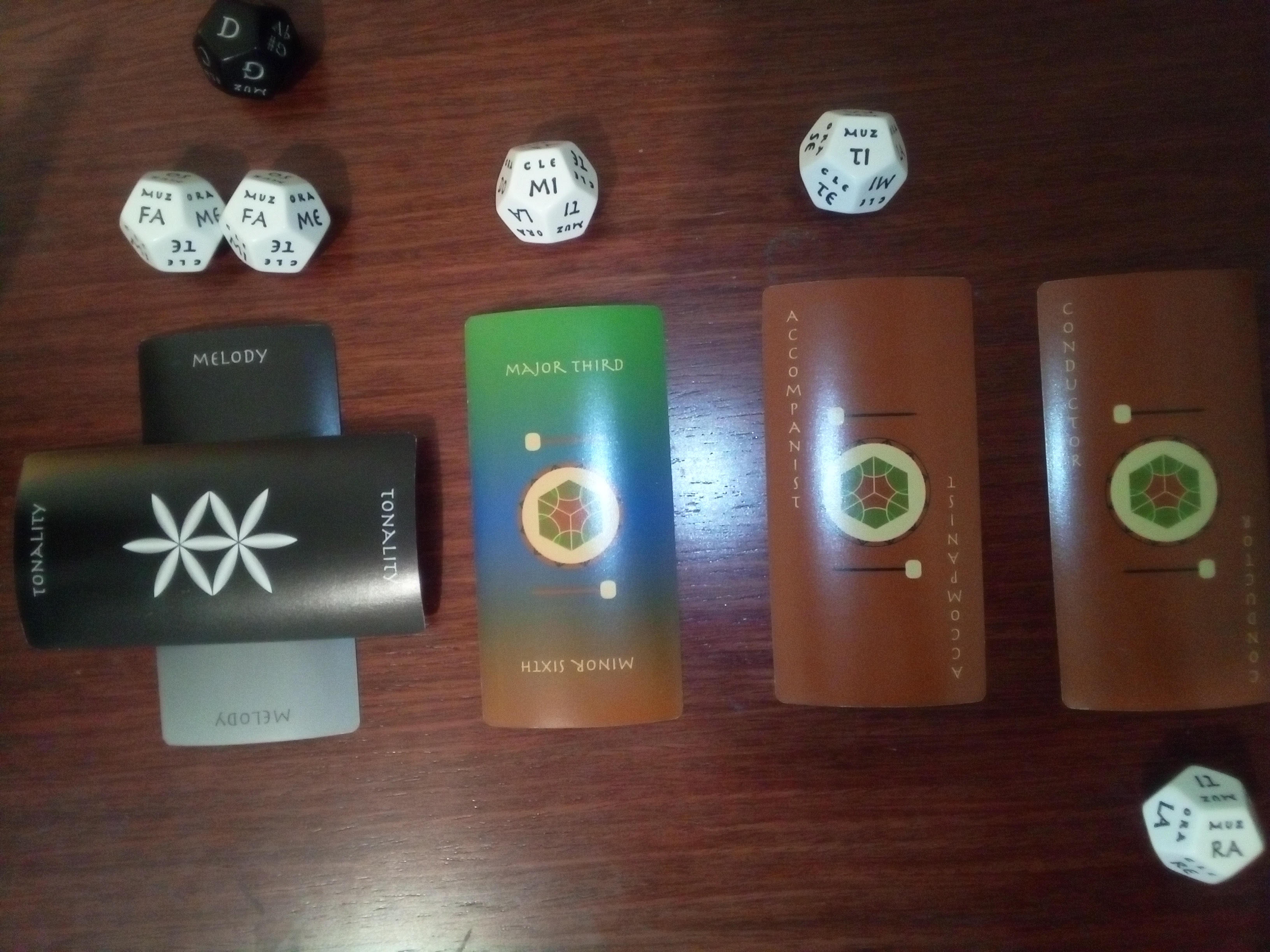
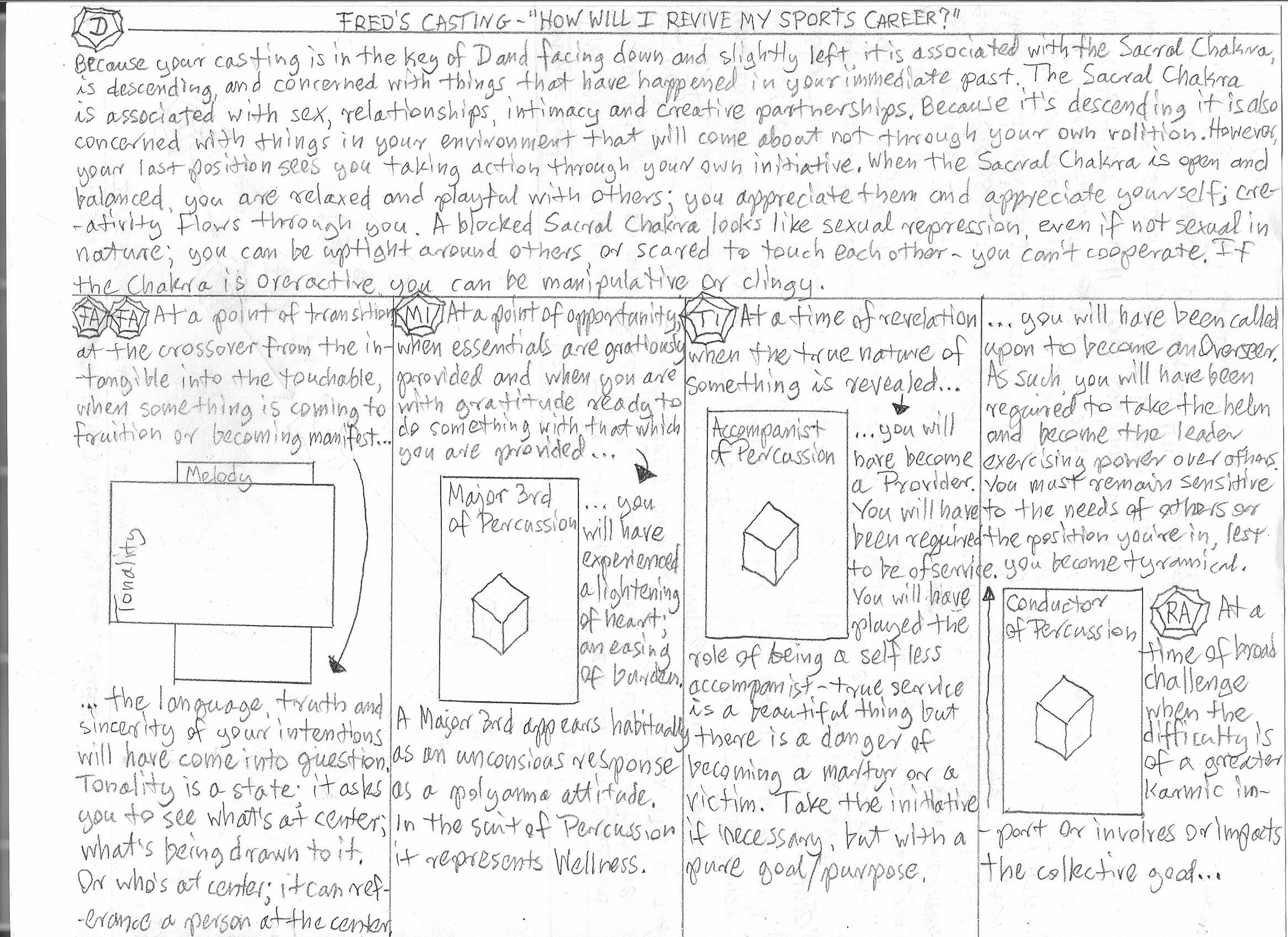
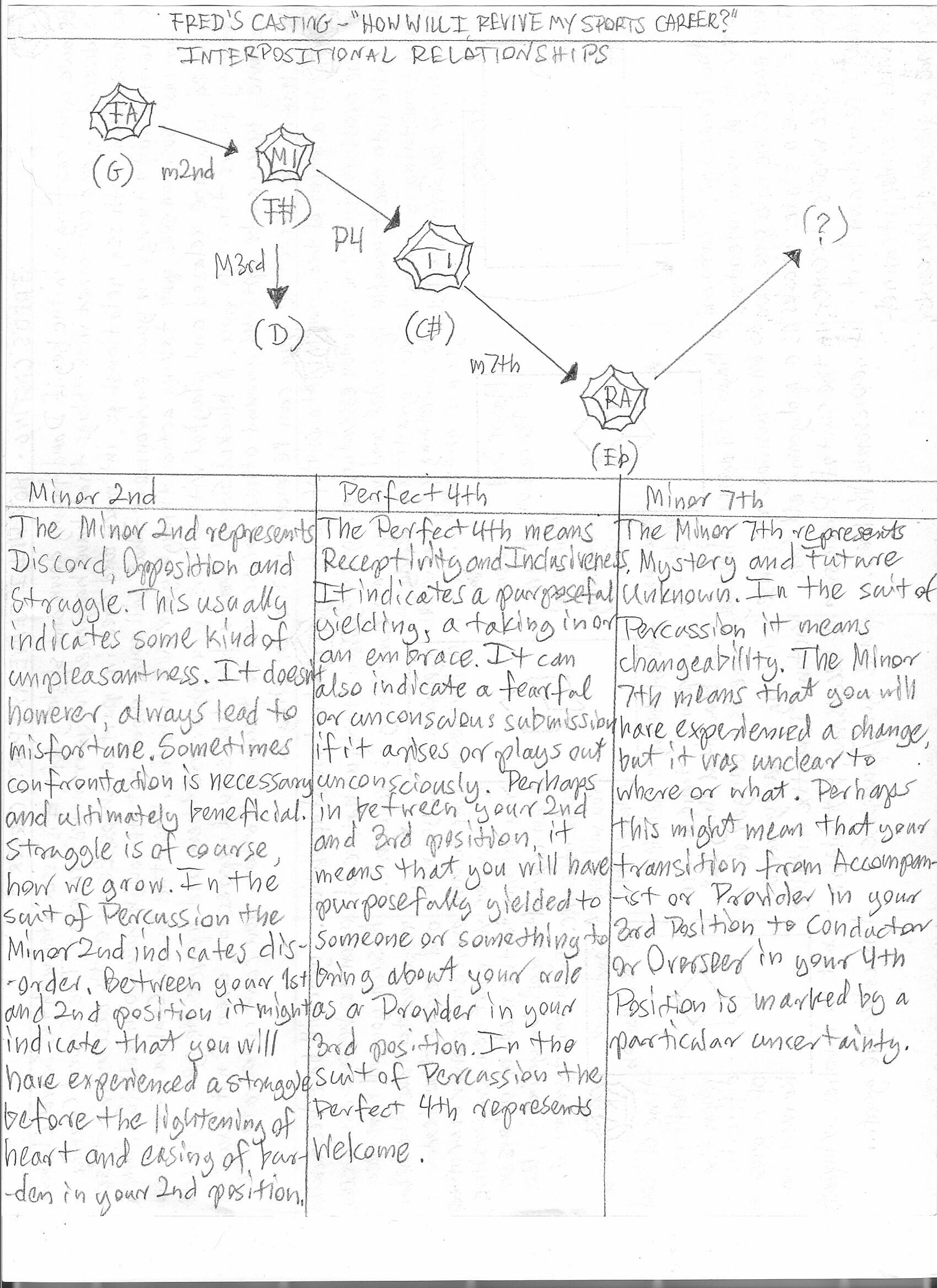
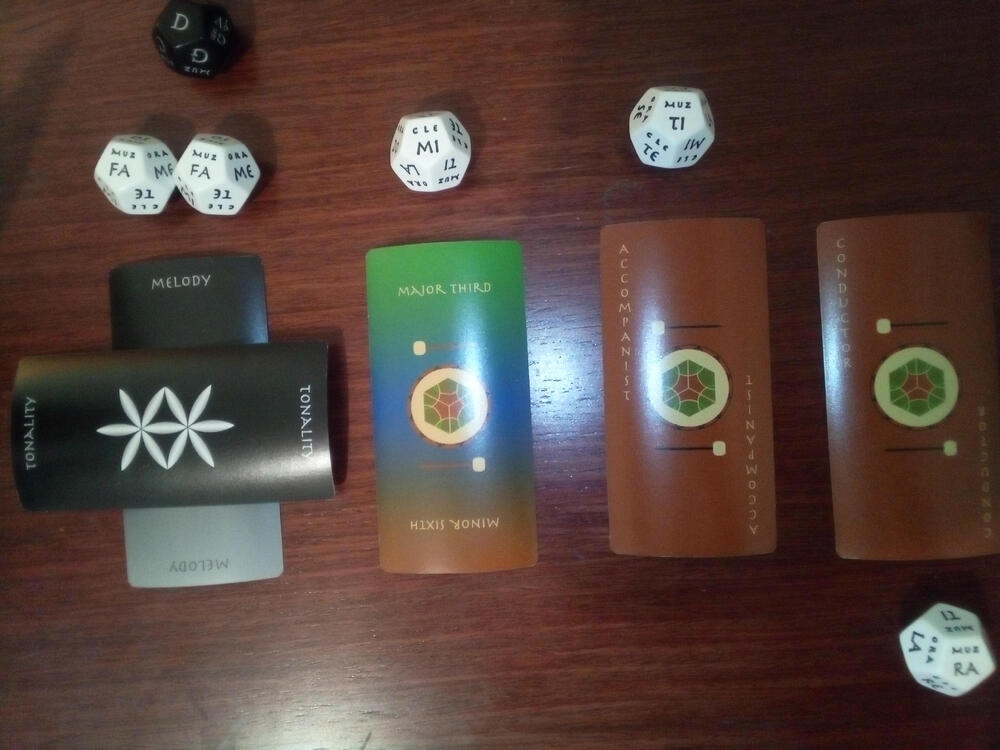
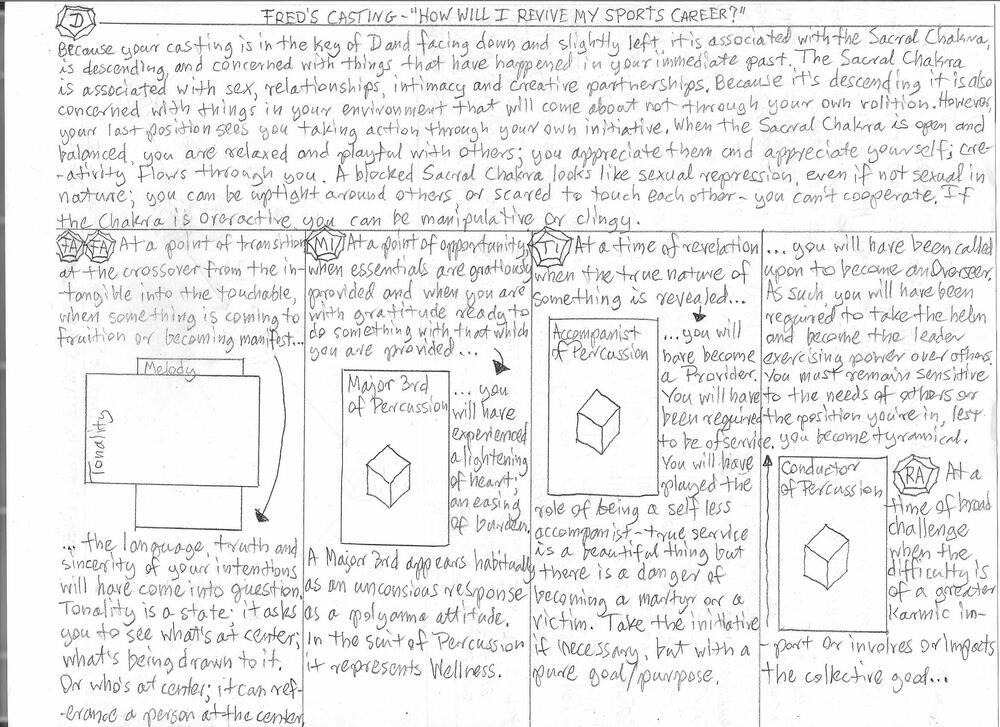
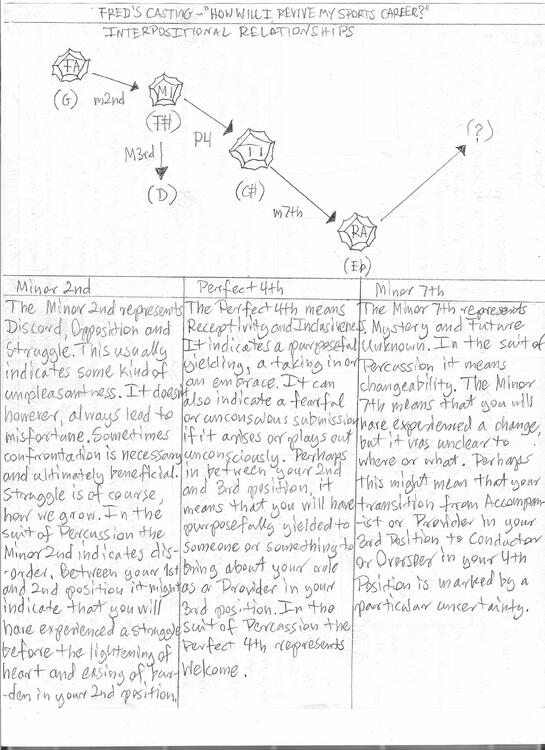
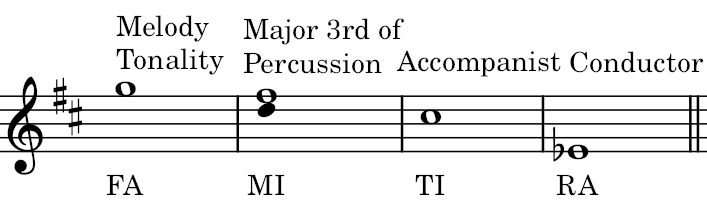
For my 15th casting Fred asked the Muzoracle "How will I revive my sports career?" (Muzoracle is a storytelling/fortune telling/divination tool similar to the Tarot card deck, but with cards with musical concepts and 12-sided Musician's dice and Solfege dice. Perhaps it may be thought of as a special musical Oracle card deck.) My interpretation of the cards and dice are displayed below. Since the black 12-sided musician's die landed on D, the piece was set in that key and pertains to the Sacral Chakra. All the cards drawn were in the suit of Percussion (besides the two elemental cards in the 1st Position - Melody and Tonality). So I chose Crotales, Vibraphone and Woodblocks as the instruments for this casting. If you'd like to find out more about Muzoracle and how castings are interpreted go here: https://muzoracle.net/ This short musical representation of Fred's 2nd Casting is about a minute long. I created the following melodic/harmonic underdrawing guided by the cards and dice. I started the melody in the Crotales and only once the melody hit C# (Ti) did I introduce the Vibraphone and Woodblock accompaniment, guided by the position of the Accompanist card. If you've gotten this far, thanks for reading! And I hope you enjoy listening to this short chamber work I wrote to represent Fred's 2nd Casting. Comments, critiques, observations and suggestions are of course always welcome. Thanks for listening! Fred's Casting No. 2.mp3 Fred's Casting No. 2.pdf
-
Thanks for sharing @Alex Weidmann! I’m not qualified to comment on the orchestration, but I really love Koechlin’s colorful sense of harmony and sonority. It reminds me of Mompou in some ways, though less static. I’ll have to dig deeper into his work…
-
-
-
Becoz there ain't no fairy tales in modern world now lolol 😝 Also it reminds you drinking more milk lolol
-
Greetings all! Just wanted to post my latest orchestration. It's another piece by Frank Bridge called "The Fairy Tale" (why does it keep autocorrecting to "The Dairy Tale"?!) I've only tackled the first movement so far (titled "The Princess"). The original piano work is very light: so I've tried to keep it so here. At one point I alternate between pizzicato and staccato in the 2nd violins, to provide a different colour. Not really sure this works? Perhaps I should've stuck with staccato only. The poor doublebasses have nothing to do. I wonder where they could play a role? Perhaps pizzicato would work somewhere? The celli also could do with more material; but not sure where to bring them in? All tips very welcome! N.B. I haven't bothered to write in alternations between the 1st and 2nd flutes, clarinets and oboes as yet. I will add some later, so they don't run out of breath. Bridge - A Fairy Tale (orchestration) #13 (added ZL compressor).mp3 Bridge - A Fairy Tale (orchestration) #13 (added ZL compressor).pdf
-
Thanks Mark. Hopefully I've converted you to Koechlin! Many of his pieces can be found on You Tube, as well as an interesting documentary about his life and works.
Yesterday
-
Hi @MJFOBOE ! This piece was not written by Alex, but by @gmm .
-
A lovely pleasant piece of music. Remember woodwind players need to Breathe! Why the Oboe D'amore? Not many players own one. Why not substitute English Horn? I also think in this composition the tone would be more fitting. Mark
-
Schizophrenia is a terrible illness, but of course many people recover and do very well and function very well. I hope your health is good. I am actually writing a piano piece about Schizophrenia at the moment, which is about 90% completed. I will try to share it on this website when it's done. Your Andante sounds really good :) Mental illness is absolutely a difficult topic, so my hope is that by using music, there are some things that can be communicated that words cannot.
-
Hi I listen to the original piano work; although your orchestration is full of color and is well thought out and quite enjoyable. The orchestra version from my mind when compared to the piano is not as ethereal/light or distinct as the original piano version in feel. I guess orchestrating from piano is not easy at all. Mark
-
Once again very nice sounding work ....
-
Alex, this is a lovely work. My only observation/suggestion is all the doubling in the woodwinds. When playing with multiple persons tuning the octaves among the players takes a bit finesse. Mark
-
I am not familiar with examples in any genre of music that deals specifically with this subject - and it's sort of a difficult topic too. I myself have mental illness and wrote my Andante for Strings while I was developing Schizophrenia.
-
-
PeterthePapercomPoser replied to PeterthePapercomPoser's topic in Music Appreciation: Suggest Works or ArticlesKirby Super Star - Cocoa Cave:
.thumb.png.8b5b433a341551e913a34392660bc95b.png)