All Activity
Past hour
-
PeterthePapercomPoser replied to PeterthePapercomPoser's topic in Music Appreciation: Suggest Works or ArticlesMega Man 3: Snake Man Stage (Arranged)
Today
-
Nice job on expanding your main motif, and excellent key changing throughout. Considering how long this movement is, the piece does a really nice job in keeping the listener's attention I think. About halfway through, you then change the pace but quickly get back on track. The harmony throughout is good, with sprinkles of pentatonic. Also, the last 2 minutes are very cool in how you conclude the piece. I like the change of pace here, with the slower, calm ending. Much of this movement is is quite steady / consistent, and your transitions are seamless.
-
This is the 4th and last movement of my Clarinet Quintet in C minor, which is completed 4 years ago which I finish revising. Thx to my friend @Thatguy v2.0 for making the audio! Here is the score and video of the movement: (For YT)Clarinet Quintet in C minor 4th mov final 20260922.pdfClarinet Quintet in C minor 4th mov Final Version 20260922.mp3 https://youtu.be/r4Y7eVQdom8 It's finally the time to solve the problem after excavating deeply into the despair and sadness itself in the last movement. The despair motive is almost everywhere in the movement to show the struggle with it. The movement is basically under sonata form (or sonata rondo) structure with an extensive coda: 0:00 1st subject, Exposition. Despair [0134] theme combines with anapaestic (or dactylic?) rhythm behind to present the action to solve it. A sudden reflection with halt appears in 0:44. What is this despair? Eb major arrives the earliest in the whole piece of music in 1:10. 1:49 Transition. Begins in Ab major, the 1st theme enters in 2:06 cello but stop by a chase to Eb major in 2:25. First time to dissolve the despair with bare harmonies. 2:39 2nd subject, Exposition, in Eb major. Some struggle in 3:02 in c minor and reached its climax in 3:21 but dissolved (or ignored). Trying to achieve a more hopeful ending but ends in deceptive cadence in 3:47 with the scare of 1st subject theme. Eb major never achieves its perfect cadence here and go straight back to c minor in the development. 4:17 Development, 1st part. Most complicated part of the movement (it should be), 1st subject theme enters into each instrument individually like nothing happens(that's why it can be either sonata-rondo or sonata for the structure). The sudden halt reflection suddenly interrupts in 4:53(which will keep appearing in the development). Keeps modulating with sudden reflection (or rather because of the reflection) to finally reaches e minor passionately for the 1st climax of the development. 5:28 Development, 2nd part. The emotion gets complicated as 5 part counterpoint is achieved here. I initially was in doubt of the counterpoint here during revision since the sound is so confusing and muddled but I think it's a good way to represent the confusion of mind here so I retained it. Certainly I don't have the ability of Mozart here haha. It cools down to b minor with 2nd subject theme singing, ending in German sixth chord which gives hint to C major/minor as V7 of it. But it instead it enter F sharp minor. 6:23 Development, 3rd part. The use of F sharp minor here is to reiterate the polarity of C/Gb which is established right in the 1st movement (I also use it in my Sextet). Another climax in 6:42 using transition theme. Falls to aura of despair in the opposite pole in 7:17. But only when you fully admit and immerse yourself in despair hope appears, as it magically turns into Eb major with the ultimate climax. The hope theme shines completely in 7:50 and in 8:11 even the despair motive appears hopefully in the clarinet! It ends in a calm pentatonic aura but it proves itself short lived as it cools down instantly. 8:23 Development, last part and retransition. It falls again to the weak Ab major and ends in a long reflection in 8:45. I think it's anti-climatic to allow unmoving passages in a development but I do it as preparation to what comes after it and a preparation of the coda. Sadness deeply felt and rebounds in agitation, as rhythms from all previous movements appear in 9:38 and in 10:00 the outburst of despair motive is played in unison. 10:13 Recap, 1st subject and transition. Themes recapped and reordered in a much more agitated manner than the exposition. I definitely learn from Mozart's G minor Quintet for the texture here. Transition in 10:54 as 1st subject greatly shortened. 11:38 Recap, 2nd subject. Time to enjoy the moving sadness by despair theme here. Try to grasp hope but despair seems fully taking control... 13:28 Coda, 1st part. My fav. theme in 1st mov quoted here: do I have to end in this way after all these struggles?? Are they futile at all?? I sink myself and dissolve myself into harmonies only after all the counterpoints before. Yeah! Despair may not be solved but it can be dissolved! To acquire it isn't to have hope defeat despair, but rather embrace despair and carry its heavy weight on your shoulder and still maintain that the world is hopeful. 14:40 Coda, 2nd part. By no means I am merely copying Beethoven's op.135 3rd mov (my all time fav mov) note by note here: the Eb-D-C-Bb motive there is the perfect solution to the despair motive in this entire piece. But just like Beethoven's op.131 or Kant's Critique of Pure Reason, what's happen next is not the issue here, so the ending is somewhat unfinished, and what's left undone would be further developed as in 16:00 the melody begins my 2nd Clarinet Quintet in E flat major. Feel free to criticize the movement here! A more complete narrative of the whole piece will be put in the video featuring the whole piece instead of here. Thank you if you follow the whole piece of music and read the long descriptions here! Henry P.S. Here are the posts of previous movements of the same Quintet: 1st Mov: 2nd Mov: 3rd Mov: The passage in Mozart's String Quintet in G minor: The slow movement of Beethoven's op.135 Quartet:
-
-
Hi @Lithl ! I love your appreciation on the structure of the movement! I personally love the alternation of homophonic Laments and polyphonic Fugues as well. Mahler said that each Symphony is a world. I think each piece should be their own world since there should be unique things to say in each work, no matter the scale or the medium. I love the last Clarinet solo too! To me it's a reflection of what happen in the movement as well the piece. I love the ending when all 4 subjects appear and the 1st Lament reappears at the end to realize the pain. That's the turning point of the whole piece. The piece is in 4 movements and the finale should be posted today or tomorrow. Stay tuned! Henry
-
Hello, yet again with another prelude... GAWL aren't you sick of them yet?? Anyway, this one flirts between Db and C#m. It's 6 pages, but not that long as far as measures. It's grandiose, yet soft and subtle. Unfortunately, the midi doesn't do it justice. The arpeggio measures don't hold the first chord/low note in each one, but hopefully the score paints the right picture. I think it's due to the amount of notes held with the sustain. I hope you enjoy this, and any comments or concerns are welcome. :) Prelude 18 - Db.mp3 Prelude 18 - Db - score - Full Score.pdf
-
Thx for your invitation, Peter. My longest time taken is for my Clarinet Quintet in C minor. I started the piece in 2016 Fall, struggling a lot with my life and whether I can really compose, and finished the final draft on April 2022, which was my 1st post here on YC Forum. And I've recently just finished the revision of it for a final version of it, and if this also counts, this work took me almost 10 years to finish. I am not one who love to be pushed by deadlines and commissions, hence still don't want to be a "professional" "composer". Music has their own lives and when they want to speak they will speak through inspiration. I never believe that by forcing myself would make good music at all; if I'm forced to write trash in order to fulfill commissions or for money, I will choose not writing at all. That accounts for 1 reason why I work really slow. One example is for my String Sextet: I knew very well in March 2024 that the piece has to be end in a palliative and serene mood, in pentatonic style. But by then I only finished the first 20 munutes in despairing minor and minor and minor passages linger. I couldn't make it. I truthfully believed I could never finish the piece as I didn't figute out how peace can be achieved after such sufferings, after all tragedies, wars, deaths happening in the world nowadays. You can ask @Thatguy v2.0 and he knew I am not lying. (But a big thx to his encouragement) So after suffering some real life pain, recovet and one day I walked and listened to a Chinesr music grouping, I was suddenly inspired-truly inspired. Inspiration came out of nowhere and I knew exactly how to continue the piece and finish it in the way I never thought possible. I always think that composer is just a pregnant woman (not people). Music just comes from God or Heaven or natute or whatever, and they never belong to you alone as they are only realized through you, hence never your own possession. (Although I am still retaining my copyright lol) That would need time to feed yourself with more nutrients from past human world and the nature, and the process won't be quick, and hence you can never expect your fruit to be born quickly. I am for sure no Mozart thus I can only slowly write my pieces with diligence and hopefully they go well. I wouldn't want to write trash and flashy and extravagant programme notes on my music's blah blah blah to lie to any listeners and myself. I hope everything I write is an honest representation of me, and that would take time too. Another thing is technical: I need time to get familiar with my material and medium and skills in order to adequately write what I want. In my multi movement works the 1st movements are always the worst because I need time to know my music and digest it to write. These are my brief explanantion of why I need much time to write. Henry
Yesterday
-
-
This is a beautiful piece—sounds so gentle. And the title is nice, very suitable for this piece. Hey @PeterthePapercomPoser, please give him an Outstanding Orchestrator badge—I think this piece is worth an award. (Thank you Peter every time :) I'm not knowledgeable about orchestration, but I think this piece sounds great. Oh, and playback is also well done—comfortable playing. Thank you for sharing this, gmm! Best, Lithl.
-
Hello @karlmarx! I think this would be nice if you played on a Wurlie or something like that. This piece maintains the atmosphere and because of dynamic development, sounds enjoyable. Serum's preset is nice, but have you ever tried Fracture Sounds' plugins? They're totally free and you can probably find a great tone to play this piece on an electronic keyboard. If you use an electronic piano for this piece, the title name can be A Piece for Wurlitzer - kind of like that. Anyway, thanks for sharing, I enjoyed it! Hope you have a wonderful time on YC! Best, Lithl.
-
thanks for the praise guys! for me this piece isnt really about space or anything like that, but more about me lamenting the loss of my inner child. about the synth, its just me whos tired of listening to piano soundfonts as playback, also i feel like the colour of this piece fits with the serum preset. Though i may change the sound later on when i publish this on musescore, this soundfont has a too long sustain and it gets muddy with all of the legato.
-
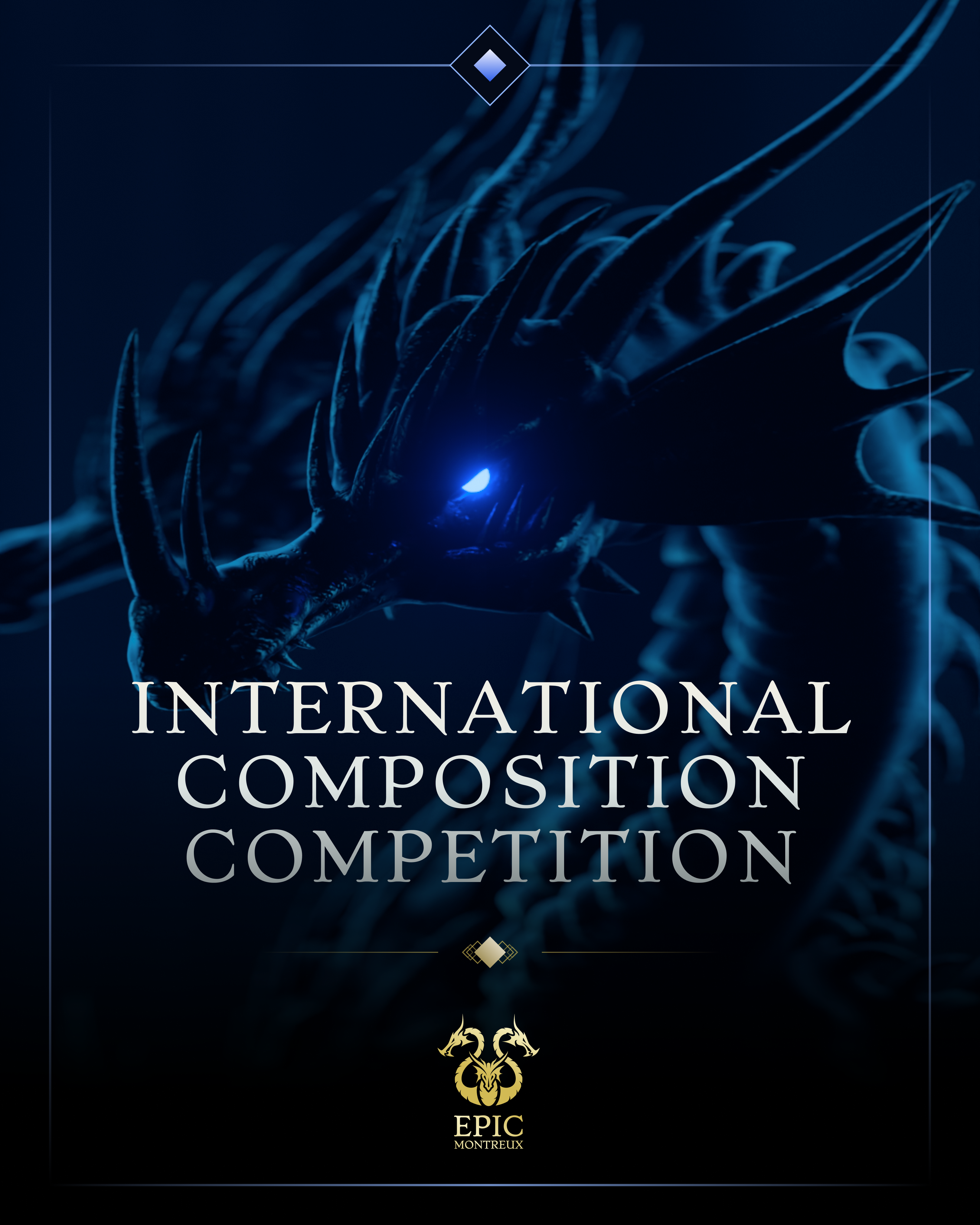
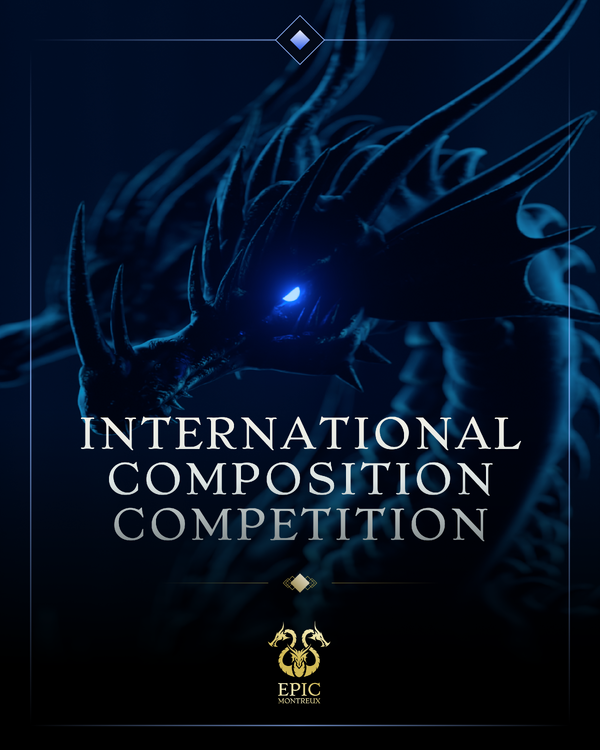
Hi everyone! Next to my composing and conducting work, I am also the Music Director of Helvepic, a Swiss concert production company. One of our recent projects is the creation of the World of Warcraft: 20 Years of Music concert that is currently touring worldwide. We're launching a new event called Epic Montreux, taking place in Switzerland on March 5–6, 2027, featuring music from 2WEI, and others, performed by a large symphony orchestra and choir and featuring singer Edda Hayes at the Auditorium Stravinski in Montreux (home of the Montreux Jazz Festival). As part of the event, we're organizing an international composition competition. Three composers will be selected to have their original music performed live by the orchestra and choir. The finalists will also get to work with a professional orchestrator to prepare their pieces for the concert and will be invited to Montreux, with accommodation, meals, local transportation for official activities, and travel covered (see the website for official details). At the concert, an overall winner will be declared, with a separate winner prize to be announced soon. While the concert features a lot of trailer music, including some of the most iconic music for League of Legends cinematic, the competition will put a particular focus on storytelling, musicality, and originality. We want to hear pieces with a clear musical idea, a sense of journey, and genuine musical development. The jury will be led by Russell Brower (Audio Director at CD Project Red), and will also include Ludwig Wicki (conductor), Alex Moukala (composer), Cédric Baravaglio (composer), 2WEI (composer collective), Alexandre Pican (choir director), and myself (composer and conductor). A few practical details: Compose an original 4–5 minute orchestral or hybrid orchestral piece, with substantial use of the orchestra and choir. Submit an MP3 mockup. No written score is required for the competition. One entry per composer, open worldwide to composers aged 18+. No AI-generated music. Very important! Submission deadline: November 8, 2026. Three finalists announced December 16, 2026. Needless to say, the participants keep the copyright and ownership of their composition. There is an entry fee of 40 CHF (currently a bit under 50 USD). I know entry fees for composition competitions are a point of discussion here. We've tried to keep the fee reasonable while offering something substantial to the finalists: professional orchestration, live performances with the full orchestra and choir, accommodation, meals and local transportation for the official activities, as well as support towards travel. in addition, an overall winner prize will be announced soon. You can find the full details, instrumentation, artistic guidelines, rules, and submission form here: https://epicmontreux.helvepic.com/international-composition-competition I'm personally very excited about this project. Having spent a lot of time working with live orchestras, I know how valuable it can be for a composer to hear their music brought to life by real musicians. We hope to give three composers that opportunity while discovering some exciting new musical voices. Happy to answer any questions here!
-
Last week
-
Hello, It's nice. I had this image of a robot colony on mars, working hard with the two moons and the ethereal beauty of space. You got this really spacey-feel going on, but also this sense of busy-ness. It feels beautiful in an out of world sort of way. There are moments of emotion, but for the most part it feels almost kind of coldish with the type of harmonies you are throwing it. Hence...robots in space! Parts of it don't even sound like piano, I kept thinking that perhaps a guitar (around 2:00) was playing in the background. But of course, this is probably supposed to be a keyboard piece.
-
karlmarx changed their profile photo
-
this is my untitled piece for piano its one of my proudest works, i would appreciate any feedback and suggestions for titles :D idk what to say, ive been working on it for a few months on and off... probably finished? maybe ill change some voicings and harmonies idk. dissonant greie.mp3 dissonant greie.pdf
-
karlmarx joined the community
-
Thank you for your feedback, @Thatguy v2.0! I'm familiar with Rautavaara and actually, on this topic, I suggested it, but thanks for citing that work :) I like Rautavaara. Apparently, many of the people who kindly commented on this piece say it somehow sounds like birds: you suggested a Concerto for Birds and Orchestra to me, so probably that is a common perspective. That's interesting since I didn't think of anything like that when I composed this piece. Also, thank you for your kind words—I'll share some of my pieces in the future and... aim to get the "Better than Thatguy badge" someday! Best, Lithl.
-
I have finished "The Occult" by Colin Wilson and have picked up the sequel "Beyond The Occult: Twenty Years' Research Into The Paranormal". Here is the very introduction that also delves into some discussion of music. Thanks for reading!
-
So, wanted to expand upon this a little further. In my original comment, I did not mention your use of independent voices, instead focusing on the engraving of the rests, which in the score's current state, are inconsistent when an instrument is resting. Some measures have a centered whole rest, while others have a whole rest aligned to the left of the measure. Not necessarily an independent voice issue, but a score presentation one. In my opinion, Debussy and mid -> late romantic composers are a good reference for using independent voices and keeping it feasible for the keyboard. With baroque notation, like the C-major fugue you referenced, it can be pretty strict with establishing the 4-voices the entire time and always notating when they rest or sound. However, over time, the rules relaxed and today we can see a variety of notation for multiple voices on the keyboard. The main thing is to be consistent with your use. Check out Debussy's Suite Bergamasque. This score video is really great to see 4-part writing expanded. He uses independent voices, blocked chords, interchanging voices and from an engraving standpoint, is really nice to see how flexible/ advanced keyboard notation can be. I played this set and the way the score is engraved really helped my learning. You can clearly see melodic ideas, texture placement and more.
-
Hi @Markus Boyd , I really like what you have so far. I like the minor key fugue at the beginning, the string entrance at around 0:45 in the major mode is a welcome contrast, then I really like how the texture thins out around 1:05. The buildup around 1:35 is also very effective, and the succeeding string melody and arpeggios are lovely. Keep it up!
-
Hi @Alex Weidmann , really great orchestration here! I thought your treatment of the voices was very good. And I really liked how you gave each instrument family (woodwinds, strings, brass) their own section, it really highlighted the piece’s overall structure. I think it would be a good idea to add the repeat, and maybe end with a more full tutti orchestration? That would give the ending more finality. Thanks for sharing!
-
-
Yeah I think this was really interesting. For me I felt like it was really easy to distinguish the two parts, as my ear could effortlessly listen back and forth between them. It didn't feel like oil and water like a lot of bitonal stuff I've heard, but rather the two parts worked much better than what I anticipated. Very cool Peter, I'm interested to hear how all your studies acquiesce into larger works. Maybe something along the lines of blending two themes together at the end of a sonata or something.
-
Hey Lithl Very cool piece! For some reason your piece reminded me of this: Know the composer? This may help if you want to keep learning about a style with "tape" playback (or whatever avenue you use) mixed with instruments. Your piece is more abstract, but I'm sure they're parallel in some ways. I'm not too familiar with the style, but I'm always curious how more abstract music could be developed further. Thanks for sharing, and don't ever be bashful about posting something against the grain of what's here :)
-
LackyLacky2 joined the community
-
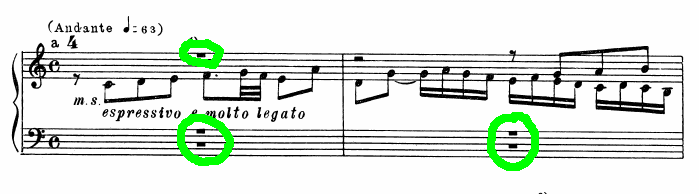
Hallo Mason, now that the contest is over, I’d like to go through the feedback I’ve received over the next few days, analyze it a bit more thoroughly than I’ve been able to in the last weeks, and respond accordingly wherever I have some clarifications or comments. That „bracketing“ and the connected bar lines between the accordion and piano have already been mentioned by other reviewers (for example, @Kvothe ). Not to be too repetitive, that approach was intentional, since I considered my „special quintet“ as an „orchestra“ rather than a chamber ensemble—which, of course, may seem “strange” or “wrong”. However that consideration has sometimes been recognized by other reviewers as well: To avoid that unusual score order/grouping, perhaps it might indeed be the better decision to notate this piece as a “chamber music work“. However, in that case I have a different „headache“: In my piece, the piano part is not as prominent as usual in a piano quintet. Moreover, I would say, the accordion is somewhat more „the chief“, so should the accordion be placed at the very bottom, with the scores for the other instruments written in a smaller font size? No, of course not—the best compromise would be the traditional order you suggested (trumpet, guitar, cello, accordion, piano), but with all instruments in the same font size. Yes, I should use dynamic markings a bit more sparingly in the future. That exaggeration possibly results from the fact that I’ve been following the rule: “Never a hairpin without a dynamic marking at the beginning and end” (I’ve already discussed this in another thread). However, I think it’s feasible to take this “rule” seriously only when it seems appropriate, rather than applying it to every single note or short phrase. We already had „the pleasure“ of discussing whether „whole-bar rests“ (which are placed in the middle of the bar) should be used or not. And until now, I was convinced that those rests are used only when the entire instrument is silent, and not if only one hand of the piano or accordion, or one voice in a polyphonic score, has a rest for the entire measure. So I looked in the „Bible“ (i.e. the Welltempered Clavier, especially at fugues) to reconfirm my opinion ... ... – but I was proven wrong: Even there, “full-measure rests” are used, i.e., placed in the middle. So, I will now finally go to bury my „whole-note rests“ in 4/4 meter or my „dotted half-note rests“ in 3/4 time, and so on. Thank you very much. Yes, the fugato—and especially the moment when the trumpet played the main subject for the first time (without a mute)—was a lot of fun for me to compose. Unfortunately, however, I faced the “dilemma” of having to set two more stanzas of the poem to music. As a result, I had to shorten the development sections of the fugato and resolve the tension to make way for the more contemplative mood of the “sung lines of the poem.” After the poem ended, I wondered whether I should now let the fugato pick up speed again and develop it fully, perhaps with a climax of strettos and a pedal point. But this approach seemed to me to make the piece a bit too long, so I recapitulated the first section in a more melancholic manner, bringing the „arch of tension“ rather down than to a triumphant finale.
-
Hello A lovely piece. One of the key lessons I took away from this ESSENTIAL book by Persichetti is that if you use a system – that is, if you are consistent with a musical organisation, whatever that may be – the result depends solely on each individual’s skill and artistry, just as it would if you were composing tonal music. I think it’s a great decision here to have divided the timbres for each mode-scale. As well as the different registers. The fact that each part has been harmonised in thirds and sixths gives it a very familiar smoothness (common in tonal music). Yet these modes lend themselves perfectly to fourth-based harmony.
.thumb.png.8b5b433a341551e913a34392660bc95b.png)