All Activity
- Past hour
-

The Purrfect Conqueror | a composition
Sojar Voglar replied to Martin Kristek's topic in Orchestral and Large Ensemble
If this piece is intentionally hilarious, then job well done. I had an amusing time with this.😁 -
Red Mountains and Golden Silk
Sojar Voglar replied to Fruit hunter's topic in Orchestral and Large Ensemble
It is always strange to listen to microtonal music as it sounds out of tune rather than a coherent musical language. And it is used within the traditional d minor with more or less classical melodic and polyphonic technique which is certainly unique. To some extent it reminds me of the third string quartet by Aulis Sallinen. -

Poll concerning AI sub-forum
Aiwendil replied to PeterthePapercomPoser's topic in Announcements and Technical Problems
I don't think we should be Draconian about policing this. I think the policy should be no posting music composed by AI, but I really think it would be a mistake to start policing and interrogating every post and assuming it's AI until proven otherwise. If there are indications that a piece might be AI (e.g. no score provided, telltale signs of Sonus, posted by someone with no prior history on the forum, etc.), then it makes sense to inquire further into it. But demanding proof of authorship from every composition would be a drastic overreaction to an issue that has, as far as I'm aware, only actually cropped up once here so far. I'm against AI compositions on the forum, but I'd rather waste my time once or twice giving useless feedback on an AI composition than chase real people who are posting real compositions off the site. -
There is only one thing to say. It is still the same Luderart, no development, no improved skills, nothing new in all these years. You must have a really boring life...
-
 That's right, but they sometimes 'malfunction'. We should use 3 regulation stuff: 1. Detector 2. Info on the music 3. WIP
 - Today
-
After many years, I have finally composed a new tango, my fifth so far. It is for double bass and piano, since my daughter Eva is a decent performer and always wanted me to compose for her. The tango has a typical A-B-A form and uses a modern musical language with added dissonances, based on a tonal centre of e but without clear major minor progress. The middle section is in much more clear yet still modal f sharp minor, very melodic and utilizes the high range of the double bass. The composition end with powerful energy and one final snap pizzicato on a low e.
-
 musical_doctor joined the community
 -
A music for a scene where a group of military helicopters move in the night using the cover of the dark flying low with lights off to avoid enemy detection
-

Sigh - Symphonic Orchestra
Uhor replied to Some Guy That writes Music's topic in Orchestral and Large Ensemble
Beautiful and solem! Vaguely reminds me of the Schmidt Symphony No.4. -
This was a very interesting listen. My brain goes to Bartok because of the folk aspect and rhythms. Also, I keep thinking: just wait until this guy gets into the changing time signatures every so often and then we'll have a feast!
-
I wrote this in the course of a day almost non-stop, because my vacations end tomorrow. Its quite freely chromatic and quartal and has a lot of space for brooding contemplation. No score for now because the rhythmic spelling is a mess.
-
This is a charming and very imaginative work. To my ear it's a bit Jazzy with a Gerhwinesque flavor. It was delightful to hear. Mark
-
 That's why we would need the AI detection tool for help to make sure it's not a lie.
 - Yesterday
-
They could lie, though.
-
Sylva Train Runnin' | Official Motion Picture Score from A Fire Within Hello! Over the last calendar year, I have been creating my first short-film called A Fire Within. When completed, the film will follow the tragedy between two friends: Sam and Andy. The story focus on the theme of betrayal as being cordial does not stop greed or jealousy from bubbling within someone. This score is paired with a travel sequence in the film and is my 4th attempt at writing for Big Band Swing. I am very happy with the result and simply wanted to share it! The style was meant to replicate late 40s/ early 50s swing to match the era in which the story takes place. I sampled a little of Miller's "Chattanooga Choo Choo" to help tie into the railroad theme with the main structure being based in verse-chorus with multiple repeats and a key change. If you would like to know more about the score, go to the "About" section on page 4! ________________ Program Note: A Fire Within is an original story written by Mason Kistler detailing betrayal between two friends. Featuring an original soundtrack, soundscape, voice cast and more, this story established itself as the first short-film made solely in the video game Railroader, which was released in December, 2023. Join the orchestra as they bring you in towards this cinematic universe and involve yourself in their soundscape. All aboard as the saxophones open the throttle and the ensemble leaves the station! [DO NOT REPLICATE]
-

Persichetti Exercise 6 - 27 for String Trio
chopin replied to PeterthePapercomPoser's topic in Chamber Music
Very eerily expressive, and I feel like the ending has not resolved. This could be a good candidate for a psychological horror perhaps. Look up the game "The Dark Eye". I don't remember the music of that game, but I feel like this music would work in that type of game.- 1 reply
-
- 1
-

-
Poll concerning AI sub-forum
chopin replied to PeterthePapercomPoser's topic in Announcements and Technical Problems
As far as the 3rd part of this poll, If we decide to regulate, I think requiring / encouraging the composer to give some insight about how they composed the piece, and their motivations of the composition should be enough. -
 GoranTch changed their profile photo
 -
GoranTch joined the community
-
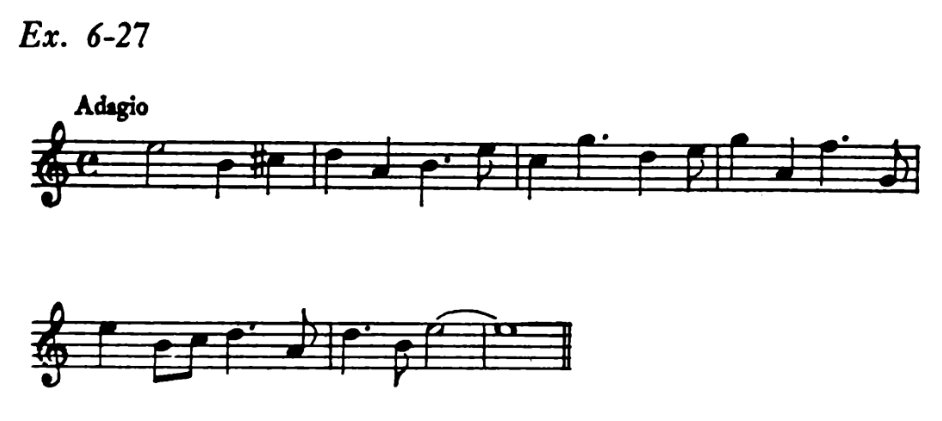
I've moved on to Chapter 6 of Persichetti's "20th Century Harmony" which is about secundal chords and clusters. The prompt was "1. Harmonize the following melody for string trio using chords by seconds." Thanks for listening and I'd appreciate any of your comments!
- 1 reply
-
- 2
-
-
Written for the TCN composer clash 56 titled "night market"sadly, due to the requirement of having the maximum amount oftime being four minutes and on top of that, having the piece ofmusic being worked on only for a week, this could've not beenentered in the competition. Red Mountains in Golden silk explores the western mountain sideof China home to the Uyghur people. The piece explores interesting microtonal inflections in the first part which return at the end ,standard tuning is used when things get fast to preservesimplicity, and to keep everybody's sanity Notes about technique: since this piece does use microtones it should be expected. That estimation can be used instead of a specific fingering. This would work better on bases and cellos, and not violins due to the spacing on the fingerboard. Some of the strumming techniques are used to imitate regional instruments, such those as the dutar I think it's a fairly good idea to learn or to find out the traditional technique while still keeping the actual posture of your normal playing method for the most efficiency There is also some instrument percussion all instruments other than the violin will have. This cello is in bases should be kept where they are. Viola could be put on the lap and played like a drum using both hands. Dead stroking is where you do not rebound and you kind of choke the instrument. It is pretty obvious of what a fingerboard slap is as well where you slap the lower part of the fingerboard. Also, while we are at it, there is also some Pizzicato tremolo in the first violin this should just be repeated unmeasured out of time, plucking as fast as you can.
-
Haha, yeah, I love Haydn's musical sense of humour.
-
This would be a very Haydnesque effect! I can never forget how he delibrately asked the strings to mistune their strings while sustaining a chord: (Begins at 23:17) Also the ending of the Farewell leaves me like WTF lol
-
@Henry Ng Tsz Kiu Thank you so much for your thoughtful reviews of each movement! I'm glad you mentioned the timpani solo - I thought it would be amusing if, when the orchestra sets up the cadenza with its 64 chord, the timpanist suddenly decides that they're the soloist and starts playing a timpani "cadenza" before the trumpet gently nudges them aside and proceeds with the real cadenza. I could even imagine a bit of stagecraft where the trumpeter gives the timpanist a "what the hell?" look and maybe the conductor pretends to try to get their attention and make them stop. Anyway, I'm glad you liked the concerto. It's certainly one of the better pieces I've finished, in my opinion.
- Last week
-
Persichetti Exercise 5 - 17 for Piano
chopin replied to PeterthePapercomPoser's topic in Piano Music, Solo Keyboard
I would not be able to tell this was an exercise. You expanded on this nicely and logically. This is difficult harmony to use coherently in my opinion, but you kept the idea and flow focused and logical. Fun beat too btw!- 1 reply
-
- 1
-
-

The Purrfect Conqueror | a composition
Martin Kristek replied to Martin Kristek's topic in Orchestral and Large Ensemble
Hey Alex, Thank you so much for such a nice feedback! I will do my best to work on the weak spots in the future. Martin -

The Purrfect Conqueror | a composition
Alex Weidmann replied to Martin Kristek's topic in Orchestral and Large Ensemble
Hi Martin, This sounds experimental, which is always good! Some of your brass writing is very nice, and the cat vocalisations are hilarious! Overall the work feels a bit random at times, and maybe lacks coherence; but still an enjoyable listen. Alex -

Persichetti Exercise 4 - 5 for Women's Choir
pateceramics replied to PeterthePapercomPoser's topic in Choral, Vocal
A very fun sound world! You might be letting yourself in for some trouble at bar 13 beat 4, since all parts have big leaps simultaneously. There is a big chance of the tuning suffering in a live performance. That said, since this is a very short exercise, people could just devote a lot of practice time to that one spot. For those playing along at home, some things that might help a choir tune big leaps: 1. Use accompaniment to help singers seize the key again quickly if they miss their jump. 2. Only leap with one part at a time, so that if they don't stick the landing, the other parts will easily provide a steady foundation to help them readjust quickly. 3. Give a part a brief rest so they can prepare their vocal placement to leap more gracefully. Even just a tiny moment of disconnect will help. Here, the way you have set the text to the music gives a natural pause if you just read the line aloud, which means singers could either disconnect the two notes of the leap, (do it non legato), add an eighth rest to take a full breath, or, given the nature of the piece, even take it out of time with a longer pause (rubato) to get as much time as they need to reset vocally and have their next note firmly in mind. If someone sings your exercise, they would probably take some sort of a pause, since the text allows it, so nice job there! Also, I particularly love your first "their soul is melted." The harmony sounds very melty. 🙂


.thumb.png.8b5b433a341551e913a34392660bc95b.png)