

All Activity
Past hour
-
-
Hello. First of all, thank you very much for liking my piece. For any composer, the most important thing is that the energy and the part of the soul that the author wove into the work reach the listener. I’ll try to answer your questions. I don’t work in Sibelius. I work in Studio One with MIDI files (whether I build the music artificially or play it by hand on the keyboard makes no difference here, since the MIDI files are recorded on the screen). So when I was asked for the score, I had the program print out part of it. It is only a copy of the notes and contains no other musical markings. I haven’t needed to prepare this piece for a live orchestra yet, as it is a brand-new work. Of course this is not the final score. It will need a great deal of work when (if) it is prepared for an orchestra rehearsal. That’s why I don’t have the strings split out by individual instrument, and so on. So please don’t be too hard on me about it. Think of it as a rough draft of the score, with only the notes marked. Sponsors help me with vinyl pressing. It isn’t very expensive, but it depends on how many copies you press and how you design them. Pressing 300 copies with good packaging costs us about €3,000-3,500 on average. Prices differ from company to company, and where you press matters too, as do shipping costs and taxes. You are absolutely right that my music stands closest to film music. Yes, that’s so, and it’s a sharp observation. Excessive grandiosity? I would rather call it heightened pathos. I love pathos-filled works (and romantic ones too. I’ll soon upload my Adagio, which has not a trace of pathos and is entirely romantic and melancholic :) ). In general, I have works in many different genres, from rock and jazz rock to classical. I love working in different genres. Now, the main point about this piece. Yes, when writing it I chose, for example, the structure of Tchaikovsky’s ballets. I still tried to carry one common motif (sometimes played by a flute, sometimes by another instrument) through the different parts, so as to keep a sense of unity. The outline of the piece is written above. It consists of 7 parts, and each part is meant to express the specific content of that outline. Take Tchaikovsky’s The Nutcracker or Swan Lake, where every part is an independent piece. I approached it on the same principle. Whether I missed something or it didn’t work out is another matter, and only the listener can decide that. For example, the fifth part is solely the attack of the sharks, and there I deliberately gave up the principle of a single, clearly pronounced leitmotif. So yes, that is a structural choice in my piece. Your view is close to mine. I also planned to make an animated film based on this piece, but so far no sponsor has appeared. As you know, film requires a huge amount of money. We’ll see. It’s a new piece, and someone may turn up. And finally, thank you once again for the kind words. All the best. The translation was done with Google, and I hope it says what I meant to say :)
-
-
When a singer wants to try a song a tone lower, an existing accompaniment recording can be useful for checking the new range before you revise the score or reopen the full project. Example: D minor to C minor D down to C is two semitones, so shift the recording by -2 semitones and leave tempo at 100%. The key changes but the rehearsal pace stays the same. Transposition keeps the intervals: D minor becomes C minor, not C major. Check the whole vocal range before choosing a key. Lowering the highest note also lowers the lowest one; a comfortable top note alone does not make the whole song comfortable. Agree on the target key with the singer, and label the rehearsal copy clearly so nobody rehearses against a different version. A simple file workflow I own Pitch Tempo, a free browser tool that can make this kind of rehearsal copy. Nothing needs installing; you upload an audio file and download the processed audio. 1. Use your own accompaniment recording, or one you have permission to upload and edit. Keep the original. 2. Set pitch to -2 semitones and tempo to 100% for the D-minor-to-C-minor example. If you already know the source key from your score, use that; automatic key detection is an estimate. 3. Listen to the preview. Check sustained chords, attacks and any guide vocal for unwanted changes in sound. 4. Export the full file, listen through it, and give the download a clear name such as C_minor_rehearsal. Keep the score and the rehearsal copy in the same key. This shifts the whole recording. It cannot move only the singer or one instrument inside a mixed file, rewrite a score, or correct individual notes. If you have separate parts or the original project, transposing and rendering those again gives you more control over the arrangement. The tool accepts files up to five minutes and 100 MB, with pitch from -12 to +12 semitones independently of tempo. Preview covers the first 20 seconds of the source. Full export finishes that editing session; a different version needs a new upload. Guests have three uploads per rolling 24 hours. Processing is on our server, and guest audio expires 24 hours after the original upload, so save the copy you need. You can try the workflow here: https://pitch-tempo.online/
Today
-
The deadline is 10/30, so two weeks from now really. I am currently working the such optimizations you included above, as well as others (weird tempo/mood marks, slurs, consistent rhythms, etc.). I will post an updated PDF of such basic optimizations before the weekend. Your time and effort is greatly appreciated.
-
Hi, I am interested in looking over this work in depth to give annotated feedback. On my first analysis of the score, there are numerous engraving errors like dynamic info on rests, crashing slurs over note runs, and the overall Harp playability. This said, I cannot get to a good review until Sunday. When is the deadline for this competition? I hope to give some before the deadline.
-
Thanks! I'll check it out!
-
-
-
The setup is very unstable. The software updates constantly, so it's hard to find a consistent method. For this, I used Flow by Google, Suno, Finale for music writing, and ClipChamp for editing. I also use Audacity for music editing, then Claude in the terminal for music mastering. The natural reverb is acoustics from Notre Dame, all A.i. assisted.
-
Very convincing works! I think the biggest challenge with A.i. music is how tropic or cliche it can be. However, I'd rather have a robot write cliche's and stuff, do you know what I mean? Great work, and am glad you compose the original source for the A.i. The good melodies translate well to interpretation! Do you ever reverse the process to humanize the production?
-
Yesterday
Hi Mr. Chkheidze, welcome to our forums. The overture sounds wonderful, as well as the second movement, but I was revising the score of the first movement you submitted and I see that it gets cut off. In the last page (78) you can see it clearly. I suppose that it goes attacca but if it does, I have no way to know just from the score alone. It seems like the movement does not finish there. My suggestion —in case it was cut off— would be trying to export it as A3 or even bigger paper so there's enough space. It's true that even in that case, it's not easy to follow a score of such dimension. If this was not cut off, I would suggest a double bar at the end or a double final bar, marking "attacca subito" if you intend to keep going to the second movement without pause. Maybe you do know about this, but just in case! That you release this (or the final, recorded product, I suppose) in Vinyl is surprising to me, just as a note. Is it costly? Now on the piece itself, I would say that you have a lot of ideas, and you sure know how to make bombastic stuff that could fit very well in a soundtrack. I normally listen to the works twice or thrice before emitting some judgement, because often a single listen is not enough for me to grasp enough details or places I would like to stop and comment. While writing this comment I'm listening to the work for the second time and as I progress in the piece I see that this great music you have brought us may err on the side of excess, in my humble opinion. Excess of bombastic fortissimo moments, of tutti, of fast contrasts, and of lack of elements that would make the piece be perceived as a whole. Of course, there are very good transitions too, like the one you do from movement 2 to movement 3, and a whole lot of enjoyable moments, but I don't really get the impression of listening to a cohesive multi-movemented work, but at well crafted environments or atmospheres, or even excerpts of music that do share instrumentation in common and that would, as you suggest, work as part of some cinematic product. There is, in my opinion again, A LOT of material here that could be further developed to make a whole suite of itself. Finally, I hope the translator doesn't fail. My favourite part of this work is undoubtedly the clarinet solo part on movement 7. It reminded me a lot of "E lucevan le stelle" from Puccini https://www.youtube.com/watch?v=YAXE-lczgu4 Many thanks for submitting your work here. Best regards, Daniel–Ø.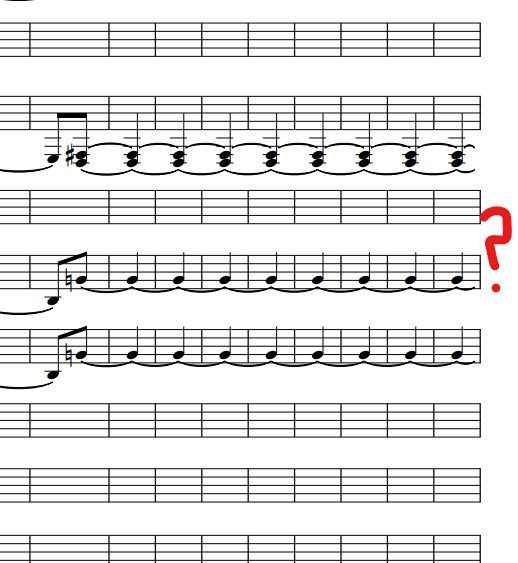 Josquins turban joined the communityPeterthePapercomPoser replied to PeterthePapercomPoser's topic in Music Appreciation: Suggest Works or ArticlesJB The Super Bass - Tournament Schedule (Super Famicom):"This is the first composition of my third vinyl "Triptych", which opens this album. One thing that should be noted here is that the guitar part was recorded as a live performance, while the rest of the orchestra was, naturally, programmed using MIDI files in Studio One. Generally, the guitar is probably one of those exceptional instruments whose non-live recording always yields a terrible result." The translation is from GoogleHello I’ve really enjoyed this piece. It’s no wonder people have been reluctant to comment – if they’re generally reluctant to do so anyway – when they come across something like this… which is even worse. It begins deceptively, presenting only the stable part, but soon you start to hear dissonances and elements that stray from the foundation. For most people, who are steeped in the harmony of the Baroque period, that’s the turning point where they might think, ‘This bloke’s a terrible composer’. But in other cases, as is the case for me, it’s the point at which my interest is piqued and I want to know where it’s all heading. The trick – or the skill, in this case – is to create a coherent piece, in which those dissonances no longer sound like mistakes but rather an integral and essential part of what is being heard. I believe this has been achieved. I’ll just make one observation, and it’s something you yourself have pointed out. The arpeggio in the left hand is like an ostinato, and it would be good to break it up (apart from the isolated bars) with another pattern. Best regards.Hello, I'm new here and starting out to learn piano and music theory. I tried to use A minor cadence and scale. This is a work I consider low-key complete and listenable compared to my other works before. A minor 1.mp3“This is the score for the first movement (the overture). Please note that the strings are not divided into first and second violins, violas, and cellos (that is, in the table they are printed under a single name and given together, because technically I don’t need that at this stage, before a live orchestra performs it). Also, for example, there are two harps because they are recorded on different tracks, so that when I use the faders the sound comes out the way I want. For example, I also haven’t set up the alto clef (viola clef), and so on. And naturally, there is a lot of work to be done in the program to separate out the faders, which I also don’t need at this stage, before there is a live orchestra, and so on. In short, this is practically just the notation score. What’s more... I live in Georgia, and everything I’m writing now, I’m writing with Google Translate, because I practically don’t know English. If Google translated anything in a confusing way, I apologize on its behalf :)” The old man and the sea.pdf.Of course I have one. I work in Studio One with MIDI files, and I can print out the score as well. This evening I'll export an excerpt and drop it in hereI originally wrote the first version of this piece for a Cello Quartet, during a very dark, and sadly extremely depressive time period of my life. I decided to rewrite it into a symphony-style work a few months ago, expanding its one minute original version into a fully developed piece that captured and added a new perspective it hadn't had before. Currently, this symphony version is 7 minutes long from start to finish. I am curious to hear the world's thoughts, especially in regards to transitions, structure, and the arc of the piece. For some very simple context for my goals with structure, it is meant to not be "easy" flowing and clear. It's interpretive and dynamic, each section usually adding a little bit more context to the last time that variation was played. It's meant to symbolize the return of event-specific previous positive and negative emotions, how they shift over time, and that usually no matter what, thoughts of a previous time inevitably come back to remind you of it. However I worry that I emphasize the dynamic type of relationship too much that it could be negative and have an unclear arc perhaps...? Note: I am submitting this to a composition contest in a few weeks, so my goal is to have it fully understandable and clear by then. Edit: The quote weirdly didn't come out on the PDF, but it says, "'So we beat on, boats against the current, borne back ceaselessly into the past.' — F. Scott Fitzgerald" Homage to a Longing Memory.mp3 Homage to a Longing Memory.pdfThanks for the welcome, Lithl! Glad the Saariaho suggestion hit the mark.Aiden Still joined the communityHello @Mamuka Chkheidze and welcome to the forum! Do you have a score of this piece? It would help greatly to allow us to review it! Thanks!Thank you so much guys for your suggestions - they help me a lot. @Grant Weep, I checked "Echoes of Time and the River" and immediately really loved it. That is what I love—creative, and it sounds interesting. Also, the score is well-crafted and beautiful. Thank you so much - I will definitely dive into his works more. @PitchTempoAndriy, thank you for your suggestions. Your suggestions are exactly what I wanted to hear. I especially love Kaija Saariaho. Thanks a lot, PitchTempoAndriy and welcome to the YC forum :) I want to give you guys the "Gentlefolk badge," but have I given it to members too many times? If it's OK, moderators, could you give them that? These replies in this topic are definitely helpful to me. Thank you as always, moderators :) Best, Lithl.









.thumb.png.8b5b433a341551e913a34392660bc95b.png)