All Activity
- Past hour
-
My quest to become a composer continues with multiple arpeggiated improv-piano parts. Welcome:
-

2025 Christmas Conclusion!!!
Luis Hernández replied to PeterthePapercomPoser's topic in Monthly Competitions
Thank you for organizing this event. It has been wonderful to listen to such a variety of proposals. -
Expanding Melodies
BlackkBeethoven replied to BlackkBeethoven's topic in Incomplete Works; Writer's Block and Suggestions
I wasn't wanting to modulate there...I was thinking of staying in the B M/G#m area - Today
-
Persichetti Exercise 3 - 51 for String Quartet
Luis Hernández replied to PeterthePapercomPoser's topic in Chamber Music
It sounds very good, very musical and coherent. -
 Thank you! On the ending, if I may ask for advice, do you think the instrumentation would work, or are there some that could work better?
 -
 Thank you for your kind words. I agree about the development comment, I definitely think it would benefit from a longer continuation, but I need to start planning ahead for developments like that to make sense for me. And yeah I'll change the key, I wrote the melody starting on a C, and then immediately changed plans lol.
 -
30 minutes?!
-
.thumb.png.8b5b433a341551e913a34392660bc95b.png)
Persichetti Exercise 3 - 51 for String Quartet
PeterthePapercomPoser posted a topic in Chamber Music
I am reviewing Vincent Persichetti's "20th Century Harmony" and just finished chapter 3! And so I decided to do the first exercise that looked good to me to try to make an actual piece of music out of (I don't like exercises for their own sake - I think I should always be trying to make living, breathing music). Here is the prompt for the exercise: "12. Harmonize the following melody in four string parts using dominant seventh chords exclusively. Much contrary and oblique motion and several inversions should be used." Like I said, I tried to make an actual piece of music out of it and not be too much of a stickler to the rules. I also tried to approach it not like a chorale exercise - let me know if I've succeeded on that front! Thanks for listening and I would appreciate any suggestions, critiques, comments or just observations!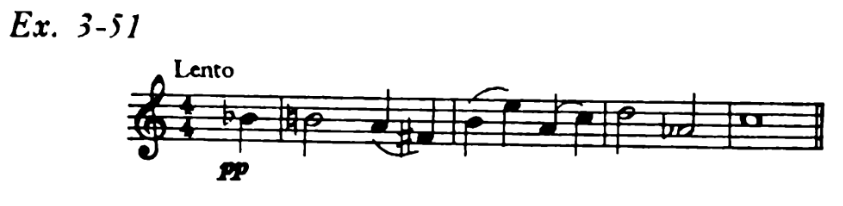
-
 Kia Ora Alex, Nice piece. A few suggestions: Although tabs are quite common for notating guitar parts in pop styles, classical guitar pieces are generally only notated using standard musical notation. While you can still include a staff of tab in your score, it might be more conventional to remove it. If you do choose to include tab, please, PLEASE get an actual guitarist to write it out for you. The tabs generated by notation software are almost always shite and the one that Musescore generated for you is no exception. It has suggested some ridiculous unplayable shite (like in bar two, who the hell has hands large enough to press both the second and seventeenth frets at the same time?!) which render it's inclusion in your score quite pointless. All in all, this is a good start. I'm excited to see where this piece goes next! Ngā mihi, Archie
 -

Two movement piano piece in D Major
Henry Ng Tsz Kiu replied to Alant's topic in Piano Music, Solo Keyboard
Hi @Alant, The chord progression sounds familiar but this one is quite interesting to listen to when you use different variation techniques. Just beware of some playability issues: the left hand passage in b.136-137 is barely playable and the constant 32nd notes at the end for the right hand would be quite difficult and exhausting to play. Thx for sharing. Henry -
Hi @PaavolaPyry! I do like this minimalistic music, it's like the poem you quoted which reflect a passage in your life. I like the ending, it sounds oppressive with the bass instruments getting in in octaves. Thx for sharing. Henry
-
Hi @therealAJGS! It really sounds like cool game music! in 0:57 the passage sounds especially 8-bit like. Thx for sharing! Henry
- 1 reply
-
- 1
-

-
Hi @Chikotora The folk elements in the music is very well noted with the Eb-F# major 2nd and the constant ending of each phrase on D rather than G. B.50 sounds really interesting with the glissando and it almost sounds like Chinese instrument Gaohu! i suspect the triple stop in b.33 is playable or not but I don't play violin myself so I can't tell. Thx for sharing your first post! Henry
-
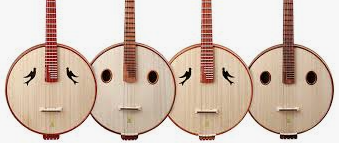
Hi @Alex Weidmann! I am no expert in guitar writing so I can't tell whether it's playable or not, but I would say the whole music would sound like something written in Chinese instrument Zhongruan (my fav. Chinese instrument due to its cute look lol!). It's also a plucked string instrument like guitar: Thx for sharing! Henry
-
Hi @jejrekmek! I don't find the intro boring at all; on the other hand I find it very religious which reminds me of Buddhist or Hindu music. Your singing is like chanting which is religious as well, and the chords, like Peter said is other-worldly. After it it's more in the world but the accompaniment reminds me of Gamelan music in the interlocking repetitive structure. Nice use of some microtones as well. The section after 5:30 is so interesting to listen to, it's almost like a musical example in a World music class with those drums and percussions! The rhythm throughout the piece is fascinating, again reminds me of world music! The ending is really calm to listen to like many of the pop Japanese music! I really enjoy this one, thx for sharing! Henry
- 1 reply
-
- 2
-
-
Expanding Melodies
Henry Ng Tsz Kiu replied to BlackkBeethoven's topic in Incomplete Works; Writer's Block and Suggestions
Hi @BlackkBeethoven! What about having the original B-C#-D# in b.3 of your melody to a B#-C#-D# so you can easily modulate to F# major? Henry -
Sigh - Symphonic Orchestra
Henry Ng Tsz Kiu replied to Some Guy That writes Music's topic in Orchestral and Large Ensemble
Hi @Some Guy That writes Music! I got to say, this one is the best music I have heard from you on this forum. It's full of Mahlerian dissonance which really portrays your stress and sadness which I can feel clearly. I love the constant F#-Gb to G-F dissonace and other direct minor 2nd chords throughout to show how intriguing you were. The dissonant counterpoint is well handled throughout. Also I love the pacing of the piece, you just slow introduce each family of the orchestra without forcing it, for example you only let brass get in in b.28 and let them slowly grow to a climax to b.36, unlike many brainless film music which always bombard without reason. The ending is very luminous and well prepared; it's a bit surprising to me that you end the piece in Eb major but I love it! I would wish it to stay longer and add a bit development onto it! One small thing: maybe a key signature with four flats would be more convenient since most of the piece is in F minor. Thx for sharing this very emoitional piece! Henry - Yesterday
-
Title: Parking Lot (Verse 1) Late at night, under neon lights, You wait in the shadows, out of sight. Engine humming, secrets in the air, I hear your laughter, but I don’t know where. Candy-coated smiles, but your eyes are cold, The pavement whispers stories never told. Empty spaces, headlights blinking slow, Caught in your game, now there’s nowhere to go. (Pre-Chorus) You circle 'round, a predator’s delight, Silent as the moon on a sleepless night. Keys in your hand like a secret code, I’m chasing freedom down this endless road. (Chorus) Parking lot, parking lot, Locked doors, I’m caught. You keep me spinning, can’t break free, You’re playing games in the dark with me. Parking lot, parking lot, Can’t escape, I’m tied in knots. Under flickering lights, I’m losing sight, Tag, you’re it in the dead of night. (Verse 2) Echoes bouncing off the yellow lines, Shadows flicker, crossing every sign. You call my name in a sugary tone, But your intentions cut me to the bone. Window fogged, your breath on the glass, I feel you near, letting seconds pass. Locked in your maze, can’t find my way, Stuck in your world where the monsters play. (Pre-Chorus) You circle 'round, a predator’s delight, Silent as the moon on a sleepless night. Keys in your hand like a secret code, I’m chasing freedom down this endless road. (Chorus) Parking lot, parking lot, Locked doors, I’m caught. You keep me spinning, can’t break free, You’re playing games in the dark with me. Parking lot, parking lot, Can’t escape, I’m tied in knots. Under flickering lights, I’m losing sight, Tag, you’re it in the dead of night. (Bridge) Hiding behind every car, You’re never near, you’re never far. Breathing in the midnight air, Wish I could run, but you’re everywhere. (Chorus) Parking lot, parking lot, Locked doors, I’m caught. You keep me spinning, can’t break free, You’re playing games in the dark with me. Parking lot, parking lot, Can’t escape, I’m tied in knots. Under flickering lights, I’m losing sight, Tag, you’re it in the dead of night. (Outro) Under neon lights, your shadow’s all I’ve got, Tag, you’re it, in the parking lot.
-
 I've combined this piece into one staff now, and created a tab score. MuseScore does this automatically, which is really helpful! I was able to modify the score where it showed red highlight warnings on the tab score: so I think it's mostly playable now (touch wood!) The natural harmonics might still be problematic? Though if they're not achievable as natural harmonics, perhaps they could be played as artificial ones? Edit: and looking at the fret numbers, I guess I'll have to thin out some of those big chords!
 -
Hi Luis and thanks for the feedback! I am not an expert either, but I tried to make sure that the timings are sensible - hence why it alternates between the two horns (1&2) in the themes. If you have any further thoughts all are welcome! I think with these minimalistic pieces I really try to find small things, like colours or feelings or smells or certain tactile sensations... So everything is very interesting to read! With great thanks from Finland Pyry
-
Hello, I think it's a beautiful, thoughtful piece with careful harmonies. What I'm unsure about are the long notes in some places, but I'm no expert.
-
Two movement piano piece in D Major
Luis Hernández replied to Alant's topic in Piano Music, Solo Keyboard
I also find it to be a very imaginative piece that maintains a great deal of expressive coherence in terms of motifs and developments. -
I have some lyrics for this now. They're from two different translations of the Epitaph. I'm very inexperienced with fitting lyrics to music: so any advice would be really helpful!
-
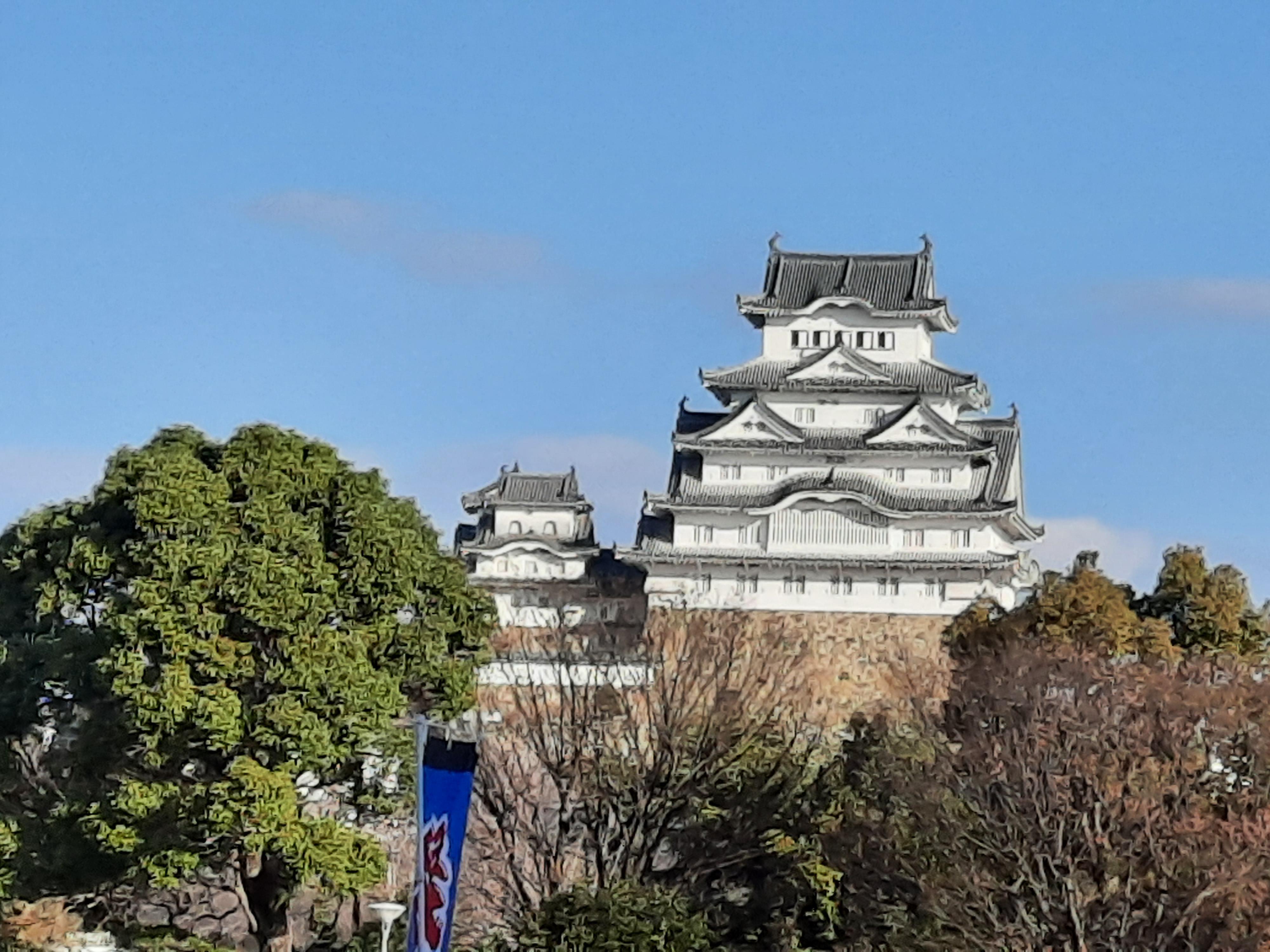
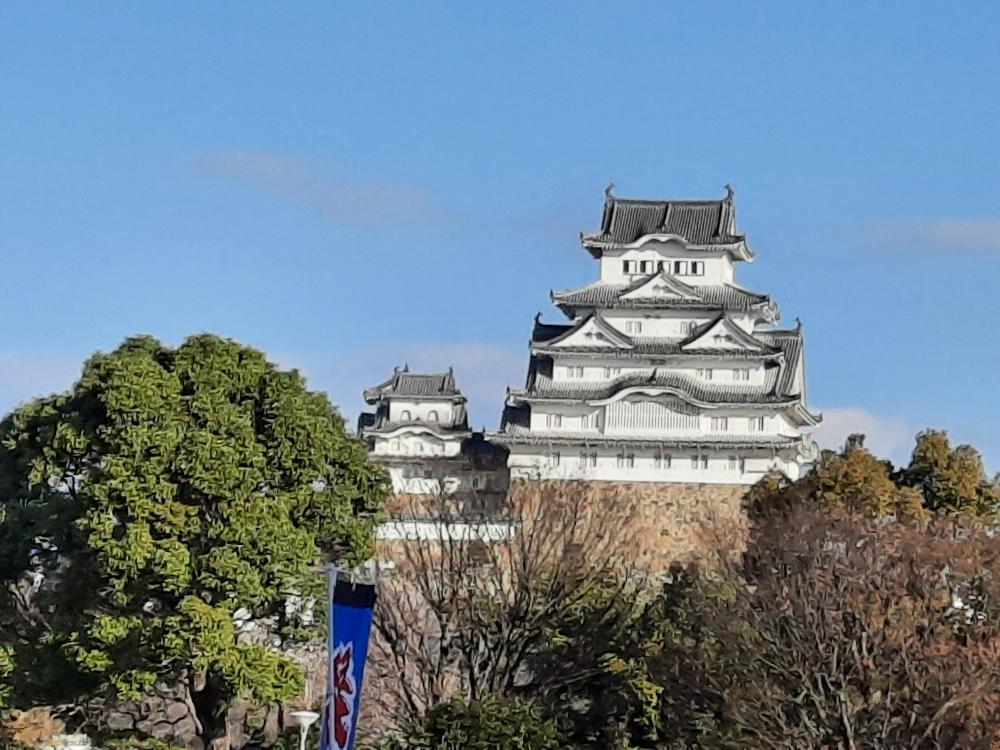
"Himeji," is a long form composition, created after my visit to Japan for a music competition. The song tackles the difficult concept that Debussy had also approached, "Footsteps in the Snow," in the radical sense that the brain is remembering and forgetting at the same time. Are you forgotten or remembered? Do people talk to you from a forgotten standpoint? The world belongs to the living, and imaginings of Himeji peak at the boundary, that I will not be forgotten; hence, the song was written with no creative boundary. The narrative of Himeji is complicated. It resembles an early Renaissance painting. Think, Goya eating the canvas of the picture. CSound has its perks, but it's not there yet in terms of compositional material. To simply feed it earlier compositions to hear it in style will turn your stomach. However, CSound is a powerful medium in communicating music which is also its purpose. I suggest "Beowulf," for transliteration, or alliteration; the program notes are tough. I wanted to create a futuristic Renaissance painting with all the concepts of Renaissance included. To hurt the image of origin is to become more like ourselves. The statement is too powerful to match form by itself. With the aid of music, it's possible to imagine anything like ourselves without also hurting it. When I close my eyes, I can see the universe expanse often un-erred in speaking. I often keep it to myself any mystery I might see; the music carries over the message flawlessly. Of course, I'm speaking of, Weapons of Mass Destruction. Whereas, the most dangerous quality of the nuclear warhead is its portability. Himeji is a composition about the boundary between memory and forgetting, shaped by the architecture of a castle that has outlived war, myth, and the composer’s own expectations. It is a Renaissance painting projected into the future, a fugue built from contradictions, and a meditation on how music invades the heart without violence. Expressing qualities of music in the Renaissance is often surrounded by void. Can you imagine blasting this song to an entire city? What rivals the nuclear warhead is musical form. Only, music aims for the heart. What little I could say about the program notes, I could say more about the technical aspect of the Song. "Himeji," was only a town over from Hiroshima, and if I'd attack the castle, always smiling, I'd imagine I'd use music, today. They would hear us coming. It's often rude to talk about such things, but bear with me the track was once called, "Footprints in the Snow," and it lacked the melodious quality added to help tone things down a bit. With that out of the way, the castle has a moat. To invade a castle with a moat, one could do it at broad daylight when the gate is open or we could go with what artificial intelligence suggests: In the hush before dawn, when the world still holds its breath, a lone tone rises — a spirit‑thread drawn from the deep places where memory keeps its vigil. From that single spark, the music begins its long wandering, crossing shadowed halls and wind‑worn thresholds. This work tells of two distant realms whose fates brush like wings in passing: a southern quarter of stone and smoke, where streets coil like serpents, and a white‑walled keep across the sea, standing bright as a blade in winter sun. Between them runs a path unseen, a soul‑road, where echoes of the living and the lost travel side by side. The music moves as travelers move — with sudden surges, with long silences, with the weight of stories unspoken. Its harmonies are forged like ring‑metal, layer upon layer, hammered by time and tempered by grief. Its rhythms stride like warriors across a whale‑road, steady, unyielding, bearing the burden of remembrance. Yet within the sternness lies a quiet fire: a flicker of hope, a lantern carried through storm‑dark nights. For every descent into shadow is met with a rising, and every lament finds its answering light. In the final moments, the sound gathers itself like a great tide, lifting all that came before — sorrow, honor, longing — and carries it toward the far horizon, where the known world ends and the dream‑realm begins. This piece stands as a barrow‑stone for what has passed and a way‑mark for what is yet to come. It is a witness, a vigil, and a vow. Invading the castle with music would involve riding at the heels of suggestion. Does it boost our morale, or theirs? Probably both. Hear this tale of sound and storm, of two far cities whose names ring like steel. When the first note strikes, it does not whisper — it leaps, bright as a blade drawn in moonlight. The music begins its march across the world, striding from fire‑lit alleys to white‑stone battlements, from the pulse of the street to the hush of a sacred keep. Every rhythm lands like a warrior’s footfall. Every harmony turns like a shield meeting the blow. There are moments when the sound surges, a wave‑strike rising to swallow the dark. There are moments when it narrows to a single ember, glowing, waiting, refusing to die. This is no gentle wandering. This is a quest‑song, a journey carved in thunder. It carries the weight of memory, the heat of struggle, the spark of defiance. And when the final crash comes — when the music gathers itself for one last charge — it does not fade. It ascends, lifting everything with it, as if the whole world were being hauled toward dawn by the hands of the brave. By the time I had gotten to the castle, I had forgotten all about nuclear warheads. The castle keeps smiling at me. I looked back at the castle one final time; it's really cheeky. When I thought I had given up, I remembered never to give up. So, by the time I had left the castle, I had won with a smile. (If the program notes don't make sense, neither does this song.) Anyway, the greatest advantage, if I were to invade Himeji, I have is that I'm from a small town, "Rockcastle." We are population, 17, at peak hours. Though, we are small enough to fit in a horse. Listen close, friend, and keep your voice low. The walls around us are hollow oak, and every creak carries. We sit in the dark belly of a thing built from lies and brilliance, waiting for the right moment to strike — and the music begins in that same tight hush. This piece is a tale of two cities, far apart yet bound by fate, as surely as we are bound inside this wooden beast. One city hums with restless streets and firelit nights; the other rises white and silent, a fortress of wind and memory. Between them runs a hidden passage, a secret path only the bold or the desperate would dare. The sound moves like we do now — slow at first, steadying breath, hands on hilts, eyes adjusting to the dark. Then a pulse, a signal, a shift in the air. A rhythm like the tightening of a grip. A harmony like the glint of a blade in moonlight. There are moments when the music surges, as if the whole structure might shudder under the weight of what’s coming. Moments when it narrows to a single thread, a whisper shared between warriors who know the cost of silence. And then — the charge. The sudden, unstoppable rush, as if the wooden walls burst open and the night explodes with fire and motion. The music leaps forward like men dropping from the horse’s belly, feet hitting stone, hearts hammering, every step a vow fulfilled. When the final sound fades, it leaves behind the echo of a deed done, a city changed, a story carved into the long memory of the world. "Himeji's," form is to reflect the architecture of the castle. Japanese Baroque, with all the atonal fugues in the world. I don't know a whole lot about Himeji, but the castle says a lot. References: Cascone, K. (1998). Blue Cube. Germany; Rastermusic. Harper. A dialog I had with Microsoft Copilot. 2026.

.thumb.png.1e2763f479362bbb522da50d31ef2e50.png)