All Activity
Past hour
-
Even if I run the risk of being a little too petty, there are overall 9 submissions and I think nobody is supposed to review its own piece, the "Heavyweight Reviewer" badge would also be awarded to one that has participated with an own submission, if he has only reviewed the 8 other submissions ... 😀
-
@Lithl Thanks for your feedback. The kids and family are doing well these days. I am a lucky man. I hope that you and your family is doing well too :) I will tell my kids that a kind internet stranger wishes them well. They are still young now, under 6 years old. I wonder how they will see these music I wrote for them as they getolder. Would they feel embarrassed by it? Feel flattered? Want to write their own music? I guess I will report back in 10 years or so :)
-
Great work nothing to really criticize just some curiosities though since you definitely milk the hell out of almost every instrument in that piece with experimental extended techniques, I’m a strings player so I understand more information about the viola stuff and some information about the flute stuff. I’ll definitely be studying the harmonics and how flute harmonics work. (wood wind harmonics are a big part of my next upcoming composition for large Orchestra. “morse”). Anyways, the textures are amazing in the harmony, though is dissonant works extremely well with that dreamy quality of the whole tone scale. Time for interrogation in my assumptions again, this is more about curiosity as that these techniques are not thoroughly explained either in the actual score or in performance notes Xyl. -harp- i’m assuming this is a xylophone sounding technique though I don’t know how exactly is it to be reproduced I’m assuming that you kind of just strike the fingers against the strings bamboo tone flute- this is pretty self-explanatory as in the idea that they’re trying to achieve a sound similar to a bamboo flute, but how could it be reproduced? how is a jet whistle produced I’m assuming that you make a jet of air near the opening mouthpiece of the flute, but harsh enough not to make an actual sound for the flute harmonics there’s two ways I could feel about them that first they are usually used as a method to extend the range so they are played as a normal actual technique used in producing a “normal” sound , are the flute harmonic similar to artificial harmonics on string instruments? Melodies Themes Motives Harmony Chords Textures Form Development Structure Time Originality Creativity Score Presentation Instrumentation Orchestration Playability Execution of Given Challenge Taste 9.5 9.7 8.85 7.76 9.93 9.3 9.4 9.6 average 9.26. I also have watched part of your live stream about the composition process so that was nice only though five minutes of some parts. I don’t know if you explained the techniques there so I may have to look back. Anyways, other than the lower score for originality due to the convergent factor of all the pieces of this competition almost having the same aesthetic it was a very nice piece and it was amazing. Great job and I hope you join more competitions in the future.
-
Hello, Sounds great. Wow, so many scales. I sometimes wish that modern music used scales more often. I guess the old school 80's metalhead shredders used a lot of scales in guitar music...but it seems much less "cool" these days to use scales. You make the scales so nice and interesting. Is that actually you playing? I can't really tell these days, due to the amazing technology out there. If this is you playing, the technique/dynamics and "feel" is incredible. Around 2:58, when it slows down, it would have been nice to hear more slowness. But then again, that's more of a matter of personal taste. I think the overall piece works. Very nice, Bravo!
-
Hello @JDevorMusic, thank you for sharing such an incredible piece of music, and by the way – a hearty welcome at the forum. Interestingly, the very first submission to the competition, and the last one – so far – have the same instrumentation, a flute, a viola and a harp (while you’ve added two vocals). Melodies Themes Motives and Harmony Chords Textures: There is a memorable motif that recurs throughout the piece and is first introduced by the flute in measures 4–5. The sung poem features relatively long note values or coloraturas for the faster notes, so that the vocal parts are somewhat reminiscent of Renaissance singing. The accompaniment contrasts that with its – one the one hand „percussive“ arpeggiated chords – and, in other passages with energetic ostinatos (on the harp or viola), so that the piece unfolds a varied texture. As a piece in „contemporary style“, or to be said „atonal“, it is difficult to speak about „harmonies“ in the traditional sense. However, there are some chords which could be perceived as „pentatonic“. Form Development Structure Time: The piece has no „traditional“ form (such as sonata or rondo form), but is clearly structured due to the realization of the poem as a modern „aria“ (or better duet), with passages of increasing tension and „rests“, calming down between the stanzas. And finally, you were thoroughly enough to meet the requirements of the competition by finishing the piece exactly at the 7:00 minute limit. Originality Creativity: This piece is absolutely unique among all the submissions, obviously for its atonality, but also because of its detailed and meticulous craftsmanship. Score Presentation: The score presentation is absolute professional, starting with the title page, preface (including instrumentation, program notes etc.) and is full of information. So I didn’t look around to find some nitpicks but was rather impressed by the vast majority of details, including markups on articulation, playing instructions, harp pedals, breakdown of compound meter signatures etc. Instrumentation Orchestration Playability: The instrumentation works well, the three instruments from different families blend together and complement each other in their timbre, as well with the vocals. As for playability, you yourself mentioned the the difficult level, which would be suitable for professionals only. And I'm sure you've checked all the passages for “unplayable” notes or chords. Execution of Given Challenge: Your piece represents a very thorough realization of the task of the contest: To take Paul Verlaine’s poem and create „Something“ in music. The question remains, whether the dissonant character of this contemporary piece will evoke associations with summer, beauty, and love in the majority of listeners. Taste: That might be the problematic part. For me, it's a fascinating piece when I can really focus on it (maybe during a live performance). But I don't think it works as well if you're just listening to it in the background. Melodies Themes Motives Harmony Chords Textures Form Development Structure Time Originality Creativity Score Presentation Instrumentation Orchestration Playability Execution of Given Challenge Taste 9 9 9 10 10 8 7.5 5.5 Average Score: 8.5
Today
-
Floating Dance77.mp3Floating Dance77.pdf
-
Hello @Musicman_3254 ! The piece has (at the beginning) a very calming character and is somewhat reminiscent of a fairy tale movie (especially one you’d watch in winter during the Christmas season) or—once the vocals come in— of @PeterthePapercomPoser’s Christmas mashup from last year. 😂 Just when one is (almost) fallen asleep (around 03:11, measure 102), you’re instantly jolted awake by the staccatos of the harp and cello, as well as the blood-curdling trill of the flute, which sounds like a piercing birdcall—perhaps that of a cockatiel. Melodies Themes Motives and Harmony Chords Textures: The piece is based on a memorable melody, reminiscent of a lullaby, which recurs repeatedly in the treble instruments (i.e., flute and oboe d’amore) as well as in the baritone voice. This contrasts with accompanying textures, chords, and arpeggios, which are played largely by the harp. While the song maintains a diatonic harmony throughout all three verses, the coda appears to be somewhat different, with a pentatonic impression. Form Development Structure Time: The form of the piece could be that of a song with three verses and a coda. As mentioned above, the verses unfold in a pleasant and calming manner, with the accompaniment employing various textures without losing that character, only to be turned into the exact opposite in the coda. Originality Creativity: The originality of the piece arises on the one hand from the contrast of the calming song and the surprising end, as well as from the instrumentation, combining two melody instruments, a human voice and two more or less accompanying and percussive instruments together. Score Presentation: The notation for the vocal part—that is, the baritone staff—is somewhat inconsistent regarding the use of slurs and beams: In vocal score notation it is important to distinguish whether a single syllable is represented by a single note or whether multiple notes are sung for a single syllable (i.e., a melisma). There are two possibilities: In older, classical scores eighths and sixteenth notes are notated with flags (not beamed) for a single syllable, but if there are multiple notes to be sung for a single syllable, those notes are beamed together. No slurs at all (except for quarter or longer notes). In contemporary music, beams are used to show the rhythmic pattern, regardless of the text. However, in that case slurs indicate whenever multiple notes should be sung for a single syllable (and nowhere else). For example, there should be no slurs in measures 18–19, since each note has its own syllable, whereas the slur in measures 62–64a is correct, since all the notes are sung on a single syllable. As for clefs, I believe that a vocal score for baritone uses the standard bass clef, and the cello in its middle/high register uses the tenor clef (and neither uses the alto clef). One more minor point: You forgot to remove rests from some measures on the high staff of the harp (for example, in measures 32–42). Instrumentation Orchestration Playability: The choice of the instruments is effectively used to achieve the mood and effect of the piece. However, there are a number of concerns on the playability – as already mentioned by other reviewers, especially in the harp part. Execution of Given Challenge: You have set the poem to music and, therefore, created a relation to the given challenge. However, my personal—and therefore subjective—impressions evoke associations with winter rather than summer, though I could be completely wrong—perhaps I’m being influenced by today’s cold weather at the start of fall. Taste: I like this piece because of the humorous contrast between calm and scare. Melodies Themes Motives Harmony Chords Textures Form Development Structure Time Originality Creativity Score Presentation Instrumentation Orchestration Playability Execution of Given Challenge Taste 9 9 7 8.5 6 5.5 7.5 7.5 Average Score: 7.5
-
Hello, a fantastic piece. Some really great combinations of timbres – a few of them really caught me out. For example, glockenspiel + trumpet + strings in Sequence II. It would be helpful if you could indicate at the start how many of each instrument there are (Flute 1, 2… etc.). When an instrument from a group of two or three plays solo, you need to specify which one it is (Bassoon 1, for example, at the start of Sequence III), not just ‘solo’ (because then you don’t know which one it is). A comment (which isn’t mine but comes from classical orchestrators): when you have a melody in octaves, don’t use the same instrument for both (flutes in Sequence III, bar 70) because one will clearly dominate. In this case, the upper one, as the flute in the lower octave is in a much weaker register. In this instance, it is better to double the upper flute with another instrument that has the same range in the lower octave (a clarinet here, for example). When we’re talking about MELODY (not harmonic chords), as a general rule: double at the octave with different instruments; melody in thirds or fifths with the same instrument; melody in sixths with different instruments… There will always be justified exceptions. In this respect, the two clarinettists from bar 80 onwards are fantastic. Sorry, these are just suggestions based on what I’ve learnt about orchestration. I always respect what everyone else does. But if you try what I’m suggesting, it might sound better to you. The climax towards the end is brilliant. And one more thing: I don’t know if you’re concerned about practical, real-world issues. Sometimes I get the impression that you need a lot of percussionists, given the number of instruments playing at the same time. Although I’m sure you’ve got this sorted. Best regards.
-
Melodies Themes Motives Harmony Chords Textures Form Development Structure Time Originality Creativity Score Presentation Instrumentation Orchestration Playability Execution of Given Challenge Taste 8 10 7.5 8.5 7.5 8.5 8 10 Avg: 8.5 This is one of those pieces where you have to listen to it a few times to understand it. But once you do, it's very rewarding. The improvised intro is a nice touch, what a dramatic opening! It sounds like your subject is trying to come to form in this section, but it's not quite there yet. Then you form it in the middle sections (the intro to your fugue) and that's when this piece starts to really shine. Anyone who has a hard time with fugues, must learn to train their ear on the main subject, and listen for that subject in the fugue. Once you do that, you realize how awesome and clever this piece is. Also, another strong point is that your harmony is very well done! Does it remind me of summer afternoon / evening? I'm not sure, maybe the end of summer or a rainy summer afternoon since this quite melancholic!
-
-
Ellie Smith joined the community
-
Melodies Themes Motives Harmony Chords Textures Form Development Structure Time Originality Creativity Score Presentation Instrumentation Orchestration Playability Execution of Given Challenge Taste 8.5 5 9.5 8.5 9 9.5 9.5 8 Avg: 8.43 Very nice relaxing theme, which was clear throughout the piece. Your form / structure was easy to follow, and this made the listening experience very enjoyable. I think you nailed the challenge with the mood. Aside from feeling serenity and peace, it reminds me of a night summer afternoon with a cool breeze. Your audio is great, and your usage of dynamics really bring out your music! Overall it's a very beautiful piece, short enough where the harmony isn't too much of an issue, but any longer, we'd need some changes in key in my opinion. This is why I marked you down with harmony. When harmony doesn't really change key, the music risks starting to sound like a hymn.
-
Down to the wire, but I just finished and uploaded my submission!
-
Attached is my submission to the "From Nothing, to Something" Summer 2026 Composition Competition Submission. I decided to set Verlaine's original French poem for two vocalists (solo soprano and solo tenor). To fit the French vibes, I rounded out the ensemble with a trio of flute, viola, and harp. The French sound I continued into parts of the harmony, opening with chords mostly made out of whole tone scales. As for form, the tenor takes the firs stanza, the soprano second with a mixed around order of phrases, and then they sing primarily together for the final stanza. I was composing this with professional players in mind, so the parts are of a higher difficulty level. Program Note: This setting, originally created for the Young Composers Forum "From Nothing, to Something" Summer 2026 Composition Competition, casts a different light on Paul Verlaine’s summer love poem, Donc, ce sera par un clair jour d'été. With the challenge being to capture the sensation of summer, I hoped to focus in on liminal moments throughout the season. The two vocalists, being the depicted couple in Verlaine's poem, first sing individually to each other, telling of the fleeting beauty and pleasure found in a summer love. Finally the two join together in harmony, as the stars look down gently on husband and wife. Devor - Donc, ce sera par un clair jour d'été_FINAL.mp3 Devor - Donc, ce sera par un clair jour d'été_FINAL.pdf
Yesterday
-
Hamidreza Ghorbani changed their profile photo
-
Hamidreza Ghorbani joined the community
-
Hello @Matthew M, this is a piece I enjoyed from the first measure on! This might be the case since you – as a fun fact – used the same first four notes (V – I – II – III) as I did in my contribution, while in another rhythm! And there is just another similarity, you have set the poem to music and used an instrument – I suppose an oboe – as the substitute for the human voice. Melodies Themes Motives and Harmony Chords Textures: The piece contains wonderful melodic themes or motifs that are, on the one hand, memorable and recurring, and on the other hand are slightly modified or varied, so that the texture flows continuously and never becomes boring. Form Development Structure Time: I would describe the form as an „introduction“, followed by two „stanzas“ of the song (whereas it is the twofold repetition of the entire poem), and a „coda“. Before the poem is recapitulated, there is a beautiful modulation from G major to E major and a meter change from 4/4 to 6/8, so that the second “verse” has an even more brighter and cheerful mood than the first. All in all, it’s a beautiful structure that makes the 4:15 minutes of the piece fly by seamlessly. Originality Creativity: The piece is original, creative, and memorable - not due to extravagant instrumentation or surprising effects, but simply because of its beauty! Score Presentation: There is one thing I noticed in the score. You have (nearly) not made any articulation or bowing markups using slurs throughout the piece – except in the soprano (or oboe) voice which is treated as the vocal part. And furthermore, that voice - if it is really considered to be the vocal part - has a somewhat inconsistent usage of slurs and beams: In vocal score notation it is important to distinguish whether a single syllable is represented by a single note or whether multiple notes are sung for a single syllable (i.e., a melisma). There are two possibilities: In older, classical scores eighths and sixteenth notes are notated with flags (not beamed) for a single syllable, but if there are multiple notes to be sung for a single syllable, those notes are beamed together. No slurs at all (except for quarter or longer notes). In contemporary music, beams are used to show the rhythmic pattern, regardless of the text. However, in that case slurs indicate whenever multiple notes should be sung for a single syllable (and nowhere else). So, for example, in mm. 26-27 there should be only one slur in mm. 27 around the first two notes A and C denoting that there is a melisma on „love“ to be sung as two notes. In mm. 29 the first slur is correct, the second not. In mm. 30 no slurs at all. Mm. 31 is correct, two melismas. And so on (all according to „modern“ notation). On the other hand, I would appreciate slurs for the other instruments to express articulation or bowing. Instrumentation Orchestration Playability: A „traditional“ instrumentation which is used effectively and does not show any playability issues. Execution of Given Challenge: Even if you did not stress on depicting the different moods one could read from the three stanzas of the poem, you have nailed it, to evoke imaginations of a summer’s day, beauty and love. Well done! Taste: A beautiful, calming piece which never gets boring, even after listening to it multiple times. Moreover, the longer I listen to it, the more subtle details I conceive. Melodies Themes Motives Harmony Chords Textures Form Development Structure Time Originality Creativity Score Presentation Instrumentation Orchestration Playability Execution of Given Challenge Taste 10 10 10 9 7.5 9.5 10 10 Average Score: 9.5
-
Hi everyone, I’m developing a new music notation and composition platform and I’m looking for composers who would be willing to test it and give practical feedback. The main idea is to combine simplified text-based editing with a traditional graphical score, so that editing rhythms, notes, voices or larger passages can be faster without constantly switching between many graphical tools. The platform is still in testing, but it already focuses on things like: real-time collaborative score editing; text-based editing with graphical rendering; importing MusicXML, MXL, LilyPond, ABC, MEI and MuseScore XML; sharing scores through read-only or editable invitation links; multi-voice and larger-score editing; optional AI-assisted tools. I’m especially interested in real composer workflows rather than general impressions: orchestral writing, chamber music, piano, choral music, film scoring, unusual notation, complex rhythms, large scores, etc. If you test it, I’d be particularly interested in knowing: what notation software you currently use; what takes too many clicks or too much time; what tends to break when editing an existing score; what you wish notation software handled differently. Early testers will also get access to some beta features before their wider release. If this sounds relevant to your workflow, feel free to reply or message me.
-
Austin1 joined the community
-
Hello @latebeethoven_addict, congratulations for your submission just before the deadline – and, yes you’ve accomplished it in time! Melodies Themes Motives and Harmony Chords Textures: The piece is full of different themes of motives, some of them more „melodic“, while others seem to be a more virtuosic accopaniment. That strength is, in my opinion, also the weakness, since in the combination it results in a huge variety of the texture with a slightly tendency to „randomness“. With that in mind, the section between mm. 24 and 55 is the strongest part of the piece, for the memorable recurrence of the „sung“ melody. Form Development Structure Time: You mentioned, that the piece is in a („loose“) A-B-A form. I suppose, the boundaries of those three sections are at the moment of the key signature changes, at mm. 60 and 100. However, I must admit that I didn’t perceive the third section as a kind of „recapitulation“ of the first one, and even the three sections consist themselves of several passages with quite different textures. Overall, after listening three times, the form seems to me a more „free“ one. Originality Creativity: The piece is original and unique among the submissions for its instrumentation and perhaps for its „virtuosity“, especially in the harp-like piano runs. Score Presentation: The first thing I noticed was the order of the instruments in your score. In a trio with piano as the keyboard or continuo instrument, it would be placed at the bottom of the score, whereas the other instruments are ordered according to their register/pitch, meaning the violin on top and the French horn in the middle. Here is an example of a „traditional score“ of Brahms’ Horn Trio. As another „nitpick“, there is a redundant key signature in mm. 95. Instrumentation Orchestration Playability: The choice of that particular three instruments gives the piece a variety of colors which I really liked (and which could not be achieved, for example, with a strings-only trio). Concerning the playability, you mentioned yourself that the horn part is challenging. I think, this is the case for the piano part, too. Execution of Given Challenge: You have chosen the three stanzas of the poem and expressed their different moods, „the summer day“, „the nature of love“ and „the evening wind“, during the three sections (ABA) of the piece. The „cantabile“ passage from mm. 24-55 could be interpreted as „the sung poem“, in a duet between the piano’s treble voice and the violin. Therefore, I can see a strong connection between your piece and the challenge of the contest. Taste: It is a pleasant piece to listen to, but unfortunately it does not captivate me all that much, perhaps due to the somewhat overboarding variety in texture. Melodies Themes Motives Harmony Chords Textures Form Development Structure Time Originality Creativity Score Presentation Instrumentation Orchestration Playability Execution of Given Challenge Taste 7.5 7 7 8 7.5 8.5 9 7.5 Average Score: 7.75
-
This composition originally started out with the intended goal of serving as an exercise in textual intelligibility, a skill which has often been found lacking in many of my previous vocal works and choral writing. As such, this one has turned out far more homophonic in style than the rest of my earlier production, since in seeking to keep the text as clear and understandable as possible, distinct contrapuntal possibilities were rendered moderate to negligible. The reason I originally sought to approach the text from this angle throughout had a lot to do with the reasons for its choice. As of now, I have submitted one of my newly composed pieces to an ongoing composition contest centered around vocal sacred music. While I cannot give away many details concerning this competition as of now, in accordance to its rules I cannot yet publish the work I submitted (lest I might end up disqualified for early publication, given that, to my understanding at least, submitted works are to remain unpublished until the jury has decided). Instead, now that the submission had been fully dealt with, I set out to finish this early alternative, which I had deemed far too bland for the requirements and expectations of the contest before it was even complete. It should also be worth noting that for the first time now I have switched from my usual vocal renderings using Cantāmus to a different software integrated directly into MuseScore 4 named Cantai, which procedurally renders the text to be sung locally while conveniently allowing for modifications in real time and hosts a much greater variety of voices, not to mention the general audio quality being, in my view at least, far more pleasant to the ear. Thus, after trying it for a few weeks now, I have at last decided an upgrade in sound quality to my renditions was finally in order. YouTube video link: Gustate et videte Communion Motet in G major.mp3 Gustate et videte Communion Motet in G major.pdf
-
Hello, I tried playing with the sheet music and I'm not sure if your recording is the same as the sheets. It definitely deviates after the repeat. Personally, I find measure 13-16 too repetitive. I think I get what you are going for, with the building of the tension, but it just doesn't good (to me). My ears want to have some variation. Also I think the notation does not match what the mp3 is playing here. I like the mp3 better than the notation. It gets really weird at 0:59 in the recording. I guess it all depends on the direction you want to take the piece in. Whenever I get stuck, I try things like: 1) Doing the same thing in a minor key 2) throwing in a key change 3) reversing the theme, so it sounds completely different 4) depending on the piece, I sometimes like to take tidbits from the theme and make a new theme. For one of my pieces which had a passage that was 8 bars long, I just took the first note of each passage, which created a new musical idea consisting of 8 notes. So that was fun and worked well. 5) Give the left hand something interesting to do, perhaps move the theme there, or change the accompaniment. I always try to understand my music. Maybe this sounds kinda weird, since I'm also writing it... but I don't assume that I understand the music that I am writing. I figure that if I truly understand my music then I can understand where the music will naturally go. I realize that this advice is not very tangible but this is the most honest answer for what I do when I feel stuck. I'm sure some of the more classically inclined musicians in this forums can give you some other ideas...the possibilities are literally endless. Hope you find some inspiration.
-
Finished it! https://www.youngcomposers.com/t50554/donc-ce-sera-par-un-clair-jour-d%C3%A9t%C3%A9/
-
This piece was written for the 2026 Summer Competition. It is technically past midnight on my side, I apologise as the audio took a while, hope this can still be reviewed. Note: I named this piece directly after the poem, maybe because it's the best name I could give it, actually. It's meant to directly translate the poem into music, so I figured that would be apt for a piece such as this. It's written in a loose ternary form with a few motifs consistently coming back throughout. Each section (ABA) represents a stanza in the poem. The first section opens with a bright, jubilant depiction of a summer day, before transitioning to the beauty of the subject. Then, the middle section adds some turbulence to this nature of the love, a personal interpretation of mine on the poem. Finally, the return of the A theme is accompanied by fleeting runs like the evening wind, as the lovers gaze into the sky. Most of the rest I will leave to your interpretation of what is happening, but I do encourage physically reading the poem while listening to the piece. As for the instrumentation, the French Horn is an instrument dear to me, despite having only picked it up for slightly less than three years. Through all the technical difficulties of this piece (yes, the Horn part is playable, albeit challenging), I wanted to showcase the mellow, melodic sound of the horn as something unique. The choice of the violin, then, was nothing special, another melodic instrument to complete the lovers' dialogue portrayed thoroughout the piece. The piano, then, allows for all the word painting possibilities. It was quite a rushed piece, given my recent schedule, but I enjoyed the time spent just appreciating the loveliness of the poem. Enjoy listening! Donc, ce sera par un clair jour d'été.mp3 Donc, ce sera par un clair jour d'été.pdf
-
Melodies Themes Motives Harmony Chords Textures Form Development Structure Time Originality Creativity Score Presentation Instrumentation Orchestration Playability Execution of Given Challenge Taste 10 8 10 7.5 8.5 9 7 8.5 Avg: 8.56 Nice romantic harmony paired with a gorgeous theme makes this a very clear and easy to follow piece. Variations of your themes are also very cool, and your key changing keeps this piece from feeling too repetitive. I definitely hear your Tchaikovsky influence, but around 3:30 I actually think I hear some Mendelssohn influence as well, maybe you didn't even realize it. Be careful though with balancing the piano parts of your melody, they were definitely too weak in velocity especially compared to your strings. But that's just an audio issue. As far as the execution of the challenge, this one is tough for me because it does remind me of romance between a man and a woman (or some type of heartbreak), but the story you are portraying here is so romantic-heavy, I forget about the summer part. But that might just me! Despite that, this is a beautiful and heartfelt piece.
-
Melodies Themes Motives Harmony Chords Textures Form Development Structure Time Originality Creativity Score Presentation Instrumentation Orchestration Playability Execution of Given Challenge Taste 6 7.5 7.5 10 7 8 8.5 7.5 Avg: 7.75 I think you chose very difficult instrumentation. Your harmony is simple, but yet, tricky. I say this because your instrumentation makes it a bit hard to decipher sometimes (for me), but I do hear your key changing as I listen through. Your piece also appears to get more dense and complex as it moves on. I think your melody and instrumentation are doing a pretty good job in portraying a serene summer afternoon, especially towards the beginning. It almost reminds me of being on an island. I marked you high on creativity because this is an interesting piece in terms of instrumentation, and your overall theme and structure. I also feel like a lot of moods and emotions are going on here which may confuse the listener as to what the goal of the piece may be. If I had to summarize the piece, it goes from serene summer afternoon, and ends with a high energy midnight dance on an island perhaps. With regards to your audio, be careful with tearing. Be sure you normalize your audio output so that your loudest parts do not red-line.
-
-
Melodies Themes Motives Harmony Chords Textures Form Development Structure Time Originality Creativity Score Presentation Instrumentation Orchestration Playability Execution of Given Challenge Taste 8.5 4 9 7 7.5 9 10 7.5 Avg: 7.8 You have a very distinct serene melody which reminds me of the poem. Given that this was the challenge, I think you obviously succeeded on that front! The simple harmony however puts more pressure on you as the composer, because then your on the hook for a good, clear theme. In this case, the harmony definitely can get a little repetitive after awhile. However, the piece is short enough where you are almost pushing the limits, but your theme luckily is strong enough to balance this out! If the piece were any longer though, I would have to sit down with you and have a discussion about changing key :-) Even if it meant throwing in a flat here and there. But the melody is fun and your structure is another strong point. In conclusion, this is a very easy to follow piece with a clear structure and a fun theme!
-
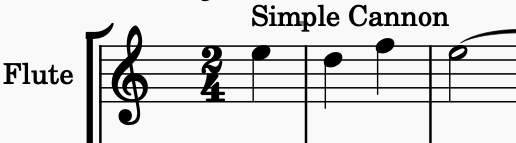
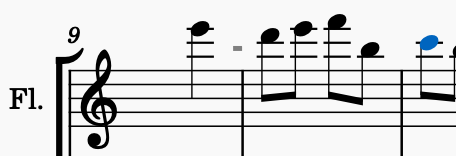
Rameau discusses how to make a simple four part canon at unison (that is, each voice entry follows unison). The easiest method involves a short melodic idea that follows a simple harmonic progression (e.g. I-V7-I). For my first try, I used this simple melodic idea: We can then add each of the 4 entries at their exact points, and realize the range of possibilities while avoiding parallel octaves 5ths. One limitation is that the final entry (where all voices are at once most likely taken by the bass part) may not correspond with established cadential voice leading conventions, unless the motif resolves from the leading tone or the 5th (as the case here). The second exercise I did was slightly more ambitious, utilizing secondary chords and greater diminution. I also embedded the leading tone in the second half of the motif in the interest of the above. Finally, as the second line approaches the V7-I cadence from the 4th (F natural) I depart from the stricter option of rising to the G (as the first part did earlier) in the interest of the conventional resolution of the V7 chord. In practice, Neidhofer & Schubert state that most imitative contrapuntal textures are neither strict canon nor free imitation but somewhere in-between. So it is quite justified to loosen the framework in such places. Play around with your own ideas... it doesn't need to be a masterpiece but at least adhere to the basic voice leading rules. I have composed canon's before but not as targeted exercises. Canon Practice.mp3 Canon Practice.pdf