Leaderboard
-
Henry Ng Tsz Kiu
Moderators4Points3,143Posts -
Thatguy v2.0
Moderators3Points1,357Posts -
PeterthePapercomPoser
Admin2Points2,956Posts -
Omicronrg9
Moderators2Points593Posts


.thumb.png.8b5b433a341551e913a34392660bc95b.png)
Popular Content
Showing content with the highest reputation on 12/14/2022 in all areas
-
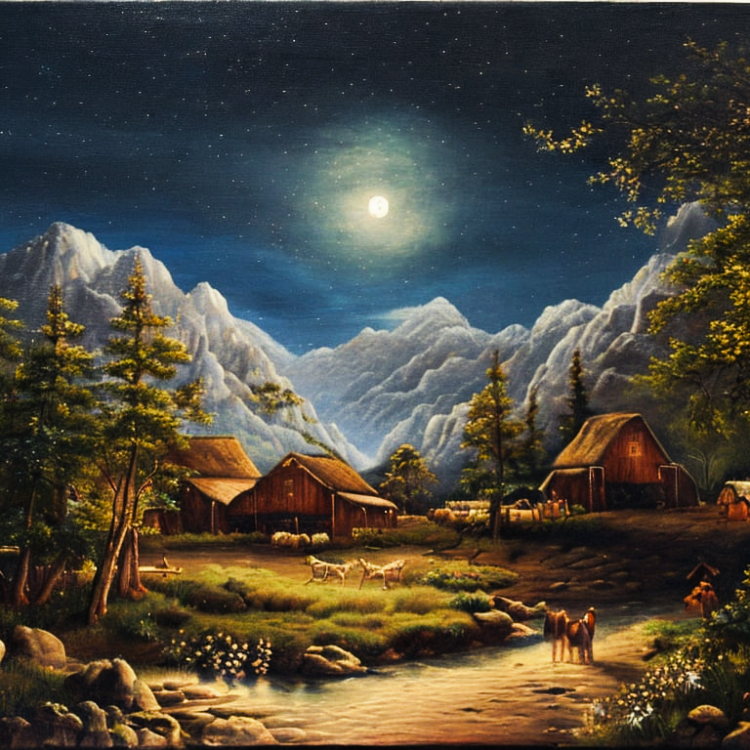
1 pointHi again, ladies and gentlemen! Hope you've been alright. Since there's been some activity increase (at least from my perception) and very interesting posts lately (like this, this and this...Ah and this) I decided to upload yet another piece. A piece per two weeks seems more or less alright to me. In this case I'm bringing here a kinda old work (March 2020) that, if you happened to listen to my 5th nocturne for piano solo, resembles it in its main motive. This piece is for woodwinds and piano and its sound has lots of room for improvement, but this is what I had at that time (and considering I'm using the very same software, probably the only things that have improved are my ears and the piano soundfont). As you may already know, I don't usually like to extend myself in unneeded descriptions so I'm leaving you the .pdf and the .mp3 here. ♫ MP3: (if you don't see anything, it's probably a bug. In that case check scroll down to the bottom of this message) ♫ PDF: 32 - Sollozos.pdf And that'd be all for now. Hope you find it decent and enjoyable enough. My recommendation would be listening to it with headphones (for this and every piece of mine) and as always, any kind of feedback, criticism, opinion, be it longer or shorter, is and will be always very welcome. Look at this image. It has nothing to do with anything but I wanted to put it here, hope you don't mind. Kind regards, Daniel–Ømicrón.
 1 point
 -
1 pointI love the new version more! (It seems shameless for me to claim so...) I think adding the celesta can make it even more sinister since the sound of celesta seems naive as a fallen angel! With the demonic organ that will be a good combination! Adding the cello to the timpani is great too! Now I feel the sinister undetcurrent underneath the devil's heartbeat! Great job!1 point
-
1 pointHey, thanks a lot, Henry! Thanks, man. I try lol Nah, it's just one more for the collection. I'll put it out there for licensing for documentaries or whatever, though. I appreciate that. Unfortunately though, let's just say: the film composition business and now games as well are pretty far from a meritocracy at this point. =/1 point
-
Hello! I haven't posted any of my music in a while so I thought I'd share this piece that I worked on just before joining this website. I just recently decided that it's finished enough and polished it up in MuseScore. At this point I was already writing my music on paper and entering it into the sequencer so I used the old midi to create a nicer looking score. As the title says there are 11 variations all separated by a pause. Some of the variations have subtitles - the 4th is "Roulade", the 5th is "Polyphonic", the 7th is titled "Mordants", the 8th is "Trills", the 9th is a Polonaise, the 10th is a Mazurka and the final 11th variation is titled "Harp" and inspired by Liszt. I thought the last variation sounded conclusive and exhaustive enough to be the final one but let me know what you think! 11_Variations_on_a_Brisk_Theme.mp31 point
-
Thanks for @Thatguy v2.0 for commenting the piece so I have a chance to listen to it too! In terms of harmony, counterpoint and the stylistic elements of each variation, they are sophisticated and interesting! Taking @SSC's point of Beethoven's variation, I would like to elaborate more in terms of flow and form discussed previously brilliant by @SSC and @Thatguy v2.0It's quite strange for me to hear each variation stops on a long fermata note! That will really disturb the flow of the music. It's hard to compose variations because composers before Beethoven do the following: 1. They treat each variation as a single entity without relationship with each other. Instead of one piece with variations, it becomes several pieces using the same original sources of a common theme. 2. They use every element of the original theme, thus making each variation too similar without a flow of development or moving forward. The concept of development is really pivotal for Beethoven, not only in his sonata movement but also his variations and fugues. @SSC is right to say that normally Beethoven treats variation as if a sonata movement, and the Eroica Variation is a great example of that. I would like to use other examples too: 1. Beethoven loves to use some elements, instead all elements of the theme to develop in the varaiation. (I want the version by Anderszewski but the video with score is deleted...) In his diabelli variation, he uses the following elements: harmony, opening turn figure, repeated notes in the right hand, G-C the interval of fourth, E-F-A motive, dance rhythm in his variations. Many variations develop only one element, for example variation IX and XII develop the turn figure. He didn't develop all the elements in the variations, since it would be too complicated and too similar to the opening theme. I've never composed a variation movement before, but if I do I will to use this strategy too. 2. In his middle/late variations a sense of development and moving forward is added. For example in the final movements of op.109 & 111 the note values keep becoming shorter to enhance the rhythmic flow. A variation will be chosen as a central gravity to allow later transfiguration, e.g. the minore section in op.111, variation V in op.109, variation XIV, XX and the minore variations in the Diabelli. 3. In his variations a grand conclusion will also be included. Elements from previous variations are included in almost all his variations movement, most notably his Diabelli and variations in C minor. Often a fugue is included, e.g. in his Eroica and Diabelli. I am just to happy to talk about anything related to Beethoven that it seems I ignore your piece. But no! Your piece is amazing too! Henry1 point
-
If it were me I'd be very basic if that was what was warranted. "Counter melody" and "fun with octaves" are dumb ideas I would use, stuff like that 😄1 point
-
Hey thanks for the review! The reason why I got into the habit of writing theme and variations pieces in the first place was actually because of this form handicap. As a young composer, I struggled majorly with writing pieces that lasted longer than a minute or so and I found that I could easily fashion a longer lasting piece of music by juxtaposing a bunch of different variations ideas next to each other like this without necessarily worrying about how they would flow into one another and transitions etc. Of course, variations are actually very adaptable, and like you mentioned can take the form of disconnected episodes or flowing variations with transitions. With this piece I chose to go with a set of separate vignettes because I think that, with how different the style of each variation was, it would have been difficult to fashion smooth transitions between them to make them flow into each other. But check out my Medley on a Theme by Yoshimatsu for a variations piece I've written since that was conceived as a more organically flowing whole (in my opinion). Not every variation was written with a specific character or technique in mind. And I wouldn't want to tack on some arbitrary subtitle to the other variations which don't really fit or deserve it. Unless you can think of some labels for the other variations which I didn't come up with! I'd be happy to consider any of your suggestions. Thanks for the compliments and the review!1 point
-
1 pointVery cool music, as usual haha. You've got a real talent for mixing, everything seems so well balanced! Is this for anything in particular? With how good you are, I'd be surprised in you weren't hustling through the film industry. Very fine work, Chris1 point
-
Hey Peter! It sounds like you've gotten some sound advice already, and as this was posted almost a year ago, I'm curious to how your writing for theme and variations has evolved. Some of the things I would say would be echoed from the above comments (busy theme, slow/fast tempo variations, etc.), so I won't fill the post with redundancy. One thing that kind of caught my ear, and although SSC mentioned this, I'd like to discuss it further, would be the flow and form of this. This could be just a style preference, but I've never been a huge fan of the cadential endings for every variation. Using @Ferrum's recent piece as an example, he went to great lengths to blend and transition most of his variations to flow, giving theme and variations a seamless and smooth form. Maybe that's what you weren't going for, and by all means your piece is wonderfully crafted as is, but it's something I've always admired about taking the form to a different level. I just happen to prefer that over the stop and go...ness...of the cadential endings and pauses of the style you went with in this. I really like the language you used, kind of a tonal yet late 18th century to modern dissonance added in. I'd agree, that you took the harp style variation and ran with it to create a final ending. But don't let that stop you! You could apply that same technique to a few of the other variations to give a sort of section closing statement to certain spots as well. Or perhaps a build in dynamics as well. I applaud you for having such a diverse and dense theme, maybe that wouldn't be possible. But, as said before, I think the simpler the theme the more you can manipulate dynamics, density, and overall variance to create wider ranges of styles to pick and choose when they might be best suited throughout your piece. One thing I thought was cool was how you labeled some of the variations. I thought that was a nice touch, and it gave me an idea of what you were going for with each one. Why only some though? If I were labeling some, I'd keep it consistent and label them all for continuity purposes, but it's not like what you did was a bad thing. With all that said, you continue to impress me with your knowledge of harmony and counterpoint. And to think you write all of your initial drafts on paper? It's takes a lot of talent and a great inner ear to do that, and it's something that I really respect and look up to about you. Kudos to a fine work, so sorry that I missed this one! I'll periodically delve into your "about me" section to hopefully find some more great works of yours that I haven't had the pleasure of listening to. Thanks a bunch for sharing, this was a real awesome piece!1 point
-
1 pointI'm not sure. The very ending seems pretty standard to me; I'd say it's just those 2 bars which seem not tense but ambiguous, and for insufficient time to cause a the intended feeling of chaos you achieved previously in the piece. Understood. Oh, haha. I am curious: what scoring software have you used in this case? Great! (Though don't expect anything coming from my share, my social media is empty lol). Sorry if my words are briefer than usual, I am kinda sleeping at this hour heh. Looking forward to your next posts and reviews! Kind regards!!1 point
-
1 pointI love the organ section! The harmony is so haunted! The timpani section is quite detached from the piece. For me it's not haunting enough. Maybe some soft organ sound can be added to accompany it. I think maybe the glissando for the last section can be played by a celesta. I think that will be even more scary! Imagine the sound of sugar plum dance playing these quick notes! NNNOOO!1 point
-
1 pointThat really gives me a Persian feeling! So exciting and heated with the Persian scale and the use of middle east instruments! Great job!1 point