All Activity
- Today
-
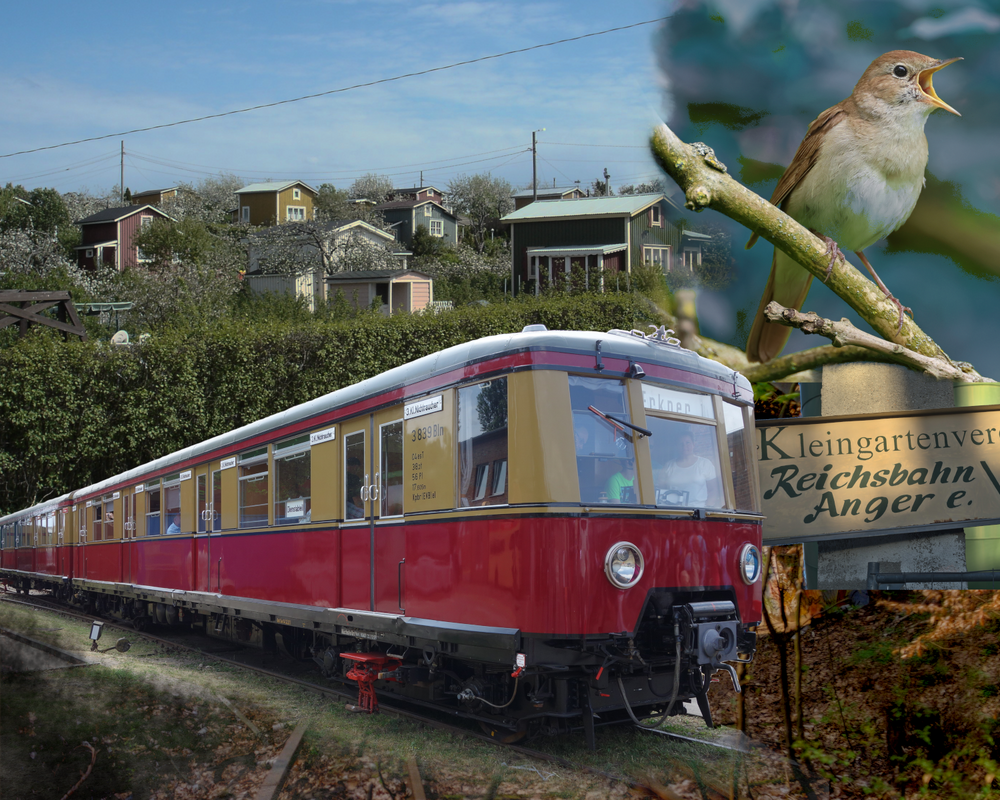
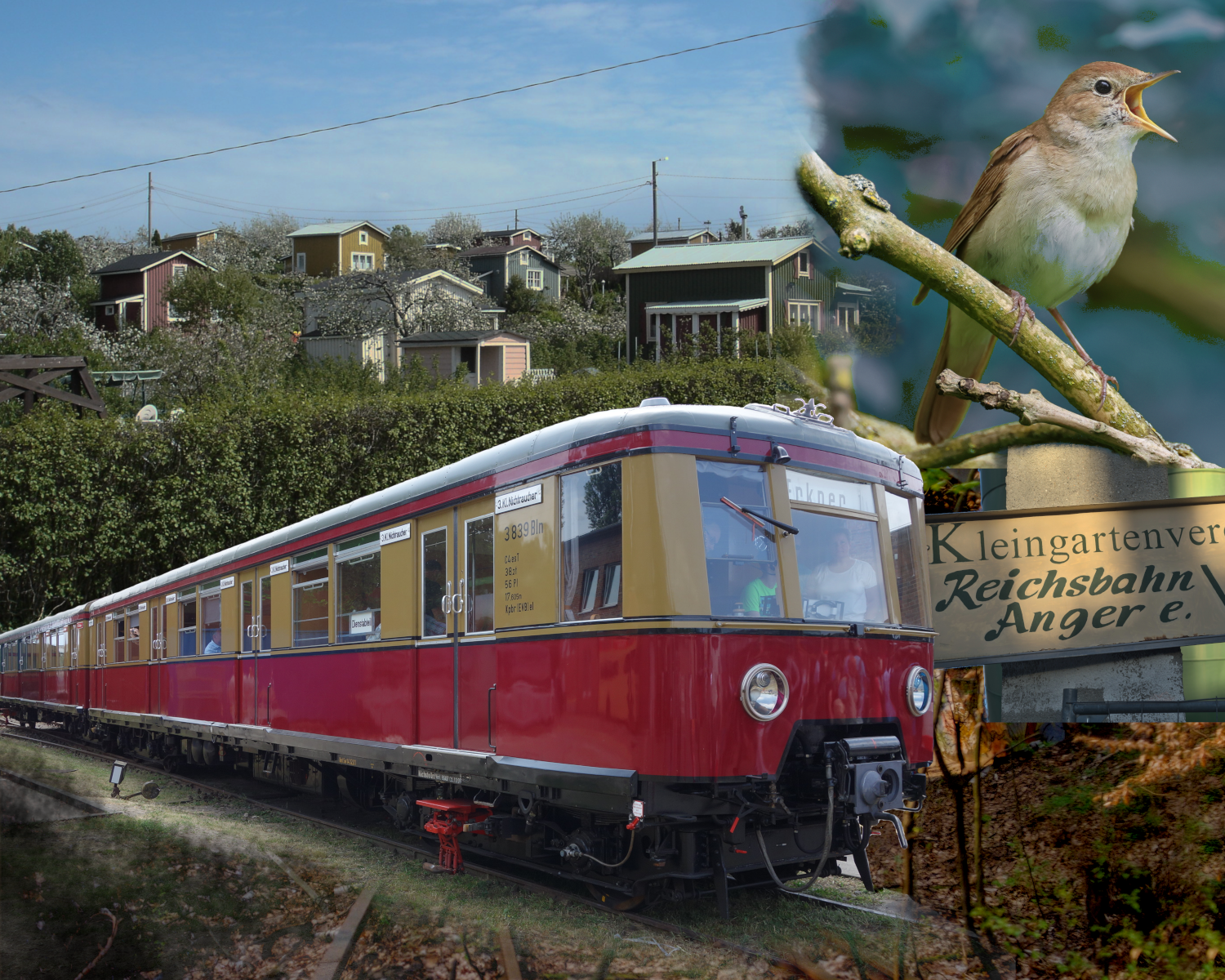
Dear fellow composers, I’m pleased to present you today my submission to the YCF 2026 Spring Competition! Here is the picture showing a historic city rail (S-Bahn) train and a nightingale capturing the sounds of spring in Berlin. The idea behind the piece is to describe the contrast between the noise of the big city and the tranquility of nature. I know that some of you, especially if you’re from Asia or the U.S. will smile when I refer to a city with not even 4 million inhabitants as a “big city.” And yes, that’s actually the case: Berlin is indeed a “huge village” with a surprising number of green and quiet areas. The piece tells the story of a journey with the city rail from the crowded city center to a suburb where are allotment garden communities are located. Since modern trains are more or less „sterile“ and lack their unique sound, I imagined taking this trip on a historic train, like the ones that ran in Berlin from the 1920s through the 1990s and were known for their characteristic noises, such as the slamming of doors and the typical hissing sound when compressed air escapes. Once you’ve arrived in the suburbs—so the story goes—you leave the station and head to the allotment garden complex. As you stroll along the garden paths, you’re surprised to notice nightingales giving their evening concert. And yes, it’s actually true that throughout Berlin, from April through June, you can hear many nightingales every evening and every night. The nightingales are really loud and have a distinctive song, so I’m very surprised that there are so many people who tell me they’ve never heard a nightingale before. The piece is a string quintet featuring a violin, a viola, and a cello, accompanied by two pianos. I have decided to use two pianos so that they can share the extensive tremolo and trill passages, which improves playability. It has an A–B–A form, with the A sections representing the S-Bahn ride. I’ve chosen the unusual 13/16 time signature—initially as a challenge to myself— but while working on it, I realized that the 13/16 time signature can be considered as a compound meter of 3 + 4 + 6, which evokes the idea of acceleration (of the train), and, when reversed to 6 + 4 + 3, that of deceleration (as the train enters the station). The B-part is in 12/8 time signature with a lovely, lulling siciliano rhythm, thus emphasizing the calm scenario while walking through the gardens. I hope you’ll enjoy the piece as much as I enjoyed working on it (although I somewhat underestimated the effort needed …). The YouTube video is coming soon. Thus, stay tuned! Praeludium-XVII-A-flat-major-quintet-mix.mp3 Praeludium-XVII-A-flat-major-quintet-with-coversheet.pdf
 Maicon Lopes joined the community@Luis Hernández is historically correct. the romantics drew from the previous composers and reinvited it.A Grand and Ghastly Meal in Tartarus Version IX:Check this puppy out. Very pleased with it indeed.@setpad2 Thank you for providing us the scores for your three-movement sonata! MV1: I appreciate the creativity within this movement. When someone usually thinks what "sonata" is, they associate that with classic recipe that. But you demonstrated to us how you can violate the listener expectations--both tonally and structurally--on what sonata is. With the high sense of chromaticism, this can be easily atonal. I am not sure if that was what your goal. But, if it was, excellent job. Since the movement broke the proper mold of tradition form, it was a challenge for me to review it. I did hear some reoccurring ideas (motives). The only thing that stuck to me was the large, rolled chords. I think that texture does not fit with in scheme of the movement. MV2: My only concern here is the bass rolled chords! A better texture is broken chords between the staffs. You will get a similar effect and it look cleaner. Final MV This is great first start on final movement. If you want to learn, I am more than glad to suggest books. But remember, reading books is only step one. Score study and finding your voice is step two and three.setpad2 joined the communityUpdated the above post with some more canon-fugues based on J. S. Bach's Well-Tempered Clavier. Listen and enjoy.expert21 changed their profile photoFour Canon-Fugues using fugues from J. S. Bach's Well-Tempered Clavier
- Yesterday
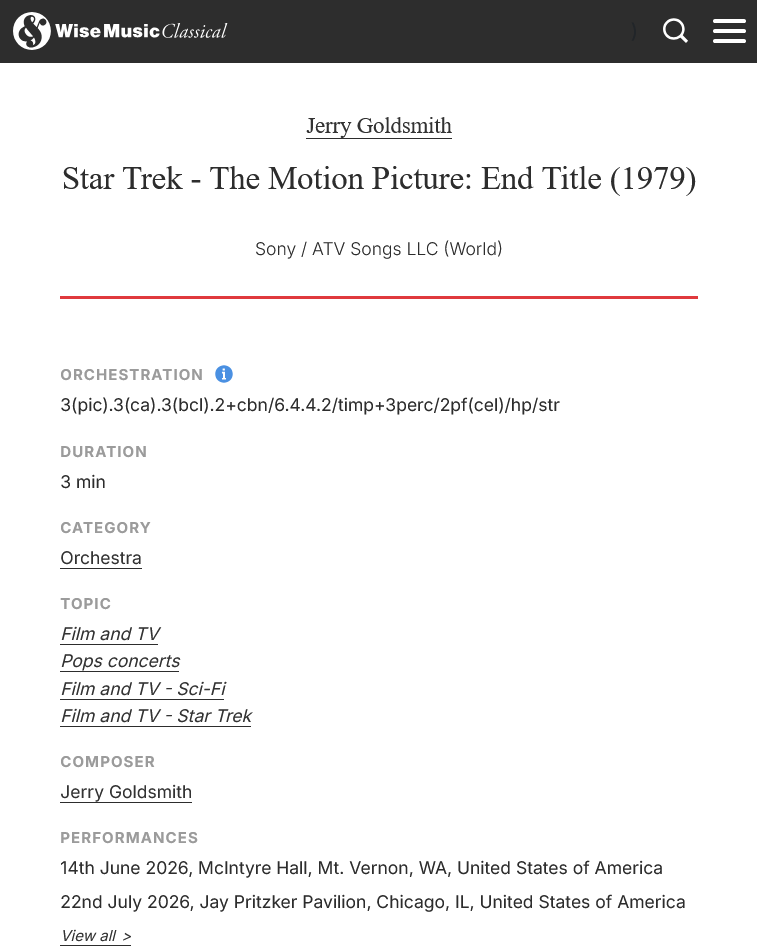
A Canon-Fugue consisting of J. S. Bach's Fugue in B minor placed in canon with itself.Heitor joined the communitySorry for self-bumping from page 7 or 8, and this is not really listening music, but this is an interesting thing I probably forgot to say: You know, if the 57-year-old composer still needed to analyze compositions, he would ask: why does it end on B Major? Think all seven church modes...ESPECIALLY LOCRIAN!!! Anyway, the tritone streams don't need much analysis...but there is some structure there! I do still analyze my own compositions when writing them, of course!I think this is lovely romantic writing. When we use "romantic" to describe a composition, it reflects a style. Many think...romantic period has it is own harmony. Romantic composers use the harmony as classic ones. It "how" they use it. It also in part writing, lines for fluid and lyrical! That is why @Luis Hernández when I say: let the double bass more melodic and fluid. It is just not used as a pedal. It can create tonal color.No plans to write a film score; anyone who is writing one is welcome to orchestrate and use it! Orchestrate as if a draft; fill out the orchestra, of course! No Wagner orchestra required. Excerpt from one of last Summer's experimental pieces, Tri-City. Horror Movie Music? Free Sheet Music by Robert C. Fox (Outis) for Piano/Keyboard | Noteflight I forgot to change at first the default tempo of 120 and started listening: play this on piano at quarter=120: Satanic Boogie Woogie?🤣 👺 Original "piece:" experimental etude from last Summer. Tri-City Free Sheet Music by Outis for Piano/Keyboard | NoteflightI do Apologize.................You are Correct................. I got STAR-WARS mixed up with STAR-TREK It was Jerry Goldsmith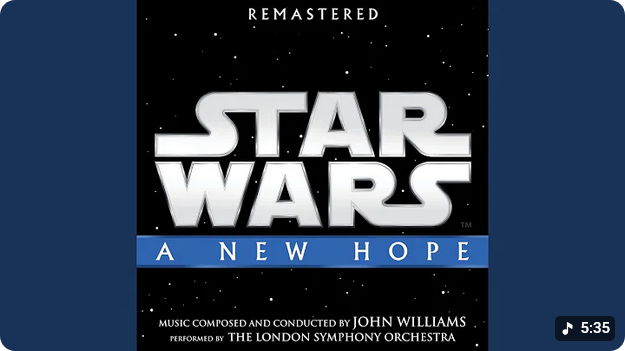
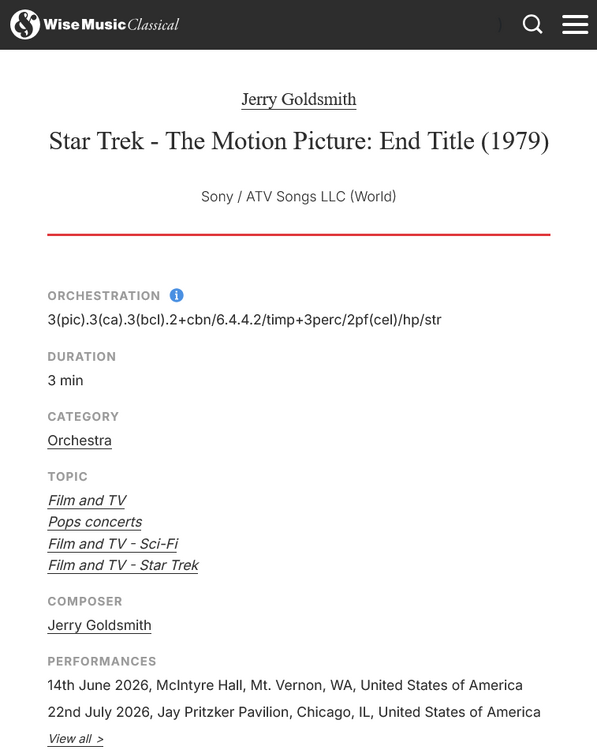 Thank you. The thing is, I never intended for this to actually be performed. I only do it because I enjoy composing and it feels like a sort of ‘natural compulsion’ to express certain emotions and so on. But I always try to ensure that what I write is realistic, for any instrument or voice—in other words, playable—and, if I can manage it, idiomatic The vocals with the lyrics are almost effortless. Thanks to a piece of software called Cantai, with which you simply have to write the notes, add the lyrics and choose the type of singer. It was tricky to set up at first because it’s very new, but now it works really well. In other words, you work in the same notation programme (Dorico in my case) without having to switch to any other. That’s why I decided to give it a go. This is a project I want to be in several parts (not too long, as I get tired). And it’s a sort of Humanist Requiem, in which there are no religious references but rather references to human beings, nature, destiny, light, etc.... The texts are a mix of Latin classics and phrases drawn from T.S. Eliot, Wordsworth, Mary Shelley, Byron, Keats, Sylvia Plath and... Joni Mitchell!! (because I adore her). The orchestra is deliberately unusual and sombre (no violins, oboes or high-pitched instruments, but others with great colour such as the celesta, which is rather ethereal). I am using 20th-century contemporary musical languages. In fact, this mini-prelude (which I have expanded slightly) is composed entirely using serial atonal technique, specifically Stravinsky’s rotational arrays (who, in turn, composed a Requiem using this technique towards the end of his life).Nice .. but John Williams never contributed in any way to the Star Trek franchise!Melodies Themes Motives Harmony Chords Textures Form Development Structure Time Originality Creativity Score Presentation Instrumentation Orchestration Playability Execution of Given Challenge Taste 9 9 9.5 10 10 6 8.5 9 Avg: 8.9 Your Melody, Theme, Motive is wonderful. Right away I could hear what you were doing in the bass. Extremely clear and intentional, and it's a beautiful entry. Also in the intro I like how you seem to interweave the theme while modulating upwards. I can see this representing a sunset in an old western movie perhaps. The biggest criticism here would be playability. Is it playable? Sure, but the way it's written, its for a larger ensemble. This most likely could be formatted for a proper quintent and not lose too much of its texture.Melodies Themes Motives Harmony Chords Textures Form Development Structure Time Originality Creativity Score Presentation Instrumentation Orchestration Playability Execution of Given Challenge Taste 8 6.5 9 7 10 10 7.5 7.5 Avg: 8.2 I think your scene is incredibly difficult to portray, but I hear the cultural influence of your piece. It brings me back to perhaps the 1500s. Definitely a solid melody, and fugue-like parts (perhaps more like a hybrid fugue - invention maybe?) Nevertheless, even though your harmony is simple, I do like that you changed keys halfway through.Melodies Themes Motives Harmony Chords Textures Form Development Structure Time Originality Creativity Score Presentation Instrumentation Orchestration Playability Execution of Given Challenge Taste 8.5 5 10 8.5 10 10 10 8.5 Avg: 8.8 I think you nailed the challenge with this, the mood in my view really captures the image / scene. I know I marked you down for harmony, and normally for a mood piece like this it wouldn't be a big deal. However perhaps you could have implemented even just 1 transition (from early morning to mid morning), especially on a 5 minute piece. Other than that though, this is a very beautiful musical scene!Melodies Themes Motives Harmony Chords Textures Form Development Structure Time Originality Creativity Score Presentation Instrumentation Orchestration Playability Execution of Given Challenge Taste 7.5 6 9 10 10 10? 9 8 Avg: 8.67 Really good job on portraying the scene, which is the whole point of this challenge. And executed with custom percussion sounds nonetheless! While the score is hard to follow, clearly you needed that setup to execute the musical output. I gave you a 10 anyway because you communicated your intent, and you clearly cared about the musical output, which is important to me as a listener. I have no idea if this is playable, but assuming yes, so you get a 10 with a question mark. This reminded me of a jungle scene which is close enough to your image! And I even hear what sounds like water in your music which I would imagine represents the reservoir. VERY well done!Melodies Themes Motives Harmony Chords Textures Form Development Structure Time Originality Creativity Score Presentation Instrumentation Orchestration Playability Execution of Given Challenge Taste 4 10 7 10 10 10 6.5 8 Avg: 8.2 This is gorgeous and very cinematic. A very well done mood piece. I feel a much greater sense of tension. There is a great deal of tension with this piece, and it makes me wary about being on or near this mountain! Or perhaps the area around this mountain has a deep secret. A perfect score for a mystery movie. Overall, I love the harmony and the mood.c: i ii III / VI7-6-5 / i vi5♮6 V56 vii7 bvb356 / VI7-6-5 / c:VI7==Ab:I7-6-5 /→ vl V iii / ii6 I6 Ab:I6==f:III6 / ii6-35 i6-35 V56 i24 / V56/V Gr.6 V vii7 for c /→ i V56-b3 c:Vb356==gb:Vb24bb6 / i V56 for IV gb:V56 for IV==f:Nb56 V7 f:V7==e:VIb7 / ii V7 i e:i==b:iv-24 / ii7 V i V56 / How do you think?A Bit Difficult this one..................................He keeps changing KEY STAR TREK END TITLE.mid STAR TREK END TITLE.pdf STAR TREK END TITLE.mp3









.thumb.png.8b5b433a341551e913a34392660bc95b.png)