All Activity
- Past hour
-
-
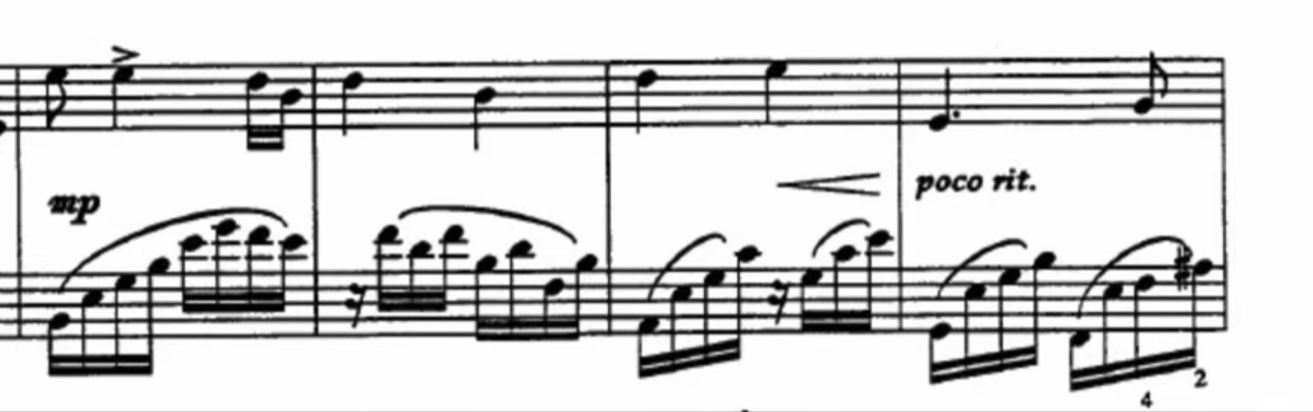
I agree here with @Luis Hernández. The music is so static that you have to get really creative to orchestrate it. Some comments: As a string player, the long slurs in the slow tempo are going to be near impossible. Try playing around with bowings to match phrasing Not sure if you're familiar with this, but Debussy already orchestrated this piece. You'll see he adds a few things here and there to keep things interesting and fresh: https://youtu.be/zbMhQjBSHvs?si=dDWWwCFhyTTcyVIs&t=188 You'll notice in the recording that the harp arpeggiates the chords to keep things flowing. Also, your lower strings (violas, celli, bass) are going to hate you for writing such a boring part! But again, the music is so static that you'd have to get really creative to do that without ruining the meditative atmosphere....very tricky!
-
Will_Sanderson45 joined the community
- Today
-
The pieces sound good. The language is simple, which fits the style of music. I prefer the second one as it has a bit of a ballad feel, honestly, I’m getting a little tired of this genre.
-
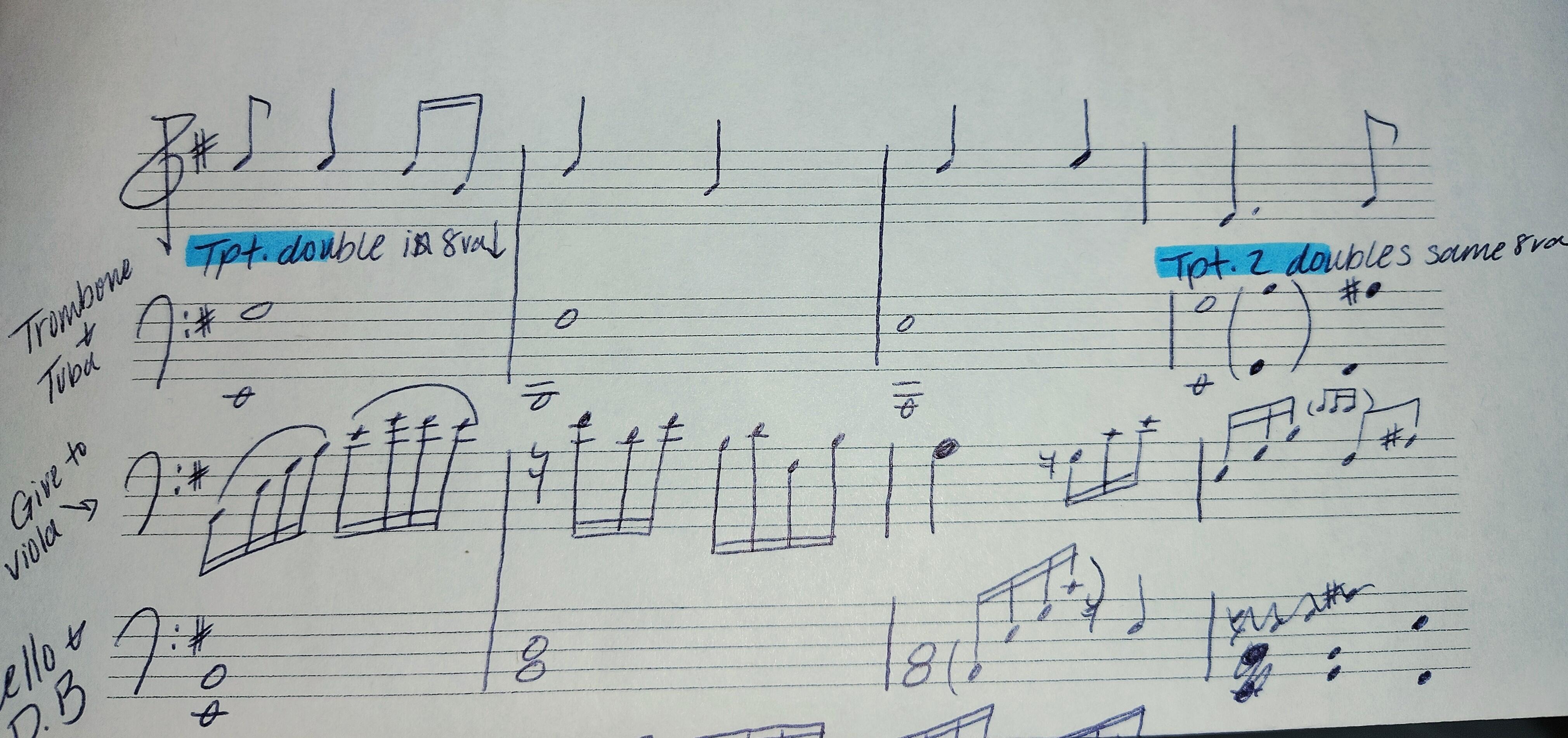
Hey, thanks! Thanks for your insight! I especially appreciate that you picked up on the rhythmic aspect of the whole piece, one of the things I really wanted to explore while writing it was finding ways to embed rhythmic construction in the form, and I think I found some interesting ways to do that here.Not sure how I missed this, I like it, and nice to hear an alto sax sonata!I'm very pleased with the popularity of this thing, and I'm sure we all want to know how it ends, right? Not with a short last movement cadencing on G Major. I promised my sister I'd have it done and edited by May 1; maybe with the right combination of inspiration and imbibition, I can get some of the development done today in the finale. I have a basic tonal plan: the development starts in G, then I'll emphasize F Major and D Minor as in the first movement introduction, and a fugato section in E Minor, which I might be able to get the subject for by inverting the theme of the very first couple measures of the first movement intro.Hallo @luderart as you frequently present compositions in this style—short, aphoristic pieces for solo instruments—your compositional approach differs from that of most other members of the forum, who often attempt to write full-scale symphonic works for a large orchestra. Yet in an orchestra, an instrument is merely a gear in a large clockwork mechanism and is subject to the conductor’s interpretive intent. On the other hand, dedicated solo pieces for monodic instruments seem to be rare, so that I could imagine that they are appreciated by players of the clarinet, bassoon etc. However, when I listen to them and look at the score, I sense a kind of loneliness (which is not a criticism, but merely a statement of fact): The solo instrument „utters“ its sentence, yet no conversation emerges, as there is no accompanying or contrasting voice. And even the score pages look a bit „lonely“, since there is remaining whitespace due to the need of only one staff for notation ... Here is another, similar approach to a piece for a solo instrument, the bassoon. The composer, in that case, decided to put the „sentences“ in a more programmatic context, depicting „a garden“ over the course of a year. https://youtu.be/ok_R4cstdGs Now, some short thoughts to the individual sententiae: No. 1 It serves as an overture, trying to gain the attention of the listener. The meter change from 6/4 to 5/4 in bar two is somewhat surprising, and, together with the two trills, reminds me of the bells ringing in the lobby of a concert hall, urging the audience to take their seats before the playful quintuplet melody begins. No. 2 A short, playful piece - reminding me at children playing around. No. 3 To me, the third sentence has a melancholic and contemplative character, which is only seemingly lightened by the eighth-note runs. The final question remains unanswered. No.4 The fourth one has a quality that even exceeds the character of a „sentence only“. Because it consists of three clearly perceptible motifs, which are used in sequences, it has enough thematic material, so that it could be developed further or used as a sketch for a much larger piece, too. No. 5 Again, a sententia which is a short piece of its own, now in A-B-A form, yielding a small exposition, a development and a recapitulation. (Fun fact for me is bar 11. in 1/4 meter with the sole purpose to place a rest ...) No. 6 Number six for me expresses the idea behind the „sententiae“ as its best: Although it has a simple texture with only staccato semiquavers, the rests at the end of the phrases serve as the period at the end of a sentence, thus structuring the short utterance. No. 7 With number seven – which also bears thematic material which could be developed further -, we come back to a more melancholic mood, somewhat a recapitulation of sententia number 3.I kinda prefer the new version :) Orchestration is pretty subjective so thank you for experimenting with my suggestions! I think you can remove the pizzicato in the bass in bars 15-17 (just have celli play).Hey there Weiland! Thanks for checking this out, it always means a lot to hear great feedback. ❤️ Thank you, friend. I'm acutely aware of the style of each of these preludes, as I'm constantly thinking about the overall feel with each one, wanting them to possess their own unique character. One of my weaknesses as a composer has been counterpoint, or at least using it in the foreground versus just thinking about it with melody and harmony. I've posted the previous preludes on the forum (check the topics tab in my profile, I'm lucky enough to have @Henry Ng Tsz Kiu give his interpretations), and a style they lack was one that focused on a more contrapuntal foundation. Personal challenge accepted. 😄 I'll also say that it makes me bashful to hear you enjoyed the counterpoint, as your talent with it is drenched in the music I've heard of yours. I wrote the first twelve a few years ago, with the intention of having each one focused on a different tonal center. The scales and approaches used varied a ton, at least that was the intention. There's blues, Chopinesque ones, soliloquys, video game character adaptations, etc. These next twelve started differently. I'm varying the tone centers, but maybe I repeat some here and there. Not sure yet, but the restriction this time is I'm limited to the 61 keys on the keyboard I'm using to brainstorm and workout things. Thanks for listening and sharing your thoughts, it means a lot!Had a go at implementing some of these ideas below. Not sure about the pizz. in the celli and basses. It's an interesting effect; just maybe feels too aggressive for the material? Decided to keep the trombones and tuba for now, because I'd prefer to use the full brass section. (The score attached is for midi rendition only: so hasn't been tidied.) Menuet in C sharp minor (Ravel orchestration) #20 (midi).mp3 Menuet in C sharp minor (Ravel orchestration) #20 (midi).pdf
- Yesterday
Thank you so much for your review. You've made some great suggestions! I can't remember why I chose to use piccolo; but think I just liked the timbral colour when mixed with the flute. I actually really like the glock: so am inclined to keep that. Also I prefer the basses arco at 11 and 13. Pizz. for the celli is definitely a good idea though, and will restore the recurring material at 21. Somehow that had slipped my notice. I orchestrated rather quickly: so probably should've taken a bit more time. Thanks again, AlexHi all this a brief (puff of smoke) String Trio. I am not sure just to leave it be or incorporate in a larger work. At the moment - I'll let it stand by itself. All comments appreciated. MarkSenerade Violin Piano 04-16-26.pdf Senerade Violin Piano 04-16-26.mp3They are college musicians (most are music majors), but some key players like the oboist and some of the strings are people taking the class as an elective. And this was a sight-reading session our orchestration class does in collaboration with the orchestra. Our final project is to orchestrate a piano piece and then we do (2) reading sessions with the orchestra. One with the rough draft (what I've posted), and then the final session (this coming Wednesday), with our revisions.Hi there ..... I just listened to the rehearsal. Unfortunately, part of the problem might be the skill level of the players ... in the rehearsal posted .... the are problems with rhythms and entrances etc .... What levels are the players: community orchestra, high school, college? I understand this might also be the first rehearsal of the work. Good luck with the progress of the work. I myself had a community orchestra perform one of my works ... no comment! MarkThis is a good attempt! Some thoughts: Probably just omit the piccolo and have a 2nd flute player double 29-32 with the 1st flute...or just omit the 2nd flute/piccolo all together Same thing with the 2nd clarinet. I would have 2 players, with the 2nd doubling on Bb and bass clarinet. Quirky (mostly unusual) thing I noticed is that you have the 2nd instrument plays higher range/melodic material than the first. For example Trumpet 2 plays the melody (with the higher range) in measure 14-20. Same thing in clarinets and bassoons around measure 33. Nothing wrong with it...just unusual. Brass scoring a little awkward. I personally would take out trombones and tuba, and maybe the 2nd trumpet away as well. I would've had both horns play the parts you have for Horn 2 and Trumpet 1, with the melody solely with 1 trumpet player in measure 14 onward Not a fan of the glockenspiel in bar 14. I think that counter-line can be played better with the harp and oboe combination instead of the harp doubling the trumpet Nit-picky, but I would also have the basses do a pizzicato in 11 and 13. I would also have the cellos do pizzicato in measure 14 until the pickup to 18. I personally would also double the cello line octave lower in the bass to broaden the depth of sound (this is probably not written in the original score, but would be a nice orchestration effect). The material reoccurring in 21 can be scored differently than what came before in 10. I would have the melody in maybe oboe or English horn...or maybe French horn, with the harmony in clarinet, bassoon and/or horns. The bassoon doubling at bar 30 seems a bit much, maybe divide in octaves? I would not have bass clarinet playing there. I would also have the harp strum out the chords (or arpeggiate them somehow) the last couple of bars Scoring in general from 28-31 is a bit awkward In general, I think more care to the dynamic markings might also be good. I think I know why you did them (probably because of the audio mockup)...but just looks odd when there randomly fff in the passage where I think its suppose to be just f or mf. I also disagree about the use of "extended techniques" in this piece. The most I would do is maybe have the strings muted.I did say I thought I wrote this in a doctor's office waiting room; maybe measure 5 was where they stuck in the needle...🫣lol, trust me when I say I am still learning every day. I am not that good compared to career composers or even some dedicated composition majors. Point is, it doesn’t matter. You are at a pivotal point in your journey and whether or not you think you’re good now, those thoughts won’t matter when you see your works on the big stage in a few years. For me, I am hungry for knowledge and consume information like a computer. I love music with my whole being and will only put my best in when exercising it. To add, maybe a DM would be better so we stop spamming the notifications of other users on this thread lolBrooooo how are you so good at this?? All of your notes make perfect sense 😭 An issue I'm running into is that since the notes are moving basically the whole time, I have trouble deciding which pitch should be held for that sustained chord sounds. There are a lot of inverted i triads (E minor), so in those spots, I obviously have lower strings and low brass hold chord tones. But for other parts where the chord may change each beat or the LH just has a chromatic line, I don't know which note should be held to make the part as effective as possible.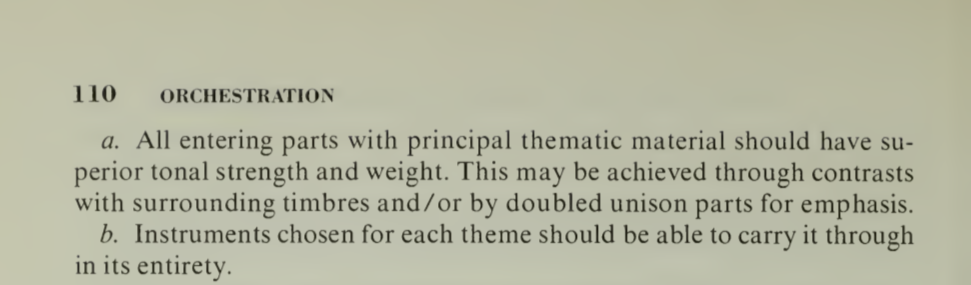 Okay I'm done!!! With the input at least..still need to refine things and beef it up a little more Thank you @MK_Piano for your guidance...that sustain pedal point you mentioned made it all click for me...I think I have something that is 1000% better than my original arrangement. Fantasie Nègre - ORCHESTRATION FINAL(Computer).mp3