All Activity
Past hour
-
I will see how it is scored. Then, i will go back revise it
Today
-
@MK_Piano, you’ve created another wonderful piece! The way the composition unfolds right from the opening is fantastic. The section starting at 0:55 reminded me of the sound of a steam train whistle; it has a real sense of momentum, and the percussion works well, too. The part starting at 1:55 is a particular favorite of mine—the melody is so memorable. The calm section that follows at 2:25 is also excellent; the piece really tells a story. I’m sorry I can’t offer any specific advice regarding the sheet music or technical details. By the way, it looks like you and @UncleRed99 get along really well! I’d love to hear a full-scale collaboration between the two of you someday :) Best, Lithl.
-
Hello @Oak! It looks like you haven't received any replies for a while, so I thought I’d leave a comment. First off, I wasn't sure exactly what kind of feedback you were looking for, so I apologize if my impressions come across as a bit one-sided. Please let me know if there is anything specific you’d like me to address. To be completely honest, my impression is that it feels like the audio was just pasted inーit lacks an impact. I took a look at your profile and gather that you have musical experience and have studied music theory, but I feel those strengths aren't really being utilized here. Here are my specific thoughts and feedback: The concept of a short piece played with a steady rhythm is a good idea; it fits the requirements for an alarm-style track well. However, the bass drum and other percussion elements don't really shine; they feel like mere add-ons. You might not even need percussion at all. Using your knowledge of counterpoint, you could potentially turn this into a short piece featuring only the vibraphone, based on the existing melody and rhythm. Alternatively, you could try introducing a bass melody starting at the 0:28 mark. Overall, the piece has an airy feel, so using more staccato and picking up the tempo might work well. Since you enjoy books and comics, it would be interesting to record a passage about the morning from a book and incorporate it into your work by cutting and arranging the audio. Given the style of this piece, looking at sampled tracks for reference could be helpful. It’s a slightly different genre, but here is one example: CORNELIUS - Fit Song https://www.youtube.com/watch?v=FaNY75mMV-I Hmm... I was a bit too harsh. However, there is plenty of room to improve this piece, so please keep at it! Best, Lithl.
-
Still so happy how the flute solo at b.76 sounds ;) Glad I could be of assistance, with both, what we referred to as the "Brass Hymnal" sections, and with the C Section of the piece. I had fun being involved in the process, directly :)
-
Hello, I really enjoyed the piece. Lacking perfect pitch, I don't pretend to have any sort of these savant like abilities some may have around preferences for certain keys. I feel like the piece works really well in F minor. I don't know why. It just feels like it should be in F minor. Bravo. In my opinion the main theme is very memorable and stands out. It's always nice to hear you return to it. It's got this sort of devilish, mischievous character to me. I was listening to again for the third time, I noticed something in measure 37 sounded a bit off. When I look at the sheets, I see Enat in the left hand and Eb in the right hand. But then again, you do this at other parts in the piece and it doesn't sound off at all. Maybe it's the Db in the RH? It might not be any significant, but I figured that I would at least post it here.Hello, The sheet music doesn't seem to correspond to the music? I looked up the BDFI tune on youtube...battle for dream island? the first 3 minutes or so...there were parts that sort of sounded like 8bit video game music. Maybe it was the fast repeated chords. But yeah, made me think of video game music. There are some nice chord progressions up to the 5 mins mark that I liked. It's a bit hard to comment otherwise without sheet music for me personally...since the audio play back is computer based...it's hard to imagine the sound that you are trying to go for without either you actually playing the piece, or having the sheets :) for example at times I thought that there was weird stuff going on harmonically, but that could just be the playback. Can't confirm without seeing the sheets, or a better recording. Hard to be sure due to above mentioned factors, but you seem to have this 0% to 100% approach. Where it's either like wall of sound, or softer sections. I mean, maybe it's your style or what you are going for. I personally think music can be a bit more interesting with a bit more held back sometimes if that makes sense. In other words, it sounds objectively nice, but I also found myself getting perhaps a bit fatigued at times listening to it all! Once again, this might just be due to the recording. Around 10:30 or so there were some nice harmonies as you ascended. The Coda and the diminished runs was pretty unexpected and fun. Overall, the piece sounds bombastic, grandiose. It's so cheerful. Brings a smile to my face :) Love the never-ending...ending. Those are always fun. I'm a bit older...when I reflect on the type of stuff that I was writing at age 15...I would say that you have something really nice here :)You know, with the score being two years old, and my experience also being two years younger at the time, I just assumed the horn staves were already formatted correctly as they are for all my scores/ templates now. That was an oversight by me due to complacency. C-trumpets are the preferred instrument for orchestral settings compared to the Bb-trumpet. Why? I am unsure the specific reason/ evolution to that answer, however, I know it is industry standard now to see C-trumpets in a vast number of orchestral works. Trumpets in D, Eb, and Bb are some of the exceptions with Bb being the other most common. I used for that reason and because I wanted C-trumpet for it's slightly brighter character compared to Bb. To add, the instrumentation lists Four Trumpets split between two parts (2+2 for volume). With the standard of 3 distinct parts over two staves, I kept the parts limited to two for simplicity when it came to orchestrating. That was done two years ago when I created the piece and I just kept it the same now. Lastly, I did not pair the woodwind staves together as they have very distinct parts between all the winds. Trying to condense them onto a single stave felt like a cluster-bomb I was not willing to tackle. Thus, having them explicit and separated establishes a strong clarity for what the part is doing. To add, as I have printed an earlier draft of this score once before, the pdf makes it feel smaller than what you will see physically. I do not think the measure/ part size will be an issue. Thanks for pointing out the horn parts, I will fix that immediately!Hi @MK_Piano ! What a wonderful steam railway adventure you've created! I think it will fit right in with similar train-themed repertoire in the catalogue such as the Copenhagen Steam Railway Galop and Pacific 231. I love the spirit of the piece! The brass Eb major 6/9 chords do a wonderful job of mimicking the train whistle! I didn't even realize what chord that was until I heard this piece. The melodic variations and modulations keep the piece fresh and the modulation to Db major is a well conceived and welcome one! The descending Eb, D, C, Bb figure is a really great ostinato that puts me in a chugging mood! LoL I know you're a stickler to score engraving so I don't have much critique there except that usually the Horns are paired 1&3 and 2&4 on each staff. Also, I'm surprised that you used C Trumpets - and only two of them? When I played trumpet, Bb trumpet was still the standard and I'd expect 3 in the orchestra to be available. Also, any reason why you didn't group the woodwinds two to a staff? It would save a lot of space on the page. Those are just my minor critiques. Thanks again for your recent help on my Christmas Mash-up!!!
Yesterday
GPVMUSIC joined the communityI’ve just finished my Serenade for String Orchestra, a piece that ended up having a rather unusual composition history. Some of the material goes back to 2021, while the first two movements were written mostly in 2024, and I finally completed the work this August with the Elegie and Finale. It wasn’t originally conceived as a single continuous project, but over time the different ideas seemed to belong together and eventually became this five-movement serenade: Präludium, Scherzo, Intermezzo, Elegie and Finale. Despite the different periods in which it was written, I think it ended up having a fairly consistent character—mostly light and calm, with the Elegie providing its more introspective moment. I. Präludium — A calm, pastoral opening that establishes the overall character of the work. II. Scherzo — A very fast and light movement, providing the most energetic and playful music of the serenade. III. Intermezzo — Relaxed and flowing, almost like a leisurely walk, without becoming overly reflective. IV. Elegie — The most introspective and melancholic movement, gradually building towards a more intense emotional climax. V. Finale — Begins with a tonally unsettled, march-like introduction before breaking into a bright and joyful A major conclusion, with brief returns of material from earlier movements. Hope you enjoy it, and I’d be very happy to hear any thoughts or feedback!This is INCREDIBLE! Great job man, it definetly does fit the vibes. It's just exactly what i was thinking of. I will also send my email to you if you want to talk to me through there I will be waiting for you to finish it! I just love it, also do send me other librettos later for me to check them out, if this was good i can only imagine the others.Ollo! I will be looking at this score soon and giving some feedback. To preface some the explicit comments I will make, there are still a lot of engraving errors within the score. 1. Page Margins. I tried printing the score from my Google Browser and it increased the page margins of your document/ made the score smaller to fit the page. I would increase the margins by default. 2. Having multiple colors within the engraving. I can understand doing this for pedagogy or analysis, however, for publishing and performance, do not add multiple colors UNLESS it is for specific reason (i.e. Contemporary/ experimental music). 3. Clefs. Glockenspiel does not read a 15ma Treble Clef. Tuba does not read in 8vb Bass Clef. Piccolo does not read 8va Treble Clef. They all read the normal versions of the clefs, however, the concert/ sounding pitch may be in those ranges. 4. Rests. Even in 6/4, 3/2, or 5/4, an empty measure is represented by a singular whole rest, not the dotted whole rest. To add, in the current version of the score, they are all offset. An empty measure needs to have its rest centered on the bar. 5. Rests again. I will make specific annotations of this comment. 6. THE HARP. The harp is not a piano, and comparing to your Piano score, it feels like you dragged piano elements to the harp. To emphasize some of their differences, harpists DO NOT use their pinkies when playing. So, some intervals or passages/ groupings of notes, can become impractical if you just copied it from a piano part. 7. Harp Pedals. They do not need a pedal diagram for every change. A simple, and clearly placed letter will be enough to show which pedal to change. To add, most harpists will just write one in if you only pedal charts. It's visually redundant for performance (in my experience) 8. The Key. Your Title says B-minor, then you open the piece in Eb-minor and end it on a C# half-diminished chord. So... which is it? Are we really in B-minor? I didn't see the key signature for this mode at all. (I have not done any harmonic analysis at the time of this comment) I will highlight some of these comments over the next day or two, however, let these serve as some food for thought. Good work!i enjoyed it, just like what the other guy had said I do believe in these points as well with the large gap with the Viola and piccolo, and also I believe that you could still written this in alto clef as it’s easier to read as a Viola playerHello everyone, I am back to feature an overhauled work of mine: The Tuckasegee Flyer. CONTEXT: Originally written in 2024 by commission from my friend, Brody, this work was meant to accompany a YouTube video series he was creating. Two years later, and during this summer, I felt in a trough of composition. I have sketched a lot of ideas for themes or independent phrases, however, I had no passion or inspiration to make them into full pieces. So, after looking through my file system, I looked through this work and immediately, I had ideas. This work is an orchestral depiction of what it feels like to ride behind a steam locomotive as seen or felt by a passenger. If you would like to know more specifics and a longer explanation of the work, go to the 3rd page of the PDF (which is listed as page 1 due to the front and back of the cover page). Thanks for viewing my score and taking a listen! (Comments welcome) This work in its current state would not have been possible without the support of friends and fellow composers. Big thank you to @UncleRed99 for his help with understanding brass ensembles as well as non-YCF composer @Arbolav for his help in the development. You two elevated this piece and I am forever thankful! The Tuckasegee Flyer_AUDIO.mp3 The Tuckasegee Flyer_SCORE.pdf The Tuckasegee Flyer_SCORE.pdfHere's the first bit. The rest will come in about ten days' time. See what you think. I wish I were still at high school - I'm much older though still lively, I hope. JSWRM Pericles.pdfGood to hear from you. I'll send the 'Pericles' libretto in about a week's time. I shall be away for four days next week but will send it on after that. I may get the first scene out to you today - it's an extended musical section. The play dates from about 1611. You may think the lyrics too elaborate for a renaissance/baroque setting but at least you can have a look. I'll include a summary of the plot. The original play is a piece of romantic magic realism - lost daughters rescued from the sea etc. My version has some dialogue linking songs but not a great deal of it. The music carries most of the story. Till later with best wishes, RiccardoI don't use DAWs , my main music notation app is MuseScore , also the section that you mentioned as a bit repetitive is my attempt on a tocatta and also I am not formally trained musically as I mainly go to online sources for music theory The reason why I marked Opp. is because it is a bunch of other works that would be transcribed into solo piano Anyways , thankies for the feedbackelmarad40 changed their profile photoLast week
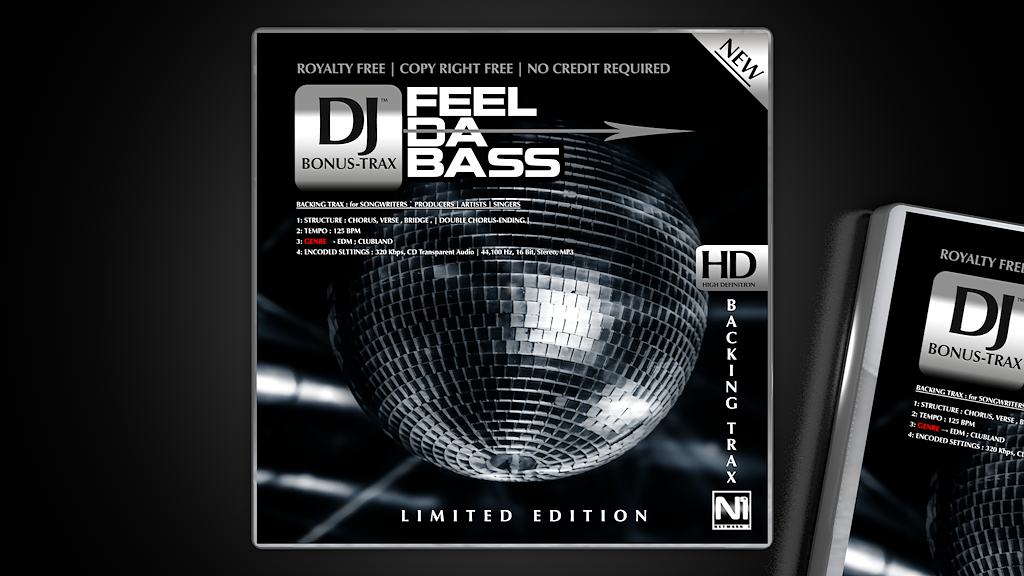
DJ BONUS TRAX Hi Guyz ROYALTY-FREE | COPYRIGHT-FREE | NO CREDIT REQUIRED Backing Trax, for songwriters, producers, artist, & SINGERS. 1: STRUCTURE : CHORUS, VERSE , BRIDGE , | DOUBLE CHORUS-ENDING | 2: TEMPO : 120 BPM 3: GENRE → EDM : CLUBLAND 4: ENCODED SETTINGS : 320 Kbps, CD Transparent Audio | 44,100 Hz, 16 Bit, Stereo, MP3 5: DOWNLOAD : Right-Click PLAYER | Save Link As DJ BONUS FEEL DA BASS 1.mp3 DJ BONUS FEEL DA BASS 2.mp3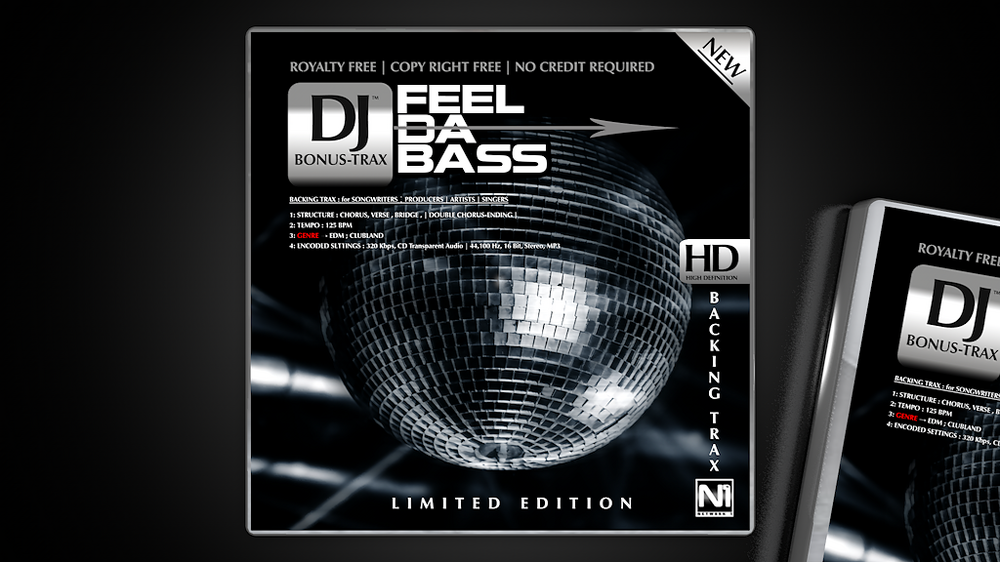
 Oh, just another competition, while I am just a little bit exhausted of the previous one, so that I – while following the poll – even missed to vote at time … As the more „restricted“ suggestions for the competition’s subject did not win, we now (once again) have a more „free“ one: „From Nothing, to Something“. I must admit that I am currently in the state of „Nothing“ ☹️, but hopefully there will be „Something“ within the next few weeks 😊. That’s why I’m declaring my intention to participate in the competition - even if I can’t make any firm promises.My dear fellow composers, after some weeks of quiescence, I’m presenting to you today my first attempt at orchestrating an existing composition for a full symphony orchestra. The „sketch“ I have chosen is a composition of my own, a huge six-part quadruple fugue for piano in B minor, from which I picked the fourth episode being a transitional section between the development sections. I especially love that section for its modulations, its slow arpeggios and the interwoven voice leading, which finally leads to a calming point on a diminished seventh chord before starting the next fast development section. As I have no experience in orchestration for an entire ensemble, all kinds of feedback are appreciated. During the last few months, I thoroughly followed the excellent reviews of @MK_Piano on orchestrated scores, so that I hopefully got around with the most obvious pitfalls due to its help. However, there are a number of open questions remaining. I hope, you’ll enjoy the piece. Wieland Episode4-Symphonic-Fugue-B-minor.mp3 Episode4-Symphonic-Fugue-B-minor.pdfThank you for answearing! Yes! I would love to see these librettos that you think it would fit, these poems you sent are awesome! Currently i'm still in highschool, so i would probrably work on it on my free time, i will still see if its even something i can do now or later. But do send me your librettos and the ones you think would be appropriate!






.thumb.png.8b5b433a341551e913a34392660bc95b.png)