
All Activity
Past hour
-
Hi Mr. Chkheidze, welcome to our forums. The overture sounds wonderful, as well as the second movement, but I was revising the score of the first movement you submitted and I see that it gets cut off. In the last page (78) you can see it clearly. I suppose that it goes attacca but if it does, I have no way to know just from the score alone. It seems like the movement does not finish there. My suggestion —in case it was cut off— would be trying to export it as A3 or even bigger paper so there's enough space. It's true that even in that case, it's not easy to follow a score of such dimension. If this was not cut off, I would suggest a double bar at the end or a double final bar, marking "attacca subito" if you intend to keep going to the second movement without pause. Maybe you do know about this, but just in case! That you release this (or the final, recorded product, I suppose) in Vinyl is surprising to me, just as a note. Is it costly? Now on the piece itself, I would say that you have a lot of ideas, and you sure know how to make bombastic stuff that could fit very well in a soundtrack. I normally listen to the works twice or thrice before emitting some judgement, because often a single listen is not enough for me to grasp enough details or places I would like to stop and comment. While writing this comment I'm listening to the work for the second time and as I progress in the piece I see that this great music you have brought us may err on the side of excess, in my humble opinion. Excess of bombastic fortissimo moments, of tutti, of fast contrasts, and of lack of elements that would make the piece be perceived as a whole. Of course, there are very good transitions too, like the one you do from movement 2 to movement 3, and a whole lot of enjoyable moments, but I don't really get the impression of listening to a cohesive multi-movemented work, but at well crafted environments or atmospheres, or even excerpts of music that do share instrumentation in common and that would, as you suggest, work as part of some cinematic product. There is, in my opinion again, A LOT of material here that could be further developed to make a whole suite of itself. Finally, I hope the translator doesn't fail. My favourite part of this work is undoubtedly the clarinet solo part on movement 7. It reminded me a lot of "E lucevan le stelle" from Puccini https://www.youtube.com/watch?v=YAXE-lczgu4 Many thanks for submitting your work here. Best regards, Daniel–Ø.
Today
-
Josquins turban joined the community
-
PeterthePapercomPoser replied to PeterthePapercomPoser's topic in Music Appreciation: Suggest Works or ArticlesJB The Super Bass - Tournament Schedule (Super Famicom):
-
"This is the first composition of my third vinyl "Triptych", which opens this album. One thing that should be noted here is that the guitar part was recorded as a live performance, while the rest of the orchestra was, naturally, programmed using MIDI files in Studio One. Generally, the guitar is probably one of those exceptional instruments whose non-live recording always yields a terrible result." The translation is from Google
-
Hello I’ve really enjoyed this piece. It’s no wonder people have been reluctant to comment – if they’re generally reluctant to do so anyway – when they come across something like this… which is even worse. It begins deceptively, presenting only the stable part, but soon you start to hear dissonances and elements that stray from the foundation. For most people, who are steeped in the harmony of the Baroque period, that’s the turning point where they might think, ‘This bloke’s a terrible composer’. But in other cases, as is the case for me, it’s the point at which my interest is piqued and I want to know where it’s all heading. The trick – or the skill, in this case – is to create a coherent piece, in which those dissonances no longer sound like mistakes but rather an integral and essential part of what is being heard. I believe this has been achieved. I’ll just make one observation, and it’s something you yourself have pointed out. The arpeggio in the left hand is like an ostinato, and it would be good to break it up (apart from the isolated bars) with another pattern. Best regards.
-
Hello, I'm new here and starting out to learn piano and music theory. I tried to use A minor cadence and scale. This is a work I consider low-key complete and listenable compared to my other works before. A minor 1.mp3
-
“This is the score for the first movement (the overture). Please note that the strings are not divided into first and second violins, violas, and cellos (that is, in the table they are printed under a single name and given together, because technically I don’t need that at this stage, before a live orchestra performs it). Also, for example, there are two harps because they are recorded on different tracks, so that when I use the faders the sound comes out the way I want. For example, I also haven’t set up the alto clef (viola clef), and so on. And naturally, there is a lot of work to be done in the program to separate out the faders, which I also don’t need at this stage, before there is a live orchestra, and so on. In short, this is practically just the notation score. What’s more... I live in Georgia, and everything I’m writing now, I’m writing with Google Translate, because I practically don’t know English. If Google translated anything in a confusing way, I apologize on its behalf :)” The old man and the sea.pdf
-
.
-
This is a short étude from my third album, "Triptych"
-
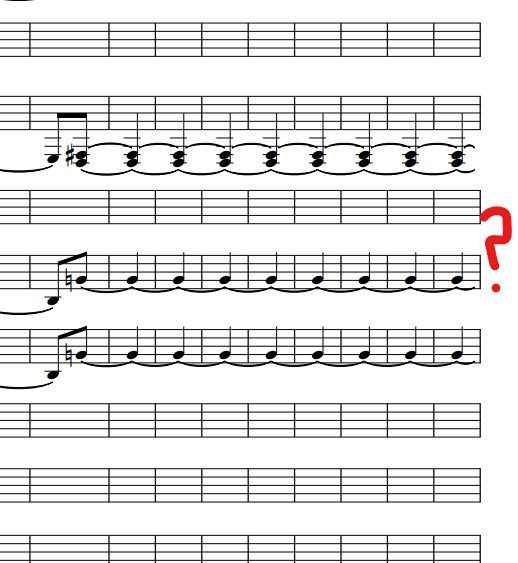
Of course I have one. I work in Studio One with MIDI files, and I can print out the score as well. This evening I'll export an excerpt and drop it in here
-
I originally wrote the first version of this piece for a Cello Quartet, during a very dark, and sadly extremely depressive time period of my life. I decided to rewrite it into a symphony-style work a few months ago, expanding its one minute original version into a fully developed piece that captured and added a new perspective it hadn't had before. Currently, this symphony version is 7 minutes long from start to finish. I am curious to hear the world's thoughts, especially in regards to transitions, structure, and the arc of the piece. For some very simple context for my goals with structure, it is meant to not be "easy" flowing and clear. It's interpretive and dynamic, each section usually adding a little bit more context to the last time that variation was played. It's meant to symbolize the return of event-specific previous positive and negative emotions, how they shift over time, and that usually no matter what, thoughts of a previous time inevitably come back to remind you of it. However I worry that I emphasize the dynamic type of relationship too much that it could be negative and have an unclear arc perhaps...? Note: I am submitting this to a composition contest in a few weeks, so my goal is to have it fully understandable and clear by then. Edit: The quote weirdly didn't come out on the PDF, but it says, "'So we beat on, boats against the current, borne back ceaselessly into the past.' — F. Scott Fitzgerald" Homage to a Longing Memory.mp3 Homage to a Longing Memory.pdf
-
Thanks for the welcome, Lithl! Glad the Saariaho suggestion hit the mark.
-
Aiden Still joined the community
-
Hello @Mamuka Chkheidze and welcome to the forum! Do you have a score of this piece? It would help greatly to allow us to review it! Thanks!
-
Thank you so much guys for your suggestions - they help me a lot. @Grant Weep, I checked "Echoes of Time and the River" and immediately really loved it. That is what I love—creative, and it sounds interesting. Also, the score is well-crafted and beautiful. Thank you so much - I will definitely dive into his works more. @PitchTempoAndriy, thank you for your suggestions. Your suggestions are exactly what I wanted to hear. I especially love Kaija Saariaho. Thanks a lot, PitchTempoAndriy and welcome to the YC forum :) I want to give you guys the "Gentlefolk badge," but have I given it to members too many times? If it's OK, moderators, could you give them that? These replies in this topic are definitely helpful to me. Thank you as always, moderators :) Best, Lithl.
Yesterday
-
Mamuka Chkheidze changed their profile photo
-
This is my latest piece, created based on Hemingway's "The Old Man and the Sea". I write various types of music that may be in demand primarily in the film industry, for soundtracks. If anyone is interested, please write to me. My music is also released on vinyl records. 1. Overture 00:00 2. The Old Man and the Boy 03:19 3. Hope 06:54 4. The Fish 10:56 5. The Sharks 12:24 6. Despair 14:22 7. Unbroken, Dreaming of Lions 15:57
-
Mamuka Chkheidze joined the community
-
LastingLegacy joined the community
-
There is certainly nothing wrong with making intelligibility of the text your primary concern, and letting that place some restrictions on how you set it. The church actually prescribed that approach at certain times historically when they felt that composers were having great musical fun, but no one could understand the mass. Thinking about an amen for works like this is a great idea!
-
haha thanks your translator makes a lot of sense and I was always wondering if other people did stuff like this, and yes ,your translator works
-
-
.... . .-.. .-.. --- / -- --- .-. ... . / ..-. . .-.. .-.. --- .-- / -....- / @Fruit hunter / .. / .... .- ...- . / - --- / ... .- -.-- --..-- / - .... .. ... / .--. .. . -.-. . / .. ... / .- .-- . ... --- -- . / .- -. -.. / - --- / -- -.-- / - .- ... - . .-.-.- / .. / .-. . .- .-.. .-.. -.-- / . -. .--- --- -.-- . -.. / .. - --..-- / .- -. -.. / .. - / ... --- ..- -. -.. ... / .-. . .- .-.. .-.. -.-- / --. .-. . .- - .-.-.- / .. / ..- ... . -.. / -- --- .-. ... . / -.-. --- -.. . / - --- --- / .. -. / -- -.-- / -.-. --- -- .--. --- ... .. - .. --- -. --..-- / -... ..- - / - .... .. ... / .. ... / -... . - - . .-. / -.-. --- -- .--. --- ... . -.. / .- -. -.. / .. / --. --- - / -.. .. ... -.-. --- ..- .-. .- --. . -.. --..-- / .... .- .... .- .-.-.- / -- .. -. . / .. -. ...- --- .-.. ...- . -.. / .-- .-. .. - .. -. --. / -- ..- .-.. - .. .--. .-.. . / .-.. -.-- .-. .. -.-. ... --..-- / -.-. --- -. ...- . .-. - .. -. --. / - .... . -- / - --- / -- --- .-. ... . / -.-. --- -.. . --..-- / .--. .-.. .- -.-- .. -. --. / - .... . -- / ... .. -- ..- .-.. - .- -. . --- ..- ... .-.. -.-- --..-- / .- -. -.. / -.-. .-. . .- - .. -. --. / .--. .- .-. .- .-.. .-.. . .-.. / .... .- .-. -- --- -. .. . ... --..-- / -... ..- - / - .... .- - / -.. --- . ... -. .----. - / -- .- - - . .-. .-.-.- / .- -. -.-- .-- .- -.-- --..-- / - .... .. ... / .--. .. . -.-. . / .. ... / -.-. .-. . .- - .. ...- . -.-.-- / .. - ... / .--. .-.. .- -.-- ..-. ..- .-.. / .-- .... .. .-.. . / -- .- .. -. - .- .. -. .. -. --. / - .... . / --- ...- . .-. .- .-.. .-.. / .- - -- --- ... .--. .... . .-. . .-.-.- / --. .-. . .- - --..-- / ..-. .-. ..- .. - / .... ..- -. - . .-. -.-.-- .--. .-.-.- ... .-.-.- / -.-- --- ..- / -.-. .- -. / ..- ... . / - .... .. ... / .--. .- --. . / - --- / - .-. .- -. ... .-.. .- - . ---... / .. / ..- ... . -.. / -.-. .-.. .- ..- -.. . / - --- / -... ..- .. .-.. -.. / - .... .. ... / -... . -.-. .- ..- ... . / .. / -.. .. -.. -. .----. - / .... .- ...- . / - .. -- . / - --- / -- .- -.- . / .- / - .-. .- -. ... .-.. .- - --- .-. / --- -. / -- -.-- / --- .-- -. --..-- / .... .- .... .- .-.-.- / .. / -.. --- -. .----. - / -.- -. --- .-- / .. ..-. / .. - .----. ... / -.-. --- .-. .-. . -.-. - --..-- / -... ..- - / -.-. .... . -.-. -.- / .. - / --- ..- - -.-.-- / ---... https://morse-translator.lithl.workers.dev/ -... . ... - --..-- .-.. .. - .... .-.. .-.-.-
-
Hiiiii Firstly, this is not 'cute' lol. I realized you definitely thought of the Rachmaninoff Moments-Musicaux for the start, that famous one Lugansky is famous for playing. (E minor one). You also used the polonaise rhythm. Nice. Next, this piece is overly forte-based, there is not enough quiet. Also, bar 39 is very good. I love that progression, but liszt would do something like Sfz there, and then the run down it starts slow but then speeds up all the way to A Tempo. Additionally, your themes and ideas are very restricted, if that's the right word, by the lack of interesting dynamics. Moreover, as someone with perfect pitch, you can really change the ending key signature as you are in 3 sharps while i heard Bb Minor (5 flats) and G minor (2 flats) I would say this has some potential, if you extended it and vary ideas, but for now, it is not performable, and even if it is playable and some distinction, it wouldn't be the best pianist experience. Good luck! -TristanTheTristan
-
Dear Daniel, Thank you so much for your kind words and for taking the time to listen to my sonata. I’m truly glad you enjoyed it! Interestingly, this sonata was completed in just a few hours. It was one of those special moments when inspiration takes the lead and the music seems to find its own way onto the page. If you ever find the time to explore my other Binary Sonatas, I would be absolutely delighted. I would be very happy to hear your thoughts and impressions, as your opinion would mean a great deal to me. Regarding Pianoteq 9, it is actually one of the things that helps inspire me as well. It is incredible to have such a plugin at home — in my opinion, it is the ultimate piano emulator! I have purchased almost all of its available piano models and have spent a great deal of time studying them, particularly the fortepianos, which I absolutely adore. I have also made several recordings using fortepianos, which you are very welcome to listen to on my channel if you ever feel curious. Thank you again for your kindness and support. I’m very happy to welcome you as a new subscriber! Warm regards, Vasilis
-
Hi Vasilis! It was indeed very pleasant to listen to. I do enjoy a lot these works "alla Scarlatti". The whole work seems to have been crafted with great care, both engraving-wise and musically speaking. It breathes, and does it very well in my humble opinion. I believe I have not listened to other binary sonatas of yours; this is probably, or as far as I remember, my first one, but you got a new subscriber! P.S: Pianoteq9 is great. Kind regards, Daniel–Ø.
-
Hi Martynas. Harmony-wise, then, it works, but I suppose you'd like it less straight-forward. There are, again, countless ways of achieving a more rich sound harmony-wise. And that is something you'll only get through practice, trial & error, and studying other compositions and harmony/counterpoint books. Some rough advise, as there are many "what ifs" that can arise: Treat the bass as a melody with its own idiosyncrasy if you want more movement there. Treat differently the the bass (tempo 1) and the middle voices of the accompaniment (tempo 2, 3, generally). Mind chord inversions. If you don't want to add a lot of richness but you still want to make this a bit less plain in the accompaniment voices, well thought chord inversions can do the work. Using octaves in the bass, again well applied, could result in a more convincing result, too. And that'd be it, without getting much into details. Best regards.
-
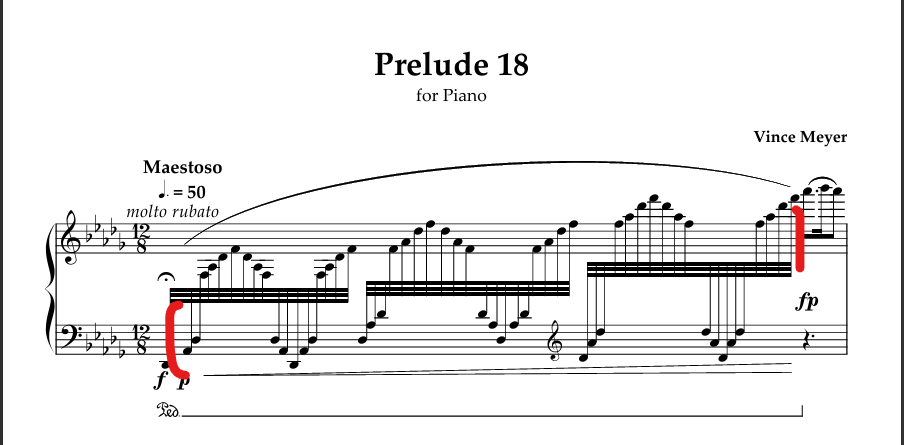
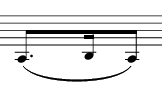
Hi Thatguy. I like the contrast between the arpeggiated chords and the almost solo voice passage. Both of them combined act as the structural pillar of the piece in my opinion, and you make good use of them. It may be true the midi doesn't do it justice. Engraving-wise I'd suggest putting these wide arpeggios in small notes so it's even clearer where the molto rubato acts and where the piece gets a bit more rigourus in tempo. I don't quite get the switching between Db and C#. Why is that? That aside, the prelude works for me but it wasn't my cup of tea compared to other preludes I've listened from your list. It's soft indeed and pleasant to my ears, especially the middle section in which the (1) seems to wander around chords. How many preludes are left? Or are they not gonna have a set end? Best regards!
-
For the chamber + electronics direction you mentioned, here are three specific starting points: Kaija Saariaho — Petals. Cello with optional electronics: reverberation and quarter-tone shifts above and below the cello. Look for a performance with electronics, since it can also be played without them. https://ressources.ircam.fr/en/work/petals Pierre Boulez — Anthèmes 2. Solo violin with live electronics that transform and extend the violin sound and move it around the room. Make sure it's the second version; that's the one with electronics. https://www.universaledition.com/en/Works/Anthemes-2/P0006667 Jonathan Harvey — Mortuos Plango, Vivos Voco. This one is entirely electronic, built from a boy's voice and the tenor bell of Winchester Cathedral. The composer's note explains how the bell's partials provide the pitch material and how voice and bell transform into each other. https://www.fabermusic.com/music/mortuos-plango-vivos-voco-1154 Those give you a few different ways into it: a cello with processing, a violin interacting with live electronics, and a piece made from transformed recordings.
-
If you still have the notation or DAW project, changing the tempo there is usually the cleanest option. But sometimes all you have handy is a short audio render and you want to hear whether the idea feels better a little slower. I own Pitch Tempo, a free tool at https://pitch-tempo.online/ that can make that sort of listening copy. Here is a simple example: 1. Start with your own audio file, or one you have permission to upload and edit. 2. For a steady 100 BPM sketch you want to hear at 90 BPM, set tempo to 90%. Leave pitch at 0 semitones to keep the key. The calculation is target BPM / original BPM × 100. 3. Listen to the preview before exporting. Check the attacks and sustained notes: slower is useful only if the result still lets you judge the music. 4. Export the full file and save it. If you like the new pacing, you can go back to the source project when it is available and make the actual compositional changes there. This stretches the entire recording by one ratio. It will not rewrite tempo markings, remove rubato, turn audio into notation or MIDI, or change just one instrument in a mix. Files can be up to five minutes and 100 MB. Tempo runs from 50% to 150%, independently of pitch. The preview covers the first 20 seconds of the source, so listen through the export too. A full export finishes that editing session; another version needs a new upload. Guests get three uploads per rolling 24 hours. Processing is on our server and guest audio expires 24 hours after the original upload, so keep your original and download the copy you want. Happy to answer questions about whether a particular file-based task fits those limits.


.thumb.png.8b5b433a341551e913a34392660bc95b.png)