

All Activity
- Past hour
-
- Today
-
Kia Ora Henry, I will admit that when I first heard the original version of your Clarinet Quintet I did not like it very much. Blasphemous, I know. Everyone else on YC seemed to love the piece, and I just... didn't. I found all too much, which I suppose was your intent; despair is overwhelming or whatever it was. After listening to this revision, my opinion has changed. Or at least my opinion on the first movement, which was one of the two of the original I listened to. I don't dislike it anymore, but I don't love it now either. I think it's a decently good piece, but far from your best work. My favourite part of this piece is by far the second subject which if I recall correctly, is based on the dream motif. It definitely has this dreamy, hopeful, idealistic Romantic, feel to it which I really really like. I mentioned something similar to this to you on discord, and I'll rehash it here, I think it could work really well readapted as a waltz theme in an orchestral arrangement or something. I think it really contrasts well with the first subject (despair) and is a nice break from all the despairing going on before it. My least favourite aspect of this piece is... I don't actually know. I've relistened to this version and skimmed through it a couple of times trying to find something I dislike but... I can't find I hate. I think I will have to listen to this a few more times and get back to you. Perhaps it was the awful playback in the original post that made everything sound worse to me, I don't know. Again, I'll have to get back to you on this In summary, I think this piece has really grown on me. Or at least the first movement has. That second subject is absolutely my favourite part of the piece but I don't really care for... something, I just can't quite tell to be honest. I think I find this piece less over bearing now than I did on my first listen years ago. Progress has been made! look forward to hearing the rest of your revision of this piece. Maybe the latter movements will convert me, a filthy heathen who cares not for the Clarinet Quintet in C Minor, into a believer. Ngā mihi, Archie
-
BlackkBeethoven replied to BlackkBeethoven's topic in Incomplete Works; Writer's Block and SuggestionsHow should the chord be voiced? It's an F#m9...I'm using the F# as a pedal tone, just experimenting with it a bit. Mind you, I haven't listened to any of this yet, so idk what it sounds like lol
-
-
Hi! Long time for not posting anything! I'm revising my old Clarinet Quintet and learning orchestration in the process. Here's something I'm working on. Clarinet Quintet in C minor is a work I finished 4 years ago in 2022 which I accidentally began my revision of it in April 2026. It's a work in four movements and in it I want to share my feeling towards despair, dream and hope. The piece is dedicated to my friend Ms. Merina Fung. Speical Thanks to @Thatguy v2.0 for making the audio for me. Here is the youtube video of the movement: Here is the structure of the 1st movement: 00:00 1st subject, Exposition. Introduce the "despair" motive (0134), in some sort of sad waltz in C minor. The passage in 01:26 is directly copied from an old piece of mine named "Boredom" 01:48 Transition. Follow the tonal plan of the first movement of Tchaikovsky's Fourth Symphony and modulate to tritone major Gb major (which is the tonic key of my next major work, String Sextet in G flat major). 04:09 2nd subject, Exposition. Introduce the "dream motive" (0247) and subsidary chromatic motive of (0123). Conflicts of the despair and dream motives continue, the dream seems to win at 06:53 with its own climax but easily defeated with a bold C minor half cadence right before the close of the exposition with a forceful perfect cadence in Gb. 08:42 Development, part 1. The dream breaks expectedly I really like the counterpoint in 08:59. Modulates to E minor for the transition theme, then build to a really beautiful climax in E major in 11:10 which I really love. Makes this movement sounds a bit less tragic. 11:36 Development, part 2. Another false serenity after the beautiful climax by a disappointed passage in G# minor in 12:38. The serene texture returns in B major in 13:17 but falls short to a dominant preparation of C minor in 13:50. I really love the retransition as it sounds really passionate to me (Actually I love all parts of the remianing parts in this movement after this point). A review of the keys visited in 14:27 with an octatonic falling scale, ending with two sorrowful monologue of clarinet and cello, just like the beginning. 14:53 Transition. I skip the 1st subject reappearence in the recap as it's completely meaningless to do so, given how the motive is developed in the entire movement. I really love the tragedy here, as I even have this passage reappears in the coda of 4th movement, after 40 minutes or so lol. Another false serenity in tonic major in 15:24, and I really love the nostalgic sounding passage in Ab major in 16:01, still base on the dream motive. The German sixth chord in 16:36 must be stolen from Schubert"s Quartettsatz. A fugato in 16:42 trying to fight despair and reclaim dream once more and "sucessfully" modulates to Gb major once again. 17:31 2nd subject, Recap. But when you want more you hurt more, as despair harms you more when you have hope. This time a hard C minor half cadence comes. The dream theme now becomes a nightmare in 18:07 and continues to sigh. 19:20 Coda. Previous themes keep reappearing as I myself used to ruminate my sadness all the time. Finally it ends with what begins the piece, the realization of despair in its original form. Structurally I am not really satisfied with how I expand the themes in the 2nd subject of exposition (Dream part) and how I treat the materials in development, as I am afraid I overextend too much. However I just retain most of the things originally as I wanna keep true to my old self. It's an absolute low when I composed this piece, as I really questioned myself whether I could really compose something good back then. Luckily I did finish the entire work and gave me some confidence, plus meeting some really good friends here. The whole 4 movement piece is composed with three motives mentioned above, as I wanted to keep the piece coherent. The inspiration of the work comes from Brahms’s Clarinet Quintet as I wanted to write a more tragic piece than his (of course this goal fails), but I am happy with what I’ve done. Strangely only now do I find how Brahmsian this piece is. One interesting thing is that despite the movement is in C minor, in the first 14 minutes (two-thirds) of the movement, only 2 minutes are in the tonic. In this revision I mainly modify spots I find unreasonble, some voicings and slurs, and breathing spots for Clarinet. Hope you listen through the music and read through the description, and my wish that enjoy the work! Feel free criticize the work as I know it's far from perfect. P.S. the old version of this same Quintet is posted before: It's my biggest mistake to post an hour long piece here as my first post. So I will chop up the 4 movements and post it one by one now! Henry Clarinet Quintet in C minor 1st mov V3.mp3 (For YT)Clarinet Quintet in C minor 1st mov final 20260501.pdf
-
Henry Ng Tsz Kiu replied to BlackkBeethoven's topic in Incomplete Works; Writer's Block and SuggestionsI didn't say that in the first place lol!
-
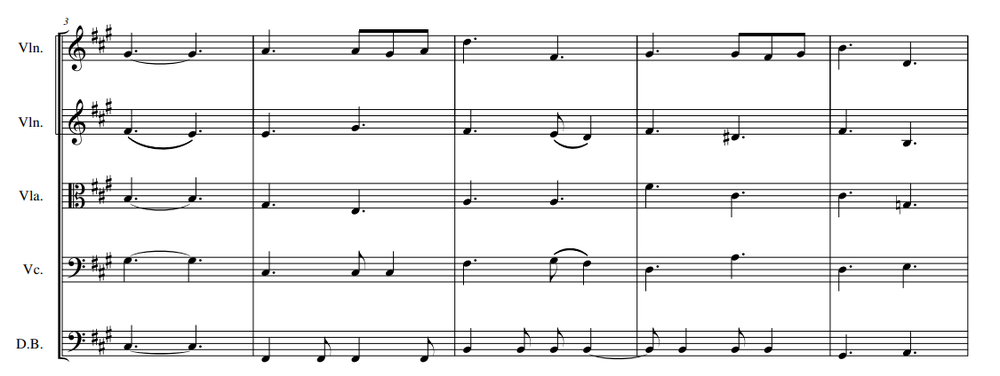
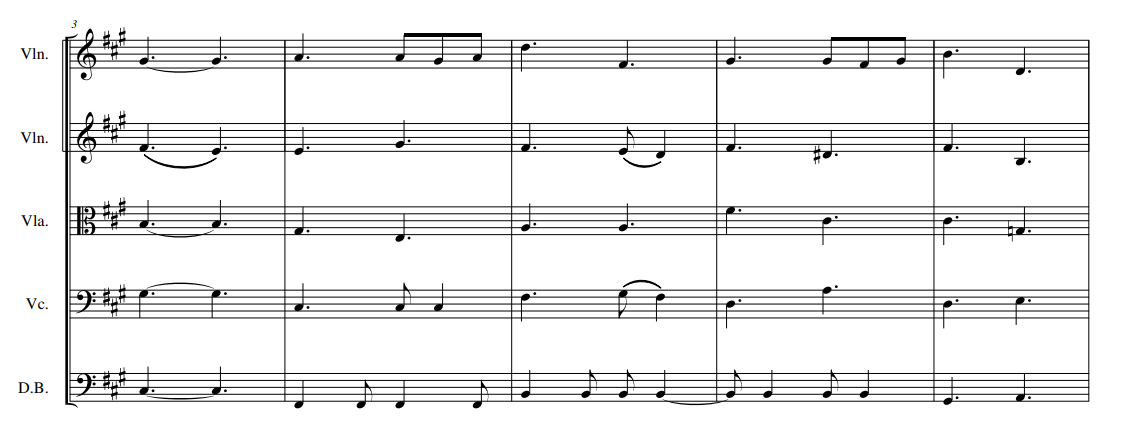
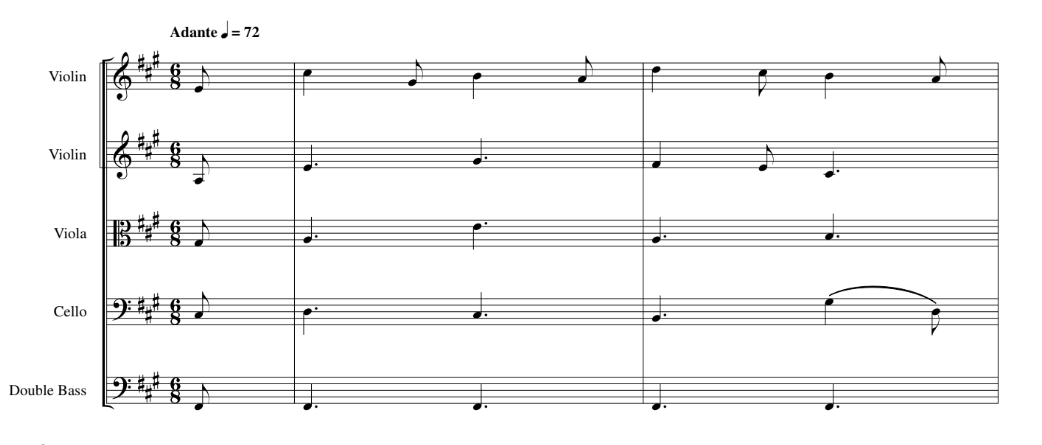
@BlackkBeethoven You are getting of this! Let us address voice leading and part writing errors, okay? As @Henry Ng Tsz Kiu there are those pesky direct and parallel 5ths in this string writing. Normally, we want to avoid that! However, there are times when it is nearly impossible to do that. Or base on the style, we choose to ignore standard part writing rules. Another thing I noticed is voicing of the chords. The first chord is not correctly voiced. Why is there F in the bass? what is the tonal center? I know you can do this @BlackkBeethoven . :)
-
-
Henry Ng Tsz Kiu replied to BlackkBeethoven's topic in Incomplete Works; Writer's Block and Suggestionslol, then just correct it. Or it's ok to have p.5 if it's not in chorale style.
-
BlackkBeethoven replied to BlackkBeethoven's topic in Incomplete Works; Writer's Block and SuggestionsWriting harmony for strings is always fun tho regardless lol - yes, I see the parallel 5ths 😒
-
BlackkBeethoven replied to BlackkBeethoven's topic in Incomplete Works; Writer's Block and SuggestionsOhhhhhh gotcha
-
Henry Ng Tsz Kiu replied to BlackkBeethoven's topic in Incomplete Works; Writer's Block and Suggestionstwo keys competing
- Yesterday
-
BlackkBeethoven replied to BlackkBeethoven's topic in Incomplete Works; Writer's Block and SuggestionsI was hoping the pedal tone, while I shifted around different chords, would help with that ambiguity...what do you mean by stretch?
-
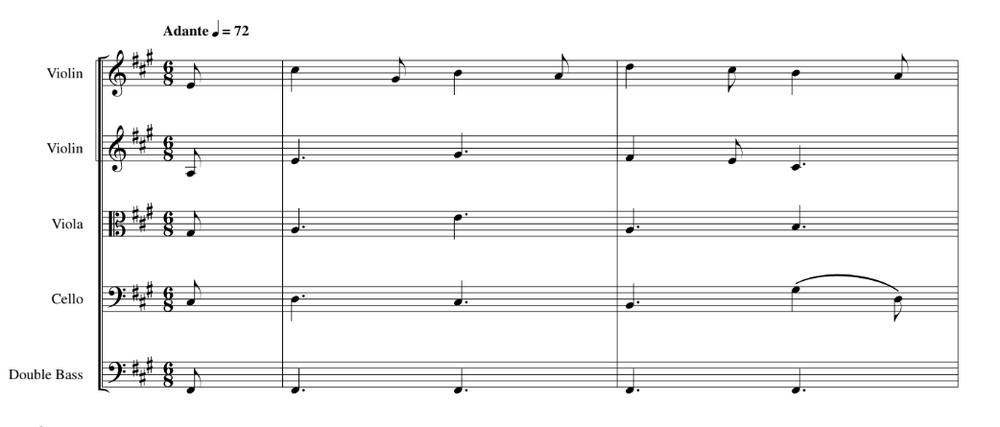
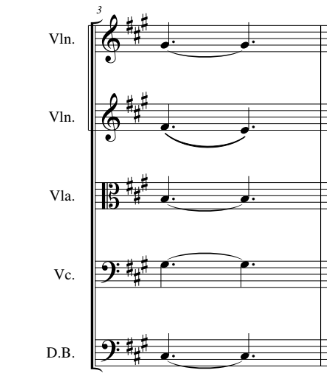
Henry Ng Tsz Kiu replied to BlackkBeethoven's topic in Incomplete Works; Writer's Block and SuggestionsI think you could play with the ambiguity of key here... now your bass is suggesting F# minor and the melody is suggesting A major, so probably you can have these two keys stretching themselves, like the opening of Schumann's Dichterliebe. Henry
-
BlackkBeethoven replied to BlackkBeethoven's topic in Incomplete Works; Writer's Block and SuggestionsI want lush and ambiguous w/o a super direct V-i motion...I would like to get some more rough ideas and chords on paper and then take a step back and look @ structure...my composition professor likes to just have us write rather than talk about strict forms. I did study it in theory, though, and I would like this piece to be my magnum opus and I want to do it well.
-
Hold on: Psycho
-
Hi there, I have done short example for you. Few things about the example: The timpani and double bass are merely in the background. I did not want to overpower the brass section. So, i choose only used the horns. The cymbal crash at the end creates emotion effect! P.s.. I hope this hope you. Kvothe. Tutti example.pdf @MK_Piano is correct about the planets! Gustav Holst wrote the suite when he was all girls school for two pianos! :) Tutti example.mp3
-
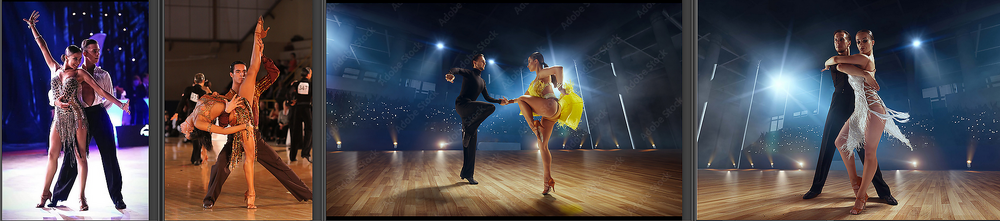
Double Vodka No Ice SUPER LATIN BIGBAND.mp3
-
@BlackkBeethoven Heavens no! Please do not give up! I want you excel at your craft. I want to best write amazing pieces and be proud. Thus, that is why I suggest a path that would allow you to do that. You can approach a string quartet in the same manner as 4 part chorale first. :) That is amazing thing about homogenous textures they blend well! I know this can do this. Please continue. :) p.s. You are being hard on yourself if you think "why should I continue if it is bad". Tell that negative view take a hike!
-
-
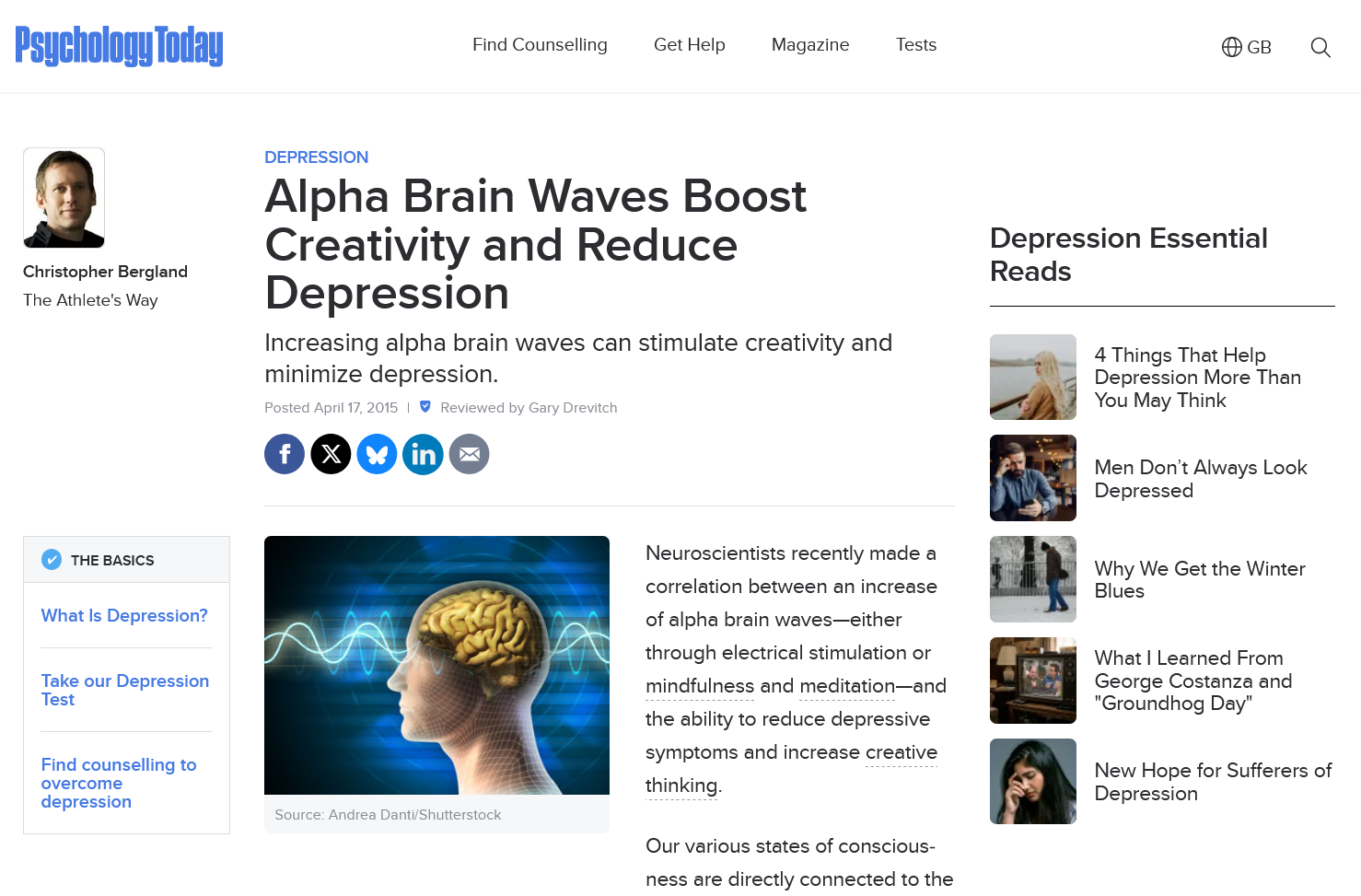
I would say in this piece , you were using your ALPHA-Brain waves...Not your BETA Brain waves 12 Foods to boost this Phenomenon https://nhahealth.com/12-brain-foods-that-supercharge-your-memory-focus-mood/ . Psychology TodayAlpha Brain Waves Boost Creativity and Reduce DepressionIncreasing alpha brain waves through electrical stimulation or mindfulness can boost creativity and minimize depression.
-
-
-
Aha! That is the risk. If you know everything about your music and exactly what it would sound like, then you would not need to ask that question. It is the pursuit of the answer that you will become a composer. If you mess up, then so be it! What is the point of failure if you don't learn from it? To quell your concerns, here is a literal and personal example: My manuscript of Waves of Frisco Bay WavesofFrisco_sample.pdf Here, you will see what I did for the piano and then how it came to be in the Orchestra. I used little abbreviated terms like FL. for Flute, CL. for Clarinet, and TBR. for Trombone. Here, I literally planned everything out. I gave roles for each instrument and then put it to midi. How did I plan it? I started big and worked smaller: 1. Picked the form - 2. picked a style - 3. Wrote a theme - 4. Developed on paper - 5. Orchestrated. This is one way and it may not work for you the same. However, mess around and try different approaches. Listen and read, or watch videos. Doesn't hurt to experiment lol
-
@therealAJGS has submitted the following quartet!















.thumb.png.8b5b433a341551e913a34392660bc95b.png)