

All Activity
Past hour
-
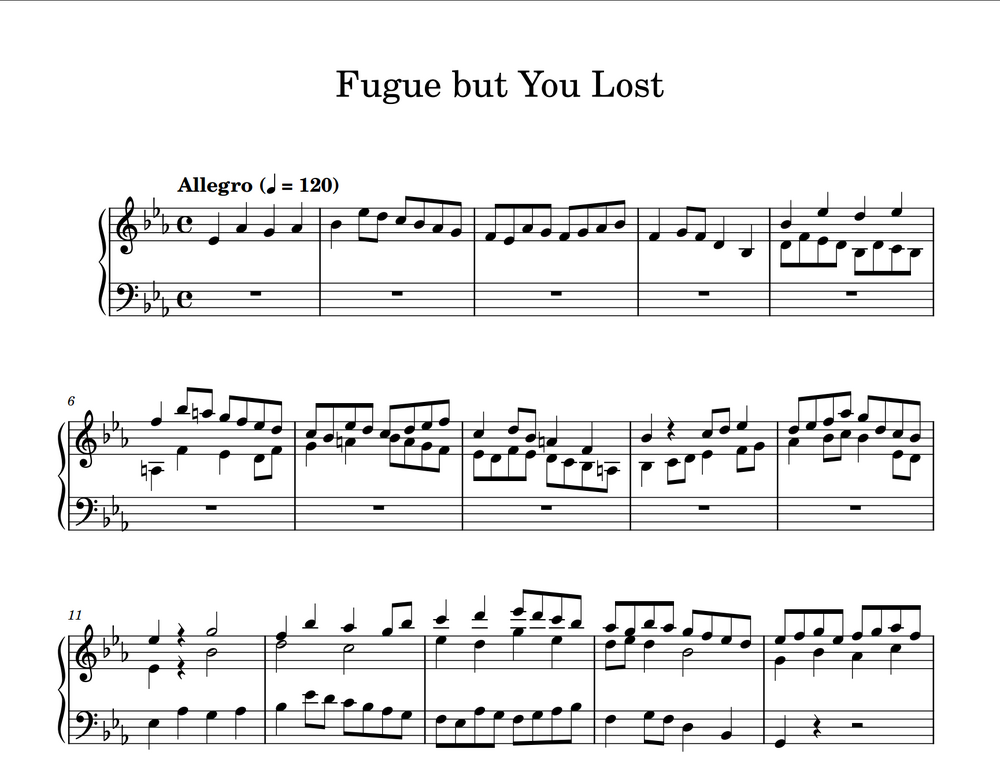
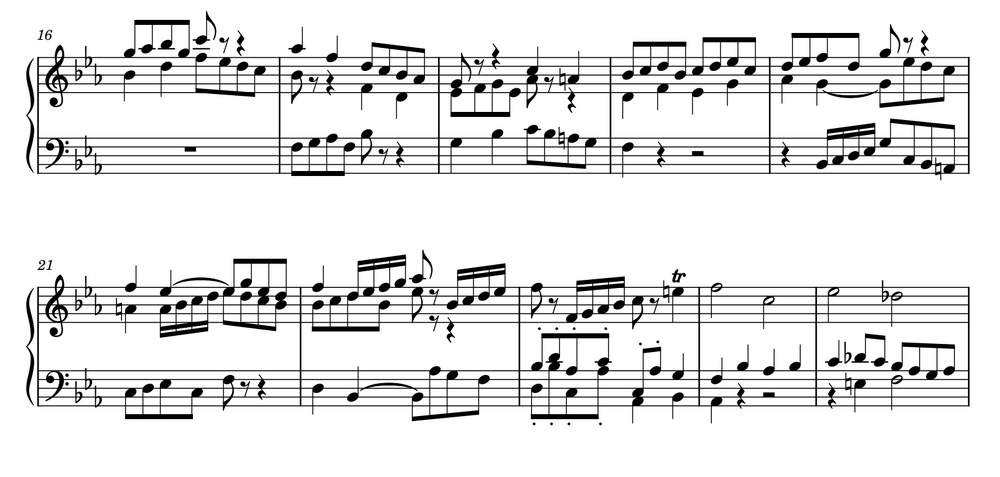
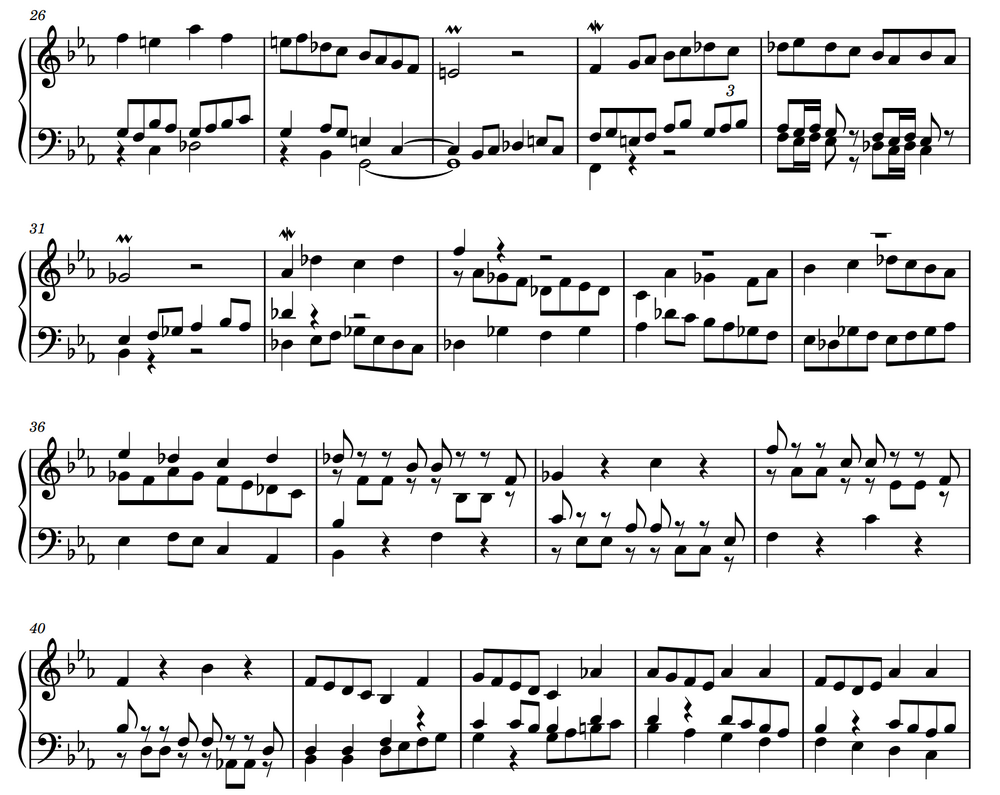
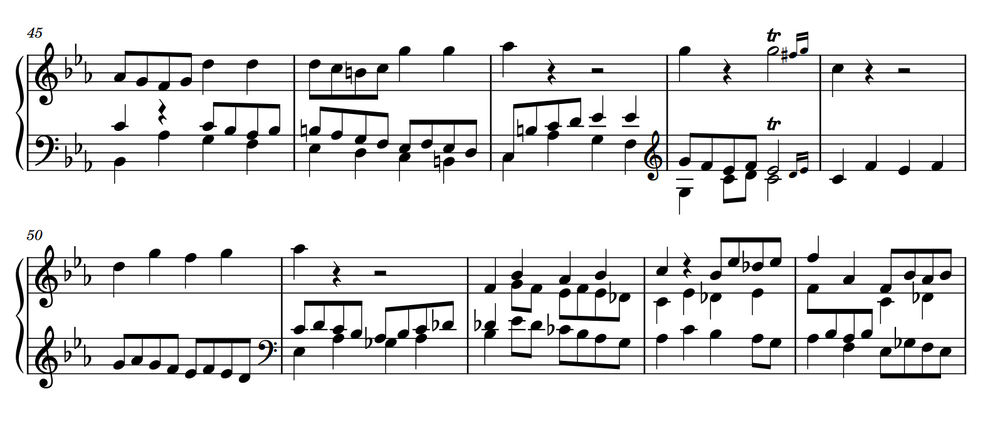
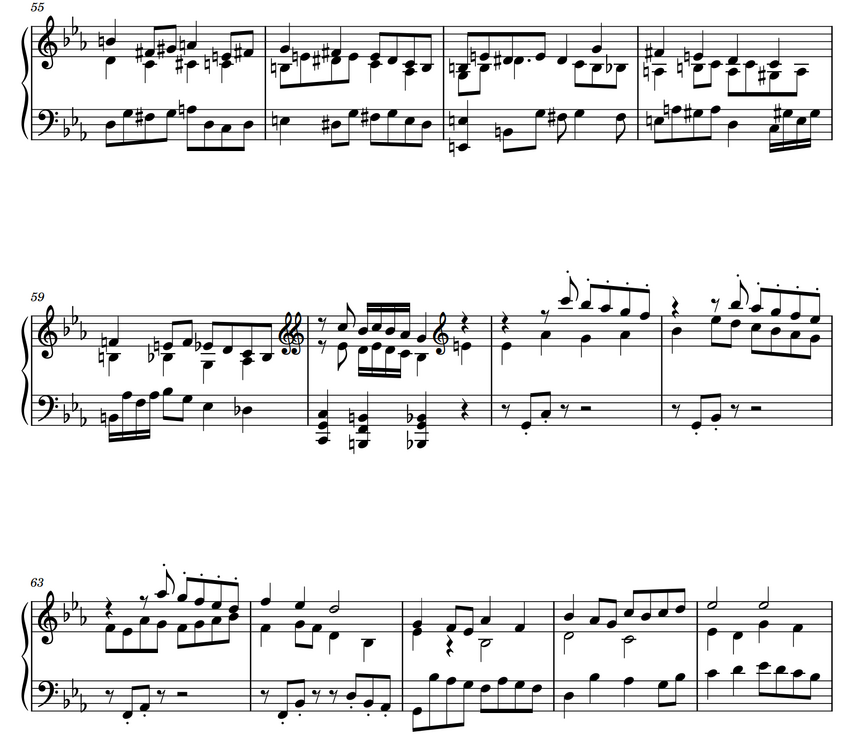
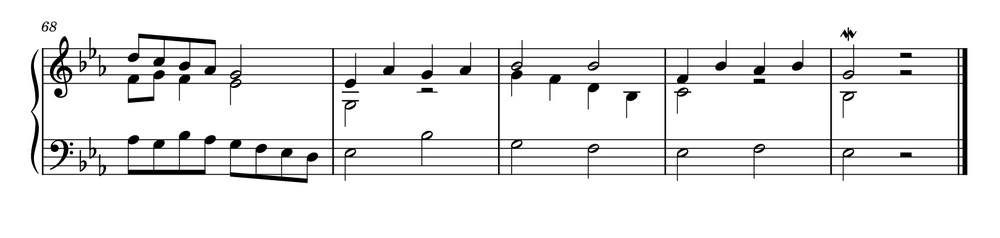
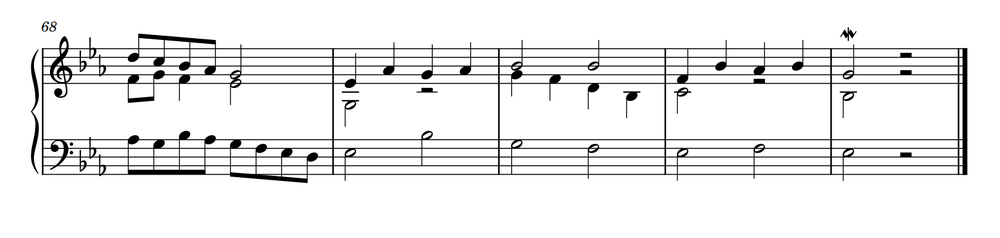
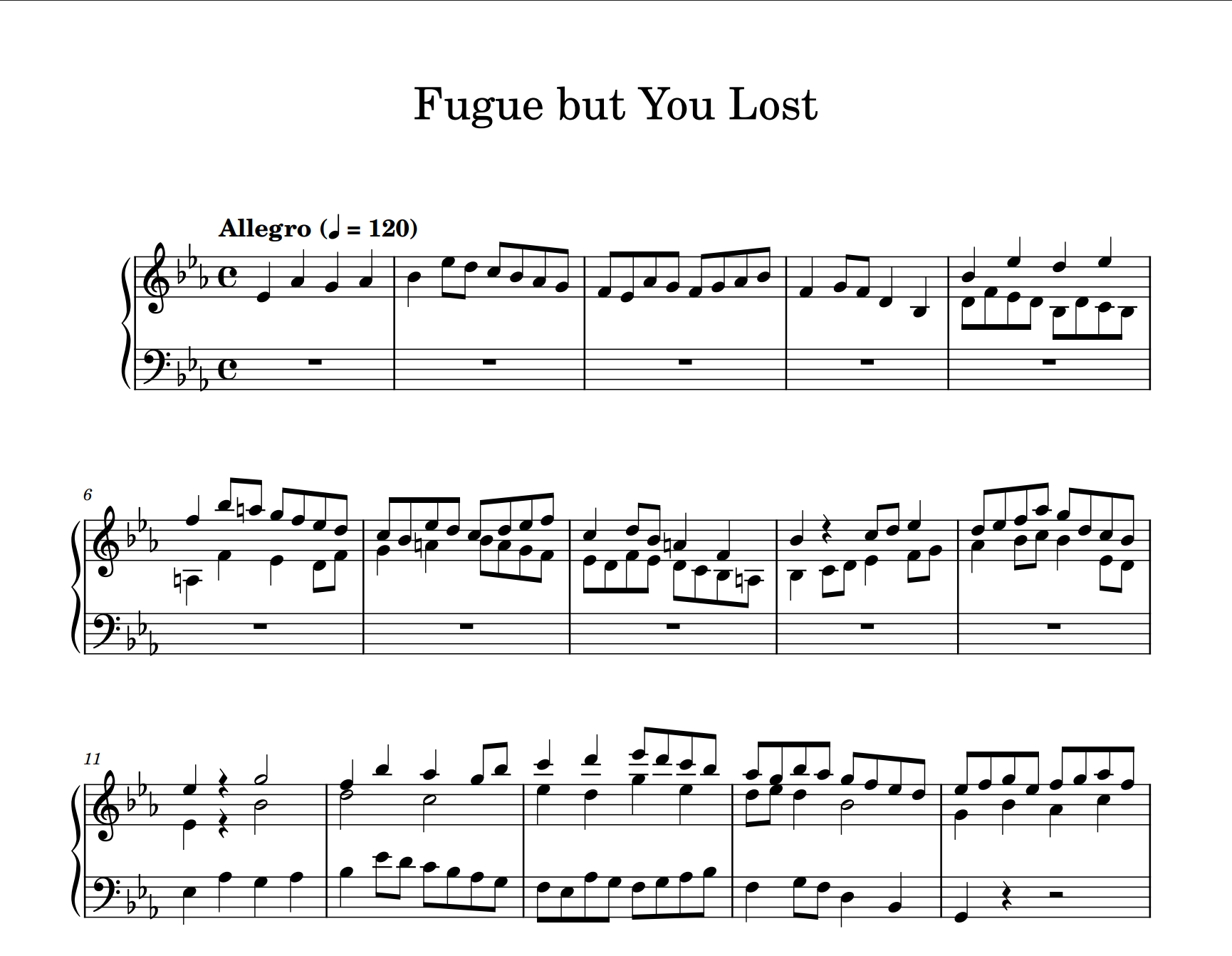
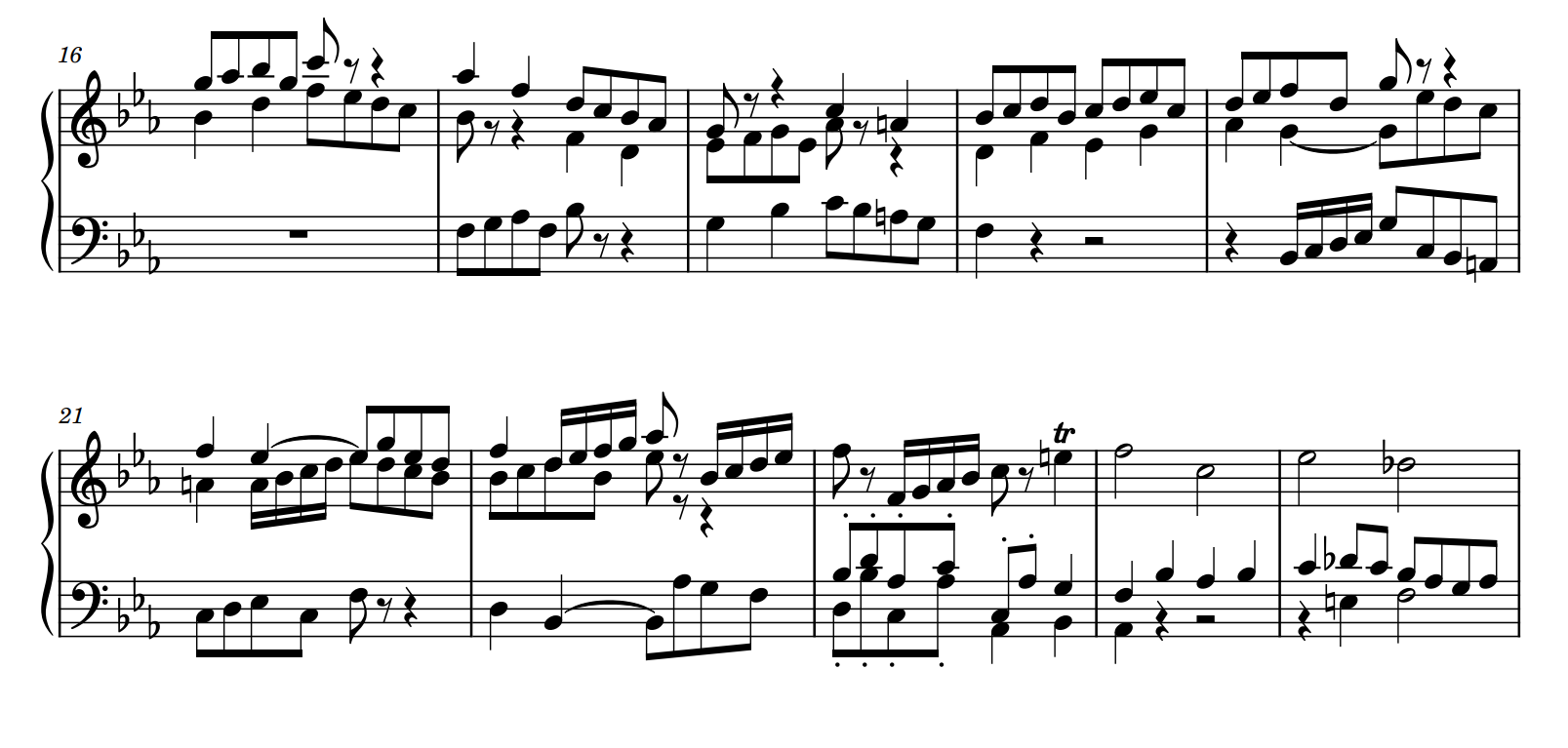
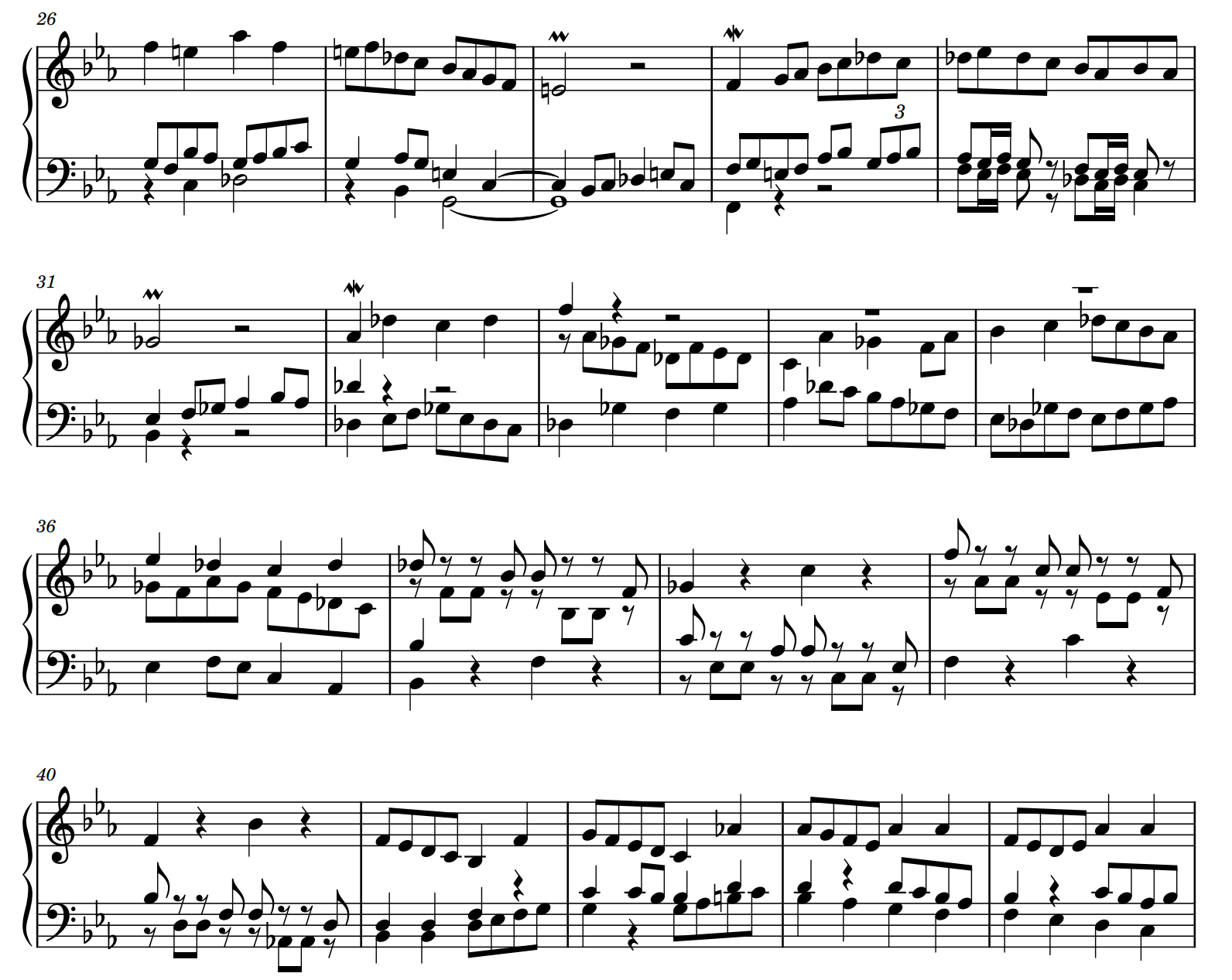
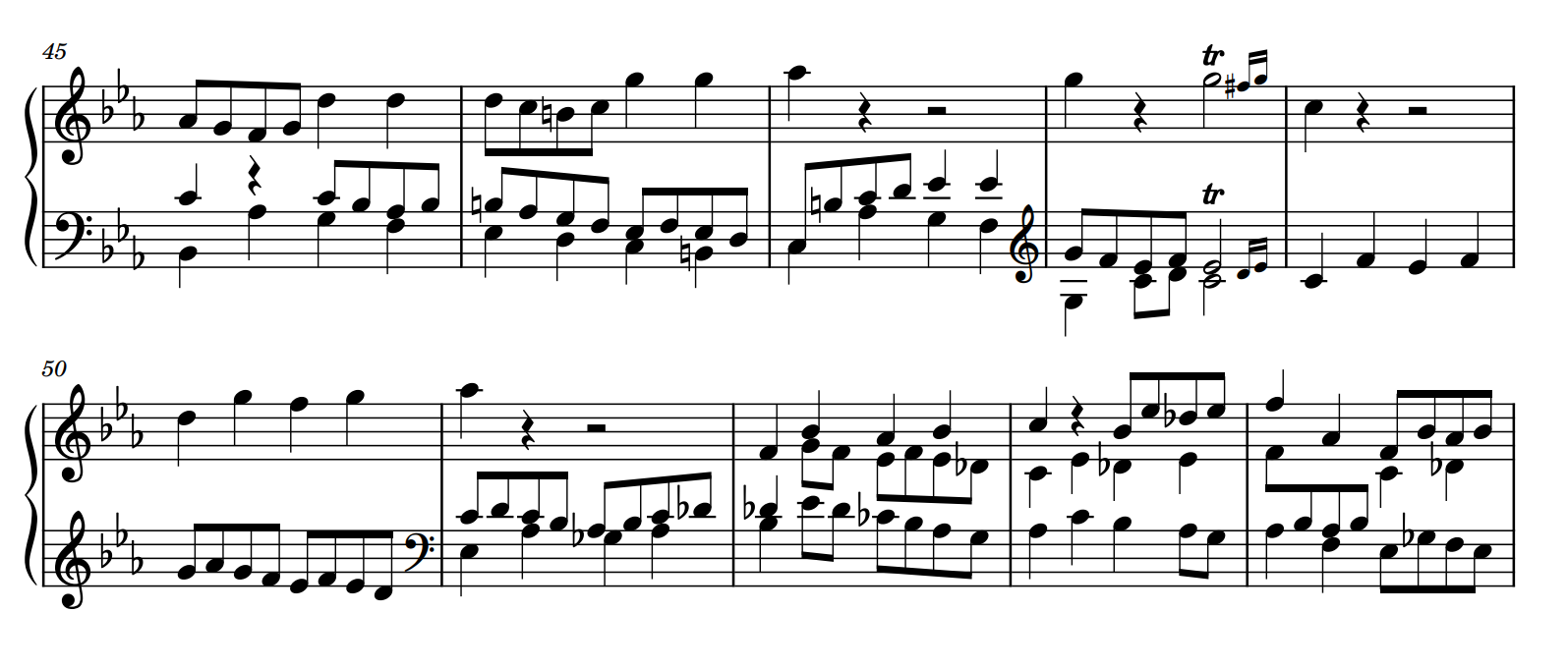
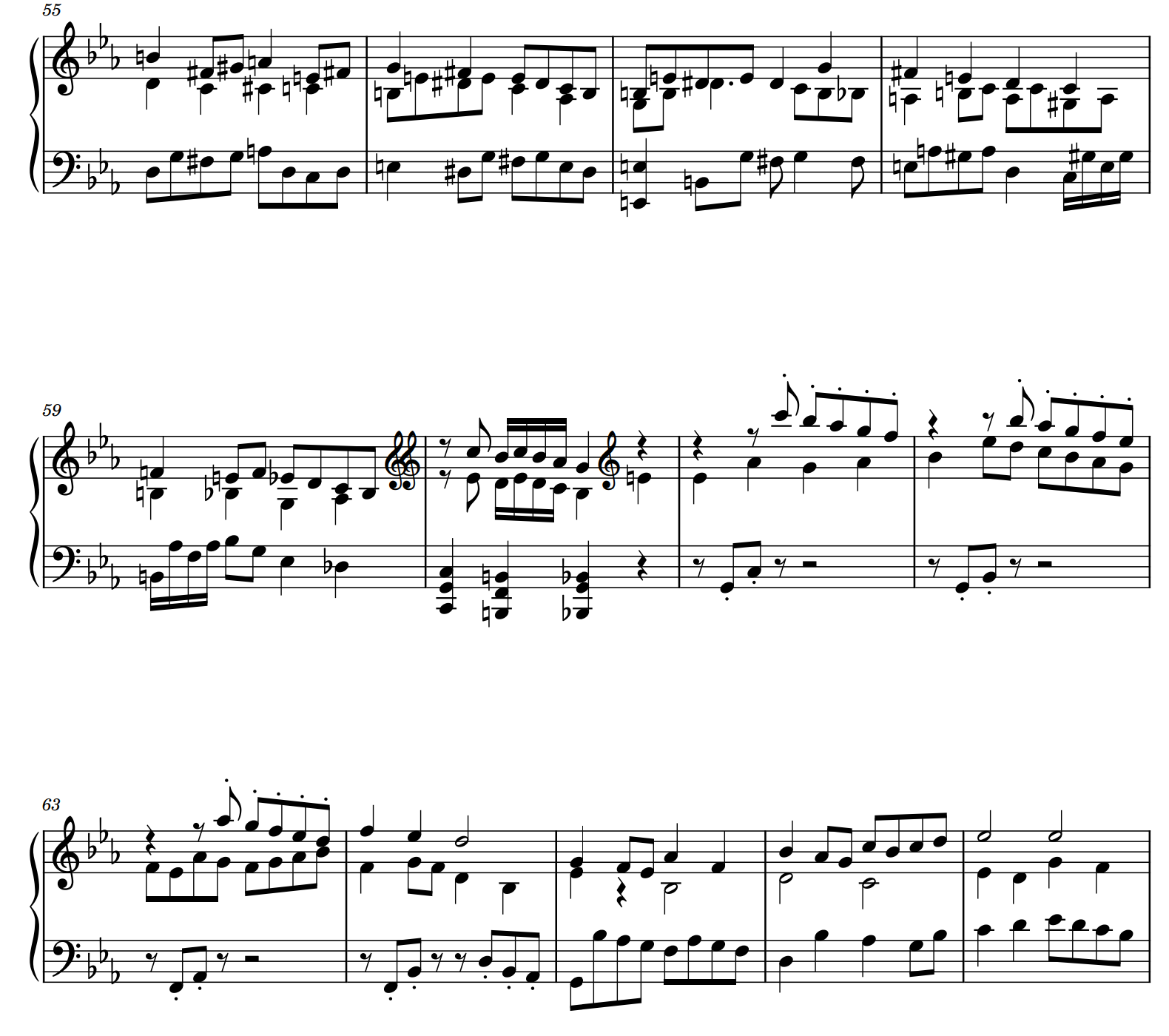
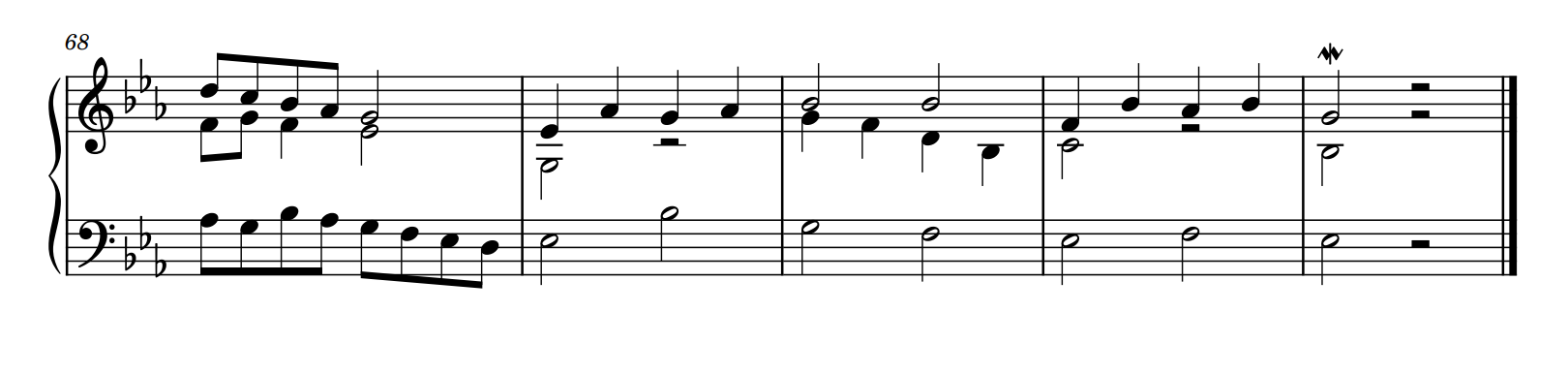
Analysis!!! Title+Bars 1-15 So, firstly, the title is just 'Fugue but you lost'. Where is the composer name? Also, I recommend (personal preference) saying something like Fugue on the theme of 'Insert something'. Writing 'Fugue but You Lost' kind of makes it seem unprofessional. (You have told us the reason behind it.) I like how you wrote Allegro (♩= 120). It gives an approximation of practice tempo (♩= 96) if this were to be performed. You never know. The beginning phrase (Eb Ab G Ab) makes it feel like Ab major a bit. I like how it is disguised. The whole opening phrase (bars 1-4) is is completely playable and musically intresting. Good job. Trouble starts at Bar 5, where you expect the performer to be Rachmaninov. Or Liszt. Or an alien. one of these three. Please do keep in mind that normal humans cannot reach such like the compound minor 6th in the first beat of the 6th bar. If instead you meant to split up in the two hands, however, then please delete or hide the rests. Do mind the parallel movements in the section. In Bar 11, a third voice is introduced effectively. We have heard the theme in two voices before. but now, it is also in the third. I would like point that the rests on Bar 11 Beat 2 feel completely unnecessary, and should just be a minim. (starting on the first beat). Bars 16-25 Bar 16, we have this nice ending to the ascension of a single hand. I do not believe that a rest is important here, as the notation should best kept simple and human-legible. By Bar 20, we already have semiquavers. Nice use of rhythm to add texture, although I don't really like Bar 23, with all of those staccato notes in the bass, although I love how you reused the main theme in the bassline of Bar 24. Bars 26-44 (Page 2) In Bar 26, you continue the development beginning at Bar 24. I really like this bar, and also the two bars right after. I don't really like the triplet in the bass of Bar 28. It feels unneccasary, and perhaps, a single G would do better. The following might sound better on a real instrument, so I will leave it as it is. It is a unique idea. Bar 31, that upper mordent could change to a lower mordent and the lower mordent in Bar 32 can change to an upper mordent. It feels more 'optmistic'... I don't know... Something tells me that is better. I also love how you came back to the theme in Bar 32. *passage from bar 33 to bar 36. Not too interesting.* Bar 37 introduces one of my favourite matierials in the whole fugue. You have used repeated notes to it's best extent at the best time you can in this fugue. Tremendous. This continues until Bar 41. Bar 41 feels too chunky. Bars 45-54 The passage from Bar 42 to Bar 46 is not bad, but Bar 47 is GOLD. That hesitation at the end of the bar feels like you are hanging on the side of a cliff. You reannounce the main material (I lost the game) in Bar 49-50 explicitly, but notice your great use of it in other places too, such as the bottom voice in 51, the top voice in 52, the second half of 53's top voice and the full bar of 53's middle voice. You also sneaked in even more in Bar 54, with that inverted material in the voice, and at the end of the bar you top voice, if you take out the bottom voice, only quarter note values found, you get Ab, F, Eb, F, which is also the inverted material! Absolutely ingenious section! Bars 55-67 (Page 3) Ok. Transition metals are Scandium Yttrium Lutetium Lawrencium Titanium Zirconium Hafnium Rutherfordium Vanadium Niobium Tantalum Dubnium Chromium Molybdenum Tungsten Seaborgium Manganese Technetium Rhenium Bohrium Iron Ruthenium Osmium Hassium Cobalt Rhodium Iridium Meitnerium Nickel Palladium Platinum Darmstadtium Copper Silver Gold Zinc Cadmium Mercury ... I did all of that as a joke... So anyways, you transition into a lot of different keys, I won't keep up. This goes from bar 59. I don't know what happened in bar 60. I guess I missed Sheet Music War 1 (SMWI). Seriously. Why are there 2 treble clefs? do you require such notation? Can't you just use a Tenor Treble Clef thingy? Also, there is something weird happening from Bar 61-63, but it sound good and seem playable to me so ok then. Bars 68-72 The rest is just a coda, which is good, but you could improve it by extending the note length of the final chord. Overall, it is a nice, cool, piece that has some potential! Congrats! -TristanTheTristan
-
Nice relaxing piece: reminds me of Vaughan Williams. I could definitely hear the ebb and flow of the ocean waves. I just have one small notational point: from Bar 28, I don't think it's correct to have those full bar rests in the harp. I would replace them with dotted crotchet rests. Would also insert dotted crotchet rests into the upper staff for the same reason (rather than having blank spaces). I'd also be inclined to use cross-staff phrasing slurs across each full bar.
Today
-
A fantastic piece that I really liked. And a very detailed score.
-
Just bumping this, because it's received no comments yet. I guess nobody has heard of Koechlin! Though I think he's a very interesting and underrated composer.
-
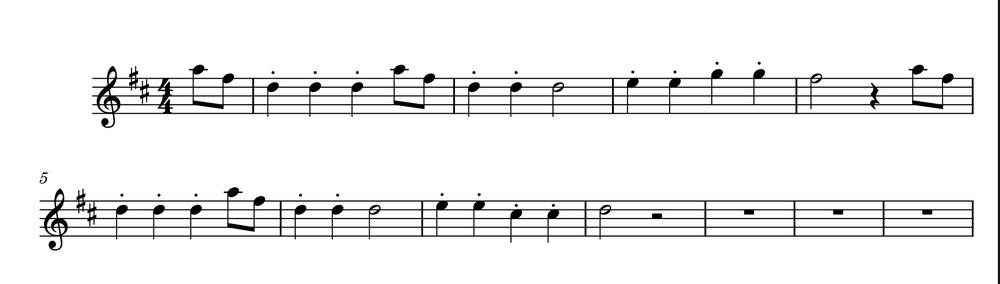
Hello @Martynas123, I enjoyed your scherzo—it shows good compositional instincts and creativity! Here are my comments: Score legibility: The first thing I noticed is that your piece is not in G major at all (as implied by the key signature), but D major. Bars 25-39 should have the G major key signature, on the other hand. Additionally, the Ab in bars 34-38 should be changed to G#, is its the third of an E major chord. This is a bit more far-reaching—but I’m convinced that your piece is in 4/4 rather than 3/4, excluding the middle section from m. 25-39. I took the liberty of re-notating the first few bars in that way: The left hand in bars 40-49 should be notated in treble clef for consistency. I would have you consider revising the pedal markings, as some of them conflict with chord changes as well as staccato articulations. I would actually omit them entirely — they’re not really necessary in this piece. I liked your use of staccato markings! You might consider adding slurs as well on some of the figures you’ve left unmarked. Hairpins are also good to bridge some of the abrupt dynamic changes and lead to climax points. Some of your minims had staccato markings, which shouldn’t be the case. I don’t think the middle section needs to be marked “Minuet”. Since this is a scherzo, you could mark it as “Trio” instead. Compositional decisions: The form itself is well thought through! I see an A section (m. 1-24), a contrasting B section with transition (25-39), and a recap of the A section with short coda (40-62). The contrast of different tonalities is good too. I would omit the one-bar moderato introduction—it doesn’t really connect to the rest of the piece, and the dotted crotchets are unnecessarily complex to read. Since the A and A’ sections have a lot of repetition inside them, I would the omit the repeat bars in those parts. Otherwise the repetition gets a bit tiring. I would suggest revisiting the middle section—the harmony feels a bit incomplete, starting on a second inversion tonic triad and ending on an unaccompanied tonic note. That’s my main feedback on the piece. Great work overall! I’m curious—what’s been your compositional training so far? Have you studied any harmony/counterpoint/form, or are you mostly self-taught?
-
-
Although Cantai works with Musescore, the lyrics I used are in French and Cantai only works with English and Latin lyrics
-
-
-
Yesterday
-
First of all, thank you @PeterthePapercomPoser for your review. I have learned so much from you, and your feedback is greatly appreciated! Hope that's a compliment 😆, but I agree. That's actually something I noted in my program notes. The title is (and by extension, the piece), symbolic of my growth as a composer. Most of my early compositions were just SATB pieces, before branching off to explore writing for instrumental ensembles. The corral sections are some of the material I feel most personally connected to in the peace, and that style of writing comes very naturally to me. I wanted the B section to feel more "grounded", hence why both the A and B section are in meters that are "equal", but 3/4 feels more grounded here, as opposed to the more waltz like 6/8 theme. And I think it provides a nice contrast to the material it is surrounded by. The return of the chorale character later in the piece is so far removed from the chaotic C section material that preceded it, but now develops into something different. 😅 This is actually one of the things that bugs me about the piece and certainly proved to be a challenge. My theory professor loves teaching form, but I also decided to skip a lot of class around the time that unit was covered 😆, so I've never felt too too confident in my knowledge of form. And I saw the holes from the beginning, but in that mindset of just wanting to push through and finish, I tried to think of ways to make it work. And I think it turned out alright. I'm glad the modulations ultimately worked for you, but I would still like to hear what you thought sounded objectionable 👀 I agree, when listening in Finale, they're more audible, but the playback is also horrible so 😬. I'm hoping to get this performed by an ensemble at school, so that's something that I will be sure to communicate to the performers. Thanks again!!
-
youreastallasplanetree.mp3 you are as tall as a plane tree I fall asleep sitting up and you catch me I could bury you up to your nose in pear soda cause Origen’s praying for us you are as tall as a plane tree when we’re Lake Superiors away you loom over me that shadow you cast over the shrovetide mass makes leo quake and strip his dandy vestments sometimes as small as a birdseed when i'm a pigeon and you feed me star anise but I’ve seen you freeze before in the falconry store so it must be the phantoms I keep I am as poor as a penny I walk up to your room and you take me I know marx didn’t die for me to cream and cry but you know just when I am needing when you're raptured up to armenia and I’m burning down make sure Origen’s praying for me in one tiny bed we could fall asleep but you get red when you can’t see into me but we ate Sherpa pie where the daisies did die so it must be the phantoms I keep we stewed Presidents’ eyes where we told our first lies so we drank from the fairies you’d steeped and we burned Baptists’ blood when we played in the mud so it must be the phantoms I keep cause you’re as tall as a plane tree when you eat chickpea thali in a glorified body see that Oregon’s waiting for me cause you’re as tall as a plane tree make sure Origen’s praying for me cause it must be the phantoms I keep make sure Origen’s praying for me cause you’re as tall as a plane tree make sure Origen’s praying for me cause you’re as tall as a plane tree
-
Hello @latebeethoven_addict ! This fugue has a nice idea. The theme is very good. Analysis!!! Title+Bars 1-15 So, firstly, the title is just 'Fugue but you lost'. Where is the composer name? Also, I recommend (personal preference) saying something like Fugue on the theme of 'Insert something'. Writing 'Fugue but You Lost' kind of makes it seem unprofessional. I like how you wrote Allegro (♩= 120). It gives an approximation of practice tempo (♩= 96) if this were to be performed. You never know. The beginning phrase (Eb Ab G Ab) makes it feel like Ab major a bit. I like how it is disguised. The whole opening phrase (bars 1-4) is is completely playable and musically intresting. Good job. Trouble starts at Bar 5, where you expect the performer to be Rachmaninov. Or Liszt. Or an alien. one of these three. Please do keep in mind that normal humans cannot reach such like the compound minor 6th in the first beat of the 6th bar. If instead you meant to split up in the two hands, however, then please delete or hide the rests. Do mind the parallel movements in the section. In Bar 11, a third voice is introduced effectively. We have heard the theme in two voices before. but now, it is also in the third. I would like point that the rests on Bar 11 Beat 2 feel completely unnecessary, and should just be a minim. (starting on the first beat). Bar 16, we have this nice ending to the ascension of a single hand. I do not believe that a rest is important here, as the notation should best kept simple and human-legible. By Bar 20, we already have semiquavers. Nice use of rhythm to add texture, although I don't really like Bar 23, with all of those staccato notes in the bass, although I love how you reused the main theme in the bassline of Bar 24. (Only doing this amount so far. Still in work.)
-
Hello Brs and welcome to YC! I think you should just write a piano part and then no repeat, but actually just the orchestra playing the material together after a few bars. -TristanTheTristan
-
Hi In a piece for soloist and orchestra in a section with a repeat, is there a common / accepted way to show that the soloist plays solo the first time through and then the orchestra joins on the repeat? Or do you have to just write it all out without a repeat and let the orchestra come in as notated?
-
Brs joined the community
-
Hi @Lithl , thanks for the feedback, it make me happy, the rain has arrived here some days haha, have a nice day! Musical Regards, Vinícius Madeira
-
EcceHomo joined the community
-
Hi @Vinícius Madeira! This is such a nice piece! I really liked it! It should be fun to play. I really liked the mellow atmosphere, harmonics, development, and melody. I intended to write about the parts I like best, but the piece is so wonderfully cohesive—with every element coming together beautifully—that I can't single out any specific section, haha. And You seem to be a very skilled guitarist. I hope it rains in Brazil, but not too much, and that you have lovely weather. Really nice piece! Thank you for sharing! Best, Lithl.
-
I agree, such talent lurking in obscure corners of YT
-
I much enjoyed your piece, particularly the lush harmonies and the build up to the full orchestral segment that is very tranquil indeed. Coincidently I had reviewed on this forum, last week, a work by Bach in which he depicts the 'winds' in one of his cantata's; I discuss how he approached this. His portrayal was not of a tranquil wind but violent, turbulent & unpredictable. So when I listened your work I could not help but consider the differences in approach. If your intention here was for purely atmospheric music (that is, background music to fit a scene without anything in particular to say) then this works very well. However if you intended to embed a narrative of sorts, there would need to be a story with some instability thrown that needs resolution (you could transition to a minor key and while not necessarily a need to venture into storm territory, perhaps a little uncertainty in the direction of the wind). Alternatively - and if indeed purely atmospheric - you could add more color to the environment of the scene, with depictions of wildlife at the scene: you could give primacy to certain instruments to depict certain life forms (birds, crabs, sharks in the water 😅) as a tool for characterization. Your work is great as it is now. This is just my humble attempt at offering some constructive criticism. One other thing I will add: I am a big fan of the atmospheric music of Jeremy Soule in the Elder Scrolls video game series. I studied some of this techniques recently and learned some interesting things: The third of triads is often omitted for its effect of emptiness to the ear. While sacrosanct in functional harmony, it can be very effective in depicting scenes with vast open spaces (imagine you as a character in a role playing game wondering the wilderness). The omission also helps the music remain in the background. His use of tonal clusters: outer parts may have a distinctive voice, but in-between he makes use of tonal clusters, with a broad range in pitch, that are essentially a mush of tonalities that most often don't make harmonic sense. But the tonal 'mush' in itself emerges as a lurid & mysterious. It makes a perfect accompaniment when, in the game, one looks to stars and celestial objects in the night sky. I will post an example of this here for your reference. Hope you find it interesting. The effect of these tonal clusters in the strings is one of the sun's glare, it seems.
-
Hello everyone, my name is Vinícius Madeira; I am a 7-string guitarist and composer. I’d like to share one of my compositions with you called "Água no Sertão" (Water in the Backlands). I wrote this piece based on the lives of people in Brazil's rural communities—specifically the old cattle herders who rejoice when the rain finally arrives amidst a drought.
-
Vinícius Madeira joined the community
-
Hey @BlackkBeethoven ! Glad to hear this piece finally in its finished form! There are many idiosyncrasies in the piece that are characteristically you. Your strongest writing is during the chorale-like hymn sections, first in F major and then in Eb major, a tritone away from your original key of A major. One of the unusual things that make the piece unique is some of the 7 measure phrases that make the melody almost feel like a run-on sentence. Like in the very beginning, the first phrase is a 7 measure phrase. That might perhaps be due to an elision with the beginning of the following phrase. The following two phrases seem to both be 9 measure phrases. However, you do make it work somehow. The modulations also ended up working. While following along with the score I thought I saw/heard something objectionable in the modulations. But that impression disappeared when I just let myself listen. Some of the quick sextuplets/flourishes in the Violins weren't quite audible in this rendition. I know that in Musescore Studio those kinds of things can sometimes be fixed by putting in staccatissimo markings on all the notes. Thanks for sharing and congratulations on finishing it!
-
Lovely, lovely work. Speaking from the perspective of someone who saw this work in its earlier stages, your orchestration of the original piano sketch is absolutely wonderful. The strings have given such life to the piece. The melody is beautiful and very nicely phrased and the harmonies are 👌🏾🔥. I think the contrast between the piano and strings is nicely balanced (especially at spots like m.38, m.51 - it's like the instrument has a chance to be highlighted in a way that is well placed) The pizz at m.59 😩 so good The piece has good form too. The developmental material in the middle is a nice contrast to the main theme. Wonderful work - I always enjoy listening to your work.
-
Hi again @gmm ! I listened to this first following along with the score, and then, while writing this review. And I am firmly convinced that the piece is actually meant to be in 3/4. I constantly hear three quarters per bar throughout the piece and am hard pressed to find a single bar where a 6/8 meter would be justified. That aside, I really love the middle section where the bass melody takes the focus of the piece while the arpeggios move to the high voices. Ab major and B major work really well as contrasting keys. Perhaps because B major is the relative major of G# minor, the parallel minor of Ab major. Very clever macrotonal scheme there. The piece exudes peace and tranquility. Wonderful job and thanks for sharing!
Last week
-
Hello fellow composers! I wanted to share a short piece I wrote called Coastal Wind. With this piece, I was trying to evoke an open shoreline with gentle motion, changing light, and a calm but restless sense of wind over water. The instrumentation is small orchestra: string section, double woodwinds, and horns. The piece is in a simple A–B–A form. The A section, in A-flat major, features a woodwind duet melody over cello arpeggios. The B section shifts to B major and moves the melody into a darker, lower register with cellos, basses, bassoons, and low horns, while the arpeggiated motion moves into the woodwinds and violin harmonics create a soft background shimmer. The opening material then returns, and the piece ends quietly as the cello arpeggios gradually fade away. I tried to keep the harmony and form fairly clear, and focus more on creating a distinct atmosphere than building a large dramatic arc. I wanted the piece to have motion and energy, but still feel calm, lyrical, and restrained. I’d really appreciate outside ears on the composition, orchestration, mockup realism, balance, phrasing, use of register, or simply whether the coastal/wind-like atmosphere comes across. Thanks in advance! Coastal Wind Score - CONCERT SCORE Ver1.pdf
-
PeterthePapercomPoser replied to PeterthePapercomPoser's topic in Announcements and Technical ProblemsCould you elaborate please? What specifically would the award be about? And would it have a French name?












.thumb.png.8b5b433a341551e913a34392660bc95b.png)
