Leaderboard
.thumb.png.8b5b433a341551e913a34392660bc95b.png)


Popular Content
Showing content with the highest reputation on 12/21/2025 in all areas
-
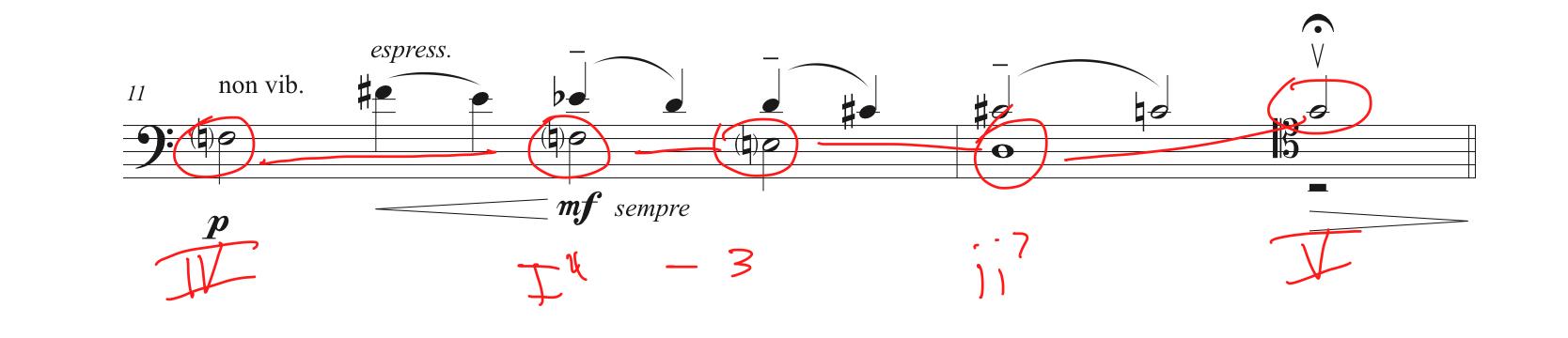
Among all the other previously published canons of its type, this one might as well have turned out to be the most demanding to perform, in no small part due to the choir's conventional maximum ranges being reached in at least three voices, including both soprano (C6) and bass (E2), making it no small feat to sing. The main lyrics would roughly translate from Latin to English as follows: "In the direst of circumstances the true heart of men shall sing with great hope of leaving behind a memorable life. Even death can conquer those whose memory lies in the glory of their good deeds." The coda, as per usual, reinforces the core message in a variety of ways. YouTube video link:2 points
-
March of the Snowflakes is an orchestral miniature written in a quasi march tempo, inspired by the playful motion of falling snow. This piece was composed as a small seasonal contribution to the Christmas Challenge 2025. I would be very grateful for any feedback, comments, or suggestions. Thank you for listening and sharing your thoughts.1 point
-
Hello, all. Coming at you with something a little different for the event, but I hope you find it at least interesting, even if you don't particularly like it. I've basically decided to get really good at writing for strings nowadays, and since I'm mostly an atonalist, cello is the easiest since computers can't play that kind of stuff; the implied timbres are super important. So enjoy hearing me poorly play this miniature fantasia on Jingle Bells. I promise there's a method to the madness 😄1 point
-
Thanks very much to both of you for listening! I think overall I'm pretty pleased with the way it turned out. I'm especially pleased to see you say this, because I spent a fair bit of time not just writing the cadenzas but trying to get Finale to play them in a way that sounded human.1 point
-
A speed composition i made. Any feedback is welcome. Thanks.(made in a few hours)1 point
-
Still participating in this event as committed although I am quite busy lately lol1 point
-
Hi all, As some of you may know, I am actively engaging in my composition project for differential festivals. For that reason, I want to adapt into different types of music and add more variety in my project. I chose arranging solo piece to orchestal music to 1) appreciate the style of the composer, and 2) hopefully benefit orchestral work listeners/ writers. Work orchestrated in this post: Piano Sonata in C major, Hob. XVI/50, L.60 Written c. 1794 by Joseph Haydn. This first movement - Allegro, was arranged by me. When I have time, I will share other movement. A side note, I only listened to the piano recording once before I decided to arrange it - perhaps it is a good thing in the sense that I got my interpretation different from pre-existing pianists Thank you for listening! Note: Attached original score for reference. HoYin1 point
-
Hi @Fugax Contrapunctus! For me it seems like having the Soprano in such a high tessitura and reaching the high C (and ending on a sustained high C) is more demanding that the low E's in the Basses. I wouldn't hesitate to transpose this piece down a half-step if it were mine - the English Horn could still play its part. And the Altos could still reach the F#. From my cursory perusal of your score, I think every other voice and instrument could still reach their notes. Btw - I liked the coda and that you managed to end in the same key you began. Thanks for sharing!1 point
-
Hi @MK_Piano! The 1st movement fanfare reminds slightly of one of John Williams' Olympic Fanfare and Themes. But on the whole it has a very wondrous and magical sound to it that I like! 2nd movement - this has a surprising Arabic/Egyptian flavor to it. It might be because the main theme has a certain similarity to James Horner's Danger Theme. 3rd movement - this movement depicting the prospect of liftoff is a great hopeful ballad (at least in the beginning). The inclusion of the U.S. National Anthem brings great nostalgia to the occasion. It's also quite action-packed depicting well the intensity and explosive process of liftoff. You have a great intermingling of themes from the 2nd movement - it's great when writing a multi-movement work that you get to make these big melodic gestures through thematic association. 4th movement - quite an eerie start that would be very appropriate to the weightless tumbling of the Apollo spacecraft towards the moon. I can feel the enormous blackness and loneliness of space in this music. 5th movement - this starts off quite menacing. If I didn't know any better I would venture to guess that the Apollo 11 spacecraft encountered some kind of dire emergency in space while trying to land on the moon. Nice minor version of the National Anthem! That's cool that you included the actual audio of the voices of the astronauts. The music after that is so joyful and transcendent but still has a touch of wonder and awe. Overall this is quite an accomplished orchestral suite! Great job and thanks for sharing!1 point
-
Hi @Aiwendil! Surely, an accomplished classical Trumpet Concerto! It's both melodically satisfactory while providing the soloist an ample challenge and virtuosity. The cadenzas are well written as well! Not to mention they sound humanized rather than mechanical and metronomic. Cadenza writing is its own beast and getting a good rendering of a cadenza from a computer program is all-the-more difficult, but I think you accomplished it! Perhaps your 2nd movement could have been more challenging for the soloist, but that might have detracted from its great, stately solemnity. I think the 3rd movement is probably my favorite. It makes for a really great finale to the whole concerto. I played Trumpet for a short time before switching to French Horn and for me those high concert C's would definitely be too demanding. But the instrument is a higher C Trumpet so it possibly might be more feasible than on a Bb Trumpet. Also, it seems you do not exceed the high concert C anywhere, so it seems all-the-more practical. A professional virtuoso should definitely be able to play it, as I'm sure you well know. Great job and thanks for sharing!1 point
-
@SeekJohn14v6 has also entered a piece which was created with the assistance of AI (Suno):1 point
-
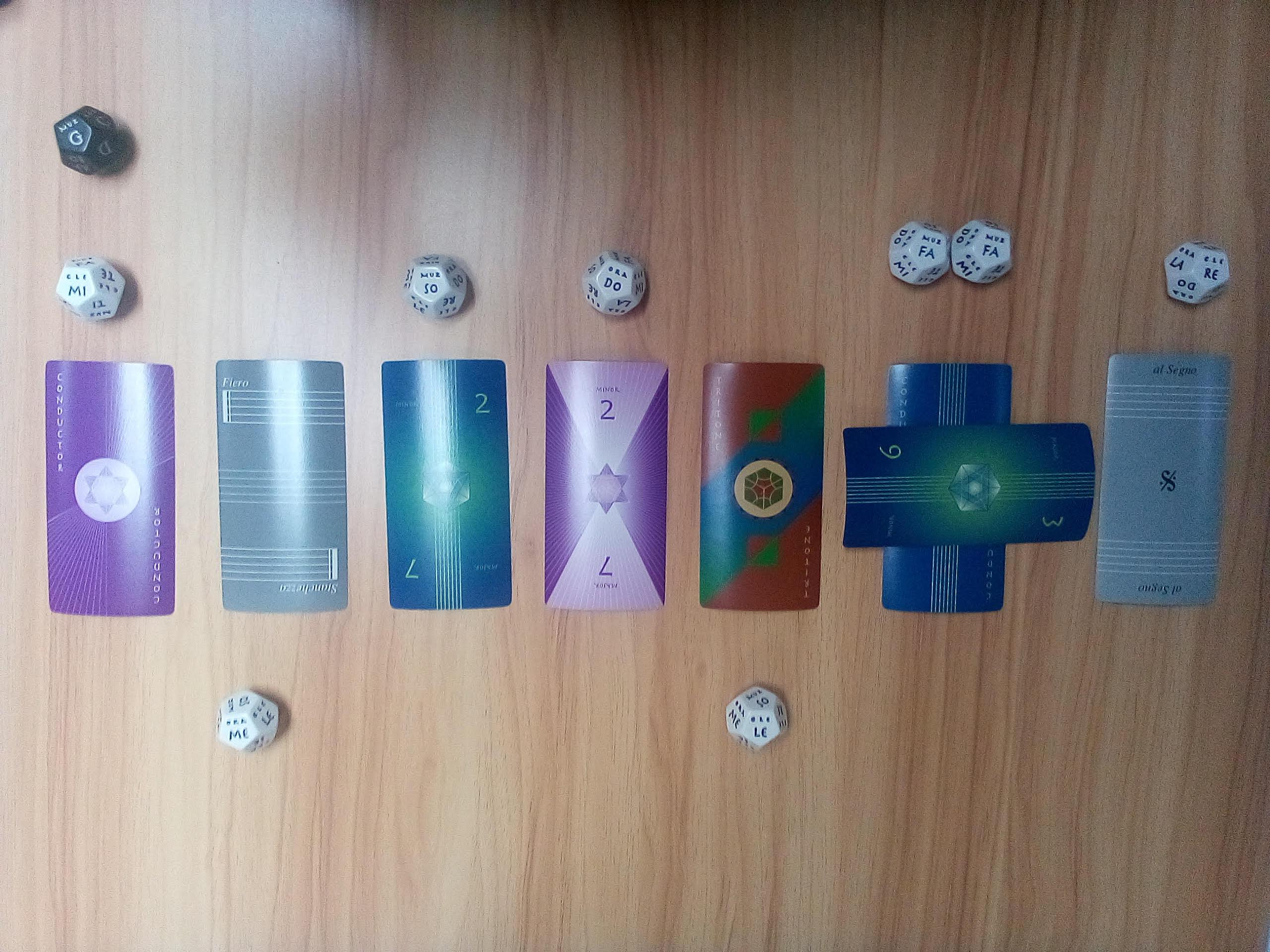
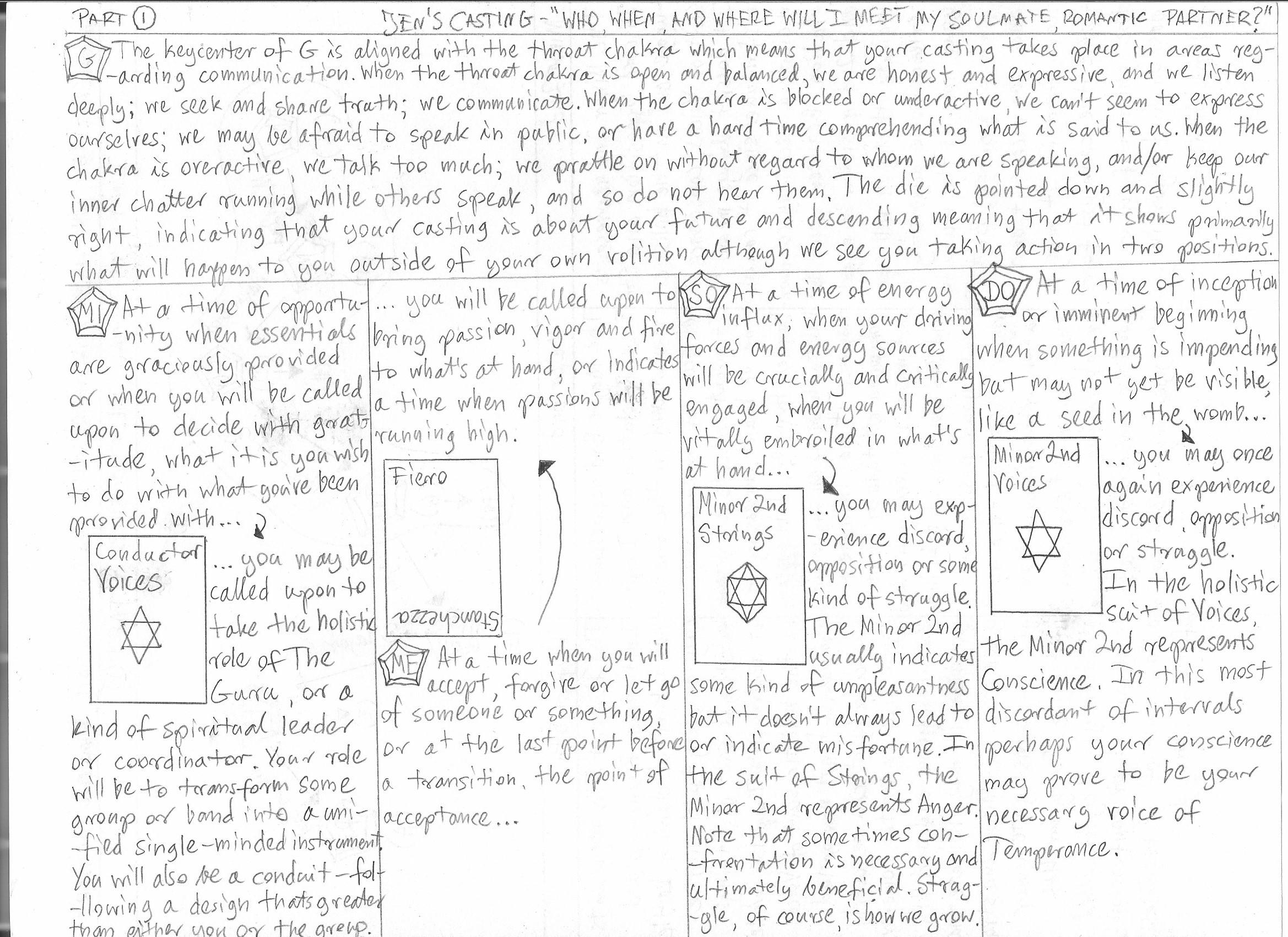
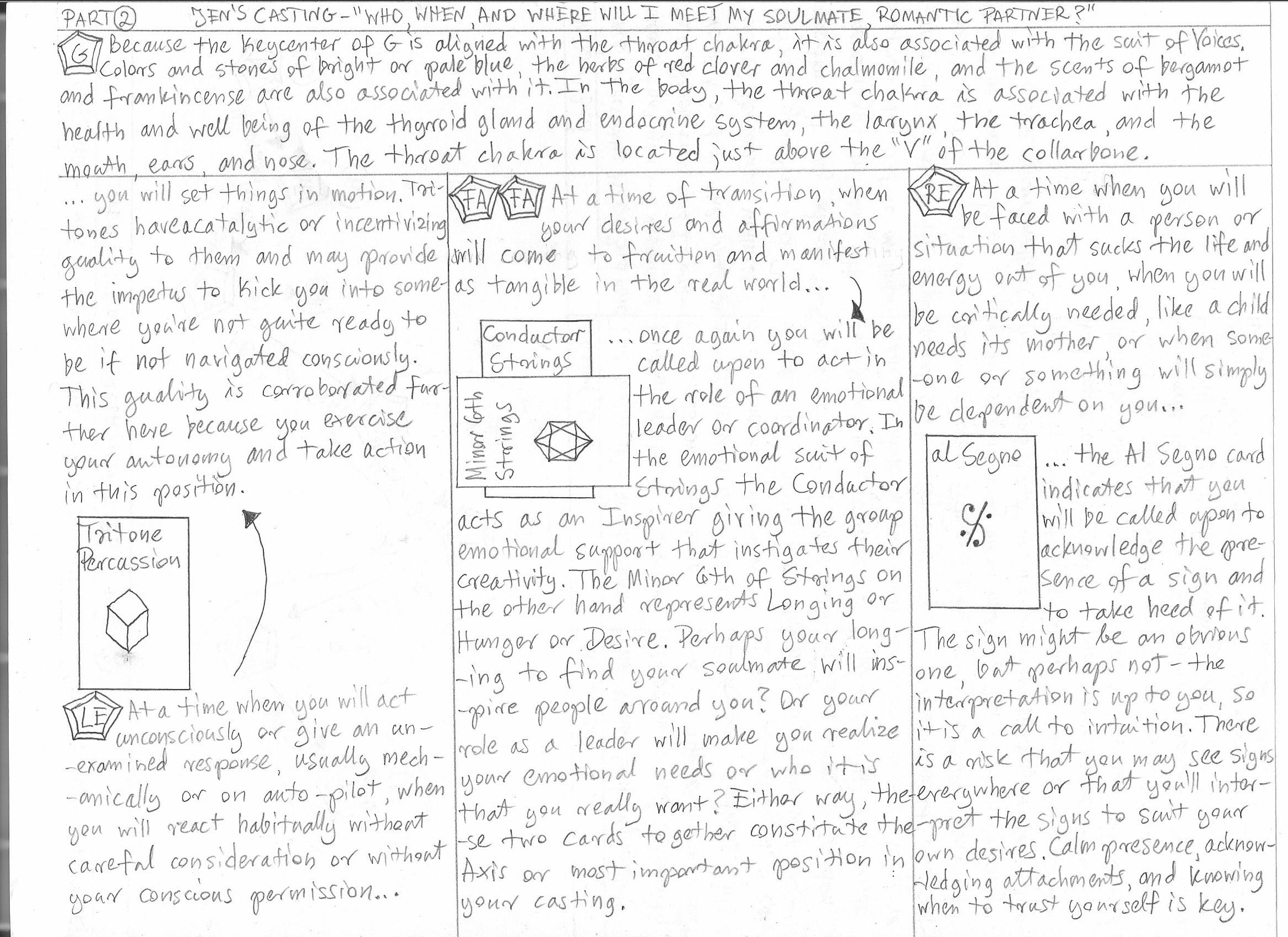
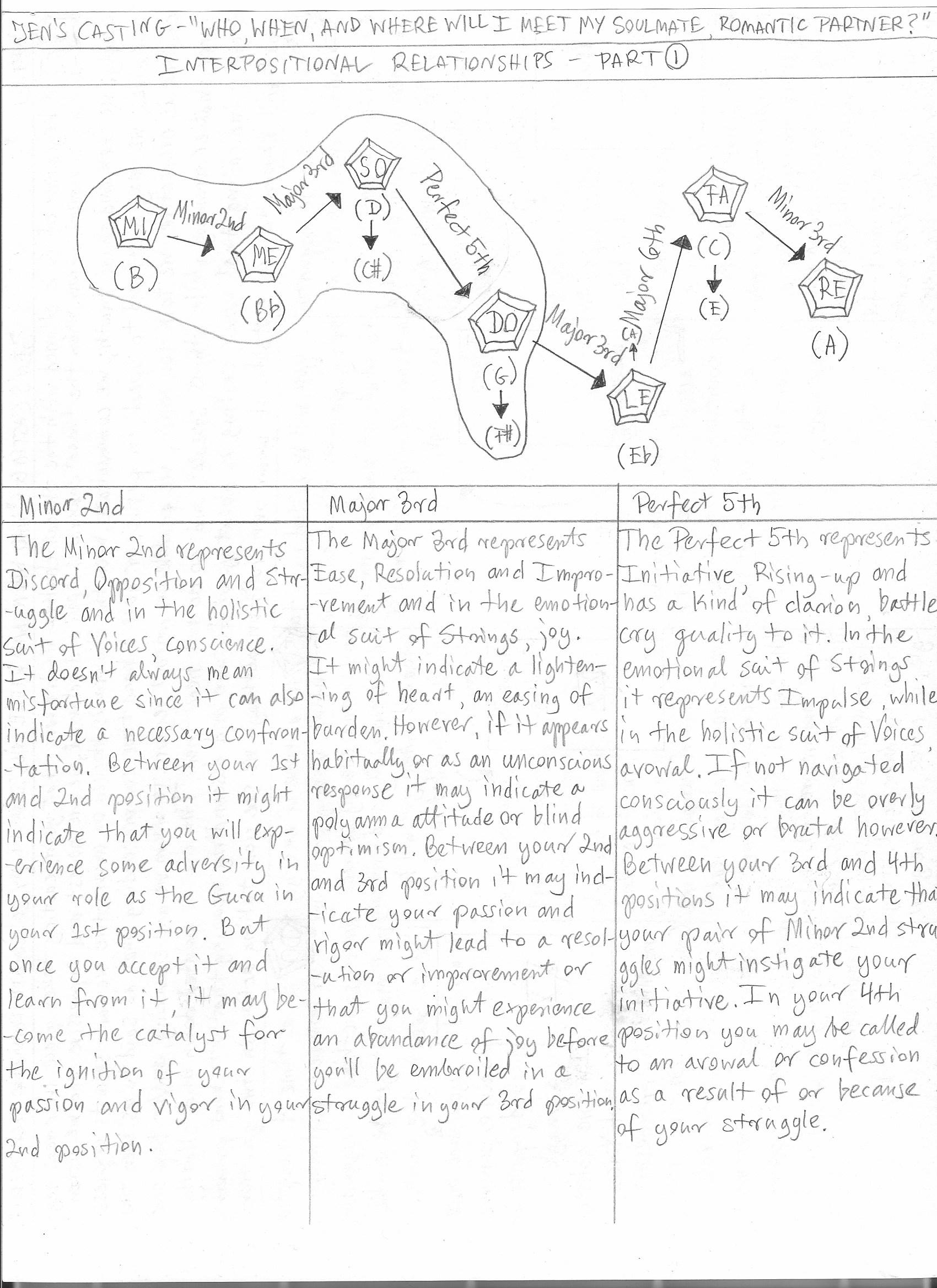
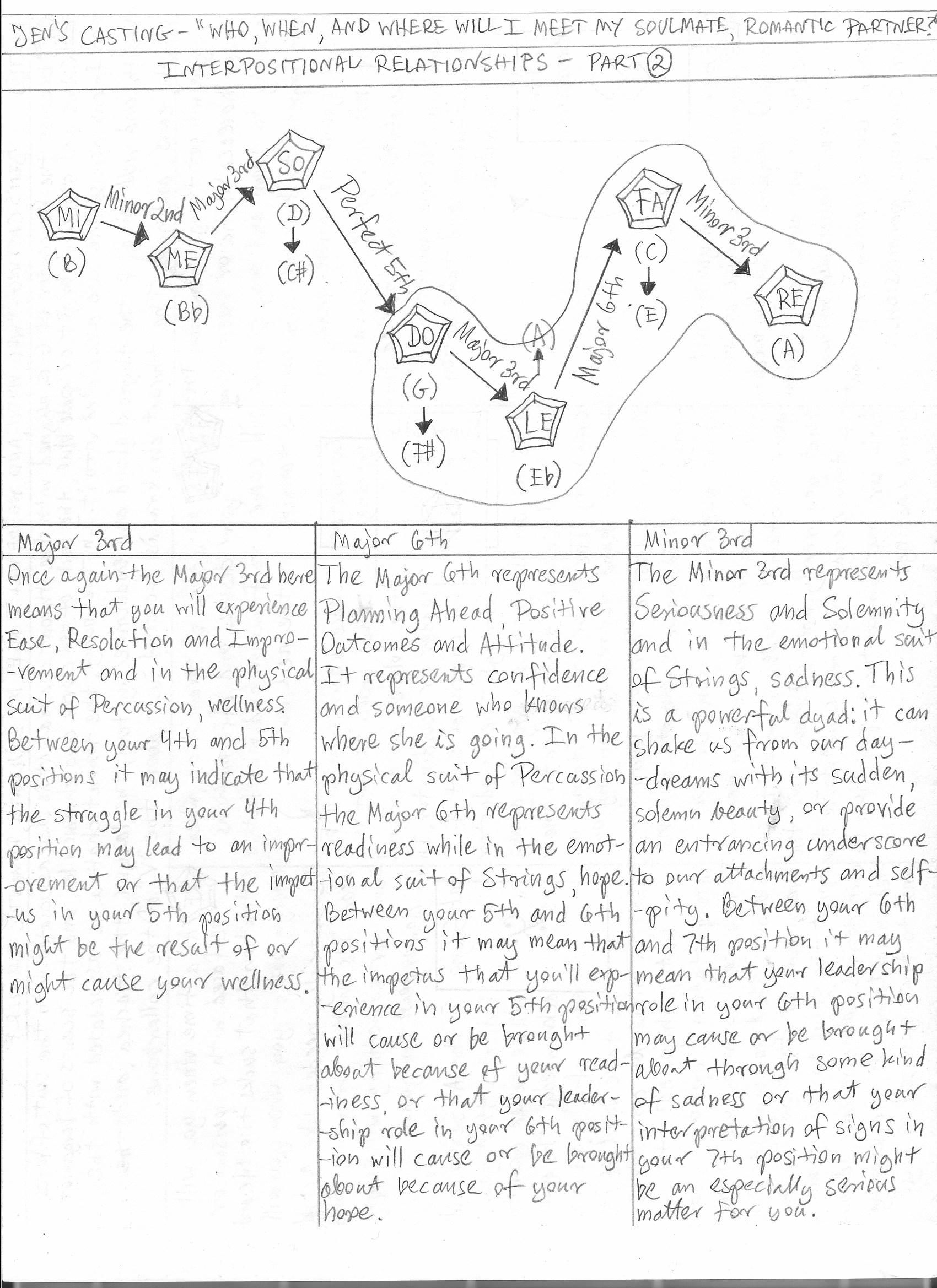
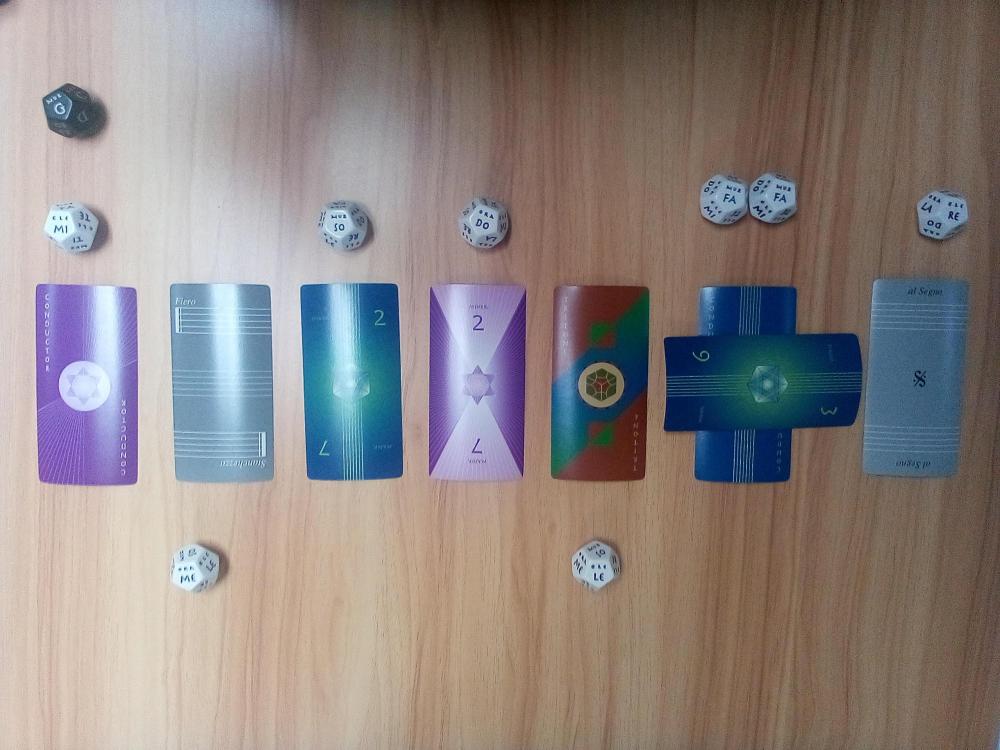
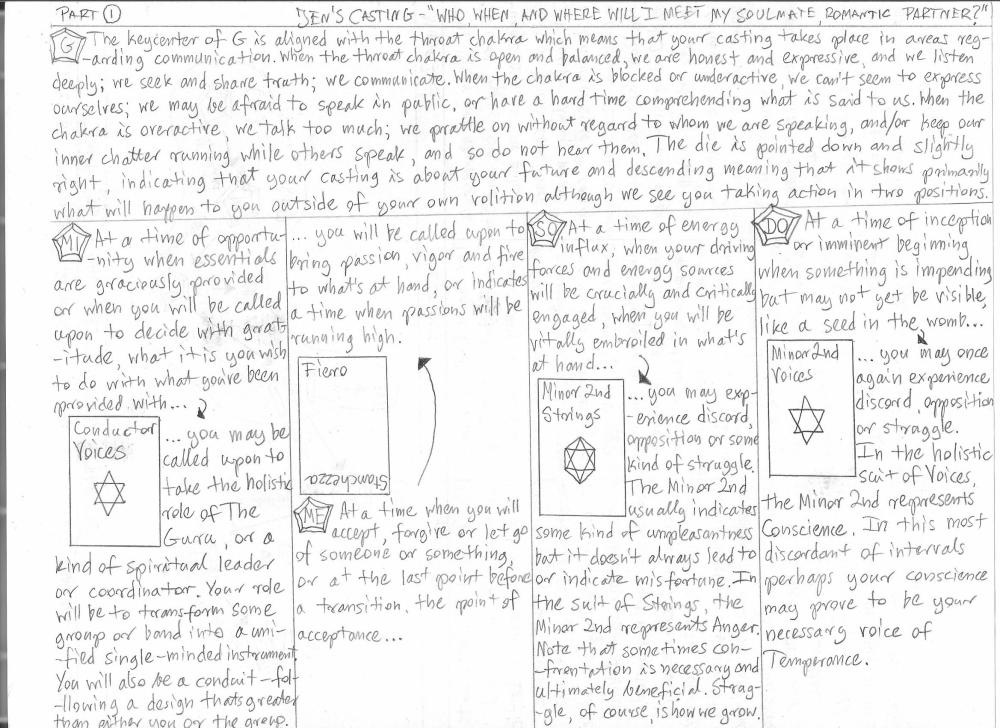
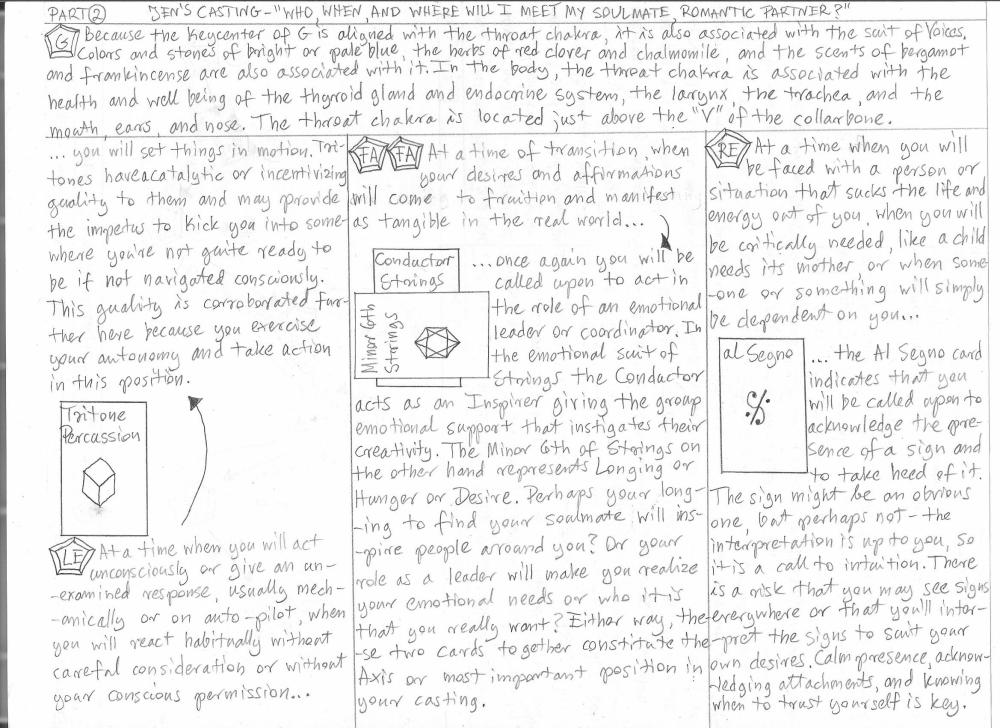
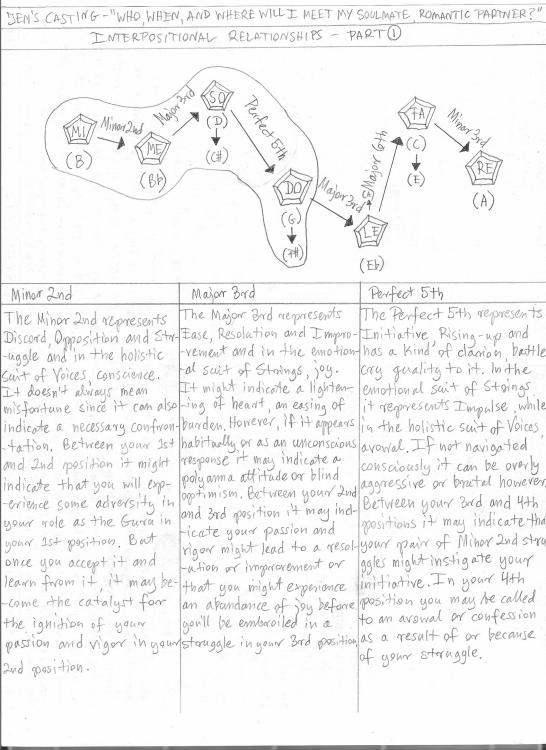
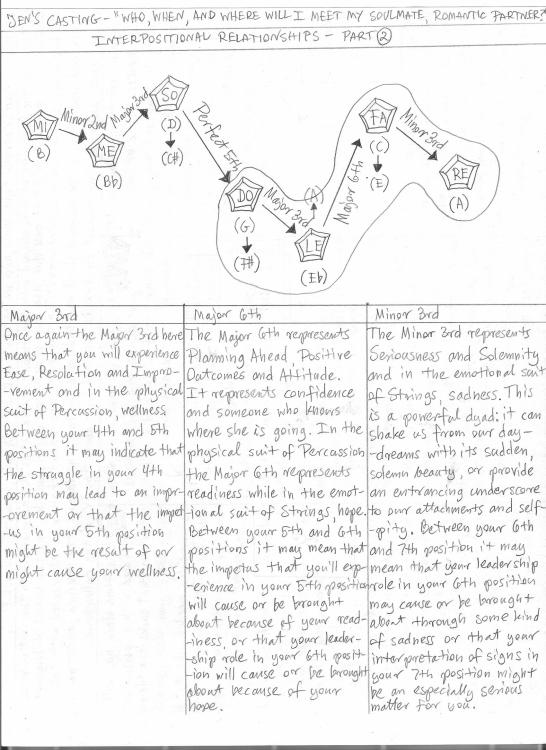
I come to you once again with my 12th Muzoracle casting! This time, Jen asked the Muzoracle "who, when, and where will I meet my soulmate, romantic partner?" (Muzoracle is a storytelling/fortune telling/divination tool similar to the Tarot card deck, but with cards with musical concepts and 12-sided Musician's dice and Solfege dice. Perhaps it may be thought of as a special musical Oracle card deck.) My interpretation of the cards and dice are displayed below. Since the casting featured two cards in the suit of Voices, I used a Soprano and an Alto. Also, there were three cards in the suit of Strings, so I used Violin, Cello and Guitar. Finally, there was a card in the suit of Percussion, so I used the Piano. I chose the Piano and Guitar because Jen has played these instruments in the past and she also happens to be an Alto. If you'd like to find out more about Muzoracle and how castings are interpreted go here: https://muzoracle.net/ This short musical interpretation of Jen's casting is about ~2 minutes long. Since the black 12-sided Musician's die landed on G, the piece is in the key of G which pertains to the throat chakra. I created the following melodic/harmonic underdrawing guided by the cards and the dice. Since the first card drawn was a Conductor of Voices card, I started with a lone soprano singing a chromatic neighbor tone to B, A#. The Violin and Guitar come in next since the Minor 2nd of Strings was drawn in the 3rd position. Following is the Alto which joins the Soprano since the Minor 2nd of Voices was drawn in the 4th position. Finally, the Piano comes in when the Tritone of Percussion card was drawn in the 5th position. The whole piece is repeated since the De Segno al Fine card was drawn in the 7th and final position. If you've gotten this far, thanks for reading! And I hope you enjoy listening to this short vocal chamber work I wrote to represent Jen's Casting. Comments, critiques, suggestions, or observations are of course, always welcome. Thanks for listening!
 1 point
 -
Damn… the theme sounds so cool and elegant! It has a sort of dark urban fantasy vibe. I could imagine a dark trench coat wearing protagonist looking for answers in a weird underworld (oddly specific, I know). Quite elegant, crunchy harmonies in there and the interplay of timbres between the instruments you choose is quite masterful. Loved it!1 point
-
So far it is very lovely in its Mozartian/early Beethoven ways. Perhaps the first movement I would not have made as long but tell that to the Eroica Symphony!. I'm also a sucker for lightweight farewell finales, it lifts the spirit.1 point
-
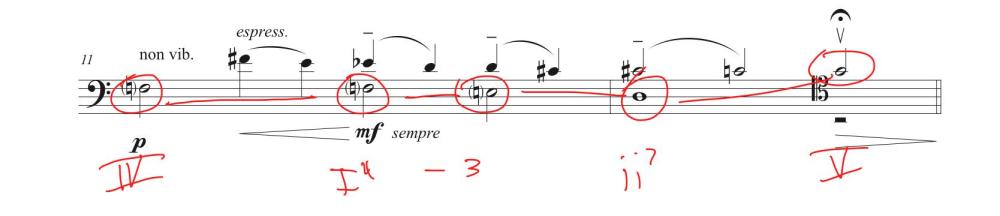
Hi @PeterthePapercomPoser, thanks for the kind words. Yes, a lot connects to the original them in some way, but obviously in a way that's idiosyncratic to me, right? There are some very obvious things like this... ...and there are other pretty obvious quotes: mm. 17–18 are just the latter half of the main theme's antecedent phrase, mm. 19–20 are a condensed version of the antecedent as a whole (<E, G, C, D, E, F, (E,) D, G>), and the notes for the tremolo parts are the first three notes of the theme (<E, G, C>). But then there are just decisions that I made artistically. For instance, I think the idea that the main melody of the non-introductory carol can be condensed into a pentachordal diatonic subset with only one semitone is very fascinating, so I emphasized the semitone throughout my setting as like an opposite to diatonicity. So lots of semitonal dyads (both harmonic and melodic) all about. Sounds rough, which I like, and also meets the design philosophy. For example, passages like m. 16 where there are both ic1s and ic2s, which, to me, emphases that friction between the diatonic and chromatic. But, to be honest, I didn't think that hard about it, haha. Most of the time, I just kinda liked the dissonance 🙂 I think the fact that you can hear echoes of the original is way more interesting than having every single thing be attached to it. Thanks again for your eyes and ears!
 1 point
 -
Greetings all! Hot off the presses, here is my latest piece, my Oboe Quartet in D, for Oboe, Violin, Viola, and 'Cello. It's in four movements and lasts about 17 minutes. I don't have any accounting for why I decided to write this piece. I was just sitting there one day after I finished a Divertimento for woodwinds and had let some space come between - several weeks without writing - and the idea for the opening movement came to me out of the blue. I started writing, and it came pretty easily. The whole thing took about a month intermittently. I'm a violist, not an oboist. A couple of weeks ago I made a post asking for some guidance as to the limitations of the oboe, and got some good answers. After doing some research on my own additionally, and checking with a friend of mine who plays Classical Oboe, I've made some calculated demands in the upper register of the instrument that I'm hoping won't be too taxing on a Classical instrument. It certainly should present no problems to a player on a modern instrument. I did my best to provide reasonable opportunities for breath - the last movement being the most demanding in this way, but circular breathing may be a good option - as well as quite a number of rests to allow the player to rest his/her embouchure. I've done my best without selling myself short, and I hope it shows. I hope you enjoy this. I look forward to your comments. Thanks! - Composed: November 13 - December 6, 2025 at Austin. - Instrumentation: Oboe, Violin, Viola, Violoncello. - Style: Classical, ca. 1790-1800 - Duration: 17:15 - Electronic Rendering by Finale 27 music notation software’s "Human Playback" with NotePerformer 4 artificial intelligence assisted interpretation.1 point
-
interesting thread, since there is no rule against AI assist, I will enter the contest too. Took me a couple days to make this, I used Suno, I wrote all the lyrics and made it sound like the way I want. Suno is a blessing, I can go make a lot of music faster and reach people with the word of God in all musical genres. Christmas is about the Lord Jesus and our mission is to spread the gospel. We can use AI for good or bad, let’s all leave a trail for the lost souls to reach heaven. My submission, if you don’t have spotify ill put the file in too0 points