Leaderboard
-
Alex Weidmann
Members7Points592Posts -
Luis Hernández
Members6Points3,403Posts -
TristanTheTristan
Members2Points538Posts -
Vasilis Michael
Members1Points104Posts


Popular Content
Showing content with the highest reputation on 08/11/2026 in all areas
-
I'm not done with the score for this yet: so please forgive the sloppy notation. Just hoping to get some comments on my orchestration choices before I finalise it. I know there are arrangements of this piano work for various ensembles; but I couldn't find one for symphony orchestra: so I thought I'd make one. Hope you enjoy listening! Rachmaninoff - Elegie in E♭ minor (orchestration) #26 (midi).mp3 Rachmaninoff - Elegie in E♭ minor (orchestration) #26 (midi).pdf4 points
-
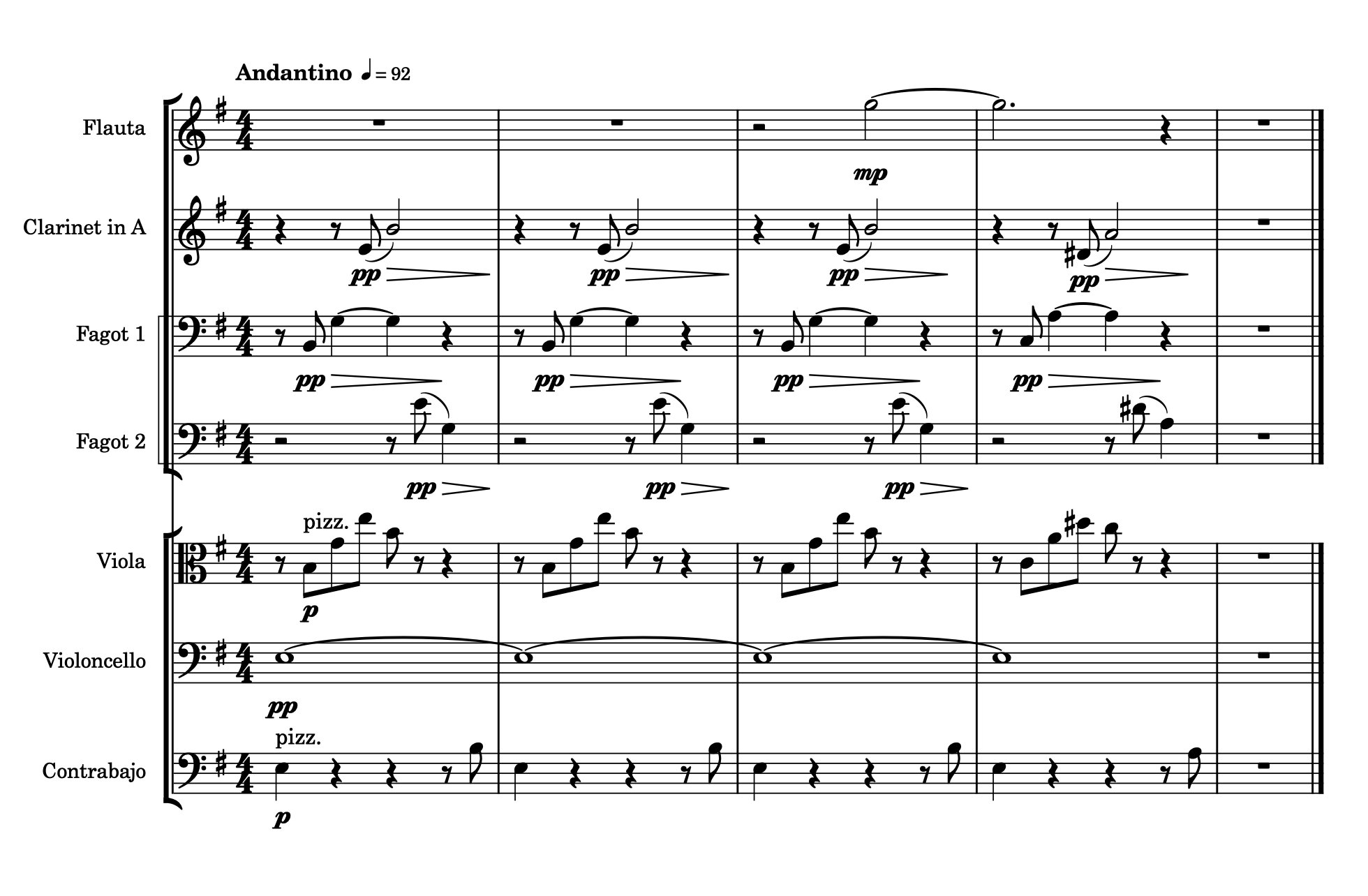
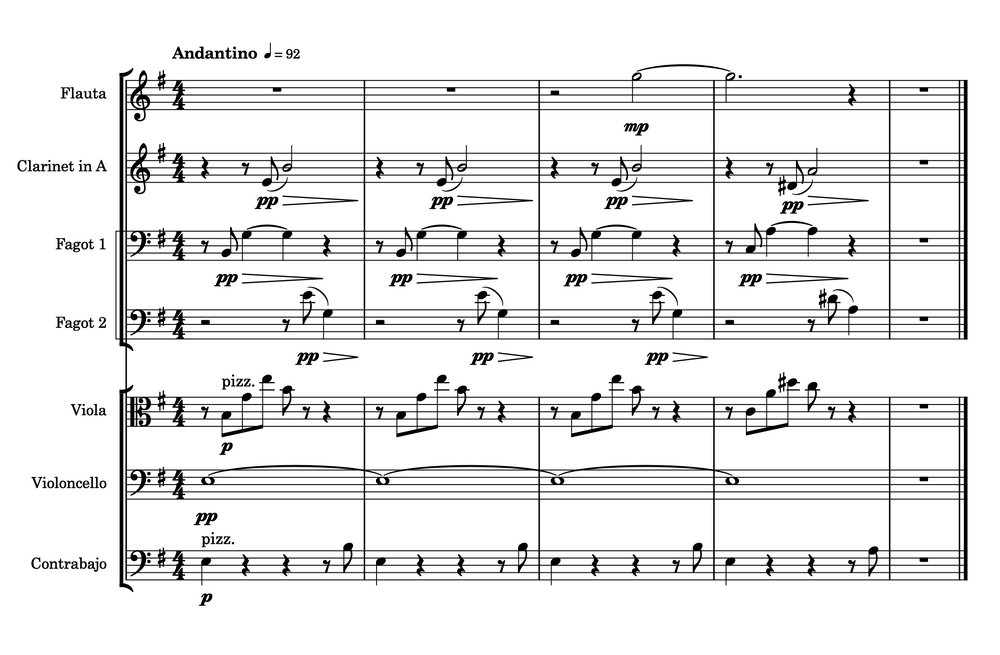
Hello A number of interesting topics. I’m speaking from a position of inexperience and, more to the point, as I’m still learning, so all of this is just suggestions or other possible options. As I said, it sounds brilliant as it is. Firstly, the issue of transposition for orchestra. I agree with what your teacher (your piano teacher, that is) said. But I think we need to consider making things easier for the instrumentalists. Another point is that it doesn’t really matter to us. It’s going to sound the same, at least in the context of virtual instrument libraries. But the reality is that in this key of E flat minor, it’s more complicated for the strings because there are no open strings; they have to ‘press down’ with their fingers all the time, losing resonance, and so on… I can see problems for the harp too, because being tuned to six flats puts a lot of strain on it. And changes may be more difficult. I think the woodwinds would be most comfortable with this. This key is rarely used in the orchestral repertoire, and I think it’s sought after for dark, tragic, profound tones. Perhaps it would suit something like the Elegy. As far as I’m aware, in the symphonic repertoire, the only works in E-flat minor are by Russian composers: Prokofiev’s Symphony No. 6, Rimsky-Korsakov’s Symphony No. 1 (which he himself transposed to E minor later), and a few others. The other issue, that of arpeggios… You see, in my orchestration classes and seminars we’ve discussed this quite a lot, as well as Alberti basses, etc… How do you adapt them for an orchestra? As I said in my previous message, a literal translation can, of course, work, because there are instruments capable of playing those arpeggios. However, we’re now dealing with an orchestra. It doesn’t have to be a single instrument that does everything. The important thing, I believe, is that the rhythm is clearly marked (with accents and pizzicato, for example), and that the figures are in the appropriate pitches and note values for each instrument. This is also where the question of how faithful one wants to be to the original score comes into play. That’s down to personal preference; we can be very literal, or we can take the main ideas and create an orchestral version. It’s true that for some scores I find it less appropriate to take liberties (for example, when orchestrating Baroque counterpoint), I’ve written these few bars in one possible arrangement, which I’m sure could be improved; I also think it would sound softer on the strings, especially with mutes. Haha, in the very first lessons I had on all this, we worked on Mozart and pieces like that, precisely to translate those piano accompaniments into something else. Cheers. Proyecto.mp3
 3 points
 -
Thanks Tristan, I'm glad you like the balance between strings and winds, as this is something I've been striving for in my orchestrations! Alex2 points
-
Hello That sounds fantastic. I just have one ‘objection’: the harp, as an almost literal substitute for the piano, doesn’t strike me as an orchestral solution. Piano arpeggios can be achieved in other ways using woodwinds or strings, or by combining them in a way that’s true to the instrument’s character, whilst maintaining the voice leading and rhythmic patterns. That would sound more symphonic. Yes, it takes a lot more effort to find the right solution, but it’s worth it. When I try to orchestrate piano pieces, I simply don’t use the harp. Perhaps later on, as an occasional supporting element or in specific moments…2 points
-
Nice! I love this, and have personally performed the original. You might want to give the harp some rest though lol. The strings and woodwinds are rather equal, which is great! Good job! -TristanTheTristan2 points
-
Hi Luis. Yes I did consider transposing to E minor; but then I remembered what my old piano teacher used to say. He told me: "there's no such thing as a hard key; you just have to think yourself into it". May be this applies more to pianists than musicians at large, I don't know? I did also think about splitting the arpeggios between instruments, and tried this in an earlier draft. Problem is, the arpeggios have a very wide span: so I had to use three different woodwind instruments to cover all the notes. This sounded bad, because they all had different timbres. Also considered using marimba; but again it can't cover the whole span. Maybe I could get away with it in the strings. Perhaps using pizz.; or a mixture of pizz. and arco? Will give it a try. The other option would be to change the arpeggios. I've done this a little bit in the flute part during the recapitulation, where I've added notes that don't exist in the original. Could probably take this further: so that's another thing I'll try. Many thanks for listening and commenting, Alex1 point
-
Hello @MK_Piano Form: You have succeeded ABA form nicely. I love mini cadenza in the middle section. Your piece reminds of Chopin nocturne! Theme: you have strong sense of lyricism in your writing. It flows so easily. Harmony and texture: the bass line texture definitely is something Chopin would do ! I have a strong sense this was inspired by chopin!1 point
-
Thank you so much my dear friend. I’m glad that you like it🙏🙏🙏1 point
-
1 point