Leaderboard
-
Luis Hernández
Members10Points3,374Posts -
MK_Piano
Reviewers9Points161Posts -
Some Guy That writes Music
Members5Points199Posts -
Wieland Handke
Members4Points167Posts


Popular Content
Showing content with the highest reputation on 08/23/2026 in Posts
-
3 pointsThat’s absolutely true. It all depends on what we mean by ‘personal style’ (or simply ‘style’). One thing is clear: everyone tries to find the language, the techniques, the systems, etc., that suit them best, and to write music within that framework. But I don’t think anyone on this forum can claim to have a personal style that makes them unique and distinctive. That doesn’t mean there aren’t excellent composers. In fact, on the current scene, I don’t know of any composers who have that sort of style. I know of plenty of music that’s based on previous stories, and it’s brilliant.3 points
-
3 pointsHello @CrystalCanon, I noticed with appreciation that you’ve thoroughly read my last two posts and thus noticed the contradiction between what I said here in this thread—that one shouldn’t “try too hard to develop a personal style”—on the one hand, and my “recipe for a personal style” in the second post, on the other. But to be honest, I didn’t mean that ironically. Perhaps, however, I misunderstood what is meant by “style.” If “personal style” is defined as how one is perceived or recognized as a composer by “others” (e.g., the audience), then I wouldn’t worry too much about it, since one has little or no influence over that. On the other hand, I think it’s important to develop a “consistent approach” or a “recipe” that you feel comfortable with when composing, and that allows you to create your pieces successfully. That’s the kind of “personal style” I mentioned in my other post. But perhaps this is somewhat different from the ideas summarized and discussed in this thread—wouldn’t it be worth for an own topic?3 points
-
ON PASTEL SKIES - REVIEW Melodies Themes Motives Harmony Chords Textures Form Development Structure Time Originality Creativity Score Presentation Instrumentation Orchestration Playability Execution of Given Challenge Taste 4 9 5 8 3 6 9 9 Total score: 53/80 Average Score: 6.625 Review: Attached is a PDF of my comments. They were too lengthy for me to write in a single comment on YCF and I hope you find them helpful. The score above does not reflect the extent of my comments and by no means do I write anything to be addressed personally. Good job on this work! F. Hunter_Notes.pdf3 points
-
entry: "You dear Beauty Lovelier, Still" Melodies Themes Motives Harmony Chords Textures Form Development Structure Time Originality Creativity Score Presentation Instrumentation Orchestration Playability Execution of Given Challenge Taste 10 10 10 10 10 10 10 10 Total score: 10 Average Score:80/80 Review: Execution: the piece was with the given time frame and was written for correct ensemble. It exceeds what was expected for this competition. Score prep: The score was properly engraved. I did not notice any noticeable engraving errors. Playability, orchestrations, instrumentation: Each part that was written with in correct idiom and could. While the piano part is more suitable for advance players, I am sure it is playable. (as the live video shows us). The string parts are readable and can play state level string players and up. Structure: There is a clear sense of form and structure in this piece.2 points
-
2 points
-
2 pointsIn this case, I don’t see it as a major problem because the melody is clear and the arpeggio simply plays the note. The issue arises when the melody is overshadowed by a counter-melody, for example here. Perhaps First Violin could go up an octave at that point…
 2 points
 -
It's a "Jolly" good piece. My only suggestion is that the notes fall into a repetitious pattern with the range of middle B to G above the staff. The work hangs about the G. Plus the lyrical movement which it up linear and down linear is also repetitious. Once again the harmony is delightful and is the piano part. It would enhance the work with a mid-section with a different flavor with a bit of editing of the main theme.2 points
-
2 pointsA fascinating perspective! I'm curious how you view that alongside your post from a few hours earlier, where you mapped out your own personal style strategy in detail: “I think this prelude is a good example of my approach to developing a “personal style” by combining an intended musical mood (festive D major) and a musical model (the “Gloria”), a clear musical form (sonata form), my contrapuntal compositional technique, some “more spicy” harmonies and dissonances, as well as a “crazy” idea as a “unique selling point”—namely, the unusual 11/6 time signature.” I really respect your opinion and your work by the way—I just caught the irony and couldn’t unsee it!2 points
-
2 pointsI wonder if m. 57 would be more effective if you deleted it, and gave the measure before a big rit. Otherwise I just had relaxing time listening.2 points
-
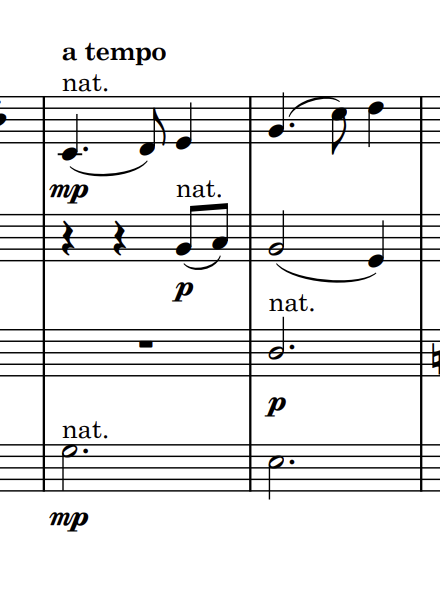
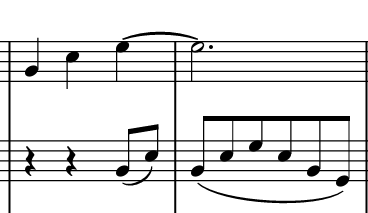
2 pointsHello I really liked it and it’s a pleasure to listen to. One thing I’m not sure if it’s related to the programme: the ‘natural’ (nat) marking at the start. At first I thought it was going to be a rather ‘boring’ piece, because in a four-bar phrase, having two or three instruments simply marking the harmony makes no sense. But I can see that in the middle section and the development, this changes radically and becomes very interesting. I’d like to make two observations: The first is that, even though these are virtual instruments, I think it would benefit if you were more precise with the dynamics and accents. And the second is that Violin II overlaps with Violin I quite frequently. Generally, this doesn’t seem to be a problem because they’re playing very different parts (one the melody and the other an arpeggio) and the overlap is occasional. But at certain points, such as in bars 23–24, it does become a bit confusing. Best2 points
-
2 pointsHello I really liked this piece. It seems to be inspired by Philip Glass’s 20 Preludes. It’s brilliant how the melody in the 6/8 section is ‘hidden’ within the arpeggio yet remains perfectly recognisable. The sound you’ve chosen – a bit muted but with a certain brilliance – is lovely. I’d suggest you try one thing. In the recapitulation of the theme in 6/8 and/or in the final exposition, insert a long pedal note in the lower register (E flat or whatever suits). I think that would add variety to the piece, as well as depth and balance across the register. But as I say, that’s just a personal observation. Best2 points
-
Hello everyone! The following post in my formal submission for the 2026 Summer Competition: From Nothing, to Something. Below includes a detailed and extensive explanation of the work, both in inspiration and construction. If you wish to skip, the score PDF and Audio will be found at the end. Thanks and talk to you all soon! [TAKEN FROM SCORE] Plus belle encor votre chère beauté - Your dear beauty lovelier still Duration: c. 6:08 Written in 2026, Plus belle encor votre chère beauté is a work for piano quartet that evokes summer and the experience of love. It was composed for the “2026 Summer Competition” hosted by The Young Composers Music Forum and is inspired by Paul Verlaine’s poem “Donc, ce sera par un clair jour d’été,” whose opening line may be translated as: “So, on a bright summer day it shall be.” The poem is number nineteen in Verlaine’s collection La Bonne Chanson (The Good Song) Find the French text and translation to the poem here The title of this work is drawn directly from the French text and has similar inspiration as the Gabriel Fauré song from his op. 61 bearing the same name as the Verlaine poem. However, this work takes the title from the fourth line of text, and unlike Fauré, this work is late-romantic in style. The musical inspiration came from two places: Tchaikovsky and his Nutcracker ballet, and a spell of improvisation at the piano. This work was created in late July and early August 2026, and during that time, I was experimenting with modal improvisation, and felt drawn to G-lydian. Specifically, the ivø7 chord you can build and find in Tchaikovsky’s music. It was also around this time I was listening to parts of the Nutcracker, where I felt drawn to the idea of harp-writing, and thus, during a period of improvisation, the foundation of this work came to be. With structure, Plus belle encor votre chère beauté is in ternary (A-B-A’) form and includes an intro and coda. The B-section acts as our development while the outer A-sections are comprised of a smaller AABA form. The principal theme stated in the A-section occurs throughout the work, where it can be heard in the introduction, coda and within the development where the piano states the principal theme in inversion. Lastly, I composed this work following the end of a relationship. In short, this work evokes those unspoken emotions I harbored and the romance I long to have one day. A day where I too can say “Your dear beauty.” PERSONAL NOTE: For me, the connection to this text, and now to this piece of music, is very personal. By the time this post goes live, my last relationship, of more than a year, ended a month ago. I will leave my thoughts on the matter with this: while rare in occurrence, being in the throes of thought can make the weight of longing feel immeasurable. However, amidst the satin and silk, this piece came to life. To add some fun for the competition, and incase people worry the music is not playable, I can assure you everything on the page works and is practical. However, better to put money where my playing is. A few hours before posting, I decided to record myself playing the work and trying out things. I originally improvised it on piano and this was one of the few times I tried to mimic what is on the page. It is not 1-to-1 and I made certain liberties in performance, however, this was fun to do! (This YouTube video is not my official audio entry for this competition. MP3 for score can be found below. Also, my camera was not in focus during the take... grrr) Thanks for reading, and I hope you enjoy! (The art on the cover page is Claude Monet's "Woman with a Parasol." A wonderful piece of art!) AUDIO_YourDearBeauty.mp3 SCORE_YourDearBeauty.pdf1 point
-
1 pointHi everyone, This is my latest piano composition that I wrote. I'm very happy with how it turned out. Hope you enjoy listening!1 point
-
Hey everyone. I have been going back and forth on my first piano concerto for a long time. Unfortunately, I reached a point where my original design has acted as a roadblock for me to finish the first movement. I decided to restart the work and compose from scratch. I will add more context below, however as an introduction, this excerpt is the entire exposition of my first draft. It is five minutes long and I wish to have it preserved here on YCF. So, sit back, and follow along to the work-in-progress of my first concerto! 🎹 ________________ CONTEXT AND FEEDBACK: I started this project back in June 2024 when I improvised the first theme in one of my practice sessions. I fell in love with it and immediately knew I found a theme worthy for a concerto. I am sticking to late classical (and possible romantic hints) for this work. Hummel, Shostakovich, and Rachmaninoff are the main three sources of inspiration for my orchestration. It follows Sonata-form, however using three themes (1st, 2nd and closing theme) in the exposition. Recently, as I have been diving heavily into the works of Mozart, Haydn and Beethoven, it has dawned on me the level of sophistication each composer had in their writing. How Beethoven would use elements of the first theme to make his second theme, and later use the first movement as basis for theme and variation writing or fugal writing in his third movements. So, after a break in the first half of the year, I have been looking at this exposition and tried to add sophistication. However, I noticed so many gaps in the structure. As it stands, it feels like a compilation of several themes versus one long work showcasing the transformation of the motif and form. As a result, I have stopped working on it and grabbed a blank manuscript and wrote down the key three themes I want to use. I have yet to start rewriting, as I want to give my brain a break and simply ask for feedback. I would appreciate comments on form, orchestration and anything you deem fit. Please do not hesitate to be blunt either! (I may try to write pure double exposition instead of this quasi-expo before the first piano cadenza.) Thanks in advance!! 🙂 _________ EDIT: There is no English Horn in this work so far. I used my Orchestral template and forgot to remove the English Horn from the instrumentation page. Also, The score is NOT TRANSPOSED; it is a concert score)1 point
-
Thanks for the comments. Before you spend more of your time, I must inform you that this version of the work is severely outdated. The most recent copy I have made functions as a complete rewrite. I have changed the form, phrase structure, orchestration, harmonic language and melodic content. Thus, I do not expect to make any changes as you have listed or pointed out. Thanks again!1 point
-
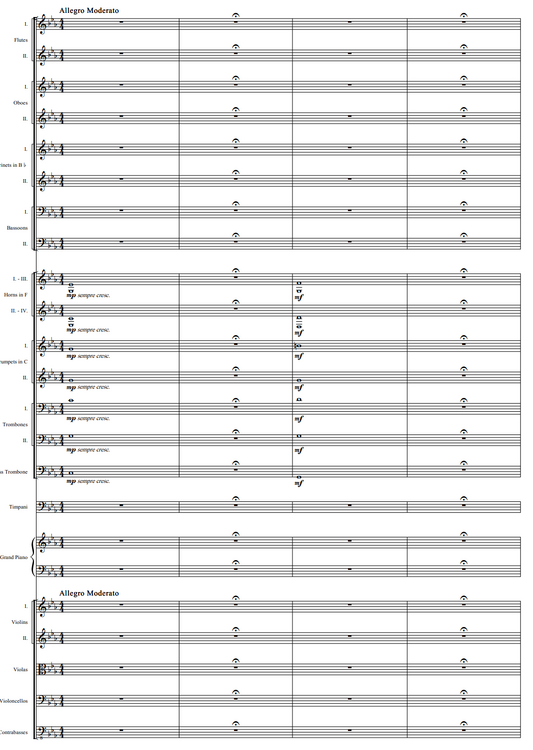
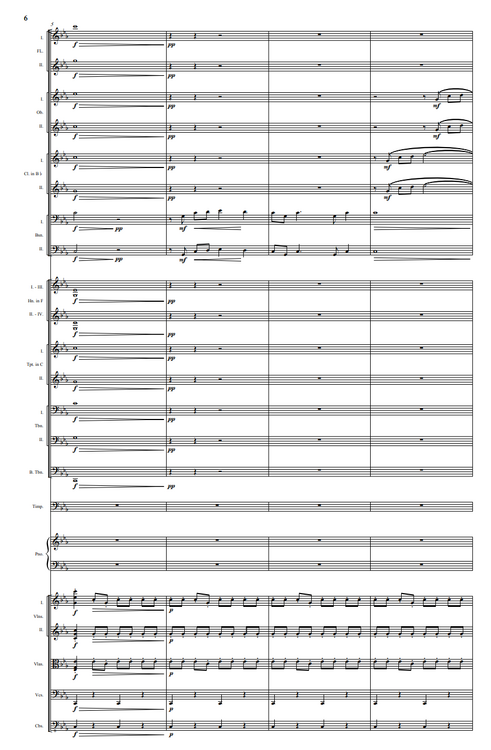
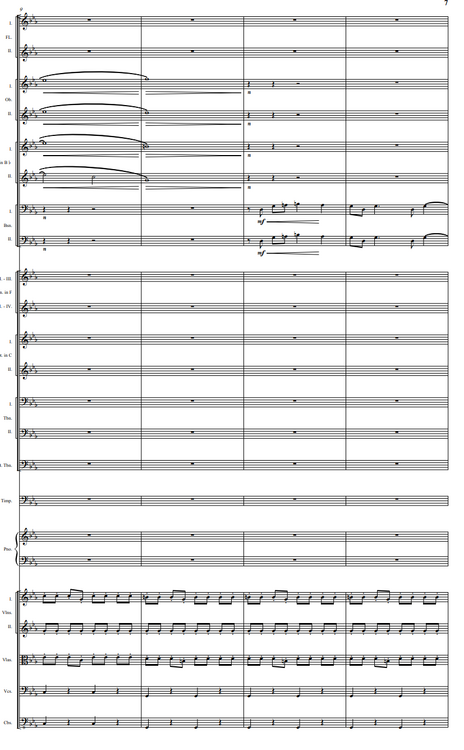
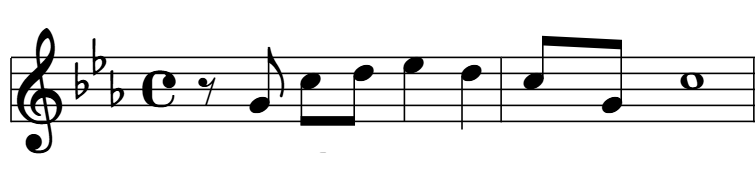
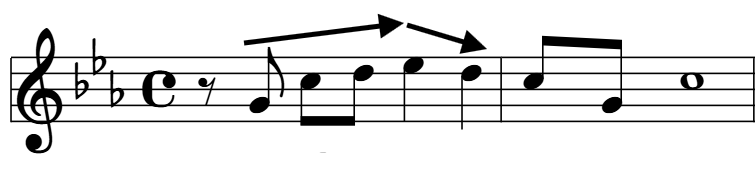
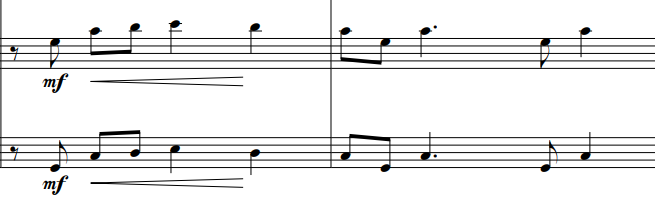
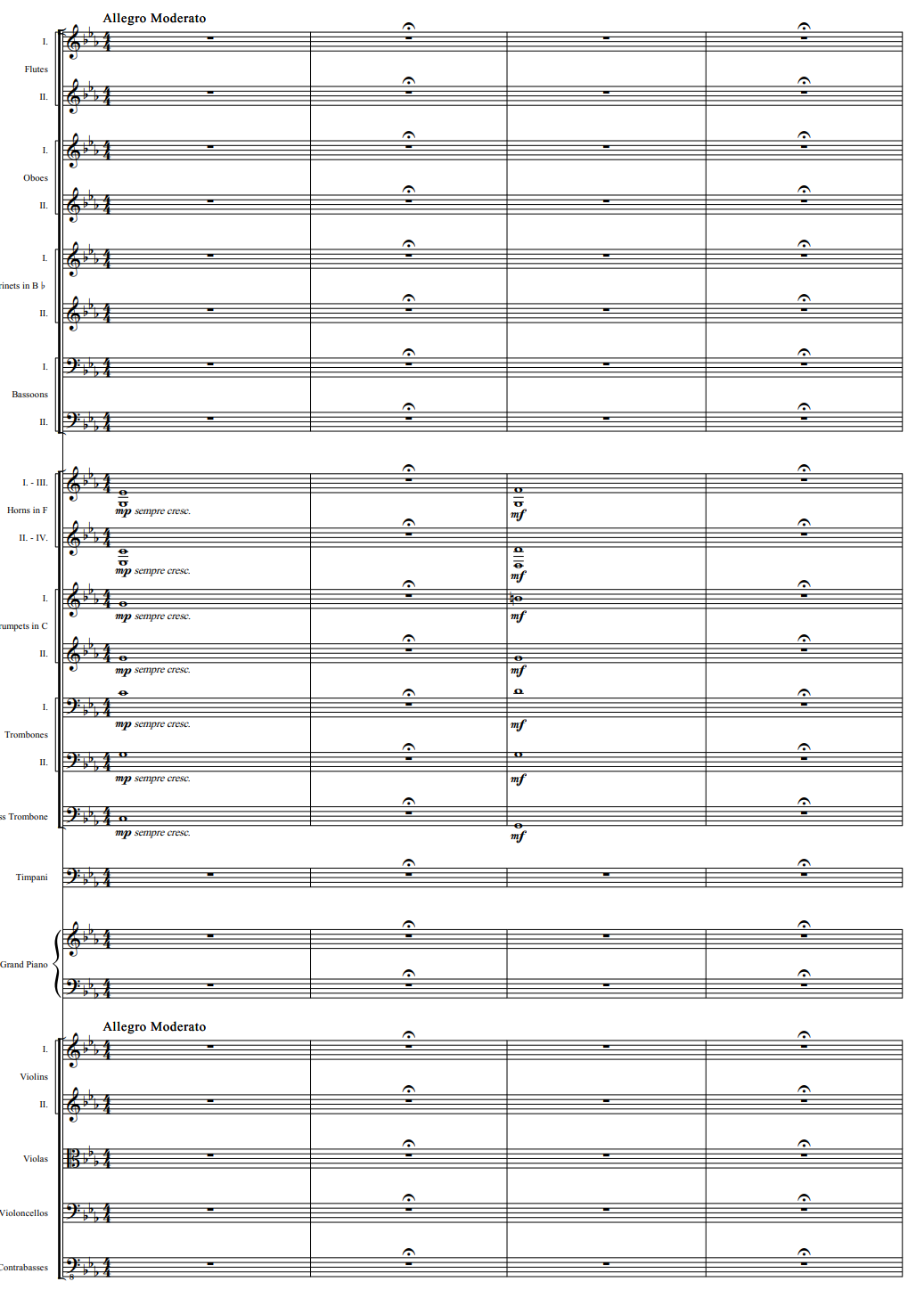
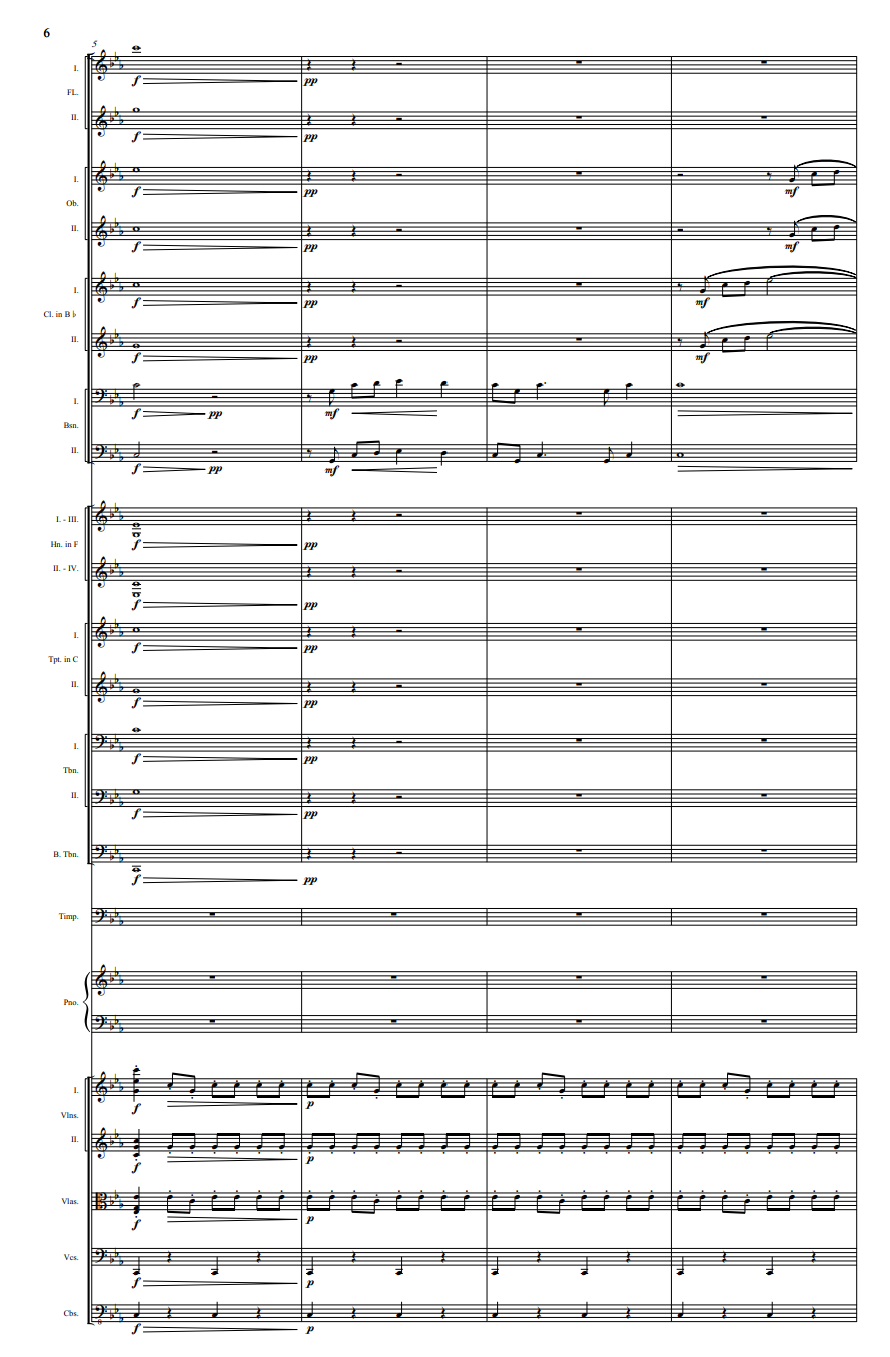
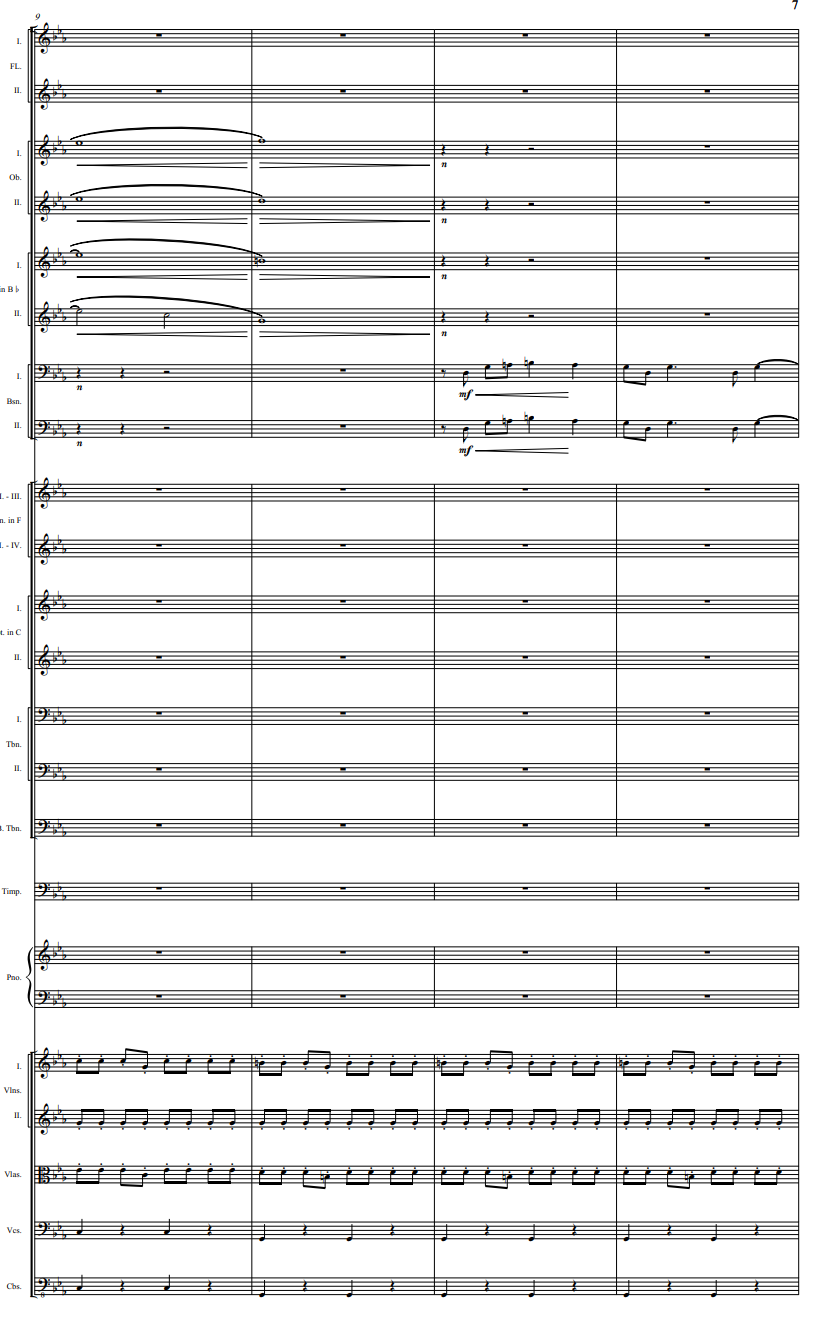
Hello @MK_Piano ! (I kind of want to help you too as you have also provided so much aid with my concerto!) Resources used: Music Jotter Brain Snipping Tool Feedback giving: Day 1 23/08/26 Page 1: Bar 1 You start of with a beethovenish opening, with a broad c minor chord, that is actually, surprisingly quiet. Your use of brass is very good, but you could try adding texture by having the contrabasses and/or violoncellos play a C? Perhaps something like Violincellos: mp, sempre cresc. , C3 Contrabasses: mp, sempre cresc. , C2 Although, I also used mp, I actually recommend spreading out the dynamics a bit? It could be more like the following: Horns in F I-III: p. These play g and eb, which is anything but the tonic, so maybe make it a bit quieter. Horns in F II-IIII: p. Same reason as above Trumpets in C: The play the note g, which is the dominant. That plays an important role, but not as important as the tonic. stay as mp, as it is just one note, and you have to make it sound good. Trombone II: Same as above Trombone I and Bass Trombone: Notice that over all of the other notes, your tonic doesn't stand out because there are only two. Therefore, maybe raise one them to mf, or maybe even both of them! Obviously, notice that all of your tonic notes on your first chord is played on a trombone. so that is just more reason to have the C in the Strings too. Bar 3 You had the tonic chord, so now you have the dominant. Simple theory. Straightforward, but notice, again, you have everything as mf. It might sound a bit plain, and I personally do not like that. spread it out just the previous one. I am too lazy to do that again, so just do what you think will work here. Again, Strings are helpful. Page 2-3 Bars 5-9 Ok. I love this huge chord! A large, bombastic C Minor chord, that opens the first theme. You could definitely try using sforzando (sfz). It is great, because at here, such dynamics are unexpected. The strings have a good background harmonic effect, that gives it a sort of texture, especially in the violins, that g that appears on the 2.5th beat is very nice. The violoncellos and contrabasses have a nice, strict organ note that gives the piece a sense of rhythm. Quite nice. We get introduced to the first theme, which is actually following the theme: G C D Eb D C. It is simple, which is good, because a theme that is simple usually leads to a good development section. This theme follows a pattern that is very important. This is the theme. And, if we add direction arrows...... This is what we end with. Now, treating the highest note as a climax, (that will be Eb,) you should always have a crescendo and a slight diminuendo. Let's see what you wrote... Yes. you only wrote crescendo, but ignored the fact that it is the highest note! You could definitely change that. It is good to have a domino effect on the main theme, where it goes from clarinets to oboes. It is definitely a nice thing to listen to. It gives a very nice feeling of call and response, but with the same theme. EDIT!!! He just said that he made a new version, so im not gonna write more. This post can be just educational ig.
 1 point
 -
Good day, Fruit Hunter! I see you have a orchestration that is vibrant. Listening to the piece, I would say the piece would follow a form that might be quasi-fantasia? The effort put in to this piece is obviously a lot, and I must appreciate this piece for that reason. It definitely feels like a potpouriss, but it is also energetic, just as the poem follows. Good Job, -TristanTheTristan1 point
-
1 pointA short study for string quartet composed by the sea this morning Regards, Marc 01 - Conducteur - Etude pour quatuor à cordes n°8.pdf Etude pour quatuor à cordes n°8.mp31 point
-
1 point
-
1 pointHi @Luis Hernández Thanks again for your review. Yes the "nat" marking is for playback rendering. I take your remarks about flourishing dynamics and accents and avoid violin I and II overlapping. On bars 23-24 I'd think we could see that as a mere imitation of violin I by violin II, since violin I holds its note in bar 24 while violin II repeats, in an arpeggio form, the previous bar from violin I ? Regards
 1 point
 -
The main thing I struggle with when writing art song, is that the singer has a limited range. I think in art song it is very important to have a harmonic idea of your poems first. Then creating a melody around that. The piano does 90% of the work and the voice should get the credit. As a singer, I truly think the best art song has most phrases within the range of a 5th. From phrase to phrase you can shift this around, but the more rangey it gets, the needlessly difficult it gets. If the poem is contemplative I would hold this as a strong guideline. But if it's angry, or disjunt, maybe not worry so much. This isn't to say that anything will be bad if written this way, but it makes it harder to execute. Also do you have a baritone in mind? Here is a piece that conveys what I think is important: https://www.youtube.com/watch?v=ZeXlTfC7MVM Most of the phrases are quite narrow for the voice, this allows the voice to navigate their difficult "passagios" Also notice how as the piece gets more intense, so does the range. And pay attention to how softly the pianist is playing throughout. It should be noted that this is a VERY difficult piece for voice. Specifically the closer you get to the end. Long phrases, short breaths, extensive range, lots of dynamic variety and high soft singing. The only reason its popular is because its so pretty. However the piece is subjected to pretty much only professional singers because of its difficulty. German Lied, is much more text driven. Generally a German Lied cycle has a lot of variety and color changes, as it was expected back then. So often times in a cylcle, piece are exaggerated in their color as much as possible. Sometimes I get annoyed at German lieder for not staying in the moment long enough, in attempt to create variety, but they are the world famous composers and I serve food to people. So getting into tonality. https://youtu.be/gHGYmV0frnw?si=H3MTNlnYh6iqUtvM Previn is always a favorite example of mine. Its tonal, but never the same tone. Listen to how the piano completely shifts from texture to texture in order to convey emotions, and prepares the next phrase. This poem is very complex, but the piano and voice work together to make it fathomable. Previn switches from between three primary textures, wide complex chords, high dissonant/poignant chords, and flourishes. Each represents a specific feeling. I think the wide chords express the "setting" of the poem, the natural feel. These are about 50% of the piece. The high dissonant chords have a feeling disappointment, while the flourishes express child-like hope. Also worth noting, this piece is really hard to sing. He never "preps" the singer with a pitch, making it incredibly difficult to find a pitch, even a augmented 2nd is difficult to find. I'm not big into non-tonal music so I can't help you much in that realm, but I think look at berg: https://www.youtube.com/watch?v=3I_7OHTr400 He's just my favorite in the not-tonal world. As someone who has sung a few atonal works, and others on the cusp, my main ask is: please make exceptions to your tonal rules, to allow the words to have their impact. Art song exists to create the worlds in which poetry exists. If the poem has to be forced by the singer, it is not a good art song.1 point
-
I like your piece very much, and I think the formatting is the main thing to make sure you get right when submitting. You have the cover page, all your formatting looks good. I think one more thing to get an edge is to add some program notes notes, and performance notes. If you have anything to say, maybe consider putting it on paper. Maybe consider making the your measures per system more consistent? I think sometimes the computer chooses 3 measures per system when its not really appropriate. Your music looks like it can stick with 5 measures every system. m. 87, you have a crescendo leading to a forte, but with a rest in between, maybe go around and make sure nothing like that is happening. If the rest of the orchestra is crescendo-ing to forte, go ahead and write that in all the parts unless you intend otherwise, and specifically write otherwise. Clarity over concise. The rest of what I have to say is lower priority, get your formatting perfect first. One more thing to consider, only if you have time. You put most of the rhythmic interest in the snare drum. One way you could create some interest, would be add some more short rhythms in some other brass parts. Trumpets love fast tonging, maybe find a place for that. I know you play trumpet. what do you like playing that you haven't done? Also percussionists can play more than one instrument. I understand the mood/style you're inspiring strongly evokes the instruments you've chosen, but at least consider if there is some mid piece changes that would maybe strengthen the piece? (Bass drum?) Also consider giving your players some more breaks, especially before solo-like sections. The horn is hard after playing for 10 minutes straight. A couple more 10 second breaks for horns seems in order. Maybe give some trombones a chance. No VST can recreate the absolute beauty of a trombone solo. Trombones have an easy time with vibrato. Also maybe consider a coda with more extensive V-I action, I was surprised when the piece ended. Don't try to do everything I said, I gave you a bunch of stuff, some of which might be totally against your creative idea. I think you have written a wonderful piece that I believe is warranted for a selection, but I think some of the above things are especially important. Consider your jury, if you don't know who they are, its usually 50% conductor, 25% executive director, and 25% players. I think you can have a director convinced with the idea of your piece, (program notes help with that). Your score is very clear. But I think at the moment, the players are going to feel like the piece is tiresome for horns, and lacks time for trombones to shine, and under utilizes the wide range of a state-level symphony percussion section. Trumpets are going to have a great time. Your piece can still be selected, so don't toss this beautiful work, but these are the possible issues catching my eye.1 point
-
1 pointI don’t think that you—as a composer at this level, as here at the YCF—should try too hard to develop a personal style, since it seems impossible to me to even intend to do so; for, on the one hand, “almost everything” already exists in terms of musical forms, systems, and languages, and on the other hand—even if one of us were the absolute genius who shapes and influences an entire era—he would unfortunately never live to see it, since such groundbreaking developments are usually only recognized decades or even centuries after the composer’s death. With that said, one should not bother much about it, since a personal musical language actually develops almost automatically as long as your composition exercises and works aren’t too “random,” you follow a consistent approach in your work, and try to incorporate only a few influences from different musical styles or languages into your next piece, rather than imitating a specific style in one piece and then switching to the style of a completely different composer or era in the next. After a year of being a member here on the forum and participating in three competitions or events, I think, I could identify some composers based on their “personal style”—for example (this is a very arbitrary list and by no means exhaustive …): @UncleRed99 – famous for the „warmth“ in its pieces, its chord progression and beautiful utilization of woodwinds. @Fruit hunter – very interesting percussion pieces. @Fugax Contrapunctus – everything about fugues and canons in an extremely thorough, intellectual (and even theoretical) way. @HoYin Cheung – mostly atonal pieces, especially for strings. @L.S Barros – influenced by renaissance and baroque, often utilizing brass ensembles and perhaps myself – counterpoint composition technique, voice leading, and mixed with influences from the 20th century, always starting as piano piece, but more and more orchestration examples ... Maybe for one of the next contests, we could make the submissions anonymous and award badges to the reviewers who correctly guess the most composers… (perhaps a silly idea).1 point
-
1 pointHello, I got the sheets and followed along with the music for the one in C major. There is a brief part of the piece that sounds like Brahms to my ears... Maybe it's because I don't know much about Brahms and when I hear lullaby I get subconsciously primed to think of Brahms :). From a performance point of view, I found it easier to play the notes differently than how you notated it. IE, instead of playing 3 notes in left hand and 3 notes in right hand, I found it easier to play 4 notes in left hand and 2 notes in right hand sometimes. Dunno if it's worth to do some cross beaming. Hopefully that makes sense.1 point
-
1 pointThe piece in F major is well done. Although it has simple, sparse lines, it all sounds really good to me.1 point
-
(Originally written for my Substack - welcome to follow me there: https://substack.com/@markoloco95) It is not often I stumble upon music by Johann Sebastian Bach that I had not heard before - especially among his cantatas that I have grown to obsess over. Then came Zerreißet, zersprenget, zertrümmert die Gruft (BWV, 205), a lavishly scored ‘secular’ cantata with the the full might of the baroque orchestra, including three trumpets, timpani, two horns that in the opening chorus come together in such a way that resembles the festive character of his better known celebratory oratorios (his Easter and Christmas Oratorios & the Magnificat in D). My interest soon extended beyond its aesthetic appeal, however. Quite often I read the accompanying commentary to these cantatas to better understand what Bach was depicting exactly, made all the more necessary as a non-German speaker experiencing this music outside of its historical context and ~300 years later (Bach wrote BWV 205 during August 1725). Little did I know that this reading about BWV 205 would lead me down a significant rabbit hole that I now have the pleasure of sharing. The ‘profane’ cantatas Bach himself made no explicit effort to create a systematic taxonomy of his cantatas between the sacred and the secular; this was more a posthumous scholarly construction (his son, CPE Bach, was among the first to do so). Interestingly, the term ‘profane’, I learned, has traditionally been applied to his secular cantatas. A contemporaneous reading of that word may imply something that is anti-religious, blasphemous or morally corrupt - this was indeed my initial impression! Rather, ‘Profane’ comes from the Latin ‘pro fanum’, which originally designated what is ‘outside the temple’ - or outside liturgical or sacred use (Charlton, 1897). Its usage to classify his secular cantatas seems to have emerged only from 1885 - in French criticism - by one René de Récy, who states in his ‘Jean-Sébastien Bach et ses Derniers Biographes’ “une autre composition du maître, celle-là toute profane” (p 415) (another composition by the master, this one entirely profane.) The French Dictionary defines profane as “l'art profane et l'art sacré” (“secular art and sacred art”), and we have no reason to doubt that its usage in French musicological expression principally meant ‘non-liturgical’. Nonetheless, the semantics of the word remains problematic considering its historically recognized extended meaning, stated in the first edition of Dictionnaire de l’Académie française (1694): C'est une action profane & impie" (It is a profane and impious action) While it may seem that I am venturing into unnecessary abstraction, this is important context. The libretto by Picander for BWV 205 is inspired by Greek mythology. How could Bach - whose art has come to embody the pinnacle of divine Christian expression in music- also write music inspired by paganism particularly with the same quality of musical-rhetorical devices that underpin the former? On the use of classical mythology It is true that early Christian writers exercised hostility to worship of pagan deities, maintaining that practice as a falsehood. This extended to use of violence to subdue paganism in parts of Europe (the Northern Crusades, for example). Yet a remarkable amount of pagan culture was preserved through art, often explicitly since the Renaissance. At face value this is contradictory, but can be rationalised. The fact is that many of the christian clerics shaming the pagan cults from antiquity were often themselves inspired by the very writers whose works were imbued with a pagan spirit. The intellectual influence of writers such as Homer, Plato, Virgil, Cicero & Ovid, for example, on Christian Europe remained significant. The answer to this conflict was eventually through the secularisation of the Greco-Roman religions, whose deities came to represent literary figures, allegories and rhetorical symbols. By Bach's time, Christianity had already long appropriated ancient culture as an acceptable and educated symbolic vocabulary for artists to deploy in their craft. History and Text of BWV 205 The cantata was commissioned by the students of Leipzig University in tribute to August Friedrich Müller, a lecturer in philosophy and law at the university. It was apparently performed outdoors near Müller’s house in the Katharinenstraße - many magnificent townhouses were built in the baroque style during the early 18th century on Katharinenstraße and regarded as the most magnificent street in Leipzig. Café Zimmermann on the Katharinenstraße where many of Bach’s secular cantatas were first performed Picander’s libretto depicts a mythological clash centred on Aeolus, the Greek ruler of the winds, and his seasonal release of autumnal storms. He takes the storm episode from Book 1 of Virgil’s Aeneid, in which Juno, wishing to prevent Aeneas from reaching Itality, travels to Aeolia and asks Aeolus to release the winds against the Trojan fleet. In the book, Virgil describes Aeolus as a sovereign ruler who keeps the winds imprisoned inside a vast cavern in Thrace, struggling against their chains and reverberating the mountain. He retains their passions and rage and without his governance, the world would be swept away (Packowski, 2007). The libretto of the opening ‘Chorus of Winds’, with English translation: Zerreißet, zersprenget, zertrümmert die Gruft, Tear up, burst apart, smash to pieces the cave Die unserm Wüten Grenze gibt! that sets limits to our rage! Durchbrechet die Luft, Break through the air Dass selber die Sonne zur Finsternis werde, so that the sun itself may turn to darkness Durchschneidet die Fluten, durchwühlet die Erde, cut through the tides, rage through the earth, Dass sich der Himmel selbst betrübt! so that even heaven is distressed. Aeolus, a Greek god of the wind How Bach Depicts the Winds in the Opening Chorus (Chorus of the Winds) Bach makes extensive use of contrary motion - instrumental lines moving in opposing directions - in the opening chorus. From bar 5, for example: From Bar 5 (violins & viola): 2nd violin and viola descending in thirds against the rising first violin part From bar 16: (flutes and oboes): contrary motion again emphasized, with wind parts moving in opposing directions. From bar 20: more elaborate example imitative counterpoint in the minor, dominated by contrary-motion scalar figuration: the bass, strings, oboes and flutes each play their own contribution to the counterpoint in unison. The effect is a flurry of independent and contrasting motifs, much like the motion of a violent storm. Some 'word painting' highlights The passage contains remarkable word painting, in which the ‘Zerreißet’ (English: tear up) is presented as though torn to pieces through fragmented imitation with staggered entries. Its three syllables are separated into short attacks, interrupted by rests (depicting the winds as scattered and violent) before consolidating into a cadential block. It is also interesting to see the cadence on ‘Gruft’ (denoting the prison or cavern) is set in longer, more stable notes. From Bar 29: ‘Zerreißet’ (tear up) before consolidating into a cadential block Starting with “Durchbrechet die Luft” (“break through the air”), the B section immediately provides a contrast to the earlier fragmented assaults of “Zerreißet”. Here, Bach gives way to a homorhythmic pattern as though perhaps the dispersed winds have now combined into a single current, before descending to a cadence in F minor as the sun turns to darkness. From bar 85: Durchbrechet die Luft, Dass selber die Sonne zur Finsternis werde, (Break through the air so that the sun itself may turn to darkness My final highlight From Bar 102: “Durchschneidet die Fluten, durchwühlet die Erde, Dass sich der Himmel selbst betrübt!” (cut through the tides, rage through the earth, so that even heaven is distressed.) Look at how how Bach treats "Himmel selbst betrübt" ("Heaven is distressed") , here. Bach prepares a cadence in b minor, but on "-trübt" he abruptly shifts to the dominant (f sharp minor). Notably his vocal writing suddenly shifts to a perpetual type of motion, while the continuo retains the rapid scalar motion that maintains the image of turbulent wind. The passage finally closes with an end to the B section in the key of F sharp minor. Together, this f# minor passage is evocative of a mighty storm that gives way to cadential consolidation. And contrasted with the restorative de capo (return to A section) that follows, Bach juxtaposes - almost theatrically - the cosmic consequence of the destructive power of the wind where even the heavens are plunged into distress, and with their original demand to "tear, burst and smash" the cavern containing the winds. Closing remarks From hearing this work for the first time last month, this has evidently become quite a rabbit hole. Notwithstanding Bach's sheer genius in his use of musical rhetoric to depict these classical myths, what's perhaps more interesting his that this rhetoric closely resembles that which he applied in his sacred cantatas. It demonstrates his ability - and indeed willingness and adaptability - to transfer musical-rhetorical techniques between both sacred and secular contexts. Being less familiar with his secular cantatas, for me this has added a new dimension to Bach and which deserves much more exploration. Indeed, it appears that his secular cantatas have received relatively less analytical attention from Bach scholarship, which I suspect has historically been drawn more strongly to the theological and devotional significance of his sacred works. Sources Académie française. (1694). Le dictionnaire de l’académie françoise. Paris, Vve de J.B. Coignard. Internet Archive. https://archive.org/details/bub_gb_VEw4AQAAMAAJ Charlton, L. (1879). A latin dictionary Lewis and short. Internet Archive. https://archive.org/details/in.ernet.dli.2015.147309/page/n1459/mode/2up For "Profanes", see Page 1459 Paczkowski, S. (2007). A Polonaise Duet for a Professor, a King and a Merchant: on Cantatas BWV 205, 205a, 216 and 216a by Johann Sebastian Bach. https://www.bachnetwork.org/ub2/paczkowski.pdf Récy, R. de. (1885). JEAN-SEBASTIEN BACH ET SES DERNIERS BIOGRAPHES. Wikisource. https://fr.wikisource.org/wiki/Jean-Sébastien_Bach_et_ses_derniers_biographes1 point
-
I wrote this piece a while ago, I'm not quite sure why I haven't posted it yet, as I believe it is my best choral work so far. This is a dark piece in the latin liturgy, and I wanted to use it to imitate some late-renaissance styles, without really adhering the the rules strictly. I aimed towards a Gesualdo like harmonic progression, and in doing so I broke ALOT of renaissance writing rules. But the texture is interesting nonetheless. Let me know what you think! Also I added two files, one is a Cantai Recreation, which has some annoying imperfections, but actually attempts to simulate voices. I can't fix just about any of the issues, but I only got a month trial so I'm not gonna complain too much. Aestimatus sum cum Descendentibus in lacum. Factus sum sicut homo sine adjutorio, Inter mortuos liber. Posuerunt me in lacu inferiori, In tenebrosis et in umbra mortis. Factus sum sicut homo sine adjutorio, Inter mortuos liber. Translation: I am counted among those Who descend to the depths. I became like a man without help, Released among the dead. They have laid me in the lowest pit, In darkness and in the shadow of death. I became like a man without help, Released among the dead. Aestimatus.mp3 Aestimatus.pdf Aestimatus.mp31 point
-
1 pointWhy hello everyone! I think I am early to the party. :) Below you will find my entry to competition. Summer's Day: YC Summer competition - Chamber Music - Young Composers Music Forum1 point1 pointAnything about the book of Matthew, I love it. Critiques. This could be..and probably should be done with traditional String Quartet. Odd instrumentations tend to not get played. String Quartets ALWAYS get played. 24-7, 365; a string quartets are playing somewhere.. The arco might not be feasible in meas. 2. You may need to take out the E5 on the "e of 4" to make that arco happen. Also, I know you want it short, but....the rule of thumb for typesetting is don't use rests whenever necessary. SO, perhaps write the cello with eighth notes instead. It's just a cleaner look and easier to read. The equivalent would be writing you reading this sentence with all this space. It can come off as real gratuitous, convoluted. and byzantine.1 point1 pointGreat job!! I enjoyed listening to your piece, and I don't have much feedback, but I'll start with this : WRITE MORE!! This has the potential to be even better than it is now. I know it's for an assignment, but if you have time, I would consider adding to it. One thing I noticed is how stagnant most of your parts are for the majority of the piece, your contrabass stays on pedal tones, and your violin 2 and viola stay on double stops pretty much the whole time. Which isn't a bad thing, just something I noticed - they could be more active and have more movement, while still supporting the harmony. Something else I would add is getting away from the clean breaks between ideas. For example your viola plays repeated notes until m.8 when they switch to another rhythmic idea, maybe there's a way to hint at this before the idea comes in concretely (this may be something you explore if you decide to add to the piece). Great job & happy composing!!1 point1 pointHello, Emilia, and welcome to the forum! I must confess; I both love and hate your piece. Post-impressionism is the style of music I personally enjoy consuming and writing, and you have done great justice to that genre with this work. However, as a violist, I feel very overlooked. That you would include the massive and unwieldy contrabass to the exclusion of the strings' darling alto voice is unforgivable. That's mostly hyperbole, of course. I am offended but I'll get over it. Now for my remarks on your hard work. First, the heartbeat pizzicato work very well, with the offbeat providing an organic rhythm that reminds me of something living and searching. Excellent voice-leading choice to put it under the violin's melodic line! I also really like that you showed genuine restraint throughout this work. There are large-scale dynamics and fantastic textural arcs here, sure, but you chose to hold back on the "crazy," and the result is a deceptively challenging piece that really showpieces what a... ahem, modified string quartet can do. Furthermore, the form and structure is very sound, with the return to the heartbeat texture being such a lovely touch. It's impressive that you captured the text's emotional essence rather than gave a programmatic rendering... but that's the mark of a true (post-) impressionist. My critiques are few and quite minor. What struck me almost immediately after listening to the work was how underused the contrabass part is. For the bulk of the piece it holds pedal tones (which is fine in moderation), but there aren't really any passages where it has an independent voice. If you're going to overlook the viola, please consider giving its replacement a more active role in its stead. ;) Also, some of the chromatic melody, like mm. 10-13 and 18-20 in the violin, is expressive, but some of the leaps feel arbitrary rather than intentional. This could be a matter of taste. If it is intended to represent something (searching, perhaps), consider using stronger support in the lower voices to provide context. Overall, I'd say this is a piece to be proud of. Your concepts are mature, the sound you've created is very much your own, and the connection to the text is genuine. Thanks for sharing (and good luck on the assessment)! Best, Jordan1 pointThanks for the feedback! I had similar thoughts. Since I am aiming for this style, it makes sense to use an even measure count in my phrases. As I am currently at a football game, I will reply in more detail, however, I will move to the discord so I can share a certain photo of my themes.1 pointHey @MK_Piano! Great ideas so far! I think what I find confusing about the beginning of your main theme (after the short 4 measure introduction), is that at first it seems like you start the piece on an accompanimental one measure vamp in the strings. So the phrase actually seems to start on measure 6 in the Bassoons. That serves as the antecedent phrase of a musical period. It lasts for 4 measures from bar 6 - 10. That's just fine and dandy, but then the consequent phrase doesn't come in until measure 11 in the Bassoons once again. So it seems like you might be including that one measure vamp again as part of the phrase, in which case it becomes an acephalic five measure phrase. I know Haydn and even sometimes Mozart were known for writing five measure phrases. I am not sure if it is working here. If you are happy with it - definitely keep it! But to me it would sound better if you concatenated the phrasing so that the consequent phrase would start at bar 10. This confusion about the phrase lengths continues into the 2nd iteration of the phrase at measure 18. The phrase starts right on beat one, so this time its not acephalic. But then it continues for five measures from measures 18 - 23 with a slight 3/4 hemiola that's then concatenated to terminate on beat one of measure 23. To me this definitely starts to sound awkward and confusing in the phrasing. When I first listened to the piece without looking at the score, it sounded like you changed meter to 3/4 and then abruptly back to 4/4. I felt lost as a listener, not knowing where the phrase was going rhythmically. So although kinda awesome, the piece does have many structural flaws that confuse (at least this) listener. When the piano comes in on the theme later on in the piece (solo), you do concatenate the phrases to 4 measure phrases and I think that does kinda work better. But I think as far as the big form and macro-tonal plan is concerned, the piece seems to repeat too much. I think if you had included the contrasting 2nd theme in the exposition before doing a 2nd exposition with the piano that would have made more sense. But I have personally never written a piano concerto in sonata form before - I've just written two theme and variations pieces for piano and orchestra. So all my experience is in concertante type piano concerto writing. Thanks for sharing and I hope some of what I had to say was helpful/useful!1 point0 pointsHello !......Here's 3 examples that might Inspire. https://en.wikipedia.org/wiki/Additive_rhythm_and_divisive_rhythm https://en.wikipedia.org/wiki/Prose https://en.wikipedia.org/wiki/Drone_music additive rythms 3.mp3 Additive rhythms 1.mp3Additive rhythms 2.mp30 points





.thumb.png.8b5b433a341551e913a34392660bc95b.png)