All Activity
Past hour
-
My reason for using the English horn, is that oboes can sound quite harsh and intrusive in their low range. A bit like a duck! So I thought an English horn would have a more pleasant timbre in that range. Alex this really is a misunderstanding of how an Oboe works! Let's throw out the meme about DUCKS! The lower range/register can be as beautiful as the upper range. (just ask Dvorak). The English horn in this orchestration will not add too much. It does not have the penetration ... it is better used a solo instrument or in a small ensemble. Please no more duck jokes! Mark
-
Hi I composed this Wind Quintet, its 12 tone and I was wondering if anyone could help with checking the spelling. The piece itself is done and my main concern is now making it as readable as possible. The score is also transposed. https://drive.google.com/file/d/1z2Rklc0NyWTGlxcjtitSqk2fFByDzm_f/view?usp=drivesdk
Today
Yesterday
-
Thanks Henry! I'm really pleased you like this work, because I wasn't sure it was any good. I actually tried to use con sord. on the violins; but then I discovered the little CTRL-T speaker thingy has disappeared. So I can't access that setting anymore. Seems to be some kind of bug within MuseScore, and it only manifested after the latest update. Weirdly it's only affecting this project. When I load other projects, the little speaker comes back. Not sure how to put this right? I guess some of those notes are probably too high for the violins without using harmonics; though I haven't actually checked. Glad you like the bassoons combined with harp, as I wasn't sure about that orchestration. Hopefully they can play those big jumps across the break; but I'm not 100% sure about that either. My time signatures are a bit all over the place in this piece, and I will be simplifying those at some point. Thanks again for your review! Alex.
-
Many thanks for listening Mark. The doubled oboes actually just come from my standard orchestral template. I was too lazy to correct the staff label! So I only envisage a single oboe playing most of the time. My reason for using the English horn, is that oboes can sound quite harsh and intrusive in their low range. A bit like a duck! So I thought an English horn would have a more pleasant timbre in that range. You're probably right about the bass clarinet. I just thought it might blend better with the regular clarinets.
-
I entered an international competition in Italy. How do you think this piece would be perceived in the Italian vocal music composition competition scene? Is there anyone familiar with how works like this are evaluated in Italy? It has never been premiered with live instruments, never been published, and has never won any awards. This is my first time participating in a major competition, so I'm not really sure how it all works.
-
-
-
That's a separate technique. The xylophonist I wrote this for can only really play two mallet style. Four mallet is more common for vibraphone. As for the piano countermelodies or solos -- nothing is set in stone as for this composition, so I will add a few of those shortly. Thanks for your feedback and advice!
-
Hi @MinGry ! It's a really good attempt on a Classical sonatina style and I think you capture the style. I think for the 1st movement you can pay more attention on voice leading and harmony. In b.12 the G major melody is played on top of a C major chord which would be out of style. I think the modulation to G major in b.13 is not successful because you don't introduce V/V before modulating, you are only repeating the G major chord and suddenly have the music enters G major. Usually the music either have V/V chord before getting to V, or have an imperfect cadence ends with a medial ceasura before going to the dominant key. Forb.30, 32, 34 and 35 I will have F# instead of F natural of the semiquaver figure. Thx for sharing and I will check the remaning movements. Henry
-
Hi @Some Guy That writes Music ! I am not gonna comment anything on scoring or engraving since it's my so weakness and @MK_Piano will comment on that anyways lol. I have zero experience in arrangement too so my following comment is merely subjective. I think the beginning can really be accompanied by a harp. Will you think of having the piece in C minor? Then the violins can play the melody with the lowest G, and I think that will be stronger than the viola melody unless it's played by its C string. i personally would want that intensity of tone with the lowest string of either violin or viola given how beautiful Sibelius's melody is, but it's just me 😛. I actually think of having the b.33 melody played by English Horn AND cello as well as I love the high register of cello haha. I think for the catastrophe in b.45 polyrhythm can be introduced with some triplets and sextuplets (and possibly quintuplts too) beneath the semiquaver figure as to capture that effect in the original piece. For b.59 I actually think of the melody played a single horn as in Brahms' 3rd Symphony to capture that solitude, since strings is always used before for the melody. Thx for sharing this arrangement! Also, thx for introducing this piece, it's fxxingly beautiful! Henry
-
Hi @Alex Weidmann ! To me this one is a fascinating work and I agree this one would be better in an orchestral setting when there are so much color available. You are very good at creating etheral color with the winds and harmonies as always. I love the color and timbral contrast brought in b.18; I'm not sure whether it will be difficult for the bassonists to play the wide leap though as I'm not familiar with the instrument. There are lots of really high notes for the strings: will you add artificial harmonics and con sordini to them as well? I think it will make it sound even more ethereal and mysterious. Really enjoy this one, thx for sharing! Henry
-
-
Hi @Carl Koh Wei Hao ! What a wonderful piece! I really enjoy it! This would really make a very good salon piece. The atmosphere is well created. I love the piu mosso parts which is clearly very idiomatic and Chopinistic! I also like the modulations in the middle part, especially the false recap in Gb major in b.163 and a magical return to Eb major in b.191! However I agree with @Grant Weep that the climactic phrase in b.198 should sustain longer, and then have the return of the A part in b.204 to be in a louder dynamic with more exciting rhythm beneath. I love that piu mosso in b.219! Thx for sharing this wonderful piece! Henry
-
Hi @MrBelegro ! The xylophone is well chosen for nostalgia of childhood! I think you can add some melodic parts to the piano as well, and on top of that xylophone can play 4 notes at most at the same time so it can be an accompaniment as well. Some countermelodies can be added too to allow an interaction between xylophone and piano. Thx for sharing! Henry
-
Hi @ferrum.wav ! I like the fast section in the middle, and I do think the composing technique is up to your standard of your past works. However I don't know why but I have to agree with @Some Guy That writes Music and @MJFOBOE that the piece is a bit monotomous to me. Maybe it's about the colour thing: previously your marvellous works are all orchestral pieces so there are a lot of colour to play with, but in chamber music setting you have much less color to change and have to focus much more on the overall structure of the piece. Although one thought is that the repetitveness and monotomy of the piece represents how the daily life works. It's my subjective comment of course and nitpicky tho =.= Thx for sharing! Henry
Last week
-
i have started doing some revisions on this, adding extra variations on the repeated oboe part (and some on the piano). hopefully this will fix the repetitiousness and make it more interesting but not entirely make the themes unrecognizable. should be finished in a few days !! funny you mentioned that. i had listened to that and strauss' oboe concerto and checked out how they treat the oboe before i composed this lmao thanks for the feedback guys !! glad you both enjoyed it
-
RESOURCE 2 Hi Guyz ROYALTY-FREE | COPYRIGHT-FREE | NO CREDIT REQUIRED Backing Trax, for songwriters, producers, artist, & SINGERS. 1: STRUCTURE : CHORUS, VERSE , BRIDGE , | DOUBLE CHORUS-ENDING | 2: TEMPO : 125 BPM 3: GENRE → Jazz 4: ENCODED SETTINGS : 320 Kbps, CD Transparent Audio | 44,100 Hz, 16 Bit, Stereo, MP3 5: DOWNLOAD : Right-Click PLAYER | Save Link As RESOURCE 2 JAZZ 1 - Royalty Free - Copryright Free - READYMADE BACKING TRAX.mp3 RESOURCE 2 JAZZ 2 - Royalty Free - Copryright Free - READYMADE BACKING TRAX.mp3
-
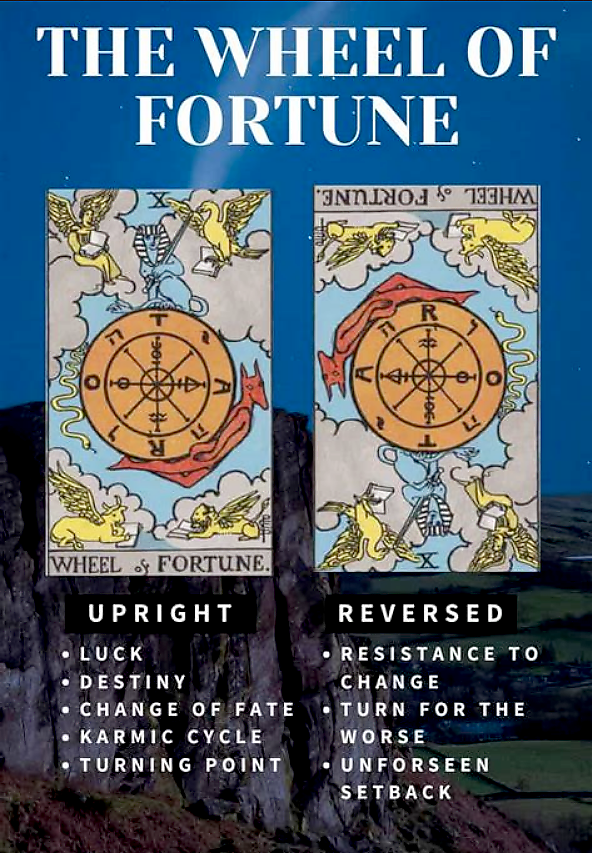
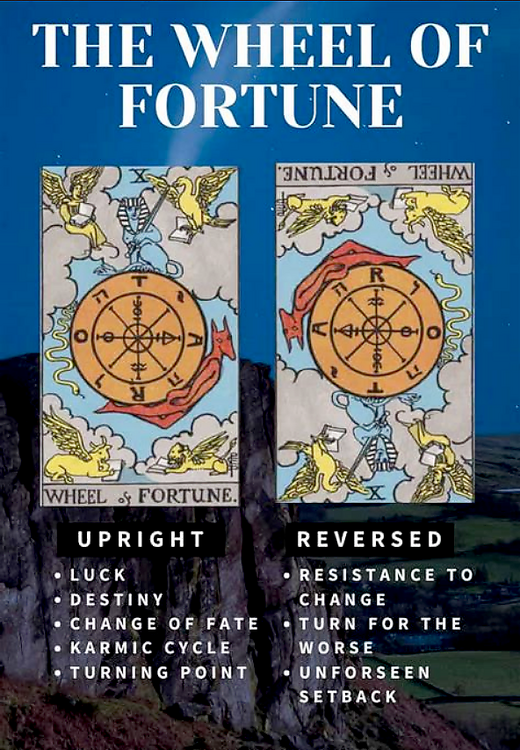
OH MY GOD !.........................I only saw a tarot reader a couple of days ago,and this card came up.
-
Some Guy That writes Music replied to Some Guy That writes Music's topic in Orchestral and Large Ensemblesure thing! it's fixed
-
Hi! Would you mind sharing the PDF? It’s really hard to see any of the notes or details clearly based on the YouTube score.
-
Thank you so much once again, Henry, for your beautiful comment and for listening so attentively. Your references to Schumann and to Last Year at Marienbad — a film by Resnais that I have long wanted to see, but have not yet had the opportunity to watch — were both flattering and deeply meaningful to me. So thank you as well for pointing me in that direction. My intention was indeed to follow as closely as possible the dreamlike path of a love that never truly came to life. As so often with Laforgue, everything unfolds in an ambiguous space, made up of appearances, half-truths, and the strange feeling that the beloved may exist only as a memory, or perhaps only as a dream. The ending seemed to call quite naturally for this musical treatment: the poet evokes the lost beloved — or perhaps love itself, who knows? — while life quietly continues its indifferent course. In French, Laforgue’s language has a very particular flavour, constantly oscillating between sublime images — “the eyes are azure carnations,” “the innocent mouth,” the elusive woman whom he tries to follow — and the wonderfully prosaic final line, “I shall go home without dinner,” which suddenly brings everything back to ordinary life. As for the orchestration, I wanted something as ethereal as possible. The harp seemed inevitable, together with violin "fragile" harmonics and a constant alternation between solo strings and the full ensemble. The ternary, circular motion also seemed essential to me: it continues endlessly, because life itself never stops moving forward, while the poet remains motionless in his grief. In any case, I am very happy that both the poem and the musical response I tried to give it were able to resonate with you.
-
-
well that was beautiful. I find myself most partial to the end of the piece, I found myself really desiring a longer phrase, so it was nice when one finally came. I will agree with MJFOBOE that the oboe part did get a little repetitive, but considering the subject matter, and the beauty of the ending as a result of that repetition, I would say it was acceptable. Also I think the MIDI made the staccatos a little extra piercing so I noticed it every time. Regarding the subject matter… real. It’s so hard to keep working to improve yourself and your position in the world, but remember hope is a weapon. I believe in you and your beautiful music.
-
Yeah I sang it in a school choir… a freakingly fascinating experience! The piece is basically about the wheel of fortune… how different things appear in life and how the fortune destroys them all without mercy, without preference, somewhat like Lao Tsu’s Tao.. Henry
-
Have I ever posted this before? I reconstructed this based on one of Rachmaninoff's Preludes, but rewrote it using only conventional functional harmony. I think you'll find it very helpful.






.thumb.png.8b5b433a341551e913a34392660bc95b.png)