All Activity
Past hour
-
Barcarolle
Barcarolle Music by A. Khomenko Lyrics by V. Osadchenko For voice and piano Slantwise across the slowly moving stream, in which the slow sky melts and slips away, an empty little boat, soundless, makes its way toward the Christmas star’s flickering gleam. The water’s dark, made thick by winter’s chill, and the light wake cannot hold on the glass, as if in a black draft notebook words pass into the page’s depths and vanish still. Above December the water closes tight, and a star falls into the shivering void. Through the cold darkness, here, arrives its light unbearably late, yet all the same it’s faster than never. V. Osadchenko. English translation by Claude.
-
Melodic Rhapsody
Hi there, in the opening I got this Scott Joplin feel and I became quite invested; however, that initial feel was lost as the material quickly progressed. I didn't feel/experience a particular direction in the piece either harmonically or thematically. It just seemed to wander. I would reexamine the opening theme and attempt to develop it further. Mark
Today
-
Sonata per corno, Op. 4 by Maharani (live performance by me)
These days are great in that I can see such nice collaborations like Henry & Vasilis, plus the Peter & Maharani pair! 😊 Peter, these pieces were good to hear. This kind of solo melody music is somehow difficult and you made nice pieces. I love your reverb version and, of course, Maharani's one. I think I like "Sonata" - this is a good opening for starting listening to these. Thank you for sharing. By the way, I've never listened to horn solo pieces. I know solo trumpet, saxophone - jazz sometimes does that but are there any solo horn pieces like that? I don't know. As for solo music, I love Paganini Violin Sonatas, not horn, though. That's awesome, isn't it? Anyway, nice job, both of you! I enjoyed it :) Hello Alexx, you can see Peter's horn in this topic, haha. For your reference! Best, Lithl.
-
Trying to write a Fugue
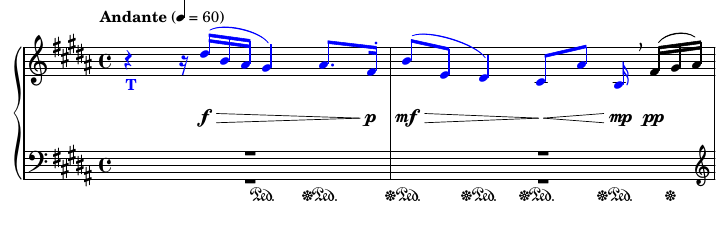
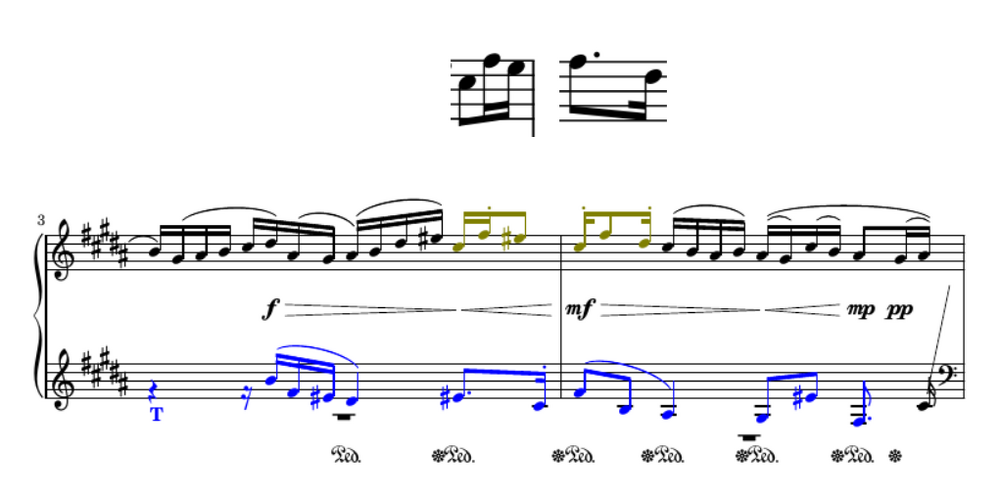
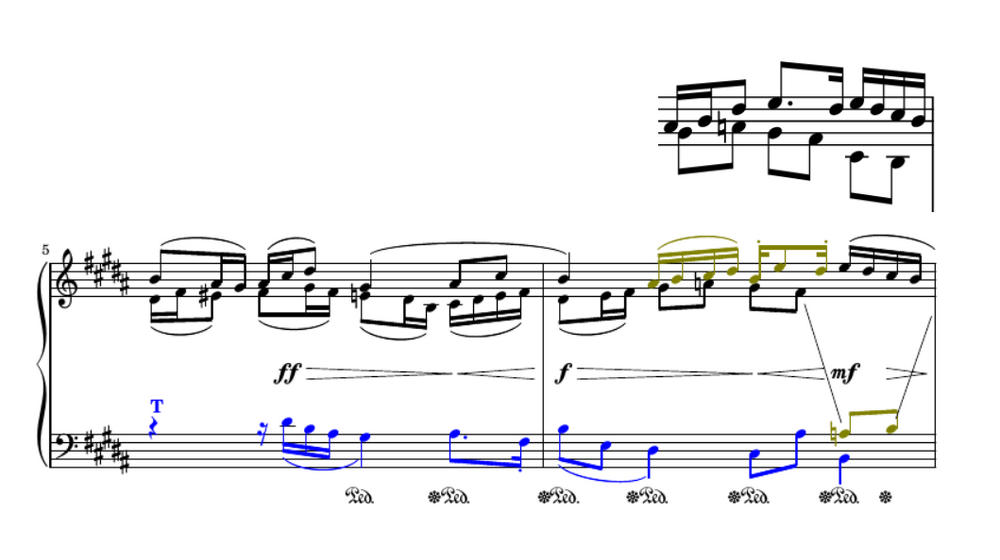
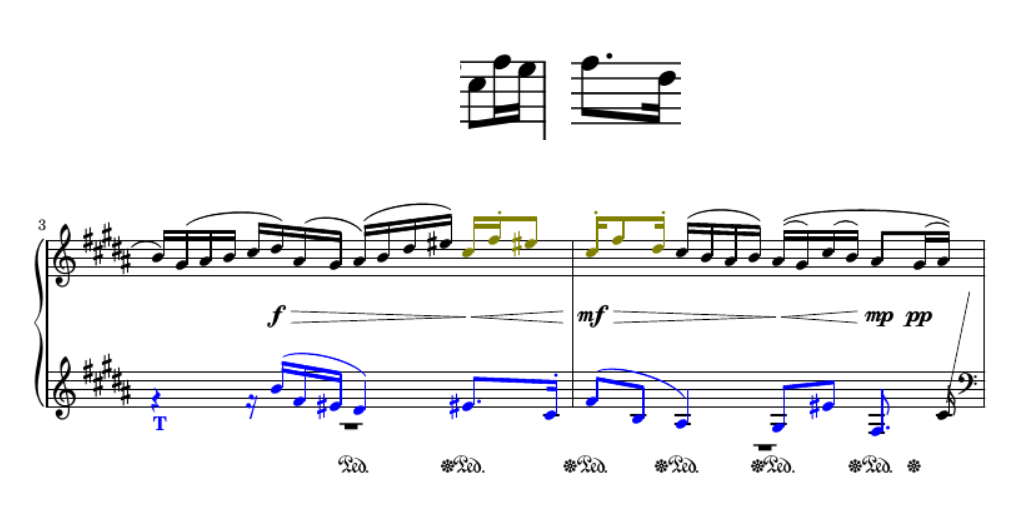
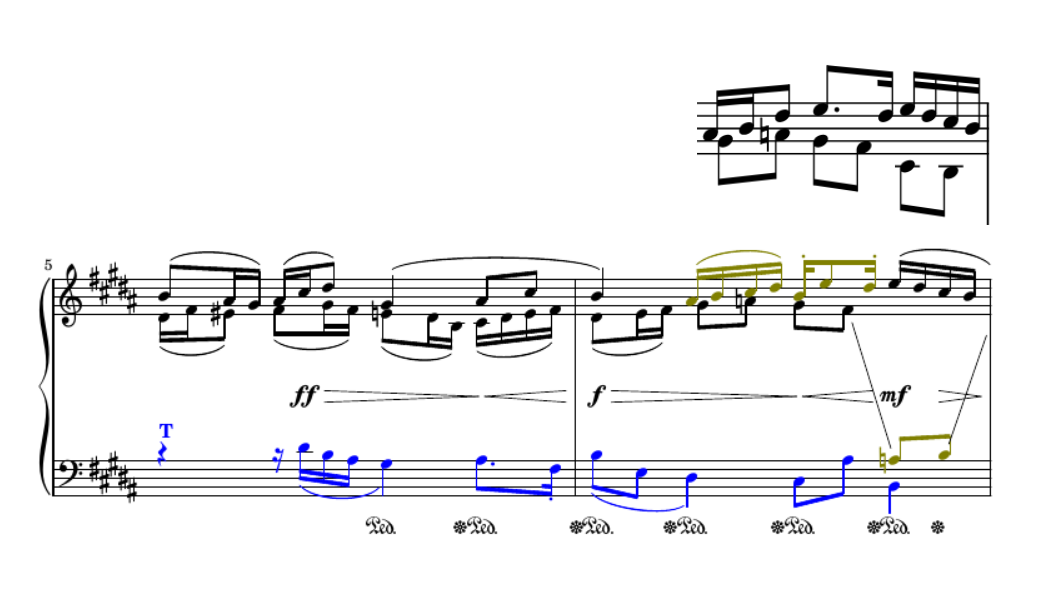
Hi @draingxngceo! First of all, a hearty welcome here to the forum. I’m very excited about your post, because your passion for fugues and the attempt to compose your own ones after studying the Well-Tempered Clavier remind me of my own first steps in composition many years ago. You have tagged the post with „beginner“ and mentioned that you „don’t really have composition knowledge or experience“. However, the short „sketch“ of an exposition of a fugue is not „nothing“, so I think you indeed have acquired a basic knowledge about fugues through studying the ones from the WTC (or you are just extraordinary talented from nature :-)). That said, some of my more general explanations about fugues below might be obvious to you, but that basic knowledge on fugue writing/analysis might be interesting or useful for other readers, too. Getting started. Before I’ve listened your fugue exposition for the first time, I took a look at the score to get an initial impression. At the first glance, it is not entirely obvious what key the piece is in and how long the fugue subject is. Your fugue subject does not prominently start at the pitch of B or G# and the last note of the fugue subject can only be identified by comparing all three subject entries: It is a B, the first sixteenth note in measure two. Therefore, I am now certain that the fugue is in the key of B major (which is perhaps hinted at by the title “B Majuh,” but—I’m curious—what language is that?). No that is not an error - it makes it somewhat harder to analyze the fugue. With that first impression and the comment of @Luis Hernández I have now taken a closer look at your fugue in order to conduct a more detailed analysis and perhaps offer some suggestions or solutions for the few issues I noticed or that have already been mentioned by other reviewers. Below you will find my annotated score as well as an audio version. The fugue subject. A fugue starts with the introduction of its central melodic material, called the fugue subject. As the fugue subject is introduced by one voice solo, anyone can easily recognize a fugue. A melody to be used as a fugue subject must meet certain requirements in order to be suitable for this purpose: It should have a distinctive melodic and rhythmic character so that it is memorable. The melody may contain smaller fragments (motifs) that can be developed later in the fugue independently. The subject must clearly define the home key (tonic). However, a good fugue subject avoids a final, closed cadence and appears “open” to forward motion. Typically, subjects are relatively short (from one to four bars), although they can be longer, and stay within a moderate range (often an octave or less). The melody should maintain a steady flow - with a mix of rhythmic activity - that creates and preserves momentum. You’ve created an interesting fugue subject that meets almost all of these requirements. I especially like its memorable rhythmic character. Starting with rests (I see, you have studied Bach’s fugues from the WTC where he often starts its fugue subjects with rests), helps that the subsequent subject entries encounter seamlessly in the continuing flow of the fugue and prevents that the fugues rhythm becomes too „static“ or „blocky“. The only „weakness“ concerning the above definitions is that it „meanders“ around the home key B before the tonic is established by the final note. There is nothing wrong with that fact – it might bring some more harmonic freedom or possibilities within the further development. In my annotated score I have emphasized the fugue subject in blue color and marked its start with the letter T (i.e. „Thema“ for subject in German). As you can see, I have separated the last sixteenth note of the subject from the following ones and included a caesura in the phrasing to emphasize the end of the subject and to separate it somewhat from the following sixteenth-notes runs, which represent the (beginning) of the counterpoint. Dux and Comes. Once the subject has been played by the first voice, it is then imitated - one after the other - by the other voices. The answer is not a repetition of the subject on the same pitch, but transposed one, up a fifth (or down a fourth) to the dominant. Such an answer is called “Comes” (i.e., companion), while the original subject entry is called “Dux” (i.e., leader). The third voice enters again in the tonic as Dux, the fourth voice - if present - in the dominant as Comes, and so on (although there may be deviations from the order Dux - Comes - Dux - Comes). Your fugue exposition consists of three voices which create an „ordinary“ arrangement of Dux and Comes: First subject entry as Dux in the Soprano in the tonic key of B major, second subject entry as Comes in the Alto in the dominant ky of F# major and finally third subject entry as Dux in the Tenor (or Bass) in the tonic key of B major. Real and Tonal Answer. Whenever the subject entry by the Comes is a literal, note-by-note transposition of the original subject as played by the Dux up a perfect fifth, we speak of a „real answer”. However, it might be necessary for some kinds of subjects to perform a slightly modified transposition - called „tonal answer” - especially with regard to the dominant note (i.e. the 5th scale degree), if it appears prominently at the beginning of the subject. In the second subject entry you have altered the first pitch from an A# (as it would be when applying a literal transposition) to a B, in order to stay in the tonic key of B major for the first while. That is a kind of a „tonal answer“, but interestingly not applied at the fifth or the fourth, but on the third. There is nothing wrong with it; rather, it proofs that the fugue subject is somewhat „advanced“ or „challenging“ in its harmonic line. Counterpoint and Countersubject. The counterpoint is a distinct melodic line that accompanies the fugue subject (or its answer) in a different voice. It provides musical contrast and rhythmic independence against the main subject. Whenever it appears more than once, it is also called „countersubject” - as it is a recurring companion of the subject, perhaps throughout the entire fugue, but at least during the exposition. It must be constructed to sound harmonically correct when inverted (e.g., if it is used below and above the subject), calling it an „invertable counterpoint”. If the melodic line accompanying the subject does not return regularly, it is considered rather than a formal countersubject. Your counterpoint is a „free counterpoint“, not a recurring one that could be considered to be a „countersubject“. Because of its sixteenth note figures, it moves forward, introducing momentum. Furthermore, especially in bar 5, you have distributed that movement between the Soprano and Alto which is a good example for counterpoint in its rhythmically sense. All in all that rhythmic texture creates a (nearly) perfect „complementary rhythm“, that is when the different voices complement to each other so that there exists a played note on every sixteenth beat, from whatever voice it comes. In the transition from mm. 3 to mm. 4 I have introduced some slightly modifications (highlighted in yellow) in order to emphasize that complementary rhythm, ensuring that all sixteenth notes beats „are played“ mitigating the somewhat „thin sounding“ octave on F# on the first note of mm. 4 (even if it is not a parallel octave, that particular note sounds „thin“ for my ears, causing me to “stumble” a bit while listening). By the way, the tritone in bar 6 – which was mentioned by @LuisHernandez – does not sound so bad to my ears, so my mitigation for that passage is also more a rhythmic modification in the sense of complementary rhythm (with the benefit that the dissonance is shifted more to a passing note): Exposition and Development. The complete, subsequent entries of the fugue subject in all voices is called a development of the subject. The first of that development sections - e.g. the initial introduction of the fugue subject through all voices - is called the exposition, since the subject is presented here for the first time, usually obeying the rules of „Dux and Comes” as explained above, thus presenting the subject in the tonic and the answer in the dominant key. In the subsequent development sections, those „rules” are often interpreted more „relaxed”, meaning that the subject now appears - after a modulation by an interlude (or „episod”) - in other keys (such as related keys as the dominant or subdominant or the parallel key, or even in more distant or unrelated keys). Furthermore, now „fugal arts”, such as inversion, augmentation and diminution and stretto are applied increasingly to depict the subject in an altered nature, or to create tension. In the closing section of a fugue, the subject finally returns to the tonic key, sometimes over a tonic or dominant pedalpoint. There might be a passage after the ultimate subject entry, which is called a coda and whichs purpose is to bring the fugue to the end with the respective cadence. Your short example (measures 1 to 6) is – in my opinion – a good exercise for a fugue exposition. Episodes . An episode is a transitional section that separates the development sections of a fugue, acting as an interlude to modulate between keys and to create contrast. Episodes often feature sequential repetition of a melodic pattern, which contributes to the modulation and creates a sense of forward momentum. As a general “rule”, the complete fugue subject does not appear within an episode. However, episodes typically - though not always - use motifs derived from the subject or countersubject. Measures 7 and 8 could be the beginning of an episode (while I consider mm. 8 „unfinished“ in the soprano part). When listening that final two bars, I could imagine, that the fugue subject re-enters in the second half of bar 8, thus closing the gap in the soprano part with its first upbeat-motif ... Conclusion. I very enjoyed your attempt at composing a fugue and I’m excited to hear more about the success of that fugue(s). Perhaps, my comments and my slightly modified version can be useful in that process. (And as you can see – and hopefully hear -, I have introduced some extend of dynamics, articulation and tempo changes in the score and audio, expressing somewhat how I would interprete the piece as a piano player.) As for the suggestions to start by studying books and trying out “simpler exercises” (such as inventions, etc.) - yes, that’s undoubtedly true. However, if you enjoy trying out writing fugues, I would strongly recommend to continue that - and, of course, study Bach’s fugues from the Well-Tempered Clavier - only the best source is good enough for learning! B-Majuh-piano-steinway-b.mp3 B-Majuh-colored.pdf

- Trying to write a Fugue
-
Henry Ng Tsz Kiu started following The Pennyroyal
- The Pennyroyal
- The Pennyroyal
-
PeterthePapercomPoser started following Orchestral work No. 17 "Polos Nevados" (Snowy Poles) and The Pennyroyal
Yesterday
-
The Pennyroyal
I've written a song about "The Pennyroyal." It's the flower that inspired the Pennyrile in my area. It's written for voice and piano. I wrote a poem in Spanish, then translated it to Italian: A Non conobbi mai l'amore, (bar 5) né il suo dolce desiderio; (bar 7) finché parlò il mattino (bar 9) nel profumo del poleggio. (bar 11) B Là tra l'ombra della fonte (bar 13) e il sussurro del sentiero, (bar 15) vidi tremare la luce (bar 17) sopra il verde più leggero. (bar 19) C Non fu voce né promessa, (bar 20) non fu canto né mistero; (bar 23) era il vento della valle (bar 25) tra le foglie del poleggio. (bar 27) D E da allora porto in cuore (bar 29) quel silenzio tanto vero; (bar 32) dove nacque il primo amore (bar 34) nel profumo del poleggio. (bar 35) A I never knew love, (bar 5) nor its sweet desire; (bar 7) until the morning spoke (bar 9) in the fragrance of the dried Pennyroyal. (bar 11) B There, among the shadow of the fountain (bar 13) and the whisper of the path, (bar 15) I saw the light tremble (bar 17) over the lightest green. (bar 19) C It was neither voice nor promise, (bar 20) nor song nor mystery; (bar 23) it was the wind of the valley (bar 25) among the leaves of the dried Pennyroyal. (bar 27) D And since then I carry in my heart (bar 29) that silence so true; (bar 32) where the first love was born (bar 34) in the fragrance of the dried Pennyroyal. (bar 35) Pennyroyal_Final_Harper - Pianoforte.pdf Pennyroyal_Final_Harper - Soprano.pdf Pennyroyal_Final_Harper.pdf
-
Trying to write a Fugue
One thing I noticed about what I wrote is that I slightly varied the subject in the different statements. The subject ends on a low B which in the first statement is cut off because I wanted to follow it immediately with some sixteenths. The second statement holds that B for a longer duration, and in the third statement it's even longer. Is this an error?
-
New Composition - no name as yet
Alex thanks for the suggestions and your take on the themes presented. Mark
-
New Composition - no name as yet
As usual I did notice it! Yet, I didn't update it in the present score ☹️. A very bad habit indeed. Thanks, Mark
-
New Composition - no name as yet
The material that you gave to the second violin at measure 13 and 14 is out of range and would better fit the viola. I think if you are still continuing working on this piece, it’s something that you could work on just by simply switching the entrance.
-
Fruit hunter started following New Composition - no name as yet
-
Orchestral work No. 17 "Polos Nevados" (Snowy Poles)
Hello, this is my composition for orchestra, "Polos nevados" one of my favorites. I hope you like it, im more a of a "feel" composer, not a rule follower so if you notice something rare in this piece, it's probably that. yes it has classical styled parts, but it's by no means trying to be a piece that follows the rules of classical music. im glad i found about this very active forum, my channel is very small and the music i upload don't get much attention or feedback. orchestral work, polos nevados by andres pozos Orchestral work snowy poles.mp3
-
Andres Pozos started following Orchestral work No. 17 "Polos Nevados" (Snowy Poles)
-
Andres Pozos joined the community
-
New Composition - no name as yet
Hi Mark. This piece has a programmatic quality that I enjoy. Like some of your other works, it feels quite militaristic due to percussion (especially the drum rolls). I imagine an epic battle; or perhaps a series of skirmishes. Maybe it could benefit from some vibraphone, to fill out the music where the texture is sparse? I went to a vibraphone and clarinet concert last week, where the vibraphonist played a series of glissandi, with one stick rising up the keys, and the other simultaneously descending. Quite an effective technique that I'd never heard before. Anyway, just a suggestion. Alex
-
Alex Weidmann started following New Composition - no name as yet
-
Performance of my piece "Echoes Of Seikilos"
Thank you so much for the warm words! I came across the original melody by chance on You Tube, and immediately fell in love with it. So I decided I had to use it for this project.
-
-
Rafa’s March
Thank you very much Mark, I really appreciate your opinion.
Last week
- SCHOLA CANTORVM DISCORDIENSIS - An early music discord server
-
Favorite video game music tracks?
PeterthePapercomPoser replied to PeterthePapercomPoser's topic in Music Appreciation: Suggest Works or ArticlesVortex - Volatir (found in an SMW rom hack):
-
Sonata per corno, Op. 4 by Maharani (live performance by me)
What an interesting composition. Writing a solo piece for a single-line instrument is a kind of marker of compositional mastery. There’s nowhere to hide here: not behind harmony, not behind any effects in the texture or counterpoint. Pure melody and form. It turned out to be a captivating piece. And the performance, of course. It’s a pleasure to hear music played on a live instrument by a live performer. It was played very convincingly and delicately. Simply bravo. By the way, I didn’t know that Peter is a horn player. For some reason I thought you were a theorist. Your username pushed me to that conclusion. =)
-
-
Sonata per corno, Op. 4 by Maharani (live performance by me)
I am a German living in America, so which to choose? Italian is the international language of music and already used for so many components of a score, so I figured I might as well use it consistently. :) Thank you for your compliments! <3
-
Sonata per corno, Op. 4 by Maharani (live performance by me)
@PeterthePapercomPoser @Maharani Wow congrats on the collaboration! I like both versions, but the reverb version really adds a layer of lushness to the sound, it's great. :) Seems like a lot of effort went into the recording and practicing, so well done there Peter. The handwritten score is clear and I'm envious of your nice handwriting lol. The language is interesting, what was the thought process behind it? ❤️ Well done you two, it's always great to hear live recordings here, and this was a fine example of what collaboration can achieve
-
Rafa’s March
Hi, I really enjoyed the opening theme with its "jazzy" feel and motion. However, I was not as engaged with the second part of the piece starting at measure 34. Personally, I would have like some more variations (playfulness) on the opening theme. I didn't feel this mid-section change enhanced the work. Mark
-
Ali Baghbani changed their profile photo
-
Disney-esque Musical song. Trouble orchestrating
I'm writing a musical song, about a witch. The lyrics are still in development, and I have since transposed the music down a lot from this recording, as it's way too high to sing. But I just can't figure out how to orchestrate it. At the end, before it cuts off, there will be a massive choir + orchestra section which I could be fine with orchestrating, it's just the rest of the song sounds so nice just with piano, so I don't know how to orchestrate it, and for what ensemble/orchestra. Any suggestions appreciated.Nasty Little Woman.mp3
-
Ali Baghbani joined the community
-
Would It Be Beneficial to First Learn a Piano Piece in Silence or at Low Volume, Before Moving on to Full-Sound Practice and Refinement?
Hi @Aw Ke Shen ! I actually did this before when I was young, as I always press the middle pedal of an upright to practice so everything is muted. I did this to strengthen my fingerings though. Your learning approach as you describe would be mainly aural and theoretical, but there are also some people who learn by auditory or manual method, so it really depends. My recent learning approach would be to play the piece as close as the original tempo with all details. By forcing myself to so many things happening I actually learn faster than just grabbing details first, probably because I’m an N person (intuitive) in MBTI instead of an S person (sensory), so I need to grab the big picture before going into details first. Henry
-
Derp135Egg changed their profile photo
-
Suite for mezzo-soprano and string quartet, “Forlorn Images”.
Suite for mezzo-soprano and string quartet, “Forlorn Images”. The original title, "Неприкаянные образы" (“Neprikayannye obrazy”), cannot be translated into English exactly. The Russian word "неприкаянный" (neprikayanny) has no single equivalent in English. It describes someone or something that has no place to belong, no refuge, and no peace. It is a person or a spirit drifting without purpose, restless, a little lost and lonely, not accepted anywhere. The word is often linked to the old verb "каяться" (to repent), and it carries a faint religious shade: something left unreconciled, with no rest or shelter. English words such as “forlorn”, “restless”, “drifting” or “homeless” each capture only part of this. So “Forlorn Images” is only an approximation. Think of images, figures and visions that wander without finding their place. The 5th movement, "Звездочёт" (Zvezdochet), is an old, slightly fairy-tale word for an astronomer or astrologer. Literally it means “one who counts the stars”. It belongs to the world of medieval wizards, court sages and folk tales, where a person watches the sky and reads fate in it. The nearest English word is “Stargazer”, though it can also suggest a daydreamer. “Astrologer” is closer to the mystical side. Please read it as an old sage who observes the stars and seeks meaning in them. Music by A. Khomenko, lyrics by V. Osadchenko. In five movements. Silence Reflection Desire The Master (attacca) The Stargazer Part1 Part 2 Part 3 Parts 4-5