
All Activity
Past hour
-
Each links are the given bass(first), of soprano(second, and third) melody which I've filled in other voices in Harmonic rules. Last link display the exercise from korean school's entrance exam. So, It sounds doesn't such a good cause It is just for entrance exam.
-
Hello I’ve had to listen to this track three times in a row – it’s very short, so it’s easy to do. There’s one reason for this: I’m really fascinated by what you’ve done here. I think this sort of music is just as valid as any other. I’d love to know a bit about how you created that ‘granular synthesis’ – whether it’s with software or something else. I sometimes think about using electronic elements in my own work, but I’m not quite sure how to go about it (as I rely 100 per cent on virtual instrument libraries). To me, that synthetic texture really reminds me of ‘flocks of birds’. It really does have several layers of sounds that are like the caws of different species of birds. This reminds me directly of pieces like Vox Balanae (Voice of the Whale) by George Crumb. https://www.youtube.com/watch?v=sutSUIBp-VY&list=RDsutSUIBp-VY&start_radio=1 As well as looking at the score, which is very, very complex (typical of Crumb), it is fascinating to watch the performance, as there are instructions on how the musicians should appear (masks) and in what position. performance
Today
-
tarisdavid joined the community
-
Fair caution here. It promotes a modified Spotify app, which is not official and breaks Spotify terms. Sideloaded builds can also hide malware, so the risk is not just legal. If you compare such builds, this music APK roundup may help. I would stick to the official free app or a Premium trial.
-
I say this is an interesting piece, though each movement in my view kind of ended a little abruptly. I just say it's also because the lines kept moving, and there's kind of little room for some of the strings to stop for a break, and let the other strings shine. But I like the contrapuntal texture and the rather mysterious melodies overall. I think the last movement here really has a clearer direction on what you want to go for, and ends most beautifully.
-
Not nessacarily. It could work with in the current frame work. The current frame work is a bi monthly competition. The constraints for each one is voted on: forces and etc. So style can be voted on. Then after that, those who want to join have to say so and are given two months to write a piece. so I can see this working Oh that is right! There were nine entries! :)
-
Thank you so much for this thoughtful and beautiful comment. It truly means a lot to me that you not only felt the Scarlatti influence, but also sensed that my own voice remains at the heart of the piece. That balance is something I care about deeply. I love working within the binary form, but I also enjoy pushing its boundaries through unexpected changes of mood, harmony and direction. As you said, I love surprises and unexpected moments, but I always try to keep them balanced and natural, so that the music never loses its sense of direction. Scarlatti has taught me a great deal in that respect. I’m especially happy that, even when you didn’t know what was coming next, you never felt lost. For me, that is one of the most important things in music: to surprise the listener without losing them. Thank you again for listening so carefully and for understanding what I’m trying to do. It truly means a lot to me.
-
@Lithl My dear friend, I truly don’t know how else to thank you. Your appreciation, both for me as a person and for my music, genuinely makes me very happy. I’m so glad that you enjoyed this sonata as well, and it means a great deal to me that you took the time to listen to it and share your thoughts. As for my dear friend @Henry Ng Tsz Kiu , I have had the pleasure of considering him a friend for quite some time now. Even though we are separated by distance, we are in touch almost every day and we often talk about music. Above all, there is a deep mutual respect between us, as well as a genuine love for music. Lately, we have been talking quite a lot about Scarlatti. Henry not only loves Scarlatti, but also listens to and performs his music. Since I also have a deep love for Scarlatti, especially his binary sonatas, this shared passion for his music has brought us even closer. And so, I felt the need to dedicate one of my own binary sonatas to him. I’m truly very happy and touched that I had the opportunity to do so.
-
Was kinda looking around for inspirations for slow movements, and this piece is quite astounding. To tell the truth, I actually felt this is closer to Debussy than Chopin, although Chopin's romanticism is quite deeply reflected here (particularly with the more detailed scalic and chromatic ornamentation whenever the main melodies return). Why I felt as such is because of the extensive use of modes, which is a bit more characteristic of impressionist music. And also plenty of hemiolas, although ofc that's also seen in plenty of romantic music.
-
Hi im working on my first orchestra piece, and im looking for feedback. The first movement serves as a introduction, well the 2nd movement is Theme and Variations. Orchestra no 1 .mp3 Orchestra no 1.pdf
-
Hey @Wieland Handke that was really excellent. I found the music intellectually challenging, so I gave it a couple listens. This music has a great flow, but is also mentally stimulating, just like Bach. I didn’t read your introduction first, and while listening I kept thinking “this sounds like a modern Bach chorale”. Glad to find out I heard what you heard! You speak the language of modern harmony, but here you speak it with a baroque accent. It works well. There’s just something about jazzy chords that gels so well with baroque rhythm/voicing. Makes me want to hear more of your work. One idea: it would be fun to hear this with four instruments rather than one. For example, I think this piece could actually be turned into a chorale! Have you ever considered setting this to a poem? I bet a choral rendition of this would slay. There is tons of fun material for 4 singers to play with. Or a string quartet could be nice. Assigning each voice to a separate instrument could really free up those voices, and allow them to shine in a way entirely different than what can be achieved on keyboard. Nothing wrong with a baroque style keyboard work! Even if you decide not to try it with a quartet, it’s still delightful. Nice work!
-
Yesterday
-
Let us add style to the mix! Let challenge them only write in one write style and see what happens. I think this would work better as a specific contest portion rather than adding another section like that because if this was a portion, then this would contradict a bunch of other things so this should be better off as its own given challenge other than a additional aspect
-
I really enjoyed this. Yes, in the broadest sense I got an immediate Scarlatti vibe, but your unique voice is dominant. I think of binary pieces as more limited, but you developed this nicely. The mood changes were really well done. You moved between keys and motives quickly without it ever sound schizophrenic. It's exuberant music, with a clear drive and direction. I never felt lost even when I didn't know what was coming next. Thanks for sharing.
-
Ah, I wish I were Henry... You are a lucky man, @Henry Ng Tsz Kiu, to have such a nice friend who composed music dedicated to you and your musical talent! As for the music itself, I don't even need to say anything because your music always sounds so high-level and lovely. I want to see you play your pieces in the future. Great, thank you for sharing, Vasilis! Best, Lithl.
-
Hi @MinGry ! Thank you for sharing this piece. I think you’re on the right track, and it’s clear that you’ve been studying composition and working hard to develop your melody and harmony skills. This work shows a lot of thought and care, and I can hear skills that will continue to blossom with practice. I’d like to share a few thoughts that might help you develop this piece and give you some ideas to carry into your next one. My first suggestion is to look at the passages with block chords in the left hand and experiment with more varied accompaniment. You already use some Mozart-style accompaniment, but there are many possibilities beyond that pattern and block chords. Try breaking up the chords, varying the rhythm, or creating flowing, scale-like lines. This could soften some of the heavier chordal passages and give the left hand more personality. It also opens up opportunities for passing tones, neighboring tones, and suspensions. The left hand doesn’t have to simply state the chord of each measure; it can contribute to the character of the music. You could explore all of this while keeping your underlying harmony and right-hand melody intact. That step alone could add quite a bit of oomph to the piece. Another detail to look closely at are the areas where you begin a melody with the fifth of the accompanying chord in the bass. Depending on the context, this can make the music feel less grounded, weaker, than it would with the root in the bass. That doesn’t mean the root always needs to be in the bass. But it’s good to be aware that the fifth in the bass will weaken the strength of any chord. One great place to put the fifth in the bass of the I chord is if the following chord is the V chord. That is a powerful I-V cadence that is used throughout the classical repertoire. My final thought concerns the overall harmonic direction. There’s plenty of appealing melodic material, but at times I feel that the music wanders harmonically, making it harder for the listener to sense where it’s headed. I’d recommend listening to some early Beethoven sonatas (maybe #1 through #15) with this in mind. Your piece doesn’t need to sound like Beethoven, but he offers wonderful examples of how melody, harmony, and form can create a dramatic arc. Tension builds, reaches a peak, and eventually subsides. The listener enjoys the music while also participating in the drama, as if the music is telling a story. Try listening to those sonatas while taking a hike, without looking at the score. Just study the sound first, the vibes. Then pick out some moments that felt especially moving to you, and study how he did it. Explore: how did he use harmony, melody, and accompaniment to construct something dramatic, something with power and direction? See whether you can build tension gradually over several measures in your music, arrive at a climax, linger there long enough to make it meaningful, and then let the tension resolve. In passages that feel a little directionless, that sense of movement toward and away from a goal could give the music more shape. It might also help to set the piece aside for a month and return to it with fresh ears. Listen for moments that feel flat or seem to lose momentum; those could be good places to experiment with accompaniment, harmonic direction, and dramatic pacing. Even if you decide to leave this piece exactly as it is, you’ve still made real progress in your composition journey. You can carry these ideas into your next sonata and keep exploring how a more expressive left hand and a stronger harmonic arc can bring your music to life. These are just my thoughts, and I appreciate the opportunity to listen. I hope you keep composing! Jonathan
-
There were 9 entries though🤣😂
-
As a judge, it was honor to review each of 12 entries of this competition. I enjoy give feedback to this composers. I hope they learn from this experience! I feel that (maybe) having at having work in the ensemble category and possibly others and showing how members how you can take draft to full polish piece could be requirement. Again I said maybe.. For the time requirement: 3-6 mins with a 5 mins would work. Ensemble: we can always vote on this. Let us add style to the mix! Let challenge them only write in one write style and see what happens. So the core requirements: “Write a piece in early romantic style (Chopin, Schuman, Schubert) that is roughly 3-7 mins long given the following forces..”
-
Thank you so much, my dear friend! I’m really happy that you noticed those false cadences. I invest a lot in the dramatic aspect of my music, and I generally love surprises and unexpected moments, but always with balance and naturalness. Although the Classical era is always like a shadow behind my writing and continues to influence me, these unexpected elements are something I learned especially from Scarlatti. I feel incredibly blessed that I discovered his music and had the opportunity to understand and absorb so much from his unique way of writing. Thank you again for listening so carefully and for your beautiful words. They truly mean a lot to me!
-
@Vasilis Michael This is a delight. It sounds like it’s right out of the classical repertoire, though with touches of modern harmony in there. Perfect music to help someone relax. It’s light, graceful, and airy. You have a really nice touch. I like how you pepper in lots of false cadences, when it sounds like it’s about to resolve but instead presents a bit of mystery to the listener. Those moments help keep the drama flowing throughout. Well done!
-
Hi Everyone! Quite a bit of work later, I am happy to finally share my third completed Sonatina! I would love to hear your feedback and opinions on it. I know it is quite lengthy, so I really appreciate anyone who is willing to take the time to listen to my music, as always! If you only have time for a single movement, I think you might enjoy the third one the most, as it is fun and quick. :) I. Andantino – A sonata-form movement that explores motif economy and establishes the overall tone of the Sonatina. II. Adagio – A lullaby-like ternary piece, providing a moment of relief and contrast before the finale. III. Allegretto – A variation on rondo form that brings the Sonatina to a playful conclusion. This is my favorite movement of the piece, and I like to think of it as a “Drunken March.” YouTube link Score Timestamps: 00:00 — I. Movement 04:15 — II. Movement 05:37 — III. Movement Sonatina No.3.mp3 Sonatina No.3.pdf
-
My dear friend, thank you so much for your kind words. I’m really happy that you liked it. I may have Scarlatti as a model for my binary sonatas, but my writing is more classical in character. In general, it is a blend of everything, and when it comes to structure, I focus more on classical musical dramaturgy. Thank you once again!
-
Love this! Quite an interesting mesh of Baroque and Classical style. What I find rather baroque is the rather contrapuntal texture in this piece, although there are still some clear melodic lines like in Classical music
-
-
= Short Piece for Cello / Piano / Granular Synthesis = = Background One day, I thought of a cellist and a pianist performing over a backdrop of electronic noise, and this piece was created based on that idea. As the title suggests, the composition features cello, piano, and granular synthesis. The composition process began with creating the granular synthesis textures, followed by adding staccato cello notes and piano. I imagine a space that looks like a compact design. = Note I don't have a specific message I'm trying to convey with this music, but I would be happy if someone found it enjoyable. To be honest, I was reluctant for a while to upload this piece; I felt a bit hesitant about creating something annoying when everyone else is composing beautiful orchestral / chamber or keyboard-based works, haha. Still, I decided to take the plunge and upload it. As for the score, since I don't know how to notate it, I can't upload it now. I’d love to hear your impressions, criticism, and feedback. Again, I hope you find it interesting and enjoy it. = Music / Artwork: Lithl = Finally If you know any pieces that are similar to this piece of mine, please let me know. I'd appreciate it. Thank you for listening, and have a nice day :) Short Piece for Cello : Piano : Granular Synthesis.mp3
-
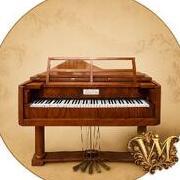
I am very happy to share my 27th Piano Sonata, written in binary form. The work is written in an Allegro character and explores contrasts between lively, restless passages and more expressive and introspective moments, with changing harmonic colours and a gradual movement towards a quiet and gentle conclusion. I have dedicated this Sonata to my dear friend Henry, as a small expression of my appreciation and admiration for him, both as a composer and, above all, as a friend. It is a great pleasure for me to dedicate one of my works to someone whose music I appreciate and whose friendship I value deeply. The performance is my own, using the J. Weimes Fortepiano (1808) from Pianoteq 9. I hope you enjoy listening to it, and I would be very happy to hear your thoughts and impressions.









.thumb.png.8b5b433a341551e913a34392660bc95b.png)