All Activity
Past hour
-
This will be fun competition to partake in. The results will be interesting!
Today
-
Very Nice ! The Piano sound is quite clean and Crisp, and the overall composition is professional. I personally would have created less of a "DROP" in dynamics, while still retaining a difference in volumes However radio stations and Broadcast-Compressors would take care of this automatically. Well Done.
-
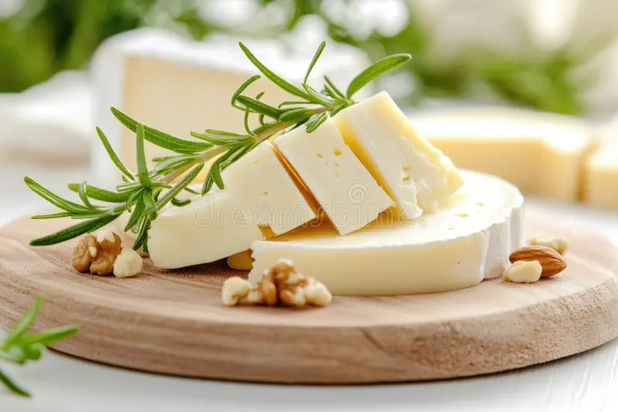
Inspired by George Traugott polkas from the 1880s. That composer is practically unknown, so you might as well say it's my own style ;) I think I'm not there yet in terms of harmonic and rhythmic variety, the melodies don't always seem to be developed the right way, but at least the general mood, form and dynamics are laid out. I'm composing in this style of music all the time for 4 years now and I think I've met that barrier when I can't compose any more complex without some help. So any advice on the harmony, rhythm and melodic contour are appreciated. I know the theory on diminished sevenths (there's one in the piece by the way), augments, Neapolitans, borrowings from minor, etc, just don't know how to use them in this context. Cheese with Walnuts.mp3 Cheese with Walnuts.pdf
-
Congratulations, my dear friend. I liked this scherzo very much. It has a very distinctive atmosphere and great taste. The harmonies are wonderful, and the contrasts make it extremely interesting. I don't really have any criticism to offer. As both a musician and a listener, I found it tremendously satisfying. The only thing I would love to hear is a real performance on an actual piano. Once again, bravo from me.
-
thanks for all the replies as again I think going by ensemble size is much better. This will also prevent people from pulling a fast one with making “string orchestra”stuff. (a moment, including me that I’m not proud of.). But basically taking something that is meant for five instruments in treating it using patches for a section.
-
Yes, in previous competitions, when people already had a piece pre-composed WAAAY ahead of time (like years) that fit the instrumentation and other requirements for the competition, they were able to submit it. However, such entries were obvious to the judges and it didn't predispose those entries to being judged favorably as they didn't fit the theme of the competition as nicely. But that doesn't and shouldn't keep the contestants from trying if they wish to do so. To concur with what @MK_Piano mentioned above, I do think we will from now on count the ensemble size by the number of performers/players not instruments. That can include just about any sound that a human being and their available tools at hand is capable of producing (although this can get pretty involved if you care to do so). Also there's a very easy way to get Musescore to only display staves that have events in them (if multiple instruments are played at once like in the case of an involved percussion rack or something).
-
I will let Peter reply officially to this. In the meantime, from what the sentiment was last time regarding percussion ensembles: 1. Ensemble size starts with the amount of persons and performers. NOT instruments. 2. Individuals can swap instruments. 5-10 instruments can also mean 5-10 persons. However, 5 percussionists can play 2-3 instruments depending on the part. This said, in percussion ensemble, you would not have 15 staves to show all instruments played. Instead, 5 staves (in this example) and use written instructions to showcase the performer changing instruments (see below): You use one stave to mark one performer, however, write in the part when they change instruments. So, for your previous submission, you would need to find away to only use 5-10 staves for 5-10 persons and not instruments. Whether or not previous submissions are okay? That is for Peter to answer.

-
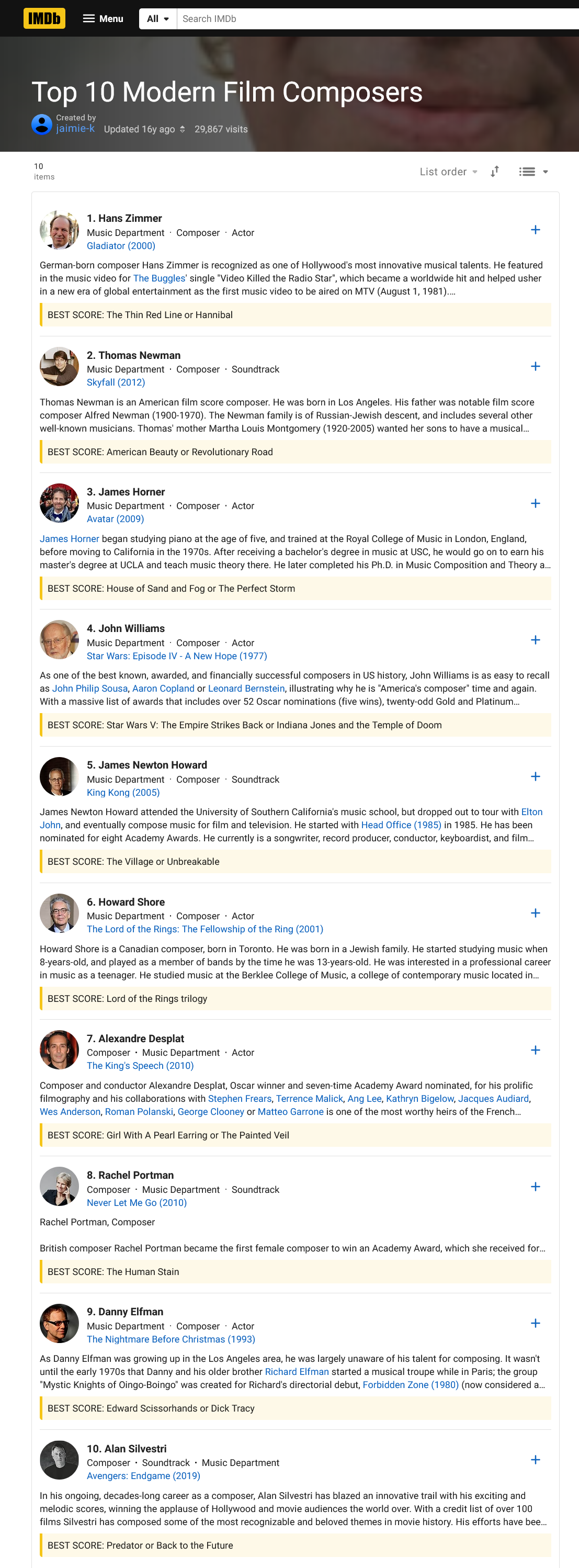
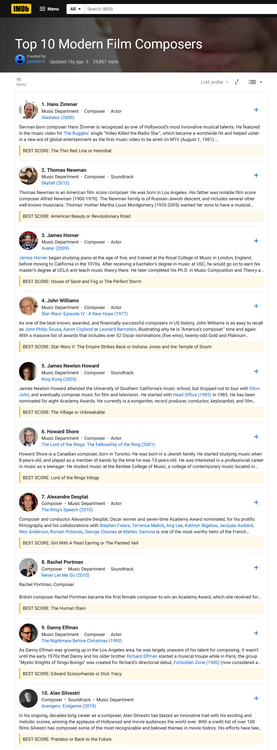
"Contemporary Composers Sector" ? ...........This Category tends to be in the Minority, as opposed to the Majority of 🪦DEAD Composers. Top 10 Modern Film Composers
-
just a bunch of questions, but first let me start off with my own disclaimer Right now, I am doing another time consuming competition for music for the next two months so I may not be able to participate however though I love this community and it always gives good feedback so I may have some loopholes I could use to allow me to still participate quite honestly, it would be a lot to have three commissioned music right on top of each other (two from the competition I previously had said about plus this one with one more) [and commission is just what I mean by a piece of music that is called for by a competition given its nature] OK, my first real question is am I allowed to submit previously written music by somehow and by some miracle the voted prompt turns out to fit a older piece I have not submitted for a competition even if I change the instrumentation a bit to make it fit if we do the large mixed ensemble option, the one consisting of 5 to 10 instruments let me just first clear that I do have my own back up plan just in case if this idea is rejected, but is it plausible I could write for a possible 10 person front ensemble (the thing about percussion is that you could have one person with one part pick up two instruments and also some auxiliary percussion such as drum set and rack consists of many things as a combo so just wondering if I’ll be able to do that given my last entry to a competition that use a similar approach kind of gave some controversy it’s very much by tradition that some of these instruments are mounted on upon each other
Yesterday
-
-
-
-
@Alex Weidmann @BlackkBeethoven Thank you for listening and commenting. Yes, virtual instruments do what they can, and well, I prefer to focus on the composition rather than on post-production with a DAW and so on. That’s why I use an editor (Dorico) with NotePerformer. There are indeed orchestral versions of Debussy’s preludes. Some are very famous, such as the arrangements by Colin Matthews or Stokowski. I must say I didn’t listen to them when I was working on my modest version. In fact, I didn’t even know they existed until I started exploring this piece. It’s been an interesting challenge because of the nature of the piece – so colourful, yet harmonically free and daring at the same time. It’s been a slow process, taking about two months, as I was working under the supervision (on a weekly basis) of a composer and teacher. I’m in a small group (four people) learning orchestration with him, and it’s fantastic… We usually work on shorter excerpts from pieces, but this one was the full work. In fact, there have been some subsequent modifications and improvements, but never mind. Soon we’ll be moving on to orchestrating pieces we’ve composed ourselves; we’ll see how it goes…
-
-
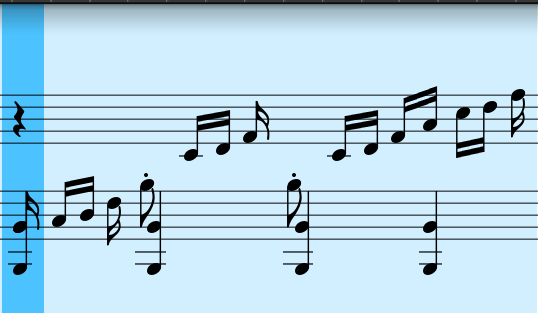
I'm teaching myself piano and this arpeggio is the only thing stopping me from playing Schala and the Queen at tempo. What fingering would you use for the right hand here? What are the good reference sources for learning the theory behind how to figure this out? I think I probably need to start practicing something a level or two below this. Just a book of arpeggios with good-habit finger notes would be amazing. Does that exist? Schalas_Theme_-_Chrono_Trigger.mid
-
Wonderful orchestration - lovely, lovely color! I find this orchestration to be incredibly balanced - fresh and innovative, while holding to the character of the original. As @Alex Weidmann said, I also think the flute choir was an excellent idea. Your choices feel very intentional, and I enjoyed listening to your orchestration! I would love to see how you might approach something by Bonds or Price.
-
Hi @stewartIM and welcome to the forum! I think writing a set of variations on two themes is a really great idea! And writing them so that their order can be reversed is especially ingenious! I listened to both versions and was amazed that there weren't any awkward transitions between variations - perhaps this is because you wrote each variation as a standalone piece of music? If you were tasked with writing them as one smooth and continuous piece of music it would be harder methinks! Also - amazing performance of your own music! Great job playing and recording this piece! My favorite variation was perhaps the Chiasmus: Bleak. Although the Lamentoso variation was especially affecting as well. Now for some critique! I write a lot of variations and I consider it my life's calling to find themes that nobody has written variations on and write variations on them! In my own composition adventures I usually expect there to be an intensification of the awareness of the theme throughout the variations. When I listen to some of my favorite variations pieces my mind is stimulated by how different they get while still being audibly related to the original theme. In other words, the pieces stimulate the listener to recognize the theme in all it's various new and different forms. But, in your variations, I don't perceive that to happen. Perhaps it's because you're using two themes? Or perhaps your variations don't have as tight of a motivic development as I've come to expect from other favorite variations pieces I've heard? But don't take this the wrong way - I've still enjoyed your music immensely and it is very good! The other critique is that the music in both versions seems to just stop and there's no audible drive to a strong conclusion - this is obviously because the piece can be played backwards and forwards and it would be impossible to accomplish because of that - unless you had two conclusions - one at the beginning and one at the end. In any case - I enjoyed your music very much and thank you for sharing!
-
Hi Luis, This is a great piece to choose for orchestration! I'm sure I've played this on the piano in the past. It uses one of Debussy's favourite tricks with its harmonic planing, and has some lovely impressionist touches. I wonder, are there any other orchestrated versions; or is yours the first? Using a choir of flutes was a neat idea, and I like your harp harmonics (near the start). Also harp with glockenspiel is an effective combination that I probably wouldn't have thought of. My only wish is that you had slightly better instrument libraries to do justice to your score, as the rendition doesn't always sound fully realistic.
Last week
-
-
I wrote this piece back in 2018, when I was still in college. The conceit is that it's a theme and variations with 2 themes, one on each end. The variations are played starting with one theme and ending with the other. To add to the compositional complexity, the piece is reversible: you can start with the other theme, play the variations in reverse order, and end with the first theme. "Variations" should probably be in air quotes - they're really more like microscopic character pieces that use the themes as a jumping off point. I've given this piece a lot of thought over the years - most people I've shared it with enjoy it, although they disagree about which order is better (which I consider a success ). The most common criticism I've heard is that the individual variations are too short. I'm curious - what do you all think? I've grown a lot ear-wise since I wrote this piece, even though I haven't written very much since college, but I'm still very happy with it for the most part. I'm thinking of revising the work and expanding some of the sections (e.g. N2, N3, S3) to give them a bit more symmetry. I might also try to get the work published, although I don't expect major publishing houses to be super interested or to get it to a wide audience. Here is a pair of recordings I made of the piece right after I finished writing most of it, synced with the sheet music. I later added a cadenza to the opening of N1 which is not included in this recording. Chiastic Variations, Op. 6a Chiastic Variations, Op. 6b
-
Hey! Thanks for the comments. To be honest, I struggled on a name in the first place lol. When I started this in 2024, my goal was to make a sonata and my original second movement was a Courante. So, the idea just stuck with me until now. I thought giving a dedicated name like some of my other works, however, it was a roadblock there. With the melodic voicing, it just comes to MuseScore at that point. I did some hidden notation to voice stuff louder or softer for the playback however. I may go back and update it for the dynamic reasoning, however, my thought process veers towards performance. The conductor of this work would hopefully know when to bring out the melody, or the ensemble would know how to balance regardless of dynamic.
-
Hey @MK_Piano ! This is a nice piece for chamber orchestra! I listened on headphones. I personally would have called it a Suite for Strings with the first movement being perhaps a Serenade, the middle movement a Bagatelle and the last movement a Scherzo or something. But those are just my personal suggestions and by no means do I intend to impose my interpretation upon your vision. One thing I did notice is that you don't seem to balance the melody above the rest of the voices (or perhaps you do in the mixer? But that wouldn't make sense since you don't always have the melody in the same voice.) I see all the string parts at the same dynamic at the same time. I think it would bring more clarity and balance to the music if you brought the melody out more by setting it at one dynamic level higher then the rest of the voices. One way that you do use to bring the melody out is by sometimes doubling it with multiple instruments together so good job there! I enjoy the sections where the melody is in the bass - I think that's a cool creative decision that brings variety to the music! Overall I really enjoyed it! Great job and thanks for sharing!
-
-
-
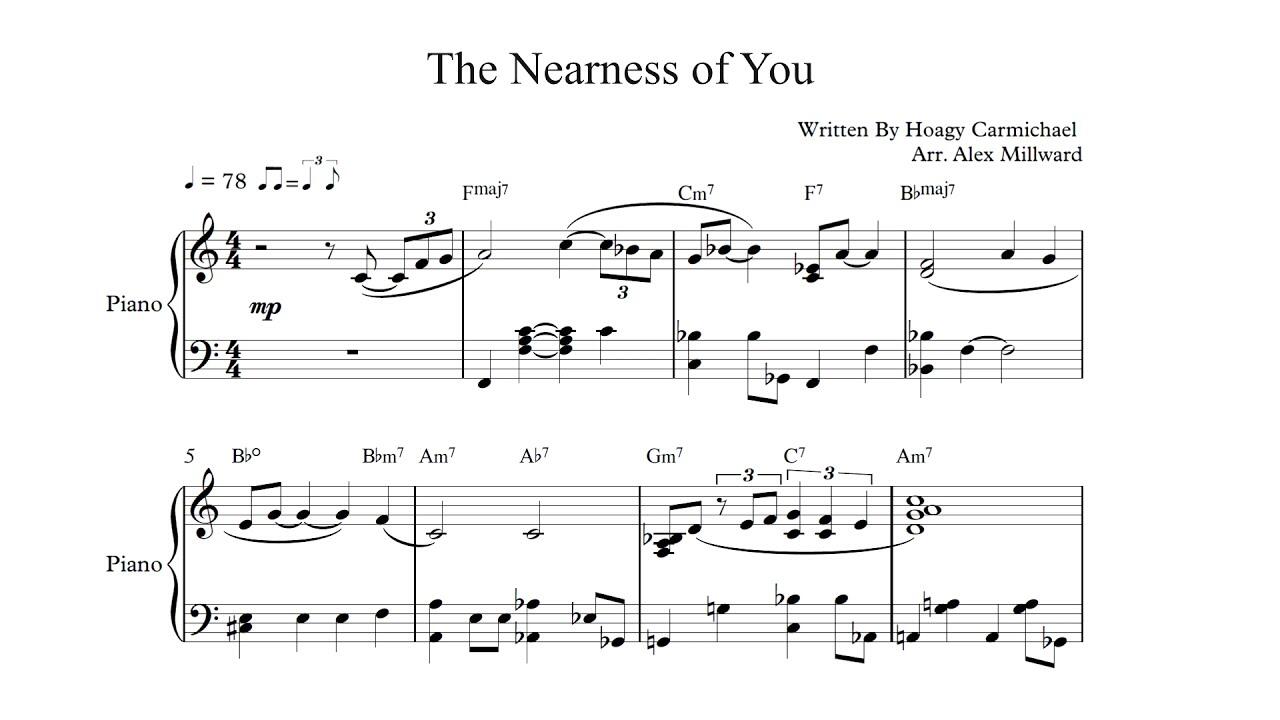
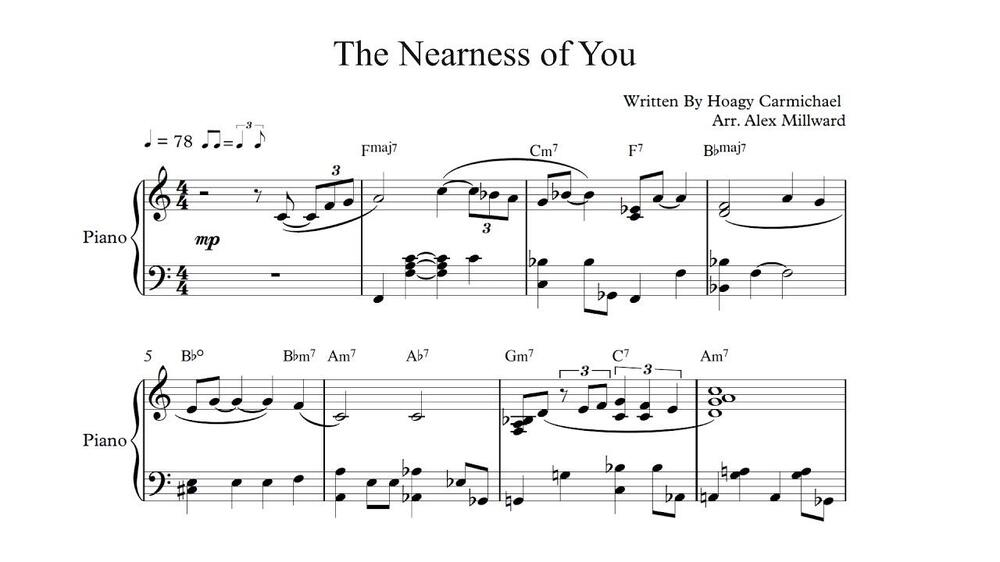
"THE NEARNESS OF YOU" 1937 Songwriters Hoagy Carmichael, Ned Washington | Orchestrated Rendition - by V.I.P. EXCLUSIVE Iceland Symphony Orchestra THE NEARNESS OF YOU - Orchestrated Rendition - by V.I.P. EXCLUSIVE.mp3 THE NEARNESS OF YOU - Orchestrated Rendition - by V.I.P. EXCLUSIVE.midTHE NEARNESS OF YOU.pdf






.thumb.png.8b5b433a341551e913a34392660bc95b.png)