Leaderboard
-
Luis Hernández
Members7Points3,237Posts -
Wieland Handke
Members5Points120Posts -
Fruit hunter
Members5Points74Posts -
MK_Piano
Members5Points62Posts


Popular Content
Showing content with the highest reputation on 04/02/2026 in all areas
-
I will do the thing that is writing something or other for the thing mentioned above, and things. (I am declaring my intent to participate. for those who have to think a little bit too hard to figure that out) ☠️4 points
-
Let this comment mark my intent of joining this competition. Good luck to anyone who may join and I am excited to see whom may take up arms in this fun little game of music creation!4 points
-
The members have voted in this poll; Spring 2026 Competition Poll and have decided about the form and details of the next Young Composer's Composition Competition! As per the previous trend, this competition has no monetary rewards - only kudos and badges. Also in accordance with the results of the 2025 Halloween Satisfaction Survey, we are inviting the members/competitors to participate in the creation of the badge awards that will be dispersed at the end of the competition! So if you have any ideas for particular badges that would accord with the kind of music that will be submitted for this competition and the theme of this competition, let us know in the List of Manually-Awardable Badges thread and we will take your ideas into consideration! Please reply to this topic to declare your intent to participate in this competition! The winners will be determined by popular voting polls! Reviewing and Judging: The reviewing of the competition submissions will once again be spearheaded by our volunteer staff and those who wish to contribute their time and effort to reviewing the entries out of the goodness of their own hearts (and/or sense of fun!). You may use the Official Competition Reviewing Template, or jettison the template and review the submissions just like you would any other piece of music on the website! You could even make your own template! You will be rewarded for your efforts with "Ardent Reviewer" badges in three tiers: Featherweight Reviewer - for reviewing 33% of the entries Welterweight Reviewer - for reviewing 66% of the entries Heavyweight Reviewer - for reviewing 100% of the entries Thank you for whatever time and effort you're willing to give! Instrumentation: as per the poll, the members are free to compose for any kind of trio/quartet/quintet from a Pierrot ensemble to a kazoo trio to a quartet of Tibetan throat singers! Write for the serpent! You may use any combination of 3 - 5 monophonic or polyphonic instruments/voices. Pictures, Photos, Paintings: You may submit a picture, photo or a painting of the landscape you based your composition on. This is totally optional, but if you submit one, please do not use AI to generate your image. However, you may use a screenshot from a game. Or you can use a completely imaginary landscape. Duration: 3 - 7 minutes with a sweet spot of 5 minutes. Deadline: Tuesday, June 2nd, 2026 Entrants thus far: @Fruit hunter @MK_Piano @UncleRed99 @MrBelegro @Luis Hernández @Musicman_3254 @TristanTheTristan @Wieland Handke @L.S Barros @Some Guy That writes Music Here is the submissions thread for the competition where participants are encouraged to post links to their composition (rather than posting their piece directly into the pre-existing topic - make your own dedicated topic so the members at large can review your music there): We are instituting a policy of not allowing any AI generated works in the competition. Because of this you will be required to detail how you created your piece and submit a PDF score or midi file for the perusal of the staff and members at large. Original compositions only.3 points
-
Hello, Since the duration of the pieces has been set at around 5 minutes—which I think is very manageable—and I think the evaluation template is great, I’d like to participate, to the best of my ability and based on my knowledge, as a reviewer... Please let me know if that’s okay. Best regards.3 points
-
I would like to participate in this competition, please3 points
-
I declare my intent to join into this competition3 points
-
Hello, About six years ago, I orchestrated Schönberg’s Six Little Pieces for Piano. I only uploaded one of them to the “Writer’s Block and Suggestions…” section, since I wasn’t quite sure what I was doing. Now I know a little more about orchestration and how to approach different styles. So I’d like to share the orchestrated version of all six pieces. Thank you. Best regards. Schoenberg.mp3 Schoenberg.pdf2 points
-
Hello @Fugax Contrapunctus ! I’m a bit surprised and even disappointed that your fugue hasn’t received a single review over the last two weeks, and so I’ll try to be the first one. Perhaps the reason is that most of the members hesitate to write a „I-have-very-enjoyed-your-playful-piece-Thanks-for-sharing“ reply because of your reputation. I’m thinking of your razor-sharp introductions, packed with background knowledge and specialist terms as well as that counterpoint – fugues and even perpetual canons – is considered to be very hard and not everybody is experienced enough to give profound comments. The choice of the subject for your fugue – I think I’ve already watched the video a year or so ago – from the G sharp minor fugue of the WTC1 has captivated me since that particular fugue is for me a distinctive one and one of my favorites (while there are many). The original key of G sharp minor has such a characteristic mystical and gloomy mood reminding me somewhat at Halloween – and interestingly your „Halloween-fugue“ which I have seen on YouTube, too, is consequently also in that key! And even your A minor version retains that pitch nearly exactly in the tuning (A=415) you’ve chosen! Even if you use the subject from Bach’s fugue, your fugue is a completely different one – showing which incredible possibilities counterpuntal composition offers – always having material with which to compose. While Bach’s one has a more walking character, your one has a continuous flow due to the complementary rhythm created by the semiquavers in the counterpoint and the episodes. That made it not as easy for me to discover the subject entries, so that I took the time to look in the score thoroughly and annotate them; I think I’ve detected the following ones: • Exposition: Bar 1 (bass, a minor), bar 3 (alto, e phrygian), bar 5 (soprano, a minor) • as sole subject entry in the 1st episode: Bar 13 (tenor, b minor) • 2nd Development: Bar 23 (alto, a minor), bar 27b (tenor, g minor), bar 29b (soprano, c minor) • 3rd Development: Bar 35 (bass, d minor), bar 39 (tenor, a minor), bar 41 (alto, e minor) • 4th Development: Bar 47 (bass, a minor), bar 49 (alto, e phrygian), bar 53 (soprano, a minor) Now I feel comfortable enough voicing a few points of criticism, which—intended as suggestions— could bring the experience of the listener and the reader of your score to another level: What prompted my “analysis” above was the fact that the subject entries are relatively difficult for the listener to perceive. You have – for example – omitted the staccatos on the last four notes of the subject in all recurring entries. Or to be more clearer, there are no articulation, phrasing, dynamics, pedaling and tempo marks (except the ritardando in the coda) at all. This might be completely intentional, since such annotations were unusual in the Baroque era, but - in my opinion – a human player would always apply that to express its interpretation, and I’m sure that was also the case during Bach’s time. And for a recording from a „software“ it is essential to apply these things to achieve a – more or less – realistic impression and to avoid that the recording sounds too mechanical as it is inherently the case due to the „exactness“ of the midi output generated from the „pure“ score. I have made the experience, that investing effort to articulation, phrasing, dynamics, pedaling and micro tempo changes brings a huge improvement of the realism of the recording and made a piece I nearly was going to throw away since I felt it boring worth to listen to. Since then, I always maintain two scores. One as the „printing“ score to be used for playing from, and one solely for the purpose of recording in the software. I do so with all of my pieces, and the „recording“ score is full of exaggerated articulations, dynamic marks and even micro tempo changes to achieve a satisfying, more realistic recording result wherein I can express my ideas about the interpretation. I must admit, that I have the temptation to take your fugue – if you don’t have anything against -, type it into my software (I use „lilypond“) and add the articulation, dynamics etc. according to my interpretation. I would be excited how it would sound like. (I can’t promise to do so, perhaps soon or in a year or never, regarding the time I find.) A last comment on your score: When I’m looking at it at the first glance, there are some intervals that seem to be unplayable or uncomfortable to be played. I’m sure, that all of them are playable, but you have (while done otherwise) omitted to take over the note in the other hand. This might be better for reading the score for analysis purposes (only). But when coming to playing and especially sight-reading and a note of an interval is written in the “wrong” staff, the recognition pattern that a sight-reader normally uses to identify that interval is inherently lost, forcing the player to identify a single note and add it to the chord/interval being played, which slows down the process. Consequently, such situations require practice and/or memorization, which contradicts the approach of sight-reading and playing the piece “without practice.” Therefore, I very appreciate scores where the chords/intervals are notated as a complete pattern in that staff where it is to be played by the respective hand. I must admit, that such a score looks sometimes a bit „cluttered“ because of the „kneed beams“ and sometimes cross-staff note stems (producing sometimes problems for the collision resolving with dynamics, slurs etc), but if the player finally makes the respective annotations by hand in its score, the readability is reduced, too.2 points
-
Hello, I'm looking forward to the new contest and would therefore like to announce that I will be participating. Unfortunately, my favorite among the topics – „Mock-ups, Mash-ups and Medleys“ – did not win the poll, but „Landscapes – Soundscapes“ also sounds very interesting – while also very challenging. The duration of two month seems appropriate to me – not too short and not too long. I think depicting a landscape musically with no more than five instruments might not be easy (though still better than using a solo piano)—usually, painting “landscapes” requires the use of a full orchestra. But let’s see what happens ...2 points
-
I want to join this competition2 points
-
2 points
-
1 pointHello All! 😀 In this post i present my composition called "Land Of Gods". It is not finished yet from an orchestration point, but i believe with the current score you can feel and understand its musical content. It is purpose is to convey the awe, the majesty , the grandeur, and the influence of the ancient deities of ancient Greece. The mighty gods, untouchable by humans, they are able to influence all aspects in the life of the people. Its dark at times, epic and very melodic. The divine realm, ruling the cosmos, both with good and evil intensions, but never within reach of the mere mortals.1 point
-
Yo, Since some people have asked about what I'm up to for film scoring I figured now would be a good time to make a thread. Firstly, I am scoring a very cool action/horror film that begins shooting next month, but they are looking to raise some additional funds. Check out this spoiler-free (mostly), behind-the-scenes video (which I also scored). The film stars stuntwoman and actress Alleya Bourne, whose work you may have seen on "The Last of Us" and the film's effects, including the animatronic creature itself are all practical and provided by an Emmy-winning team who have also lent their talents in prosthetics, makeup and puppeteering to Hollywood films like "Sonic The Hedgehog" and "Child's Play". The entire cast and crew would greatly appreciate any support you might able to offer, which you can do so at this link: The Customer - Film and Storytelling | Seed&Spark Oh and you can check out the teaser trailer (which features a heavily-reverbed version of a vocal track I wrote for it) for another film I composed for, a dark supernatural drama called "Crossroads" starring Dave Greason (MGM+'s Billy The Kid) Both will be doing the festival tours in North America later this year so you can catch them in a number of major cities! Thank you for checking it out and all the support the Young Composers community has given me over the years!1 point
-
1 pointliebestraume-no-3 un orchestra.pdfUploading Attachment... I know it's been done before, but I really wanted to try making an orchestral cover for this btw I'm aware that player and tempo markings are a lil weird here, mainly the lack of div. unsi. and player marks for the winds and brass at times, I just didn't bother writing that, as this isn't going to be preformed. feedback would be appreciated :P (unless you're gonna tell me the climax comes too soon, I KNOW) liebestraume-no-3 audio.mp31 point
-
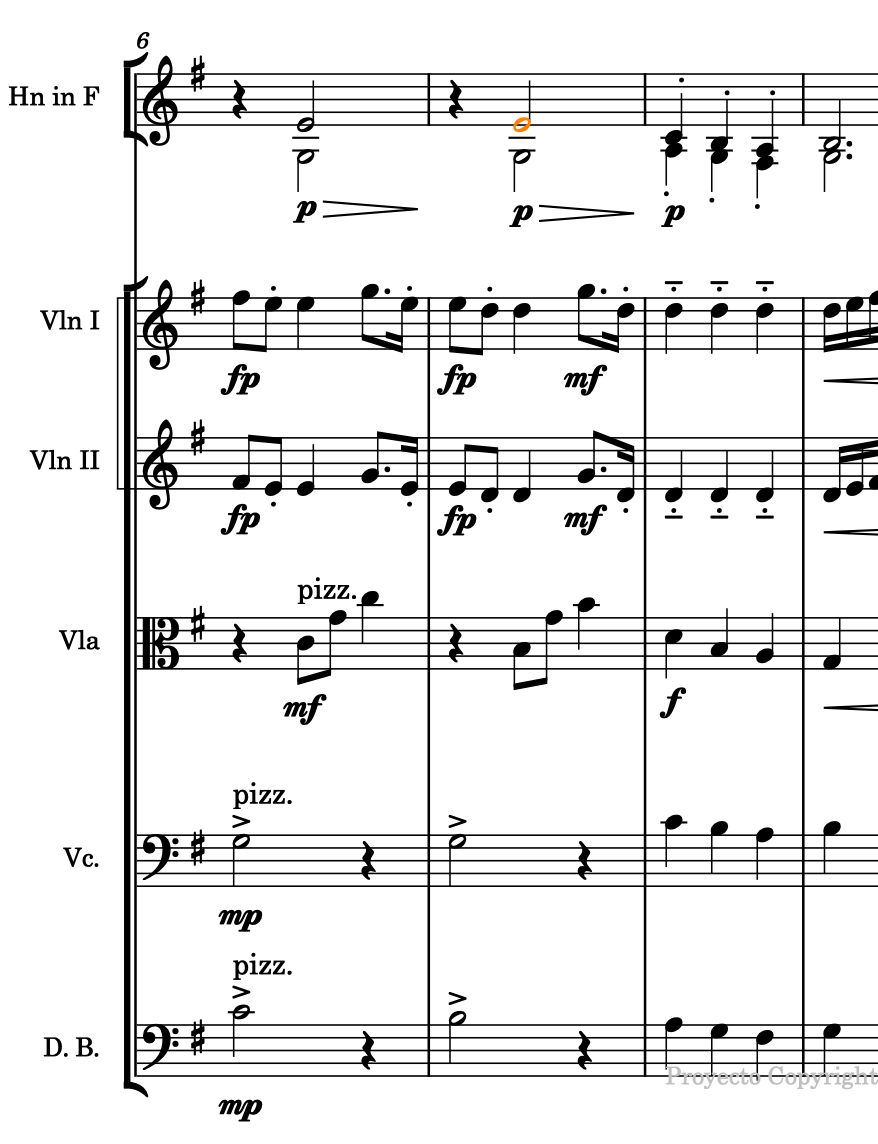
Hello @Luis Hernández ! I’m not able to write a „review“ today since therefore I would like to explore the six little piano pieces in more depth in its original version to compare them with your orchestration. So for now, all I can say is that I really enjoyed them and consider them good examples of orchestration—especially for someone like me who has no experience yet. The great thing about them is that the pieces are so short yet still expressive—so there should be no excuse not to go even deeper into the details (if the time allows me). Now, somewhat off-topic: Two days ago, I attended a performance of Dvořák’s “Stabat Mater” with a full orchestra and a massive choir (430 singers). This was a real fun, not only because of the bombastic sound, but also because I was able to follow Dvořák’s orchestration live. It is the total contrast to the „six little piano pieces“, since he stays very long on the harmonies and even single tones – letting them „rotate“ through the entire orchestra. At one point, you hear and see the cellos playing a chord while the double basses accompany them with pizzicato. A moment later, you can still hear the chord, but you see that the cellos have stopped playing, and after a moment of surprise, you realize that the horns have taken over and the pizzicato has been reinforced by the timpani. Yet the transition was so seamless that you didn’t even notice the change in instruments, only a slight shift in timbre. And by the way, the first movement of the “Stabat Mater” begins with exactly one note being played for nine measures, passing through all the instruments before the main theme begins. That reminded me of one of your recent posts: “What can I do with two notes?” 🙂1 point
-
1 pointI love it, and I bet Rachmaninoff would too, if you know that story...C# Minor did things to Beethoven as well, but then LVB was going to lovely keys such as Cb Major even in his earlier work!1 point
-
1 pointHello I think this is a beautiful piece. The melodic phrases are truly lovely, and while it doesn’t aim for an overly virtuosic style, it does evoke the Romantic era. I agree with everything @MK_Piano says; I think he has a valuable mastery of the piano and this style. I’d highlight one thing he mentions, which is to really reinforce the overall structure of the piece. Give it a clearer ABA form. I think the modulations are fantastic, but I also think a return to the starting key would give it more impact. I also agree regarding that 2/4 time signature. Rather than finding it problematic—since I see it as justified by what’s happening there, the modulation and “precipitation” into another harmonic region—it’s the fact, as he also pointed out, that it isn’t repeated in the recapitulation. A wonderful piece of work.1 point
-
1 point
-
1 pointHi, can you try uploading again? I tried and I was successful. Earlier this morning I did try to update the forum but was having some issues, maybe you tried uploading during that time. Try again and let me know.1 point
-
Reading the title of this thread I have a few seconds of terror that you're leaving the forum, thank God you don't! Congrats on your works being used in films! Henry1 point
-
1 pointThanks for sharing! I have played this work for solo piano and it is one of my favorites to both perform and listen to. I do have some comments about a few things, both from the eyes of a pianist and a composer. However, it’ll be sometime before I can sit down and type it all out in detail. May I ask if you are also a pianist, or if you have played this work in some capacity?1 point
-
If you mean this note... Yes! Better a D.
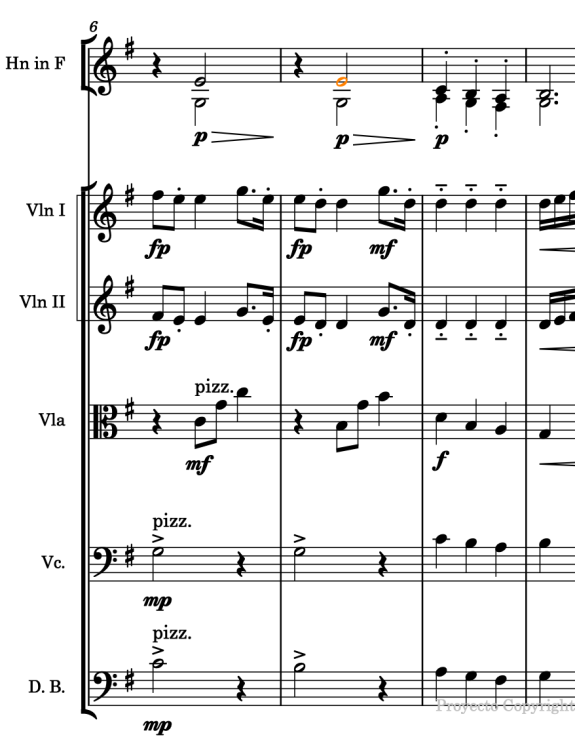 1 point
 -
1 pointThree of my favourite composers! I didn't realise I was channeling Prokofiev!1 point
-
1 pointThanks Vince, I just hope it's playable! I can only play it myself at a very slow tempo. Most of the recapitulation came to me just as I was falling asleep one night, which is when I always seem to have my best ideas!1 point
-
I am doing a solo piano type of thing. Watch me blow your mind not with music, but with instrumentation.0 points
-
TristanTheTristanTheTristanTheTristanTheTristanTheTristanTheTristanTheTristanTheTristanTheTristanTheTristanTheTristanTheTristanTheTristanTheTristanTheTristanTheTristanTheTristanTheTristanTheTristanTheTristanTheTristanTheTristanTheTristanTheTristanTheTristanTheTristanTheTristanTheTristanTheTristanTheTristanTheTristanTheTristanTheTristanTheTristanTheTristanTheTristanTheTristanTheTristanTheTristanTheTristanTheTristanTheTristanTheTristanTheTristanTheTristanTheTristanTheTristanTheTristanTheTristanTheTristanTheTristanTheTristanTheTristanTheTristanTheTristanTheTristanTheTristanTheTristanTheTristanTheTristanTheTristanTheTristanTheTristanTheTristanTheTristanTheTristanTheTristanTheTristanTheTristanTheTristanTheTristanTheTristanTheTristanTheTristanTheTristanTheTristanTheTristanTheTristanTheTristanTheTristanTheTristanTheTristanTheTristanTheTristanTheTristanTheTristanTheTristanTheTristanTheTristanTheTristanTheTristanTheTristanTheTristanTheTristanTheTristanTheTristanTheTristanTheTristanTheTristanTheTristanTheTristanTheTristanTheTristanTheTristanTheTristanTheTristanTheTristanTheTristanTheTristanTheTristanTheTristanTheTristanTheTristanTheTristanTheTristanTheTristanTheTristanTheTristanTheTristanTheTristanTheTristanTheTristanTheTristan (etc.) wishes his wish of writing a not yet existent but later surely existing existentially as an existing existence in the musical realm to be fulfilled non-ceased existentionally.0 points

.thumb.png.8b5b433a341551e913a34392660bc95b.png)