All Activity
Past hour
-
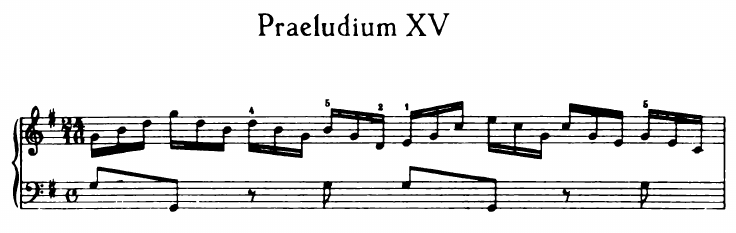
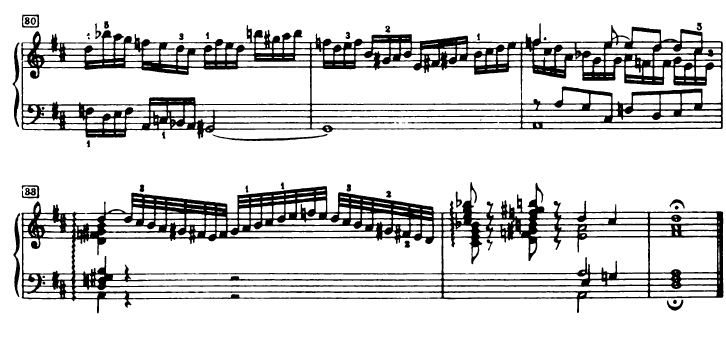
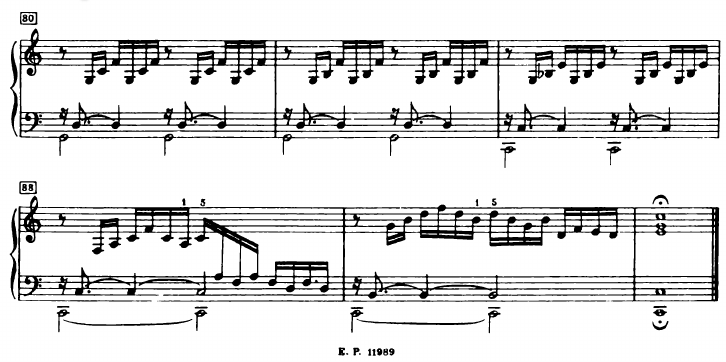
Hello @Martynas123, this prelude is really a pleasant, short piece. Although there is nothing wrong with a „simple piece“, I have some suggestions which could perhaps improve it somewhat further: The time signature. I don’t think that this piece is in 6/4 meter. Even though this time signature matches the number of notes played in a measure, there is no pulse that counts from 1 to 6 (with the exception of the last two bars). There are clearly four beats to be counted in the left hand. Therefore, the prelude should be in 4/4 meter, and the texture of the right hand could be rearranged into four groups of three notes each as triplets. With that done, you could get rid of the dotted quarter notes in the left hand (which look a bit unusual). Otherwise, you could recall the time signature as 12/8 (again with four groups of three notes in the right hand) retaining the dotted quarter notes in the left. And there is another „funny“ possibility that has been used by J.S. Bach in its Prelude 15 of the Welltempered Clavier, Book 1, BWV 860: Different time signatures in the right and left hand (admittedly very unusual but solving the problem): You could use 12/8 in the right hand (four groups of three eights notes) and 4/4 in the left hand. Here is the example from Bach’s prelude (he uses 24/16 in the right hand due to its use of semiquavers). The repetitions and the ending. At the ending (the two last measures), the piece leaves its uniform texture with the „triplets“, slowing down at (yes here) six beats per measure. I would like to have a somewhat „more elaborated“ finale, perhaps with the slow-down to a desceptive cadence, another one or two bars of improvisation with, again, the eights notes pulse, before the piece finally finishs. Typical examples of such an ending can be found in the Prelude 1, BWV 846: or somewhat more complicated in the Prelude 5, BWV 851: And now, finally, regarding the repeats: I generally wouldn’t include the ending—and especially not after an extension such as the one suggested above—in a repetition. Perhaps you could omit the repetition of the second part entirely—though that would result in a shorter piece.
-
Hello @PeterthePapercomPoser, this next Persichetti exercise was again a great fun. I just had to checkout what „symmetrically invertable scale“ means. Yes, it is indeed the case that the pairs you’ve chosen share the same order of whole-tone steps and half-tone steps between the different scale degrees, the one in normal order and the other one in reverse one! C Mixolydian: C 1 D 1 E ½ F 1 G 1 A ½ Bb 1 C C Aeolian (aka C natural minor) - reversed C 1 Bb 1 Ab ½ G 1 F 1 Eb ½ D 1 C C Ionian (aka C major) C 1 D 1 E ½ F 1 G 1 A 1 B ½ C C Phrygian – reversed C 1 Bb 1 Ab ½ G 1 F 1 Eb 1 Db ½ C Another thing is mirroring, that is whenever the left hand plays the melody/chords upwards, the right hand does the exact opposite. At some points, you have made some exceptions from the strong mirroring, introducing octave-wise steps or leaps which is – in my opinion – absolute correct and does not violate the intention of the prompt, but rather is a good device to make „an actual piece of music rather than an exercise“. Having different key signatures in the right and left hand scores is surely unusual, but makes the score looking very interesting, together with the meter changes, applying the odd one 5/4. How does it sound? Modern, ethereal, but pleasant and by no means “too atonal.” I can’t imagine this kind of exercise being expanded into a piece—say—7 minutes long. But I’d very much like to see passages based on this idea in a “real” piece of music, such as a prelude, combined with passages featuring more functional harmony and a texture that differs between the two hands to create variety. Thanks for sharing—it’s a very humorous and at the same time profound exercise, and perhaps an inspiration for one of my next pieces.
Today
-
Hello dear fellow composers! The two months of the YCF 2026 Summer competition are over and we have now the results. For me, participating in that competition was (again) a great fun – but also a huge challenge! And I think, I’m not alone with that impression, since – on the one hand – only roughly the half of that members which initially intended to participate have finally posted a submission and – on the other hand – the most submissions arrived during the last two weeks, signifying that almost all participants had to do a hard work to meet the requirements of the contest, to produce „Something“, that was related to Paul Verlaine’s poem, from „Nothing“ (in this regard, the specific task made it difficult to use an existing piece; therefore, I believe that most submissions were composed “from scratch”). I’m very pleased, that I could win the third prize, however the most takeaway from the contest are – in my opinion – the reviews which had an outstanding quality this time. It was the fourth consecutive competition (or event) I participated during the past year, and I think the overall quality of the compositions and of the reviews has been improved significantly in that period. The reviews tend to be longer and consist not only of the impression and taste of the listener/reviewer, but have become full of profound feedback and suggestions, concerning for example questions of engraving or of the playability and/or specific characteristics of certain instruments that a composer must take into account, even if he or she may not be very familiar with the one or the other instrument. With this respect, I would especially thank @MK_Piano, @Omicronrg9 and @Thatguy v2.0 for their reviews. I'm already looking forward to the next competition, though to be honest, I need a few weeks' rest until then. Finally, there is just another little concern I would share: I noticed that some of the participants voted for themselves in the final poll. That behavior ultimately had no impact on the awarding of badges and prices in that sense, that a participant has not earned the respective badge due to he did hesitate and not voted for itself. However, in my opinion, it is not a good practice to vote for oneself, since - if everyone would do so - voting would become merely useless, especially since we have relatively few voters at all, and this time more participants than other members. Therefore, I would suggest to introduce an explicit statement in the rules of upcoming competitions, that participants shall not vote for themselves in the final poll.
-
Great musical ideas come and go, we all have different approaches to writing music...I am sure that some of us have grown as people as time passes, and the music may also evolve as well, stylistically etc... Just for fun, and perhaps for some perspective for the younger members of the forum - what is the longest time frame that people have actually taken to complete a serious piece of music? For me, it would be about 17 years. I started a piano piece when I was roughly 17 years old, never quite finished it. Was initially written in a way that was inspired by typical pop music at the time that I was into. I revisited it around age 20 and added a bit more to it during a time in my life where I was listening to more progressive rock. 14 years later, around age 34 - I put the finishing touches and completed it, and it retained a slightly jazzier/sophisticated feel near the end of the piece. The piece itself isn't anything that I would consider special, some 4 minutes long for solo piano. 17 years a long time, though I wouldn't say I struggled at all or was obsessed with the piece. I held the musical ideas in the my life as I aged, and it was fun to complete the musical idea when the time came due :) What about you guys?
-
Hi @Lithl ! By listening to your music I actually think of a Gothic scene: just like @Luis Hernández noted the synthesiser sounds like ominous birds flipping. I actually don’t hear the cello much, maybe you can add more of it? I think an extremely high pitch harmonics or sul ponticello cello or col legno lowest register cello can make the atmosphere sound more scary. Thx for sharing! Henry
-
hey @Markus Boyd ! Really thank you for your detailed explanation! I appreciate that. I think the “disparity” is only due to our different aesthetics and style. Bach’s Et Resurrexit is perfectly written as it narrates the pain of crucifixion, Dido’s Lament for the abandoned Dido. My movement here is none like theirs, as I want to talk about the confused state under depression or despair. Under a state of despair, in my case, falls into confusion and you almost see nothing bright; no drama there, no contrast of bright/dark or major/minor there, just confusion. Maybe there is some light, some reasonable power from human Logos, which is portrayed a bit in both 2nd subject which is in major key in both exposition and recapitulation here, but it’s only a small portion and will easily be crushed by blind confusion of despair. I don’t think I have ever fallen into depression myself but I have lots of friends fallen into it, and they see no light and reason to pick them up; what seems to a depression patient hopeful may be the one last false hope and the last straw which takes their lives away. I don’t try to set myself unprecedented but I just try to write that particular state of mind. Hope this explanation helps Markus! Henry
-
Hi @Markus Boyd ! I really love this prelude! The counterpoint is really rich and fluent and the pain real. Maybe an imitative entrance of each voice would make the piece more solemn but to me this one is already really good. Probably because the Dorian is the 1st mode? Just like Bach’s Die Kunst der Fuge maybe because of that too. Thx for sharing! Henry
-
Hi @Martynas123 , Is this one section of your D major Sonata? I ask because it’s more a G major piece to me. If it’s hard to continue you can for sure modulate to new keys. Easiest would be to modulate to D major by ending the first section in half cadence and then you can begin with new ideas. I actually really like the idea after 0:59, but like @Grant Weep said it gets really weird, to me because it doesn’t match with the style before it. Henry
-
Hey Peter, This bitonal piece sounds really funny, it sounds like a parody of a march! It's like someone saying "look at how serious I am!" by making himself 200% serious which makes him 500% ridiculous lol Henry
-
I'm usually into Gustav Holst's music because of The Mystic Trumpeter. It's such a mature and emotional piece that's sadly very neglected. I also quite like Tan Dun, Antonin Dvorak, Ludovico Einauldi, Gustav Mahler, Fela Sowande, and many more
-
It's been a while since I've composed anything, so I felt like getting back into doing some Persichetti composition prompts. I am now on Chapter 8 of Persichetti's "20th Century Harmony" which is titled "Compound and Mirror Harmony". The particular prompt for this piano piece was "8. Write an opening section of a two-part piece for the piano employing two symmetrically invertible scales. The mirror writing should be kept strict throughout." So I tried to do just that with this ~1 minute long piano piece. I tried my best to make an actual piece of music rather than an exercise, but let me know how I did! I'd appreciate any of your comments, critiques, suggestions or observations! Thanks for listening! Here's the form of the piece: A - Right Hand - C Mixolydian, Left Hand - C Aeolian B - Right Hand - C Ionian, Left Hand - C Phrygian A Persichetti Exercise 8 - 8.mp3 Persichetti Exercise 8 - 8 Score.pdf
-
-
SATB, a cappella. Thanks for taking a listen! Come in the morning, and this is what is best: the wood thrush, turning every sunny path to a holy space. Go there in the evening, and this is what is best: the susurration of little screech owls. Hearts all full, and you, my love, step softly as the night. And the good, good crow chops wood and calls his family home. The great bowl spins, stars in flood, and all of beauty, some of use, hold their breath beneath. Who are we to choose which souls to save? The morning and the evening-Furtak.mp3 The morning and the evening-Furtak.pdf
Yesterday
-
Hello there musicians! We are opening a private beta for Intervals: a new desktop tool aimed at composers, producers and musicians who spend a lot of time working with harmony or beginners looking for a way to start diving into complex harmony in a very visual an intuitive way. You can see it in action in: https://qrealmstudios.com/ Intervals its not just a predefined software tool where you have a list of chords and scales, where you are in chord A and it just gives you chord B. Intervals has a large set of harmonic tools to build progressions with. It explains what each option is doing, why it works in the current context and what kind of direction it can take the harmony in, so you can actually use more advanced ideas without already knowing every concept by name. The result is a much more intuitive way of building progressions that still follows real harmonic logic and you can understand what you’re doing as you go. As a side effect, it makes writing harmony much easier to explore. Some examples: - You have a chord and want to find what to do next. You have a huge list of operations, scales, transpositions and all the possible chords (from diads up to polychords!) that leads you through all the possible continuations, providing you context on why that decision works. - You may also have a progression that basically works, but it sounds obvious and you want to find somewhere more interesting to take it. You know two chords you want to use, but the transition between them isn’t working. One of its main tools lets you choose any two chords and search for different harmonic paths between them. So instead of asking for a random progression, you can say, in effect: “I’m here, I want to end up there — show me some musically plausible ways of getting there.” It can go from simple chords up to very complex ones such as: thirteens, polychords or even Mystic chords. It searches for relations between chords, modes or scales to search for real pathways to build your progression. - It can also analyze your progression harmonically: see what scales/modes corresponds to each chord, where modulations are found in your progression or even transpose your progression between modes and scales. - It can also take harmony you’ve already written and help explore other directions around it — reharmonization, substitutions, different harmonic colours, smoother voice leading and alternative ways of developing the same idea. And all of that just in the Standard Intervals package! For more advanced personalization there is also Intervals Pro: A MIDI-DAW where you can import your progressions and highlight your chords and scales tones, making compositional writing far more easy. And it allows you to quick export your track/project into your favorite DAW. It also has a tool to find chords accompaniments to your melodies, powered by the Intervals algorithms and libraries of knowledge. The important part is that it isn’t intended to write the music for you. The point is to give you useful alternatives around material you already care about, let you hear them immediately, understand and decide what actually belongs in the piece. The beta is now looking for people who will actually throw real music at it — not just click around for five minutes. Composers, beginners, producers, songwriters, film/game composers, jazz musicians and theory nerds are all welcome. It’s available on: Windows macOS — Apple Silicon and Intel Linux Beta access is free and includes both Intervals and Intervals Pro. People who complete the beta and provide useful feedback can receive a permanent Intervals Pro licence afterwards. If you’ve got a progression that feels stuck, two chords that refuse to connect, or a melody that still needs the right harmony, that’s exactly the kind of material worth trying it on. You can submit your participation to the private beta at https://qrealmstudios.com/ You can contact directly the team at: Mail: beta@qrealmstudios.com or Instagram/Tik Tok: @qrealmstudios We are interested in all kinds of feedback, specially from Windows and Mac users. Any possible issue you may have with the app: something you consider odd or not perfectly working that do not let you complete satisfactorily all the task of our beta tester formulary, please notify them by email. Feel free to ask for any additional information and feedback in this forum and we'll be glad to answer your doubts and comments!
-
QRealm Studios joined the community
-
Thank you very much. I’m glad you’ve noticed the influences on my compositions and my contrapuntal compositional approach: Yes, of course Bach is the great role model, but I don’t want to mimic that particular Baroque style at all; rather, I want to incorporate more contemporary influences, for example in harmony (the use of modes or even some jazz harmonies) or in rhythm and texture (the use of unusual, odd time signatures). My challenging project is two compose 24 preludes and fugues (according to the model of the WTC), where this particular prelude is one of them. Even though they are piano pieces, I have used some of them to create orchestrated versions. You can find links to the pieces I’ve already featured here on the YCF in my signature below, along with a link to my YouTube channel. I’m really appreciated that you suggest the piece to be presented with other instruments than the solo piano only! And – no problem – here is it: My official submission for the above mentioned competition that finished a few days ago: „Summer – A Song of Beauty and Melancholy – Submission to the YCF 2026 Summer Competition“. And just as I’m wondering why you didn’t discover it on your own, I realize that I forgot to include a link to this “orchestrated” version in my post above. So I’ve added it now.
-
Thank you very much. I also particular like the passage (around 1:34) where the trumpet plays the subject of the fugato for the first time. This is for me the depiction of the summer day – while the final part is a bit more melancholic, - perhaps the evening. If you’re referring to the “thumbnail” of the YouTube video (as well as the first slide in the video and the title page of my score), then yes: After I finish a piece, I usually do some „artwork“ and give each piece its own color scheme as well as a visual interpretation in the form of a photo or painting (and, of cause, the painting here isn’t mine—it’s by Pierre-Auguste Renoir 😆). I’ve found that such a “colorful” annotation to the pieces can be very helpful for remembering them—even when I talk to my family about my music, it’s much easier to refer to a particular piece as “the one with the elephant” or “the purple one with the misty forest” rather than as “Prelude in A minor” or “Prelude in G-sharp minor.”
-
HI Lithl, Thanks for sharing this! I am not really versed in music using electronic sound, so maybe I'm not the best one to be commenting, but I am interested in all types of music, though and enjoy having new musical experiences. My impressions: I enjoyed this very much. I do hear a coherent soundscape here. The piano seemed to move in and respond to the electronic sounds. I'm not sure I could identify all of the cello's contributions to the conversation but what I did recognize "belonged" if that makes sense. And I agree with Luis' observation about the flock of birds. Though I don't know pieces similar to yours, I do like the way Anja Lechner uses (exploits?) the cello in Memory of a Melody (18:45 or so).
-
@Seni-G First of all, I would like to thank you deeply for listening to my music and writing such a long and thoughtful comment! One thing you mentioned that definitely struck a chord with me is that I need to start listening to more music. Most of my musical consumption happens through playing, and I feel like as instrumentalists we rarely listen just for the sake of listening and enjoying music for what it is, rather than treating it as some sort of exercise or study. So I definitely want to work on that. I am also pretty insecure about my harmonic variety. I tend to spell out every chord and write down the figured bass before my final edits, partly because I feel the need to justify every note. I often second-guess myself whenever I want to step outside of diatonic harmony. I imagine that listening to and exploring more scores from the perspective of a composer rather than a pianist would definitely help with that, so I will take this advice! One genuine question for you guys: do you ever run into this in your own writing? A lot of the time I feel like my decisions about inversions and voice leading come from playability. I have this strange need to make my music simple and approachable, even though it isn't necessarily going to be performed by other people. For some reason, I have a bit of an obsession with playability. Another obsession of mine is motivic economy, which I am not sure is always healthy, haha, but I feel like it has become a big pillar of my approach to composition. Also, did you have a favorite movement or passage? I would genuinely love to hear which one!
-
Hi Matthew @mahler2009 Personally, I do both at the same time: I study and compose with traditional harmony while also writing more experimental music, rather than treating one as something I need to master before moving on to the other. Some of my earliest pieces were actually quite weird and almost atonal, before I later explored more conventional tonal writing too. I’ve found that both approaches help me develop in different ways. I don't think there's a particular point when you're suddenly "ready" for non-functional harmony. Traditional harmony gives you useful tools, but experimenting with the sounds that interest you is also part of learning composition. I'd keep developing both in parallel and let them influence each other Also, welcome to the forum!
-
Hello @Luis Hernández, thank you for listening and giving me a curious reference. I immediately added Vox Balaenae to my queue. I feel the vibe of "flocks of birds"—that's a good saying. As for granular synthesis, yes—I can tell you. For this piece, I used "Oi-Grandad". This is a plugin where you can load wav files and combine them, which is an amazing granular synthesis tool. I used some wavs for three tracks and made glitchy sounds. If you use it, you will probably understand soon. Anyway, thank you for your feedback. I'm so glad :) Best, Lithl.
-
true. I feel like competitions happen every season so every four months but I feel like adding too much constraints is going to form a layer of monotony. making every piece of music, aesthetically and stylistically the same, which takes away from the main philosophical concept of composition
-
Hello, guys. It's been very long since I posted anything here. Was busy with uni and graduated rather recently, but still composing here and there. This piano trio, titled Reunion, is intended for the Chinese New Year. But I decided to post this early given I just managed to complete the second movement. This piece is partially inspired by Charles Ives' Piano Trio. The first movement, March, was actually intended to be for string quartet, which I started before going into university (about six years before), but I only worked until the middle of the exposition and left it aside, until I worked on a minuet and fugue for piano trio (which became the third movement). I gathered what material I have for this movement and rearranged it for piano trio. This movement is in modified Sonata form. The main theme is borrowed from Da Di Hui Chun (大地回春), while the second theme is He Xin Nian (贺新年). The development section features Ying Chun Hua (迎春花); I felt it's rather fitting for a march-like piece. The second movement, Nocturne, is largely petatonic and inspired by Debussy. Some material was actually adapted from a pre-college music assignment, which I didn't so well in because, honestly, I misunderstood that assignment (which wanted us to compose a study piece either on pitch or rhythm, and not both). But I decided to revisit this piece for Mid-Autumn and repurpose some material around as I focus more on the pentatonicism. This is in rounded binary form, because, admittedly, I didn't really have more ideas on how to develop the motifs further. The third movement was composed for a music assignment when I took a music composition course in college. The lecturer wanted us to compose something related to local heritage, so this piece incorporated two Chinese melodies: 明月千里寄相思 (Ming Yue Qian Li Qi Xiang Si) for the Minuet and Waltz sections, and an abstracted version of A Common Man's Voice in the Fugue (Trio) section. It's because of this composition that I decided to revisit what I did before, to put together what I had for a complete three-movement Piano Trio. I enjoyed composing the middle section for this piece as it tried to juxtapose 6/8 with 3/4. I still plan to rework some parts if I have the time, but I decided to share it as-is for now, and I welcome any feedback and comments.I. Piano Trio (march) 4 Oct.mp3I. Piano Trio (march).pdf II. Piano Trio (nocturne).mp3II. Piano Trio (nocturne).pdfIII. Piano Trio (Minuet, Fugue and Waltz).mp3III. Piano Trio (Minuet, Fugue and Waltz).pdf
-
-
Each links are the given bass(first), of soprano(second, and third) melody which I've filled in other voices in Harmonic rules. Last link display the exercise from korean school's entrance exam. So, It sounds doesn't such a good cause It is just for entrance exam.
-
Hello I’ve had to listen to this track three times in a row – it’s very short, so it’s easy to do. There’s one reason for this: I’m really fascinated by what you’ve done here. I think this sort of music is just as valid as any other. I’d love to know a bit about how you created that ‘granular synthesis’ – whether it’s with software or something else. I sometimes think about using electronic elements in my own work, but I’m not quite sure how to go about it (as I rely 100 per cent on virtual instrument libraries). To me, that synthetic texture really reminds me of ‘flocks of birds’. It really does have several layers of sounds that are like the caws of different species of birds. This reminds me directly of pieces like Vox Balanae (Voice of the Whale) by George Crumb. https://www.youtube.com/watch?v=sutSUIBp-VY&list=RDsutSUIBp-VY&start_radio=1 As well as looking at the score, which is very, very complex (typical of Crumb), it is fascinating to watch the performance, as there are instructions on how the musicians should appear (masks) and in what position. performance






.thumb.png.8b5b433a341551e913a34392660bc95b.png)