
All Activity
Past hour
-
Jony joined the community
Today
-
-
-
Firstly I appreciate greatly the feedback given. It was not intended for there to be 3 violin sections but rather 2, with Violin 1 being a soloist which is evidenced I believe with the middle section where it is labeled solo. Perhaps I should have written Violino Principale for greater clarity. You correct on the roman numeral usage which I had to track where I was harmonically. I am aware that isn't included in a final score. I realize my compositions with vsts and seeing that I had not yet included a keyboard accompaniment I decided on "cleaning it up". I also thought it would better help with any feedback or critiques to show more openly my thought process. The other numbers are not figured bass. They are merely scale degrees which like the roman numerals helped me track my harmony/motifs. As for the rest you may be very well correct. I did hope the bass line at least is written idomantically or certain antiphonal elements in the violins. I will agree that my violins may have reached too high in some areas. And for the vocals I may have leaned to heavily into a violinistic approach. The harmonic langauge was not an attempt to imitate the renaissance style. Simply what I have observed from Vivaldi's and Sardelli's violin concertos and vocal works. As for the text I explained my intentions/desired effect in the description of the post. I understand the main presentation for this text and would agree my approach would likely not fill well in a mass setting. Perhaps it is far too extreme but I did wish to lean into a more operatic approach and my background is mainly with vocal synths(Vocaloid, Synth V) so my ear may be too accustomed to harsher music.
-
This piece confuses me... Why are there 3 violin parts and not just 2? 2 violin sections, 1 viola section, 1 cello section, and 1 bass section is the norm. Writing for nonstandard ensembles is fine, but using a standard ensemble, in this case string orchestra, but with minor ordering differences just 1. makes it look like you don't know what you're doing (and you demonstrably don't) and 2. makes it significantly harder to have your piece performed. Who's going to have a string orchestra with 3 violin sections? No one. Why are there numbers all over the page? Roman numeral analysis is for... well, analysis. You don't include it in a score, and the other numbers I guess might be for figured bass, but that's not how you do that? Learn how to do something before doing it is generally a good rule of thumb. The instruments are not written for idiomatically. Those leaps in the violin in the middle of the piece are way too big. The soprano part is also WAY too hard, even for a professional soloist. It has super technical and absurdly fast extended passages in the very high range. If you gave this to a soprano, she'd would absolutely refuse to do it. Some of the harmonic choices are also odd. You seem to be wanting to do an imitation of a renaissance style, but it's just not achieved very well. It lacks the right harmonic language. I'd expect more raised leading tones, piccardy 3rds, etc etc. There are people on here that are much more familiar with this style that may be able to provide more specific feedback, but it sounds very messy to me, not elegant like the music of the time. Finally, the music doesn't match the text at all. The text is beautiful, solemn, contemplative, and the music just isn't. Why? I sing gregorian chant for a TLM parish, I'm very familiar with motets and liturgucal/sacred music, and this just isn't something I would choose to include at mass. I wouldn't even include it in a secular program. It's just not that well put together or though out. I would take more time to study the ensembles and instruments you write for, including vocal ranges. Also look into studying counterpoint, doing species counterpoint exercises, and harmony of the period. Studying galant schemas might also be beneficial for you. And most importantly, study scores! If you don't know how to notate something, reference a (modern print) score. Clearly you are amateur and young (young composers, haha) so don't worry. You will improve, probably quickly, but you need to spend more time studying theory and practicing with study pieces and exercises.
-
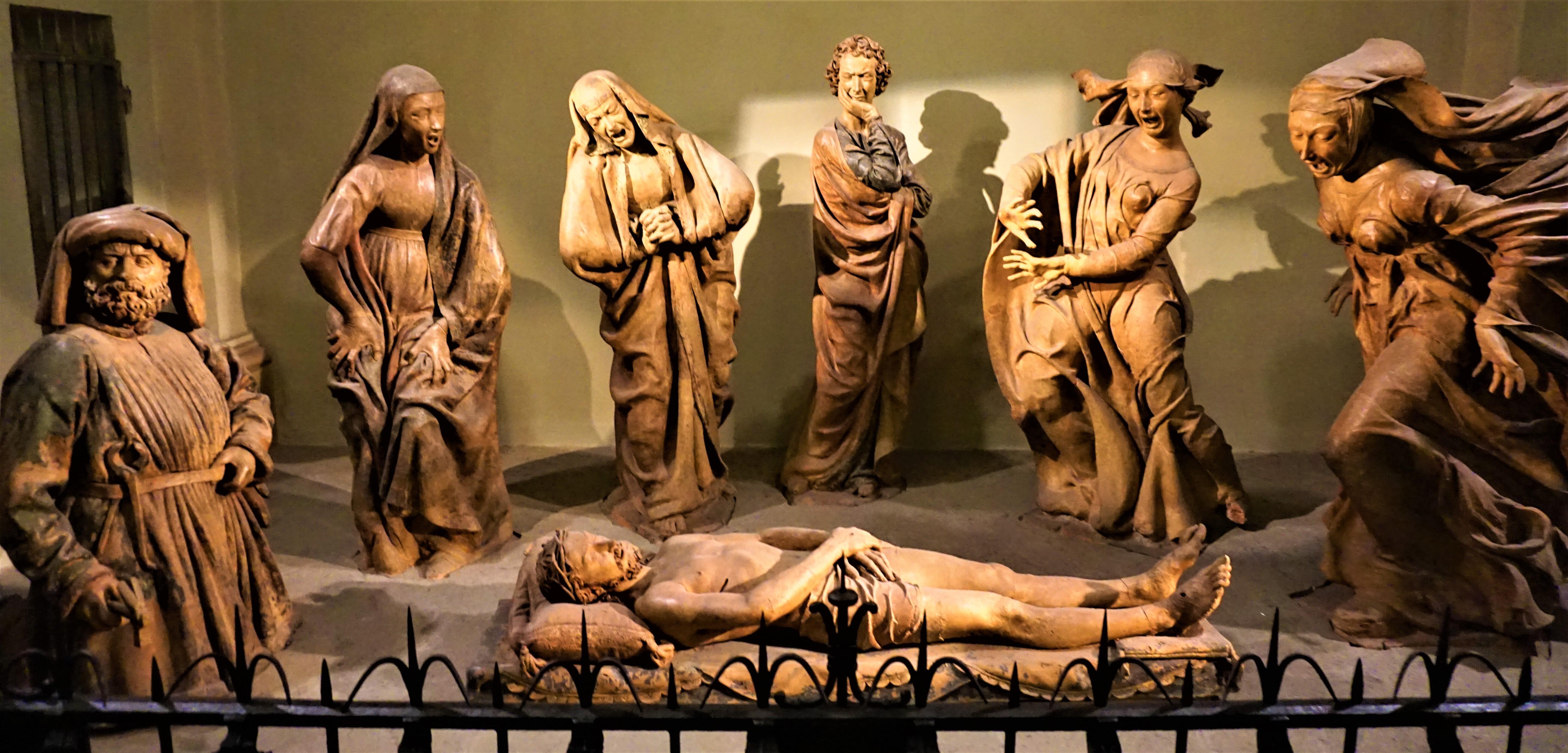
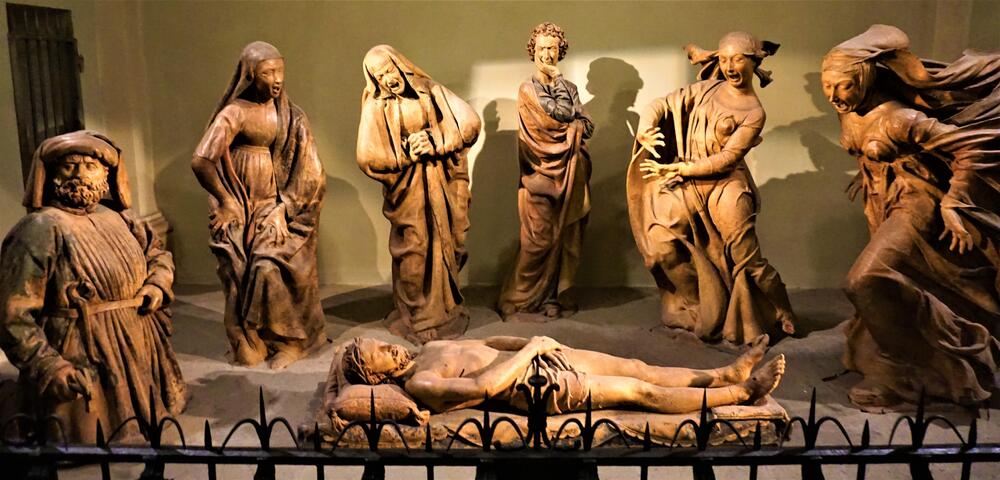
Hello. This is my first post here, presenting hopefully the first of many sacred solo motets and religious pieceso vos omnes sheets.pdf. I am very inspired by the italian masters Antonio VIvaldi and Federico Maria Sardelli. This is a sacred solo motet for soprano, strings, and continuo based on the Latin Vulgate translation of Lamentations 1:12. I really wanted to capture the raw and shocking horror of the suffering and death of Christ, the Son of God for the sins of men. The same shock that Dell'Arca captured so masterfully in his statues of the Lamentation for the death of Christ. Hopefully my work has served that well too. O vos ómnes qui transítis per víam, atténdite et vidéte: Si est dólor símilis sícut dólor méus. Atténdite, univérsi pópuli, et vidéte dolórem méum. Si est dólor símilis sícut dólor méus. English Translation: O all you who walk by on the road, pay attention and see: if there be any sorrow like my sorrow. Pay attention, all people, and look at my sorrow: if there be any sorrow like my sorrow. O vos omnes- M.M..mp3
-
jtalbert joined the community
Yesterday
-
I present to you my next cantata - "Laudate, pueri" (Ps 112) for tenor, flute and basso continuo consisting of 6 parts. It's rather short and for small ensemble, but it has a chance to be played in real life - until then computer playback will be added. It's meant to lighter than my previous cantata, with more concertante technique used... The first part is a dialog between two soloist, the second (and fifth) is tarantella-like with basso ostinato. Third and fourth i wrote what I had on my mind XD. Fifth is fugue (or fugato to be exact i think) with soloist doubling the theme entries. Any tips and feedback welcomed! Laudate, pueri.pdfLaudate, pueri.mp3
-
Haha, indeed, we are influenced by what we listen, we all are... Nevertheless, I would definitely encourage you to continue the journey, and exercise your composer skills on this work you started, by introducing some melodic phrases. My (limited) experience in composing clearly shows that the journey is hard, but really fascinating.
-
Wow... Thank you very much. I had this "theme/figure" in my head for so long and it felt familiar, but I didn't know where did it come from, so I thought it's mine :D. Now I know, so I think there is no need to reinvent the wheel (especially by Bach), so I better leave this theme to Him, cause he just does it better :) It's really interesting how we can subconsiously "compose" something already made
-
Hi @Josquins turban , I tend to agree with MK, it's a little too repetitive, even if the patterns you chose, and the harmonic progressions are nice. It somehow reminded me of Prelude No.6 by Bach - BWV 875 --> if you don't know the piece, check it out, it's interesting how much variety of rhythms and melodic materials he can use. This can definitely give you some hints. If I had to elaborate on your work, I would typically introduce some slower melodic material in bars 4, 12... before returning to your transition material (yes, I think that's my feeling, you have good transition material, but I don't feel there is a theme sticking out...) Thanks for sharing and do share the evolutions, I'm keen to see how you've decided to make it evolve! Julien
-
Hi @islav , compositions such as yours is one of the reasons why I am keen to be part of a platform like youngcomposers: your work is really novel and inspiring. I didn't like everything, otherwise the many changes of rhythm in the melody, as well as the many strange and unexpected dissonances make your piece very coherent. Things I didn't quite like (really personal taste): bars 7-9 were too mellow for me I felt like the end was too abrupt, and didn't really go well with the piece I felt like the trill was used a little too often (e.g.: bbs 58, 67, 69...) Things I particular liked: the transitions in bar 20, bar 39 or bar 53, really surprising and somehow relaxing the rhythm pattern you regularly use, e.g.: in bbs 43-45 Thanks for sharing and continue the good work! Julien
-
Suppose a cue must finish within 90 seconds, including its final decay. Would you calculate a tempo adjustment from the entire file, or reserve time for the tail and measure the musical section separately? When would you prefer to revise the ending or render the cue again instead of stretching the existing audio?
Last week
-
That remix destroyed the clarity of my audio, as I found upon further listening. Here's a much, much better version, one that does justice to the original:
-
I really worked myself to the bone on this particular song. I spent almost a whole day on it, barely sleeping, and I put almost everything I've learned into the resulting music. I don't think I've sent more energy into any other piece. It turned out pretty decent for all the effort. I decided to call it Ancient Tapestry because it has what sounds to me like a Neo-Rennaisance quality. It's the kind of music I imagine the composers from that era would have written if they were still on this earth today.
-
JohnMalkolm joined the community
-
"A track from my third vinyl record, which should be arriving any day now. The concept of the piece (the first part and the main theme) is simple... a melodic framing based on the Locrian minor scale." The translation was done via Google, and I hope it conveys the meaning I intended.
-
This and the following movements all toke a good 2 2/1 years to write
-
@Henry Ng Tsz Kiu, your composing story is lovely - I feel your deep care for your compositions, I can say that taking such a long time to compose certainly paid off :) Well, as of yet, I've never taken time to compose over one week and a half per work. The reason is that if I take a lot of time, I can't complete them, or rather, I move on to another project. Taking a lot of time for composing brings about failure. It turns out recently that my composing style is like "on the spot of imagination", I mean composing if I have a clear vision. This style enables me to create pieces without losing my passion and complete them. Oh, if you consider mixing as compositional time, it would be more than that time because I usually revise mixing after I make a track. Good and curious topic, Grant, thank you. Best, Lithl.
-
flora.410 changed their profile photo
-
This is so good. I'm sure that you have a wonderful musical nature - the reason I think so is clear: this piece has so many musical factors and combines them with a progressive rock style avant-garde element very well. Probably the reason you didn't get feedback is that this piece covers a controversial topic, I guess. Also, a nice picture. I prefer the second one from the top: for the others, I know what you are trying to do, but the surrounding elements do not highlight the rabbit in the center. If you upload the second image to YouTube, it would likely draw people in. By the way, I want to ask you, how did you make the drums? Is that a VST, or did you play them yourself? Well, overall, this sounds amazing. Again, I admire your musical creativity. Some parts of this piece have a beautiful tune yet with chaotic noises. At any rate, we can enjoy plenty of wonderful melodies and developments. Keep up the great work!! Best, Lithl.
-
Hi, thanks for listening and commenting. Well, I’ve actually finished the project now. For one thing, I currently prefer to compose short pieces that express exactly what I want and nothing more; I’m not interested in writing extended works or anything like that. It’s just a personal preference right now. The Cantai app has evolved a lot during this time. They introduced what you mentioned: choral masses. And also other languages (Latin, English, and Spanish for Dorico). Although I had to uninstall the update and reinstall the previous version because the new version wouldn’t let me mix English and Latin. Once I finished this project, I installed the latest versions. In the end, there were about seven pieces: prelude, introit, Kyrie/Tuba Mirum, Lacrimosa, Sacrifice, Sanctus, and Libera Me. The texts are taken from classical Latin and all those Romantic poets, Joni Mitchell, and a poem by a dear friend.
-
EspressoChaiLatte joined the community
-
-
lerkaz joined the community
-
Hi @PeterthePapercomPoser , What a strange sort of work, mixing modes like that. The result is however astonishing, really well thought and nice to the ear! The principle reminds me of Etudes (like Chopin's or Liszt's), complex pieces intended to "improve your technique", but which are also real pieces in themselves. So to your question: yes, I feel you've gone beyond the simple exercise, clearly. Must be complicated to learn though (due to the dis-harmonic aspect) Thanks for sharing, Julien
-
Hi Wieland, This mix of fugal and dissonances is quite unusual (to my ears), but really enjoyable. As already mentioned by others, the contrapuntal material is really interesting, well done! The end in particular (starting from bar 91), I really found profound and full of emotion. And after 3 listenings, I found the orchestrated version: WOW !!! The only criticism there is that I find it a little "too diverse" in instrumentation (if that makes sense). But really: well done, and I liked the Parisian feeling (I really felt I was in Montmartre), which is in line with Paul Verlaine's theme! Did you get any prize for it in the end ;-) ? Cheers, Julien
-
Hey Tunndy, Some feedback: I like the beginning: the rhythm, the darkness, really cool! Bars [7-10], really not my favourite section. I like the change of tone bar 28. I agree with Tristan that having forte everywhere would deserve a bit of nuance... In general, in enjoyed it, thanks for sharing! Julien
-
AISlop.FM changed their profile photo
-
Hello, Here at aislop.fm we take this emerging artform seriously, so have designed a blind auditorium test feedback tool such that AI creators can get anonymous praise or criticism of their work. We are looking for submissions in all genres, so please consider submitting your best creations. https://app.aislop.fm/submit
-
AISlop.FM joined the community
-
"The fourth track on my first vinyl album, 'to be continued...', is jazz-rock. The guitar is live here too."
-